



TL;DR
Your contracts probably suck at protecting you from the stuff that actually goes wrong (scope creep, ghost clients, “just one more thing”). Here are 19 templates that address real problems instead of theoretical ones. Start with the client-facing ones. Add the others as you get burned by situations they would’ve prevented. Most importantly, use the damn things instead of winging it because the client seems nice.
Why Most Contract Templates Fail Before You Even Send Them
I used to think contracts were about covering your ass legally. Then I had a client (a $40K project, signed agreement, everything looked great) who went completely dark for three weeks right when we needed approval on the campaign concepts. Just vanished. Wouldn’t respond to emails, calls, nothing.
Then she resurfaced on a Thursday afternoon demanding we launch Monday because “we’re behind schedule.”
The contract we’d both signed? Useless. It said when deliverables were due, but nothing about what happens when the client ghosts during approval. I ended up working the weekend, delivering rushed work I wasn’t proud of, and resenting every minute of it. Couldn’t even bill extra because technically I’d met the deadline she was demanding.
That’s when I realized most contract templates are built for projects that go according to plan.
Which is to say, they’re built for projects that don’t exist.

Here’s what nobody tells you about contracts: the legal protection is almost beside the point. I’ve never sued a client. I’ve never been sued. The real value of a good contract is that it gives you language for uncomfortable conversations.
When a client says “just one more thing” for the fifth time, you don’t have to be the bad guy who says no. You point to section 4.3: Scope Change Authorization. “Happy to do that, here’s the change order form and the additional cost.” The contract is the bad guy. You’re just following the agreement you both signed.
The templates I’m sharing here focus on real-world scenarios where projects go sideways. The client who disappears for two weeks then demands rush delivery. The freelancer who ghosts mid-project. The “small change” that balloons into a complete scope revision you’re somehow expected to absorb.
These work because they acknowledge that projects rarely unfold as planned and build in protection for the messy middle, where most problems occur. You know, the part where you’re actually trying to get the work done and everyone’s true colors start showing.
Client-Facing Agreements That Protect More Than Just Payment
Getting paid matters. Staying sane during delivery matters more.
Most service contracts cover deliverables and payment terms, which is baseline. What they skip is the language that protects you when a client ghosts for two weeks, then resurfaces demanding rush delivery. Or when feedback rounds multiply because stakeholders keep rotating. Or when “just a quick tweak” turns into a complete redesign that you’re somehow expected to absorb.
I’m going to walk you through five contract templates that include clauses for the situations that erode your margins and sanity: response time requirements, revision limits, scope change processes, and communication protocols. Because protecting payment matters less if you’ve spent three times the budgeted hours chasing approvals or incorporating contradictory feedback from people who weren’t part of the original conversation.
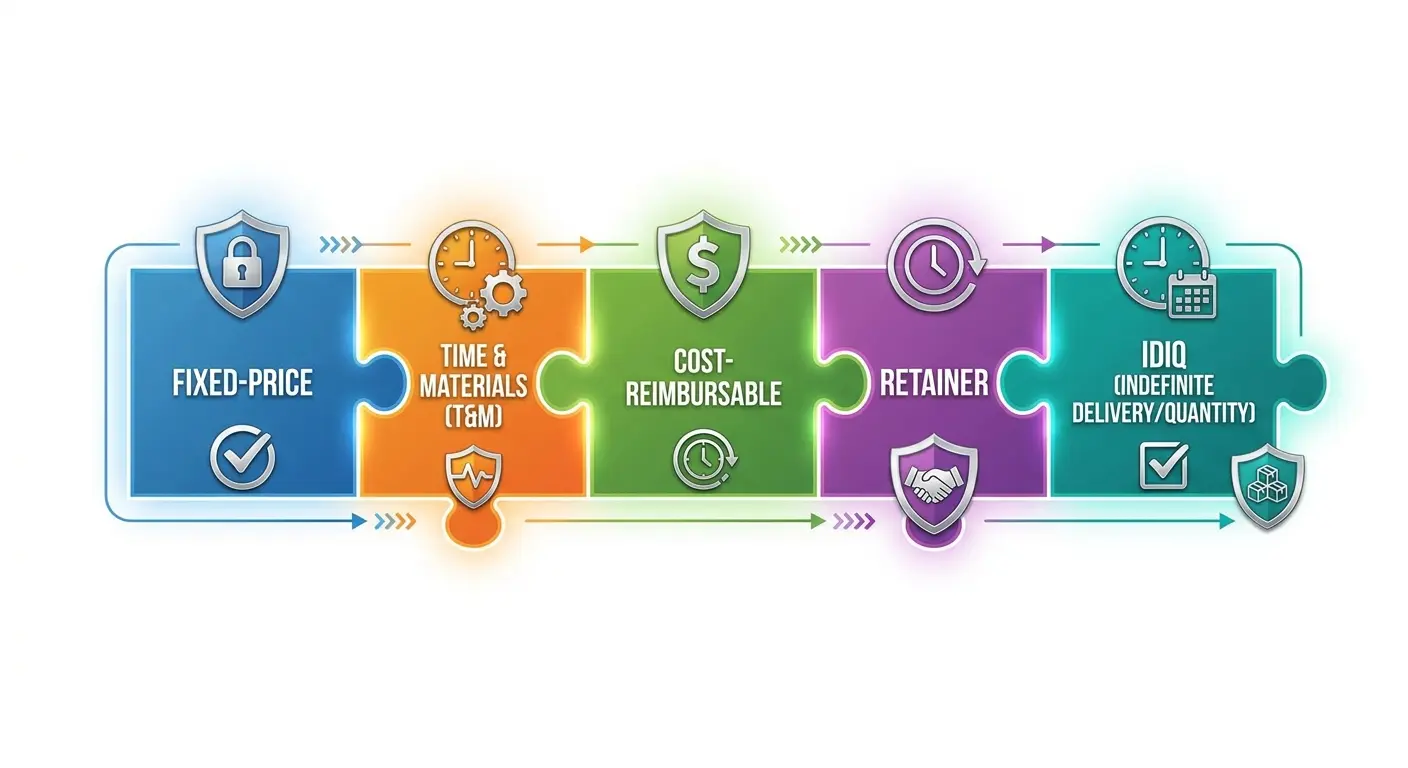
1. Marketing Services Agreement
Your foundational client contract needs more than deliverables and payment terms. But here’s what most templates miss completely: communication cadence requirements.
You need explicit language about how often you’ll meet, who the primary contact is, and what happens when the client goes dark during a critical phase. I recommend including a clause that pauses timelines if you’re waiting on client materials or approvals beyond five business days. After that, the clock stops until they respond.
This has saved my ass more times than I can count. Client goes silent for a week and a half? Timeline extends by a week and a half. They can’t come back later claiming you’re late when they were the bottleneck.
Also address what “approval” means. Does an email count? Do you need sign-off from multiple stakeholders? Spell out that silence doesn’t equal approval, because I’ve seen too many projects derailed by the assumption that no feedback means everything’s fine. (Spoiler: it never means everything’s fine. It means they haven’t looked at it yet.)
This template should also clarify whether strategy recommendations are included or billed separately. That’s where scope creep starts. A client assumes strategic consulting is part of the package. You assumed you were executing their strategy, not developing it. Three weeks in, you’ve delivered $5,000 worth of strategic work you never invoiced for.
When establishing your agency’s operational framework, consider how your contract structure supports your broader business model, much like the systems outlined in our guide on how to start a marketing agency.
Define what’s included and what triggers additional fees. Make it boring and specific. List every deliverable. Define every term. Be so boring that there’s no room for interpretation. I know it’s not sexy, but you know what’s less sexy? Chasing a client for three weeks because your contract said “payment upon completion” and they’re arguing about what “completion” means.
2. Creative Project Contract
Creative work gets subjective fast, which makes revision limits and a clear definition of what constitutes a “round” of feedback absolutely essential.
I’ve seen projects balloon because a client considers line-by-line email edits as “just tweaks” rather than a full revision. State clearly: one round equals one consolidated feedback document, and anything beyond the agreed number (usually two to three rounds) triggers additional fees.
Here’s the thing about feedback rounds that nobody tells you: you need to make it the client’s responsibility to gather internal feedback before submitting it to you. This prevents the scenario where you incorporate feedback from the CMO, only to have the CEO reject everything two weeks later. You’ve now done the work twice and can only bill for it once.

I learned this lesson on a rebrand project back in 2020. The marketing director gave us detailed feedback, we incorporated everything, delivered the revised concepts. Then the founder (who hadn’t been involved in any previous conversations) decided he hated the direction and wanted to start over. We’d burned through both revision rounds fixing things the marketing director wanted, and now we were expected to do a complete overhaul for free.
Never again.
Also specify file formats, usage rights, and whether you’re providing source files or final deliverables only. Clients often assume they’ll get the working Photoshop files or raw footage. If that’s not part of your standard deliverable, say so upfront. Source files can be available for an additional fee if they want them, but that needs to be explicit.
The contracts that work best for creative projects include a detailed deliverables list with file specifications. Vague language creates vague expectations, which creates conflict.
3. Retainer Agreement
Retainer contracts fail when they’re vague about what “hours” cover.
Is strategy time included? What about meetings? Email responses? This contract needs a clear breakdown of included services and a process for tracking and reporting hours monthly. I send a simple report at the end of each month showing hours used, hours remaining, and what we spent time on. Takes me ten minutes and prevents 90% of potential disputes.
Address rollover policies upfront. Do unused hours expire, roll over indefinitely, or bank up to a certain limit? I recommend a use-it-or-lose-it policy with a 30-day notice requirement for pausing or ending the retainer. Month-to-month arrangements with no commitment make revenue forecasting impossible, and you’ll spend half your time wondering if next month’s retainer is actually happening.
Include a clause about rate increases. I do an annual review with 60 days notice, so I’m not locked into 2019 pricing in 2025. Your costs increase. Your expertise deepens. Your rates should reflect that. If a client has a problem with a reasonable annual increase, they’re not a client worth keeping.
Contracts for retainer work should also address what happens when a client consistently uses significantly more or fewer hours than allocated. If they’re regularly burning through their monthly allotment in two weeks, the retainer amount needs to increase or you need to discuss prioritization. If they’re consistently using 30% of their hours, the retainer should decrease or you’re essentially providing them an interest-free loan of your time.
4. Scope Change Authorization
This isn’t a full contract but an addendum template you’ll use constantly, which is why it’s one of the most valuable tools you can have ready.
When a client requests something outside the original agreement, you need a fast, formal way to document the change, the additional cost, and the timeline impact. This template should be a single page: description of the requested change, why it’s out of scope, the additional fee, and how it affects the delivery date.
Both parties sign it before you proceed.
The key here is speed and simplicity. If your scope change process requires a ten-page amendment, neither you nor the client will use it. You’ll end up doing extra work for free “just this once.” Then it happens again. And again. I’ve watched agencies lose tens of thousands of dollars this way because the friction of documenting changes was higher than the pain of absorbing them.
I keep mine to half a page with three fields: what changed, what it costs, when it pushes the deadline. Sign here. Done. Takes five minutes to fill out and eliminates any ambiguity about whether something was included in the original scope.
5. Influencer Partnership Contract
Influencer agreements need specificity around content approval, usage rights, and what happens if performance metrics aren’t met.
Outline exactly how many posts, stories, or videos you’re commissioning, the posting schedule, required messaging or hashtags, and whether you get approval rights before content goes live. Vague terms create situations where an influencer posts something off-brand or off-message, and you have no recourse.

Address exclusivity: can the influencer promote competing brands during the partnership period? If you’re paying them to represent your client’s product, you probably don’t want them posting about a competitor’s version three days later. (Yes, this has happened. Yes, it was a nightmare.)
Define the metrics you’re tracking (reach, engagement, conversions) and whether payment is contingent on performance or guaranteed regardless. I’ve seen partnerships implode because one side expected guaranteed payment while the other assumed compensation was performance-based. Neither side was wrong, they just never clarified the terms upfront.
This template should include language about FTC disclosure requirements, making it the influencer’s responsibility to include proper sponsorship disclosures. If they fail to comply and your client faces regulatory issues, that’s on them, not you. Get it in writing.
Also specify whether you can repurpose their content on your own channels and for how long. Can you use their posts in case studies? On your website? In pitch decks to other potential clients? I once had an influencer threaten legal action because we used a screenshot of their sponsored post in a presentation to a prospective client. Our contract didn’t address it. Now it does.
Internal Operations Contracts That Keep Teams Aligned
Most agencies skip formal contracts with freelancers, subcontractors, and vendors because these feel like internal relationships.
That’s exactly when things go sideways.
Without clear agreements, you get freelancers who miss deadlines because they didn’t realize they were firm. Subcontractors who ghost mid-project. Vendors who deliver subpar work with no recourse. Then you’re scrambling to fix the problem while a client project burns, and you’re the one who looks unprofessional even though someone else dropped the ball.
These five templates establish expectations, protect your client relationships, and ensure everyone understands their role in the delivery chain. The language here focuses on preventing the “I didn’t know I was supposed to…” conversations that happen when a project is already on fire.
Internal contracts matter as much as client-facing ones. Maybe more, because when internal relationships fail, client relationships fail too. And you’re the one left holding the bag.
6. Freelancer Onboarding Agreement
This template covers the ongoing relationship with a freelancer you’ll use repeatedly, not just a one-off project.
Include payment terms (I do net 15), how you’ll communicate project assignments, expected turnaround times, and quality standards. Be specific about what “quality” means. If you need AP style, say so. If you require specific software versions, list them. I once had a freelance designer send me files in a version of Adobe CC I didn’t have, and we lost half a day to compatibility issues.
Address availability: do you expect them to prioritize your work, or are they juggling multiple clients? Neither answer is wrong, but you need to know which situation you’re in. If they’re balancing five clients and you’re assuming they’ll drop everything when you have a rush project, someone’s going to be disappointed. (It’ll be you.)
This contract should clarify ownership of work product. It transfers to you upon payment. Include a non-solicitation clause so they can’t poach your clients. Three years ago, I had a freelance designer (I’ll call her Sarah) who did beautiful work. She also, it turns out, had been emailing our clients directly offering to do “the same work for 40% less if you cut out the middleman.” That middleman comment stung. But more than that, she violated the trust of the relationship. The non-solicitation clause exists now because apparently people need to be explicitly told that poaching clients is not cool.
Also outline your feedback and revision process, so they understand how many rounds to expect and what level of detail you provide. Include a termination clause that allows either party to end the relationship with 30 days notice. Relationships end. That’s fine. But give each other enough runway to wrap up current projects and find replacements.
7. Subcontractor Service Contract
Subcontractors handle specialized work you can’t do in-house, which means quality control is critical.
This contract needs detailed deliverable specifications, deadline requirements, and a clear process for what happens if work doesn’t meet standards. Include a clause that allows you to reject work and withhold payment until it’s corrected, with a defined timeline for revisions.
Address confidentiality, since subcontractors will likely see client information and strategy. They can’t share that information with anyone, including in their own marketing or case studies, without explicit permission.
Before establishing subcontractor relationships, ensure you have a comprehensive understanding of your agency’s operational structure, including the approaches detailed in our agency case study that examines successful contractor management.
Include an indemnification clause that protects you if their work causes legal issues: copyright infringement, data breaches, defamation. If they create the problem, they’re responsible for the consequences, not you. I’ve had to invoke this clause exactly once, when a subcontractor used stock photos they didn’t have licenses for. The client got a cease-and-desist letter from Getty Images. The subcontractor paid the settlement. Not us.
Specify whether they can use the work in their portfolio and if so, whether they can name your client or just show the work anonymously. Some clients have strict confidentiality requirements that extend to everyone who touches their projects.
This template should also address what happens if they can’t complete the work. Do they need to find a replacement? Can you bring in someone else and bill them for the difference in cost? What’s the notice period if they need to back out? I’ve had subcontractors ghost mid-project more than once. Now the contract specifies that if they bail without 72 hours notice, they’re liable for any additional costs I incur finding a replacement.
8. Non-Disclosure Agreement (NDA)
NDAs protect sensitive information, but most templates are too broad to enforce or too narrow to be useful. Focus yours on specific categories of protected information: client lists, pricing structures, proprietary processes, unreleased campaign strategies, and any client data you share. Generic language about “confidential information” doesn’t hold up well if you ever need to enforce it.
Define how long the NDA remains in effect. Typically two to five years, depending on the type of information. Also address what happens to confidential materials when the relationship ends: return them or destroy them, with written confirmation.
Include exceptions for information that’s already public, independently developed, or required to be disclosed by law. Without these carve-outs, you’re putting the other party in an impossible position if they’re ever subpoenaed or audited.
Make sure the NDA is mutual if you’re entering a partnership where both parties will share sensitive information. One-sided NDAs work when you’re the only one sharing confidential material, but equal partnerships need equal protection.
Keep it to two or three pages maximum so people actually read it before signing. I’ve seen 15-page NDAs that no one reads and therefore no one follows. The templates that work are clear and concise.
Unpopular opinion: I don’t use NDAs before discovery calls. Everyone says you should, but if your business model can be stolen in a 30-minute conversation, you don’t have a business model. You have a to-do list. NDAs before you’ve even qualified the client make you look paranoid and create friction. I save them for when we’re actually sharing proprietary information.
9. Project Handoff Protocol
This template documents the transition when you’re passing a project to another team member or wrapping up a client engagement.
It’s not a traditional contract but a structured agreement about what gets delivered, in what format, and by when. Include a checklist of all project assets: files, passwords, documentation, brand guidelines. Specify where they’ll be stored and who’s responsible for organizing them.
Address knowledge transfer. Will there be a handoff meeting? Written documentation? Training sessions? How much time is allocated for questions after the official handoff?
Clarify when the handoff is considered complete and who’s responsible for any issues that arise after that point. This prevents the scenario where a client emails six months later asking for a file, and nobody knows where it is or who handled it.
I’ve lost hours (probably days at this point) to archaeology projects, digging through old drives and email threads trying to find assets that should have been properly archived. The templates that include handoff protocols save you from that waste. Now I have a standard folder structure and a handoff checklist that takes maybe 20 minutes to complete but saves hours of future confusion.
10. Vendor Partnership Agreement
Vendor agreements cover ongoing relationships with service providers: hosting companies, software platforms, printing services, media buyers.
This contract should outline service level expectations, response times for support issues, and what happens when something breaks. If their server goes down and takes your client’s website with it, what’s the recourse? If a print job gets botched two days before a major event, who covers the rush reprint costs?
Include pricing terms and whether rates are locked for a specific period or subject to change with notice. I’ve been burned by vendors who raised prices mid-project with no warning, throwing our entire budget off. Now I require 60 days notice for any price increases, and if I don’t agree to the new rates, I can terminate without penalty.
Address liability clearly. If their service failure causes you to miss a client deadline, what compensation do you receive? Most vendors try to limit liability to the amount you paid them, which doesn’t cover the damage to your client relationship or the revenue you lose when a project fails. Push back on this. You won’t always win, but try.
Include termination terms and data portability, so you can move to another vendor without losing access to your information or being held hostage by proprietary formats. I’ve seen agencies stuck with terrible vendors because extracting their data would cost more than enduring bad service for another year.
Specify billing cycles and payment methods, and whether you’ll be invoiced or charged automatically. Surprise charges that hit your account without warning create cash flow problems. I prefer to be invoiced so I can review charges before they hit my account.
These templates for vendor relationships should also address performance reviews. Schedule quarterly or annual check-ins to discuss service quality, pricing adjustments, and whether the partnership still makes sense for both parties.
Revenue Protection Templates Most Agencies Overlook
This is where you recoup money you’re currently leaving on the table.
These five templates address situations where work happens but payment doesn’t, or where you deliver value but don’t capture the financial upside: kill fees for cancelled projects, late payment penalties that actually get enforced, IP rights transfers that ensure you’re compensated when clients want to own your creative work outright, termination agreements that protect you when a client bails mid-project, refund policies that set clear boundaries on what is and isn’t refundable.
Most agencies avoid these conversations because they feel awkward or aggressive. The result is thousands of dollars in lost revenue annually, absorbed as “the cost of doing business.”
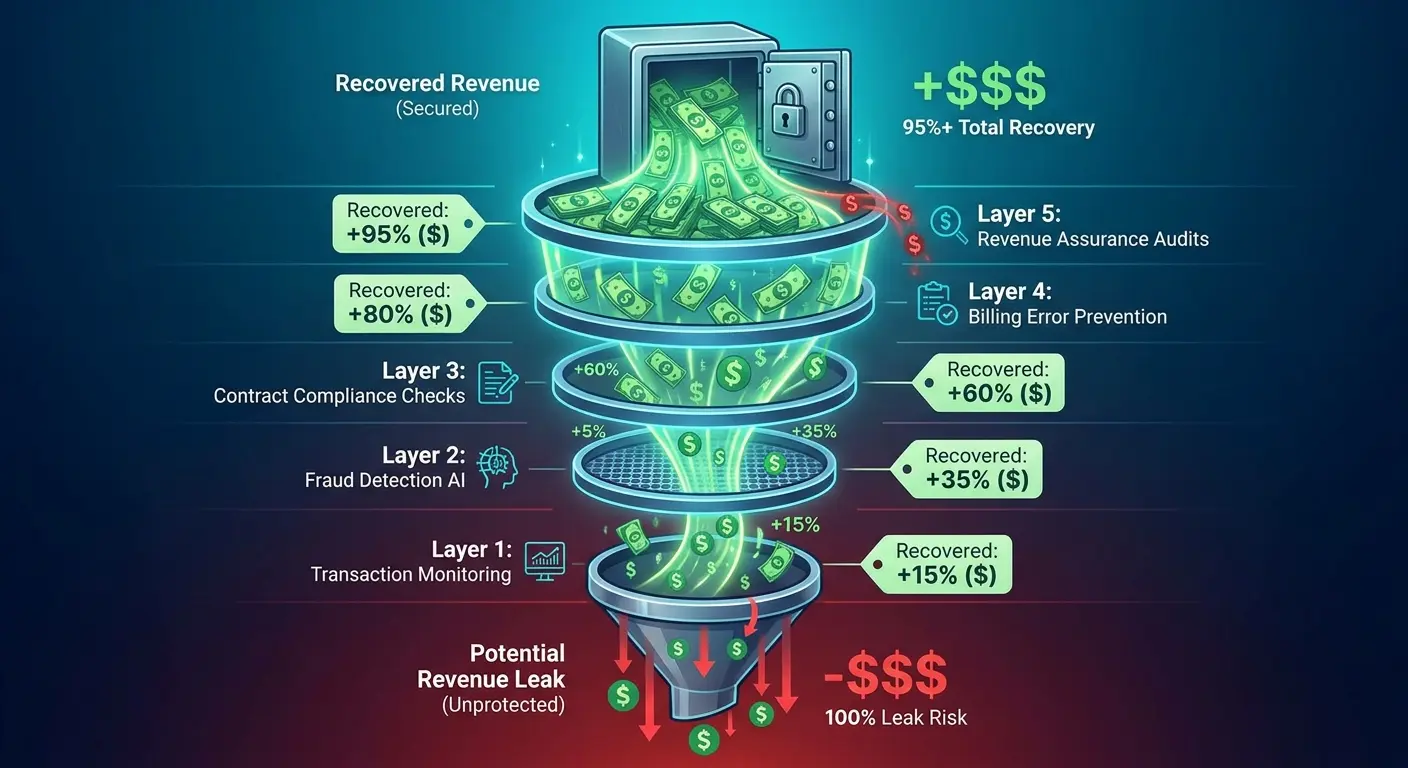
These templates make the conversations easier by establishing the terms upfront, before emotions or urgency take over. You’re not being difficult. You’re being professional. And frankly, clients who balk at reasonable revenue protection terms are usually the ones you’ll wish you’d never worked with.
11. Kill Fee Agreement
I learned about kill fees the expensive way.
Had a client cancel a project six weeks in, right after we’d delivered the strategy deck but before we’d started execution. They’d decided to “go in a different direction” (which I later learned meant they hired someone cheaper). We’d done probably 40 hours of work at that point. I invoiced for it. They paid for maybe 10 hours and said the rest was “speculative” since we hadn’t delivered final assets.
I had no recourse because the contract didn’t address cancellation.
Lesson learned: $8,000 later.
Now every contract includes a kill fee clause: if you cancel after work begins, you pay for everything completed plus 50% of what remains. That 50% covers the opportunity cost, the other projects I turned down to work on yours.
Some clients push back on this. “What if your work is bad and we need to cancel?” Fair question. The answer: if I deliver work that doesn’t meet the agreed specifications, you don’t pay for it. But if you’re canceling because you changed your mind, ran out of budget, or found someone cheaper? That’s a you problem, not a me problem. And you’re paying the kill fee.
This template should be part of your initial contract or a standalone addendum. Specify that if a project is cancelled, you’re entitled to payment for all work completed to date, plus a percentage (I do 50%, some agencies go as low as 25%) of the remaining contract value.
The percentage depends on how far into the project you are and how much capacity you’ve reserved. If you’re 80% complete, you should receive closer to the full remaining amount. If you’re 20% in, a smaller percentage makes sense, but you still deserve compensation for the opportunity cost of turning down other work.
Include a timeline component. If the client cancels within 48 hours of the start date, you’re still owed a minimum fee because you’ve blocked off capacity and potentially declined other projects.
Address what happens to work product if a kill fee is paid. Do they get to keep what you’ve created, or does it remain your property? I let them keep work completed through the cancellation date, but anything in progress or not yet started stays with me. I might use it for another client. Or I might not. Either way, it’s not theirs.
Kill fee invoices are due immediately, not net 30. You’ve already been screwed by the cancellation. You’re not financing their exit too.
12. Late Payment Terms Addendum
Late payments kill cash flow, but most contracts have vague language with no consequences for delays.
This addendum specifies exactly when payment is due (net 15, net 30, whatever you’ve agreed to) and what happens if it’s late. Include a grace period. I use five days before penalties kick in, then assess a late fee. 1.5% per month is standard, which equals 18% annually.
State clearly that work may be paused if payment is more than 15 days overdue, and that you reserve the right to require prepayment for future work if a client develops a pattern of late payment.
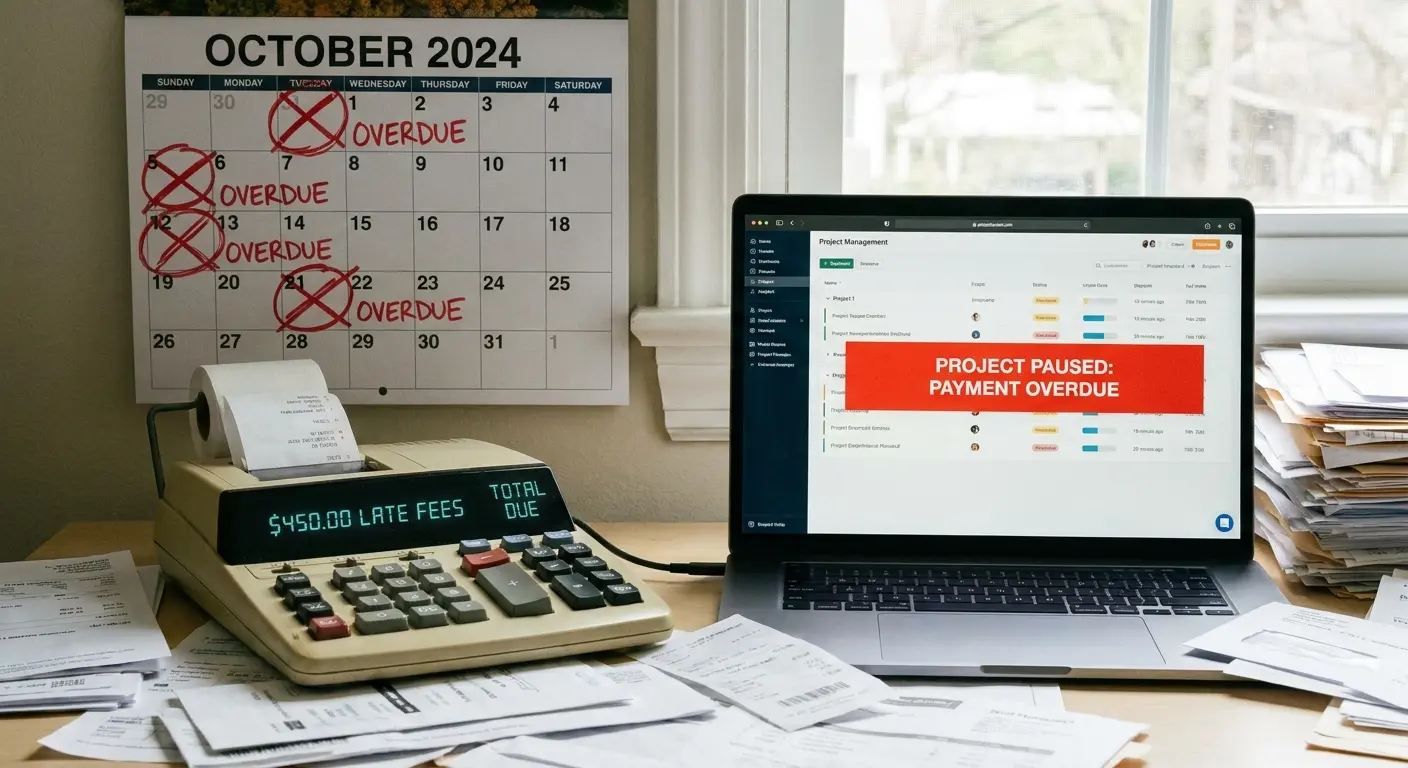
Some people think late fees are aggressive. Those people have never had their rent payment delayed because a client decided “net 30” was a suggestion. It’s not aggressive. It’s called running a business. You’re not a bank, and you shouldn’t be financing your clients’ operations.
I’ve had clients who consistently paid 45-60 days late, treating our payment terms as suggestions. After implementing late fees, most started paying on time. The ones who didn’t at least compensated us for the cash flow impact. And honestly? A few of them we eventually fired because chronic late payment is a sign of deeper problems.
Contracts that include enforceable late payment terms also give you leverage in collections conversations. When a client pushes back on a late fee, you can point to the signed agreement. They knew the terms. They chose to pay late. The fee stands.
You’re going to feel like an asshole the first time you enforce a late payment fee. Do it anyway. I promise you, the client who pays 60 days late without consequences will keep doing it. The one who gets hit with a fee? Suddenly they can pay on time.
13. Intellectual Property Rights Transfer
By default, you own the creative work you produce until you explicitly transfer those rights.
This template outlines the terms under which IP ownership moves to the client. I recommend a tiered approach: clients get usage rights automatically, but full ownership (including the ability to modify, resell, or transfer the work) requires an additional fee, typically 25-50% of the project cost.
Specify what you’re transferring. Finished deliverables only, or source files too? Can they use the work in perpetuity, or for a limited term? Some agencies license work for specific periods or use cases, requiring clients to pay again if they want to extend or expand usage.
Address attribution and portfolio rights. Even if they own the work, can you still show it as an example of your capabilities? Most clients are fine with this, but some have strict confidentiality requirements that prevent any public acknowledgment of the relationship.
Include a clause that IP transfer only occurs once full payment is received. If they haven’t paid, they don’t own it. This gives you leverage in payment disputes and prevents clients from using your work without compensating you.
I once had a client use designs we’d created in a national campaign before they’d paid the final invoice. We sent a cease-and-desist, they paid within 48 hours. The IP transfer clause gave us the legal standing to do that.
14. Client Termination Contract
When a client relationship isn’t working, you need a clean exit that protects both parties.
This template outlines the termination process: required notice period (I use 30 days for small projects, 60 for retainers), payment for work completed through the termination date, and what happens to in-progress projects.
Address whether the client can complete projects with another provider using your work-to-date, and if so, what they owe you for that work. I typically charge for all completed work at full price, plus a transition fee that covers the time required to document and hand off in-progress items.
Include a non-disparagement clause that prevents both parties from publicly trashing each other after the split. Relationships end. That’s fine. But neither side should damage the other’s reputation out of frustration or spite. I’ve had to invoke this clause twice when former clients tried to badmouth us in industry groups after we parted ways.
Specify how you’ll handle transition logistics: final deliverables, file transfers, account access, and any ongoing obligations such as hosting or maintenance. Create a detailed checklist so nothing falls through the cracks.
Make it clear that termination doesn’t void payment terms for work already completed. I’ve had clients try to use termination as leverage to negotiate down final invoices. The contract should state that all outstanding invoices remain due regardless of termination. You did the work. You get paid for it. End of story.
15. Refund Policy Agreement
Refund policies prevent the nightmare scenario where a client demands their money back after you’ve delivered the work, claiming they’re “not satisfied.”
This template should be part of your initial contract. State clearly what is refundable (typically only deposits for projects that haven’t started) and what isn’t (strategy work, completed deliverables, time-based services).
If you offer satisfaction guarantees, define exactly what that means. You’ll revise the work until it meets the agreed specifications, but you won’t refund payment because the client changed their mind about the direction.
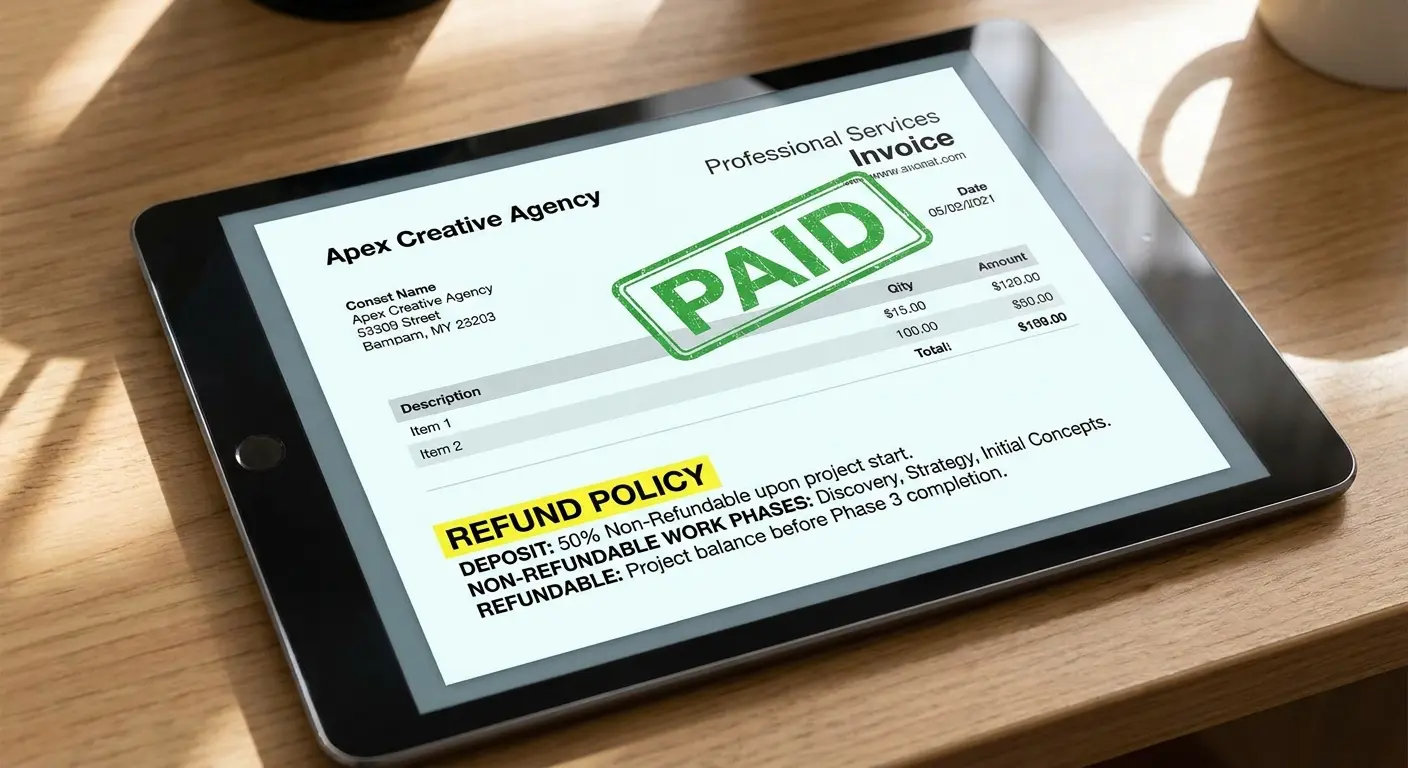
Include a timeline: refund requests must be submitted within X days of project completion. After that window closes, all sales are final. I use 14 days for most projects, 30 for larger engagements.
Address partial refunds and what circumstances might warrant them. If you’ve completed 60% of a project and the client wants to terminate, they’re not entitled to a 100% refund. They pay for work delivered.
I’ve found that clear refund policies actually increase client confidence. They know exactly what they’re agreeing to and what recourse they have if things don’t work out. Vague policies create anxiety and disputes. Specific policies create clarity.
Specialty Situations That Need Their Own Framework
These four templates cover edge cases that don’t fit standard agreements but happen often enough that you need a ready-made solution.
Emergency services when a client needs something immediately. Pro bono work that still requires clear boundaries. Test projects that might lead to larger engagements. Referral fees when you’re connecting clients with other service providers.
Each of these situations has unique dynamics that make standard contracts inadequate. Emergency work requires premium pricing and compressed timelines. Pro bono requires scope limits to prevent it from consuming your capacity. Test projects need clear conversion terms. Referral arrangements need payment structures and relationship boundaries.
Having templates ready for these scenarios prevents you from winging it and regretting the terms later. (Ask me how I know.)
16. Emergency Services Contract
Emergency requests come with urgent timelines and disrupted schedules, which means premium pricing.
This template should include a rush fee. I charge 100% above my standard rate for true emergencies (delivery within 24-48 hours). Some agencies go as low as 50%, but I figure if you’re asking me to drop everything and work through the night, you’re paying double.
Specify that emergency work takes priority over other projects, and that you can’t guarantee availability without advance notice. You’re not sitting around waiting for rush jobs. If you can accommodate the request, great. If not, the client needs to understand that urgency doesn’t create capacity.

Include condensed payment terms: 50% upfront, 50% upon delivery, with payment due immediately rather than net 30. Emergency work carries risk. You’re deprioritizing other clients and potentially working nights or weekends. That risk requires upfront compensation.
Address the scope tightly, because there’s no time for scope creep on rush jobs. What you’re delivering is what you agreed to in the initial conversation. No additions, no changes, no “while you’re at it” requests.
Make it clear that the premium pricing reflects not just faster delivery but the opportunity cost of deprioritizing other clients and working outside normal hours. I once had a client balk at the rush fee, saying “it’s the same work, just faster.” Yeah. That’s the point. Faster costs more.
17. Pro Bono Work Agreement
Pro bono work still needs a contract. Maybe more than paid work does.
This template should specify exactly what you’re providing, the timeline, and crucially, what’s not included. Without boundaries, pro bono projects expand infinitely because there’s no financial constraint to keep scope in check.
State the deliverables clearly and include firm revision limits. One round, maybe two. After that, additional changes require payment at your standard rates. I learned this after doing six rounds of revisions on a pro bono logo project because “it’s for a good cause” and I felt guilty saying no.
Address response time expectations. You’ll fit this work around paid projects, so turnaround may be longer than your standard timeline. The organization needs to understand that free work doesn’t come with the same service levels as paid engagements.
Include an end date or project completion milestone so the relationship doesn’t drift into ongoing free consulting. I’ve seen pro bono arrangements that started as a single project turn into years of unpaid advice because nobody defined when the engagement ended.
Pro bono work requires the same strategic planning as paid engagements, and understanding how to structure these relationships properly can benefit from insights shared in our marketing case study collection.
Specify usage rights and whether you can showcase the work in your portfolio. Most nonprofit organizations are happy to be featured, but confirm before you publish case studies or examples.
Most importantly, include a clause that if the organization’s circumstances change (they secure major funding, get acquired, merge with a larger entity), the arrangement converts to paid work at your standard rates. You’re providing free services because they lack resources, not because your work has no value.
18. Test Project Contract
Test projects let potential clients evaluate your work before committing to a larger engagement, but they need structure to be worth your time.
This template should define the test project scope tightly. Usually a small, representative piece of the larger work they need. Price it fairly. Discounted but not free. If they’re not willing to pay something, they’re not serious about the larger engagement. I’ve done exactly two free test projects in my career. Neither converted. Lesson learned.
Include conversion terms. If they move forward with the full project, does the test project fee apply as a credit? I typically offer 50% of the test project cost as a credit toward the larger engagement if they commit within 30 days.
Specify a decision timeline. They have X days after receiving the test project deliverables to commit to the larger engagement, or the discounted pricing expires. This prevents prospects from using test projects as a way to get cheap work with no intention of moving forward.
Address ownership. Do they keep the test project work regardless of whether they move forward? I say yes, since they’ve paid for it, but clarify that it’s licensed for their use, and you retain portfolio rights.
Also include language about what happens if they don’t move forward. Can you pitch the same strategic approach to their competitors? Can you repurpose the work for other clients? These questions matter if you’re developing custom strategies or creative concepts.
19. Referral Fee Agreement
When you refer a client to another service provider (or vice versa), a referral agreement protects both parties and clarifies the financial arrangement.
Specify the referral fee structure. Flat fee, percentage of the first project, percentage of the first year’s revenue, or tiered based on project size. Each approach has pros and cons. Flat fees are simple but don’t scale with project value. Percentages are fair but require transparency about project costs. I typically do 10-15% of the first project value.
Address when payment is due. After the referred client signs a contract? After their first payment? After project completion? I recommend tying referral fees to actual payment, not just signed contracts, because contracts don’t always convert to revenue. I’ve been burned by this. Client signs, I pay the referral fee, client never pays the invoice. Now I’m out the referral fee and the project revenue.
Include a time limit. The referral fee applies to work that begins within X months of the introduction (typically 6-12 months). This prevents situations where someone claims a referral fee for a client they introduced years ago who’s only now moving forward.
Clarify whether the fee is a one-time payment or ongoing for the duration of the client relationship. One-time is simpler and cleaner. Ongoing creates long-term obligations and tracking requirements. I stick with one-time unless it’s a retainer situation where ongoing makes more sense.
Include language about client ownership. The referral fee doesn’t give you any claim to the client relationship, and the receiving party is free to work with them directly going forward. You’re being compensated for the introduction, not for ongoing management or oversight.
Address confidentiality. You won’t disclose the referral arrangement to the client unless both parties agree. Most clients don’t need to know you’re receiving a referral fee, and revealing it can create awkwardness or questions about objectivity.
Final Thoughts
Look, I’m going to give you 19 templates, but honestly? You need five of them. The rest are for edge cases that might come up twice a year. Start with these five: Marketing Services Agreement, Creative Project Contract, Scope Change Authorization, Kill Fee Agreement, and Late Payment Terms. Get those solid before you worry about pro bono agreements or referral fee structures.
The templates themselves matter less than understanding why each one exists and what specific problem it solves. You could download all 19 tomorrow and still end up in disputes if you’re using them as formalities rather than frameworks for how you want to work.
I’ve walked through contract scenarios covering everything from standard client work to edge cases you’ll encounter maybe twice a year but need to handle professionally when they arise. The thing is, having 19 contract templates ready doesn’t help if you’re not sure when to use each one or how to customize them for your specific situation.
Contracts aren’t just legal protection. They’re operational tools that shape how projects run. They document the relationship you want to have with clients, not just the legal obligations you’re creating.
The Marketing Agency understands that contracts are about creating clarity that makes projects run smoother and relationships last longer. Most contract disputes happen because expectations were never truly aligned, not because someone acted in bad faith. If you’re building out your agency’s systems and want to see how experienced teams structure client relationships and project agreements to prevent problems before they start, check out their approach to service delivery and client onboarding.
These 19 templates aren’t about being litigious or difficult. They’re about creating clarity. Customize these templates to reflect your processes, pricing, and boundaries rather than using generic language that sounds professional but doesn’t match reality.
You’re going to read this, nod along, maybe even download a few templates. Then you’re going to skip using them on the next project because the client seems great and you don’t want to slow down the sales process with “a bunch of legal stuff.”
Don’t do that.
I’ve been doing this for over a decade, and I can tell you with absolute certainty: the client who bristles at signing a clear contract is the same client who’s going to make your life hell during delivery. The red flags are there. The contract process reveals them.
Good clients appreciate clear agreements. They want to know what they’re getting, what it costs, and what happens if things go sideways. Bad clients want everything to be loose and flexible because they’re planning to take advantage of that flexibility.
Start with the client-facing agreements since those have the most immediate impact on revenue and project health. Build out the internal and specialty templates as you encounter situations that need them. Having a template ready before you need it in a crisis is the difference between protecting yourself and scrambling to figure out fair terms while emotions are running high and a project is already burning.
Use the damn contracts. Enforce the terms. Fire the clients who won’t respect them. Your sanity is worth more than their project fee.
Now go download these templates and actually use them. Future you will thank present you.