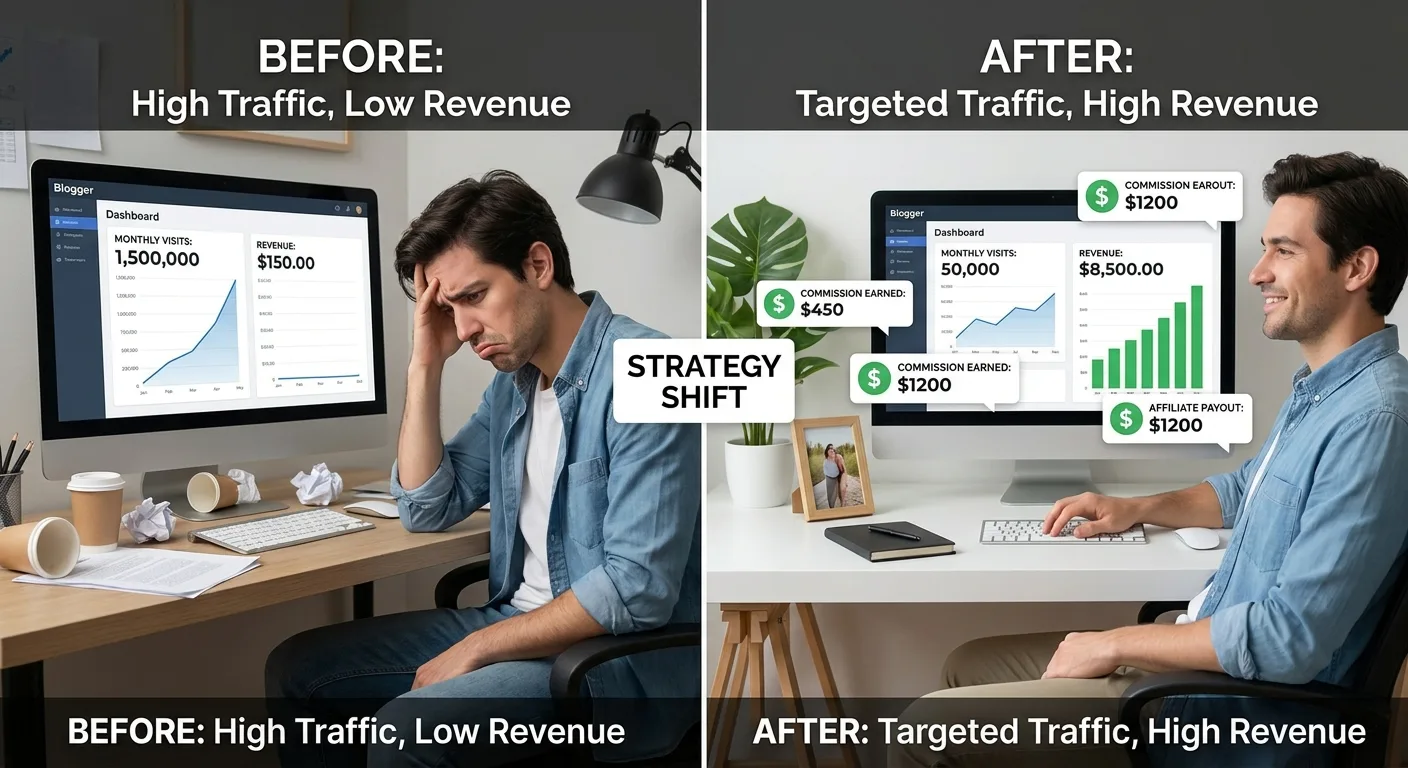



Traffic’s up 40% year-over-year. You’re ranking for 200+ keywords. Sessions keep climbing. Then you open your affiliate dashboard and… $340. Same as three months ago when you had half the traffic.
What the hell?
Your content’s probably fine. SEO? Also fine. The problem is simpler: you’re pulling in the wrong people. Most blog affiliate marketing strategies optimize for high-volume, low-intent keywords that attract researchers, not buyers. You’re getting thousands of visitors who have zero purchase intent and nearly zero conversion probability.
Over 70% of affiliate marketers expected their revenue to grow in 2024, but that didn’t happen for most of them. Traffic increases don’t translate to income when you’re attracting visitors who aren’t ready to buy.
Here’s what actually works: stop chasing traffic volume, start tracking revenue per visitor, and figure out which content brings people ready to buy. Intent mapping, attribution correction, and content refresh cycles. This isn’t about working harder or publishing more. You need to measure differently and target differently.
Table of Contents
- The Revenue Mismatch: Why Your Top-Performing Posts Generate the Fewest Sales
- Search Intent Calibration: Mapping Content to Purchase Readiness
- The Attribution Problem Nobody Solves: Why Last-Click Tracking Hides Your Best Content
- Content Decay and the Refresh Cycle That Protects Commissions
- Audience Segmentation: When One Blog Tries to Serve Too Many Revenue Streams
- Measuring What Drives Income: Beyond Click-Through Rates
- Working with The Marketing Agency
- Frequently Asked Questions
- Final Thoughts
TL;DR
The Revenue Mismatch: Why Your Top-Performing Posts Generate the Fewest Sales
Your analytics and your bank account are telling completely different stories.
That post pulling 12,000 visits? Makes you $100. That weird comparison post on page three? Gets 400 visits, makes you $550. SEO tools won’t show you this because they’re programmed to worship traffic volume. They push you toward informational queries that attract researchers, not buyers.
Take what is affiliate marketing as an example. It ranks well, generates clicks, pulls in visitors who are exploring the concept. They’re not buying anything. They’re learning whether this revenue model even makes sense for them. You’ve optimized for Google’s favor rather than reader purchase readiness.
Publishers celebrate rankings without connecting them to actual commission data. The result is brutal: 10,000 visits from researchers generate less revenue than 500 from ready buyers. Affiliate marketing influences approximately 16% of online orders in the United States, which means most blog on affiliate marketing strategies spend effort capturing the other 84% of search traffic that never converts.
Why Your Analytics Mask the Real Problem
Google Analytics shows sessions and page views. Cool. None of that tells you who’s actually going to buy.
Traffic sources matter more than traffic volume. Organic from “best product for X” converts better than organic from “how X works,” but your dashboard design encourages celebrating the wrong wins.
Affiliate clicks are buried in event tracking, rarely connected to content performance. You optimize what’s visible, not what pays.
The platforms themselves reinforce this pattern. Standard analytics configurations show engagement metrics because those are easier to measure and trend positively. Commission data sits in a separate affiliate network dashboard, rarely cross-referenced with content performance. You end up with two disconnected reporting systems: one that tells you what’s popular, another that tells you what earns.
Volume Versus Value: The Math Nobody Wants to Do
Revenue per visitor is the core metric. Divide total affiliate commissions by total visitors. Compare RPV across posts to identify which content actually earns. High-volume posts with low RPV drag down overall blog performance.
Here’s the scenario: 5,000 visits at $0.02 RPV equals $100. Meanwhile, 300 visits at $1.50 RPV equals $450. Most publishers never segment traffic by conversion potential. Reallocating content investment toward high-RPV topics multiplies income without increasing total traffic.
| Content Type | Monthly Visitors | Revenue per Visitor | Total Monthly Revenue |
|---|---|---|---|
| “What is affiliate marketing” (informational) | 5,000 | $0.02 | $100 |
| “Best affiliate programs for bloggers” (evaluation) | 300 | $1.50 | $450 |
| How-to tutorial (educational) | 2,800 | $0.05 | $140 |
| Product comparison (transactional) | 450 | $1.20 | $540 |
See the pattern? Volume and value almost never line up.
Real example: a tech blog with 80 posts covering software topics. The highest-traffic post about how to do affiliate marketing on blog pulled 12,000 monthly visitors and generated $240 in commissions ($0.02 RPV). The seventh-ranked post by traffic, a comparison of three project management tools, received 890 visitors and generated $1,246 at $1.40 RPV.
The publisher had spent six months updating the how-to guide, ignoring the comparison post entirely. Redirecting that effort toward expanding the comparison content category immediately changed their income trajectory.
If you’re looking to build a solid foundation for your own site, check out our guide on how to start a blog to get the technical and strategic setup right from day one.
Search Intent Calibration: Mapping Content to Purchase Readiness
Search intent breaks down four ways, but only two of them pay your bills: investigational and transactional.
The problem? Informational content is way easier to rank. So you keep writing it. Google rewards you with traffic. Readers learn something. Then they leave. Nobody buys anything.
Intent signals in queries are clear. “How to affiliate marketing on blog” is learning-stage content. “Best affiliate programs for bloggers” is selection-stage content. Conversion rates vary 20x or more between those intent stages.
Positioning your affiliate marketing blog toward later-stage queries sacrifices some traffic but multiplies revenue. Google’s algorithm updates in 2025 and 2026 have been particularly aggressive toward affiliate websites, making intent calibration more critical for maintaining rankings and revenue.

The Four Content Stages That Matter for Affiliate Income
Awareness stage: queries like “affiliate blog meaning” or “affiliate marketing easy” have the lowest conversion but are necessary for funnel entry. Readers don’t know enough yet to evaluate specific products.
Consideration stage: comparing approaches, exploring options, not yet selecting products. This is where readers decide what type of solution fits their needs before they narrow down to specific brands.
Evaluation stage: comparing specific products or programs. This has the highest affiliate conversion potential because readers have defined their requirements and are choosing between finalists.
Purchase stage: final objection handling, often happens on the merchant site rather than your blog. You’re less likely to capture this moment directly.
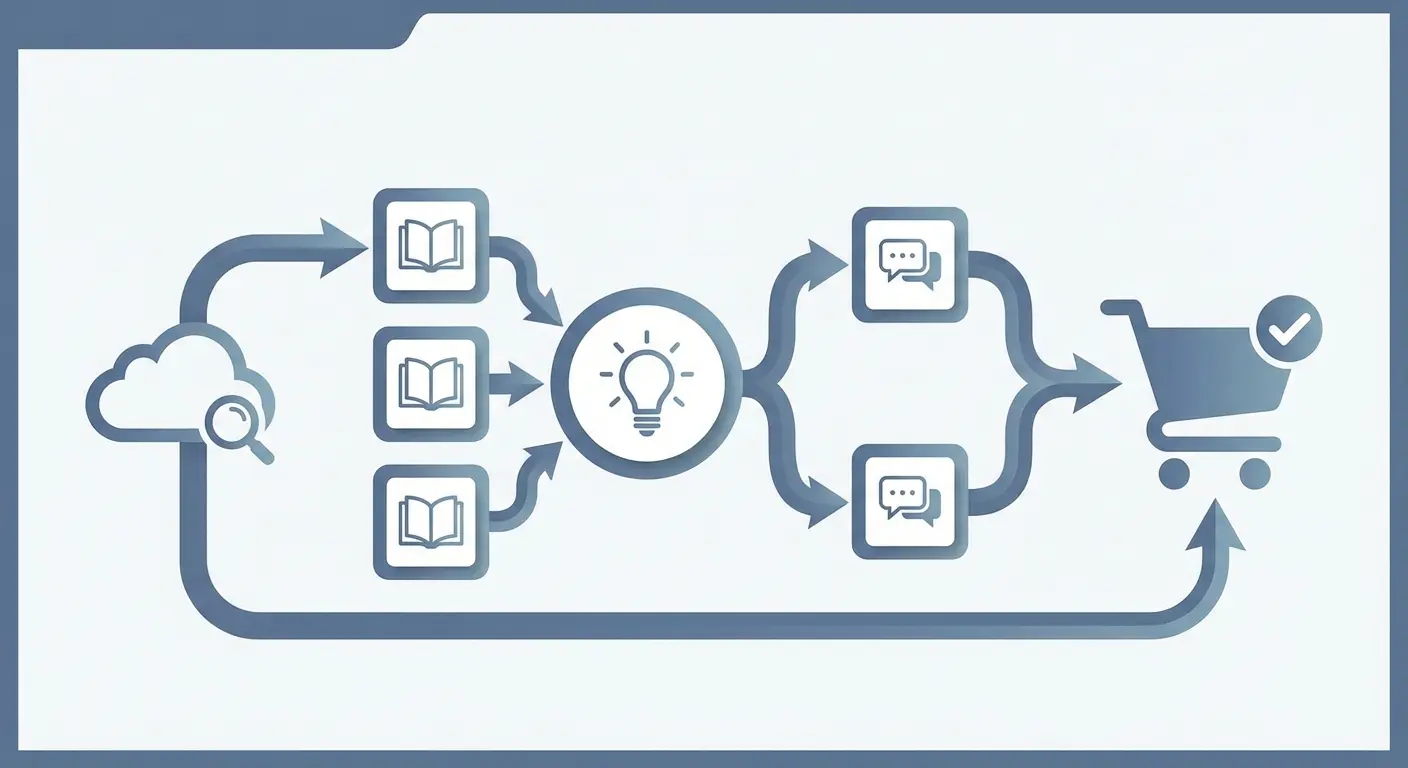
Most blogs produce only awareness content, leaving money in consideration and evaluation gaps. Internal linking should move readers from awareness toward evaluation. Starting a blog with affiliate marketing requires a hybrid structure: education early, product integration late.
You can’t skip awareness entirely because that’s how most readers discover your site. You can’t stay there if you want commissions. The funnel requires all four stages, properly sequenced and internally linked.
Search Intent Signals You’re Ignoring in Your Keyword Research
High-intent modifiers include “best,” “top,” “review,” “versus,” “alternative,” and brand names. Low-intent patterns include “how,” “what,” “guide,” “tutorial,” “tips.” Volume inversely correlates with intent: the highest-volume keywords have the weakest buying signals.
Affiliate marketing tips for beginners ranks well but attracts non-buyers. “[Product] review for [use case]” drives conversions. Filter keyword lists by modifier type before prioritizing production. Creating a blog for affiliate marketing should target evaluation-stage content, not how-to fundamentals.
Keyword Intent Classification Checklist:
- Does the query include a product-comparison modifier? (“best,” “top,” “versus,” “alternative”) → Evaluation stage, high priority
- Does it name a specific product or brand? → Late-stage research, high priority
- Does it ask “how” or “what”? → Awareness stage, funnel entry only
- Does it include “for beginners” or “tips”? → Low-intent educational content
- Is the search volume above 1,000/month with low modifiers? → Likely traffic trap, deprioritize
- Can you integrate a product recommendation naturally within 300 words? → Conversion-viable content
Run your entire keyword list through this filter before scheduling content production. Any keyword that fails the first two tests and passes the last three belongs in your awareness-only category. Awareness content should represent no more than 30% of your editorial calendar.
For the structural execution of each content stage, our resource on how to write a blog post covers the mechanics of table of contents design, CTA placement, and internal link architecture.
Content Structure for Each Stage
Awareness content is educational, broad, definition-focused, with minimal affiliate links. Evaluation content uses comparison tables, feature breakdowns, direct affiliate CTAs, and specific product recommendations.
The structural mistake publishers make is inserting affiliate links in how-to content before establishing product relevance. Table of contents should reflect whether the post is educational or transactional. Link placement timing affects trust: premature CTAs signal advertorial intent and lower conversion.
The table of contents itself telegraphs intent. If your TOC lists “What is X,” “How X works,” “Types of X,” readers expect education, not product pitches. If it shows “Best X for Y,” “X versus Z,” “Top X features,” they’re prepared for recommendations. Mismatching content structure to reader expectation kills conversion before they reach your first affiliate link.
The Internal Funnel Nobody Builds
Internal links should create intentional paths from awareness to evaluation. Most blogs link randomly or for SEO only, missing funnel potential. Strategic anchor text signals the next step: from a “what is affiliate marketing” post, link to “start a blog for affiliate marketing” with next-step framing.
Exit intent and related posts should prioritize higher-intent content. Track which internal paths lead to affiliate clicks. Siloing content by intent stage clarifies the reader journey.
Every awareness post should contain 2-3 contextual links to consideration or evaluation content. Every consideration post should link to at least one product comparison or review. Build these paths deliberately during content creation, not as an afterthought.
The readers who follow that path from awareness through evaluation represent your highest-converting traffic segment. Many publishers produce scattered content without these deliberate paths. Check out our piece on personal blog ideas as an example of awareness content that fails to create monetization paths unless you layer in strategic internal linking afterward.
The Attribution Problem Nobody Solves: Why Last-Click Tracking Hides Your Best Content
Most affiliate tracking uses last-click attribution. Only the final post before purchase gets credit. This model erases the value of trust-building content earlier in the journey.
Example: a reader discovers your blog through “how to create blog for affiliate marketing,” reads three comparison posts, then clicks an affiliate link from a product roundup. Only the roundup gets revenue credit. The content that introduced readers and built authority appears worthless in reports.
Multi-touch attribution reveals which posts assist conversions even when they don’t close. Most affiliate programs don’t offer multi-touch data, so you need internal tracking to see the full journey. Customers who click through a brand’s site via an affiliate publisher repeat purchases at a 21% higher rate, demonstrating that affiliate content builds long-term relationships, not just single transactions. Last-click attribution misses this entirely.
The Real Customer Journey on Your Blog
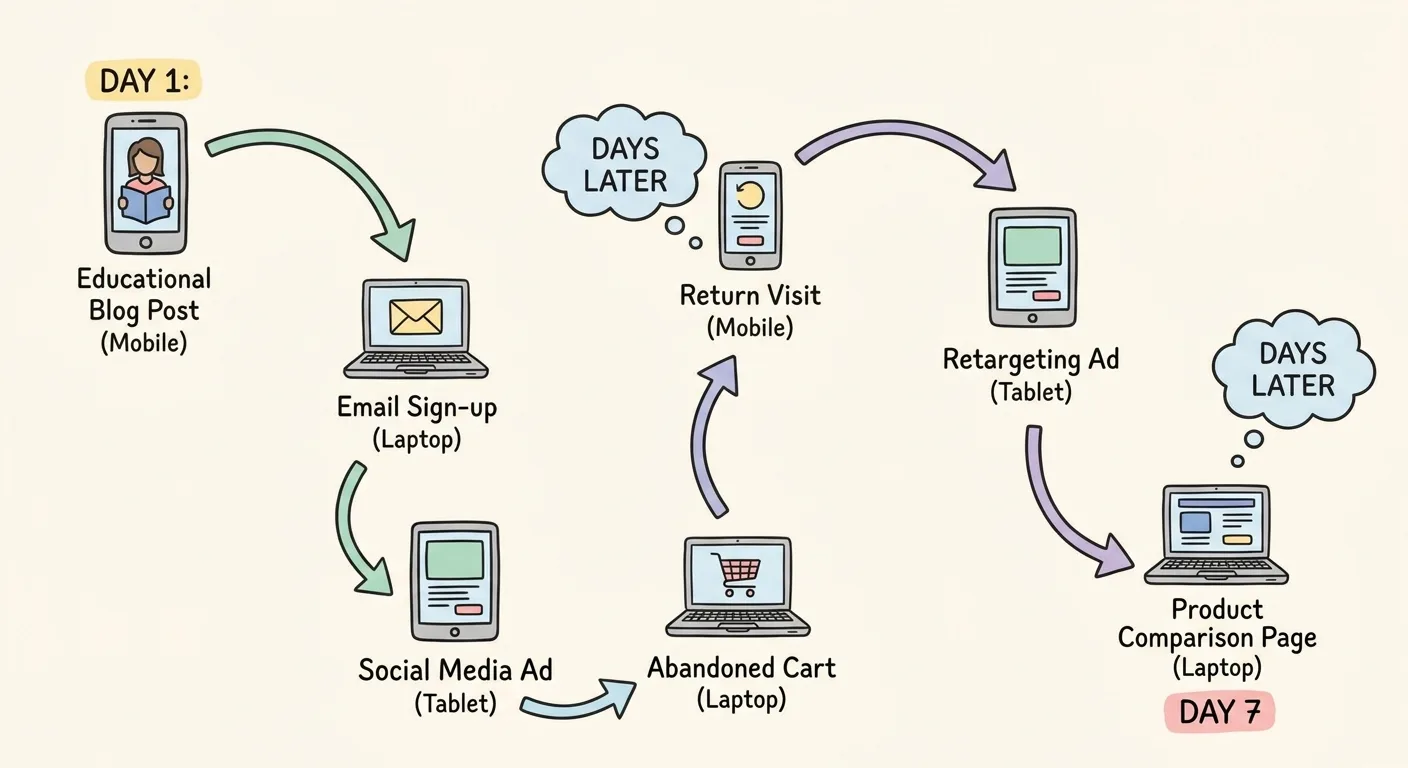
Buyers rarely convert on first visit. Multiple sessions and multiple posts are common. Entry happens through low-intent content, return for high-intent evaluation. Time lag between first visit and purchase ranges from days to weeks depending on niche and price point.
Readers bookmark comparison posts to review later, often using direct traffic on return. Traffic source changes across the journey: first visit organic, second direct, third social. How to use blog for affiliate marketing (educational entry) versus affiliate marketing blog example (evaluation content) serve different journey moments.
Content velocity matters. Publishing frequency keeps your blog top-of-mind during consideration periods.
The return visitor who arrives via direct traffic and immediately clicks your affiliate link appears in analytics as a zero-touch conversion. Standard tracking shows direct traffic and a commission, missing the three organic sessions and four posts they consumed over the previous two weeks. You credit the wrong content and underfund the actual driver.
A SaaS affiliate blog tracked user journeys manually for 90 days using UTM parameters and session recording. Of 127 conversions, only 23 (18%) happened on first visit. The median customer journey included 4.2 page views across 2.8 sessions over 11 days.
Most common entry point: educational post about software categories. Most common conversion point: product comparison. Last-click attribution credited the comparison posts with 100% of revenue, leading the publisher to consider cutting educational content entirely.
When they built out their educational category instead, 90-day revenue increased 34% because more readers entered and completed the full journey.
Content That Converts Versus Content That Assists
Converting content includes product reviews, comparison posts, “best of” roundups. These close sales. Assisting content includes tutorials, industry context, use cases. These build authority and introduce readers to converting content.
Measuring both by conversion rate misrepresents their function. Assisting content should be measured by time on page, scroll depth, internal clicks to converting content, and return visitor rate. Revenue attribution requires assigning partial credit to assists.
How to create a free blog for affiliate marketing posts assist: they rarely convert directly but feed the funnel. Budget and production effort should reflect the ratio of closers to assists your analytics reveal.
If 60% of your revenue comes from 15% of your posts, you don’t need more closers. You need more assists that fill the top of the funnel and move readers toward those high-converting posts.
Time Lag and the Patience Problem
Traffic responds quickly to ranking changes. Revenue lags by weeks. Buyer decision cycles vary by niche: software, hosting, financial products take longer than physical goods. Seasonal patterns affect both traffic and purchase timing.
New content takes time to build trust signals. Fresh posts convert lower than aged authority content. Publishers abandon content before it matures into revenue. Tracking cohorts by publish date reveals ramp-up timelines.
When to start affiliate marketing on blog? The answer is immediately, but expect revenue to follow traffic by 30-90 days. This lag explains why publishers get discouraged and shift strategy prematurely.
A post published in January might not hit its revenue potential until March or April, after it’s accumulated backlinks, aged in Google’s index, and built reader trust signals. Evaluating performance at 30 days misses the majority of its earning potential.
Content Decay and the Refresh Cycle That Protects Commissions
Content decay in affiliate marketing happens when product changes, availability shifts, pricing updates, new competitors emerge, or links rot. Posts that once converted start failing because information becomes stale.
Readers notice outdated details. Trust erodes. Conversions drop even when traffic stays stable. Most publishers write once and never return, leaving revenue on the table.
Refresh strategy should target posts with historical revenue, not just traffic. Affiliate marketing blog ideas should include update cycles as a core editorial calendar element. Decay happens faster in tech, software, and seasonal niches; slower in evergreen topics.
Example: a post written in 2024 recommending five project management tools might still rank in 2026. But if two of those tools changed pricing, one was acquired, and a better alternative launched, your recommendations are actively damaging trust. Readers who encounter outdated information don’t just skip the purchase, they leave and don’t return.
The Refresh Priority Matrix
Prioritize posts by historical revenue, not just traffic rank. High-revenue posts with declining traffic need immediate refresh because product details may be outdated. High-revenue posts with stable traffic need periodic review to maintain accuracy and check links.
Low-revenue, high-traffic posts require intent mismatch evaluation before updating. Low-revenue, low-traffic posts should be deprioritized or redirected. Track affiliate link click-through rates within posts; dropping CTR signals staleness.
Use tools to identify broken affiliate links and discontinued products. Best wordpress theme for affiliate marketing blog discussion should include update management as site infrastructure concern.
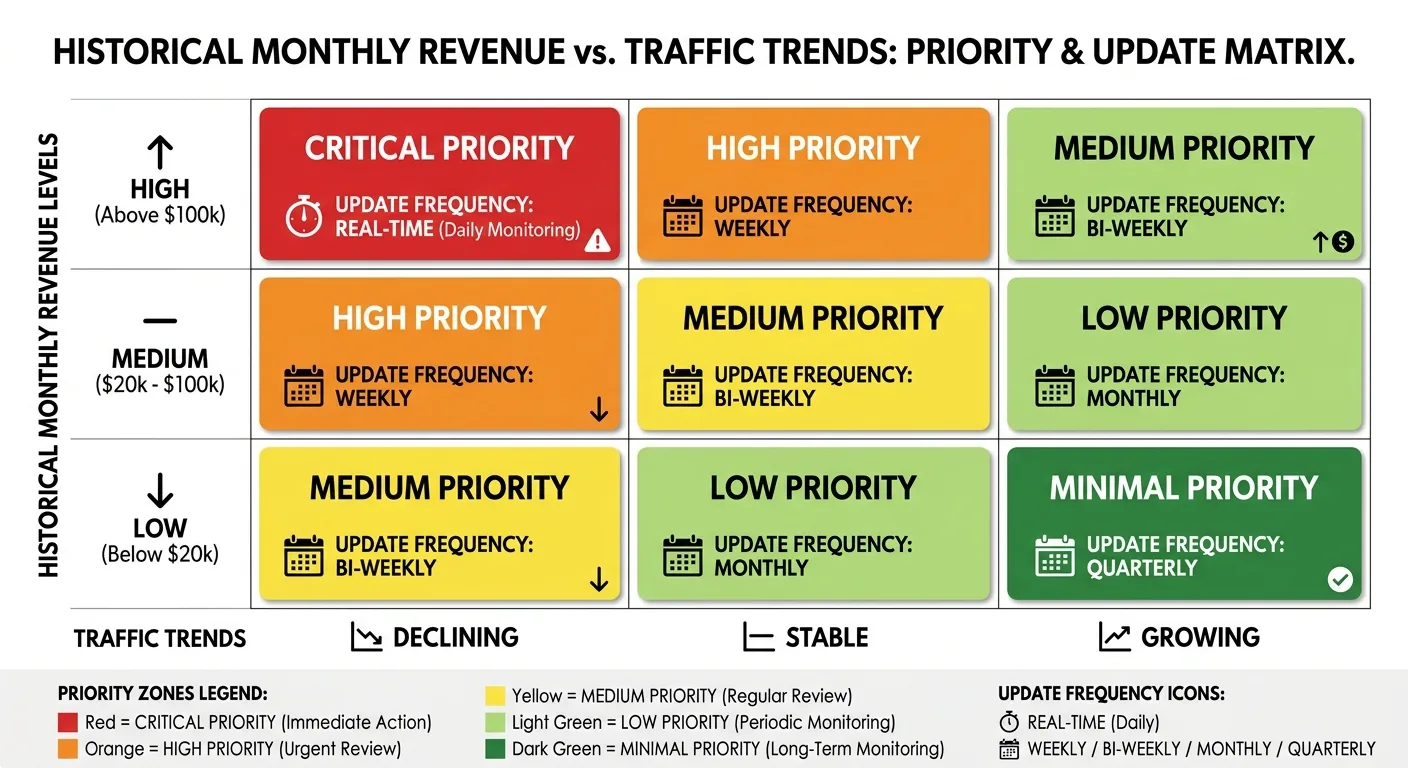
| Post Category | Historical Monthly Revenue | Traffic Trend | Refresh Priority | Update Frequency |
|---|---|---|---|---|
| High-revenue, declining traffic | $200+ | ↓ 20%+ | Immediate | Monthly review |
| High-revenue, stable traffic | $200+ | Flat ±10% | High | Quarterly |
| Medium-revenue, growing traffic | $50-199 | ↑ 15%+ | Medium | Semi-annual |
| Low-revenue, high traffic | <$50 | Any | Low (intent review) | Annual |
| Low-revenue, low traffic | <$50 | ↓ or flat | Deprioritize | Redirect or archive |
This matrix tells you exactly where to invest refresh effort. Most publishers update what’s easy or what they notice, not what protects revenue. The posts bleeding commissions sit in that top row, often ignored because traffic appears stable or the decline seems gradual.
What to Update (And What to Preserve)
Always update pricing, product availability, feature changes, screenshots, and affiliate links. Conditionally update recommendations if products change rank or new competitors enter. Preserve the URL, title (unless keyword strategy shifts), backlink anchor text, and core structure.
Add publish date and “updated” date to signal freshness. Rewrite sections that reference outdated info, don’t just append updates at the end. Re-promote updated posts through internal links, email, and social. Google treats substantial updates as a freshness signal; ranking often improves post-refresh.
The URL preservation rule matters more than publishers realize. Changing URLs loses backlinks, breaks existing traffic sources, and resets ranking signals. Update the content in place unless the post’s fundamental topic has shifted so far that the URL no longer matches.
The Compound Effect of Consistent Updates
Updated posts regain rankings, traffic, and conversions. Each refresh extends the revenue life of the post. Competitors who don’t update fall behind; your updated content becomes the new standard.
Reader trust increases when they see recent dates and current info. Internal link value grows as updated posts become more authoritative. Editorial calendar should allocate 30-40% of time to updates, not just new content.
Affiliate marketing with blog requires ongoing investment, not one-time publication. This is the clearest example of compound returns in affiliate marketing. A post refreshed quarterly for two years builds authority that new posts can’t match. It accumulates backlinks, earns consistent traffic, and converts at higher rates because readers trust thoroughly maintained content more than fresh posts from unknown publishers.
Audience Segmentation: When One Blog Tries to Serve Too Many Revenue Streams
Many affiliate blogs chase multiple niches opportunistically, diluting authority. Google evaluates topical authority; scattered topics weaken ranking potential. Reader trust erodes when your blog covers unrelated subjects like software reviews plus kitchen gadgets.
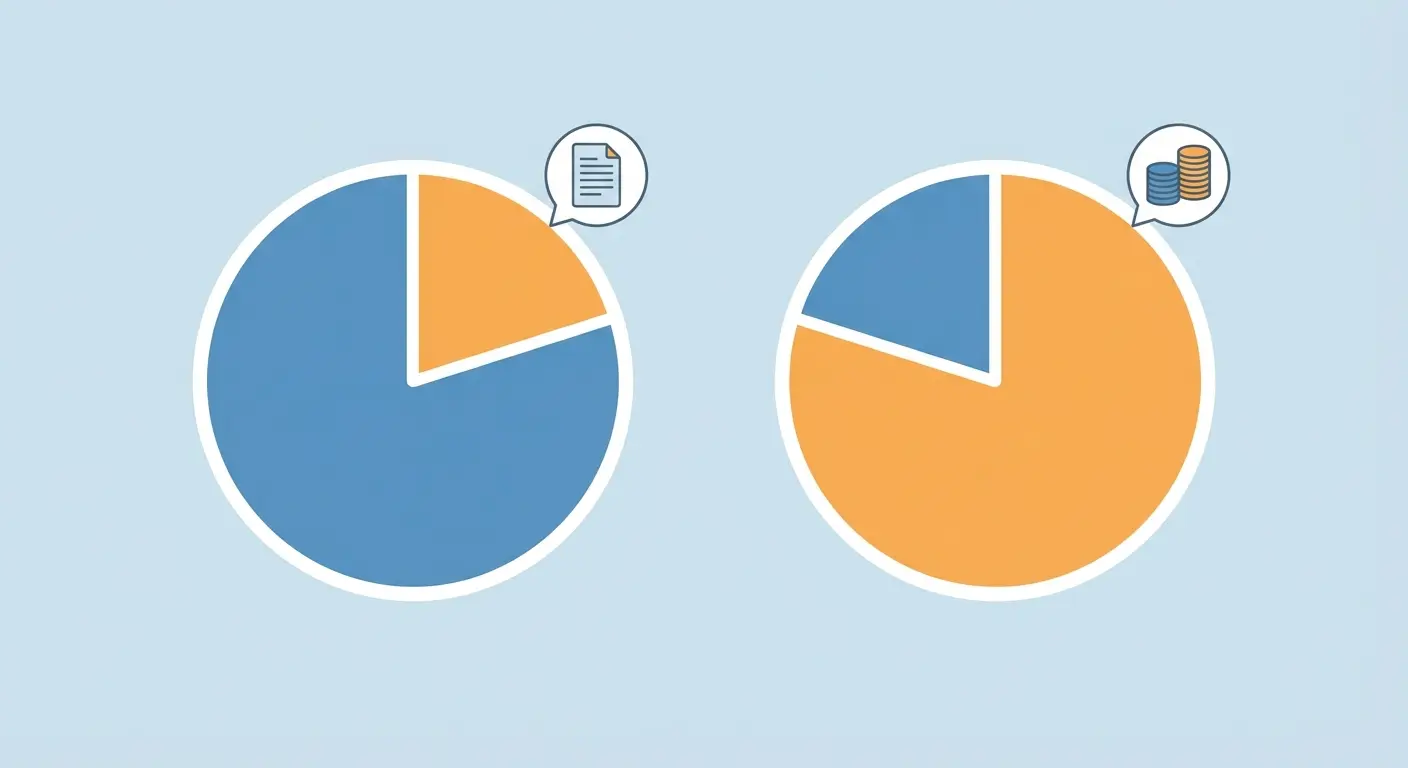
Revenue concentration follows the 80/20 rule: most affiliate income comes from 20% of topics. Audit which niches drive actual revenue versus which ones consume effort. Affiliate marketing for blog strategy should clarify niche boundaries early.
You have two paths: narrow to one niche, or create distinct content paths with separate categories and funnels. AI-driven automation and enhanced attribution models are reshaping affiliate marketing in 2026, which means topical authority and niche focus are more valuable as platforms better identify and reward specialized expertise.

Why Your Positioning Confuses Your Best Prospects
Buyers trust specialists over generalists in affiliate content. A mixed-topic blog signals “monetization over expertise.” Navigation, categories, and branding should clarify focus immediately. About page and author bio establish credibility; scattered topics undermine it.
First-time visitors decide in seconds whether you’re authoritative in their specific problem. Affiliate marketing on blog positioning should answer “who is this for?” before the visitor scrolls.
Niche-specific language, case examples, and terminology signal insider knowledge. A reader researching email marketing software who lands on your blog and sees categories for email marketing, graphic design, project management, and home fitness equipment immediately questions your authority. You might have excellent email marketing content, but the positioning says you’re a generalist chasing commissions, not a specialist solving their problem.
Revenue Concentration and the 80/20 Reality
Run a revenue report by category, tag, or topic cluster. Typically 10-20% of posts generate 80%+ of affiliate commissions. Traffic distribution rarely matches revenue distribution.
Identify your top-earning topics and expand content there. Prune or redirect low-performing niches that drain production time. Shopify affiliate marketing versus general ecommerce content demonstrates this principle: specificity attracts buyers, not browsers.
Resource allocation should follow revenue data, not traffic or personal interest. An affiliate blog covering “online business tools” analyzed 14 months of commission data across 200+ posts. Email marketing tools content generated 64% of total revenue from just 18% of total traffic. Web hosting content pulled 31% of traffic but only 12% of revenue. Design tool content represented 22% of traffic and 4% of revenue.
They spent the next quarter doubling down on email marketing content, redirecting lowest-performing design posts, and letting hosting content stagnate. Six months later, total revenue was up 47% with 8% less traffic because they’d shifted toward the highest-RPV category.
Creating Distinct Content Paths
Use category structure to create separate funnels. Navigation should allow visitors to self-select their path immediately. Internal linking respects niche boundaries; don’t cross-link unrelated topics. Email segmentation by topic interest preserves relevance.
Analytics tracking by category reveals which streams perform. Consider subdomains or separate sites if niches have zero overlap. Affiliate marketing blog examples show focused brands outperform scattered ones.
The navigation test: can a first-time visitor identify whether your blog serves their specific need within five seconds of landing on your homepage? If your menu lists ten unrelated categories, the answer is no. If it lists three closely related sub-niches within a single vertical, you’re positioned correctly.
The Niche-Down Dilemma
Yeah, narrowing your niche means less total traffic. But who cares? I’d rather have 500 visitors who buy than 5,000 who bounce.
Narrowing increases topical authority and improves rankings within your niche. The risk is a smaller total addressable audience and lower traffic ceiling. But a smaller audience with higher intent generates more revenue than a large unfocused audience.
Decision factors include current revenue concentration, ranking difficulty, competition level, and personal expertise depth. Affiliate blog examples demonstrate focused sites often earn more with less traffic.
Transition plan: redirect low-performing content, consolidate around your winner, rebrand if needed. Do you need a blog to do affiliate marketing? Yes, if you want compounding authority. Scattered content dilutes that advantage.
The decision matrix is simple. If one category generates 60%+ of your revenue, that’s your niche. Everything else is distraction or funnel support. If revenue is evenly distributed across five unrelated categories, you either haven’t found your winner yet, or you’re running five separate businesses under one domain and should split them.
Niche Consolidation Decision Template:
-
Revenue Analysis (Last 12 Months)
- Category A: _____% of revenue | _____% of traffic
- Category B: _____% of revenue | _____% of traffic
- Category C: _____% of revenue | _____% of traffic
-
Authority Assessment
- Which category has the strongest backlink profile? _____
- Which category ranks in top 3 most consistently? _____
- Which category gets the most direct/branded traffic? _____
-
Competitive Position
- Which category has the weakest competition? _____
- Which category has the highest barrier to entry for new competitors? _____
-
Personal Expertise
- Which category could you cover for the next 3 years without burning out? _____
- Which category do you have genuine insider knowledge in? _____
-
Decision: If the same category appears in 3+ of these answers, that’s your niche. Consolidate.
Measuring What Drives Income: Beyond Click-Through Rates
CTR on affiliate links is an intermediate metric, not an outcome. High CTR with low conversion means you have a traffic quality problem or a merchant page issue. Earnings per click (EPC) from your affiliate network reveals merchant conversion performance. Revenue per visitor (total commissions divided by total visitors) shows content value.
Conversion rate (purchases divided by affiliate clicks) isolates merchant and offer quality. Most publishers obsess over traffic and CTR while ignoring actual revenue per post. How to make money on affiliate marketing depends on tracking dollars, not clicks.
Affiliate marketing can return up to $15 for every $1 spent, but only when measuring and optimizing metrics that directly connect to revenue rather than intermediate engagement signals.

Why CTR Is a Vanity Metric in Affiliate Content
CTR measures reader action, not buyer action. Clicking an affiliate link costs nothing; purchase completes the chain. High CTR with low merchant conversion signals either the wrong audience or a poor offer.
Optimizing for CTR alone encourages aggressive link placement that damages trust. Readers click out of curiosity, comparison, or research, not just buying intent. Affiliate marketing side hustle advice often touts CTR; actual income requires tracking beyond the click.
Better metric: qualified clicks, those that lead to merchant engagement, cart adds, or purchases.
You can inflate CTR through aggressive link density, pop-ups, and CTAs that interrupt reading flow. You’ll get more clicks and lower earnings because you’ve shifted from attracting ready buyers to training casual browsers to click speculatively. The merchant’s analytics will show high bounce rates and zero cart activity, eventually flagging your traffic as low-quality and potentially reducing your commission rates or terminating the partnership.
Revenue Per Visitor: The Only Metric That Matters
Calculate RPV by dividing total affiliate earnings by total unique visitors, either by post or blog-wide. RPV reveals which content, topics, and traffic sources produce income. Compare RPV across posts to identify winners and losers.
Focus production toward high-RPV topics. Low RPV signals intent mismatch, poor targeting, or weak monetization. Track RPV by traffic source (organic, social, direct) to see which channels bring buyers.
Can you do affiliate marketing without a blog? Technically yes, but a blog compounds RPV over time through organic traffic.
Blog-wide RPV gives you a single number that tells you whether your overall strategy is working. If you’re at $0.15 RPV and want to hit $50,000 annual revenue, you need 333,333 annual visitors. If you improve RPV to $0.50, you need only 100,000 visitors. Most publishers chase the visitor count. Smart publishers chase the RPV and need far less traffic to hit the same income.
The Metrics Dashboard You Should Build
Top-level: total revenue, total visitors, blog-wide RPV
Post-level: revenue per post, visitors per post, RPV per post, affiliate clicks, CTR
Traffic source: revenue and RPV by organic, direct, social, email
Time-series: monthly revenue trend, traffic trend, RPV trend (shows whether optimization works)
Cohort: performance by publish month (reveals content maturity curve)
Category/topic: revenue and RPV by content cluster
Use Google Analytics custom events for affiliate clicks, spreadsheet or dashboard tool for revenue aggregation. Affiliate marketing no blog alternatives don’t build this compounding data asset.
The cohort view is the most underused and most valuable report. Group posts by publish month and track how revenue per post evolves over time. You’ll see clearly that posts typically hit 20% of their mature revenue in month one, 50% by month three, and don’t plateau until month six or later. This data alone prevents premature strategy shifts and justifies the patience required for affiliate content to mature.
Post-Click Behavior and the Blind Spot
Once a reader clicks your affiliate link, you lose visibility. Merchant conversion is a black box. Low EPC (earnings per click) signals a merchant-side issue: poor landing page, high price, weak offer, or technical problems.
Compare multiple merchants in the same niche to identify performance gaps. Reader drop-off points on the merchant site are invisible to you, but a pattern of low EPC across your traffic suggests a systemic issue.
Test affiliate links yourself. Check load time, mobile experience, checkout flow. Some merchants convert at 1%, others at 10%. Pick partners carefully. Affiliate marketing tips include merchant evaluation, not just content creation.
When you send 1,000 clicks to Merchant A and earn $300, then send 1,000 clicks to Merchant B and earn $80, that’s not a content problem. That’s a merchant problem. Merchant A converts at 6% with a $50 average order value; Merchant B converts at 2% with a $40 average order value. Your content is identical. Their landing page, offer, and checkout flow are dramatically different.
Track EPC by merchant and ruthlessly cut low performers even when the product category fits your niche.
Seasonal Patterns and Budget Cycles
Affiliate revenue often spikes in Q4, dips in January. B2B affiliate programs see budget-driven patterns: end of quarter, end of fiscal year. Seasonal products like tax software, fitness equipment, or travel concentrate revenue in narrow windows.
Traffic may stay consistent while conversion rates fluctuate with buying season. Plan content publication and refresh timing around known cycles. Evergreen content provides baseline revenue; seasonal content spikes it.
Food blog affiliate marketing sees holiday and event-driven patterns. Plan your content calendar accordingly.
Understanding your seasonal baseline prevents panic during predictable dips. If January revenue is historically 40% of December, you don’t have a performance crisis when it happens again this year. You have a calendar. Plan cash flow accordingly and use low-revenue months for content refreshes and infrastructure improvements rather than chasing short-term traffic fixes.
Working with The Marketing Agency
You’ve built traffic, but commissions don’t match the effort. Your analytics tell you one story; your bank account tells another. The problem usually lives in the gap between what you’re measuring and what actually drives revenue.
We work with affiliate publishers who need to stop guessing and start tracking what matters. Our approach focuses on revenue per visitor, intent-stage mapping, and attribution models that reveal which content assists and which content closes.
We don’t chase rankings for their own sake. We identify the queries and topics that bring buyers, then build content strategies around them. If your affiliate marketing blog generates traffic but underwhelms on income, we’ll audit your content against purchase intent, fix your internal funnel, and show you which posts to double down on and which ones to cut.
Set a free strategy call and we’ll map your content to actual buyer behavior, not just search volume.

Frequently Asked Questions
How do I start affiliate marketing on a blog when I have no traffic yet?
Start with high-intent, low-competition keywords and publish evaluation-stage content (product comparisons, reviews) even with a small audience. Traffic from 50 ready buyers converts better than 5,000 researchers. Join affiliate programs immediately without waiting for traffic thresholds, and use internal linking to guide new visitors toward conversion content from day one.
Focus on one narrow niche to build topical authority faster. Organic growth takes 6-12 months; paid traffic or an email list can accelerate if budget allows. How to create a free blog for affiliate marketing: WordPress.org with low-cost hosting gets you started under $100/year.
The cold-start advantage most publishers miss is that you can optimize for conversion before you have traffic. Build your first 15-20 posts as a complete evaluation-stage funnel covering different buyer questions within your niche. When traffic arrives, it lands in a conversion-optimized environment instead of a half-built blog that leaks visitors because the internal paths don’t exist yet.
Do I need a blog to do affiliate marketing, or are there better alternatives?
You can run affiliate marketing without a blog through social media, YouTube, email lists, or paid ads, but blogs offer compounding organic traffic and function as owned assets with long content lifespan. Alternative channels provide faster starts but require continuous posting, while blog content works for years without platform risk or algorithm dependency.
Blogs have advantages: compounding organic traffic, owned asset status, long content lifespan, and SEO authority. Disadvantages include slower growth, ongoing content demand, and technical overhead.
A hybrid approach works well: blog as hub, social for distribution and audience building. Platform risk matters. Social accounts can be suspended; a blog remains under your control. Best fit: blogs work for patient builders willing to invest 6-12 months for compounding returns.
The critical distinction is that social platforms and YouTube rent you an audience. You can lose access overnight through algorithm changes, policy shifts, or account issues. A blog on your own domain is an asset you own. The traffic takes longer to build but can’t be taken away. Most successful affiliate marketers eventually build both: social for fast distribution and audience growth, blog for long-term compounding traffic and revenue.
What are the best affiliate marketing blog ideas for someone just starting out?
Choose a niche based on personal expertise rather than just commission rates, focusing on micro-niches like “home workout equipment for small apartments” instead of broad categories like “fitness.” Product categories with recurring purchases (software subscriptions, consumables) generate ongoing commissions. Start with 10-15 core posts covering different buyer questions, then expand based on what converts.
Evergreen topics provide stable baseline revenue; trending products create spikes. Content types should include product comparisons, buyer’s guides, use-case tutorials, and troubleshooting posts.
Avoid oversaturated niches like web hosting, VPNs, or credit cards unless you have a unique angle or existing authority.
The starter content map should include: one category overview post (consideration stage), three product comparison posts (evaluation stage), two deep-dive reviews (evaluation stage), three use-case tutorials (assists that demonstrate product application), and two troubleshooting or FAQ posts (assists that build search authority). That’s 11 posts covering the complete buyer journey with enough internal linking opportunities to create a functional funnel.
How often should I update my affiliate marketing blog posts to keep them converting?
Track affiliate link click-through rates within posts. Dropping CTR signals staleness. Set calendar reminders; don’t rely on memory. Substantial updates, not just date changes, signal freshness to Google and readers.
The update trigger isn’t just calendar-based. Set up alerts for product discontinuations in your niche, major feature releases from products you recommend, new competitive alternatives launching, price changes above 15%, and affiliate program commission structure changes. Any of these events should trigger an immediate review of affected posts regardless of your normal schedule.
Can I run affiliate marketing on a food blog, and does it actually work?
Affiliate marketing food blog monetization works through kitchen equipment, cookware, appliances, ingredients, and cookbooks. Commission rates are lower than software or finance niches, but high traffic volume compensates. Success depends on contextual integration where product recommendations solve specific recipe problems rather than generic link grids.
Monetization mix typically places ads (Mediavine, AdThrive) as primary revenue, with affiliate as supplementary. Best affiliate fit: recipe posts that feature specific tools or ingredients through Amazon Associates or brand programs.
Seasonal peaks include holiday baking, summer grilling, and back-to-school meal prep. Compliance matters: disclose affiliate relationships clearly, as FTC monitors food and wellness content closely. Combine display ads and affiliates for diversified revenue.
The food blog affiliate model works best when product recommendations solve a specific recipe problem. “I tried five different stand mixers before finding one that could handle this dough” carries more weight than a generic Amazon affiliate link grid at the bottom of the post. The integration has to be genuinely helpful, or readers ignore it entirely and your CTR stays in the low single digits.
Final Thoughts
Traffic feels productive. Rankings feel like progress. But if your affiliate marketing blog pulls thousands of visitors and generates minimal commissions, you’re optimizing the wrong part of the equation.
Revenue comes from targeting buyer intent, measuring revenue per visitor, and building content that converts instead of content that just ranks. Most publishers never make the shift because their dashboards celebrate the wrong wins.
You can fix positioning, recalibrate your keyword strategy, map content to purchase stages, and refresh posts that decay. The work isn’t complicated, but it requires measuring what actually pays.
Stop chasing volume. Start tracking value. Your commissions will follow.