


I’ve watched this happen maybe fifty times now. Someone on the marketing team finishes their Google Ads certification, posts about it on LinkedIn, maybe even gets congratulated at the next all-hands. Two months later they still haven’t launched a single campaign.
The problem isn’t her competence. It’s that nobody warned her she’d spend six weeks navigating approval chains, IT tickets, and budget-freeze politics just to get access to the ad platform the course taught her to master.
This is the brutal reality of class digital marketing training that course providers never mention: they teach you the tactics in pristine isolation, but your organization’s dysfunction determines whether you’ll ever execute them. Smart people complete solid programs, then hit operational friction no syllabus prepared them for, and that gap swallows training investments whole.
Related information After just one year, HubSpot customers acquire 129% more leads, close 36% more deals, and see a 37% improvement in ticket closure rates. Verified source

Table of Contents
- The Implementation Gap That No Curriculum Addresses
- Why Platform Mastery Doesn’t Translate to Strategy
- The Permission and Budget Trap
- Data Access: The Silent Training Killer
- Cross-Department Dependencies Nobody Warns You About
- Choosing Training That Maps to Real Constraints
- When to Outsource Instead of Upskill
- Frequently Asked Questions
The Implementation Gap That No Curriculum Addresses
The trained team member sits down to execute their first campaign. They can’t access the ad platform because IT hasn’t granted permissions. They can’t get budget approval without three signatures. They can’t install conversion tracking because the dev team is booked for six weeks.
The course never mentioned any of this.
Look, I’m probably biased here because I’ve seen the agency side, but most class on digital marketing content assumes ideal conditions: unrestricted platform access, responsive development teams, integrated data systems, and collaborative stakeholders. Actual organizations operate with fragmented tools, budget politics, isolated data silos, and competing priorities generating friction at every turn.
The curriculum teaches you to run Google Ads but skips the two-week approval process for company card access, the IT ticket for conversion tracking, and the legal review for ad copy. Courses assume knowledge transfer alone creates capability, but that assumption ignores organizational reality entirely.
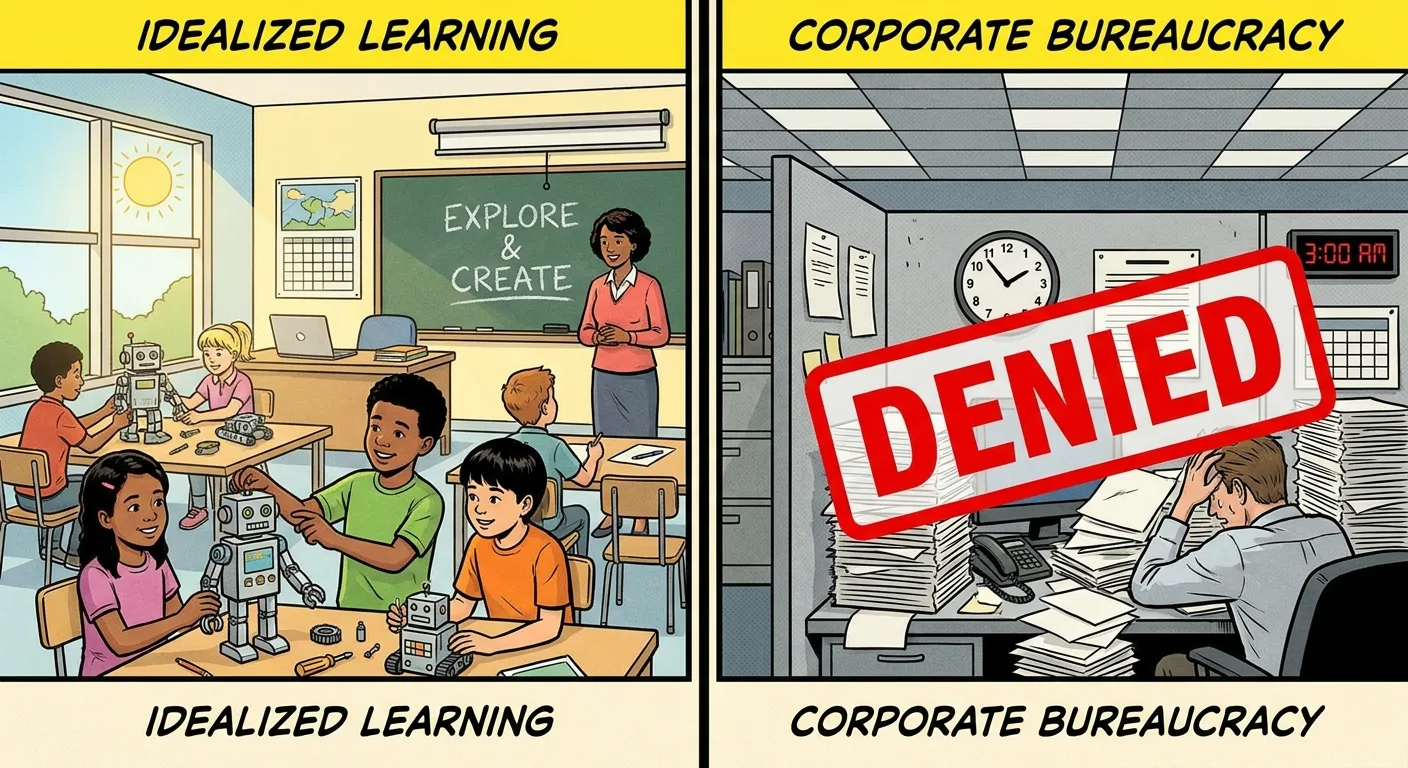
Companies send people to get certified thinking they’re solving a skills problem when they actually have a systems and authority problem. Trained employees who can’t execute become frustrated, disengage, and eventually leave.
Sarah finished her Google Ads certification on a Tuesday. By Friday she’d spec’d out a campaign targeting bottom-funnel search terms, even built the ad copy and landing page mockups. Her manager loved it. Then she actually tried to launch it.
First roadblock: no access to the ad account. IT ticket submitted.
Second roadblock: Company credit card requires VP signature. He’s traveling.
Third roadblock: Legal needs to review all ad copy. They’re backlogged three weeks.
By the time everything cleared, the seasonal window she’d identified in the training was over. The campaign finally launched to an audience that was no longer searching those terms. Her manager asked why the results weren’t better.
Why Platform Mastery Doesn’t Translate to Strategy
Platform certifications teach mechanics without context. Someone can complete the google digital marketing class mastering every ad format, bidding strategy, and targeting option while remaining unable to connect those capabilities to business objectives.
Here’s what I’ve seen: technical proficiency creates activity, not necessarily progress. Teams launch campaigns quickly because they know the tools, but those campaigns don’t align with customer journey stages, brand positioning, or realistic conversion economics. They’re just… doing stuff.
The best digital marketing course online can’t teach judgment, which comes from understanding your market, customer psychology, and competitive landscape. Skills training creates technicians; strategy training develops marketers capable of defensible decisions.
Most free programs prioritize breadth and tool adoption because, let’s be honest, they’re often created by the platforms themselves, serving as user acquisition engines. Paid specializations might go deeper into strategic frameworks, but even these rarely bridge the gap between strategic thinking and organizational reality.
The gap shows up in campaign performance: high activity levels, decent metrics on individual channels, but poor overall ROI because nothing connects to a coherent strategy. Evaluate the available evidence in the context of your own needs.
| Training Focus | Produces | Typical Outcome |
|---|---|---|
| Platform mechanics only | Technicians who can operate tools | High activity, unclear business impact |
| Strategy without platform skills | Planners who can’t execute | Good ideas, no implementation |
| Integrated approach | Marketers who make defensible decisions | Strategic campaigns that can be executed |
Organizations exploring foundational marketing principles beyond platform mechanics often discover strategic gaps that training alone cannot fill.
The Permission and Budget Trap
You can become an expert media buyer but Evaluate potential savings using evidence relevant to your own costs and circumstances. Just sits there. Doing nothing.
Mid-level marketers suffer most from this barrier: experienced enough to identify opportunities, too junior for unilateral approval authority. I’ve watched people remain trapped in this position for years while their certifications sit unused.
Digital marketing certification programs don’t teach you how to build internal business cases, navigate procurement processes, or secure ongoing budget commitments. By the time approvals clear, seasonal windows close, competitive moments pass, and trending topics fade.
Some companies solve this with discretionary budgets or pre-approved testing allocations. Most don’t. The worst scenario is training someone thoroughly, then watching them submit endless requests that get delayed or denied. Nothing kills momentum and morale faster.
Meta advertisers may soon lose another familiar control inside Ads Manager, with the company beginning to alert some users that placement options could be removed from ad sets, potentially limiting their ability to decide where campaigns appear across Meta’s advertising ec …. Verified source Related information This shift demonstrates how platform changes can render specialized training obsolete while organizational approval processes remain unchanged, creating a double constraint for trained marketers trying to adapt strategies.

Even digital marketing course online free options from reputable providers teach the same tactical skills that require budget to execute. Before investing in training, audit whether the trained person will have the authority and resources to implement what they learn. If they won’t, either change the organizational structure first or focus training on people who already have that authority. Otherwise you’re just setting people up for failure.
Before you pay for someone’s certification, sit down with them and map out a single campaign from idea to launch. Not theoretically, actually walk through your company’s process. Who needs to sign off? How long does that take when those people are on vacation? Can your marketing coordinator actually install tracking pixels or does that go through IT? Does IT respond to tickets in days or weeks?
Evaluate the available evidence in the context of your own needs.
Data Access: The Silent Training Killer
Every digital marketing class free or paid assumes near-real-time access to performance data, customer information, and conversion metrics. This baseline expectation underpins every lesson, case study, and optimization framework.
Reality: marketing automation isn’t connected to the CRM, website analytics lack ecommerce tracking, ad platforms can’t see offline conversions, customer service data lives in a separate system nobody can export from. I wish I was exaggerating.
Training teaches customer lifetime value optimization, but when purchase data remains disconnected from acquisition sources, the entire methodology fails. Marketers resort to hours of manual data transfers or accept decisions based on incomplete information.
The problem compounds when different stakeholders have access to different data sets and everyone’s working from partial truth. Attribution modeling requires tracking infrastructure that many organizations simply don’t have, but the digital marketing certification course teaches it like it’s a given.
Best digital marketing certification programs teach sophisticated measurement approaches that require data engineering work most marketing teams can’t commission. When companies invest in training before building data infrastructure, the sequence guarantees failure.
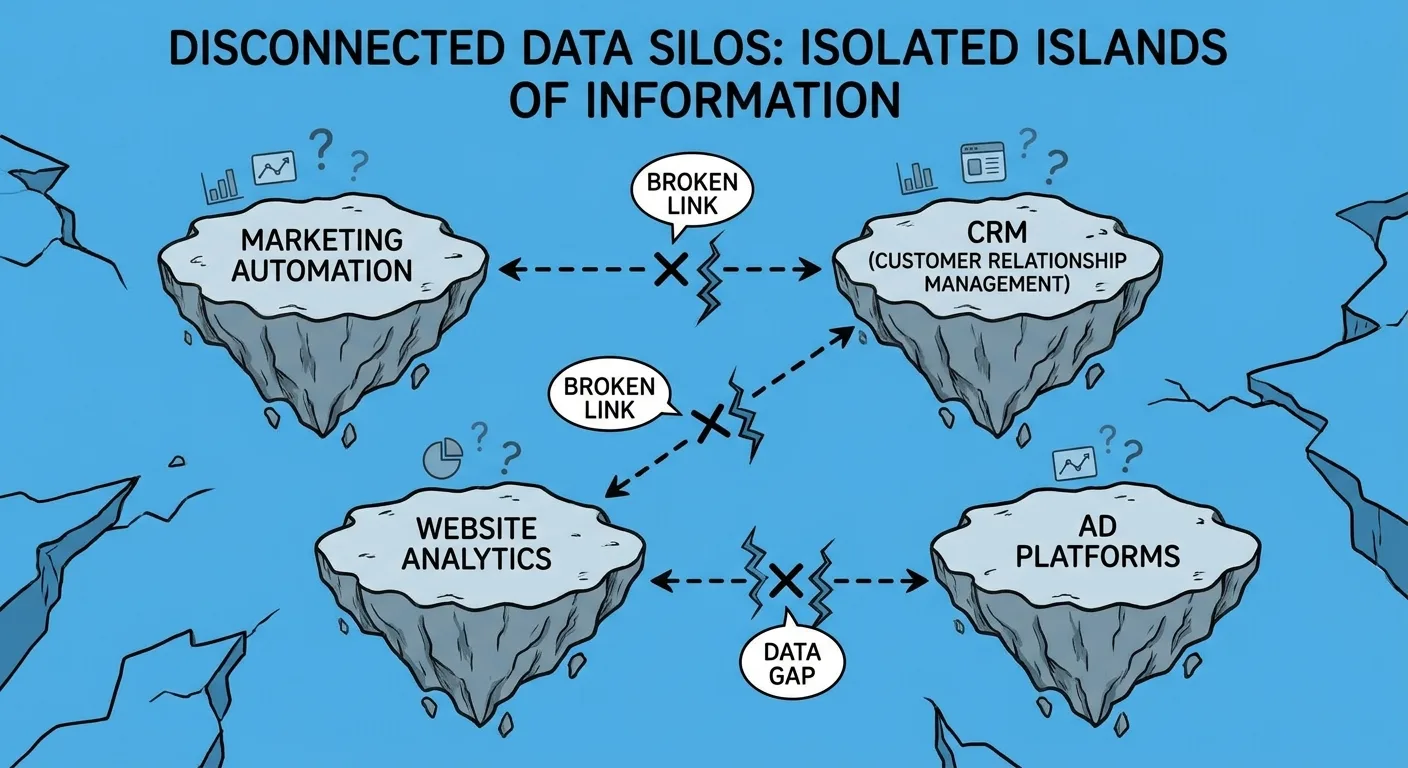
Clean, accessible, integrated data enables trained marketers to make better decisions. Without it, training just teaches people to wish they had better data. Some platforms offer built-in analytics like HubSpot, which is why the hubspot digital marketing course can feel more immediately applicable than programs teaching cross-platform orchestration. Everything’s already connected in their ecosystem.
A trained marketer wants to implement the audience segmentation strategies she learned, creating different email campaigns for high-value customers versus first-time buyers. Makes sense, right? The company’s email platform doesn’t connect to the e-commerce database. Evaluate the available evidence in the context of your own needs. Evaluate the available evidence in the context of your own needs. She defaults to sending the same email to everyone, exactly what she was doing before the training. The certification didn’t prepare her for that conversation.
Companies struggling with analytics infrastructure challenges often discover that data problems prevent trained teams from executing sophisticated strategies.
Cross-Department Dependencies Nobody Warns You About
Modern digital marketing demands ongoing collaboration across IT, creative, product, sales, legal, and finance. No online class digital marketing prepares you to secure IT prioritization for tracking pixels, negotiate feature messaging with product teams, or accelerate legal claim reviews. Unsexy coordination work never makes the syllabus despite being essential to execution.
Each dependency adds delay and friction.
Creative team is booked three weeks out, developer sprint planning happens monthly, legal review takes five business days minimum, sales team uses different performance definitions. The trained marketer knows what needs to happen but depends on people who have different priorities, timelines, and definitions of urgent.
Some organizations have embedded resources: dedicated designer for marketing, engineering sprint capacity reserved for marketing initiatives. Most operate on a request queue model where marketing competes with every other department for attention. And marketing rarely wins that competition.
This coordination challenge grows exponentially with campaign complexity. Someone who completed a digital marketing certification course can plan a sophisticated funnel with dynamic content, retargeting segments, and automated email sequences, but if they need six weeks and four departments to build it, they’ll usually default to simpler, less effective approaches they can execute independently. The training becomes theoretical.
Training should prepare people for this coordination work, teaching stakeholder management and project scoping alongside tactics. When coordination proves too difficult, trained marketers either leave for better-structured companies or disengage and execute only what they control alone.
Related information After just one year, HubSpot customers acquire 129% more leads, close 36% more deals, and see a 37% improvement in ticket closure rates. Verified source Knowing what to do and being able to actually do it are completely different problems.
Choosing Training That Maps to Real Constraints
Begin with constraint inventory rather than course reviews. Identify current and future platform access, post-training budget authority, ticket-free data availability, required cross-department coordination, and existing implementation support for design, development, and analytics.
Match training to constraints. Not to the highest-rated course, to your actual situation.
Foundational free options work when:
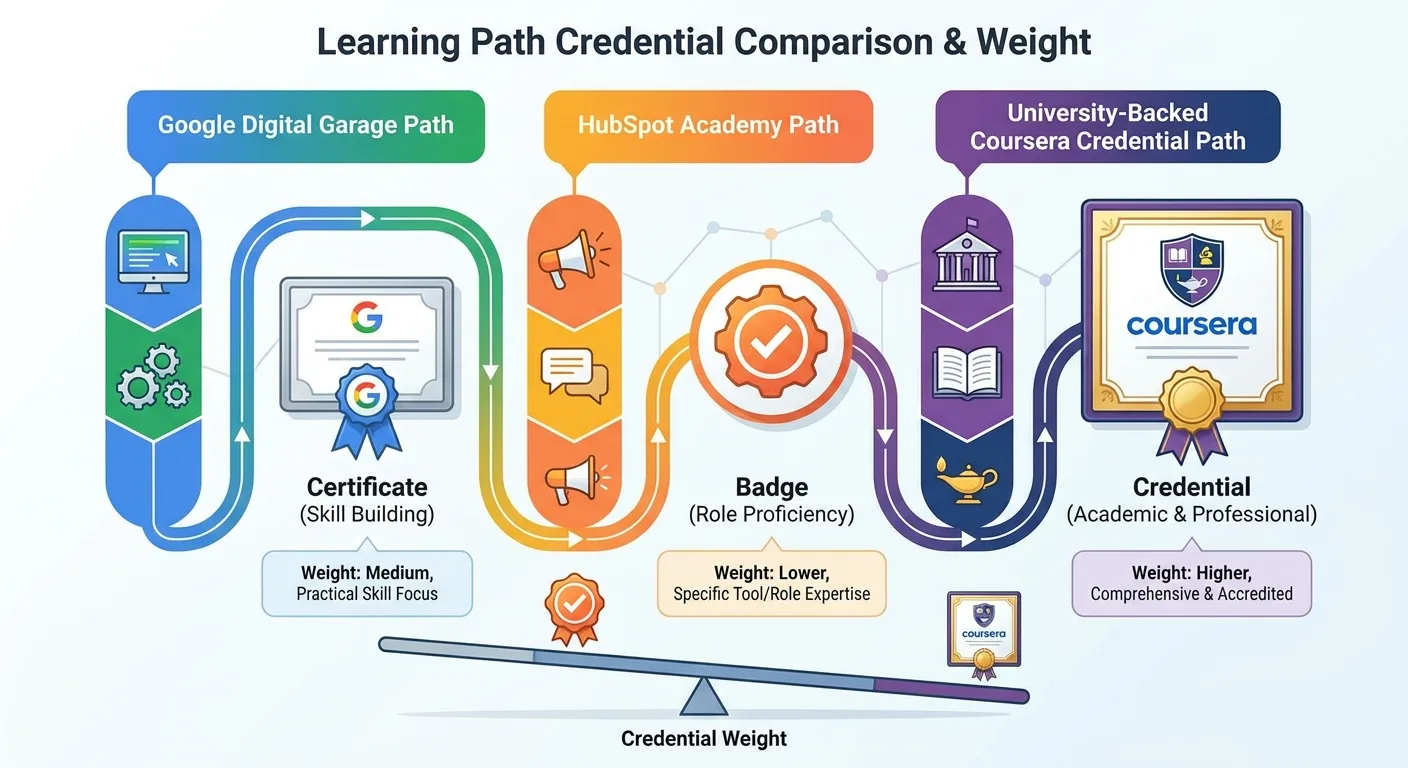
You need basic literacy across channels to have informed conversations. The trained person won’t be executing but needs to evaluate agency work or vendor proposals. You’re testing interest before committing budget to deeper training. Free digital marketing course with certificate programs from Google Garage or HubSpot Academy cover concepts without requiring immediate application. These programs teach vocabulary, basic tactics, and platform familiarity. That’s useful if it matches your need.
Paid specializations make sense when:
The learner will have budget authority and platform access after completing the course. Implementation support for design, dev, and data exists or is being built in parallel. You need strategic frameworks, not just tactical checklists. Coursera digital marketing course specializations and similar programs from recognized universities include strategic thinking, research methods, and decision frameworks. These work better for people who will be making strategic choices and coordinating execution rather than operating platforms directly.
Avoid depth training when:
Organizational constraints prevent implementation regardless of skill level. The trained person will have no authority, budget, or support when they finish. You’re hoping training alone will somehow overcome structural problems, which it won’t. Best digital marketing course rankings can’t predict whether that course will work in your specific environment with your specific constraints.
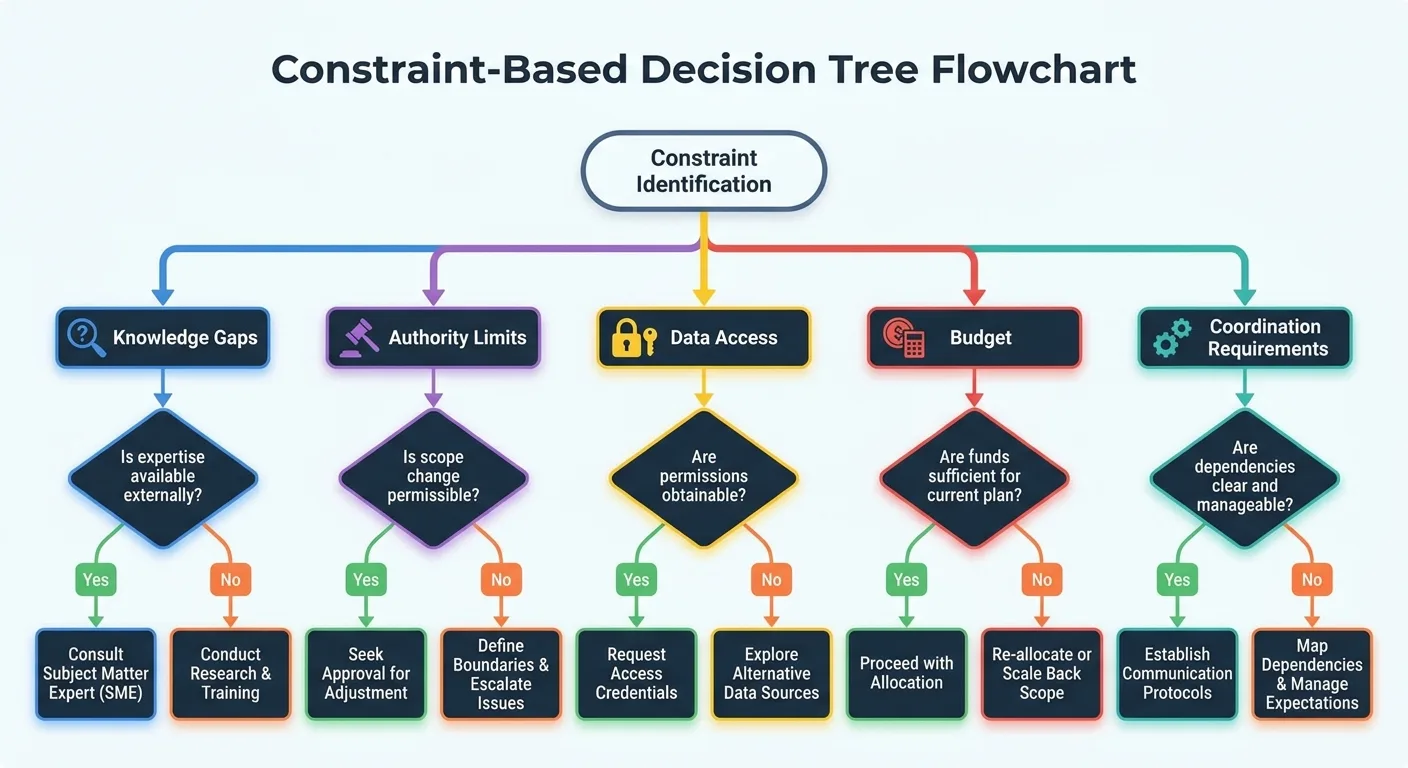
The most effective approach: identify your binding constraint first. Is it knowledge, authority, data, budget, or coordination? Then train only if knowledge is the bottleneck. If something else is blocking execution, training just adds frustration.
| Constraint Type | Indicator | Training Impact | Better Solution |
|---|---|---|---|
| Knowledge gap | Team doesn’t understand channel mechanics or strategy | High – training directly addresses the problem | Select training matching authority and resources |
| Authority limitation | Team knows what to do but can’t approve execution | Low – training increases frustration | Restructure decision rights before training |
| Data infrastructure | Decisions require data that isn’t accessible | Low – training teaches methods you can’t use | Invest in integration and access first |
| Coordination friction | Every campaign requires multiple departments | Medium – depends on soft skills component | Train in stakeholder management or embed resources |
| Budget scarcity | No allocation for testing or campaigns | Zero – nothing to execute | Secure budget commitment before training |
Before selecting any digital marketing online course, answer these honestly:
Does the trainee have login access to the platforms being taught? Can they approve or execute spend after completing the course? Is the necessary data available without multi-week requests? Are required support resources like creative and dev accessible? Does the organizational structure support the work being taught? Have you confirmed the training includes implementation planning, not just tactics? Is there a pilot budget for applying what they learn? Will the trainee have authority to make strategic decisions post-training?
If you’re answering no to more than half of these, pause the training conversation and fix the structural issues first.
When to Outsource Instead of Upskill
This is going to sound harsh, but sometimes training is the wrong answer entirely.
Training solves knowledge constraints within supportive organizational structures. When authority limitations, data infrastructure gaps, coordination friction, or speed requirements block execution, training merely credentials people for work they cannot perform.
Outsourcing transfers execution to an entity that already has the structure, tools, authority, and coordination mechanisms built in.
The economic comparison isn’t training cost versus agency cost. It’s fully loaded internal capability cost, which includes training plus salary plus tools plus support plus coordination time plus opportunity cost of slow execution, versus external capability cost. When you map it honestly, the math often favors outsourcing more than companies expect.

Agencies operate with pre-integrated tool stacks, established vendor relationships, design and development resources, and streamlined approval processes. They also bring pattern recognition from working across multiple clients and industries, which no single course provides. That breadth matters when platforms change or new opportunities emerge.
The decision often comes down to control versus speed: internal teams offer more control and brand intimacy, external teams offer faster deployment and broader technical capability. Hybrid approaches work too: outsource execution while training internal team members to be better strategists and agency managers rather than tacticians. That’s often more realistic.
Red flags for training: if you’re hoping a digital marketing course with certificate will somehow make up for lack of budget, authority, data access, or organizational support, it won’t. Green flags for training: clear path from learning to execution, reasonable authority and budget, accessible data, supportive cross-functional relationships.
Some companies train people expecting them to become full-stack digital marketers, which is unrealistic. The skill breadth required now spans too many specializations: paid search, paid social, SEO, email, content, analytics, automation, conversion optimization. Evaluate the available evidence in the context of your own needs.
A manufacturing company wants to launch digital campaigns but has no marketing department infrastructure. They consider training their communications manager in digital marketing. The constraint inventory reveals she has no budget authority, no access to analytics, and would need to coordinate with IT, legal, and sales for every campaign element. The company instead partners with an agency that executes campaigns while the communications manager learns to be an effective client and strategic partner, a more realistic role given the organizational structure. Evaluate the available evidence in the context of your own needs.
Evaluate the available evidence in the context of your own needs. Related information
You’re likely facing decisions about building internal capability while working within real constraints: budget approval processes, data access limitations, resource competition. We’ve worked with companies at exactly this inflection point. The Marketing Agency helps businesses determine whether their constraint is execution capability, strategy clarity, or organizational structure, then provides the appropriate solution whether that’s campaign management, strategic guidance, or both. We work within your existing structure or help you see where that structure needs to change. Worth a conversation if you’re weighing training investment against getting work done now.
Companies evaluating specialized B2B marketing support often discover that outsourcing execution accelerates results while internal training builds long-term capability.
Frequently Asked Questions
What is the best digital marketing certification for someone with no experience?
Begin with Google’s Digital Garage or HubSpot Academy; both provide free digital marketing course with certificate programs covering fundamentals without prerequisites or budget requirements. These introduce SEO basics, paid search structure, email principles, social strategy, and analytics interpretation. For structured strategic learning, Coursera’s university-backed beginner specializations offer frameworks extending beyond platform mechanics.
Google’s program naturally emphasizes their ad platform, HubSpot’s focuses on inbound methodology and their CRM ecosystem. The “best” choice depends on your next step: university-backed certificates carry more weight for job applications, while free platforms work fine for exploring interest or building foundational knowledge quickly.
None of these programs will make you job-ready for a specialist role, and that’s okay. You won’t be an expert media buyer or SEO strategist after any single certification. They will make you literate enough to understand marketing conversations, evaluate proposals, and identify what deeper skills you want to develop.
Complete one foundational program before paying for advanced training. Many people discover their interests shift after seeing what different channels actually involve day-to-day.
Are free digital marketing courses actually worth taking or should I invest in paid programs?
Reputable free programs from Google, HubSpot, and Meta Blueprint provide legitimate foundational knowledge and platform mechanics while driving adoption of their tools. Paid programs like Coursera specializations and university certificates prioritize strategic frameworks, case-based learning, and application guidance, though quality varies across both free and paid offerings.
The dirty secret of free certifications: they’re user acquisition. Google wants more people running Google Ads. HubSpot wants more people using HubSpot. The training is real, but it’s fundamentally a marketing channel for the platform. That doesn’t make it worthless, it just means you should be clear about what you’re getting.
Free courses excel at building baseline competency, teaching platform tools, and helping you determine interest in advanced study. However, they generally omit strategic depth, business context, and cross-channel integration thinking.
Your decision should align with your objective: exploration and literacy building point toward free options, while career transition or strategic accountability suggest paid programs. Digital marketing course online free options rarely provide personalized feedback, peer collaboration, or instructor interaction; paid programs sometimes do, though it varies.
Time investment matters as well. Without financial commitment creating urgency, free courses often stretch longer to complete. Many accomplished marketers began with free training, then strategically invested in paid programs after pinpointing specific skill gaps. This progression represents the most efficient approach for most learners.
Marketers exploring professional content development support often discover that execution matters more than credentials when building marketing capability.
How long does it take to complete a comprehensive digital marketing course?
Evaluate the available evidence in the context of your own needs., while Evaluate the available evidence in the context of your own needs. Intensive bootcamp formats compress similar content into 8-12 week full-time formats. More important than total duration: does the program structure match your learning style and schedule constraints?
Self-paced programs offer flexibility but require discipline. I’ve seen people buy a course and still be working through it a year later. Cohort-based programs create accountability through structured timelines, though this approach doesn’t suit learners with unpredictable schedules.
Implementation time matters more than course completion time, honestly. You’ll spend far more hours applying what you learned than learning it. Consider whether the time investment makes sense given your opportunity to implement. Evaluate the available evidence in the context of your own needs.
Related information Evaluate the available evidence in the context of your own needs. Understanding these benchmarks requires hands-on campaign experience that extends well beyond course completion timelines. The real learning happens when you’re trying to beat those benchmarks with actual budget on the line.
What’s the difference between a digital marketing class and a certification program?
Terminology is inconsistent across providers, but generally a digital marketing class online refers to a single course on a specific topic, while certification or certificate programs imply multiple courses forming a complete curriculum with a formal credential upon completion. Standalone classes are often learning experiences without formal assessment, whereas certifications require module completion, assessments, and sometimes project submissions.
The credential itself varies in recognition. Google, HubSpot, and Meta certifications are widely recognized because they’re directly from major platforms. Employers know what they mean. University-backed certificates from Coursera or edX carry academic weight but may be less known to practitioners.
Standalone class completion doesn’t usually result in something you’d put on a resume. Certifications are designed to be resume credentials. Employer recognition varies wildly though. Some hiring managers value specific certifications, while others prioritize demonstrated results over credentials. I’ve hired people without any certification who outperformed certified candidates through real campaign experience.
Professional certifications from the Digital Marketing Institute attempt to standardize knowledge assessment across platforms but have less market recognition than vendor certifications. The learning quality doesn’t correlate perfectly with credential formality. You can learn more from a well-designed class than a poorly structured certification program.
Choose based on your goal: if you need a credential for job applications, formal certification matters; if you need knowledge for immediate application, focus on content quality regardless of terminology.
Can I learn digital marketing effectively without spending money on courses?
Yes, free resources now include platform documentation, vendor academies, YouTube tutorials, podcasts, blogs, case studies, and community forums that can build legitimate expertise through self-directed learning if you’re disciplined and strategic. The challenge is structure since paid programs provide learning paths while self-teaching requires you to construct that path yourself, and you won’t get feedback until you launch campaigns and see results.
Quality filtering becomes your responsibility. Free content varies wildly in accuracy and currentness. I’ve seen people learn completely outdated tactics from YouTube videos that rank well but Evaluate the available evidence in the context of your own needs.
Self-teaching works best when you have access to platforms for hands-on practice. Reading about Google Ads without running campaigns provides limited value, kind of like trying to learn swimming from a book.
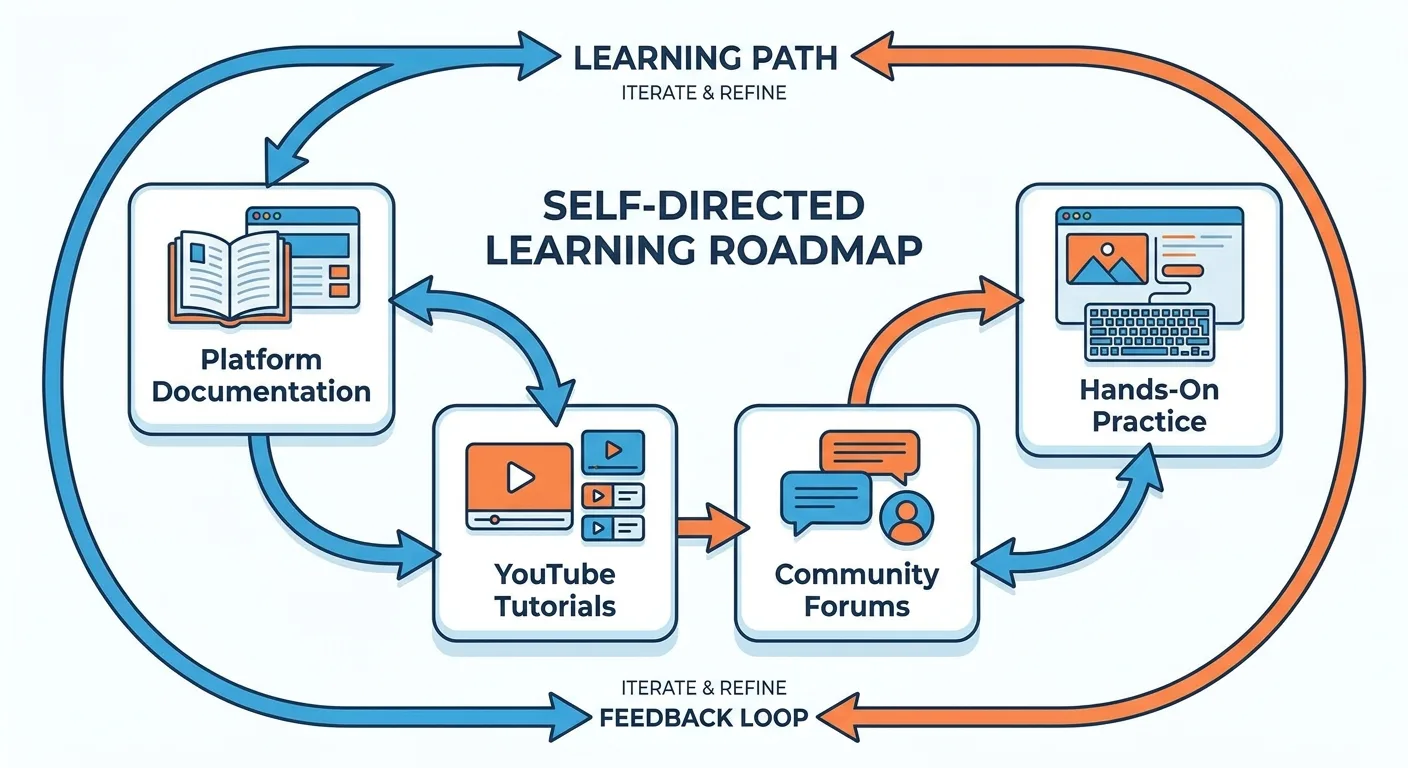
Many successful marketers are entirely self-taught, learning through experimentation, failure analysis, and pattern recognition over time. This path requires more time and includes costlier mistakes, but produces deeper understanding through learning in context with real consequences.
Hybrid approach works well: use free resources for initial learning, pay for training in specific areas where you’re stuck or need to accelerate. Evaluate the available evidence in the context of your own needs.
The risk with pure self-teaching: you don’t know what you don’t know, and may develop significant blind spots or rely on outdated practices. Join practitioner communities like Reddit’s marketing subs, private Slack groups, or LinkedIn communities where you can test your assumptions and get reality checks on your understanding.
The best digital marketing certification can’t replace hands-on experience, so whether you pay for training or not, you’ll need platform access and budget to practice. Without that, you’re just collecting theory.
Related information After just one year, HubSpot customers acquire 129% more leads, close 36% more deals, and see a 37% improvement in ticket closure rates. Verified source The platforms change faster than any course can keep up with.
Practitioners seeking current SEO strategy guidance often discover that self-directed learning requires curating trusted sources that stay current with platform changes.
Final Thoughts
Training fills knowledge gaps. It doesn’t remove organizational barriers, create authority where none exists, build data infrastructure, or coordinate cross-functional dependencies. We see companies invest heavily in certifications expecting capability to follow automatically. It doesn’t, and I wish more people understood that before committing the budget.
Before you send someone through another digital marketing online course, audit whether knowledge is your constraint. When trained team members already know what to do but face barriers around budget approval, data access, creative resources, or technical implementation support, additional training increases frustration and drives turnover.

The most effective training investments happen when you’ve already cleared organizational blockers or at least identified and planned for them. When the trained person has realistic authority, accessible tools, decent data infrastructure, and manageable coordination requirements, education translates to execution. When those conditions don’t exist, you’re credentialing people for work they can’t do, which is worse than not training them at all.
Sometimes the answer is fixing organizational structure before investing in skills. Sometimes it’s outsourcing execution to teams that already have the structure, removing the implementation barrier entirely. Evaluate the available evidence in the context of your own needs. That’s hard for companies to accept, but it’s reality.
Choose training that maps to real constraints, not idealized ones. And when the constraint isn’t knowledge, have the honesty to address what it actually is. Your team will respect you more for it, and you’ll save money you would have wasted on training that was never going to solve the problem.