


Most lifestyle blogs sound identical because creators chase the wrong thing. They optimize for algorithmic favor, which trains them to smooth every rough edge and avoid anything that might limit reach. The result performs in impressions but transforms nobody. Readers scroll, nod along, forget everything within an hour.
Your audience doesn’t need another morning routine breakdown. They need content that meets them in the complicated middle of actual decisions. According to Sweet Horizon Studio, lifestyle blogging is one of the fastest blogging genres out there, with viewers seeking authentic glimpses into bloggers’ lives while allowing influencers to cover diverse topics and maintain relatively normal routines. That speed creates noise. Standing out requires a different approach.
I’m covering 19 topics across three strategic categories that generate reader loyalty instead of passive consumption. Each one tackles a real tension your audience experiences but rarely sees discussed with nuance. These aren’t content prompts to fill an editorial calendar. They’re ways to position yourself as someone who respects your readers’ intelligence enough to complicate comfortable narratives.
TL;DR
Most lifestyle content recycles the same surface-level advice because creators prioritize reach over transformation. Identity-driven topics work differently. They tackle career transitions with financial reality checks, friendship evolution during major life changes, and personal finance boundaries when income disparities strain relationships. These blog topic ideas for students and established readers alike explore style identity beyond algorithm-fed trends, value alignment when politics diverge from family, relocation decisions for remote workers, and hobby monetization tensions.
Practical living content succeeds by meeting people where constraints exist. Small space systems that respect budget limits, meal prep alternatives for people who hate traditional approaches, sleep interventions beyond supplements, exercise habit formation for formerly athletic people, digital declutter protocols, and pet care cost planning, all of these acknowledge that functionality matters more than Instagram aesthetics.
Cultural commentary topics invite nuanced discussion. Body image recalibration in the pharmaceutical era, dating app fatigue and emerging alternatives, generational money scripts, travel guilt in climate-conscious circles, social media authenticity performance, and friendship maintenance expectations, they all explore tensions without prescribing single solutions.
These lifestyle topics to discuss perform because they refuse to flatten complexity. Personal blog ideas that build loyal audiences articulate questions clearly enough that readers feel seen instead of instructed.
That’s what transforms casual visitors into community members.
Why Most Lifestyle Content Fails Before You Write the First Word
You’ve read 47 articles about morning routines. You still hit snooze. You’ve bookmarked 23 capsule wardrobe guides. Your closet still looks like a tornado hit it. And you’ve definitely saved that meal prep carousel, the one you’ll get to next Sunday.
Here’s why none of it sticks: you’re reading content optimized for algorithms, not actual humans living actual lives.
Creators learn quickly that specificity limits reach. Taking a clear stance risks alienating potential followers. Acknowledging real constraints, financial, temporal, psychological, makes aspirational content harder to produce. So they default to generic inspiration that photographs well but helps no one.
Your readers don’t need another person telling them to wake up at 5 AM or build a capsule wardrobe. They need someone willing to examine the actual tensions they’re living with. Career dissatisfaction paired with financial responsibility. Friendships that no longer fit but haven’t cleanly ended. Body image questions that don’t resolve through affirmations alone.
The overlooked bit: lifestyle blogging functions as identity navigation and cultural interpretation, not aspiration delivery. When you reframe your role from inspiration provider to tension examiner, different lifestyle blog topic ideas emerge. You start writing about the complicated middle instead of the clean beginning or triumphant end.
This piece maps 19 topics that generate reader loyalty precisely because they resist easy answers. Each one addresses a decision point, transition phase, or cultural shift your audience is experiencing whether content acknowledges it or not. I’m covering identity evolution, practical living systems, and cultural commentary that positions you as a thinking voice instead of another content replicator.
Want to know how to write a blog post that actually retains readers? Start by validating that their questions are more complex than most content pretends.
Identity-Driven Topics
Identity topics perform because they address questions readers actively wrestle with but rarely see reflected in content. These aren’t personality quizzes or self-discovery frameworks. They’re practical examinations of the moment when who you were stops matching who you’re becoming.

Life transitions, value shifts, relationship reconfigurations. The topics below give your audience permission to think through changes without demanding they arrive at a specific conclusion. Each one invites discussion, disagreement, personal application.
That’s what builds community instead of just traffic.
These personal blog ideas work because they meet readers in transition phases that most content ignores. The messy middle where decisions haven’t resolved, where multiple paths seem equally valid or equally problematic, where the right choice isn’t obvious. Your job isn’t to provide the answer. It’s to map the terrain clearly enough that readers can navigate their own path.
1. Career Transition Timelines That Skip the Motivational Fluff
Most career transition content falls into two useless categories: “follow your passion” fantasy or LinkedIn performative storytelling. Neither helps someone actually evaluating a shift.
Map the financial runway required, not just the emotional journey. Break down what month three looks like versus month nine. Talk about skill gap assessment, network positioning, psychological adjustment periods that nobody mentions because they’re not inspirational.
Here’s what gets skipped: the friendship shifts when your professional community suddenly becomes irrelevant. Decision points for when to stay versus when the cost of staying exceeds the risk of leaving. This works for students evaluating initial paths and mid-career professionals reconsidering direction.
Month three looks different than month nine, and nobody tells you this upfront.
Early on, first three months, you’re mostly managing panic. Your emergency fund math suddenly feels very real. Imposter syndrome is hitting hard because you’re asking questions a college intern would know. This is when you decide: does my financial runway actually support this, or did I just think it would work out somehow?
By month six, you’ve spent money on courses and networking you didn’t budget for. You’ve lost your professional community, the people who used to grab lunch, who understood your day. The loneliness is worse than you expected. This is the reassessment point: can I close these skill gaps in time, or am I just extending the inevitable?
Months seven through nine are the danger zone. You’re questioning the decision constantly. Comparing yourself to where you’d be if you’d stayed. Reduced earning potential is affecting how you feel about yourself in ways you didn’t predict.
By month ten, either you’ve turned a corner and you’re starting to feel competent again, or you’re developing an exit strategy. Both outcomes are valid. Both are hard.
Here’s what most content ignores: how your earning identity shapes self-concept and what happens when you voluntarily step away from it. Career transitions aren’t just job changes. They’re identity reconfigurations that affect how you introduce yourself, how you spend your days, who considers you relevant.
The identity crisis that comes when you leave a field where you’ve built expertise? That’s real. You were the person who knew things, solved problems, had authority. Now you’re starting over, asking basic questions, lacking the institutional knowledge everyone else assumes.
2. Friendship Evolution After Major Life Changes
Friendships don’t end cleanly. They fade in stages nobody talks about because the slow drift feels harder to justify than a dramatic falling out.
Major life changes expose compatibility gaps that weren’t visible before. Marriage, parenthood, relocation, career shifts, sobriety. Acknowledge the grief of outgrowing friendships while validating that growth itself isn’t betrayal. Think through the practical logistics: how do you maintain connection across different life stages when your daily realities no longer overlap?
The guilt of having less emotional capacity for people you genuinely care about is real. Whose responsibility is it to bridge the gap when life circumstances diverge dramatically? Multiple perspectives exist here: the person who changed, the person who stayed the same, the person who feels left behind.
This topic generates discussion because everyone has experienced it from at least one angle. The friend who got married and disappeared into couple’s life. The friend who had kids and can’t maintain previous availability. The friend who got sober and can’t participate in the social activities that used to define the friendship. The friend who moved cities and stopped being daily-accessible.
Quick side note: the friend group chat that’s been silent for three months but nobody wants to officially kill? That’s its own category of modern grief. You’re all just watching it die in real time, nobody willing to say “hey, is this over?” because saying it makes it real.
Anyway.
Here’s what gets skipped: friendship maintenance effort isn’t equally distributed, and that’s not always wrong. Sometimes the person in transition legitimately has less capacity. Sometimes the person who stayed the same resents accommodating new constraints. Sometimes both people are trying their best and the friendship still doesn’t survive.
All of those outcomes can be valid.
3. Personal Finance Boundaries When Your Income Outpaces Your Circle
Income growth creates social friction that personal finance content rarely addresses. You can afford things your friends can’t, which changes group dynamics completely.
Vacation planning becomes complicated. Restaurant choices require negotiation. Housing options diverge. When do you offer to cover costs? When does that gesture create resentment instead of generosity?

How do you maintain friendships across widening financial gaps without either martyring yourself or flaunting resources? There’s the isolation that comes with upward mobility when your original community can’t or won’t follow. The imposter syndrome of inhabiting spaces you weren’t raised to access.
This topic works particularly well for first-generation wealth builders who lack inherited scripts for managing money in relationships. Your parents can’t advise you on problems they never faced. Your new peer group assumes class fluency you don’t have.
Class transition isn’t just about money. It’s cultural. You’re learning codes nobody taught you, which wine to order, how to small-talk about vacation homes you don’t own, why everyone assumes you went to summer camp. Meanwhile, the people who knew you before might interpret your changes as rejection or pretension.
You’ll lose people in the process, and that loss is real even when the growth is necessary.
Here’s the question nobody wants to ask out loud: at what point do you stop accommodating the lowest common denominator in your social circle? When does financial boundary-setting become self-preservation instead of exclusion?
I don’t have a clean answer. I’ve navigated this badly more than once.
4. Style Identity Beyond Algorithm-Fed Trends
Style content typically functions as either shopping inspiration or trend reporting. Neither helps someone develop actual aesthetic identity.
Think through how people figure out what they actually like when they stop letting Instagram decide. There’s the discomfort of wearing things that don’t photograph well but feel right in person. The financial waste of trend cycling and how to build a functional wardrobe without treating every season as a reset.
Body changes force style recalibration. Aging, weight fluctuation, gender transition, disability, pregnancy. Your relationship to clothes shifts when your body does, and most style content ignores that reality in favor of aspirational consistency.
Evaluate whether you’re dressing for yourself or for imagined approval. The outfit that feels good walking out the door versus the outfit you’d choose if you knew you were being photographed. Those aren’t always the same, and recognizing the gap matters.
These lifestyle content ideas for Instagram work because they challenge the platform’s core premise: that aesthetic choices should optimize for visual impact. Sometimes the best outfit is the one that makes you feel capable, comfortable, or appropriately dressed for your actual day, not the one that would generate engagement.
Your aesthetic choices signal group belonging. Changing your style often means signaling a group exit, whether you intend that message or not. Professional dress codes, subcultural markers, class indicators. Clothes communicate identity and aspiration whether you’re deliberate about it or not.
5. Value Alignment When Your Politics Don’t Match Your Family
Political content either preaches to the choir or avoids specificity entirely. Neither approach helps someone navigating actual relationship fractures.
Value divergence isn’t always bridgeable. That’s a legitimate grief. Boundary-setting can preserve relationships where possible without requiring you to suppress core beliefs. But there’s the loneliness of values-based distance from family, and that’s real.
The financial and practical complications matter. Family events become minefields. Holidays require strategic planning or avoidance. Childcare access disappears. Inheritance expectations shift when relationships strain. These aren’t abstract political disagreements. They’re daily decisions about proximity and safety and belonging.
Multiple outcome scenarios exist because there isn’t one right answer. Some people maintain surface relationships, accepting limited connection as the price of family ties. Some create firm boundaries around topics and contact frequency. Some walk away entirely.
I’ve done all three of these, if I’m honest. Kept surface-level relationships with some family members, set hard boundaries with others, walked away from a few entirely. None of it felt good, but some of it was necessary. Your mileage will vary, and that’s the uncomfortable truth, there’s no universal right answer that lets you off the hook.
You can love people and still conclude that proximity to them costs too much. That’s not a failure of character or compassion. It’s recognizing that your capacity for damage absorption has limits. Your mental health matters. Your safety matters. Your children’s wellbeing matters.
Sometimes those priorities require distance from people you’d prefer to stay close to.
6. Relocation Decision Frameworks for Remote Workers
Remote work content defaults to either “work from anywhere” fantasy or cost-of-living arbitrage optimization. Neither addresses actual decision factors.
Tax implications vary by state and country. Time zone constraints affect meeting schedules and work-life boundaries. Healthcare access changes based on location. Social infrastructure determines whether you’ll build meaningful connections or spend years lonely in a beautiful place.
Climate considerations go beyond weather preferences. Natural disaster frequency, wildfire seasons, hurricane zones, flood risk. Proximity to aging parents who will eventually need support. These aren’t minor variables. They’re life-shaping constraints.
| Decision Factor | What You Can Measure | What You Can’t Measure Until You’re There | How Much It Matters |
|---|---|---|---|
| Cost of Living | Rent, utilities, taxes, healthcare premiums | Financial stress level, lifestyle sacrifice required | High for budget-constrained, medium for stable income |
| Social Infrastructure | Distance to existing friends/family, population density | Sense of belonging, ease of making new connections | High for relationship-oriented, low for extreme introverts |
| Climate & Geography | Average temperatures, natural disaster frequency, daylight hours | Personal energy levels, seasonal affective response | Medium to high depending on health impact |
| Professional Opportunity | Industry presence, networking events, coworking availability | Career trajectory alignment, skill development access | High for career growth phase, lower for established remote workers |
| Time Zone Alignment | Hours overlap with team/clients, meeting scheduling burden | Work-life boundary maintenance, sleep schedule disruption | Critical for synchronous work, negligible for async roles |

The hidden costs of relocation get ignored. Building new social networks from scratch takes years, not months. You lose institutional knowledge about your city: where to find specialists, which neighborhoods flood, how systems work. If you’re relocating with a partner, coordinate flexibility matters. If they’re location-bound for work or family, your “freedom” is theoretical.
What happens when you optimize for weather or cost but lose the community connection that made your previous location meaningful? The beach city with perfect weather where you know nobody and struggle to find your people. The low-cost Midwest town where your dollars stretch but cultural alignment doesn’t exist.
Unlimited location flexibility can create decision paralysis and rootlessness. When every city becomes theoretically available, how do you choose? What criteria matter most when everything is weighted equally? Some people thrive with constant mobility. Others need roots that deepen over time. Neither approach is superior, but pretending they’re interchangeable serves nobody.
7. Hobby Monetization Without Killing the Joy
Monetization content treats every hobby as potential revenue without acknowledging transformation costs. The thing you do for pleasure becomes work, which changes your relationship to it completely.
When does monetization make sense and when does it extract more than it provides? There’s the pressure of content creation when your hobby becomes your brand. You can’t just make things anymore. You have to document the process, optimize for engagement, maintain posting consistency.
The loss of experimentation freedom hits hard. You can’t try things that won’t photograph well. You can’t spend three months failing at techniques that won’t attract audience interest. Every choice gets filtered through commercial viability instead of personal curiosity.
Think about the financial threshold where side income justifies psychological cost. Making $200 monthly might not compensate for the stress of performing your former refuge. Making $2,000 monthly changes the calculation. Include perspectives from people who successfully monetized without losing joy and people who regret the conversion.
These unique blog ideas connect to broader questions about capitalism, creativity, and rest. Our culture pathologizes non-productive pleasure. Hobbies “should” generate value beyond personal satisfaction. Skills “should” monetize if they’re worthwhile. Rest “should” serve productivity enhancement, not exist for its own sake.
Monetizing hobbies often reinforces that pathology instead of challenging it. You can learn how to monetize Instagram without examining whether you should. The question isn’t always “can this make money?” Sometimes it’s “does this need to make money, or can I protect one space from commercial pressure?”
Practical Living Topics
Practical living content fails when it presents idealized scenarios requiring resources most readers don’t have. The topics below work because they acknowledge real constraints.
Budget limitations, time scarcity, energy depletion, space restrictions. Each topic provides systems and approaches instead of rigid prescriptions. The goal is functionality, not Instagram aesthetics. These healthy lifestyle topics generate reader loyalty because they meet people where they actually live instead of where aspirational content insists they should.
8. Small Space Systems That Don’t Require a Container Store Budget
Organization content typically showcases expensive storage solutions in aesthetically perfect spaces. That doesn’t help someone in a 400-square-foot apartment with $50 to spend.
Focus on free or low-cost systems. Furniture arrangement that maximizes usable space. Vertical space utilization using command hooks and tension rods instead of built-ins. Multipurpose items that serve double or triple functions because you don’t have room for single-purpose tools.
The psychological impact of limited space matters, and organization reduces overwhelm. When every surface is covered, your brain never rests. Creating clear zones for specific activities helps even when the zones are small. Renter-friendly solutions that don’t require permanent installation or landlord approval make this actually doable.
What do you prioritize when you genuinely can’t fit everything you own? You’ll need decision points for ruthless decluttering. Sentimental value versus functional value. Aspiration versus reality (the bread maker you’ve used once in three years, the ice cream attachment for the KitchenAid you’ve never unboxed, the spiralizer that seemed essential until you actually tried to spiralize a zucchini).
These blog topic ideas for students work particularly well because college housing and first apartments impose severe space constraints. Early-career readers in high-cost cities face the same limitations. Small space living is a constraint, not a minimalist aesthetic choice.
9. Meal Prep for People Who Actually Hate Meal Prep
Meal prep content assumes everyone has time, energy, and motivation to spend Sunday afternoons batch cooking. Many people hate that system and need alternatives.

I tried the Sunday meal-prep thing for two years. Genuinely hated it. Felt like I was spending my only free day cooking for future-me, who never appreciated the effort. Turns out, I just needed to wash vegetables when I bought them and cook a giant pot of rice twice a week. That’s it. That’s my system. It’s unglamorous and it works.
Minimal-effort approaches still improve decision fatigue. Ingredient prep instead of full meals (wash and chop vegetables, cook grains and proteins in bulk, portion snacks). Strategic restaurant and frozen food integration that maintains nutritional baselines without guilt. Breakfast-for-dinner acceptance when cooking feels impossible.
The shame some people feel about not meal prepping needs reframing. You fed yourself. That’s the win. The meal doesn’t need to be optimized, photographed, or impressive. Think through when convenience foods are worth the cost. Your time and mental energy have value. Sometimes paying for convenience is the smartest choice.
Decision fatigue matters, and reducing daily food decisions improves quality of life even when you’re not “doing it right.” Rotation of five reliable meals beats elaborate planning you’ll abandon. Repetition beats variety when variety creates stress.
Meal prep optimization is not a moral requirement. Feeding yourself adequately matters more than feeding yourself optimally. Your relationship to food shouldn’t require Instagram validation.
10. Sleep Quality Interventions That Aren’t Another Supplement
Sleep content either sells supplements or repeats basic hygiene advice everyone already knows. Dig into behavioral and environmental factors that actually move the needle.
Schedule consistency: the hardest and most effective intervention nobody wants to hear. Your body runs on circadian rhythms that require regularity. Weekend sleep schedule deviation creates social jet lag that compounds throughout the week. Going to bed and waking at the same time seven days weekly improves sleep quality more than any product purchase.
Light exposure timing matters. Morning bright light exposure helps set circadian rhythm. Evening blue light exposure delays melatonin release. Temperature optimization matters (your body needs to cool slightly to initiate sleep; most bedrooms are too warm). Noise management on a budget (foam earplugs cost $5 and work better than most white noise machines).
The relationship between stress and sleep quality is real. When you address root causes, financial insecurity, relationship dysfunction, work stress, instead of symptoms, sleep often improves without intervention. Perspectives on sleep medications: when they help, when they create dependency.
Shift work and non-traditional schedules make conventional sleep advice useless. Not everyone can maintain consistent sleep schedules. Some jobs require rotation. Some people genuinely function better on delayed schedules. Biological variation exists instead of one prescribed approach.
###11. Exercise Habit Formation for Formerly Athletic People
Exercise content targets either beginners or current fitness enthusiasts. The formerly athletic population faces different obstacles entirely.
Ego creates problems. You remember being stronger, faster, more capable. Every workout becomes comparison to your previous baseline. Acknowledge the grief of losing fitness you once had. How do you rebuild without constantly measuring against past performance?
Identity loss when “athletic” was core to self-concept hits different. Who are you when you’re not the fit person anymore? Injury adaptation and how to work around limitations instead of waiting for perfect recovery that might not come matter here. Habit formation that accounts for full life responsibilities: parenting, caregiving, demanding jobs that drain energy.
These healthy lifestyle topics for discussion resonate with aging readers and new parents who’ve watched fitness slip while other life demands intensified. Returning to exercise after a long break requires rebuilding your relationship to movement, not just rebuilding strength. The psychological component matters as much as the physical one.
12. Digital Declutter Protocols Beyond the Unsubscribe Button
Digital declutter content focuses on email unsubscribing and app deletion. That ignores the accumulated digital weight dragging on daily function.
Cloud storage organization matters. Folder hierarchies that make files findable, deletion of duplicates and outdated versions. Password management using tools that reduce cognitive load. Subscription auditing that reveals recurring charges you forgot existed. Photo library curation (do you really need 147 photos of your friend’s wedding where you’re pretty sure you blinked in all of them, the 4,000 screenshots of tweets you meant to read later, the vacation photos from 2018 you never sorted because it felt overwhelming so now it’s just a folder called “Spain maybe?”).

Social media archive decisions need thinking through. Do you keep the Facebook posts from college that no longer represent you? Do you delete the Instagram aesthetic you’ve outgrown? Digital legacy planning: what happens to your accounts when you die? Who has access? What should be preserved versus deleted?
The psychological relief of digital organization versus time investment required is worth considering. Digital clutter creates invisible cognitive load. Every time you search for a file, every time you scroll past outdated bookmarks, every time you see notification badges you’re ignoring, you’re expending mental energy. Systematic reduction improves daily functioning in ways that aren’t immediately obvious.
Maintenance systems prevent re-accumulation. Monthly subscription reviews. Quarterly cloud storage audits. Annual password updates. Social media archive decisions at life transition points.
13. Pet Care Cost Planning Before You Adopt
Pet content is either cute animal photos or training advice. Neither addresses the financial commitment required for responsible pet ownership.
Initial costs before the animal comes home: adoption fees ranging from $50 to $500 depending on source and animal type, initial veterinary exam and vaccinations ($100-$300), spay/neuter if not included ($200-$500), supplies including bowls, leash, collar, bed, litter box or crate ($100-$300). That’s $450-$1,600 before the animal arrives.
Ongoing expenses that last 10-15 years add up. Food costs vary by animal size and dietary needs ($30-$100 monthly). Routine veterinary care including annual exams, vaccinations, preventative medications for heartworm and fleas ($500-$1,000 annually). Pet insurance premiums if you choose coverage ($30-$100 monthly). Grooming for breeds requiring professional care ($50-$100 per session). Boarding or pet sitting when you travel ($25-$75 daily).
Breed-specific health costs create predictable expensive conditions. Brachycephalic dogs (bulldogs, pugs) often require breathing obstruction surgery. Large breed dogs face higher hip dysplasia rates requiring surgery or ongoing pain management. Purebred cats develop genetic conditions requiring lifelong medication. These aren’t hypothetical risks. They’re known probabilities you should budget for.
The ethical questions around pet ownership when you’re financially stretched matter. The animal depends entirely on your ability to provide care. Surrendering a pet to a shelter because you can’t afford emergency veterinary care creates suffering that planning could prevent.
Build an emergency fund before adopting. Most veterinarians recommend $1,000-$3,000 set aside for unexpected medical costs. That fund prevents the impossible choice between euthanasia and debt when your animal needs emergency surgery.
These trending lifestyle topics serve younger readers considering first pets and families evaluating whether to add an animal. Pet ownership is a financial commitment many people enter underprepared, and inadequate planning leads to surrender and suffering that responsible pre-adoption assessment could prevent.
Cultural Commentary Topics
Cultural commentary positions you as a thinking voice instead of a content aggregator. These lifestyle topics for presentation invite discussion, disagreement, personal reflection.
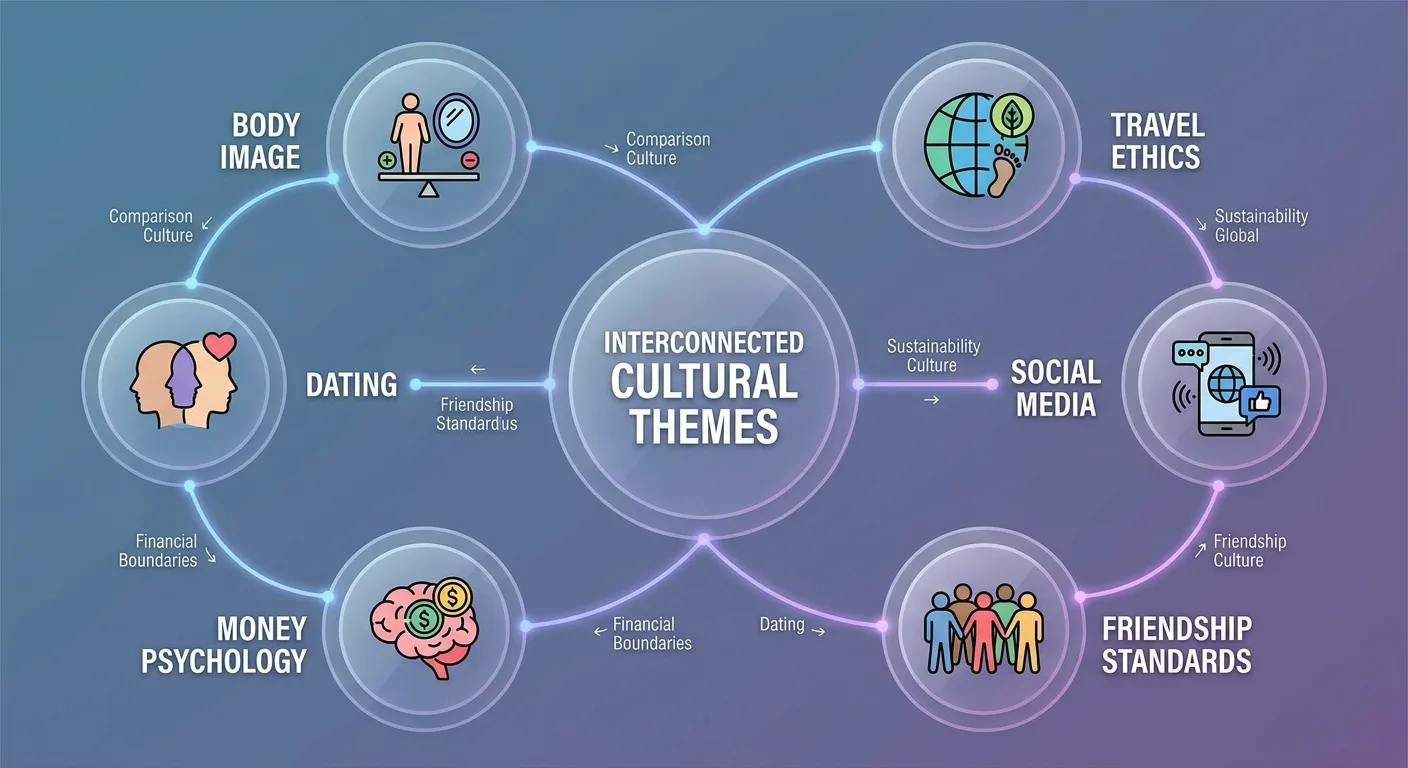
They work because they examine tensions your audience experiences but rarely sees articulated. The topics below don’t provide answers. They map questions and explore multiple valid perspectives. This approach builds deeper reader loyalty than how-to content alone because your audience returns curious about your perspective on emerging cultural shifts.
14. Body Image Recalibration in the Ozempic Era
Weight loss medication availability has shifted cultural conversations faster than most content has adapted. What happens to body positivity when you can just take a shot once a week and lose 30 pounds? It’s a genuine question, and it’s making people reconsider everything they thought they’d settled about acceptance versus change.
Class implications first. Medication access follows wealth. Ozempic and similar GLP-1 medications cost $1,000+ monthly without insurance coverage. That creates visible class stratification where thinness increasingly signals not just discipline but financial resources. Coverage varies by insurance and diagnosis. Some people get it prescribed for diabetes management. Others pay out of pocket for off-label weight loss use.
The judgment directed at people who choose medication versus people who choose not to runs both ways. Neither decision should require defense, yet both invite commentary. People who use medication face accusations of taking the easy way out. People who don’t use medication despite struggling with weight get asked why they won’t try the obvious solution. Both responses miss the complexity of individual circumstances.
Does “loving your body” rhetoric hold up when medical intervention becomes accessible? If you could modify your weight relatively easily, does choosing not to mean you’ve actually accepted your body, or does it mean you’re performing acceptance while resenting limitation? Perspectives from people who’ve used medication, people who’ve rejected it, and people who lack access entirely all matter here.
We’re watching real-time shifts in how we think about weight, health, and choice. Lifestyle content should reflect that complexity instead of pretending previous thinking still applies unchanged.
15. Dating App Fatigue and What Comes After
Dating content reviews apps or provides profile optimization advice. That ignores the growing population that’s given up on apps entirely without clear alternatives.
Why is app fatigue so widespread? Commodification turns people into products you swipe through while eating breakfast. Endless choice paradox means you’re always wondering if better options exist three swipes away. Optimization culture creates profiles that all sound identical. Conversation fatigue from repeated introductory exchanges that go nowhere. Burnout from treating dating like a part-time job.
What are people trying instead? Returning to in-person social activities specifically to meet potential partners (sports leagues, hobby groups, volunteer work). Friend setups that feel old-fashioned but occasionally work. Accepting long-term singleness as preferable to app exhaustion. Exploring unconventional relationship structures that don’t fit app thinking.
The practical problem: if you’ve exhausted your immediate social circle and don’t want apps, how do you actually meet people? Location factors matter tremendously. Large cities offer more in-person options. Small towns might make apps the only realistic choice despite their problems.
What happens when the infrastructure we built for dating stops serving its purpose but we haven’t developed functional replacements? Perspectives from people in different life stages and with different relationship goals matter. Dating at 25 differs from dating at 45. Looking for casual connection differs from seeking a co-parent.
We built dating infrastructure that optimizes for initial contact volume, not relationship formation, then act surprised when people burn out from quantity without quality.
16. Generational Money Scripts You’re Still Running
Personal finance content focuses on tactics without addressing psychological foundations. Money beliefs you inherited from your family’s economic reality shape everything.
How Depression-era grandparents passed down scarcity thinking that might not serve current contexts. Hoarding tendencies, extreme frugality even with adequate resources, distrust of financial institutions, cash preference over banking. Those behaviors made sense during actual scarcity. They create dysfunction when maintained without cause.
Boom-era parents assumed homeownership and pension security that no longer exist. They followed a script: stable employer, decades-long career, retirement pension. That path isn’t available to younger generations, yet parental advice still assumes it is. The resulting guidance (just buy a house, stay with one company, don’t job hop) ranges from irrelevant to actively harmful.
Immigrant family money scripts around education investment, family financial obligation, wealth display matter differently. Many immigrant parents sacrificed everything for children’s education, creating implicit expectation that financial success will be shared. Some cultures expect adult children to support parents financially. Others view wealth display as dangerous or shameful. Those scripts shape behavior long past childhood.
Which inherited beliefs serve you and which create dysfunction? The guilt of rejecting family financial values even when those values demonstrably don’t work for your circumstances is real.
These english blog topics work across demographics because everyone has inherited money scripts. Your financial behavior is rarely just about math. It’s about psychological patterns formed before you had conscious money awareness.
17. Travel Guilt in Climate-Conscious Circles
Travel content either ignores environmental impact or virtue-signals carbon offset purchases. Neither helps someone navigating actual ethical tension.
Flying has significant climate impact. A single round-trip flight across the country produces roughly one ton of CO2 per passenger. That’s measurable harm. Human desire for travel and connection is also real. Family across oceans. Cultural experiences that matter to identity formation. Work requirements that demand physical presence.
How are people resolving this tension without pretending perfect solutions exist? Reduced flight frequency (one big trip annually instead of multiple smaller ones). Regional travel prioritization using ground transport. Train alternatives where infrastructure makes it viable. Accepting guilt as the cost of choices that matter to you.
The class and geographic privilege embedded in climate-conscious travel rejection needs acknowledging. Coastal Americans with family nearby can drive for holidays. People with relatives across oceans can’t. Wealthy travelers have easier access to expensive train alternatives. Budget travelers face pressure to fly cheapest routes regardless of environmental cost.
Virtue signaling versus genuine behavior change shows up here. Purchasing carbon offsets often functions as moral laundering that changes nothing. Some offset programs fund projects that would have happened anyway. Others have questionable verification. The psychology of offsetting (“I paid money so now my flight is neutral”) can reduce motivation for actual consumption reduction.
Perspectives from people who’ve stopped flying, people who fly rarely with intention, and people who’ve decided the tradeoff is worth it all matter. This topic generates discussion because it lacks a clear right answer.
We’re in the uncomfortable middle phase of climate awareness where individual behavior changes feel simultaneously essential and insufficient. Sitting with that discomfort beats offering false resolution.
18. Social Media Authenticity Performance and Where It Breaks
Social media commentary either celebrates authenticity or condemns performativity. The paradox: sharing vulnerability online is both genuine and performative simultaneously.
The exhaustion of constant authenticity curation is real. Crying selfies with captions about mental health struggles. Trauma storytelling that turns pain into content. Relationship transparency that shares intimate details for engagement. These can be genuinely therapeutic while also functioning as calculated content strategy.
How “authenticity” became a marketable commodity matters. Platforms reward vulnerability with engagement. Brands partner with creators who share struggles (as long as those struggles are relatable, not too dark, and ultimately overcome). The result is incentive structures that financially reward emotional exposure. As noted by sunrise and grind, content creators are increasingly questioning the sustainability of authenticity performance, where bloggers are encouraged to “write the post that makes you a little nervous to hit publish” rather than filter content to death for algorithmic favor.

Audience complicity in this system exists. We reward vulnerability performance with likes, shares, supportive comments. That engagement incentivizes more performance, which trains creators to package increasingly personal content for consumption. Then we criticize them for oversharing or exploitation.
Perspectives from people who’ve pulled back from personal sharing and people who’ve found value in online vulnerability both exist. Connection through shared struggle is real. Community formed around authentic storytelling matters. The question is whether the platforms we’re using can sustain genuine connection or whether their structural incentives inevitably corrupt it.
What parts of yourself should remain unmonetized? Where do you draw boundaries between shareable and sacred?
We’ve created platforms that financially reward emotional exposure through influencer marketing and engagement algorithms, then act surprised when people optimize for that reward structure.
19. Friendship Maintenance Effort and Who Decides the Standard
Friendship content provides maintenance tips without acknowledging that people have fundamentally different friendship models. The tension between competing expectations creates most of the conflict.
High-maintenance friendship models expect regular communication, proactive planning, emotional availability, and consistent effort demonstration. Long gaps in contact signal disinterest or relationship devaluation. Maintaining connection requires ongoing work.
Low-maintenance friendship models treat long gaps as normal. Connection isn’t measured in contact frequency. You can not speak for months or years and pick up where you left off. Friendship persists through mutual affection regardless of interaction regularity.
Who gets to decide the standard in a specific friendship? When two people have incompatible models, someone’s expectations will be disappointed. The high-effort person feels unvalued when their initiative isn’t reciprocated. The low-effort person feels pressured by demands they consider unnecessary.
The resentment that builds when effort feels unequal shows up constantly. One person always initiates plans. One person always reaches out first. One person does the emotional labor of maintaining connection. That imbalance creates frustration regardless of which side you’re on. The initiator feels taken for granted. The responder feels badgered.
Life stage, personality, and relationship history shape friendship expectations. New parents have less friendship capacity than child-free friends. Introverts recharge through solitude; extroverts recharge through connection. People who’ve experienced friendship betrayal might maintain higher boundaries than people who haven’t.
Neither approach is objectively superior. They’re different models that serve different needs. The question is compatibility, not correctness.
This topic generates discussion because everyone has experienced friendship disappointment from mismatched expectations. The friend who wanted more contact than you had capacity to provide. The friend who disappeared when you needed them. The friend whose definition of effort never matched yours.
We don’t have shared cultural scripts for friendship in the way we do for romantic relationships. Partnerships have proposals, ceremonies, legal contracts, cultural expectations. Friendships have none of that, which creates constant negotiation and frequent disappointment.
Turning Topics Into Traction
You now have 19 lifestyle blog topic ideas that address real reader needs instead of algorithmic preferences. The harder question: how do you turn these into content that actually builds audience?
Most lifestyle creators understand what to write about but struggle with strategic execution. They produce content that’s substantively strong but structurally invisible. The issue isn’t creativity. It’s the gap between editorial strength and distribution strategy.
I work with lifestyle creators and brands who’ve figured out their voice but can’t figure out why their traffic plateaus. The Marketing Agency specializes in the technical architecture that makes strong content findable through keyword research that doesn’t force awkward phrasing, internal linking systems that guide readers deeper, and schema implementation that helps search and AI systems understand your perspective.
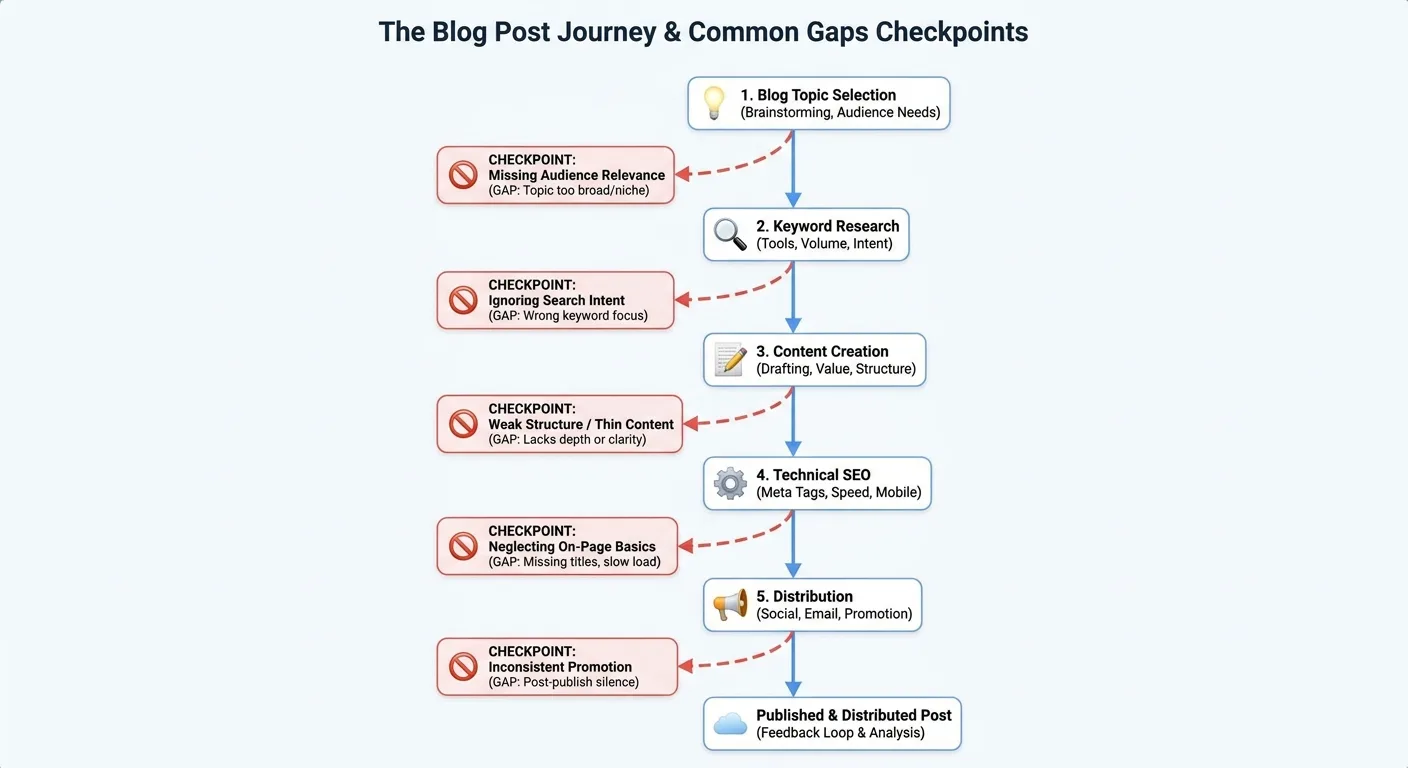
If you’re producing thoughtful lifestyle content but not seeing the audience growth that quality deserves, the problem might not be your topics. It might be the invisible technical gaps between publication and discovery. Understanding how to come up with blog topics is one piece. Making those topics discoverable is another.
These unique blog ideas for students and established creators alike require distribution strategy that matches editorial ambition. Your audience exists. The question is whether they can find you.
Final Thoughts
The lifestyle topics that build loyal audiences share one quality: they refuse to flatten complexity. Most content fails because it chases the appearance of authority by providing definitive answers to questions that don’t have them.
The 19 high demand blog topics covered here work because they meet readers in the messy middle of real decisions. Career transitions involving actual financial risk. Friendships that fade despite genuine affection. Body image questions that don’t resolve cleanly. Travel desires that conflict with stated values.
Your job isn’t to eliminate the tension. It’s to articulate the tension so clearly that readers feel seen instead of instructed.
That’s what transforms casual readers into community members.
They return because you’re willing to examine the questions they’re actually living with instead of the questions that make for clean content. These blog topic ideas for students address actual academic pressure and life navigation, not productivity theater. High demand blog topics emerge when you identify cultural shifts before they’re fully named.
Choose topics that invite discussion rather than prescribe solutions. Write for the reader who’s tired of being told what to think and ready to think alongside someone who respects their intelligence.
Understanding how to start a blog is the technical foundation. Building content that refuses comfortable simplification is what sustains it.
That’s the difference between content that gets consumed and content that builds community.
Frequently Asked Questions
What makes lifestyle blog topics effective for building community instead of just traffic?
Effective lifestyle blog topic ideas address real tensions readers are experiencing rather than providing aspirational content or surface-level advice. Topics that acknowledge complexity, validate multiple perspectives, and examine uncomfortable questions create space for genuine reader engagement. Community forms when your audience recognizes that you’re willing to map difficult terrain without forcing clean conclusions. They return because your content respects their intelligence enough to complicate comfortable narratives, creating ongoing discussion rather than one-time consumption.
How do you identify high demand blog topics before they become oversaturated?
High demand blog topics emerge at the intersection of personal struggle and cultural shift. Watch for tensions your audience mentions in passing but content rarely addresses directly. Monitor how life changes, remote work flexibility, medication availability, platform evolution, create new decision points people lack scripts for. Trending lifestyle topics often surface in private conversations months before mainstream coverage. Your advantage comes from articulating emerging tensions clearly before they’re named, positioning you as early voice rather than late echo.
What personal blog ideas work for students versus established professionals?
Blog topic ideas for students should address actual constraints of that life stage: limited budgets, space restrictions, career uncertainty, identity formation, friendship evolution during transitions, and financial decision-making without established income. Established professionals benefit from content examining career recalibration, income disparity in existing relationships, life stage transitions like parenthood or aging parents, and value alignment questions. Both audiences need practical systems that acknowledge real limitations rather than aspirational scenarios. The core difference is life stage context, not complexity level or topic sophistication.
How do you write cultural commentary without alienating readers who disagree?
Lifestyle topics to discuss effectively examine tensions from multiple perspectives without prescribing one correct outcome. Think about cultural commentary as tension-mapping rather than position-taking. Acknowledge that competing viewpoints have legitimate foundations. Include perspectives from people making different choices. Your role is articulating the complexity clearly enough that readers with varying positions feel their experience reflected. Readers who disagree with your personal choices will still return if your analysis respects their intelligence and validates that these questions lack universal answers.
What lifestyle content ideas for Instagram translate well to long-form blog posts?
Lifestyle content ideas for Instagram that work as blog expansion include style identity beyond trends (short-form shows outfits; long-form examines aesthetic development and group belonging signals), small space systems (carousel shows the result; blog provides decision points and budget breakdowns), friendship evolution (caption hints at complexity; blog maps multiple outcome scenarios), and cultural commentary on body image or authenticity performance. Instagram functions as conversation entry point. Blog provides the depth that format constraints prevent. Use the platform to identify which topics generate discussion, then develop those themes thoroughly in long-form content.