



Look, most blogs fail because they’re built for the writer’s ego, not the reader’s problems. Start with who you’re helping, not what platform to use. Your first post will probably suck. That’s fine. Your tenth will be better. Everything else is just procrastination with better branding.
Why Most New Blogs Fail Before They Even Launch
There are 600 million blogs out there. Most of them suck.
Not because the writing’s bad. Because nobody asked for them.
The writer wanted to write, so they wrote. The reader needed help, so they Googled, found nothing useful, and left.
The problem isn’t oversaturation. It’s misalignment.
You start a blog because you want authority. Or leads. Or to “establish yourself as an expert.” Fine. But here’s the thing: your reader doesn’t care about your need to be seen as an expert. They care about their 3pm panic attack when they can’t figure out whether their Facebook ads are working.
This creates cascading problems. You produce content that serves your need to publish rather than their need to find answers. Your promotional strategies feel desperate because you’re pushing content at people instead of offering something they’re already looking for. Your metrics measure vanity over impact because you’re tracking what makes you feel successful rather than what makes your readers’ lives better.
I’ve worked with dozens of businesses trying to figure out how to start a blog that generates results. The pattern is consistent: the ones that struggle start with platform selection and content calendars. The ones that succeed start with a clear picture of who they’re serving and what problem they’re solving.
The Reader-First Reversal
Reader-first blogging sounds like marketing bullshit, but it’s not. It just means you start with “what does this person actually need” instead of “what do I want to say.”
This means identifying a specific reader with specific problems before writing a single word. Not a demographic profile or a buyer persona with a stock photo and fictional name. A real person dealing with a real frustration that you can help resolve.
Think about your ideal reader’s typical Tuesday. What are they struggling with? What questions are they asking their colleagues, typing into Google at 11 PM, or complaining about in industry forums?
My friend Sarah runs a marketing agency. She started a blog last year with a post called “My Journey From Corporate Marketing to Entrepreneurship.”
Guess how many people read it? Her mom. And maybe her mom’s friend Linda.
Know what her most-read post is now? “How to Fire a Client Who Won’t Pay.” Because that’s the thing her readers actually Google at 11pm on a Tuesday when they’re pissed off and desperate.
The first approach serves the consultant’s need to establish credibility. The second approach serves the reader’s need to make a decision by Friday.

When you’re starting out, resist the temptation to begin with topics you want to write about. Start with questions your reader is already asking.
This doesn’t require elaborate research or expensive tools. It requires paying attention to the conversations happening around you.
What questions do people ask you repeatedly? What problems do they describe in detail? What decisions are they struggling to make? These questions reveal the exact content your blog should provide.
Have you actually talked to your reader? Like, in the last week? Or are you guessing what they need based on what you’d find interesting?
What Success Looks Like (Before You Define It Wrong)
Before defining your blogging goals, understanding high-impact blog topics can help you align your success metrics with content that resonates with readers.
Most people adopt other people’s definitions of blogging success without examining whether those definitions align with their personal goals. You see someone building a massive email list and assume that’s what success means. You read about a blogger making six figures and decide that’s the benchmark.
These might be valid success markers for those people. They might be completely wrong for you.
You need to get uncomfortably specific about what you want your blog to accomplish in six months. “Build my brand” isn’t specific enough to guide decisions. “Share my expertise” doesn’t tell you what to write or when you’ve succeeded.
Some goals are incompatible with others. You can’t simultaneously build a massive audience and maintain an exclusive insider feel. You can’t publish quick tactical wins while also establishing yourself as a deep-thinking strategist. You can’t be everywhere on social media AND write deep research pieces.
Pick one. The people trying to do everything are doing nothing well.
Different success paths require different approaches:
Email List Building needs high-frequency publishing and lead magnets. You’re looking at weekly posts minimum, plus the time to create downloadables. This pairs well with authority building and product launches. It doesn’t work if you want to maintain exclusivity or hate promotion.
Lead Generation works with bi-weekly tactical content that addresses specific buyer questions. You’re creating sales enablement material and case studies. This doesn’t pair well with pure thought leadership or controversial takes that might alienate potential clients.
Thought Leadership demands deep research and unique perspectives. You’re aiming for industry citations and speaking invitations. High time investment. Works great if you want book deals or consulting gigs. Doesn’t work if you need high-volume publishing or quick wins.
Content Archive for internal reference needs monthly comprehensive guides. Lower publishing frequency, but each piece needs to be thorough. Perfect for team training and client onboarding. Terrible for viral growth or social engagement.
Public Processing is variable. You publish when inspired, focusing on personal clarity and creative outlet. Great for authentic voice and niche community. Bad for monetization or broad appeal.
The Pre-Writing Foundation Nobody Talks About
Most guides rush you toward platform selection and theme customization. We’re going to slow down.
The systems, habits, and mental frameworks you establish now matter more than your first post’s quality. Most people start blogs during a burst of enthusiasm without considering what happens when that enthusiasm wanes.
And it will wane.
You need structural supports that keep the blog going when motivation is low, because consistency matters more than brilliance in the early stages.
Your Idea Capture System (Because Inspiration Is Unreliable)
When you’re struggling to generate ideas, learning how to come up with blog topics systematically can transform your content planning from sporadic to strategic.
Professional writers don’t wait for inspiration. They build systems that generate viable ideas on demand.
Set up a simple system to capture potential topics when you encounter them. This could be a notes app on your phone, a dedicated spreadsheet, voice memos, or a notebook you carry everywhere. The format doesn’t matter. What matters is having a low-friction process that doesn’t require you to fully develop an idea before capturing it.
I use Apple Notes because it’s already on my phone and I’m too lazy to open anything else. You do you.
Record potential topics when they appear in conversations with colleagues, customer questions, industry discussions, or personal frustrations. Write down the question exactly as you heard it. Note where you encountered it and why it seemed worth exploring.
Your idea capture system should collect raw material without judgment. You’re not committing to write about everything you capture. You’re building a reservoir of possibilities that you can evaluate later.

Before you write anything, ask yourself: Is someone actually searching for this? Not “would this be interesting” but “is someone typing this exact problem into Google right now?”
My test is simple: Would I have searched for this when I was stuck? If the answer is “maybe” or “sort of,” it’s a no. It needs to be “yes, absolutely, at 2am when I was panicking about this exact thing.”
Run potential topics through these questions:
Does this solve a specific problem my reader faces today? Would someone search for this, or is it just interesting to me? Can the reader do, decide, or understand something new after reading this? Is this relevant now, or am I six months too early or late? What perspective can I offer that differs from the top 10 search results? Do I have the expertise, data, or access needed to write this credibly? Can this be meaningfully covered in one post, or does it need a series?
If an idea passes most of these tests, schedule it. If it passes a few, refine it. If it passes almost none, archive it.
The Realistic Publishing Audit
Some study says 57% of bloggers who post daily see better results. Sure. You know what else gets better results? Not burning out after three weeks and quitting forever.
I’ll take “posted every Tuesday for a year” over “posted daily for a month then disappeared” every single time.
The question isn’t whether daily posting performs better. It’s whether you can maintain daily posting for twelve months without burning out.
Can you write every day for a year without burning out? No? Then don’t plan to write every day.
Track your time for two weeks. Actually track it. Don’t guess.
You’ll discover you have way less free time than you thought. That fantasy of waking up at 5am to write? You tried that last year for your workout routine. Lasted four days.
Be honest about your energy patterns. Some people write best early morning, others late at night. I’m a night person who spent six months forcing myself to write at 6am because some productivity guru said that’s when “real writers” work. Know what I produced? Shit. Exhausted, resentful shit.
Calculate the true time cost of publishing. This includes research, writing, editing, formatting, image selection, SEO optimization, and promotion scheduling. Not just the writing phase.
A financial advisor with a full client load wants to start a blog about retirement planning. She tracks her time for two weeks and discovers she has exactly four hours of discretionary time on Sundays. She initially plans weekly 2,000-word posts, calculating that she can write 500 words per hour.
What she doesn’t account for: research time (1.5 hours), finding and formatting images (30 minutes), editing (45 minutes), SEO optimization (30 minutes), and scheduling social promotion (30 minutes).
Her actual capacity is one quality post every two weeks, not weekly.
By accepting this reality upfront, she builds a sustainable rhythm instead of publishing three great posts, burning out, and disappearing for two months. A consistent biweekly schedule beats an erratic weekly attempt every time.
Determine whether you can realistically commit to weekly posts, biweekly posts, or monthly deep dives. Build buffer content before launching so you’re not writing under deadline pressure from day one.
Choosing Your Blogging Platform Without Overthinking It
Platform selection matters less than most people think in the early stages.
You’re going to waste two weeks comparing WordPress hosting plans. I know because I’ve watched 50+ people do it. They’ll create spreadsheets. They’ll read Reddit threads from 2019. They’ll ask their cousin who built a website once.
Then they’ll pick Bluehost anyway because it’s $3.95/month.
Just start with Bluehost.
The real trade-offs between hosted platforms (WordPress.com, Medium, Substack) and self-hosted options (WordPress.org) come down to control versus convenience.
The Three Questions That Matter
Do you need to own your email list? If you plan to use your blog for business development or eventual monetization, list ownership matters. Platform-controlled lists can disappear if the platform changes policies or shuts down. Self-hosted WordPress or platforms with robust email integration give you full ownership and export capability.
Do you need custom functionality beyond basic publishing? If default templates meet your needs and you value simplicity, hosted platforms work beautifully. If you need specific functionality (membership areas, course integration, custom workflows), self-hosted WordPress provides the most flexibility.
Do you want to minimize technical maintenance? Hosted platforms handle security, updates, and backups automatically. Self-hosted WordPress requires occasional plugin updates and security monitoring. Time spent on technical issues is time not spent writing.
Side note: I once spent $47 on a “content tracking app” that was literally just a spreadsheet with a prettier interface. Don’t be me. Use Google Sheets. It’s free and does the exact same thing.
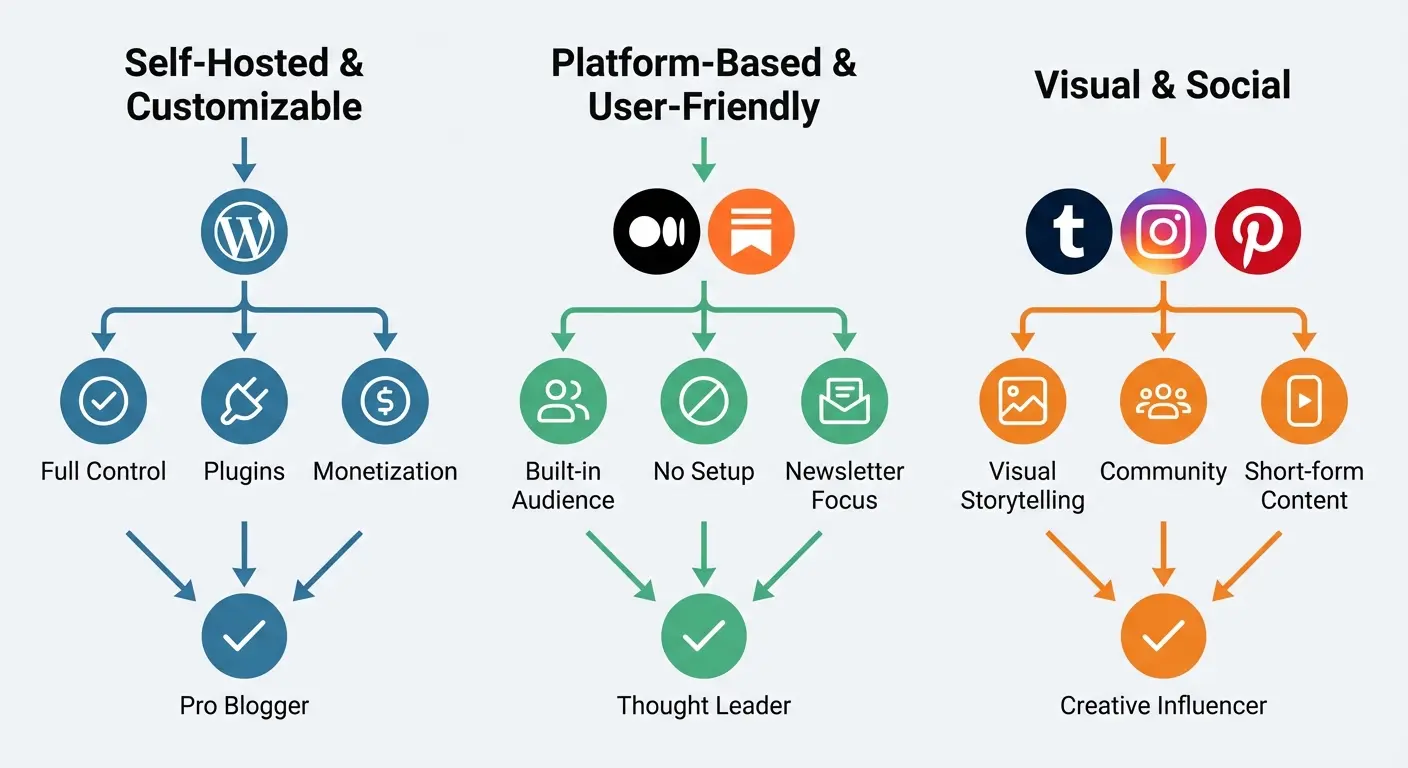
If you’re wondering how to start a blog for free, hosted platforms offer the simplest path. Blogger.com, WordPress.com’s free tier, and Medium all allow you to start publishing immediately without hosting costs. The trade-off is limited customization and platform dependency.
For those starting a blog with business goals, self-hosted WordPress typically makes more sense despite the slightly higher complexity and cost. The control and flexibility become increasingly valuable as your blog grows.
What You Can Ignore Completely Right Now
New bloggers obsess over technical and design elements that have minimal impact on early success. You can ignore these completely until you’ve published at least ten posts:
Custom theme design. A clean, readable default theme is sufficient. Your readers care about whether your content helps them, not whether your header font is perfectly on-brand. You could put a picture of a potato up there and as long as your content is good, they’ll subscribe. I’m not saying you should use a potato. But you could.
Advanced SEO plugins. Basic optimization is enough initially. You don’t need comprehensive SEO suites when you have five posts.
Social sharing buttons. Readers will share valuable content regardless of button placement. If your content solves their problem, they’ll find a way to share it.
Elaborate category structures. You don’t have enough content yet to need complex organization. Start simple and refine as your library grows.
Custom domain email addresses. Gmail works fine for now. You can upgrade to hello@yourblog.com later if it matters.
These elements might matter eventually, but they’re procrastination disguised as preparation when you haven’t published ten posts yet.
According to The Minimalists’ 2026 blogging guide, WordPress remains the platform of choice for serious bloggers due to its creative freedom and flexibility. The founders note “it’s not only because it’s the easiest blog to set up. The Minimalists uses WordPress because it gives us greater control over the look and feel of our blog, more creative control than any other platform.”
This real-world validation from bloggers who’ve reached over 20 million people confirms that platform sophistication matters far less than consistent, valuable content creation.
Content Planning That Works Backward From Your Reader
Most people approach content planning by brainstorming topics they could write about. This produces a list of subjects they find interesting, which may or may not align with what their readers need.
We’re going to reverse-engineer your content planning by starting with reader outcomes rather than topic ideas.
Mapping Problems to Content Types
Different content types serve readers at different stages of their problem-solving journey. Someone just becoming aware of
a problem needs different content than someone ready to implement a solution.
Awareness-stage content helps readers recognize they have a problem or opportunity. These posts define issues, explain why something matters, and help readers understand whether this applies to their situation.
Consideration-stage content evaluates potential solutions. Readers at this stage know they have a problem and are exploring approaches to solve it. These posts compare options, discuss trade-offs, and help readers narrow their choices.
Decision-stage content supports implementation of a specific approach. Readers here have chosen a direction and need tactical guidance. These posts provide step-by-step instructions, troubleshoot common obstacles, and offer detailed implementation advice.
The same topic can be approached differently depending on reader stage. A beginner needs foundational concepts and clear definitions. Someone further along needs nuanced comparisons and implementation details.
According to Wix’s comprehensive blogging research, approximately 76% of bloggers publish “how-to” content, making it the most common content format, while 55% include list-based posts. This data reveals what readers consistently find valuable: actionable, structured content that walks them through processes step-by-step.
Research what terms your readers use by examining forum discussions, customer questions, and social media conversations. Don’t assume you know their vocabulary. The language they use to describe their problems often differs from the technical terms you might prefer.
When’s the last time you searched for something at 11pm because you were stuck? What did you type? That’s what your reader is typing.
Build a content mix that serves your audience at multiple stages rather than assuming everyone arrives with the same level of knowledge or readiness.
Writing Your First Post (And Why It Shouldn’t Be Perfect)
Your first post will be bad. I mean, it might be fine, but you’ll think it’s bad. You’ll rewrite the intro seven times. You’ll change “however” to “but” and back to “however.” You’ll wonder if you should add another example.
Stop. Publish it. I promise the internet will not explode because your transition sentences aren’t smooth.
Perfectionism prevents many aspiring bloggers from publishing their first post. Your first post is a learning tool, not a masterpiece. The goal is getting something published so you can begin the iterative process of improvement through feedback and practice.
Choose a topic you can write confidently about without extensive research. Structure it for clarity: introduction that states the problem, body that provides the solution, conclusion that summarizes action steps.
How do you know when it’s “done enough” to publish? When it clearly communicates your main point and provides actionable value to your reader. That’s the bar. Everything else is refinement that can happen over time.
Published and imperfect beats unpublished and perfect. Every time.
You’re going to hit publish on your first post and immediately check your analytics. Zero visitors. You’ll refresh. Still zero. You’ll check again in an hour. Two visitors (one is you on your phone).
This feels terrible. You spent six hours on that post. You edited it four times. You picked the perfect header image. And… nothing.
This is normal. This is not a sign you’ve failed. This is just what starting looks like.
Editing for Clarity, Not Perfection
Focus your editing on ensuring your post communicates clearly rather than achieving stylistic perfection.
Read your draft aloud. This catches awkward phrasing that looks fine on screen but sounds clunky when spoken. Your ear catches rhythm problems your eyes miss.
Remove jargon your reader might not understand. You’re so familiar with industry terminology that you forget it’s not universal. If there’s a simpler word that means the same thing, use it.
Ensure each paragraph advances your point rather than circling it. Every paragraph should move the reader closer to understanding or action. If a paragraph doesn’t contribute to that progression, cut it.
Three editing passes cover what matters:
Structural coherence pass: Does the order make sense? Does each section flow logically to the next? Would rearranging any sections improve clarity?
Clarity pass: Will your reader understand this? Are you explaining concepts thoroughly enough? Are you making assumptions about prior knowledge?
Basic errors pass: Spelling, grammar, broken formatting. These matter because they distract from your content, not because they reflect your intelligence.
Ignore advanced editing concerns for now. Rhythm variation, stylistic consistency, and tonal refinement develop over time through practice. Establish “clear and helpful” as your quality bar. “Polished and engaging” comes later, after you’ve published at least twenty posts.
The Technical Setup That Matters (And What Doesn’t)
Stop fucking around with theme customization. Your readers don’t care if your sidebar is 280 pixels or 300 pixels. They care if you answer their question.
We’re going to streamline your technical setup to get you from platform selection to published post as quickly as possible.
Focus exclusively on elements that impact reader experience or blog functionality in meaningful ways. Everything else can wait.
Technical sophistication should grow with your blog, not precede it. You need just enough technical foundation to publish and be found. Everything else is optimization for problems you don’t have yet.
The One-Hour Setup Checklist
This time-bounded technical setup process prevents endless tinkering and configuration. Here’s what you can and should accomplish in approximately one hour:
Minutes 0-15: Account & Hosting
Create hosting account (Bluehost, SiteGround, or similar). Register domain name or connect existing domain. Install WordPress (usually one-click from hosting dashboard). Log into WordPress dashboard.
Minutes 15-30: Essential Settings
Set site title and tagline (Settings > General). Configure permalink structure to “Post name” (Settings > Permalinks). Set comment moderation preferences (Settings > Discussion). Delete default “Hello World” post and sample page. Create essential pages: About, Contact (placeholder text is fine).
Minutes 30-45: Theme & Basic Design
Install clean, readable theme (default Twenty Twenty-Four works fine). Upload logo or set site title font/color. Set primary brand color if theme allows. Add profile photo to author bio. Test mobile responsiveness (view on phone).
Minutes 45-55: Essential Plugins (WordPress only)
Install and activate Yoast SEO. Install and activate security plugin (Wordfence or similar). Install and activate backup plugin (UpdraftPlus or similar). Configure automatic backups to run weekly.
Minutes 55-60: Test & Launch
Publish test post with image to verify everything works. View published post on desktop and mobile. Submit sitemap to Google Search Console. Bookmark WordPress dashboard login URL.
Stop here.
Everything else can wait until after you’ve published ten real posts.
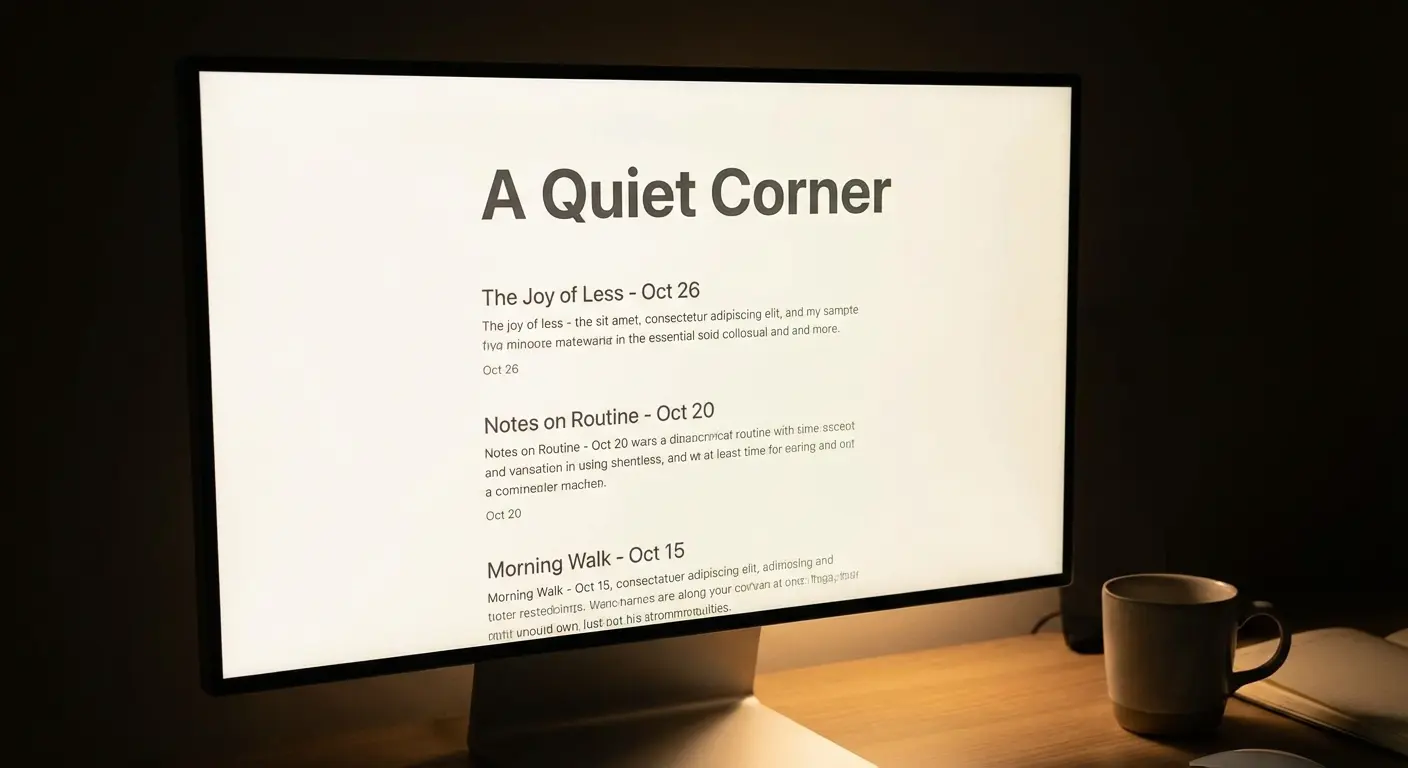
This one-hour setup creates a functional blog ready to publish content. Additional technical improvements can happen gradually as you publish and identify needs rather than anticipated ones. This approach prevents technical setup from becoming a procrastination mechanism that delays creating content.
Security and Backup Basics (Without the Paranoia)
For self-hosted blogs, essential security and backup practices protect your work without inducing anxiety that leads to over-engineering.
Install a reputable security plugin. Enable automatic updates for WordPress core and plugins. Use strong passwords. Set up automated backups to external storage.
These practices matter because they protect your work and maintain site availability. But you don’t need to catastrophize about potential threats.
For hosted platforms, security and backups are managed by the platform. This is one of the key benefits of that approach.
Basic security practices are sufficient for new blogs that aren’t yet high-value targets. Don’t worry about advanced firewall configurations, security audits, or elaborate backup redundancy systems. Those become relevant later if your blog grows into a significant business asset.
Building Your Publishing Rhythm Before You Need It
Publishing rhythm (the predictable cadence at which you release content) matters more for building reader trust and personal sustainability than publishing frequency.
A blog that publishes reliably every two weeks trains readers to expect and return for new content. A blog that publishes sporadically (three posts one week, nothing for a month, two posts the next week) never builds that anticipatory relationship.
Choose a realistic publishing schedule based on your time audit.
Knowing when you publish reduces decision fatigue and creates accountability without requiring external pressure. You’re not deciding each week whether to publish. You’re executing on a predetermined schedule.
Creating Your Content Buffer
Write three posts before you publish any of them. I know. You want to hit “publish” right now. Don’t. Future you will thank present you.
Build a reserve of completed posts before committing to a public publishing schedule.
Having three to five posts completed before announcing a schedule or promoting your blog provides breathing room when life interferes with your writing time. And life will interfere.
My friend Sarah ignored this advice. Published her first post immediately, promised “weekly updates,” then life happened. Sick kid, work deadline, car broke down. By week three she hadn’t published anything and felt like a failure.
She quit blogging entirely. Thought she “wasn’t cut out for it.” Bullshit. She just didn’t have a buffer. If she’d had three posts ready, she could’ve survived those three chaotic weeks and kept going.
So yeah, build a buffer. Future you will thank present you.
Write and complete your first three posts without publishing any of them. Schedule them at your chosen interval. Then maintain the buffer by completing your next post before the previous one publishes.
This requires delayed gratification. You have content ready but aren’t publishing it yet. But this discipline prevents the stress of writing under deadline pressure from day one.

Sustainable systems beat constant motivation. You’re creating structural support that keeps you publishing when enthusiasm fades.
Accountability Mechanisms That Work
As you establish your publishing rhythm, developing a content marketing strategy that aligns with your business goals ensures your consistency serves a larger purpose beyond just maintaining a schedule.
Practical accountability strategies help maintain publishing rhythm without depending on willpower or motivation.
Public commitment means announcing your publishing schedule to readers, even a small initial audience. This creates social pressure to follow through.
Accountability partners involve finding another blogger or colleague who tracks progress with you. You check in regularly and share what you’ve published.
Calendar blocking treats writing time as non-negotiable appointments. You schedule specific blocks for writing and protect them from other commitments.
Each approach works differently for different personalities. Some people respond well to public commitment. Others find it creates counterproductive pressure. Choose strategies that fit how you’re wired.
Track your publishing consistency visually. A simple spreadsheet or calendar marking published posts shows your progress and identifies patterns in when you succeed or struggle.
A software developer starts a blog about coding tutorials, committing to publish every Tuesday. She announces this schedule to her 200 Twitter followers and creates a simple Google Sheet with 52 rows (one for each week).
Every Tuesday she publishes, she marks that week green. After eight weeks, she has seven green rows and one red (the week her daughter had the flu).
This visual representation shows her she’s 87.5% consistent. Far better than the “I’m terrible at this” narrative her brain tells her when she misses one week.
The accountability partner she found through a blogging community Slack channel sees the same sheet and texts her every Monday: “Tomorrow’s Tuesday.”
This simple external reminder, combined with visual progress tracking, keeps her publishing even during low-motivation weeks when the last thing she wants to do is explain JavaScript promises.
Making Your Blog Discoverable Without Gaming the System
Help readers find your content through search and other channels without resorting to manipulative tactics or keyword stuffing.
Basic discoverability practices align with creating genuinely helpful content. Use clear, descriptive titles that match how people search for information. Structure posts with headers that aid both readability and search engine understanding. Write naturally while being mindful of the terms your readers use to describe their problems.
When you write content that directly answers questions your readers are asking, using the language they use to ask those questions, you’re doing effective SEO.
Internal linking connects related posts to help readers find more relevant content. Basic metadata (meta descriptions that accurately summarize your post’s value) helps search engines understand what you’ve written.
Search-Friendly Writing Without Keyword Obsession
Write in ways that naturally align with how your audience searches for information, without robotic keyword insertion that degrades readability.
Identify the questions your post answers. Ensure those questions (or close variations) appear in your title, headers, and opening paragraphs. This isn’t about hitting keyword density targets. It’s about clear communication that happens to align with search behavior.
Research what terms your readers use by examining forum discussions, customer questions, and social media conversations. Don’t assume you know their vocabulary.
Data from Hostinger reveals that 77% of internet users regularly read blog posts, making blogs a critical information source. However, with readers spending an average of just 52 seconds per blog post and 43% of readers skimming rather than reading thoroughly, the window to capture and hold attention is narrow.
This reinforces why search-friendly writing must also be skim-friendly writing: clear headers, front-loaded value, and immediate answers to the questions readers are asking.
Search-friendly writing and reader-friendly writing are the same thing when done correctly. Both prioritize clarity, directness, and answering questions explicitly.
The Internal Linking Strategy You’ll Maintain
Understanding internal linking case studies reveals how strategic connections between your posts can dramatically improve both user experience and search visibility without requiring complex technical implementation.
A simple approach to internal linking doesn’t require complex planning or constant updating.
When writing each new post, identify two to three previously published posts that provide relevant background, related perspectives, or next-step information. Link to them naturally within your content.
Simultaneously, review those older posts and add links back to your new content where relevant.
This creates a web of connections that helps readers discover related content and signals to search engines that your posts are part of a cohesive body of work.
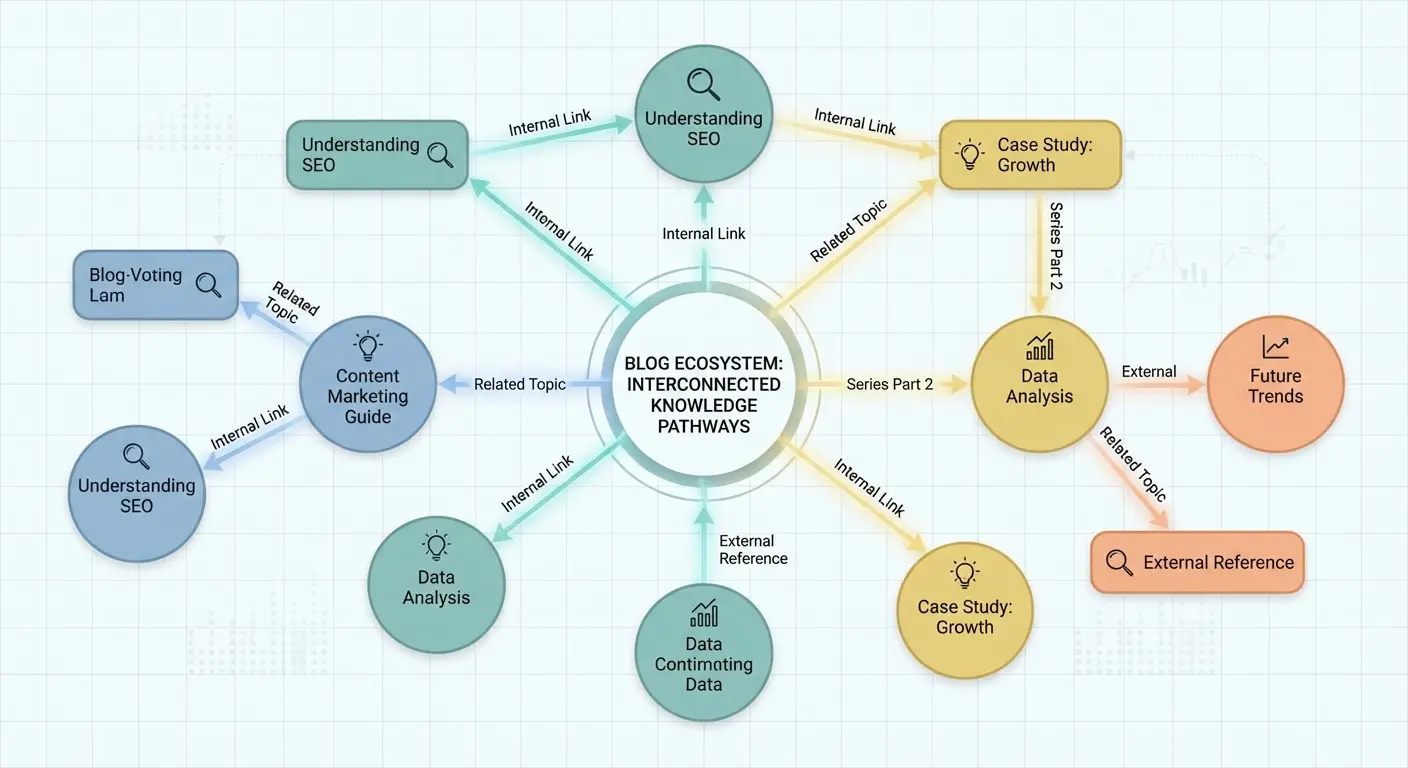
Make these links contextually relevant rather than forced. They should genuinely help readers rather than just exist for SEO purposes.
Internal linking becomes easier and more valuable as your content library grows. This is another reason to focus on consistency over perfection in the early stages.
When to Start Promoting (Hint: Not Immediately)
Premature promotion often backfires because you’re driving people to a blog with insufficient content to demonstrate your expertise or provide enough value to warrant return visits.
When someone arrives at your blog, reads your only post, and finds nothing else to explore, you’ve likely lost them permanently. They won’t remember to check back in a month when you have more
content.
Build a foundation of at least eight to ten posts before investing significant energy in promotion. This gives new visitors enough material to understand what your blog offers and whether it serves their needs.
This approach reduces pressure on any single post to perform perfectly. Visitors can explore multiple posts and form a more complete impression of your work.
Building Before Broadcasting
Developing your content library and refining your approach before seeking a large audience provides strategic advantages.
With multiple posts published, you can identify which topics resonate most strongly, which writing approaches feel most natural, and which reader problems you’re best positioned to address.
This learning happens through the act of publishing and reflecting on your work, not through planning.

Use this pre-promotion period productively. Experiment with different content formats. Refine your understanding of reader needs. Develop your voice without the pressure of audience expectations.
This approach requires patience and delayed gratification. But you’re building a stronger foundation that will make eventual promotion more effective.
You’re not hiding your blog during this period. You’re just not actively pushing traffic to it while you establish what it is.
Your First Promotion Channels (Chosen Strategically)
Identify one or two promotion channels that align with where your target readers already spend time, rather than trying to maintain a presence everywhere.
Honest assessment of where you can consistently show up and add value matters more than where you can broadcast links.
For B2B bloggers, this might be LinkedIn or industry-specific forums. For consumer-focused content, this might be relevant subreddit communities or niche Facebook groups.
Choose channels where you can participate authentically in existing conversations and occasionally share your content when it’s genuinely relevant to those discussions.
Quality of engagement beats quantity of channels. We’re pushing back against the exhausting expectation that you need to be on every social platform.
Give more than you take in these communities. Contribute helpful comments, answer questions, and share others’ content before promoting your own.
Measuring What Actually Matters in Year One
Let me be straight with you: traffic will likely be modest in year one. That’s completely normal.
Blogs rarely achieve significant traffic quickly unless they’re backed by existing audiences or substantial promotional resources.
What matters in the first year: publishing consistency (did you maintain your chosen rhythm?), content completion (did you build a substantial library of posts?), reader engagement (are people spending time with your content and returning?), and personal learning (do you better understand your readers’ needs and how to serve them?).
The Metrics Dashboard You Need
While basic metrics matter in year one, understanding advanced analytics for strategic growth becomes increasingly valuable as your blog matures and you need deeper insights into content performance patterns.
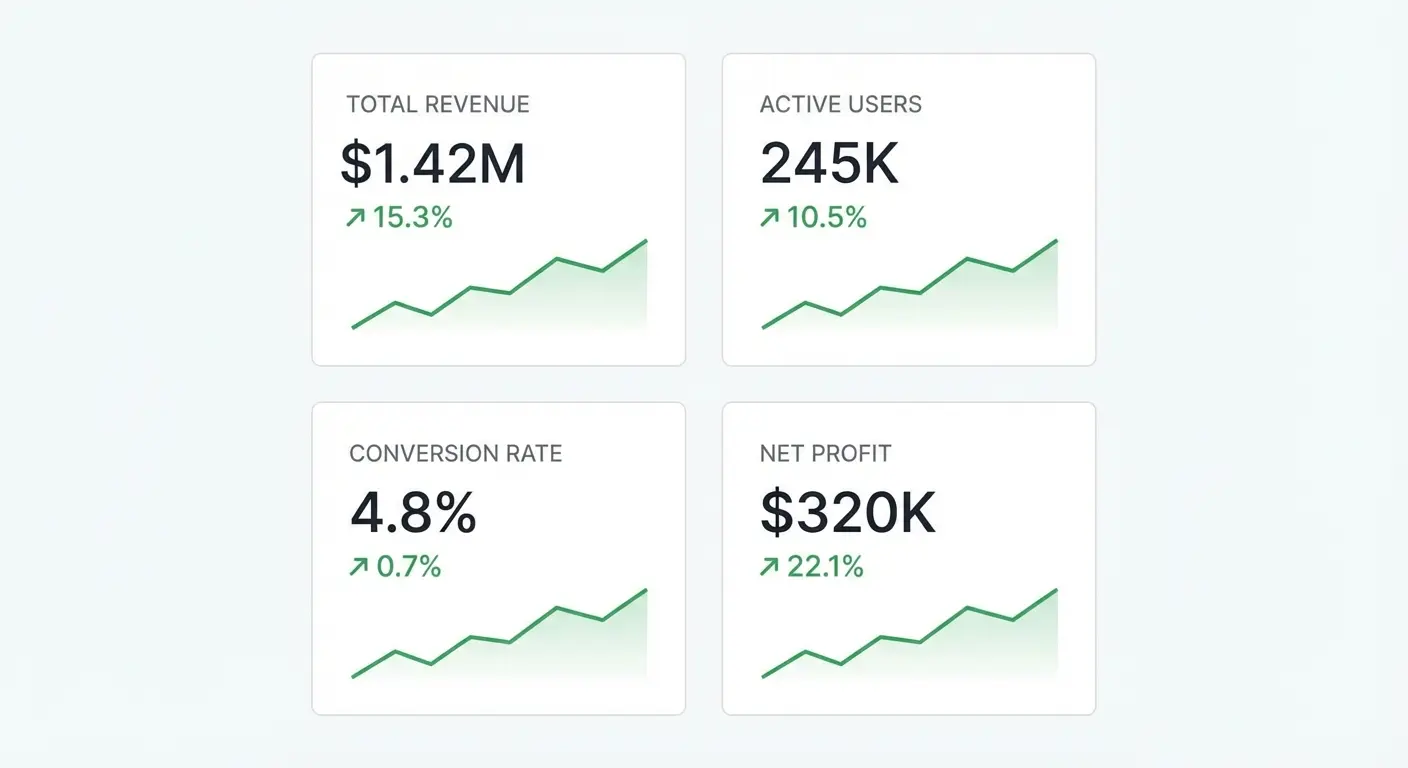
Track four things monthly: number of posts published (measuring your consistency), returning visitor percentage (indicating whether you’re creating content worth coming back for), average time on page (suggesting whether people read your content), and email subscribers if you’re building a list (representing your owned audience).
Why each metric matters:
Posts published reveals whether you’re maintaining your commitment. If you planned biweekly posts and published six in three months, you’re on track. If you published two, something needs adjustment.
Returning visitor percentage indicates value creation. If 5-10% of visitors return within 30 days, you’re creating content that resonates enough for people to come back. If that number is under 2%, your content might not be solving problems effectively.
Average time on page suggests engagement depth. If readers spend 3-5 minutes on a 1,500-word post, they’re reading it. If they spend 30 seconds, they’re bouncing immediately, which means your title promised something your content didn’t deliver.
Email subscribers represent your owned audience. Platform algorithms change. Search rankings fluctuate. Email subscribers are people who explicitly want to hear from you.
Don’t check your analytics every day. Daily data is noisy and creates anxiety without actionable insights. Monthly reviews give you enough data to identify trends without the emotional volatility of daily fluctuations.
According to research on blogging ROI, 15% of marketers report their highest return on investment comes from their websites and content marketing efforts, including blogs, with another 14% citing content marketing specifically as their top ROI source.
However, this return doesn’t materialize immediately.
The data shows that businesses publishing 11 or more posts per month see twice as much traffic as those publishing 2-5 posts monthly, and small companies publishing at least 11 posts monthly generate twice as many leads as those publishing 6-10 articles.
These statistics reveal an important truth for year one: consistency compounds, but the compounding takes time to become visible in your metrics.
When to Pivot (And When to Persist)
You’ll watch someone else’s mediocre post go viral while your actually-helpful post gets three views. You’ll wonder what they’re doing that you’re not. You’ll feel like an idiot for trying.
Welcome to blogging. It’s not fair. It’s never been fair. The best content doesn’t always win. Sometimes boring posts with great headlines beat brilliant posts with boring headlines. Sometimes timing is everything. Sometimes it’s just luck.
Distinguish between normal early-stage challenges that require persistence and genuine misalignment that suggests a strategic pivot.
Signals that indicate you should adjust your approach:
Consistently struggling to generate content ideas suggests you haven’t found the right angle or audience. If every post feels forced and you’re scraping the bottom of the barrel after five posts, something’s misaligned.
Writing that feels forced or inauthentic suggests misalignment between your interests and your chosen topic. If you dread writing sessions and the words come out stilted, you might be writing about something you think you should care about rather than something you do care about.
Complete lack of reader engagement despite consistent publishing suggests you’re not addressing real reader needs. If you’ve published 15 posts over four months with zero comments, zero shares, and bounce rates above 90%, your content isn’t resonating.
Situations that call for persistence rather than change:
Modest traffic in the first six months is normal. Most blogs don’t gain significant traction quickly. If you’re publishing consistently and seeing gradual growth (even if it’s just from 10 visitors per month to 50), you’re on the right path.
Occasional difficulty maintaining your publishing schedule happens to everyone. Missing one post because you got sick or had a work deadline doesn’t mean your system is broken. Missing six consecutive posts suggests you need to adjust your schedule.
Uncertainty about your writing quality is normal skill development. Everyone feels like their writing isn’t good enough when they start. If you’re publishing consistently and learning from each post, your quality will improve naturally.
Most successful blogs go through an awkward early phase where everything feels harder than it should. The question isn’t whether you experience challenges, but whether those challenges stem from normal skill development or fundamental strategic misalignment.
Do you even like writing? Seriously. Because if you hate it, this whole plan falls apart.
You’ve built something that didn’t exist before. That matters, even if your traffic numbers don’t reflect it yet.
The blogs that succeed long-term aren’t the ones that launch perfectly. They’re the ones that launch adequately and improve consistently.
You’re learning what your readers need (which is often different from what you assumed they needed). You’re developing a publishing rhythm that fits your life rather than fighting against it. You’re building a body of work that compounds in value as it grows.
If you’re struggling to maintain momentum or questioning whether your content strategy aligns with business goals, The Marketing Agency helps businesses develop content frameworks that serve both reader needs and business objectives. We work with companies that understand content’s value but need strategic clarity on execution. One conversation can help you determine whether your current approach is building toward something sustainable or just creating work without direction.
The next three months matter more than the last three.
You know more about your readers now than when you started. You’ve identified which topics generate engagement and which fall flat. You understand your own creative process better, including when you write most effectively and how much time posts require.
Use that knowledge. Refine your approach based on what you’ve learned, not what you hoped would be true. Double down on content types that resonate. Eliminate friction from your publishing process. Build on the foundation you’ve established rather than starting over with a completely new strategy.
Final Thoughts
Your blog doesn’t need to be revolutionary. It needs to be useful.
The bloggers who build sustainable audiences aren’t the ones with the most talent or the biggest promotional budgets. They’re the ones who show up consistently, pay attention to what their readers need, and adjust their approach based on evidence rather than assumptions.
You’ve already done the hardest part by starting. Most people never move past the planning phase. They research platforms endlessly, outline content strategies they never execute, and wait for the perfect moment that never arrives.
The “perfect” time to start a blog was five years ago. The second best time is now. The worst time is “when I have everything figured out,” which is code for “never.”
Everything gets easier with repetition. Your tenth post will flow more naturally than your first. Your twentieth will require less editing than your tenth. You’ll develop instincts about what your readers need and how to deliver it efficiently.
I’ve given you 5,000 words of advice. You’ll probably use 10% of it. That’s fine. That’s how advice works.
Here’s what actually matters: Publish something. Anything. Then publish something else. Then do it again.
Everything else (the platform, the design, the SEO, the promotion strategy) is just details you’ll figure out as you go.
When you’re thinking about how to start a blog and make money, remember that monetization follows value creation. Focus on solving reader problems consistently for a year. The business model becomes clearer once you understand who you’re serving and how you’re helping them.
If you’ve been asking yourself “how can I start a blog” or “how do I start a blog,” remember that the answer isn’t found in perfect preparation. It’s found in taking the first step. When people wonder “how do you start a blog” that actually succeeds, the answer is always the same: start with your readers’ needs, not your publishing ambitions. How to start blogging effectively means building systems that outlast your initial motivation, creating content that serves real problems, and measuring what actually indicates progress rather than what feels impressive.
The blogging web is vast and competitive, but there’s always room for voices that genuinely help people. Whether you choose blogger.com or another platform, whether you figure out how to start a blog for free or invest in hosting from day one, the platform matters far less than your commitment to showing up for your readers.
Stop researching. Stop planning. Stop reading blog posts about blogging (including this one).
Go write something.
Then hit publish.
That’s it. That’s the whole thing.