



Why Most Blog Posts Fail Before Anyone Reads Them
I see this constantly. You write a blog post, it gets decent traffic, maybe even ranks well, and then… nothing. Zero conversions. Zero leads. Zero revenue.
The problem isn’t your writing ability. It’s probably not even your topic selection (though that might be off too). The real issue? You decided what to write about before you figured out what that content needed to accomplish.
Last month, a client showed me their analytics. 50,000 blog visitors over three months. Know how many converted? Twelve. And they couldn’t even tell me which posts drove those conversions.
Here’s the thing that kills me: companies with blogs get 55% more traffic than those without. Great. But most of them can’t tell you if a single post ever made them money. They’re optimizing for eyeballs when they should be optimizing for outcomes.
Most content strategies work backward. Writers pick topics they find interesting or relevant, then hope those topics attract the right people who’ll eventually convert. This treats blog writing as a creative exercise when it’s actually about deploying your resources toward specific business outcomes.

So what actually changes when you flip the sequence?
Everything.
You start with the conversion goal, work backward to identify which reader problems or questions naturally lead to that goal, then create content that bridges the gap. Your blog post becomes a strategic asset instead of something that just sits in your content library collecting dust.
And look, I’m not talking about writing sales pages disguised as blog posts. Nobody wants that. You’re building a pathway that serves reader needs while advancing business objectives. The two aren’t mutually exclusive, but most writers never figure out how to serve both simultaneously.
Start With The Outcome, Not The Topic
Define what success looks like in concrete terms. “More traffic” isn’t an outcome. It’s a vanity metric that doesn’t pay your bills.
You need something measurable: 50 qualified email signups, 10 demo requests, 5 product trials, whatever metric actually moves your revenue needle.
Once you nail down the outcome, ask yourself: what does someone need to believe, understand, or feel before they’re ready to take that action? This question tells you exactly what knowledge gaps, objections, or uncertainties your content needs to address.
Your blog post topic emerges from this gap analysis. Not from keyword research or competitor content audits (though those inform how you approach the topic). You’re writing to move someone from their current state of understanding to a new state where your desired action makes logical sense.
Actually, let me give you a quick framework for this:
Define one primary conversion metric. Pick one. Email signups, demo requests, consultations, product trials. Just one.
Identify the specific number that represents success. Not “more signups.” How many signups would make this post worth the effort?
Document what readers must believe or understand before taking your desired action. Write this down. If you can’t articulate it, your content will be unfocused.
List the top 3 objections or uncertainties preventing readers from converting. What’s stopping them? Price? Complexity? Trust? Timing?
Validate that your content topic naturally addresses these objections. If there’s no logical connection, pick a different topic or a different conversion goal.
Establish how you’ll actually track the conversion goal. Because if you can’t measure it, you can’t improve it.
Why Search Intent Matters More Than Search Volume
You can rank #1 for a keyword that gets 10,000 monthly searches and still generate zero conversions if the search intent doesn’t align with your outcome goal.
I learned this the hard way. Spent months ranking for “what is content marketing” and got tons of traffic. Know what I didn’t get? Clients. Because someone searching that phrase is in learning mode, not buying mode.
Search intent tells you where someone sits in their decision journey. Informational intent means they’re learning and exploring. Commercial intent signals they’re evaluating options. Transactional intent indicates they’re ready to act.
Your blog post needs to match the intent stage that naturally precedes your desired outcome. Trying to convert someone at the wrong stage creates friction that kills conversion regardless of how good your content is.
Look at the search results currently ranking for your target keyword. What type of content dominates? If you see listicles and beginner guides, that’s informational intent. If you see comparison posts and “best of” roundups, that’s commercial intent. The search results tell you what Google believes searchers want.
Here’s how this breaks down in practice:
Informational intent means your reader is learning and exploring. They want how-to guides, explainers, educational content. Conversion readiness is low. Use this for building awareness and authority.
Commercial intent means they’re evaluating options. They want comparisons, reviews, “best of” lists. Conversion readiness is medium. This is where you move prospects toward a decision.
Transactional intent means they’re ready to act. They want product pages, pricing guides, service descriptions. Conversion readiness is high. This is where you capture ready-to-buy visitors.
Navigational intent means they’re seeking a specific brand or page. Conversion readiness varies. Use this for serving your existing audience.
The Pre-Writing Work Nobody Talks About (But Everyone Should Do)
The writing phase should be the easiest part of creating a blog post. If you’re struggling with structure, flow, or messaging, you probably skipped the strategic groundwork that makes writing simple.
I’ll be honest. I skip this step constantly and regret it every time. Because when you do the pre-writing work right, the actual writing becomes almost mechanical. You know exactly what you need to say and why.
Professional content strategists spend 60-70% of their time on pre-writing work. They’re researching audience behavior, analyzing data patterns, mapping customer journeys, and building strategic frameworks before they write a single headline. In fact, bloggers who spend more time on their articles (at least six hours) report better results, which tells you that thoughtful strategy beats quick execution every time.
Before you begin drafting, understanding high-impact blog topics can help you identify which content angles naturally lead to conversions.
Behavioral Research That Reveals What Your Audience Actually Needs
Demographics tell you who your readers are. Behavioral data tells you what they need and how they make decisions.
The second category matters infinitely more.
Start with customer support tickets and sales call recordings. What questions do prospects ask repeatedly? What objections come up most often? What misconceptions do they have about your product category? These patterns reveal the knowledge gaps your content needs to fill.

Review sites like G2, Capterra, and Trustpilot offer unfiltered language from your target audience. Pay attention to how people describe their problems before finding solutions. They’re not using industry jargon or marketing speak. They’re using plain language that reflects how they actually think.
Your blog content should mirror this language. When you use the same words and phrases your audience uses internally, your content feels immediately relevant. You’re speaking their language instead of translating marketing messages into something approximating human communication.
I worked with a project management software company last year. Their content was bombing. They kept writing for “marketing managers aged 30-45” because that’s what their demographic data said.
Then someone actually read their support tickets. Turns out, the real question people kept asking wasn’t “what features do you have?” It was “how do I stop my remote team from missing every damn deadline?”
We wrote a post with that exact frustration as the headline. It converted at 3x their average because it spoke to the actual problem, not the demographic profile.
Competitive Analysis for Gaps, Not Replication
Most writers review competitor content to see what’s already working, then create their own version. This approach guarantees you’ll produce me-too content that competes for the same reader attention without offering differentiation.
Better approach: analyze competitor content to find what’s missing. What questions do their blog posts fail to answer? What depth do they lack? What perspectives do they ignore? What objections do they leave unaddressed?
These gaps represent your opportunity. You’re not trying to write a better version of existing content. You’re creating something that serves reader needs competitors are missing entirely.
Ask yourself while reviewing each competitor post: What would I still need to know after reading this? What assumptions does this make about reader knowledge? What happens after someone finishes this post?
The answers reveal strategic opportunities for differentiation.
Building Your Conversion Hypothesis
Before you write, complete this statement: “After reading this post, my reader will understand [specific concept] and feel ready to [desired action] because [logical connection].”
This conversion hypothesis keeps you focused. Every section, example, and point you make should advance the reader toward that transformation. If it doesn’t, cut it. I don’t care how clever or well-written it is.
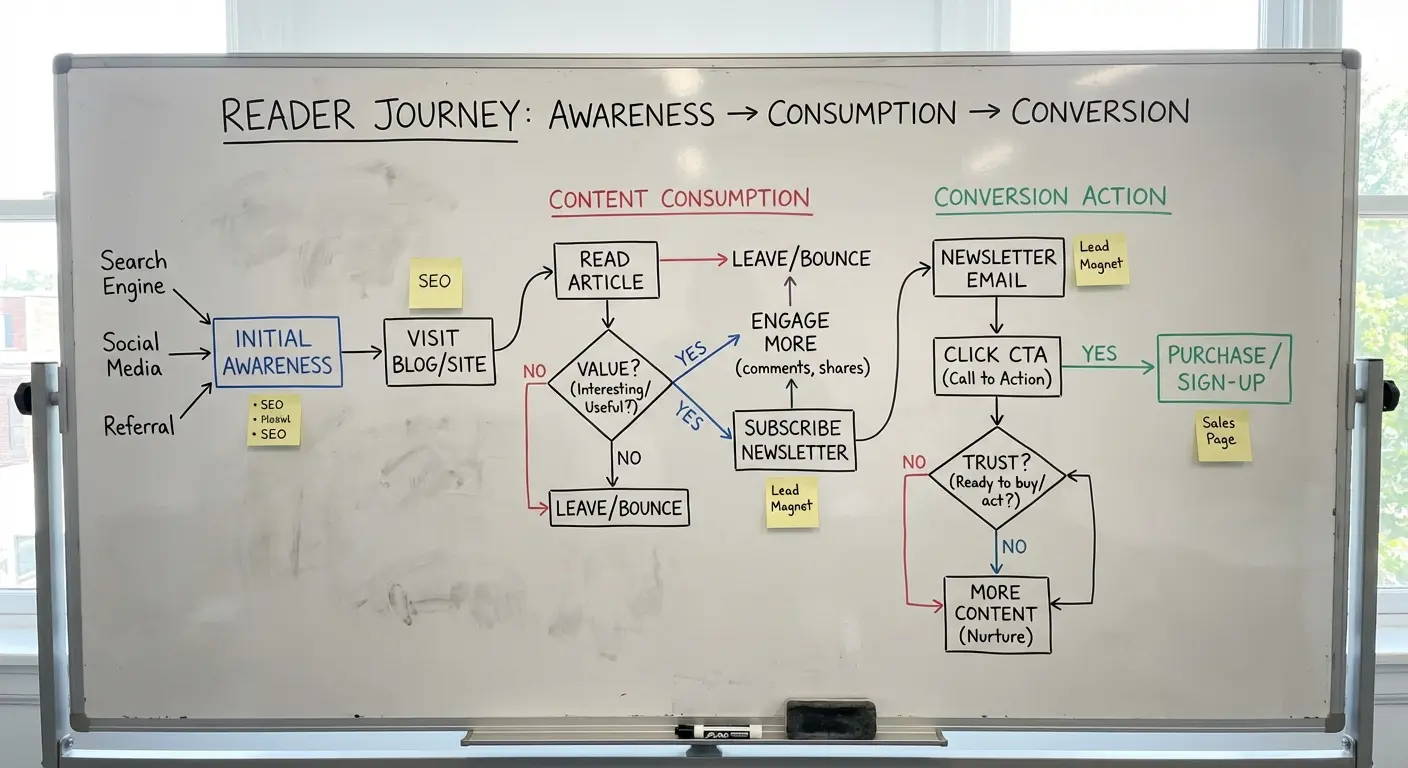
Your hypothesis also helps you identify what not to include. Comprehensive coverage sounds valuable, but it often dilutes focus and overwhelms readers. You’re not writing an encyclopedia entry. You’re creating a strategic asset that accomplishes a specific goal.
Test your hypothesis by asking: does this logical connection make sense? If someone truly understands what I’m teaching, would they naturally see value in my desired next action?
If the connection feels forced, your content topic and conversion goal probably don’t align well.
Here’s the template I use:
Reader Starting State: What does your reader currently believe, understand, or feel about this topic?
Content Transformation: After reading this post, my reader will understand [specific concept or insight]
Emotional Shift: This understanding will make them feel [confident/prepared/aware/concerned/motivated]
Logical Next Action: Because of this new understanding and emotional state, they’ll be ready to [desired conversion action]
Connection Validation: The connection between content and action is logical because [explain why someone who learned this would naturally want to take your desired action]
Objection Check: The main objection preventing this action is [primary barrier], which my content addresses by [how you overcome it]
Writing for Two Audiences Simultaneously Without Compromise
Here’s the thing nobody tells you about blog readers: you’re actually writing for two completely different people.
First, you’ve got the skimmers. These people are scrolling like their life depends on it, hunting for that one specific answer. They’ll never read your intro. They don’t care about your carefully crafted narrative arc. Around 73% of readers just skim blog posts, with only 27% reading articles fully.
Then you’ve got the deep readers. The people who actually read every word, who want to understand the why behind everything, who’ll spend 15 minutes with your post if you give them a reason.
Most writers pick one group and accidentally alienate the other.
That’s a mistake.
The Skimmer’s Path Through Your Content
Skimmers don’t read your introduction. They scroll immediately, looking for visual cues that signal relevant information. Your subheadings, bullet points, bold text, and short paragraphs create a visual hierarchy they can scan rapidly.
Each subheading should communicate a complete idea or answer a specific question. “Implementation” tells a skimmer nothing. “Three Ways to Implement This Strategy Without Additional Budget” tells them exactly what they’ll find and whether they need to stop scrolling.
Bold the first sentence of key paragraphs when it contains a crucial point. Skimmers will catch these highlighted elements even while scrolling quickly. You’re creating a “highlights reel” that runs parallel to your full content.
Use bullet points and numbered lists strategically, not automatically. They work best for presenting multiple items of equal importance or sequential steps. If you’re explaining a nuanced concept that requires context, bullets harm comprehension by fragmenting connected ideas.
The Deep Reader’s Journey Through Your Argument
Deep readers are easier in some ways. They’re looking for understanding, not just answers. They want to know why something works, not just what to do. They’ll read every paragraph if you give them a reason to keep going.
What you’re really doing is building a logical argument that progresses naturally from one idea to the next. Each paragraph should advance your thesis, add new information, or deepen understanding. If a paragraph just restates what you’ve already established, cut it.
Vary your paragraph length on purpose.
Short paragraphs (1-2 sentences) create emphasis and urgency.
Medium paragraphs (3-5 sentences) work for most explanatory content. Longer paragraphs (6+ sentences) signal depth and complexity, telling deep readers they’re about to get substantial value.
Examples and case studies serve deep readers more than skimmers. Use them to illustrate complex concepts or demonstrate real-world application. Place them after you’ve established the concept clearly so skimmers can bypass them while deep readers get additional context.
Creating Dual-Layer Content That Serves Both Groups
The best blog posts work on multiple levels simultaneously. A skimmer gets clear, actionable takeaways in 90 seconds. A deep reader finds nuanced insights and comprehensive understanding in 10 minutes.
Both feel the content served their exact needs.
Parenthetical asides add depth without disrupting flow. Your main sentence carries the primary point for skimmers. The parenthetical adds context, caveats, or additional insight for deep readers who want more.
Front-load key information in each section. Lead with the main point or answer, then expand with explanation, context, and examples. This structure serves skimmers who stop after the first paragraph while giving deep readers a clear foundation before you add complexity.
Think of your content as having a “main track” and “bonus tracks.” The main track (subheadings, opening sentences, key points) should tell a complete story on its own. The bonus tracks (examples, deeper explanations, nuanced considerations) enrich understanding for those who want more.
Structure That Serves the Skimmer and the Deep Reader
Blog post structure isn’t about following a template. It’s about organizing information in a sequence that serves your reader’s needs while advancing them toward your conversion goal.
Openings That Earn the Right to Continue
Your opening has one job: convince readers that continuing is worth their time.
You’ve got maybe 8 seconds before they bounce.
The average reader only spends 52 seconds on a blog post, meaning your introduction must immediately demonstrate value or you’ll lose them before they reach your main content.
When deciding how to come up with blog topics, consider whether your opening will immediately address the reader’s core problem.
Start with the problem, outcome, or transformation your post delivers. “This post will teach you how to write a blog post that converts ” is clearer and more compelling than three paragraphs of context about why blog writing matters.
Skip the preamble. You don’t need to establish why your topic is important or provide historical context. Your reader clicked your headline because they already believe the topic matters.
Get to the value immediately.
Your introduction should create a knowledge gap that makes readers curious. Present a surprising insight, challenge a common assumption, or promise a perspective they haven’t encountered. Give them a reason to believe this post will be different from the 47 others they’ve already read on similar topics.
Body Organization That Builds Toward Conversion
The sequence of your main sections matters more than most writers realize. You’re not just presenting information. You’re building a case that leads readers toward a specific conclusion.
Start with foundational concepts that establish shared understanding. You can’t discuss advanced strategies if readers don’t grasp the basics. But don’t over-explain fundamentals if your target audience already has baseline knowledge.
Progress from understanding to application. First, help readers grasp why something matters and how it works. Then show them how to implement it. This sequence feels natural and builds confidence as readers move through your content.

Position your strongest, most compelling point where it will have maximum impact. This is usually not your first section (readers aren’t invested yet) or your last section (you’ve lost some readers by then). The middle sections, when readers are most engaged, often work best for your most important insights.
Create natural bridges between sections. Your closing paragraph in each section should connect logically to the topic that follows. You’re building a continuous argument, not presenting disconnected ideas.
A marketing automation company writing about email segmentation could structure their post this way: Section 1 establishes why basic email blasts underperform (foundational understanding). Section 2 explains the psychology behind segmentation effectiveness (deeper understanding). Section 3 reveals the most impactful segmentation criteria based on their client data (strongest point, positioned in the middle when engagement peaks). Section 4 provides implementation steps (application). Section 5 addresses common obstacles (overcoming objections).
This sequence builds momentum toward their CTA for a segmentation audit, because readers who’ve followed this journey now understand both why and how to segment, making the audit a logical next step.
Conclusions That Convert Instead of Summarize
Most blog conclusions just recap what you already said. This wastes the most valuable moment in your entire post: the point where engaged readers are looking for what to do next.
Your conclusion should reinforce the transformation your content created and make your desired action feel like the natural next step. You’ve just taught someone something valuable. What’s the logical way for them to apply or extend that knowledge?
Skip the summary unless your post is exceptionally long or complex. Readers who made it to your conclusion don’t need you to repeat your main points. They need direction on where to go from here.
Your call-to-action should connect directly to the value you just delivered. If you taught someone how to audit their content strategy, offering a free audit template or consultation makes logical sense. Asking them to subscribe to your newsletter feels disconnected unless you’ve established why your newsletter extends the value they just received.
The Conversion Architecture Hidden in Your Content
Conversion doesn’t happen just at the end of your post with a CTA button. High-performing content has conversion architecture woven throughout, creating multiple pathways for readers to take action based on where they are in their decision journey.
This approach aligns with evolving content strategies where successful bloggers are increasingly focused on building complete reader experiences. As The Minimalists note in their comprehensive blogging guide, professional content creators spend 60-70% of their time on strategic groundwork that determines whether content succeeds or fails, including the deliberate placement of conversion elements throughout the reader journey rather than treating conversion as an afterthought.
Strategic Internal Linking That Guides Reader Journeys
Internal links aren’t just SEO tools. They’re strategic pathways that let readers choose their own journey through your content based on their specific needs and readiness level.
Strategic internal linking case studies demonstrate how connecting related content increases both engagement and conversion rates.
Internal links are tricky. Put them mid-sentence and you kill your flow. The reader’s brain has to decide whether to click or keep reading, and that split-second of friction adds up. I learned this the hard way after watching heatmaps show people bouncing the second they hit an inline link.
Better approach: end of section. The reader finishes a thought, you give them an option to go deeper if they want. “Want to see how we actually did this? Here’s the case study.” Natural exit ramp, not a speed bump.
Link to related content that serves the reader who wants to go deeper on a specific subtopic. When you mention a concept that requires more explanation than fits in your current post, link to comprehensive coverage elsewhere. You’re giving readers control over their learning depth.
Your anchor text should communicate what readers will find if they click. “Learn more” tells them nothing. “See our complete guide to keyword research” sets clear expectations and helps them decide if that detour serves their current needs.
Trust Signals That Build Credibility Without Bragging
Readers need to trust you before they’ll take action on your recommendations. But overt credibility-building (case studies, client logos, credentials) often backfires in blog content by feeling promotional.
Build trust through demonstration instead of declaration. Show your expertise by offering insights competitors miss, challenging conventional wisdom with data, or explaining the real complexity behind your recommendations. Readers recognize depth when they encounter it.

Reference specific results or data points when they strengthen your argument, not to showcase success. “We increased conversion rates by 47% by restructuring blog CTAs” works if you’re explaining CTA strategy. It feels like bragging if you’re just establishing credibility.
Acknowledge complexity and trade-offs. When you present how it actually works instead of oversimplified advice, readers recognize you understand the real challenges they face. Admitting what doesn’t work or when a strategy has limitations builds more credibility than claiming universal solutions.
Micro-Conversions That Keep Readers Engaged
You don’t need readers to jump straight from content consumption to becoming customers. Micro-conversions create stepping stones that build investment gradually.
Content upgrades (downloadable templates, checklists, worksheets) work when they genuinely extend the value of your post. You’ve taught someone a strategy; offering a tool that makes implementation easier feels helpful, not promotional. Place the offer where it’s most relevant, not automatically at the end.
Questions that prompt self-reflection increase engagement and help readers apply your insights to their specific situation. “Which of these three approaches fits your current resources?” makes readers pause and think, deepening their investment in your content.
Keep micro-conversions optional and non-intrusive. They should feel like bonus value for those who want more, not obstacles for those who just want to read your content.
A financial planning blog teaching readers about retirement savings strategies might include three micro-conversions: First, a retirement readiness quiz embedded after explaining different account types, prompting readers to assess their current situation. Second, a downloadable compound interest calculator placed within the section on investment growth, giving readers a tool to model their own scenarios. Third, a question at the end of the tax-advantaged accounts section: “Are you leaving tax savings on the table?”
Each micro-conversion deepens engagement and investment, making the final CTA for a free consultation feel like a natural progression rather than a sales pitch.
The Post-Read Experience That Determines Conversion
The moment someone finishes your blog post is your highest-intent opportunity. They’ve just invested 5-10 minutes with your content. They’re primed to take the next step if you make it obvious and valuable.
Your primary CTA should be singular and specific. Multiple competing CTAs create decision paralysis. What’s the one action that makes the most sense given what you just taught them?

Reduce friction in your conversion process. If you’re asking for an email signup, don’t require five form fields. If you’re offering a consultation, make scheduling one-click easy. Every additional step costs you conversions.
Provide a secondary path for readers who aren’t ready for your primary CTA. An email newsletter subscription, a related resource, or a lower-commitment offer gives you a way to stay connected with people who need more time or information before converting.
Where The Marketing Agency Fits Into Your Content Strategy
Alright, sales pitch time.
You might understand everything in this post and still struggle with execution. The gap isn’t knowledge. It’s infrastructure.
Effective content strategy requires behavioral data analysis, attribution modeling, conversion tracking, and continuous optimization based on performance metrics. Most businesses don’t have these systems built out or the expertise to interpret the data they’re collecting.
According to recent guidance from the World Bank’s Development Impact blog, even academic and institutional bloggers are now being advised to spend significant time on strategic groundwork, running drafts by advisors and multiple reviewers before publication, recognizing that initial impressions largely determine whether content achieves its intended impact.
Understanding blog revenue case studies reveals how specialized agencies connect content performance directly to measurable business outcomes.
I’ve seen companies create solid content that gets traffic but can’t connect that traffic to revenue because their attribution modeling doesn’t account for content’s role in the customer journey. They know content matters, but they can’t prove which content drives results or justify continued investment.

The Marketing Agency approaches content as a measurable performance channel, not a brand-building exercise. Our process starts with data analysis to identify which content gaps prevent conversions, then builds content strategy around closing those specific gaps. Every piece of content ties to trackable business outcomes because we build the measurement infrastructure first.
If you’re creating content but can’t definitively say which blog posts drive revenue, which topics attract qualified leads, or how content influences your sales cycle, you’re operating blind. Book a strategy call to explore how we structure content programs around measurable ROI instead of engagement metrics.
Final Thoughts
Look, you can be the best writer in the world and still produce blog posts that do nothing for your business. I’ve seen it happen over and over.
The difference isn’t the writing. It’s whether you did the strategic work before you opened your laptop.
For additional guidance on execution, explore our comprehensive resource on how to start a blog that covers the technical and strategic foundations.
You’re not writing for one reader. You’re writing for two distinct behavioral types who consume content completely differently. Your structure needs to serve both the skimmer looking for quick answers and the deep reader wanting comprehensive understanding. When you design for both simultaneously, your content works harder.

Conversion doesn’t happen just at the end with a CTA. High-performing content has conversion architecture embedded throughout: strategic internal links, natural trust-building, micro-conversions that deepen engagement, and a post-read experience that makes your desired action feel like the logical next step.
Start with the outcome. Work backward. Build content that bridges the gap between where your reader is and where they need to be before they’re ready to convert.
That’s it. Everything else is just execution.