


Three months ago, I watched a CMO kill a product that had 8.5/10 purchase intent scores. The focus groups loved it. The surveys were glowing. It died in sixteen weeks because the research was measuring something completely disconnected from reality.
This keeps happening. And we keep pretending surveys tell us something useful.
Here’s what nobody wants to admit: consumers can’t tell you why they buy things. Not because they’re lying, but because their brains literally don’t have access to that information. The part of your brain that makes purchasing decisions doesn’t talk to the part that answers survey questions. We’re asking people to report on mental processes they can’t see.
I’ve been doing consumer research for twelve years. I’ve run hundreds of focus groups, analyzed thousands of surveys, and watched most of them fail to predict what actually happened in market. This isn’t theoretical critique. It’s pattern recognition from repeated failure.
If you only read one section, read this:
Surveys don’t predict behavior. They just don’t. The data’s been in for years. Self-reported consumer preferences contradict actual purchases more than 60% of the time.
Your customers are telling you everything you need to know, just not with words. Behavioral signals (what they click, what they abandon, what they buy at 2am versus 2pm) reveal the truth their survey responses hide.
The human brain makes decisions first, then invents reasons afterward. Which makes post-purchase surveys almost useless for understanding why people actually bought.
We’ve got better tools now: passive observation that doesn’t feel creepy, ethnographic research that’s actually scalable, even AI respondents that can model consumer segments faster than traditional methods. Some of this tech is weird. Some of it raises ethical questions we haven’t answered yet.
But here’s what matters: the companies still running 2010-era focus groups and treating the results as gospel are getting their asses kicked by competitors who’ve figured out that watching what people do beats asking what they’ll do.
The gap is widening.
Why Self-Reported Data Keeps Failing Us
We’ve built entire research industries on the assumption that people can accurately report their preferences, motivations, and future behaviors. That assumption is crumbling.
Neuroscience figured this out fifteen years ago: most purchasing decisions happen in parts of your brain that literally can’t talk to the parts that answer questions. It’s not a communication problem. It’s architecture.
When you ask someone why they bought a particular brand of coffee, they’ll give you an answer. That answer will be coherent, logical, and probably wrong.
The real drivers? Could be the packaging color. Could be where it sat on the shelf. Could be that the font reminds them of their grandmother’s kitchen. They’ll never tell you this, because they don’t know it themselves. We’re not dealing with dishonesty but with the fundamental architecture of human cognition. And yet most marketing departments keep pretending none of this research exists.
Traditional surveys assume people are rational actors who know why they do things. Walk into any marketing department right now (I’ll wait) and you’ll find decks full of purchase intent scores, brand perception metrics, feature preference rankings. Beautiful charts. Confident projections.
They’re also frequently useless for predicting what people will actually do.

The disconnect shows up most clearly in new product launches. A concept tests brilliantly in focus groups. Consumers claim they’d definitely buy it at the proposed price point. The product launches and dies within six months. What happened?
The research wasn’t measuring reality. It was measuring a hypothetical scenario where consumers imagined themselves as more adventurous, health-conscious, or budget-savvy than they actually are.
I know a snack company (big one, you’ve bought their stuff) that spent eighteen months and probably seven figures developing a “better-for-you” chip line. The focus groups were unanimous. People wanted healthier options, cleaner ingredients, all that stuff. Purchase intent scored 8.5/10. The product team was so confident they bypassed the usual test markets and went straight to 3,000 stores.
Four months later, they were pulling it from shelves. Sales were 73% below projections, which in CPG terms means “catastrophic failure.”
What happened? They checked the loyalty card data. The same people who championed healthy snacks in focus groups were buying family-size bags of regular chips and premium ice cream. Every single week. Their carts told a different story than their mouths did.
Self-reported data suffers from three fatal flaws. First, people don’t have conscious access to most of their decision-making processes. Second (and this one drives me crazy because it’s so predictable) social desirability bias makes everyone claim they eat more vegetables and care more about sustainability than they actually do. Walk through any Whole Foods parking lot and count the empty Cheetos bags. Third, context. Just… all of it. Context matters enormously, and surveys strip away the environmental factors that drive behavior.
You can’t fix this with better survey questions. I’ve watched researchers try for years (more careful wording, better screening, longer interviews). Doesn’t matter. You’re asking people to report on processes they don’t have access to. That’s not a methodology problem. It’s a fundamental mismatch between tool and task.
Similar patterns emerge in market research case studies where stated intentions diverge dramatically from actual purchasing decisions.
The primary consumer you think you’re studying through surveys is a fiction. The primary consumer who shows up in your store or on your website operates from completely different motivations than the one who fills out questionnaires. This gap between research subject and actual customer is widening, not shrinking.
The Behavioral Signals Hiding in Plain Sight
Your customers are telling you everything you need to know. They’re just not using words.
And yet most companies are still asking them to use words. We’ve got mountains of behavioral data sitting in analytics dashboards, and we’re ignoring it to run another round of surveys asking people to predict their future behavior. Which they can’t do. Which we know they can’t do. But we keep asking anyway because it feels like research.
Every interaction with your brand generates behavioral data that’s more honest than any focus group transcript. The challenge isn’t collecting this data (you probably already are) but knowing which signals matter. Most companies drown in metrics while starving for insight.
Click-through rates, time on page, cart abandonment patterns, customer service inquiry topics, return reasons, repeat purchase intervals. These aren’t just operational metrics. They’re a continuous stream of revealed preferences that show what consumers value versus what they claim to value. The gap between the two is where real insight lives.
Behavioral data doesn’t ask consumers to predict their future actions or explain their past ones. It simply observes what they do.
Someone who says they care deeply about sustainability but consistently chooses next-day shipping over eco-friendly delivery options is telling you something. Someone who claims price isn’t a factor but only buys during sales events is revealing their true priorities.
This isn’t people being hypocrites. It’s just how brains work. We’re walking contradictions, and our purchasing decisions happen in parts of our brain that don’t talk to the parts that answer survey questions.
Understanding how primary consumers behave in actual purchase environments reveals more than any stated preference survey. Just as secondary consumer markets show different patterns than direct buyers, behavioral data exposes the gap between intention and action.
Look, I made you a table. Because sometimes you need to see the gap laid out clearly before you’ll believe how wide it is:
|
Stated Preference (Survey Data) |
Revealed Preference (Behavioral Data) |
What It Actually Means |
|---|---|---|
|
“I always read reviews before purchasing” |
68% of purchases happen within 90 seconds of landing on product page |
Reviews provide post-purchase justification, not pre-purchase evaluation |
|
“Brand reputation is my top priority” |
81% of cart additions come from products with prominent discount badges |
Price signals override brand signals at point of decision |
|
“I prefer shopping from sustainable companies” |
Eco-friendly shipping selected in 12% of checkouts when it adds 2 days |
Convenience trumps values when there’s a tangible tradeoff |
|
“I’m loyal to brands that align with my values” |
Average customer shops 4.3 competing brands per category annually |
“Loyalty” means preferential consideration, not exclusivity |
That last one kills me. Everyone thinks they’re loyal until a competitor runs a sale.
We’ve gotten better at collecting behavioral signals, but interpretation remains primitive. Most analytics dashboards track what’s easy to measure rather than what’s meaningful. Page views tell you almost nothing about engagement quality. Email open rates don’t indicate message resonance. Conversion rates divorced from context can lead you in completely wrong directions.
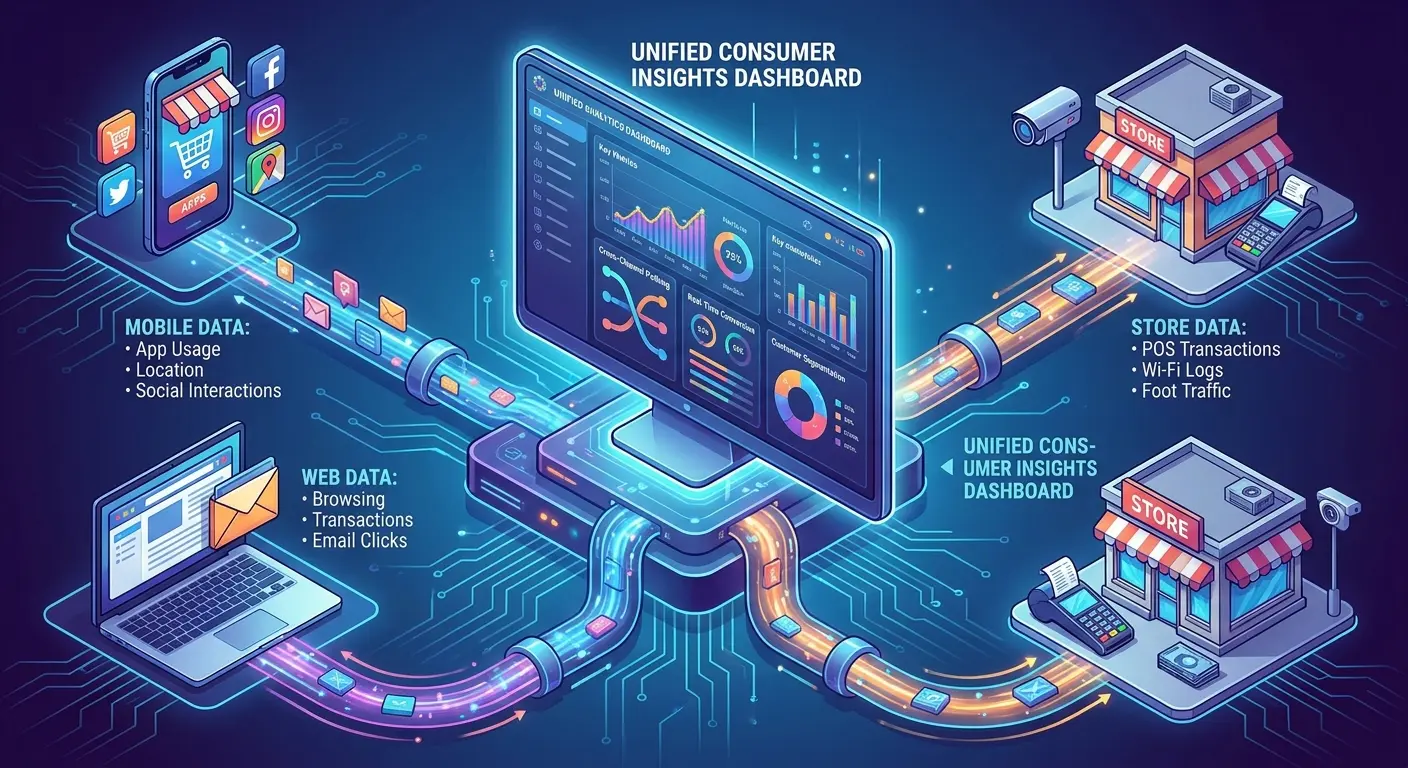
The signals that matter most are often second-order effects. How does purchase behavior change when you modify product descriptions versus when you change imagery? Do customers who engage with certain content types have higher lifetime value? What’s the relationship between customer service interactions and subsequent purchase patterns?
These questions require looking at behavioral data relationally rather than in isolation. A 3% conversion rate means nothing without knowing how those converters behave over the next six months compared to the 97% who didn’t convert.
Behavioral signals also reveal segment differences that surveys miss entirely. You might have a customer group that never responds to surveys but generates 40% of your revenue. Their silence in traditional research makes them invisible while their wallets make them critical. Behavioral data finds them.
Passive Data Collection Without the Creep Factor
There’s a version of behavioral research that feels like surveillance, and there’s a version that feels like attentiveness. The difference isn’t always obvious, but it matters enormously for both ethics and data quality.
Passive data collection works best when it observes patterns in aggregate rather than tracking individuals in granular detail. We’re not trying to know everything about each person. We’re trying to understand how groups of people with similar needs behave in different contexts.
The creepiness factor kicks in when collection feels disproportionate to value delivered. Nobody minds Amazon tracking purchases to improve recommendations. People do mind when their smart TV monitors conversations. The line isn’t about data volume but about reasonable expectation and reciprocal value.
Here’s where I’m supposed to reassure you that this is all fine and ethical and nobody should worry. I’m not going to do that. Some of this data collection is creepy. The line between “helpful” and “invasive” is blurry, moves depending on context, and we’re all still figuring it out.
What I will say: there’s a version of behavioral tracking that creates mutual value, and a version that’s just surveillance capitalism. If you can’t articulate how the consumer benefits from the data you’re collecting, you’re probably on the wrong side of that line.
Passive observation has always been part of consumer research. Store layouts get optimized based on foot traffic patterns. Product placement decisions reflect shelf-level sales data. What’s changed is the scale and granularity available.
You can now track how long someone hovers over a product page, which sections they read, what they skip, where they abandon the experience. Mobile apps reveal usage patterns that show which features get used versus which ones just test well in concept validation.
Ethical Passive Data Collection Checklist
Before implementing any behavioral tracking system, verify:
- Data collection is proportionate to the value delivered back to the user
- Privacy policy clearly explains what’s collected in plain language, not legal jargon
- Users can access, export, or delete their data through a simple process
- Aggregate pattern analysis is prioritized over individual tracking
- Data retention periods are defined and enforced (not kept indefinitely “just in case”)
- Third-party data sharing is explicitly disclosed with opt-out mechanisms
- Collection can be disabled without breaking core product functionality
- The “creepiness test” passes: would you be comfortable explaining this tracking to your own family?
Transparency helps. People accept behavioral tracking more readily when they understand what’s being collected and how it benefits them. Vague privacy policies that technically disclose everything while explaining nothing breed distrust.
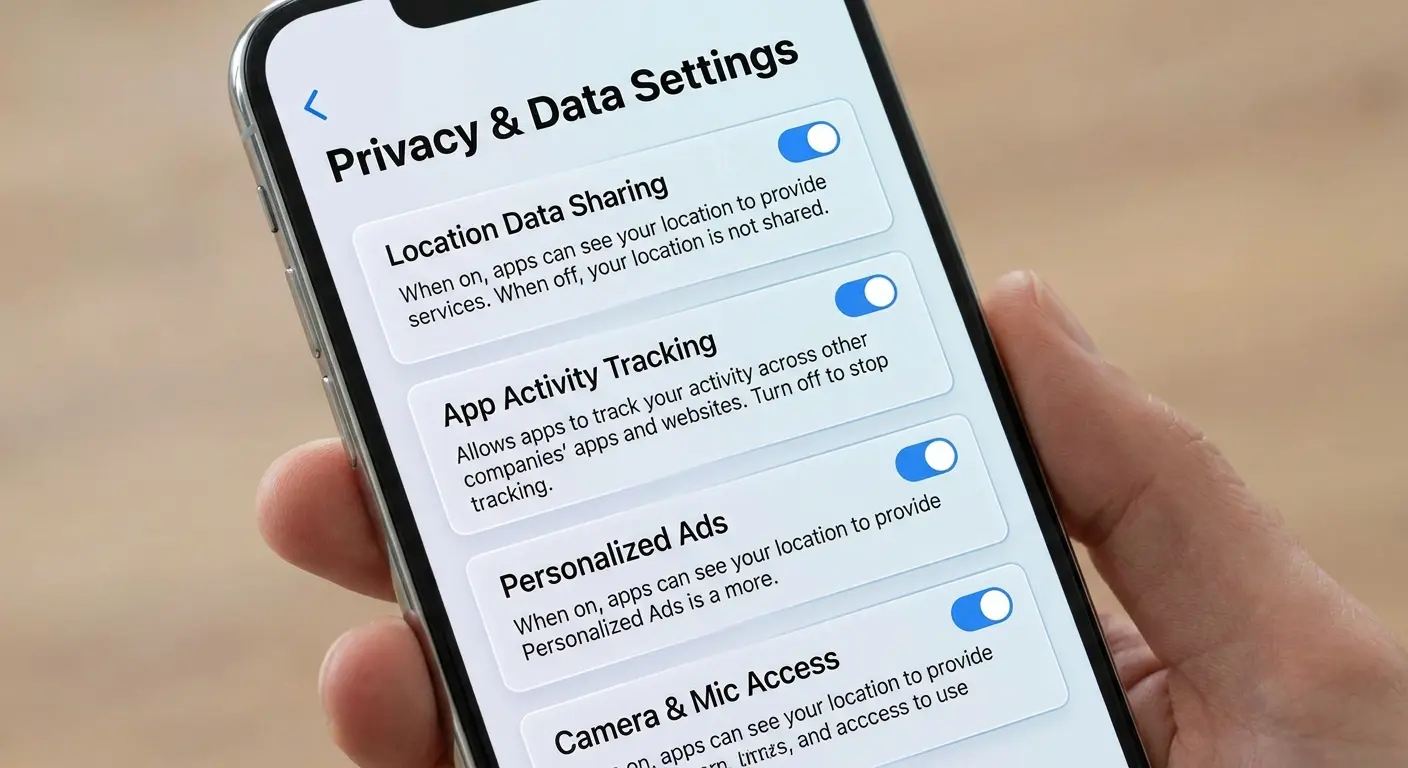
The most valuable passive data often comes from operational systems rather than purpose-built tracking. Return patterns tell you which products fail to meet expectations. Customer service inquiry topics reveal pain points in the user experience. Repeat purchase timing shows when people run out of products versus when marketing assumes they do.
Whether you’re studying the primary consumer, secondary markets, or even tertiary consumer behavior in resale channels, passive observation reveals patterns that self-reporting misses entirely.
This data exists whether you analyze it or not. The question is whether you’re extracting insight or just accumulating records.
What Consumers Won’t Tell You (Because They Can’t)
The biggest limitation of traditional primary research isn’t that people lie. It’s that they can’t access the real reasons behind most of their decisions.
Cognitive science has thoroughly demolished the idea that humans have transparent access to their own motivations. We make decisions based on factors we’re not consciously aware of, then construct rational-sounding explanations after the fact.
This isn’t a bug in how some consumers think. It’s a fundamental feature of human cognition that affects everyone, including researchers who should know better. When you ask someone why they prefer Brand A over Brand B, you’re not getting the real answer. You’re getting their best guess at a socially acceptable explanation for a decision that probably happened in milliseconds based on factors they can’t articulate.
The post-rationalization problem (fancy term for “making up reasons after you’ve already decided”) shows up everywhere once you start looking for it. Someone buys an expensive coffee maker and explains the decision in terms of quality, durability, and superior brewing technology. The real driver might have been that the design reminded them of a coffee shop where they felt sophisticated, or that owning it signals a certain identity, or that the unboxing experience delivered a dopamine hit.
These aren’t trivial distinctions. If you believe the stated reason (superior brewing technology), you’ll focus product development on technical specifications. If you understand the real driver (identity signaling), you’ll invest in design and brand positioning instead.
Traditional research methods can’t access these unconscious motivations because asking directly triggers the rationalization process. The moment you ask “why,” the respondent’s brain starts constructing a logical narrative that may have nothing to do with the actual decision process, which is why behavioral economics case studies consistently show such dramatic gaps between reported and observed behavior.
A furniture retailer conducted exit interviews with customers who had just made purchases, asking them to explain their decision criteria. The most common responses centered on durability, warranty coverage, and value for money.
When the same retailer analyzed security footage and in-store behavioral patterns, a different story emerged. Customers who ultimately purchased spent an average of 11 seconds evaluating construction quality but over four minutes sitting on furniture, running their hands over fabric, and taking photos to see how pieces looked in their phone’s camera. The tactile and visual experience drove the decision. The rational justifications came afterward when they needed to explain the purchase to themselves and others.

Some motivations are socially unacceptable to admit. Nobody wants to say they bought something to make their neighbors jealous or because they were feeling insecure. They’ll talk about features and value instead.
Other motivations are simply non-verbal. You might prefer one package design over another because of how the colors interact, but you lack the vocabulary to explain that preference. When forced to explain it, you’ll grasp for rational-sounding reasons (easier to read, looks more professional) that miss the actual driver entirely.
You can’t fix this with better survey questions. I’ve watched researchers try for years (more careful wording, better screening, longer interviews). Doesn’t matter. You’re asking people to report on processes they don’t have access to. That’s not a methodology problem. It’s a fundamental mismatch between tool and task.
It’s like trying to measure temperature with a ruler. The ruler works fine. It’s just measuring the wrong thing.
You need research methods that observe behavior in context, measure physiological responses, or test choices through revealed preference rather than stated preference. This applies whether you’re researching the primary consumer directly or understanding how secondary consumers interact with products in different contexts.
Building Research Frameworks That Account for Irrationality
Most research frameworks assume rational decision-making and then act surprised when results don’t predict behavior . We need frameworks that start from the assumption that humans are predictably irrational, heavily influenced by context, and largely unaware of their own decision drivers.
This doesn’t mean research becomes impossible. It means we need different tools.
Behavioral economics has given us models for how people make decisions under uncertainty, with limited information, and competing priorities. These models don’t assume rationality. They account for cognitive biases, emotional states, social pressures, and environmental factors. Research designed around these realities produces insights that predict behavior because it’s measuring the right things.
I worked with a team once that spent three months perfecting their survey methodology. Better questions, larger sample sizes, more sophisticated screening. They were so proud of the rigor.
Then someone (I think it was an intern, which makes this better) pulled the actual purchase data for the same respondents. Zero correlation between stated preferences and buying behavior. The survey data was beautifully collected, statistically significant, and completely useless for predicting what people would actually do.
That’s when it clicked for them: they weren’t refining the methodology. They were perfecting a tool that measured the wrong thing.
A research framework built for irrationality starts with observable behavior rather than stated intention. What do people do when faced with a choice? How does context shift that behavior?
Choice architecture experiments reveal preferences more accurately than surveys. Present the same options in different sequences, with different defaults, or in different environments, and you’ll see how malleable preferences are. Someone who claims to carefully evaluate all options might consistently choose whatever’s presented first or marked as “popular.”
These aren’t flaws to correct. They’re realities to design for.
|
Traditional Research Assumption |
Behavioral Reality |
Research Implication |
|---|---|---|
|
Preferences are stable and knowable |
Preferences shift based on context, framing, and emotional state |
Test the same choice across multiple contexts rather than seeking one “true” preference |
|
People make decisions through conscious deliberation |
Most decisions happen unconsciously in milliseconds |
Measure reaction time and first instinct, not lengthy explanations |
|
Consumers can accurately predict their future behavior |
Post-rationalization creates false narratives about past decisions |
Observe actual behavior in realistic scenarios rather than asking hypotheticals |
|
More information leads to better decisions |
Information overload triggers decision paralysis and default choices |
Test how behavior changes with varying information loads |
|
Social factors are secondary to product features |
Social proof, status signaling, and peer behavior often override features |
Research must include social context, not isolated individual assessment |
Time pressure reveals priority hierarchies that don’t show up in leisurely focus groups. When people have unlimited time to consider a decision, they’ll weigh factors they’d never consider in real purchase situations. Research that artificially removes time constraints produces artificially rational results.
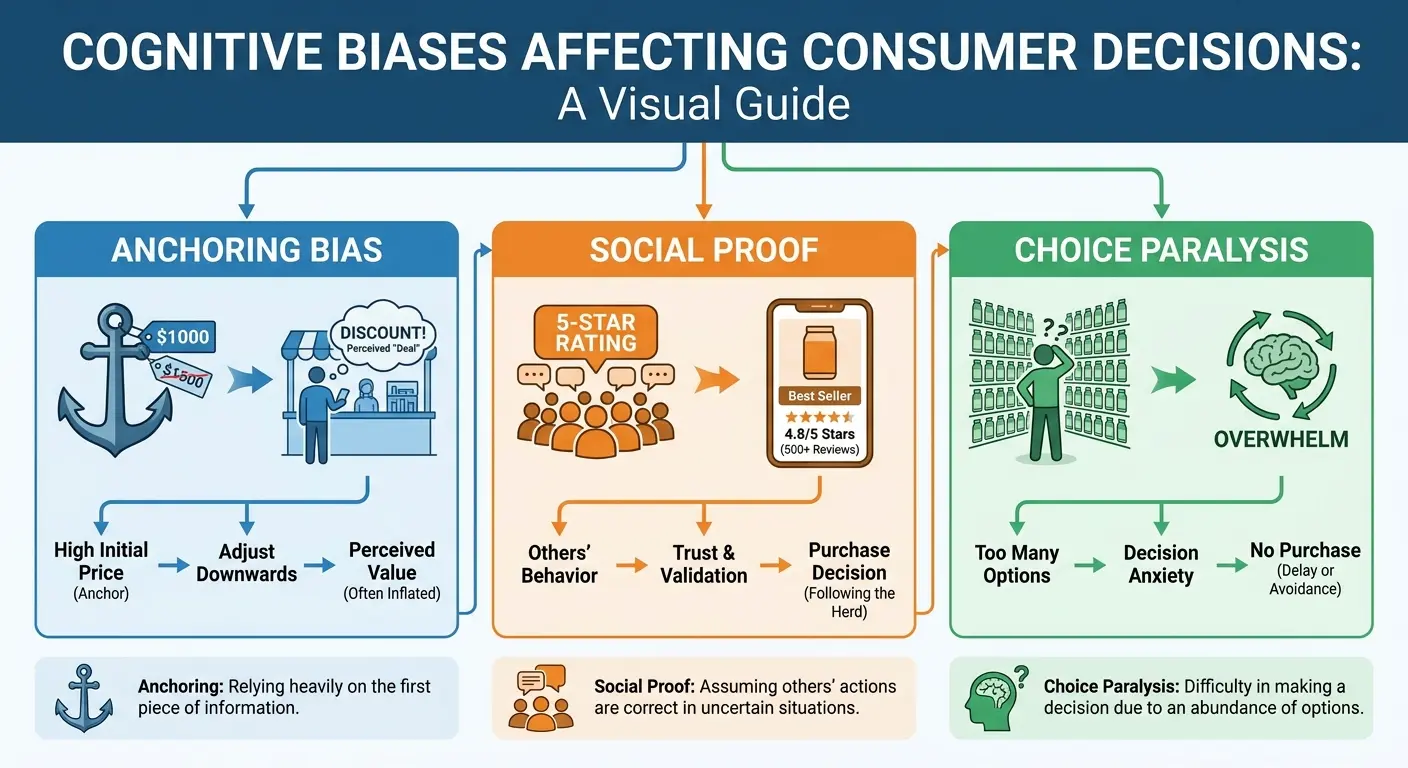
Social context matters enormously. People make different choices when they’re alone versus with friends, when they think others are watching versus when they feel anonymous, when they’re choosing for themselves versus choosing for others. Research that strips away social context misses a huge driver of real-world behavior.
Emotional state influences everything. Someone who’s stressed makes different choices than someone who’s relaxed. Someone who’s hungry evaluates options differently than someone who’s satiated. Traditional research tries to control for these variables to get “clean” data. That clean data then fails to predict messy reality.
Better frameworks incorporate variability rather than eliminating it. Test how behavior changes across contexts instead of trying to find the one “true” preference that exists independent of context. Looking at examples of primary consumers across different emotional states and social settings reveals patterns that sterile lab conditions miss entirely.
The Ethnographic Revival Nobody Saw Coming
Ethnographic research nearly died in the push toward big data and digital analytics. Spending hours observing how people use products in their homes felt inefficient compared to analyzing millions of data points.
But something got lost in that transition. Context. Nuance. The unexpected insight that comes from watching someone struggle with packaging you thought was intuitive, or use your product in a way you never imagined.
Now, before you go hiring anthropologists and embedding researchers in people’s homes for weeks, let me add some reality: traditional ethnography is expensive, slow, and doesn’t scale. Which is why it nearly died in the first place.
What’s coming back isn’t the old version. It’s hybrid approaches that steal the good parts (contextual observation, behavioral depth, the surprises that come from watching instead of asking) without the parts that made CFOs cry.
Modern ethnographic research looks different than it did twenty years ago. It’s often hybrid, combining in-person observation with digital tracking, shorter time frames with deeper analysis, and smaller sample sizes with more rigorous interpretation frameworks.
Traditional ethnography involved researchers embedding themselves in consumers’ lives for extended periods. That’s still valuable for certain applications, but it’s not scalable and it’s not fast.
Modern approaches compress the timeline while maintaining observational depth. You might observe how someone interacts with a product category over a single shopping trip, then follow up with digital diary entries over the next week. The combination provides context (the in-person observation) and longitudinal patterns (the diary entries) without requiring months of field work.
Video ethnography has made observation more accessible. Consumers can record their own experiences, providing access to moments researchers could never practically observe. Someone using your product at 6 AM before work, or while juggling kids, or in their car between appointments. These contexts matter, and they’re nearly impossible to access through traditional in-person research.
Similar methodologies appear in advanced case study success strategies that combine multiple observation techniques to build comprehensive understanding of consumer behavior patterns.
Modern Ethnographic Research Design Template
Phase 1: Contextual Observation (Days 1-2)
- In-home or in-context observation sessions (60-90 minutes per participant)
- Focus on natural product usage, environmental factors, and workarounds
- Capture video/photos of actual usage contexts
- Note discrepancies between intended and actual use
Phase 2: Digital Diary Collection (Days 3-10)
- Participants self-record key moments via mobile app
- Prompts triggered by specific behaviors or time intervals
- Capture emotional states and decision points in real-time
- Collect usage data across different contexts (work, home, social settings)
Phase 3: Behavioral Data Integration (Days 11-14)
- Layer observational insights with digital behavioral patterns
- Identify gaps between what participants say and what data shows
- Map decision journeys with actual friction points highlighted
- Build context-rich user scenarios grounded in observed reality
Phase 4: Synthesis and Hypothesis Generation (Days 15-17)
- Code behaviors and identify pattern clusters
- Generate testable hypotheses for quantitative validation
- Create insight briefs with video evidence and data support
- Prioritize findings by potential business impact
The analysis has gotten more sophisticated too. We’re not just collecting observational notes and looking for themes. We’re coding behaviors, mapping decision processes, identifying friction points, and building models of how products fit into broader life patterns.

What ethnography reveals that other methods miss is the gap between intended use and actual use. Products get repurposed, features get ignored, workarounds get invented. Someone might buy your product for the stated benefit but value it for something completely different. You’ll never learn that from a survey.
Side note: I once watched a focus group where every single participant said they “always” read ingredient labels. We had eye-tracking data from their actual shopping trips. Average time spent on ingredient labels: 1.2 seconds. One guy didn’t look at a single label across a 45-minute shopping session. But sure, he “always” reads them.
Ethnographic research also surfaces the emotional relationship people have with products and categories. The frustration someone feels when packaging won’t open easily doesn’t show up in satisfaction surveys. The pride someone takes in a particular brand choice only becomes visible when you observe them in social contexts.
Understanding how primary consumers use products in their daily lives (versus how secondary consumer markets redistribute or repurpose them) requires this level of observational depth.
Small sample sizes remain a limitation, but ethnography isn’t trying to be statistically representative. It’s trying to generate hypotheses and reveal possibilities that quantitative research can then test at scale.
Synthetic Respondents and AI-Generated Insights
Okay, this is where it gets weird. And possibly dystopian. I’m still not sure how I feel about it.
You can now interview AI-generated synthetic respondents that model real consumer segments. Not real people. Simulations based on aggregated patterns from thousands of actual consumers. They’ll answer questions about new products, react to messaging, predict behavior across scenarios.
And they’re often more accurate than small-sample qualitative research.
I know. It’s unsettling. We’re using artificial intelligence to simulate human irrationality so we can predict irrational behavior. The fact that it works doesn’t make it less strange.
The ethical questions are obvious and unresolved. The practical applications are already here. Brands are using synthetic respondents for rapid concept testing, message refinement, and scenario planning. The accuracy isn’t perfect, but it’s often better than small-sample qualitative research and infinitely faster.
This doesn’t replace primary research with real humans, but it changes what you need real humans for.
Synthetic respondents work by modeling patterns rather than individuals. Feed an AI system enough data about how a particular consumer segment behaves, what they value, how they make decisions, and it can generate responses to new scenarios that reflect those learned patterns.
The use case isn’t replacing all research. It’s accelerating the iterative process. You might test twenty message variations against synthetic respondents to narrow down to the three most promising, then validate those three with real consumers. The synthetic phase eliminates obvious failures and identifies promising directions without the time and cost of recruiting real participants.
These models can also simulate scenarios that would be difficult or impossible to test with real consumers. How might your target segment respond to a competitor’s price change? What happens if a new product category emerges? Synthetic respondents can explore hypotheticals based on established behavioral patterns.
A beverage company needed to test 47 different package design variations across five demographic segments before committing to production tooling. Traditional research would have required recruiting 235 participants, conducting multiple rounds of testing, and taken six weeks minimum.
Instead, they used synthetic respondents trained on three years of purchase data, brand perception studies, and eye-tracking research from previous packaging tests. The AI models evaluated all variations in 72 hours, identifying the top eight designs. Those eight were then validated with real consumers in focus groups. The final design performed 23% better in market than their previous package, and the research timeline compressed from six weeks to nine days.

The limitations are real. AI models reflect the data they’re trained on, which means they perpetuate existing biases and can’t predict genuinely novel behaviors. They’re interpolating within known patterns, not identifying breakthrough insights.
They also can’t replace the richness of real human interaction. A synthetic respondent won’t surprise you with an unexpected use case or reveal an emotional connection you hadn’t considered. They optimize within existing frameworks rather than challenging those frameworks.
But for certain applications, particularly early-stage concept refinement and rapid iteration, synthetic respondents offer a speed and cost advantage that’s hard to ignore. You can test ideas at a pace that would be impossible with traditional methods.
The technology is improving rapidly. Models are getting better at capturing nuance, accounting for context, and simulating the irrationality that characterizes real human decision-making. Whether modeling primary consumers, secondary markets, or even tertiary consumer behavior in niche segments, AI-generated insights are becoming increasingly sophisticated.
Give it three years, and you won’t be able to tell synthetic respondents from real ones. I’m not sure if that’s exciting or terrifying. Probably both.
Integrating Multiple Intelligence Streams
The future of consumer research isn’t choosing between traditional and modern methods. It’s building integrated systems that layer different data types to triangulate truth.
Behavioral data shows what people do. Ethnographic observation reveals context and emotional drivers. Surveys capture stated preferences and awareness. Synthetic respondents enable rapid iteration. Each method has blind spots, but those blind spots don’t overlap perfectly.
Where multiple methods point in the same direction, you’ve found something reliable. Where they contradict each other, you’ve found something interesting that deserves deeper investigation.
In theory, this sounds great. In practice, most companies suck at it.
Why? Because integration requires admitting that your existing research might be wrong. It requires data analysts talking to ethnographers talking to customer service talking to product teams. It requires someone senior enough to say “the survey data contradicts the behavioral data, so we’re trusting behavior and ignoring the survey.”
That’s politically hard in most organizations. The survey cost $150K and the CMO commissioned it. The behavioral data came from your analytics team and contradicts what the CMO wants to hear. Guess which one gets prioritized?
This isn’t a methodology problem. It’s an organizational courage problem.
The companies winning at consumer insight aren’t the ones with the most sophisticated single methodology. They’re the ones who’ve built systems for synthesizing multiple intelligence streams into actionable understanding.
Integration starts with recognizing that different questions require different tools. Map your research needs against method strengths rather than defaulting to whatever’s familiar or easy.
You might use behavioral data to identify a pattern (customers who buy Product A rarely return for Product B). Ethnographic research could explore why (Product A fully solves their problem, making Product B irrelevant). Surveys might quantify how widespread the pattern is across different segments. Synthetic respondents could test whether messaging changes might shift the behavior.
Each layer adds context and confidence. Behavioral data alone might lead you in the wrong direction if you misinterpret the pattern. Ethnographic research alone might over-index on a small sample. Surveys alone might capture stated preferences that don’t reflect actual behavior. Together, they create a more complete picture.
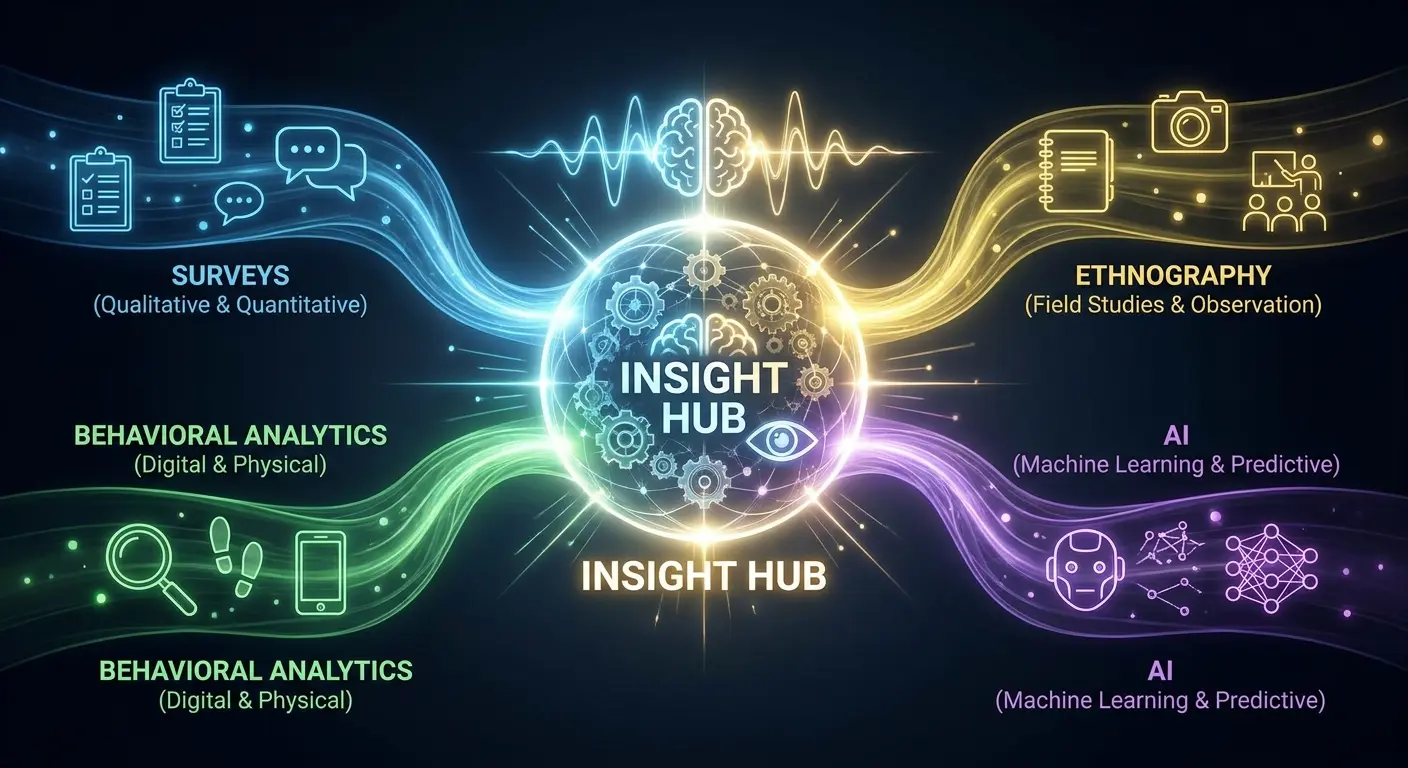
The synthesis matters as much as the collection. You need frameworks for weighing contradictory signals. When behavioral data says one thing and survey data says another, which do you trust? (Usually behavioral, but not always.) When ethnographic research reveals an edge case, how do you determine if it’s an outlier or an early signal of broader change?
You know what drives me crazy? I’ll present behavioral data that completely contradicts survey findings, and someone will always say “but what do consumers say they want?” Like the survey data (which we just proved doesn’t predict behavior) somehow trumps the actual behavioral data showing what people really do. We’re so attached to asking questions that we ignore the answers right in front of us.
Cross-functional collaboration helps here. Researchers, data analysts, product teams, and customer-facing staff all see different aspects of consumer behavior. Creating spaces for those perspectives to intersect produces insights none of them would reach independently.
Technology enables integration at scales that weren’t previously possible. You can now connect behavioral data from digital interactions with survey responses from the same individuals, creating linked datasets that show both what people do and what they say. Privacy regulations complicate this, but the technical capability exists.
The goal isn’t perfect prediction. Consumer behavior is too complex and context-dependent for that. The goal is reducing uncertainty enough to make better decisions more often. Multiple intelligence streams increase your hit rate.
Real-time integration creates adaptive research systems. Behavioral data might trigger an ethnographic study when it identifies an unexpected pattern. Survey results might prompt deeper behavioral analysis of specific segments. The research program becomes dynamic rather than following a predetermined annual plan.
Understanding the full ecosystem (from the primary consumer to secondary markets and even tertiary consumers in resale channels) requires this multi-layered approach that no single methodology can provide.
Final Thoughts
Here’s what’s happening right now: your competitors are watching what customers do while you’re still asking them what they’ll do. That gap (between companies that trust behavioral signals and companies that trust survey responses) is widening every quarter.
We’ve spent decades perfecting research methods that measure the wrong things. The infrastructure is impressive. The sample sizes are large. The statistical rigor is real. But we’ve been asking people to report on mental processes they don’t have access to and predict behaviors they can’t foresee.
Similar to how data analytics case studies demonstrate the power of behavioral over stated data, the evidence keeps mounting that we’ve been looking in the wrong places.
The shift happening now isn’t about abandoning traditional research entirely. Some questions still benefit from directly asking consumers. But those questions are narrower than we thought. Most of what we need to know reveals itself through observation, behavioral patterns, and contextual understanding rather than self-report.
The methods exist. The technology is accessible. What’s missing isn’t capability. It’s willingness to admit that the emperor has no clothes, that the research we’ve relied on for decades produces comfortable fiction more often than uncomfortable truth.
Unpopular opinion: Most market research exists to justify decisions executives have already made, not to inform decisions they haven’t. The research brief gets written after the strategy is set. We’re not seeking truth. We’re seeking confirmation. And surveys are really good at giving people the confirmation they paid for.
Which is why advanced analytics strategies now focus on behavioral signals and integrated data systems rather than relying on stated preferences that rarely predict actual behavior.
You can keep running focus groups and surveys and treating the results as insight. They’ll look good in presentations. Stakeholders will nod. Everyone will feel like research happened.
Or you can start building systems that watch what people actually do, account for the fact that humans are irrational and can’t report on their own decision-making, and accept that understanding consumers means getting comfortable with mess and contradiction.
One of those approaches predicts behavior. The other just documents what people wish were true about themselves.
Within three years, the companies still running traditional survey-based research as their primary intelligence source will be noticeably behind. Not because surveys become less accurate (they’re already not accurate). But because the gap between companies using behavioral intelligence and companies using stated preferences will become too obvious to ignore. The market will punish the laggards.
I know which one I’d bet on.