



Here’s what happens: Someone gets promoted, there’s a LinkedIn post, maybe some Slack congrats, and by Thursday everyone’s moved on. It’s like it never happened.
I’ve seen this same pattern at dozens of companies now, and it’s starting to piss me off. Not because companies don’t care about their people (they do), but because they’re designing these promotion announcements for themselves, not for the employees who are supposed to be inspired by them.
Everyone focuses on making promotions bigger or flashier. That’s not the issue. The issue is that most companies are celebrating the wrong things entirely, and it’s leaving a ton of impact on the table.
The Short Version (If You’re Skimming)
Most promotion announcements are performative bullshit. They prioritize optics over actual recognition, and employees can tell.
The real damage isn’t in your engagement metrics. It’s in the trust you’re eroding every time you post a generic “thrilled to announce” template.
Context is everything. Tell us what the person actually did, not just their new title. Connect their work to team impact and company direction, and suddenly the promotion means something.
Time your announcements strategically (not just when HR gets around to it). Support the promoted person behind the scenes (they’re probably freaking out). And for the love of god, not every promotion needs to be on LinkedIn.
Measure success by cultural impact and whether the promoted person actually thrives in their new role, not by how many likes the post got.
Why Most Positive Promotions Feel Performative Instead of Purposeful
Promotion announcements have become so standardized that they’ve lost their meaning. You see the same formula everywhere: headshot, name, old title, new title, maybe a quote from leadership about being “thrilled” or “excited.” The promoted person shares it. A few colleagues comment with congratulations emojis. The post disappears into the feed.
This mechanical approach treats promotions as administrative updates rather than moments that actually matter. Companies go through the motions because they know they’re supposed to celebrate wins, but the execution reveals a deeper misunderstanding of what positive promotions accomplish when done right.
There’s a fundamental disconnect between how companies execute promotion announcements and what makes them resonate with employees. The mechanical nature of standard promotion communications creates a checkbox mentality that reduces people to titles. This approach fails to generate authentic excitement or inspiration.
Employees aren’t stupid. They can smell corporate theater from a mile away. And once they’ve decided your promotion announcements are performative, good luck getting them to care about the next one.
The Checkbox Mentality That Reduces Impact
HR departments often view promotion announcements as compliance tasks. Someone got promoted, so we announce it. Check the box. Move on.
This mindset strips away the opportunity to use promotions as cultural touchstones. When you treat a promotion as a task to complete rather than a story to tell, you signal to your entire organization that individual growth is just paperwork. Employees notice. They internalize that their career progression matters to the company only as much as it needs to be documented.
The promoted employee feels this most acutely. They’ve worked hard, achieved something that mattered to them, and the company’s response is a template. Their accomplishment gets the same treatment as everyone else’s, regardless of the journey, the obstacles overcome, or the unique value they bring.
Here’s what kills me about the checkbox approach: you’re taking someone’s proudest professional moment and giving it the same energy as a facilities update about the parking garage.

|
Checkbox Approach |
Approach That Actually Works |
|---|---|
|
Standard template with name and title |
Customized narrative highlighting specific achievements |
|
Posted once and forgotten |
Shared across multiple channels with context |
|
Generic congratulations from leadership |
Detailed explanation of impact and journey |
|
No follow-up or support structure |
Ongoing development plan and mentorship |
|
Focuses on administrative completion |
Focuses on cultural reinforcement |
|
Same treatment for all promotions |
Tailored to individual contributions and organizational needs |
Look at that table and tell me which company you’d rather work for. The difference is obvious, right? So why do most companies still operate in the left column?
When Leadership Excitement Doesn’t Translate
You’ll often see promotion announcements where a C-suite executive is quoted expressing enthusiasm. “We’re thrilled to promote Sarah to Senior Director.” The intention is good, but the execution falls flat because it’s about leadership’s feelings, not Sarah’s contributions.
Employees reading these announcements aren’t wondering how the CEO feels. They’re wondering what Sarah did to earn this. What problems did she solve? What skills did she develop? How did she grow? Without those answers, the announcement becomes noise.
This leadership-centric framing also creates an unintentional hierarchy of importance. The promotion isn’t valuable because of what the employee accomplished. It’s valuable because leadership decided to acknowledge it. That subtle message reinforces a top-down culture that undermines the very empowerment positive promotions should create.
The Generic Language Problem
Promotion announcements are drowning in vague praise. “Exceptional leadership.” “Proven track record.” “Invaluable contributions.” These phrases mean nothing because they could describe anyone.
Specificity is what makes recognition feel real. When you say someone has exceptional leadership, you’re asking people to take your word for it. When you describe how that person restructured the onboarding process and reduced new hire ramp-up time by 40%, you’re giving people evidence. Evidence creates credibility. Credibility creates respect for the promotion that actually feels earned.
Generic language also wastes the educational opportunity that promotions provide. Junior employees looking at promotion announcements are trying to understand what it takes to advance. Telling them someone has a “proven track record” teaches them nothing. Showing them the specific accomplishments that led to promotion gives them a roadmap.
Consider two announcements for the same promotion. The first reads: “We’re pleased to announce that Jennifer Martinez has been promoted to Director of Customer Success. Jennifer has demonstrated exceptional leadership and commitment to our customers throughout her tenure.”
The second reads: “Jennifer Martinez is now Director of Customer Success. Over the past 18 months, she rebuilt our customer onboarding process, reducing churn in the first 90 days from 22% to 8%. She personally trained 15 team members on consultative support techniques, and three of them have since been promoted. Her approach to turning frustrated customers into advocates has become our department standard. She’s ready to scale this impact across our entire customer base.”
The first announcement tells you nothing about why Jennifer earned the promotion. The second gives you a clear picture of her contributions, the skills she developed, and what the organization values enough to reward with advancement.
The Invisible Cost of Promotion Announcements That Don’t Land
Bad promotion announcements don’t just fail to inspire. They actively poison your culture in ways you won’t see until it’s too late.
Every time an employee sees a hollow promotion announcement, they make a mental note. “The company says it values people, but look at how they actually recognize them.” These notes accumulate. Eventually, they become a narrative: leadership doesn’t really get it, or worse, doesn’t really care.
The damage of poorly executed positive promotions shows up in decreased trust, not just missed engagement metrics. Failed recognition attempts erode trust, create cynicism, and decrease the perceived value of promotions within an organization. The compounding effect of repeated low-impact announcements trains employees to disengage from company communications about success and growth.
Trust Erosion Through Misaligned Messaging
Companies often promote someone and announce it with language about “rewarding excellence” or “recognizing outstanding performance.” Then employees who work closely with that person see a different reality. Maybe the promotion was about tenure, not performance. Maybe it was political. Maybe it was deserved, but the announcement makes claims that don’t match what the team experienced.
This misalignment between announcement and reality teaches employees that company communications about success are unreliable. They stop trusting what leadership says about who’s valuable and why. That skepticism spreads to other areas. If they’re not being straight about promotions, what else are they spinning?

The Comparison Trap
Every promotion announcement creates an implicit comparison point. Employees reading about someone else’s promotion are naturally measuring it against their own trajectory and contributions.
When announcements lack substance, this comparison becomes toxic. People start wondering why someone else got promoted when they can’t see what made that person stand out. The vacuum of information gets filled with speculation, often negative. Office politics. Favoritism. Being in the right place at the right time.
Substantive announcements that clearly articulate what someone accomplished give employees productive comparison points. They can look at the promoted person’s path and think, “I need to develop those skills” or “I should take on projects with that kind of impact.” Without that clarity, comparison just breeds resentment.
Devaluing Future Promotions
When promotions are announced poorly, they train your organization to view all promotions as less significant. If every announcement is a templated afterthought, promotions become routine administrative events rather than milestones that actually matter.
This devaluation hurts everyone, including people who earned their advancement through exceptional work. Their promotion gets lumped in with all the others that felt obligatory or political. The company’s inability to differentiate between someone who transformed their department and someone who simply stuck around long enough diminishes the value of achievement itself.
What Gets Lost When You Announce Without Context
Context is what transforms a promotion from a fact into a story. Without it, you’re just telling people something changed. With it, you’re showing them why it matters and what it means for the organization’s future.
The role context plays in making positive promotions resonate and teach can’t be overstated. What information is typically missing from standard announcements? Why does that absence matter? The lack of context turns what could be powerful teaching moments into empty gestures.
Multiple layers of context are needed, from personal growth stories to organizational strategy alignment. Each layer serves a different audience need.
The Journey That Led Here
Most promotion announcements present the end result without showing the path. You learn that someone is now a Director, but you don’t know what they were doing six months ago, what challenges they overcame, or how they developed the capabilities that made this promotion possible.
The journey is where the real value lives for everyone else in the organization. When you share how someone went from struggling with stakeholder management to leading cross-functional initiatives, you’re teaching skills development. When you describe how they took on a failing project and turned it around, you’re demonstrating problem-solving and resilience.
This journey context is valuable for employees at similar career stages. They see a realistic progression, not just a title change. They understand that growth involves setbacks and learning, not just steady upward movement.
What To Actually Include When You Announce a Promotion
Stop making people guess why someone got promoted. Here’s what you should be telling them:
- Where they started. What was this person doing 12-18 months ago? What were they struggling with?
- The challenge. What real problem did they face that tested them?
- What they actually did. Specifics. Not “showed leadership” but “rebuilt the entire onboarding process.”
- Skills they built. What did they learn? What were they bad at before that they’re good at now?
- The results. Numbers. Outcomes. Things that actually changed.
- Why now. What signals told you they were ready for more?
- What’s next. How will their new role leverage these developed capabilities?
How This Promotion Serves Organizational Goals
Promotions don’t happen in a vacuum. Someone gets promoted because the company needs their elevated capabilities to achieve specific objectives.
Connecting a promotion to organizational strategy helps everyone understand where the company is headed. When you promote someone to lead a new initiative, you’re signaling that initiative’s importance. When you promote someone who’s been driving culture change, you’re reinforcing what behaviors and values matter.
This strategic context also helps teams understand how their work fits into the bigger picture. If someone gets promoted for building better client relationships, that tells the organization that client experience is a priority. If someone advances for innovation and experimentation, that signals the company values calculated risk-taking.
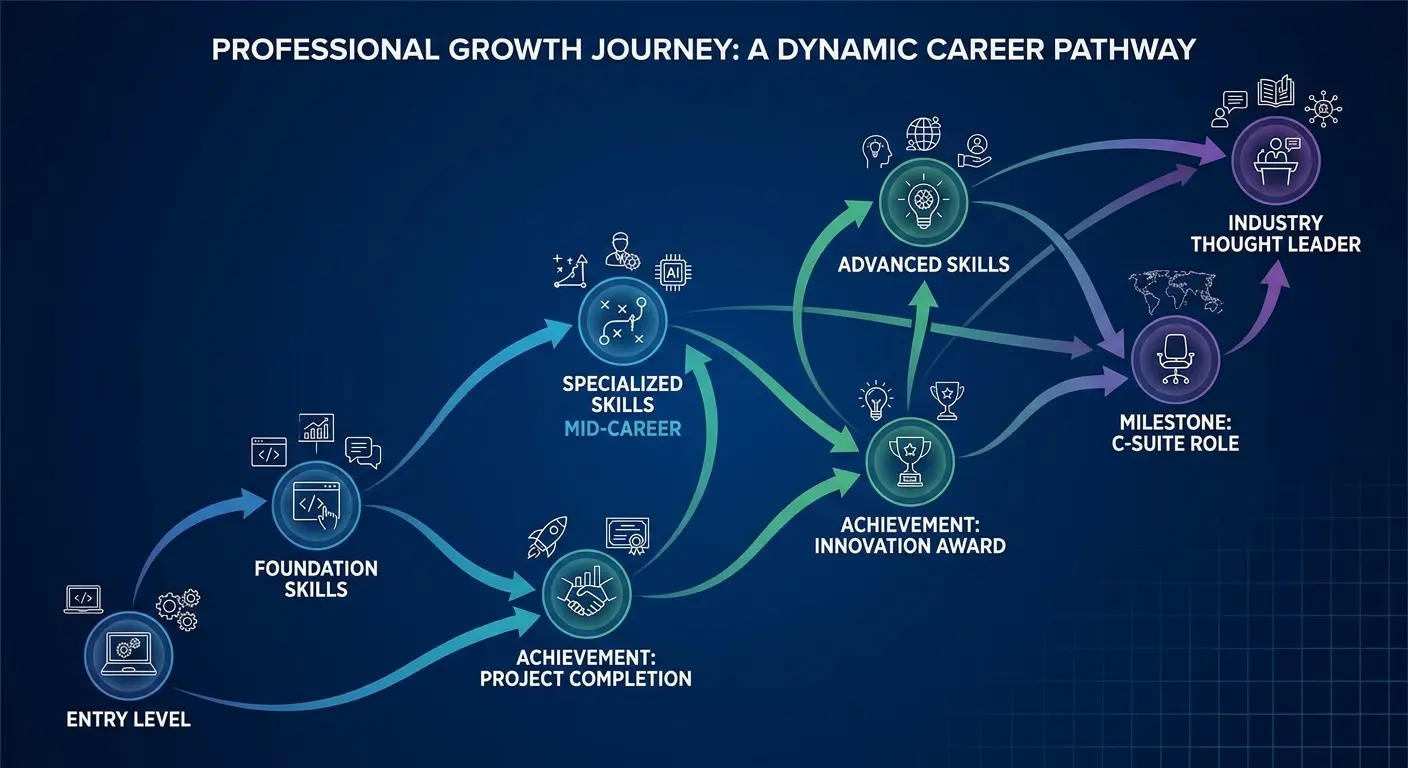
What This Means for the Team
Promotions affect more than just the promoted individual. Team dynamics shift. Responsibilities get redistributed. Reporting structures change.
Addressing these implications directly in the announcement prevents confusion and anxiety. When you explain how the promotion will impact the team’s structure and what support will be provided during the transition, you’re showing consideration for everyone affected. You’re also demonstrating that leadership thinks beyond the individual to consider organizational health.
This team-focused context is important for internal announcements. Employees who work closely with the promoted person need to understand what changes for them, not just celebrate their colleague’s success.
Recognition That Actually Moves the Needle
Recognition works when it reinforces specific behaviors and outcomes that you want to see more of across the organization. Positive promotions are one of your most powerful recognition tools because they carry weight that other forms of acknowledgment don’t.
Effective recognition reinforces behaviors, clarifies values, and creates momentum for cultural change. There’s a difference between recognition that feels good in the moment versus recognition that drives lasting impact on individual motivation and team performance.
Specificity Creates Replicability
When you recognize someone for specific actions and results, you’re giving everyone else a template. You’re saying, “This is what success looks like here.”
If you promote someone for “great leadership,” nobody knows what behaviors to emulate. If you promote someone for building a mentorship program that improved junior employee retention by 25%, now you’ve defined what great leadership means in your organization. Other people can look at that and think about how to create similar impact in their areas.
This specificity also validates the promoted person’s approach. You’re not just saying they did well. You’re identifying exactly what they did well, which reinforces those behaviors and gives them confidence to continue operating that way.
Connecting Individual Achievement to Team Success
The most powerful recognition shows how one person’s work elevated everyone around them. Promotions that highlight collaborative impact rather than solo achievement send a clear message about what the organization values.
When you promote someone and emphasize how their work made their teammates more effective, you’re reinforcing a culture of collaboration. When you highlight how they shared knowledge or developed others, you’re signaling that individual success isn’t enough. The promotion becomes a statement about organizational values, not just individual performance.
This approach also makes recognition feel less competitive. Instead of positioning the promoted person as someone who outperformed their peers, you’re showing how they lifted their peers. That creates a very different emotional response from the rest of the team.

Recognition That Builds Momentum
Strategic recognition doesn’t just acknowledge past performance. It creates energy for future work.
When you promote someone and tie it to an emerging priority or new direction, you’re using that recognition to build momentum behind that initiative. You’re showing the organization that this is where resources and support are going. Other employees who want to advance start aligning their work with those priorities.
This forward-looking element of recognition helps prevent promotions from feeling like rewards for past service. They become investments in future capability and signals about where the company is headed.
Real example: A startup promoted their lead engineer to VP after she spent two years fighting for technical debt reduction. The announcement didn’t just list her credentials. It explained how she convinced leadership to dedicate 20% of every sprint to refactoring, which everyone thought would slow them down but actually cut production incidents by 60% and made new features faster to ship.
The announcement explicitly said: “This promotion reflects our commitment to sustainable engineering over shipping fast and breaking things.”
Within three months, other departments were pitching similar quality-over-speed initiatives. Why? Because the promotion announcement proved leadership would actually support that approach. That’s what good recognition does. It creates permission for others to follow.
Building Promotion Narratives That Create Ripple Effects
The difference between a promotion announcement and a promotion narrative is scope. An announcement is a single moment. A narrative creates ongoing impact.
Constructing promotion announcements that generate impact beyond the immediate moment requires serving multiple audiences simultaneously. How do you create learning opportunities and reinforce cultural values? The difference between announcements that end with the post and those that spark ongoing conversations and behavioral changes throughout the organization is profound.
Starting With the Problem They Solved
The most compelling promotion narratives begin with a challenge the organization faced. You establish context by describing a real problem, then show how the promoted person addressed it.
This problem-first approach immediately makes the promotion relevant to a broader audience. People who’ve encountered similar challenges pay attention. People in different departments start thinking about how those problem-solving approaches might apply to their work.
Starting with the problem also grounds the promotion in business reality rather than abstract achievement. You’re not saying someone is generally impressive. You’re showing how they drove specific value when it mattered.
Highlighting the Skills They Developed
Promotions should showcase growth, not just results. When you describe the capabilities someone built to earn their promotion, you’re creating a learning resource for the entire organization.
This skills focus is valuable for employees earlier in their careers. They need to understand what capabilities to develop, not just what outcomes to achieve. When you explain how someone went from basic project management to strategic program leadership, you’re mapping a development path.
Highlighting skill development also normalizes continuous learning. You’re showing that promotions go to people who actively work on their capabilities, not just those who execute well within their current skill set.
Connecting to Company Values
Every promotion is an opportunity to reinforce what your organization stands for. When you explicitly connect someone’s advancement to company values, you’re defining those values through concrete examples.
This values connection transforms abstract principles into observable behaviors. If one of your values is innovation and you promote someone who consistently challenged conventional approaches, you’re showing what innovation looks like in practice. Employees stop wondering what values mean and start seeing them demonstrated.
The values link also helps promoted employees understand why they advanced. They’re not just good at their job. They embody what the company wants to be. That understanding shapes how they approach their expanded role.

Projecting Forward Impact
Strong promotion narratives don’t just look backward at what someone accomplished. They look forward to what their promotion enables.
When you describe how someone’s new role will drive specific initiatives or address upcoming challenges, you’re building anticipation. Teams start thinking about how they’ll interact with this person in their new capacity. Stakeholders understand what to expect. The promoted person gets clarity about priorities.
This forward projection also helps justify the promotion to anyone who might question it. You’re not just rewarding past performance. You’re positioning capability where it’s needed for future success.
Let me show you exactly what I mean. Same promotion, two different approaches:
|
Narrative Element |
Weak Execution |
Strong Execution |
|---|---|---|
|
Problem Context |
“Market challenges required new thinking” |
“Client retention dropped to 68% as competitors offered faster implementation” |
|
Solution Approach |
“Developed innovative strategies” |
“Created a 30-day quick-start program and trained 12 team members to deliver it” |
|
Skills Growth |
“Enhanced leadership abilities” |
“Learned to facilitate cross-functional alignment between sales, product, and support teams” |
|
Measurable Impact |
“Improved performance” |
“Increased retention to 89% and reduced implementation time from 90 to 28 days” |
|
Values Connection |
“Exemplifies our commitment to excellence” |
“Demonstrated our ‘customer-first’ value by prioritizing user experience over feature quantity” |
|
Future Direction |
“Will continue driving success” |
“Will scale this approach to enterprise clients and build a customer education platform” |
See the difference? The weak version could describe anyone. The strong version tells you exactly what this person did and why it mattered. One is forgettable. The other is a roadmap.
Timing Your Positive Promotions for Maximum Internal Impact
Timing shapes impact more than most organizations realize. The same promotion announced at different moments can generate completely different responses.
Strategic considerations around when to announce promotions internally matter. The default approach of immediate announcement isn’t always right. Timing affects reception, impact, and the promoted employee’s ability to succeed in their new role. There’s tension between transparency and strategic communication. How do you balance both for optimal outcomes?
Before the Promoted Person Is Ready
Some companies announce promotions before the person has transitioned into their new responsibilities. The thinking is that public commitment creates accountability and excitement.
This backfires almost every single time. The promoted person faces questions and expectations they’re not yet equipped to address. Their team doesn’t know how to interact with them in the new role because nothing has changed yet. The announcement creates awkwardness instead of momentum.
Waiting until someone has begun operating in their new capacity gives them time to establish credibility. When the announcement comes, people have already seen evidence of the expanded role. The promotion confirms what’s becoming apparent rather than making a promise about future performance.
During Major Organizational Changes
Companies sometimes bury promotion announcements during restructures, acquisitions, or other major transitions. The logic is that people are already dealing with change, so why not bundle it all together.
This timing diminishes the promotion’s impact and can create confusion about motivation. Employees wonder if the promotion is real recognition or a political move related to the broader changes. The promoted person’s achievement gets lost in the noise of organizational upheaval.
Strategic timing means giving promotions space to breathe. If major changes are happening, either announce promotions well before or after, when people have bandwidth to process and celebrate. The exception is when a promotion is directly tied to managing the transition, in which case the connection should be explicit.
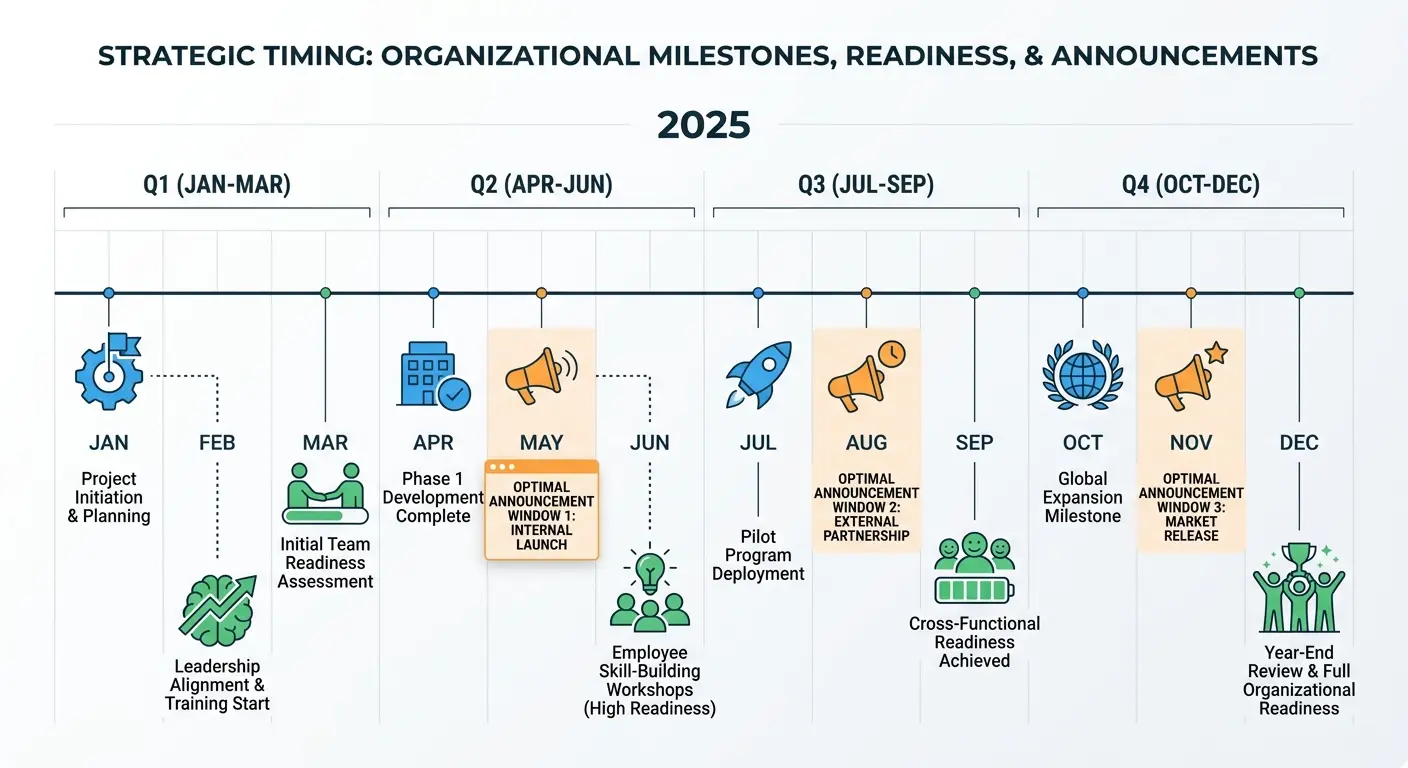
Aligning With Performance Cycles
Many organizations batch promotions around annual review periods. It’s administratively convenient but creates problems.
When everyone gets promoted at once, individual achievements blur together. The person who transformed their department gets announced alongside someone who simply met expectations for long enough. Differentiation becomes impossible.
Promoting people when they’ve earned it, regardless of calendar timing, sends a stronger message. You’re responding to achievement in real time rather than waiting for an arbitrary date. This responsiveness shows that the organization pays attention and acts on what it sees.
When the Team Needs Inspiration
The most strategic promotion timing considers what the organization needs emotionally and culturally at that moment.
If a team has been through a difficult period, promoting someone who helped guide them through those challenges provides validation and hope. If the company is pushing into new territory, promoting someone who embodies the required capabilities signals commitment to that direction.
This doesn’t mean manufacturing promotions for morale purposes. It means being thoughtful about when you announce legitimate promotions to maximize their cultural impact.
Promotion Timing Decision Checklist
Before you announce a promotion, ask yourself these questions. If you can’t check most of these boxes, wait:
Readiness Indicators
- Has the promoted person been doing the new job for at least 2-4 weeks? (Don’t announce before they’ve started)
- Have they had time to talk to key stakeholders and get some early wins?
- Can they handle the questions that are about to come their way?
- Do they feel prepared to articulate their vision for the role?
Organizational Context
- Is the company going through major chaos right now? (Layoffs, restructuring, acquisition drama?)
- Will this announcement get buried under other big news?
- Does leadership have bandwidth to properly support and amplify the announcement?
- Does the timing align with when the promoted person’s new responsibilities become visible?
Cultural Timing
- Can this announcement serve a current organizational need (inspiration, direction, values reinforcement)?
- Will it get lost in a batch of simultaneous promotions?
- Have the teams affected by this change been told privately first?
- Does the timing allow for proper celebration without feeling rushed or buried?
How to Make Promoted Employees Feel Supported, Not Spotlighted
We spend so much time thinking about how to announce promotions that we forget to consider how those announcements affect the person being promoted. Public recognition creates pressure that many people aren’t prepared to handle.
The often-overlooked experience of the promoted employee themselves deserves attention. The pressure, isolation, and uncertainty that can accompany public recognition needs addressing. Promotions should set people up for success rather than exposing them to unrealistic expectations. There’s a gap between how promotions feel from the outside versus how they feel to the person experiencing them. What can organizations do to bridge that gap?
The Visibility Paradox
Promoted employees often feel more exposed than celebrated. Everyone is watching to see if they’ll succeed in the new role. Colleagues are evaluating whether the promotion was deserved. Leadership is monitoring performance with heightened expectations.
This visibility can be paralyzing for people who don’t naturally seek the spotlight. The promotion they worked hard for suddenly feels like a test they might fail publicly.
Addressing this paradox means having honest conversations before the announcement. What support does the promoted person need? How do they want their achievement framed? What concerns do they have about the increased visibility? These conversations shape announcements that feel supportive rather than exposing.
Setting Realistic Expectations
Promotion announcements sometimes overpromise what the person will accomplish in their new role. Leadership gets excited and makes grand statements about transformation and impact.
These inflated expectations set the promoted person up to disappoint. They’re trying to learn their new responsibilities while everyone expects immediate, dramatic results.
Grounding announcements in reality protects the promoted employee. You can celebrate their past achievements and express confidence in their future contributions without making promises they’ll struggle to keep. Realistic framing gives them room to grow into the role without feeling like they’re failing if they don’t immediately revolutionize everything.

Providing Behind-the-Scenes Support
The public announcement is just the beginning. Promoted employees need ongoing support that isn’t visible to the rest of the organization.
This includes coaching on how to handle their new responsibilities, guidance on building relationships with new stakeholders, and permission to make mistakes while learning. It also means protecting them from the pressure to immediately prove themselves by giving them time to transition.
Many organizations announce promotions and then leave people to figure everything out on their own. The lack of structured support communicates that the promotion was the reward, and now they’re on their own. That’s when promoted employees start to struggle, not because they lack capability but because they lack guidance.
I watched this happen recently: A marketing director got promoted to VP with a big external announcement about her “aggressive growth targets.” Within six weeks, she was barely sleeping. The announcement had created expectations she couldn’t possibly meet while simultaneously learning executive strategy, managing a team twice the size, and dealing with board politics for the first time.
Her manager finally noticed she was drowning and built a 90-day transition plan: executive coaching, permission to drop certain projects, explicit “you’re allowed to say no” conversations. The lesson? The announcement had set her up to fail by prioritizing how it looked externally over whether she’d actually succeed.
The External Promotion Playbook That Doesn’t Feel Like Bragging
External promotion announcements serve different purposes than internal ones. You’re not just recognizing an employee. You’re signaling to potential talent, clients, and partners what your organization values and how it develops people.
How do you share employee advancement in ways that build employer brand without triggering skepticism or eye-rolls? There’s a fine line between showcasing organizational culture and coming across as self-congratulatory. External promotion content should serve both the promoted employee and the company’s reputation goals.
Making It About Growth, Not Glory
External audiences are skeptical of company self-promotion. When you announce a promotion externally, the framing matters enormously.
Here’s the thing about external promotion announcements: everyone can smell bullshit. If it reads like you’re patting yourself on the back for being a “great place to work,” people will scroll right past it. But if it reads like an actual story about someone’s growth? That’s when people pay attention.
The difference is subtle but critical. You’re not saying “Look how great we are for promoting people.” You’re saying “Here’s what this person accomplished and how our environment enabled it.” The first is about you. The second is about them, with your organization as the supporting character.
Giving the Promoted Person a Platform
Stop having executives talk about the promoted person. Let them tell their own story. It’s more authentic because it is authentic. You’re not spinning a narrative, you’re just getting out of the way.
This approach feels more real because it is. You’re not controlling the narrative. You’re facilitating someone sharing their story. That authenticity resonates with external audiences who are tired of corporate spin.
It also serves the promoted employee by raising their professional profile. The promotion announcement becomes a platform for them to demonstrate thought leadership and build their personal brand, which benefits both them and the organization.

Connecting to Industry Trends
External promotion announcements gain relevance when they connect to broader industry conversations. If you’re promoting someone to lead AI integration efforts, that ties into what many organizations are grappling with. If you’re promoting someone who’s been driving remote team effectiveness, that’s a widely relevant topic.
This industry connection makes your announcement useful beyond just celebrating one person. You’re contributing to professional discourse while showcasing your employee’s expertise. External audiences engage because they care about the topic, not just because you asked them to celebrate your promotion.
When to Skip External Announcements
Not every promotion needs external visibility. Some are primarily about internal organizational structure and don’t translate in ways that matter to outside audiences.
The test is whether external stakeholders would find the promotion relevant or interesting. If you’re promoting someone to manage an internal process that has no external implications, announcing it externally is just noise. Save external communications for promotions that demonstrate something about your culture, capabilities, or direction that outside audiences care about.
When Positive Promotions Should Stay Internal
Not all promotions should be publicly celebrated. Sometimes the smartest move is to keep your mouth shut.
I know, I know. Transparency is important. But there’s a difference between transparency and broadcasting every internal change to the world. Some situations call for discretion, and pretending otherwise is naive.
Not all promotions should be publicly celebrated. Scenarios exist where internal-only communication serves the organization and the promoted employee better. The nuanced decision-making around promotion visibility matters. How do you handle situations where discretion serves strategic purposes without creating perceptions of secrecy or favoritism?
During Sensitive Transitions
When someone is promoted into a role that involves managing former peers or taking over for someone who was asked to leave, public celebration can create tension.
The promotion is legitimate and deserved, but the circumstances require sensitivity. Announcing it with the same fanfare as other promotions can feel tone-deaf to people affected by the transition. Internal communication that acknowledges the complexity while supporting the promoted person serves everyone better.
This doesn’t mean hiding the promotion. It means adjusting the approach to match the situation. You can recognize the person’s readiness for expanded responsibility without glossing over the difficult circumstances that created the opportunity.
When Organizational Structure Is Fluid
Some promotions happen during periods of organizational experimentation where roles and responsibilities are still being defined. Announcing these promotions broadly before the structure stabilizes can create confusion.
Keeping these promotions relatively quiet until the organizational design solidifies prevents mixed messages. Teams don’t benefit from announcements that raise more questions than they answer about who’s responsible for what.
Once the structure is clear and the promoted person has established their new role, a more public acknowledgment makes sense. The timing just needs to match organizational readiness.
Protecting Competitive Advantage
Occasionally, a promotion signals strategic direction that you’re not ready to broadcast externally. Promoting someone to lead a new market initiative or develop a new capability might tip off competitors before you want them to know your plans.
In these cases, internal communication can celebrate the promotion while external silence protects strategic interests. The promoted person understands the reasoning, and internal teams get the information they need without compromising competitive position.
Measuring What Actually Matters After the Announcement
Let’s talk about how most companies measure promotion success: likes, shares, comments. Engagement metrics.
This is complete bullshit. Those numbers tell you nothing about whether the promotion actually worked. They tell you whether people clicked a button. That’s it.
How do you evaluate whether positive promotions are achieving their intended impact? Moving beyond vanity metrics to explore indicators of real success matters, both for the promoted individual and for the broader cultural and organizational goals that promotions should serve. Tracking long-term outcomes rather than just immediate reactions provides real insight.
Tracking Cultural Indicators
The real success metrics for positive promotions show up in organizational culture over time. Are people having more conversations about career development? Are employees asking more questions about what it takes to advance? Are teams nominating colleagues for recognition more often?
These cultural shifts indicate that promotions are inspiring rather than just informing. They suggest that people see promotions as achievable and understand the path to get there.
This is harder to measure than counting LinkedIn reactions, which is exactly why most companies don’t do it. But it’s the only measurement that actually matters.
Tracking these indicators requires qualitative assessment, not just data analysis. You need to listen to what people are saying in team meetings, one-on-ones, and informal conversations. You need to watch for changes in how people talk about growth and opportunity.
Monitoring the Promoted Employee’s Success
The ultimate measure of a good promotion is whether the person succeeds in their new role. If promotions consistently lead to struggling employees, something is wrong with either the promotion criteria or the support structure.
This means tracking performance and wellbeing for promoted employees over their first year in the new role. Are they meeting expectations? Do they feel supported? Are they developing the capabilities the role requires?
When promoted employees struggle, the instinct is often to blame the promotion decision. Sometimes that’s fair, but often the issue is lack of support after the promotion. Measuring success means looking at both the decision and the follow-through.
Assessing Ripple Effects on Teams
Promotions affect team dynamics in ways that take time to emerge. Is the team functioning better with the person in their new role? Are other team members stepping up to fill gaps? Is collaboration improving or deteriorating?
These team-level impacts reveal whether the promotion served organizational needs or just individual ones. A promotion that advances one person but weakens the team is a net negative, even if the promoted employee performs well individually.
Assessing these ripple effects requires input from multiple perspectives. The promoted person’s view of their impact differs from their team’s view and their manager’s view. Triangulating these perspectives gives you a realistic picture.
Evaluating Long-Term Retention
Promotions should increase retention, both for the promoted person and for others who see a clear path forward. If people are leaving shortly after being promoted or if promotions aren’t reducing overall turnover, the promotion strategy isn’t working.
Retention data over 12-18 months post-promotion reveals whether promotions are creating the career satisfaction and opportunity they’re meant to provide. Exit interview data from people who leave despite being promoted can be instructive about what’s not working.
Turning Promotion Strategy Into Competitive Advantage
Companies spend enormous resources on employer branding and talent attraction. Few realize that their promotion practices are one of their most visible and credible brand signals.
How can organizations use their approach to positive promotions as a differentiator in talent markets? Thoughtful, strategic promotion practices signal organizational values and create employer brand advantages that generic promotion announcements never will. Promotion strategy connects to broader talent acquisition and retention goals in powerful ways.
What Promotions Reveal About Your Culture
Potential employees research companies by looking at who gets promoted and why. They’re reading your promotion announcements to understand what you value, not just what you claim to value in job postings.
When your promotions consistently highlight collaboration, mentorship, and impact beyond individual metrics, candidates understand that’s what matters in your culture. When your promotions focus solely on revenue generation or individual achievement, they understand that too.
This revelation works for or against you depending on whether your promotion practices align with the culture you want. Inconsistency between stated values and promoted behaviors is immediately apparent to anyone paying attention.

Building Promotion Transparency as Differentiator
Most organizations are opaque about promotion criteria and processes. Employees are left guessing what it takes to advance, which creates anxiety and reduces motivation.
Companies that build real transparency around promotions gain a significant advantage. When people understand exactly what’s required to move up, they can make informed decisions about their career investments. They know whether the path to advancement aligns with their strengths and interests.
This transparency doesn’t mean publishing formulas or making promotions purely metrics-driven. It means clearly articulating the capabilities, experiences, and impacts that lead to advancement, and being consistent about applying those criteria.
Using Promotion Stories in Recruitment
Your best recruitment content is often sitting in your promotion history. Stories about how people grew from entry-level to leadership, overcame challenges, or transitioned between functions demonstrate possibility in ways that generic employer brand messaging never can.
These stories work because they’re specific and verifiable. A candidate can look at your organization and see real examples of the career progression you’re promising. They can connect with people who’ve walked paths similar to what they’re hoping for.
We work with companies to identify and develop these promotion stories as recruitment assets. The work isn’t about creating marketing spin. It’s about documenting real growth stories and making them accessible to people considering joining your organization. When candidates can see themselves in your employees’ journeys, your talent pitch becomes infinitely more compelling.
Final Thoughts
Look, I get that promotion announcements seem like a small thing. There are bigger problems to solve. But here’s why this matters: promotions are one of the few moments where you can actually show, not tell, what your company values. And most organizations are completely wasting that opportunity.
You’re already promoting people. You’re already making announcements. The raw material is there. You’re just executing it in the most forgettable, template-driven way possible, and then wondering why nobody seems inspired by your “culture of growth.”
The fix isn’t complicated. Stop treating promotions like administrative updates. Start treating them like the stories they actually are. Give context. Be specific. Connect individual achievement to team impact. Time things strategically. Support people after you announce them. Measure what actually matters, not what’s easy to count.
Here’s what’s going to happen: most companies will read this, nod along, and then go right back to posting the same generic “thrilled to announce” templates they’ve always used. Because changing this requires actual effort. It requires giving a shit. It requires someone in leadership saying “our current approach is lazy and we’re going to do better.”
The companies that actually do this work? They’re going to win the talent war. Because promotions are one of the most visible, credible signals of what you actually value. And right now, most companies are signaling that they don’t value much beyond checking boxes.
A few companies will actually change their approach. They’ll put in the work to make promotions resonate. And they’ll gain a compounding advantage over time: employees who feel recognized in ways that matter, teams that understand what success looks like, a culture that reinforces itself, and an employer brand that’s credible because it’s backed by observable patterns.
Which one are you going to be?