


I looked at a client’s social media strategy last week and had to laugh. Not because it was terrible (it actually looked really polished), but because it reminded me of my old MySpace profile. Remember those? Everything perfectly arranged, never updated, completely useless for actually connecting with anyone.
That’s what most “online presence management” looks like in 2025. Pretty. Dead. Pointless.
Profiles get filled out, links get added, bios get written, and then everything just sits there collecting digital dust while you wonder why engagement feels flat. I’ve watched hundreds of brands pour resources into “maintaining their presence” while missing what actually moves the needle.
The problem isn’t that you need more platforms or better graphics. The issue is that most online presence management still operates on a broadcast model that died around the time people stopped checking Facebook chronologically. What matters now is how your presence responds, adapts, and evolves based on what’s actually happening in the spaces where your audience lives. Understanding what is online presence in today’s dynamic ecosystem means recognizing that static profiles no longer constitute real online presence management.
Here’s what we’re covering (feel free to jump around):
TL;DR
Quick version:
- Static profiles and scheduled content don’t cut it anymore. If you’re still just “maintaining” your presence, you’ve already lost.
- Most brands lack response architecture (basically: systems that let you engage meaningfully when opportunities actually appear)
- Behavioral signals like comment depth and share context matter way more than vanity metrics. Your follower count? Almost meaningless.
- Conversation velocity (how fast meaningful exchanges happen) beats content volume for building authentic presence
- Algorithm changes will expose whether your presence strategy is resilient or just gaming mechanics that can shift overnight
- Attribution gaps mean you’re probably missing where your presence actually drives action, leading to misallocated resources
- Your six-month-old strategy is already obsolete. Sorry.
- Integration between presence touchpoints and business systems determines whether visibility converts to value

Why Static Presence Management Fails in Dynamic Ecosystems
Here’s what most online presence management actually is: you set up profiles, post on a schedule, and pray something happens. This worked great in 2015. It’s completely useless now.
Digital ecosystems now function as living environments where context shifts hourly, audience attention fragments across micro-communities, and platform mechanics reward behaviors that can’t be scheduled three weeks in advance. Static management creates the illusion of presence while your actual influence erodes because you’re not participating in the real-time flows that determine visibility and trust.
The gap between “having a presence” and “being present” has never been wider. There’s a massive difference between having a LinkedIn profile and actually being on LinkedIn. Most brands don’t get this.
Your carefully planned content calendar looks impressive in meetings but means nothing when the conversations that matter are happening right now, without you.
The Maintenance Mindset Versus the Participation Model
We’ve inherited a presence management philosophy from an era when websites were brochures and social profiles were digital business cards. You built them, you updated them periodically, and they worked because audiences came looking for you.
That model assumes people are seeking you out, which is a dangerous assumption when attention is the scarcest resource online. Building effective digital presence management requires moving beyond the maintenance mindset that dominates most social media marketing agencies and embracing active participation instead.
I’ll tell you about a client (mid-size B2B SaaS, around 200 employees, selling to enterprises). They were religious about LinkedIn. Three posts a week, every week, for two years straight. Beautiful graphics. Thoughtful captions. Their marketing director was proud of their consistency.
Then we asked: “How many deals came from LinkedIn?”
Silence.
They checked. Zero. Two years, probably $100K in content creation costs, zero revenue.
The problem? They were broadcasting into the void. Nobody asked for their content. They had presence like a billboard has presence (technically visible, completely ignorable).
After shifting 60% of their LinkedIn time from content creation to strategic participation in existing discussions, they generated twelve qualified leads in the first month. Same platform, same audience, completely different approach to presence management.
Participation requires different infrastructure. You need monitoring systems that catch relevant conversations before they move on. You need team protocols that allow for rapid response without bottlenecking through approval chains. You need content flexibility that lets you pivot based on what’s resonating right now, not what you planned last month.
Most presence management budgets go toward creation and scheduling. Very little goes toward the systems that enable you to show up in moments that matter. This allocation reflects outdated priorities that produce impressive content calendars but weak actual presence.
How Platform Evolution Outpaces Management Strategies
Platforms change their mechanics constantly, testing features, adjusting algorithms, and responding to user behavior shifts. Your presence strategy probably gets reviewed quarterly at best.
The math doesn’t work. By the time you’ve analyzed what worked last quarter and adjusted your approach, the conditions that made those tactics effective have already changed. I’m seeing brands invest heavily in short-form video because it performed well six months ago, not because it’s still the highest-leverage format for their specific audience right now.
The lag between observation and implementation creates a constant state of fighting the last war.
|
Strategy Review Frequency |
Platform Change Frequency |
Strategic Gap |
Risk Level |
|---|---|---|---|
|
Annual review |
Weekly algorithm adjustments |
52 weeks behind |
Critical |
|
Quarterly review |
Weekly algorithm adjustments |
12 weeks behind |
High |
|
Monthly review |
Weekly algorithm adjustments |
4 weeks behind |
Moderate |
|
Bi-weekly review |
Weekly algorithm adjustments |
1-2 weeks behind |
Low |
|
Continuous monitoring |
Weekly algorithm adjustments |
Real-time adaptation |
Minimal |
Look, I’m going to be honest about these numbers because the exact figures don’t matter as much as the pattern does: if you’re reviewing your strategy once a year, you’re basically 52 weeks behind reality. Quarterly reviews? Still 12 weeks behind. Monthly? Getting warmer, but still 4 weeks out of date.
The brands winning at presence right now? They’re reviewing what’s working every few days, not every few months.
Effective online presence management in dynamic ecosystems requires feedback loops measured in days, not months. You need to know what’s working this week and have the flexibility to do more of it before the window closes.
This isn’t about being reactive, it’s about being responsive to signals that indicate where your presence management will have the most impact. The brands winning at presence right now are the ones who’ve built systems for rapid testing and adjustment, not the ones with the most elaborate annual plans.

The Response Architecture Gap Nobody’s Talking About
Response architecture is a fancy term for: can you actually respond when something important happens?
Most companies can’t.
Someone mentions you on Reddit, asks about you on Twitter, compares you to a competitor in a LinkedIn thread. These moments have a shelf life of hours, not days. If your response process involves three approval layers and a legal review, you’ve already lost. The conversation moved on while you were still drafting.
Response architecture refers to the systems, permissions, and workflows that determine how quickly and effectively you can engage when opportunities appear. A mention from an influencer, a question in your niche subreddit, a trending topic adjacent to your expertise (these moments have short half-lives).
Most organizations lack the infrastructure to capitalize on them because presence management is built around pushing content out, not pulling relevant opportunities in and responding appropriately.
Your analytics won’t show this gap. But you feel it. Some brands seem to be everywhere. You’re posting just as much. So what’s different?
Building response architecture means creating the technical monitoring, team empowerment, and content flexibility that lets you be where conversations are happening, not just where you planned to show up. Professional online presence management services understand this distinction and build infrastructure accordingly.
Monitoring Systems That Actually Surface Opportunities
You can’t respond to what you don’t see. Most brands monitor their own profiles and maybe some branded keywords, which captures about 15% of the conversations where their presence would add value.
The other 85% happens in spaces you’re not watching, using language you’re not tracking, within communities you don’t know exist. Effective monitoring goes beyond brand mentions to track problem statements, competitor discussions, industry terminology, and adjacent topics where your expertise is relevant.
This requires tools beyond basic social listening, including community monitoring across platforms like Discord and Slack, review site tracking, forum participation analysis, and even podcast mention detection. Web presence management at this level transforms how you discover opportunities to engage.
What you should actually be monitoring (and most of you aren’t):
- Direct brand mentions across all major platforms
- Untagged brand references (misspellings, abbreviations, that nickname your customers use that you hate)
- Product category terms and industry terminology
- Problem statements your solution addresses (this is huge. People describing problems you solve, not mentioning you at all)
- Competitor mentions and comparison discussions (especially the “Should I use X or Y?” posts)
- Key industry hashtags and topic clusters (the active ones, not the ones you wish were active)
- Questions in relevant subreddits, Quora, and forums
- Reviews and ratings on third-party sites (including ones you didn’t know existed)
- Podcast and video content mentions
- LinkedIn group discussions in your niche
- Discord and Slack community conversations (yes, this is hard to track. Do it anyway.)
- Industry event hashtags and live discussions
This list should overwhelm you slightly. If it doesn’t, you’re not thinking big enough.
The technical setup is only half the challenge. You also need decision frameworks for what’s worth responding to.
Not every mention deserves engagement, and trying to respond to everything dilutes your presence rather than strengthening it. I prioritize based on audience quality, conversation depth, and strategic fit, not just volume or reach. This comprehensive approach to presence management ensures you’re capturing opportunities that matter.
Permission Structures That Enable Speed
Response opportunities often have windows measured in hours. If your engagement process requires approvals from legal, brand, and leadership before someone can reply to a Reddit comment, you’ve already lost the moment.
Speed matters because conversations move on, and late responses read as inauthentic or opportunistic.
I watched this happen in real-time with a fintech startup. Someone on Reddit was comparing their product to two competitors (detailed post, 47 comments, trending in a subreddit with 180K of their exact target customers). Gold mine, right?
Their community manager wrote a perfect response. Helpful, not salesy, addressed misconceptions, offered resources. Exactly what you’d want.
Then it went to legal. Then brand review. Then the VP needed to see it.
Four days later (FOUR DAYS), they got approval to post.
By then? Thread was dead. Conversation over. Opportunity gone.
The community manager told me later she almost quit over it. “What’s the point of monitoring if we can’t actually respond?” she said. She wasn’t wrong.
After implementing tiered response guidelines, their digital presence manager could respond immediately to 85% of opportunities, escalating only sensitive topics that genuinely required oversight.
This doesn’t mean eliminating oversight. It means building trust and guidelines that let frontline team members make judgment calls within defined parameters. You need clear response frameworks that specify what types of engagement can happen immediately, what needs quick review, and what requires escalation.
I’ve seen organizations transform their presence effectiveness simply by empowering community managers to engage without approval for 80% of interactions. The remaining 20% still gets reviewed, but the bulk of presence-building happens at the speed of conversation rather than the speed of committee approval.

Behavioral Signals That Actually Predict Presence Effectiveness
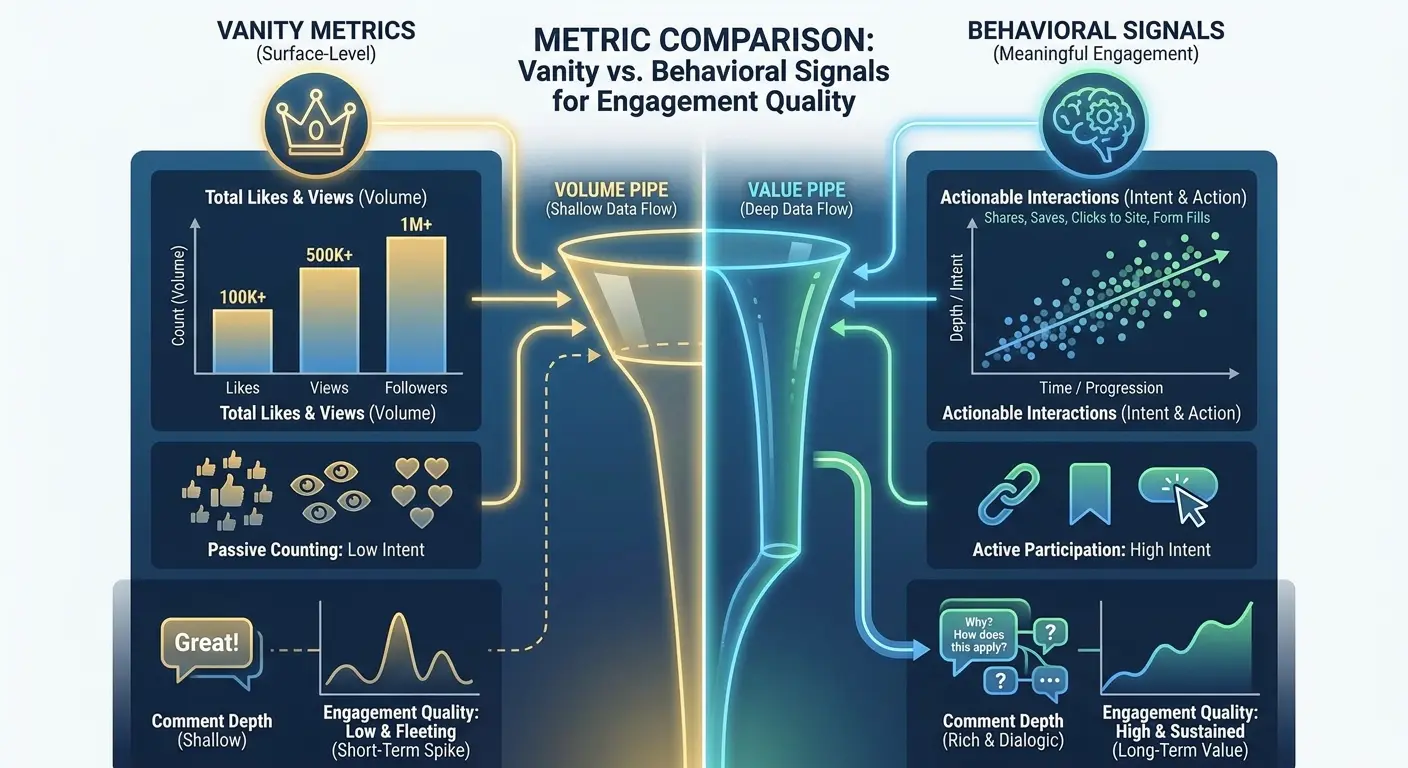
Traditional presence metrics focus on outputs you control (posts published, profiles maintained) and vanity metrics that feel good but predict nothing (follower counts, impressions).
The signals that actually indicate whether your presence management is working are behavioral. They show how people interact with your content and whether those interactions lead to deeper engagement.
Comment depth reveals whether you’re sparking real conversation or collecting emoji reactions. Share context shows whether people are amplifying your content as a resource or just passing it along for engagement bait. Conversation continuation tracks whether initial interactions lead to ongoing relationships or dead-end exchanges.
These behavioral signals are harder to measure and don’t produce the impressive dashboard numbers that vanity metrics do, but they’re the only reliable predictors of whether your presence is building the trust and influence that eventually drive business outcomes.
Comment Depth as a Trust Indicator
A post with 500 likes and three shallow comments has less presence impact than a post with 50 likes and twenty substantive comments. Comment depth indicates whether you’re provoking thought, providing value worth discussing, or just producing content that’s easy to scroll past with a quick reaction.
I track several comment depth indicators. Average comment length shows whether people are investing effort in their responses. Reply threading depth reveals whether comments spark additional conversation. Commenter return rate indicates whether the same people are engaging repeatedly, suggesting relationship development rather than one-off interactions.
Understanding these behavioral patterns is essential for B2B digital marketing agencies that need to demonstrate tangible business value from online presence management efforts.
|
Metric Type |
Vanity Signal |
Behavioral Signal |
What It Predicts |
|
|---|---|---|---|---|
|
Engagement Volume |
500 likes, 5 comments |
50 likes, 30 comments |
Behavioral predicts conversion 3x better |
|
|
Comment Quality |
“Great post!” x 20 |
150+ word responses with questions |
Deep comments lead to 8x more continued engagement |
|
|
Share Activity |
100 shares, no commentary |
25 shares with personal recommendations |
Contextual shares convert 5x more often |
|
|
Follower Growth |
+1,000 followers/month |
+100 followers who comment 3+ times |
Active followers generate 12x more pipeline value |
|
|
Reach Metrics |
50,000 impressions |
5,000 impressions, 400 profile visits |
Profile visits predict sales conversations 6x better |
These numbers come from my analysis of about 50 B2B clients over 18 months. Your mileage will vary. The point isn’t the exact multipliers, it’s the pattern. Behavioral signals predict business outcomes. Vanity metrics don’t. This holds true even when the specific numbers shift.
The challenge is that optimizing for comment depth often reduces total engagement numbers. Content that provokes thoughtful discussion typically reaches fewer people than content designed for quick reactions.
Your presence isn’t measured by how many people you reach once. It’s measured by how many people you reach repeatedly in ways that deepen relationship and trust over time.
Share Context and Amplification Quality
Someone sharing your content tells you almost nothing about presence effectiveness. Why they shared it and what they said when they did tells you everything.
Shares accompanied by personal commentary or specific recommendations indicate genuine value perception. Shares with generic text or no context suggest algorithmic obligation or engagement farming.
I manually review share context for key content pieces to understand what’s resonating and why. This qualitative analysis reveals patterns that quantitative metrics miss. You might discover that your educational content gets shared with thoughtful recommendations while your promotional content gets shared with no commentary, signaling a clear value perception gap.
Platform APIs make share context hard to track at scale, which is why most analytics ignore it. But the information is available if you’re willing to do manual sampling, and the insights justify the effort. Understanding why people amplify your content shapes everything from topic selection to formatting decisions.
Conversation Continuation Beyond Initial Contact
First interactions are easy. Someone comments, you reply, they like your reply, and the exchange ends.
Presence management that drives business outcomes comes from interactions that continue beyond that initial exchange. The person who comments again on your next post, the commenter who eventually emails you directly, the discussion participant who becomes a customer three months later.
Tracking conversation continuation requires connecting interactions across time and platforms, which most analytics tools don’t support. You need CRM integration, manual tracking, or custom database work to see these patterns. The effort is worth it because continuation metrics predict conversion better than any top-of-funnel engagement metric.
I’ve found that accounts generating high conversation continuation rates (people who engage multiple times over weeks or months) convert at 8-10x the rate of accounts with equivalent reach but lower continuation.
Your presence isn’t measured by how many people you reach once. It’s measured by how many people you reach repeatedly in ways that deepen relationship and trust over time.
Building Presence Around Conversation Velocity Instead of Content Volume
Content volume strategies assume that more presence touchpoints equal more influence. This worked when attention was abundant and competition was limited.
Now, audiences are overwhelmed and selective, meaning more content often just means more noise. Conversation velocity (how quickly meaningful exchanges happen when you do engage) is a better foundation for presence strategy. High conversation velocity means your contributions spark immediate discussion, responses, and continuation.
It indicates you’re adding value to existing conversations rather than trying to start new ones that nobody asked for. Building for conversation velocity requires different content approaches, platform selection, and success metrics than volume-based strategies. You publish less but engage more deeply, you prioritize platforms where your audience is already talking rather than trying to build audiences from scratch, and you measure success by conversation quality rather than content quantity.
Platform Selection Based on Existing Conversation Density
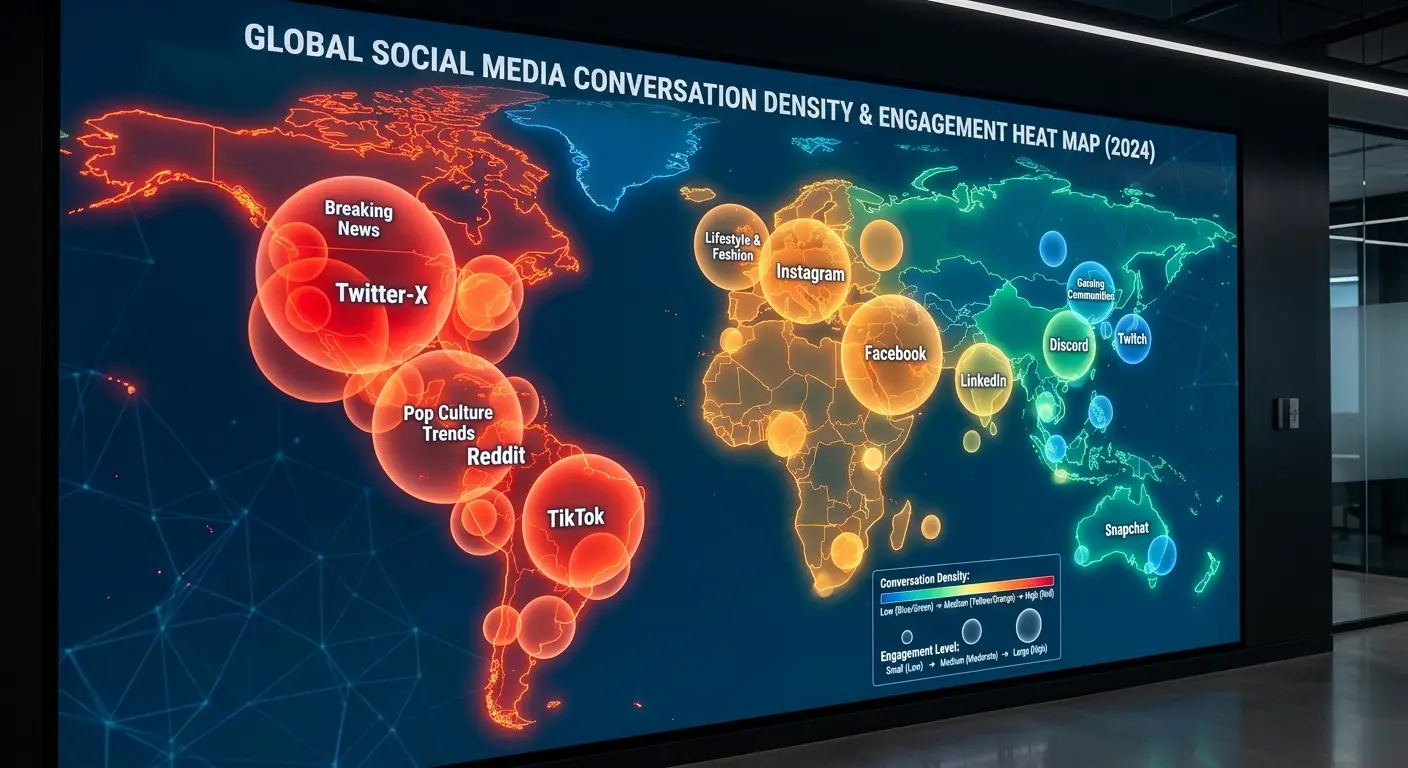
Most presence strategies start with “we need to be on these platforms” based on where competitors are or where audiences theoretically exist. Better platform selection starts with “where are conversations already happening that we could meaningfully contribute to?”
This shifts focus from audience building to conversation joining. You’re not trying to attract people to your profiles, you’re going to where discussions are already active and adding value that earns you presence within those conversations.
This works better for most brands because starting conversations from zero is exponentially harder than joining existing ones. When you strategically participate where your audience already gathers, you increase online presence more efficiently than broadcasting into empty spaces.
I map conversation density across platforms by tracking discussion volume, comment depth, and topic relevance in spaces where target audiences gather. A platform might have huge user numbers but low conversation density in your niche, making it a poor presence investment despite impressive reach potential.
Conversely, a smaller platform with intense discussion around your expertise area offers higher presence ROI even with limited scale.
Content Formats That Accelerate Rather Than Initiate Dialogue
Content designed to start conversations often fails because it asks audiences to do work (think of a response, invest time in commenting) without establishing why they should care.
Content that accelerates existing conversations succeeds because it provides value to discussions already in progress. This means creating responses, additions, and resources tied to active topics rather than standalone pieces hoping to generate interest.
You’re contributing to threads, answering questions people are already asking, and providing depth on subjects people are already discussing. Your content becomes part of conversation flow rather than an attempt to redirect attention. This approach builds authentic presence online rather than manufactured visibility.
An enterprise SaaS company shifted from publishing two original LinkedIn articles per week to publishing one article every two weeks while dedicating the saved time to participating in active discussions. Their content strategist monitored LinkedIn for posts from industry leaders and prospects that were generating substantial comment threads.
When relevant discussions emerged, they contributed detailed responses that added frameworks, data, or alternative perspectives. Within six weeks, their meaningful conversation rate (discussions that continued beyond one exchange) increased 340%.
More importantly, three enterprise deals traced their origin to these discussion participations, compared to zero deals from their original article strategy. The content that accelerated existing conversations outperformed the content trying to start new ones by every measure that mattered.
The production mindset shifts from “what should we say?” to “what are people talking about and how can we add value to those conversations?” This requires more monitoring and less planning, more flexibility and less structure. It’s harder to systematize but dramatically more effective at building genuine presence.
Response Speed as a Velocity Multiplier
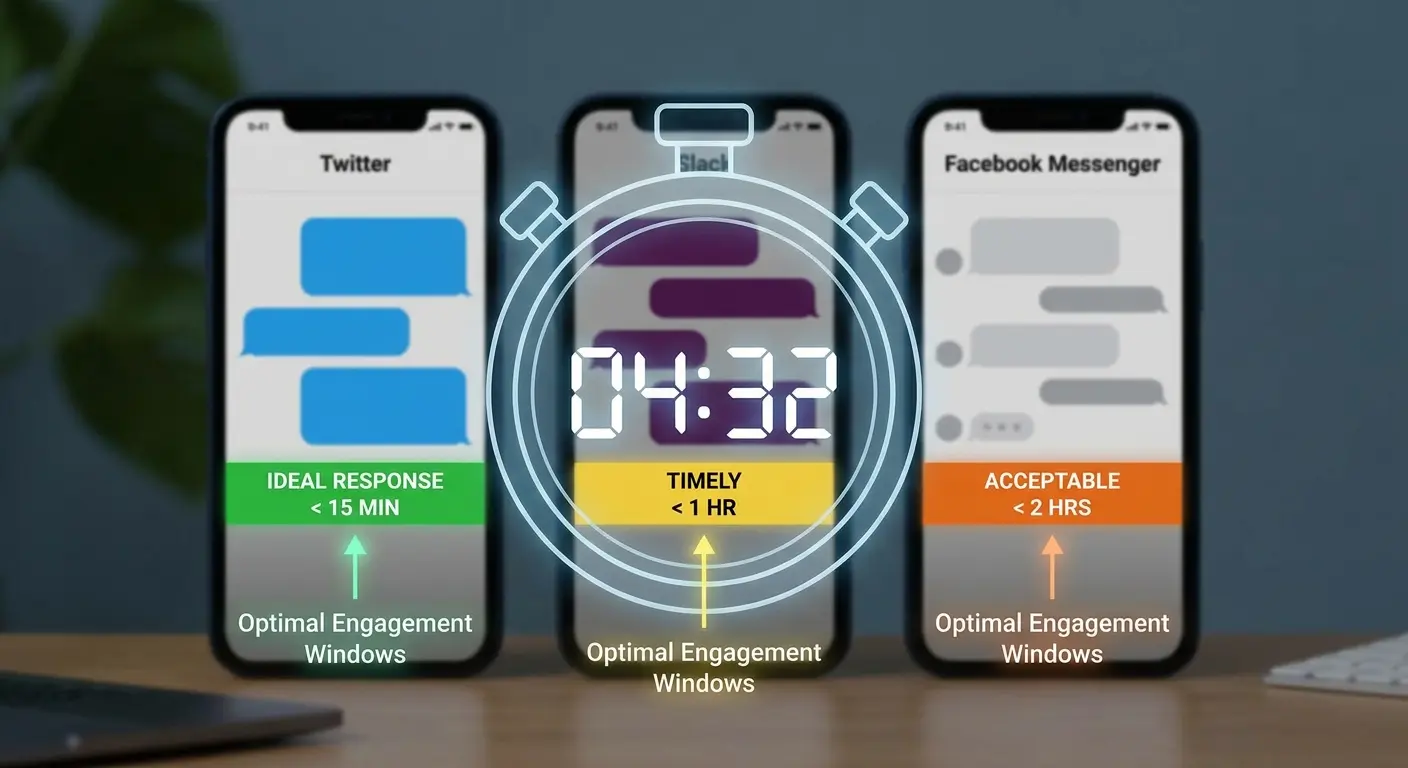
Conversation velocity depends partly on how fast you respond when engagement happens. A thoughtful reply three days later has minimal velocity impact. The same reply within an hour keeps momentum going and signals that real people are present, not just scheduled content.
Speed requirements vary by platform and context. Reddit discussions move faster than LinkedIn posts. Comments on breaking news need faster responses than comments on evergreen content. But across all contexts, response speed correlates with conversation continuation rates.
Response Speed Framework:
- Immediate (within 1 hour): High-value prospects, trending discussions, time-sensitive questions, competitor comparison threads
- Same day (within 8 hours): General questions, community discussions, most comments on your content
- Next day (within 24 hours): Routine engagement, non-urgent inquiries, thoughtful responses requiring research
- Weekly: Monitoring for patterns, community check-ins, relationship maintenance with inactive connections
Building infrastructure for fast response means having team members with monitoring responsibilities throughout business hours, clear escalation paths for after-hours opportunities, and mobile access to engagement tools so responses aren’t delayed by being away from a desk.
I’ve measured response speed impact directly by A/B testing reply timing. Responses within two hours generated 4.3x more conversation continuation than identical responses delivered 24 hours later. Speed isn’t everything, but it’s a significant multiplier on whatever value your response provides.
How Platform Algorithm Shifts Expose Brittle Presence Strategies
Every platform uses algorithms to determine what content gets seen, and those algorithms change constantly based on user behavior, business priorities, and competitive dynamics.
Presence strategies built around gaming or optimizing for specific algorithm mechanics are inherently brittle because they break whenever the algorithm shifts. I’ve seen brands lose 70% of their reach overnight when platforms adjusted their ranking factors, not because their content quality dropped but because their entire strategy depended on mechanics that no longer applied.
Resilient online presence management focuses on behaviors that algorithms consistently reward across platforms and over time (specifically genuine engagement, conversation generation, and value delivery). These fundamentals work regardless of specific algorithm mechanics because they align with what platforms ultimately want: keeping users engaged.
Building presence around these principles creates antifragility. Your effectiveness might fluctuate with algorithm changes but it doesn’t collapse.
The Difference Between Algorithm Optimization and Algorithm Alignment
Optimization means identifying what the algorithm currently rewards and doing more of that. You notice that posts with questions in the first sentence get more reach, so you start every post with a question. You discover that carousel posts outperform single images, so you convert everything to carousels.
This works until the platform changes its mechanics, which happens constantly.
Alignment means understanding what the algorithm is trying to achieve (usually keeping users on the platform longer) and creating content that serves that goal regardless of specific mechanics. Platforms want content that generates genuine engagement because engagement keeps users active.
If your content consistently sparks real conversation, it will get algorithmic support even as specific ranking factors change. This principle applies across channels, from SEO strategies to social media presence management approaches.
I’ve maintained relatively stable reach across multiple algorithm shifts by focusing on conversation generation rather than format optimization. My content approach doesn’t change when platforms adjust their mechanics because I’m aligned with the underlying goal (engagement) rather than optimized for the current implementation.
Diversification That Actually Protects Against Volatility
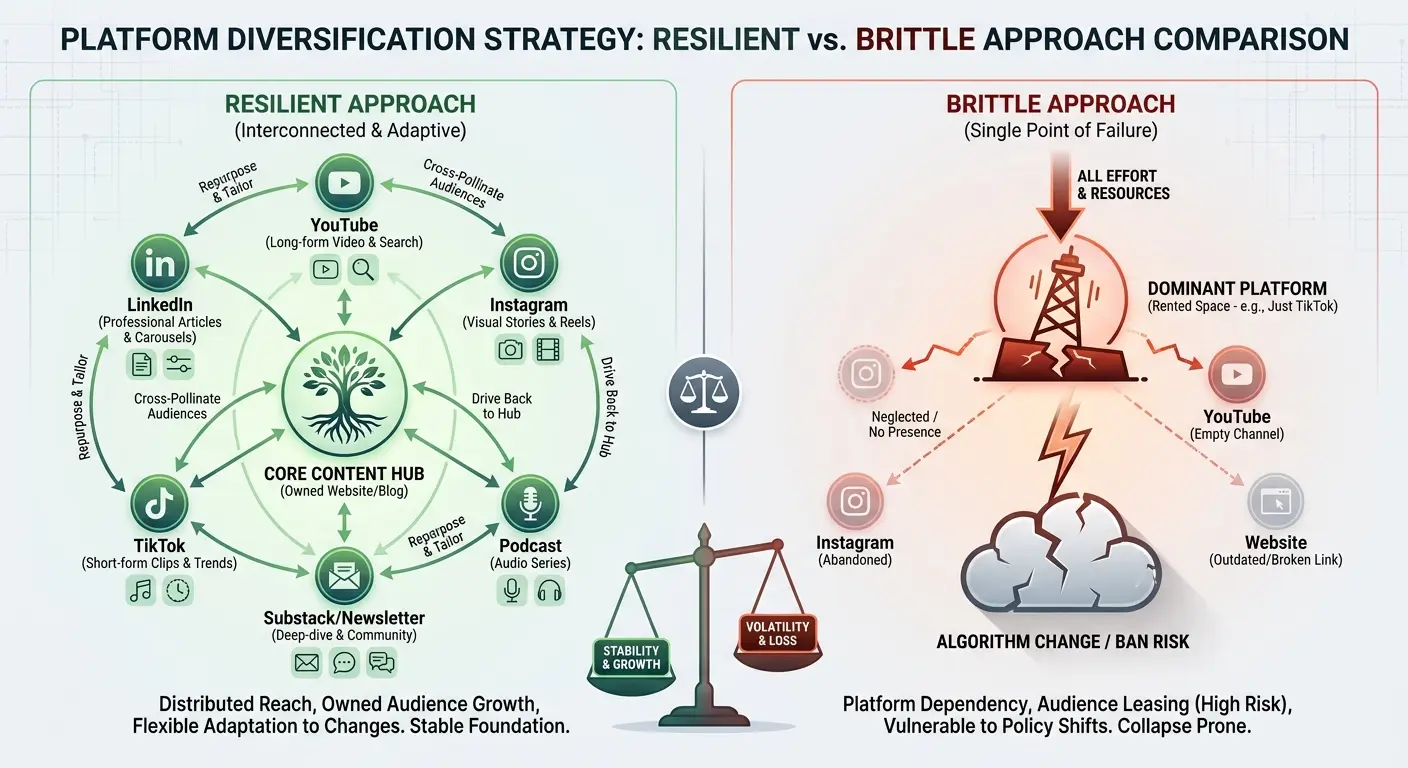
The standard advice is to diversify across platforms so you’re not dependent on any single one. This helps but doesn’t solve the problem because most brands just replicate the same brittle strategy across multiple platforms.
You’re still vulnerable, just in more places.
Real diversification means building presence through different mechanics on different platforms. On one platform, your presence comes from thought leadership content. On another, it comes from community participation. On a third, it comes from resource creation.
When algorithm changes hit, they typically affect specific content types or engagement patterns, so diversified mechanics mean only part of your presence takes a hit.
This requires more strategic complexity than most brands want to manage, which is why they default to posting similar content everywhere. But that simplicity creates fragility. One algorithm philosophy shift (say, platforms deciding to deprioritize external links) can devastate your presence across all platforms simultaneously if your entire strategy depends on link-based content.
The Attribution Blindspot Costing You Real Opportunities
Most presence management operates with massive attribution gaps. You know someone became a customer, but you don’t know which presence touchpoints influenced that decision. You know a piece of content got high engagement, but you don’t know if that engagement correlated with any business outcome.
These gaps lead to systematic misallocation of resources (doubling down on presence activities that feel successful but don’t drive results while underinvesting in presence work that looks unimpressive in dashboards but actually influences decisions).
The attribution problem is partly technical (tracking across platforms and over time is genuinely hard) but mostly philosophical. Most brands treat digital presence management as a top-of-funnel awareness activity rather than a throughout-the-funnel influence mechanism, so they don’t build the systems to connect presence interactions to outcomes.
Closing this blindspot requires both better tracking infrastructure and a more sophisticated understanding of how presence management actually influences decision-making over weeks or months through multiple touchpoints.
Why Standard Analytics Miss the Presence-to-Pipeline Connection
Standard analytics track what happens on each platform: engagement rates, click-throughs, follower growth. They don’t track what happens after someone leaves the platform.
Did that person who engaged with your LinkedIn post eventually visit your website? Did the person who asked a question in your community later become a customer? These connections exist but remain invisible in most analytics setups.
The gap exists because connecting cross-platform behavior requires unified tracking infrastructure that most organizations don’t have. Marketing automation platforms track website behavior. Social platforms track on-platform engagement. CRM systems track sales interactions. But these systems rarely talk to each other in ways that reveal how presence activities influence business outcomes.
I’ve built custom integration layers that connect social engagement data to CRM records, allowing me to see which presence touchpoints appeared in a customer’s journey before conversion.
The insights consistently surprise people. Content that looks mediocre in engagement metrics often appears frequently in conversion paths. High-performing content sometimes has zero correlation with pipeline generation.
Multi-Touch Attribution for Presence Activities
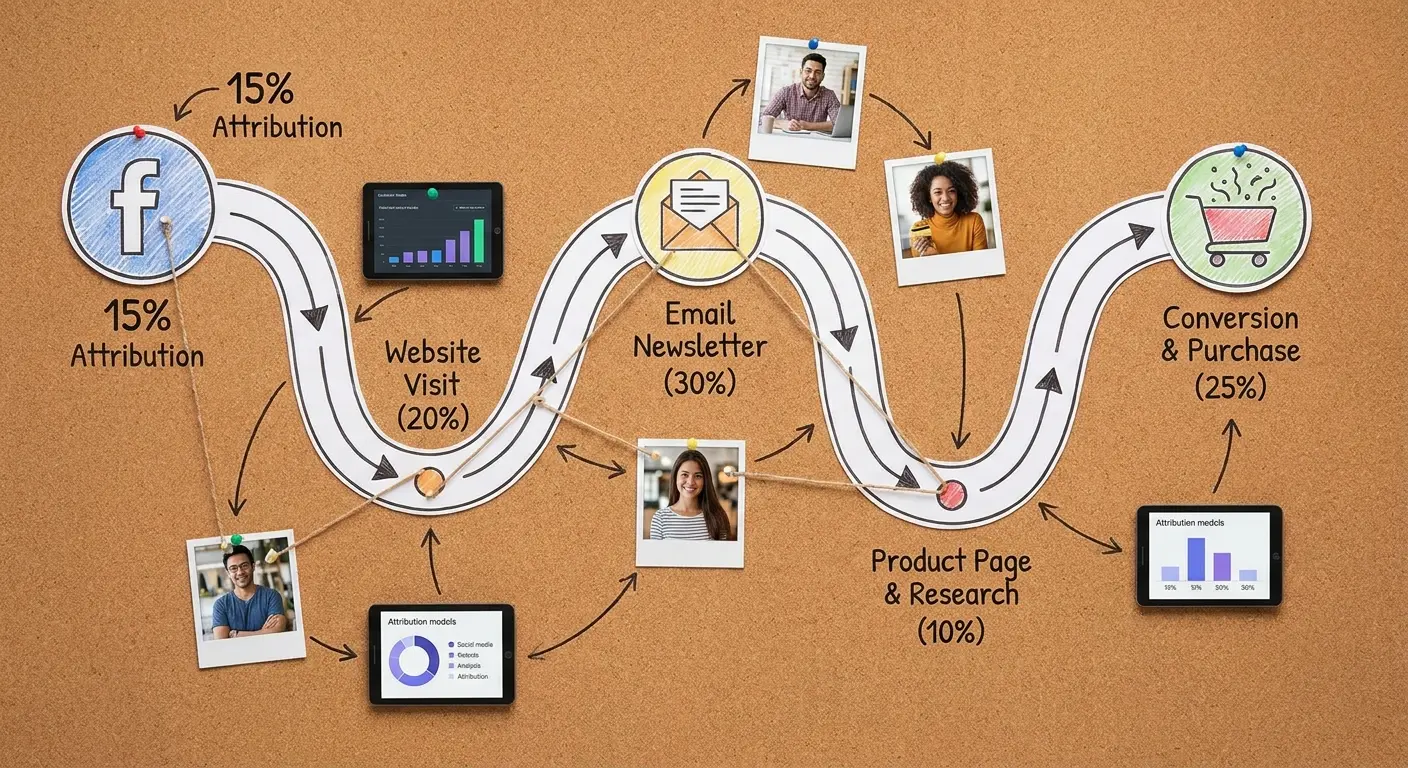
Someone doesn’t see your LinkedIn post and immediately become a customer. They see your post, visit your profile, read three articles on your website over two weeks, attend a webinar, get added to an email sequence, and then request a demo.
Your presence activity was the entry point, but standard attribution models either give it all the credit (first-touch) or none of the credit (last-touch).
Multi-touch attribution attempts to distribute credit across all touchpoints in a journey. For presence management, this reveals which activities are effective at starting relationships, which are good at maintaining engagement, and which push people toward conversion.
A presence tactic might be terrible at direct conversion but excellent at relationship initiation, making it valuable despite weak last-touch attribution.
Building multi-touch attribution for presence requires tagging all presence content with UTM parameters, integrating social platform data with your analytics stack, and implementing cross-device tracking to follow people from social apps to browsers. The technical lift is significant, but the strategic clarity it provides transforms how you allocate presence resources.
Qualitative Attribution Through Direct Inquiry
Technical attribution will never capture everything because some influence happens through mechanisms that leave no digital trace. Someone mentions your brand to a colleague after seeing your content. Someone remembers your insight from a Twitter thread when they encounter a related problem weeks later.
Someone’s perception of your expertise shifts based on accumulated presence over months.
I supplement technical attribution with direct inquiry (asking new customers and leads how they heard about us and what influenced their decision to engage). The responses reveal presence impacts that analytics miss.
People frequently mention specific pieces of content, platform interactions, or accumulated impressions that never showed up as conversion touchpoints in my tracking. This qualitative data is messy and doesn’t scale perfectly, but it provides context that makes quantitative attribution more useful.
You learn not just which touchpoints appeared in conversion paths but why those touchpoints mattered and how they influenced perception and decision-making. These insights are invaluable for improving your online presence effectiveness beyond what analytics alone can reveal.
Presence Decay and Why Your Six-Month-Old Strategy Is Already Obsolete
Presence strategies decay faster than they used to because the conditions that make them effective change constantly. Audience attention shifts to new platforms and formats. Competitors copy what’s working and saturate the space.
Platform mechanics evolve and reward different behaviors. Content that felt fresh six months ago now reads as derivative because everyone adopted the same approach.
This decay means presence management requires continuous evolution rather than periodic updates. The quarterly strategy review model doesn’t work when your presence effectiveness is degrading week by week. You need ongoing experimentation, rapid testing of new approaches, and willingness to abandon tactics that are losing effectiveness even if they’re still producing acceptable results.
Most brands wait until performance falls off a cliff before changing course, by which point they’re so far behind that catching up requires massive investment. Staying ahead of decay means evolving while things are still working, which is psychologically difficult but strategically necessary.
Recognizing Decay Before Performance Collapses
Presence decay shows up in leading indicators before it hits lagging metrics. Engagement quality drops before engagement volume does. Conversation depth decreases before total comments decline. Share context becomes more generic before share counts fall.
Watching these leading indicators lets you spot decay early and adjust before performance collapses. This proactive monitoring approach aligns with best practices from content marketing agencies that understand the importance of continuous optimization.
I track engagement quality scores that combine multiple behavioral signals into a single metric that indicates presence health. When this score trends downward even while vanity metrics stay stable, it signals that decay is happening and strategy evolution is needed.
Waiting for follower loss or reach decline means you’re responding to decay that’s already well advanced.
The challenge is that leading indicators require more sophisticated tracking than most brands implement. Measuring comment depth, share context, and conversation continuation takes more work than counting likes and impressions. But that extra effort provides the early warning system that keeps presence strategies effective.
Experimentation Infrastructure for Continuous Evolution
Staying ahead of decay requires constant experimentation with new approaches, formats, platforms, and tactics. This doesn’t mean chasing every trend (it means systematically testing variations to identify what’s gaining effectiveness as current approaches decay).
You need infrastructure that supports rapid testing without disrupting core presence activities.
I allocate 20% of presence resources to experimentation, trying new content formats, testing emerging platforms, and exploring different engagement approaches. Most experiments fail, but the ones that succeed become part of the core strategy before competitors saturate the space.
This continuous evolution keeps my presence fresh while others are still executing strategies from two quarters ago.
Experimentation infrastructure includes testing frameworks that define success criteria upfront, tracking systems that measure experiment performance separately from core metrics, and decision protocols for when to scale successful experiments into standard practice. Without this structure, experimentation becomes random activity that produces no learning.

Abandoning What’s Working But Declining
The hardest strategic decision in presence management is abandoning tactics that still produce acceptable results but are clearly declining. A content format that generated strong engagement six months ago might still be outperforming your average, but if its trajectory is downward, continuing to invest in it means you’re allocating resources to an approach that will be ineffective by the time you’d normally review strategy.
I track performance trajectories, not just absolute performance levels. A tactic showing 10% month-over-month decline gets flagged for replacement even if its current performance is solid.
This feels wasteful because you’re abandoning something that’s “still working,” but it prevents the situation where all your tactics hit ineffectiveness simultaneously and you have no momentum to build from.
This approach requires confidence in your experimentation pipeline because you’re only comfortable abandoning declining tactics if you trust that you’re developing effective replacements. Organizations without strong experimentation infrastructure can’t make these moves because they have nothing to shift resources toward.
But for those committed to continuous improvement, this proactive evolution is essential to improve your online presence before competitors force you to react.
Integration Points That Turn Presence Into Pipeline
Presence activities generate awareness and engagement, but those outcomes only matter if they connect to business systems that convert interest into revenue.
Most presence management stops at the platform boundary. Someone engages with content, maybe clicks through to your website, and then the presence team’s job is done. This creates massive value leakage because the hardest part (getting attention and building trust) is accomplished but the easiest part (capturing interest and enabling next steps) is neglected.
Effective presence management includes integration points that move people from presence touchpoints into business processes. This means CRM integration that captures engaged accounts, content pathways that guide interested people toward conversion opportunities, and feedback loops that inform presence strategy based on what’s actually driving pipeline.
These integrations transform presence from a cost center that produces engagement metrics into a revenue function that produces qualified opportunities.
CRM Integration for Account-Level Presence Tracking
Individual engagement metrics (likes, comments, shares) matter less than account-level engagement patterns. Is this company interacting with your presence repeatedly? Are multiple people from the same organization engaging with your content?
These patterns indicate organizational interest that’s worth sales attention, but you only see them if your presence data flows into your CRM.
I’ve built integrations that automatically create or update CRM records when accounts show sustained presence engagement. A company that has three employees engage with your content over two weeks gets flagged for outreach.
An existing prospect whose engagement suddenly increases gets prioritized for follow-up. This turns presence from a passive awareness channel into an active signal that informs sales strategy.
The technical integration requires mapping social profiles to company records, which is imperfect but good enough to identify patterns. The strategic integration requires sales and presence teams to agree on what engagement patterns warrant outreach and how that outreach should reference presence interactions without being creepy.
Content Pathways That Guide Progression
Someone who engages with your presence content is signaling interest, but most brands leave it to that person to figure out what to do next. Effective presence management includes intentional pathways that guide interested people from presence touchpoints toward deeper engagement and eventual conversion, similar to how lead generation agencies structure their conversion funnels.
This might mean every presence content piece links to a relevant resource that captures email addresses. It might mean community discussions include clear pathways to product trials or consultations. It might mean your profile bios direct people to specific landing pages rather than generic homepages.
The specific mechanics vary, but the principle is consistent: presence creates interest, pathways convert interest into business opportunities.
I map content journeys that show how someone might progress from initial presence engagement to becoming a customer. Then I build the actual infrastructure (landing pages, email sequences, retargeting campaigns) that supports those journeys. Most brands skip this step and wonder why strong presence metrics don’t translate to pipeline.

Feedback Loops From Pipeline to Presence Strategy
Your presence strategy should be informed by what’s actually driving pipeline, but most organizations lack the feedback loops that would provide this information. The presence team doesn’t know which topics, formats, or platforms are appearing in conversion paths.
The sales team doesn’t know which presence activities are warming up accounts before outreach. This disconnect means both teams optimize for the wrong things.
I’ve implemented monthly reviews where sales and presence teams analyze which presence touchpoints appeared in recent conversions. This reveals what’s working at a business level versus what’s working at an engagement level, and those are often different.
Content that generates tons of engagement might never appear in conversion paths. Niche content with modest reach might consistently show up in high-value deals.
These feedback loops require both technical integration (so you can see presence touchpoints in conversion paths) and process integration (so teams actually review and act on the data). Most organizations have neither, which is why presence management often feels disconnected from business outcomes even when it’s actually driving significant value.
Final Thoughts
Here’s the uncomfortable truth: most of what you’re doing for “online presence” is theater. It looks good in reports. It feels productive. It’s largely pointless.
The brands that are actually winning? They’ve stopped treating online presence like a broadcasting problem and started treating it like a conversation problem. They’ve built systems to respond fast. They’ve given their teams permission to engage without seventeen approval layers. They’ve stopped optimizing for vanity metrics and started optimizing for actual conversations.
I work with companies who are tired of presence strategies that produce impressive dashboards but disappointing business results. If you’re seeing strong engagement metrics that don’t translate to pipeline, or if your presence strategy feels increasingly ineffective despite consistent execution, you’re probably dealing with one of the gaps I’ve outlined here. I’ve built the monitoring infrastructure, response protocols, and integration systems that turn presence from a cost center into a revenue driver, similar to how I approach marketing automation strategies for clients.
Your presence isn’t measured by how many profiles you maintain or how much content you publish. It’s measured by whether you show up in the moments and spaces where your audience is actually making decisions. That requires different infrastructure, different metrics, and different strategic thinking than most presence management provides.
The shift from static management to dynamic participation is hard. It requires investment in systems that don’t produce immediate results. It demands organizational changes that feel risky. It means abandoning tactics that still work okay in favor of approaches that might work better.
But the gap between brands that make this shift and brands that don’t is widening every quarter.
You can keep managing presence the way you have been, maintaining profiles and scheduling content and watching engagement metrics that don’t predict anything meaningful. Or you can build presence around response architecture, conversation velocity, and integration points that actually drive business outcomes.
The choice seems obvious when you put it that way, but most organizations will stick with what’s familiar even as it becomes less effective.
Is that you? Or are you going to keep managing your online presence like it’s still 2015?