


Last updated: June 5, 2026. Based on years of hands-on email marketing across platforms, with Mailchimp pricing re-verified in June 2026.
Key facts at a glance (updated June 2026)
- What it is: Mailchimp is a long-established all-in-one email marketing and automation platform, owned by Intuit.
- Best for: Teams that need its huge integration library and are willing to pay a premium for it.
- 2026 pricing: Free (now 250 contacts, 500 sends/mo), Essentials from $13/mo, Standard from $20/mo, Premium from $350/mo. Prices climb with contact count.
- Biggest gripe: It counts unsubscribed and non-subscribed contacts toward your limit, so you pay for people who will never get your emails.
- Our rating: 3.0 / 5. Capable but expensive as you scale, with better-value rivals.
- Better-value alternatives: MailerLite (free / $10/mo), Brevo (free / $9/mo), ActiveCampaign ($15/mo).
The verdict: Mailchimp still has the best integration library in email marketing and solid reporting, and for some teams that ecosystem is worth the price. But it is no longer the scrappy, small-business-friendly tool it was. Pricing climbs steeply with your list, it bills you for contacts who cannot even receive your emails, the free plan was cut again in 2026, and support is thin below the Premium tier. For most small and mid-sized senders, MailerLite, Brevo, or ActiveCampaign deliver similar results for noticeably less.
Last year I opened a Mailchimp bill that was more than double what I paid for roughly the same list the year before. That was my breaking point. I have done email marketing for years, and Mailchimp used to be the obvious choice. After watching costs climb while the dashboard got more confusing, I dug into what Mailchimp actually offers in 2026 versus the alternatives. Here is what I found.
What Mailchimp is best known for
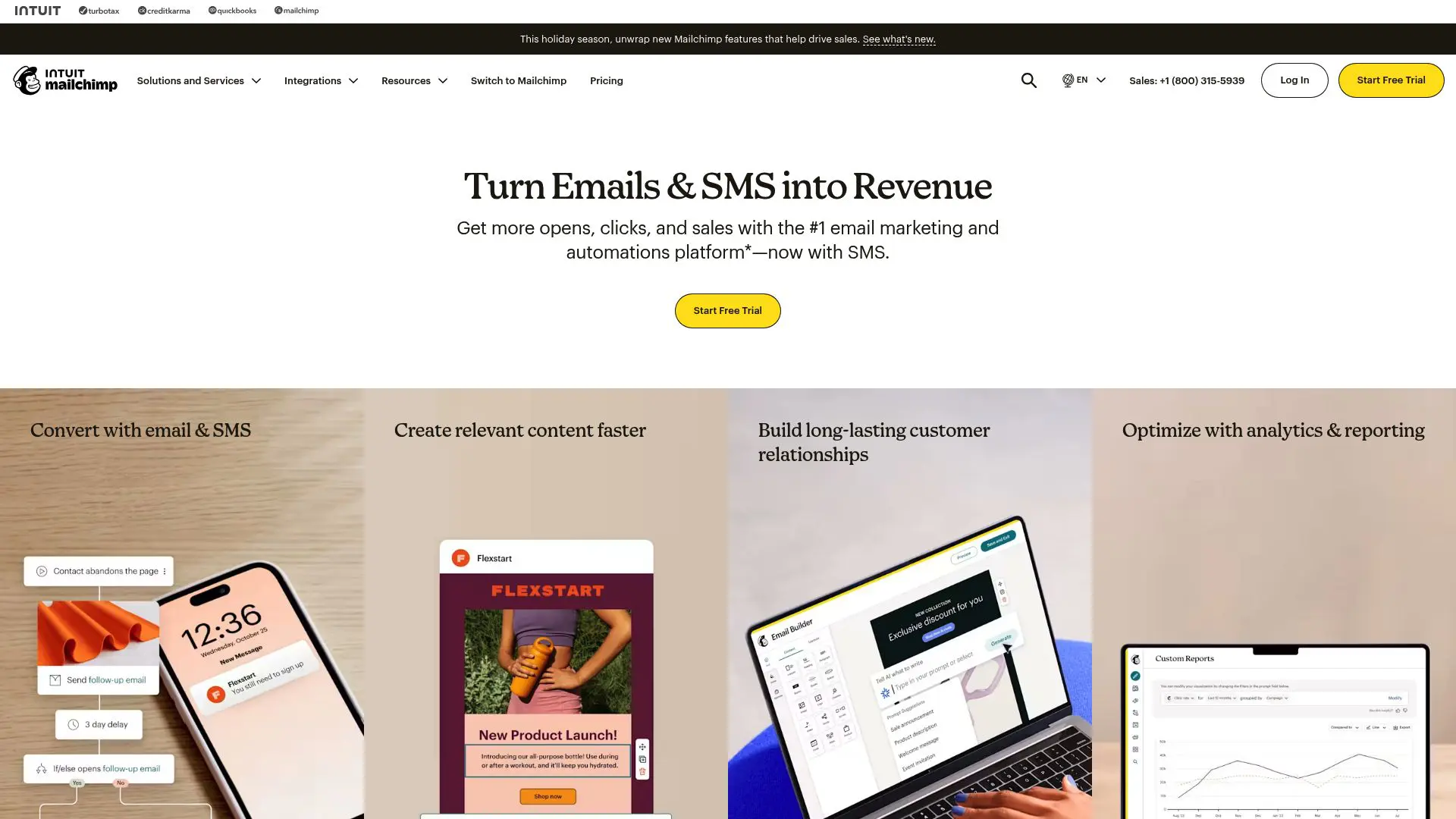
Mailchimp built its reputation as the friendly, accessible email tool for small businesses, complete with the famous monkey mascot and a once-generous free plan. It has been around since 2001 and now positions itself as an all-in-one marketing platform: email, automation, landing pages, basic CRM, social posting, and AI content tools.
That expansion is a double-edged sword. The drag-and-drop editor and 250-plus templates are still fine, the Customer Journey Builder handles automation, and the reporting is genuinely strong. But the feature creep has made the interface harder to navigate, and the core email experience has not improved at the same pace as the price.
How Mailchimp scores (criteria scorecard)
| Criteria | Score | Notes |
|---|---|---|
| Integrations | 5 / 5 | 300-plus integrations, the strongest reason to stay. |
| Reports and data | 4 / 5 | Detailed analytics, solid A/B testing. |
| Ease of use | 3 / 5 | Clean look, but cluttered after years of additions. |
| Email templates | 3 / 5 | Plenty, but many feel dated and similar. |
| Automation | 3 / 5 | Capable builder, few useful pre-made flows. |
| Email delivery | 3 / 5 | Reliable, nothing exceptional. |
| Pricing and value | 2 / 5 | You pay for contacts who cannot receive emails. |
| Customer support | 2 / 5 | Limited unless you are on Premium. |
| Overall | 3.0 / 5 | Strong ecosystem, weak value as you grow. |
Mailchimp pricing in 2026
Mailchimp’s base prices look reasonable, but they scale quickly with your contact count, and the free plan was reduced again in January 2026. Verified June 2026.
| Plan | Starting price | At 5,000 contacts | Notes |
|---|---|---|---|
| Free | $0 | not available | 250 contacts, 500 sends/mo, Mailchimp branding, no automation. |
| Essentials | $13/mo | about $75/mo | Removes branding, scheduling, basic automation. |
| Standard | $20/mo | about $100/mo | Advanced automation and personalization. |
| Premium | $350/mo | $350/mo+ | For large senders, priority support, advanced reporting. |
Important billing detail: Mailchimp counts subscribed, unsubscribed, and non-subscribed contacts toward your limit. Only archived or deleted contacts are excluded, so you must clean your list regularly to avoid paying for people who will never see your emails.
Pros and cons
| What works | What does not |
|---|---|
| Best-in-class integration library | Pricing climbs steeply with list size |
| Strong reporting and A/B testing | Bills you for non-receiving contacts |
| Recognizable, polished brand | Free plan cut again in 2026 |
| Broad all-in-one feature set | Thin support below Premium |
3 better-value alternatives to Mailchimp in 2026
| Tool | Best for | 2026 starting price | Why consider it over Mailchimp |
|---|---|---|---|
| MailerLite | Small businesses and creators | Free, from $10/mo | Cleaner interface, better automation templates, far cheaper at scale. |
| Brevo | Email plus SMS on a budget | Free, from $9/mo | Bills by emails sent, not contacts, so big lists cost less. |
| ActiveCampaign | Advanced automation and CRM | $15/mo | Much deeper automation and built-in CRM for growing teams. |
If you are comparing email platforms, our Brevo review and Campaign Monitor review cover two of the strongest Mailchimp alternatives in detail.
Frequently asked questions
Is Mailchimp worth it in 2026?
For teams that rely heavily on its integrations or already live in the Mailchimp ecosystem, it can be. For most small and mid-sized senders, the value is weak: pricing climbs fast with your list, and you pay for contacts who cannot receive your emails. MailerLite, Brevo, and ActiveCampaign deliver comparable results for less.
How much does Mailchimp cost in 2026?
Paid plans start at $13/month (Essentials), $20/month (Standard), and $350/month (Premium), with prices rising as your contact count grows. At 5,000 contacts, Essentials runs about $75/month and Standard about $100/month. The free plan now covers just 250 contacts and 500 monthly sends.
Why did my Mailchimp bill go up?
Mailchimp prices by contact count and includes unsubscribed and non-subscribed contacts in that count. As your list grows, or simply accumulates inactive and unsubscribed people, your bill rises unless you regularly archive or delete those contacts.
Is the Mailchimp free plan still good?
Less so than it used to be. As of January 2026 it covers only 250 contacts and 500 emails per month, with Mailchimp branding and no multi-step automation. For a free tier, MailerLite (500 subscribers) and Brevo (generous contact limits) are more generous.
What is the best Mailchimp alternative?
It depends on your needs: MailerLite for simple, affordable email, Brevo if you want email plus SMS and pricing based on sends rather than contacts, and ActiveCampaign for advanced automation and CRM. All three typically cost less than Mailchimp as your list grows.
Final thoughts
Mailchimp is not broken. The integrations and reporting are genuinely good, and big teams embedded in its ecosystem may stay happily. But it has drifted far from the small-business champion it once was, and for most senders the math no longer favors it. Before you renew, price out MailerLite, Brevo, or ActiveCampaign against your real contact count. You may be surprised how much you save.