


The 4 Ps. You learned them in week two of Marketing 101, maybe sketched them on a napkin during your first strategy meeting. Product, Price, Place, Promotion. Simple enough that you can explain them to your CEO in an elevator. And that simplicity? That’s exactly why they don’t work the way you think they do.
I’ve sat through maybe 200 marketing strategy meetings, and I can count on one hand how many times someone actually used the framework right. Most teams treat it like a Mad Libs worksheet. Fill in your product features. Set a price. Pick some channels. Plan a campaign. Check the box, call it strategy, wonder why nothing clicks.
You’re not supposed to fill in the blanks and call it done. You’re supposed to interrogate what each P reveals about the gaps between what you think you’re offering and what your market actually experiences.
TL;DR
- The 4 Ps fail when you treat them as a checklist instead of a diagnostic tool that exposes the gap between your strategy and customer reality
- Each P sends signals about your brand whether you intend to or not, and most companies are sending contradictory signals across all four
- Integration is where strategy lives, but it’s also where most marketing teams completely fall apart
The Real Problem With How We Use the 4 Ps
The 4 Ps became popular because they’re simple to remember and teach. That simplicity is also why they fail in practice.
You can’t just define your product, set a price, choose distribution channels, and plan some campaigns. Each decision you make in one area rewrites what the others mean to your customer.
Walk into any strategy meeting and watch what happens. We discuss product features. Then we move to pricing strategy. Then we talk about where we’ll sell. Finally, we plan promotional tactics. But customers don’t experience your brand in neat categories. They experience it as a single, integrated promise (or a confusing set of contradictions).
Understanding what is the marketing mix means recognizing that the 4 ps of marketing work together as an interconnected system. When marketers ask themselves what the framework really means, they often discover they’ve been optimizing individual components without considering how those decisions affect the whole.
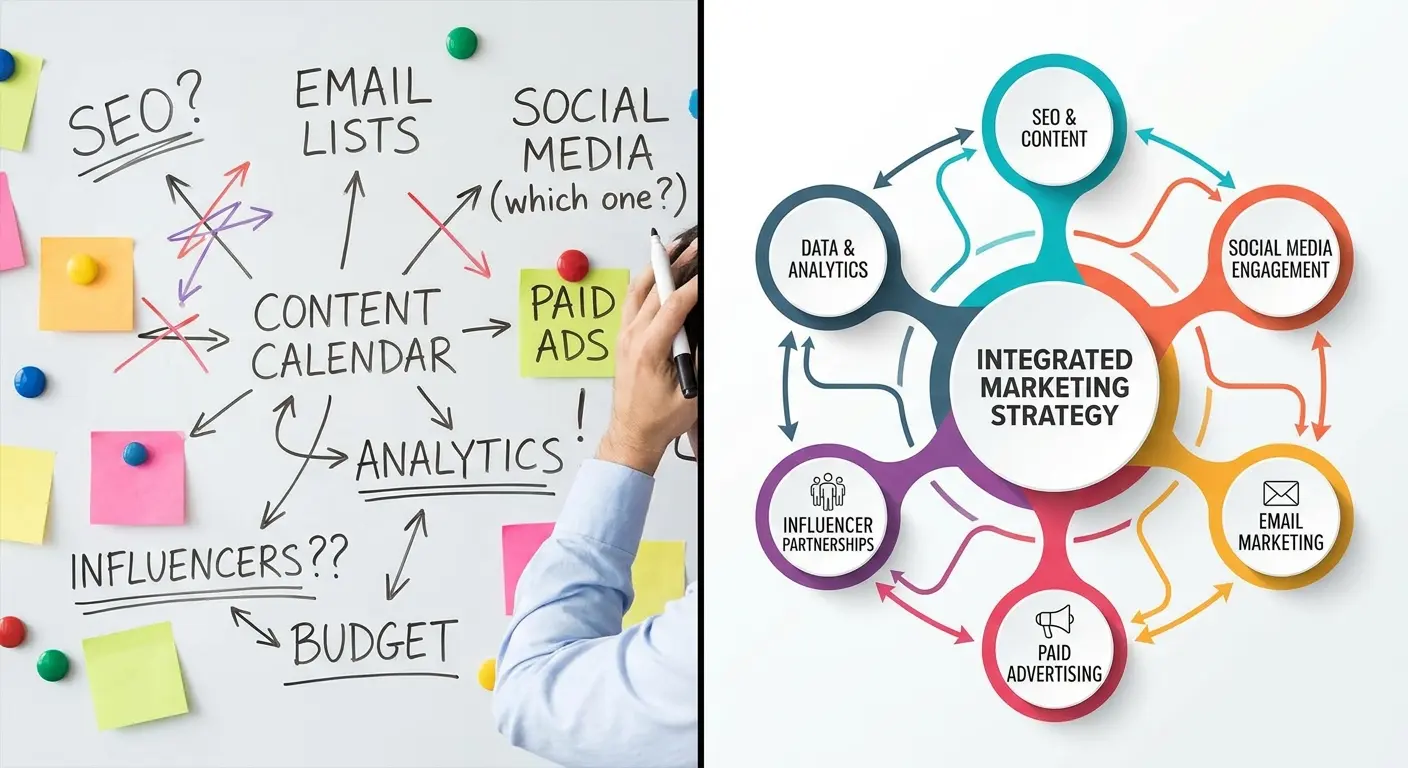
Most marketing teams approach Product, Price, Place, and Promotion as separate line items to address in a plan, checking boxes without examining how each element either reinforces or contradicts the others.
The framework’s value isn’t in its categorization. What matters is how it exposes the gaps between your intended strategy and the customer’s lived experience. When you use the 4 Ps as a diagnostic tool, you start seeing where your messaging promises something your pricing contradicts, or where your distribution creates friction your product can’t overcome.
|
Traditional Checklist Approach |
Diagnostic Framework Approach |
|---|---|
|
Define product features and specs |
Question what product truly delivers in customer context |
|
Set pricing based on costs and margins |
Examine what pricing signals about positioning and audience |
|
Select distribution channels |
Map friction points across entire customer journey |
|
Plan promotional campaigns |
Audit message consistency and memorability |
|
Optimize each P independently |
Identify where Ps contradict or reinforce each other |
The real work isn’t filling in what each P should be. It’s questioning what each P currently reveals about the disconnect between your internal perspective and external reality. This shift from checklist to diagnostic changes everything about how you build strategy, because you’re no longer optimizing elements in isolation. You’re identifying where misalignment creates confusion, distrust, or missed opportunities that no amount of tactical execution can fix.
What makes the framework valuable isn’t the four categories themselves. It’s what happens when you use them to audit the story your brand is telling versus the one you think you’re telling. The 4 Ps aren’t building blocks. They’re diagnostic lenses that reveal whether your strategy holds together under scrutiny.
Product: Stop Selling Features You Think Matter
You probably define your product by what it does. The features. The specifications. The deliverables. That’s not wrong, but it’s incomplete.
Your product includes the onboarding experience.
The customer support responsiveness.
The feeling someone has when they use it in front of colleagues or friends.
It’s the gap between what you promised and what happens when they try to implement or use what you sold them.
Most product definitions stop at the point of sale. But customers experience your product across a much longer timeline. They experience it when they’re trying to figure out if it’s right for them. When they’re learning to use it. When something goes wrong. When they’re deciding whether to renew, repurchase, or recommend it.
The first of the four p elements, product represents the foundation of your entire marketing ps strategy. When teams properly map what their product delivers in customer terms, they discover opportunities that feature lists never reveal.
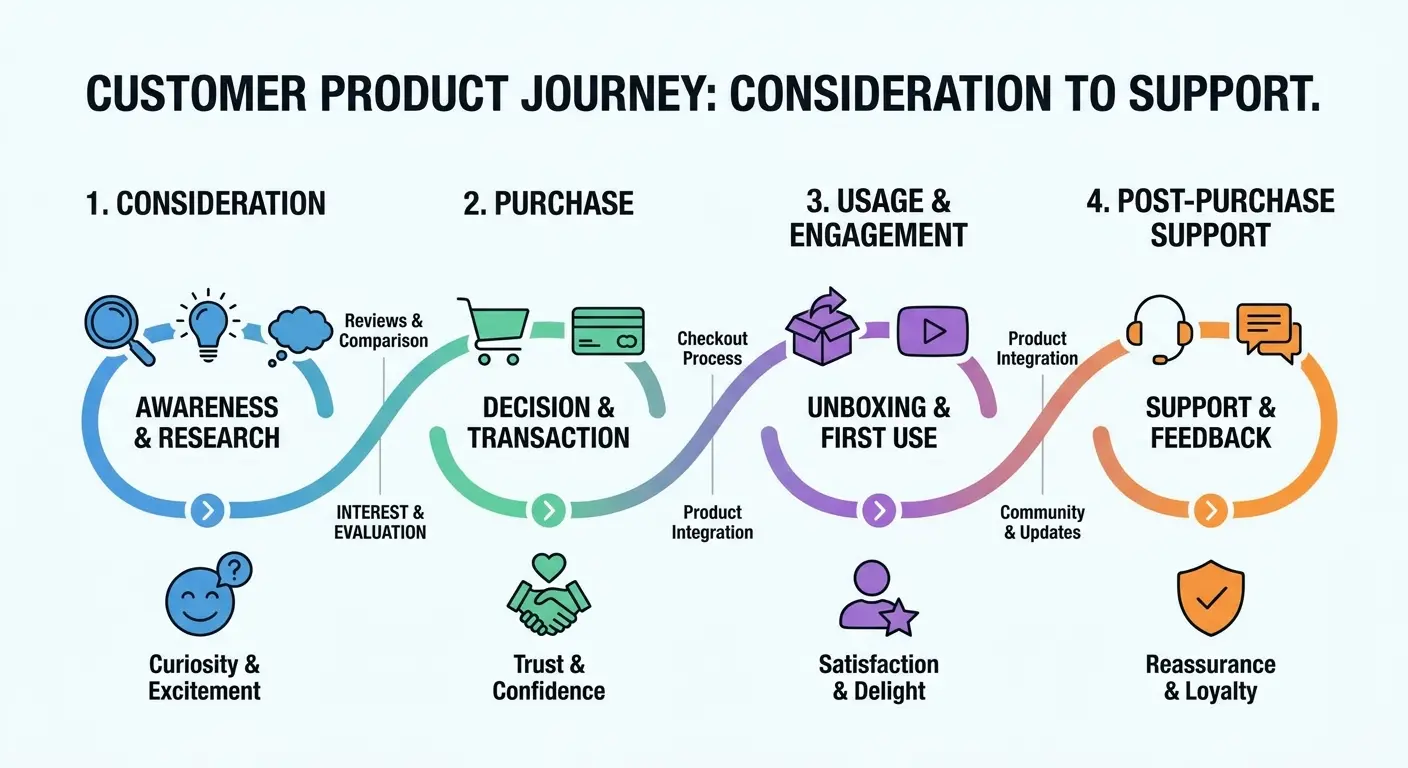
Product extends far beyond the physical item or service you deliver. It includes everything a customer experiences from the moment they consider a purchase through long-term ownership or use. Most teams define product too narrowly, focusing on specifications and features while ignoring the emotional outcomes, support systems, and post-purchase realities that determine satisfaction and loyalty.
Your product is also defined by what it doesn’t do, the problems it fails to solve, and the needs it overlooks. When you map product fully, you’re forced to confront whether you’re solving the problem customers have or the one you assumed they have. This distinction matters because customers don’t buy features. They buy solutions to felt needs, and if your product definition doesn’t account for the full scope of those needs, you’re creating strategy based on an incomplete picture.
Why Your Product Definition Is Probably Too Narrow
You’re leaving out everything that happens after the transaction. Worse, you’re probably leaving out the emotional jobs your product is supposed to do.
People don’t buy project management software just to organize tasks. They buy it to feel less overwhelmed, to look competent in front of their team, to reduce the anxiety of missed deadlines. If your product definition doesn’t include those emotional outcomes, you’re optimizing for the wrong success metrics.
I worked with an email marketing platform (small team, maybe 15 people) who were convinced their power users were the ones diving into advanced segmentation. Nope. The customers who stuck around longest were solo entrepreneurs using basic templates because it made them look professional. The founders had spent 18 months building features their best customers found intimidating. When we finally looked at the retention data (which took way longer than it should have because their analytics were a mess), the pattern was obvious. They rebuilt onboarding around templates first, automation second. Churn dropped by about half.
Your product also includes what it doesn’t do. The problems it can’t solve. The use cases it’s not built for. Those absences shape customer perception just as much as the features you did include.
When you ignore them in your product definition, you set yourself up for misaligned expectations and frustrated customers who thought they were buying something you never intended to deliver.
The Emotional Architecture Nobody Maps
Every product has an emotional layer that most teams never document. It’s the feeling of confidence (or confusion) during setup. The sense of control (or helplessness) when something breaks. The pride (or embarrassment) of showing it to others.
You can’t engineer emotional outcomes the same way you engineer features, but you can design for them. That requires mapping the emotional states your customers move through and identifying where your product either supports or undermines those states.
Here’s how I think about emotional architecture:
- Pre-Purchase Emotional State: What does the customer feel before they find your solution? (Frustration, anxiety, hope, skepticism)
- Discovery Moment: What emotion do you want them to feel when they first encounter your product?
- Decision Phase: What emotional reassurance do they need to commit to purchase?
- First Use Experience: What feeling should dominate their initial interaction?
- Ongoing Use: What emotional state supports continued engagement?
- Problem Resolution: How should they feel when something goes wrong?
- Advocacy Moment: What emotion drives them to recommend you to others?
When you expand your product definition to include emotional architecture, you start seeing why two products with identical features can have wildly different market success. One designed around emotional outcomes. The other just shipped features and hoped for the best.

Stop adding features. Start mapping what your product actually does in someone’s life, including all the ways it fails them even when it “works.”
Price: The Signal You’re Sending Whether You Mean To or Not
Price isn’t just what you charge. It’s a statement about value, positioning, and who you’re for.
When you price something at $49, you’re saying something different than when you price it at $5,000. You’re attracting different buyers. You’re setting different expectations about quality, support, and results. You’re making a claim about where you sit in the market hierarchy.
The second element in the four ps framework, price serves as an immediate signal about your brand positioning. Within the 4 ps marketing mix, pricing decisions ripple through every other component, affecting how customers perceive your product quality and whether your promotional messages feel credible.
Price is never neutral. Before a customer reads a single word of your marketing or tries your product, your pricing has already told them who you think they are, what you believe your offering is worth, and which market segment you’re targeting.
Price functions as a filtering mechanism that attracts certain customers while repelling others, and this happens whether you’ve consciously designed that filter or not. Most pricing decisions focus on covering costs and hitting margin targets without considering the strategic signal being sent. But customers use price as a heuristic for quality, positioning, and brand promise. When your pricing contradicts your other marketing messages, you create cognitive dissonance that undermines trust.
What Your Pricing Says About Who You Think Your Customer Is
Budget pricing tells customers you’re optimizing for volume and accessibility. You’re for people who prioritize cost savings over premium features or white-glove service.
Premium pricing tells customers you’re optimizing for quality and exclusivity. You’re for people who want the best option and are willing to pay for it.
Mid-tier pricing often tells customers nothing clear at all. You’re not the cheapest, but you’re not positioned as the premium choice either. This ambiguity can work if you’re genuinely targeting the middle market, but more often it signals indecision or a failure to commit to a clear positioning.
Your pricing also signals how you expect to be evaluated. High-touch services with premium pricing invite scrutiny of quality, responsiveness, and results. Low-cost products with budget pricing invite scrutiny of efficiency and whether corners were cut. When your pricing doesn’t match the evaluation criteria customers apply, you create disappointment even when you deliver exactly what you promised.
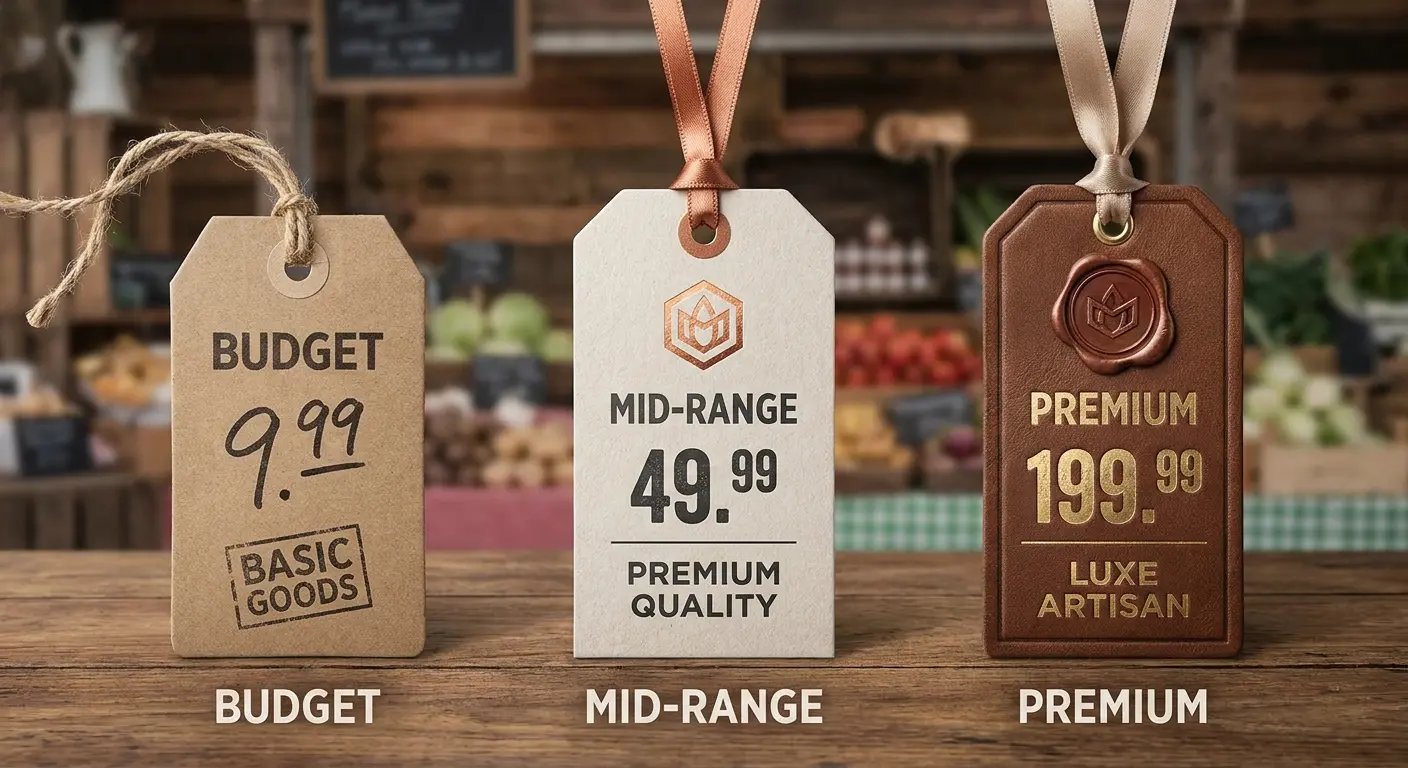
Premium pricing signals exclusivity and superior quality. Budget pricing signals accessibility and value optimization. Mid-tier pricing often signals nothing clearly, leaving customers confused about what you stand for. The goal isn’t to find the “right” price in isolation. It’s to ensure your pricing reinforces the same story your product, distribution, and promotion are telling.
When Discounting Rewrites Your Brand Promise
Discounting isn’t inherently bad, but it does change what your price signals. Every time you discount, you’re telling customers your original price wasn’t the real price. You’re teaching them to wait for sales. You’re suggesting your product isn’t worth what you initially claimed.
Frequent discounting trains customers to see your list price as inflated and your sale price as the actual value. That’s fine if your business model is built around promotional cycles, but it’s destructive if you’re trying to build a premium brand or establish stable pricing.
I watched a B2B software company (let’s call them Workflow.io) launch at $299/month. Seemed reasonable. Then their VP of Sales (who’d just come from a high-velocity SaaS company) convinced everyone to offer 40% off to “build momentum.” It worked. They hit 100 customers in three months. Then they pulled the discount. New signups fell off a cliff. We’re talking 70% drop. Existing customers who’d paid full price started demanding refunds. The sales team was fielding angry calls. The whole thing became a mess because nobody asked: what does this discount teach people about our real price? They eventually had to restructure their entire pricing model, adding a lower-tier option at $199 and repositioning the original tier at $399 with more features to reset market perception.
Discounting also changes who your customer is. When you drop your price by 50%, you attract a different buyer than the one who would have purchased at full price. That new buyer has different expectations, different price sensitivity, and different likelihood of becoming a repeat customer. If you haven’t thought through those implications, your discounting strategy is undermining your customer acquisition goals.
Place: Distribution as Customer Experience Design
Distribution determines whether customers can access what you’re offering. But it also determines what they experience in the process of accessing it.
You can have the best product and the most compelling messaging, but if your checkout process is confusing, your shipping is slow, or your customer service is unresponsive, place becomes the bottleneck that kills conversions and retention.
The third component in the 4ps of marketing framework, place has evolved beyond simple channel selection. When marketers revisit what is the marketing mix in today’s digital environment, they realize distribution now encompasses every digital and physical touchpoint where customers interact with your brand.
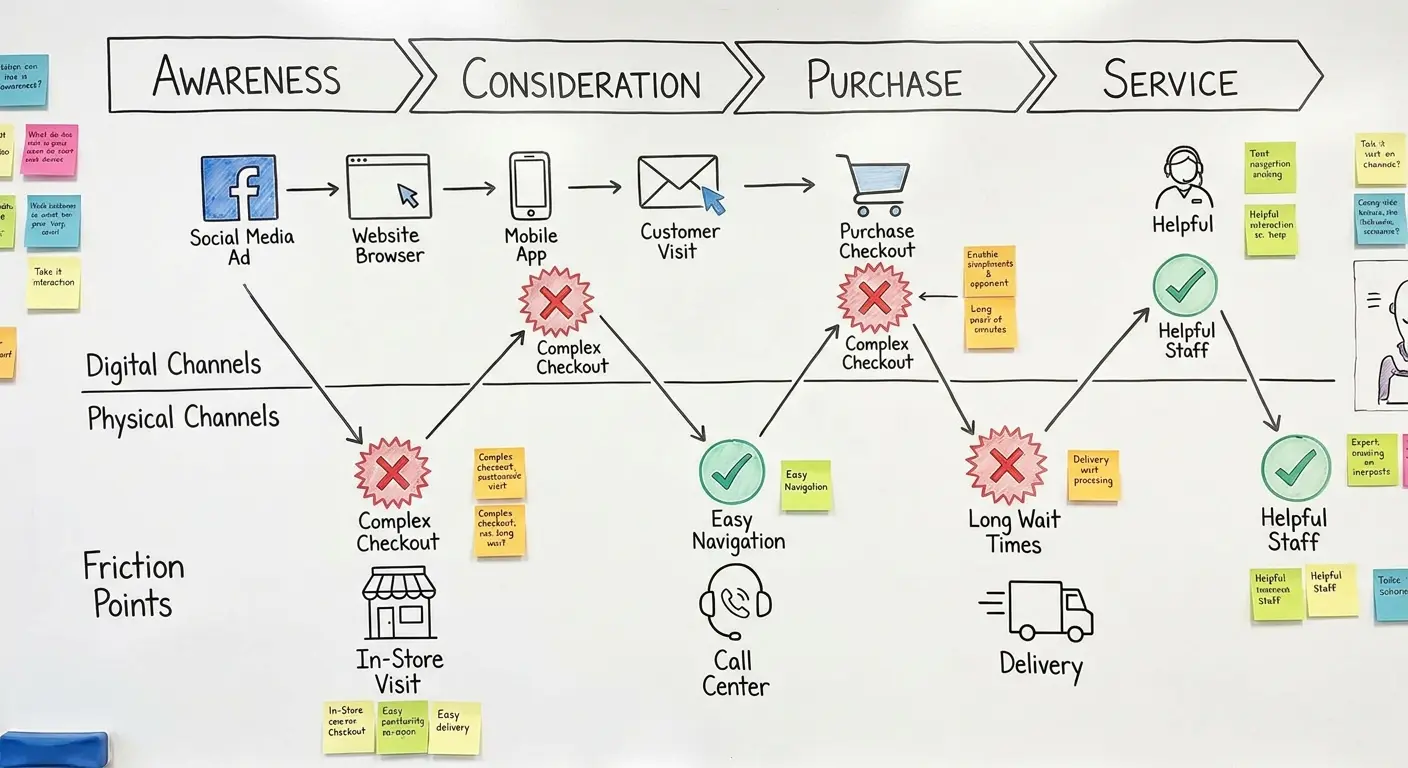
Place is where strategy becomes tangible experience. Distribution isn’t just about which channels you use to sell. It’s about every touchpoint where a customer interacts with your brand, every friction point that slows them down, and every moment where the experience either matches or betrays the expectations you’ve set.
Most teams think about place as a logistics question, focusing on channel availability without measuring the quality of experience within each channel. But customers don’t care that you’re omnichannel if every channel delivers a fragmented, inconsistent experience. They care whether they can find what they need, complete a transaction without frustration, and get support when something goes wrong.
Why Omnichannel Isn’t the Same as Being Everywhere
Being present on
Being present on multiple channels doesn’t mean you’re delivering a coherent omnichannel experience. Omnichannel means a customer can start their journey in one place and seamlessly continue it in another without having to repeat information, re-explain their needs, or encounter contradictory information.
Most brands are multi-channel, not omnichannel. They’re present in multiple places, but each channel operates independently. Your website says one thing. Your retail partners say another. Your customer service team doesn’t have access to your e-commerce data. The customer has to do the integration work themselves.
True omnichannel requires backend systems that talk to each other and a customer experience strategy that accounts for cross-channel journeys. That’s expensive and complex, which is why most brands settle for multi-channel presence and call it omnichannel. But customers feel the difference immediately.
The Friction Points You’re Not Measuring
Friction isn’t always obvious. It’s the extra click required to find product details. The unclear return policy that makes someone hesitate before buying. The lack of real-time inventory information that forces a customer to call or visit in person to check availability.
You’re probably measuring conversion rates and cart abandonment, but those metrics don’t tell you where friction lives. They tell you the outcome, not the cause.
Place also includes the invisible barriers you’ve created, the geographic limitations, the technical requirements, the knowledge gaps that prevent someone from accessing or using what you offer. When you audit place as experience design rather than channel presence, you start identifying the friction points that cost you customers even when your product and messaging are strong.
When you’re mapping friction, look at discovery first. Can people find you? Then information gathering. Is your pricing visible or hidden? Then decision support. Are reviews accessible? Can customers compare options easily? Then the transaction process. How many steps to complete purchase? Are payment options sufficient? Then post-purchase. Is order confirmation immediate? Are shipping updates proactive? Then support access. Can customers reach help through their preferred channel? Finally, problem resolution. Is the return process clear? Are refunds processed promptly?
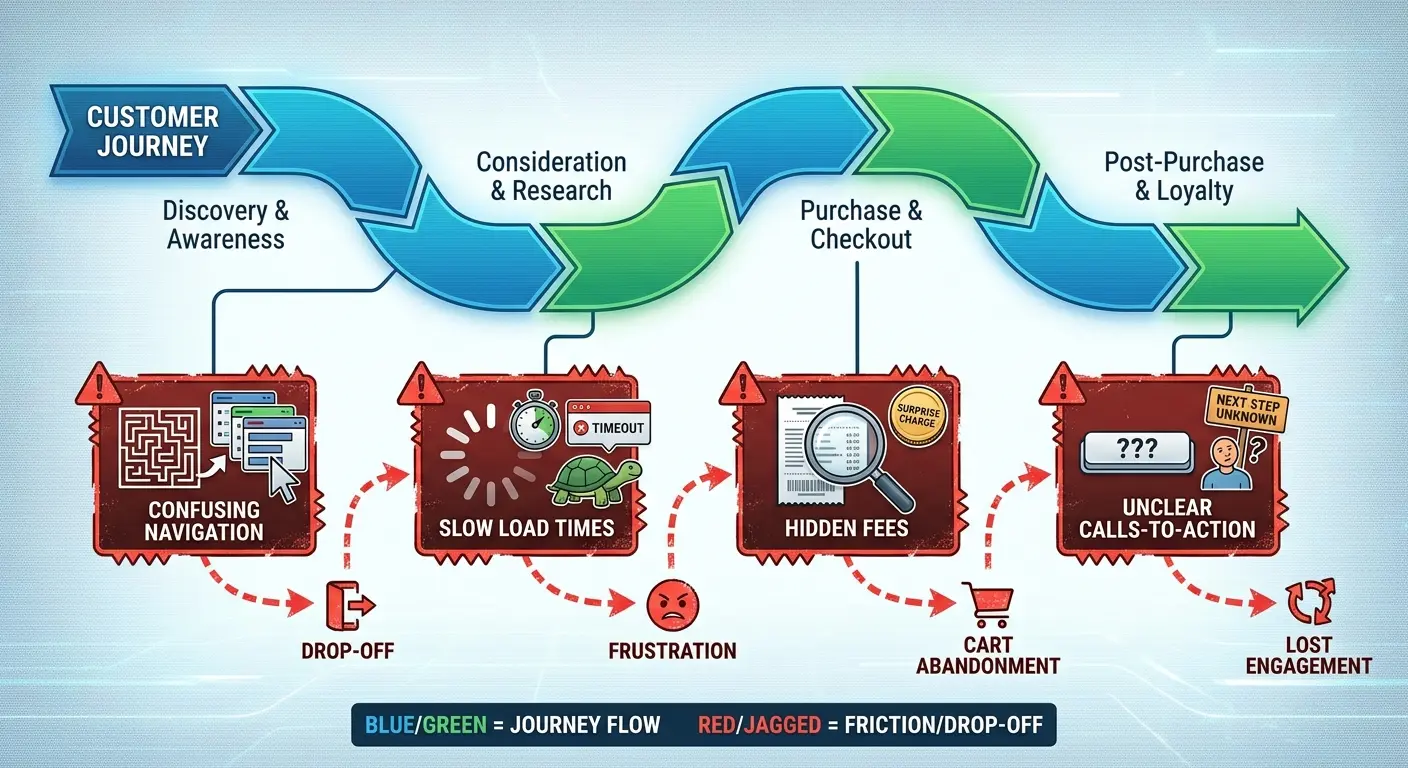
To identify friction, you need to map the actual customer journey step by step and note every point where someone has to stop, think, search for information, or make an assumption. Each of those moments is a friction point. Some are unavoidable, but many exist because you designed your distribution around your internal processes instead of customer needs.
Reducing friction doesn’t always mean removing steps. Sometimes it means adding clarity, providing reassurance, or offering alternative paths for different customer preferences. The goal is to make the journey feel effortless, even if it involves multiple steps.
Promotion: Message Discipline in a Noisy Market
Promotion is where your strategy becomes visible to the market. It’s also where most brands lose focus, trying to be everything to everyone across every possible channel.
You’re competing for attention in an environment where everyone is shouting. The instinct is to shout louder, post more often, try more platforms. But volume doesn’t equal impact.
The fourth element of the four ps of marketing, promotion serves as the amplification mechanism for everything else. When people ask what are the 4 ps of marketing, they often think promotion is the most important, but it only works when the other three elements are properly aligned.
If you want to see this in action, I broke down how Starbucks uses the 4 Ps in a case study (https://themarketingagency.ca/blog/starbucks-case-study-marketing-strategy/) that shows what happens when promotion amplifies a coherent strategy versus when it tries to compensate for misalignment.
Promotion is where most marketing energy gets spent and where strategic discipline most often breaks down. The pressure to be everywhere, try every platform, and constantly produce content leads to message dilution and brand confusion. Customers don’t need to see you more often. They need to remember you when it matters.
That requires message discipline, which means saying the same core thing in varied ways rather than saying different things in hopes that something sticks. Most promotional strategies confuse consistency with repetition, assuming that showing up frequently is the same as being memorable. But memorability comes from clarity, distinctiveness, and emotional resonance, not volume.
How Consistency Became Confused With Repetition
Consistency means maintaining a coherent message and brand identity across touchpoints. Repetition means saying the same thing over and over until people tune out.
You need consistency. You don’t need repetition in the literal sense. What you need is thematic consistency, where the core idea remains stable but the expression of it varies enough to stay interesting.
Most brands do the opposite. They change their core message constantly (chasing trends, reacting to competitors, pivoting based on the latest campaign idea) while repeating the same tactical formats until they become wallpaper.
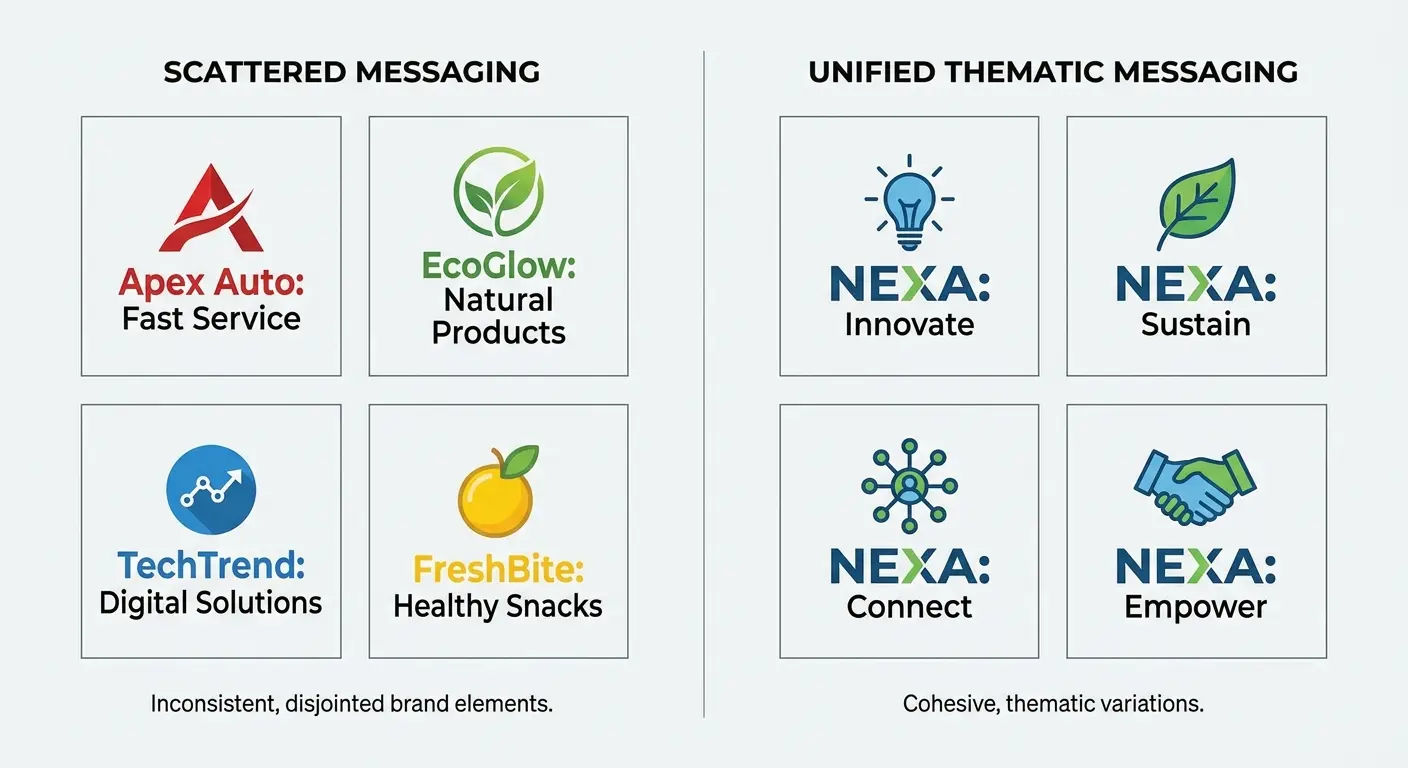
Consistency builds recognition. It allows customers to develop a clear understanding of what you stand for. But it requires discipline, because the temptation to chase novelty or react to market noise is constant.
The Difference Between Being Seen and Being Remembered
Visibility metrics (impressions, reach, views) measure whether people saw your content. They don’t measure whether anyone cared or remembered it.
Being seen is necessary but not sufficient. You can rack up millions of impressions with forgettable content that leaves no lasting impact. Or you can reach a smaller audience with something genuinely distinctive that people remember and talk about.
A consulting firm I worked with spent six months posting daily tips on LinkedIn, generating steady impressions but zero inbound leads. They shifted to publishing one in-depth case study per month that detailed specific client problems, their diagnostic process, and measurable outcomes. Their reach dropped by 60%, but qualified consultation requests tripled. The daily tips were seen but immediately forgotten. The case studies were remembered because they demonstrated specific expertise and gave prospects a clear picture of what working together would look like.
Memorability comes from clarity (knowing exactly what you’re saying), distinctiveness (saying it in a way that feels different from everyone else), and emotional resonance (connecting to something people care about). Most promotional content optimizes for reach without considering whether the content itself is worth remembering.
You also need to match message intensity to customer readiness. Someone who’s never heard of you needs a different message than someone actively comparing you to competitors. Promotional strategy often flattens this nuance, delivering the same message regardless of where someone is in their decision process.
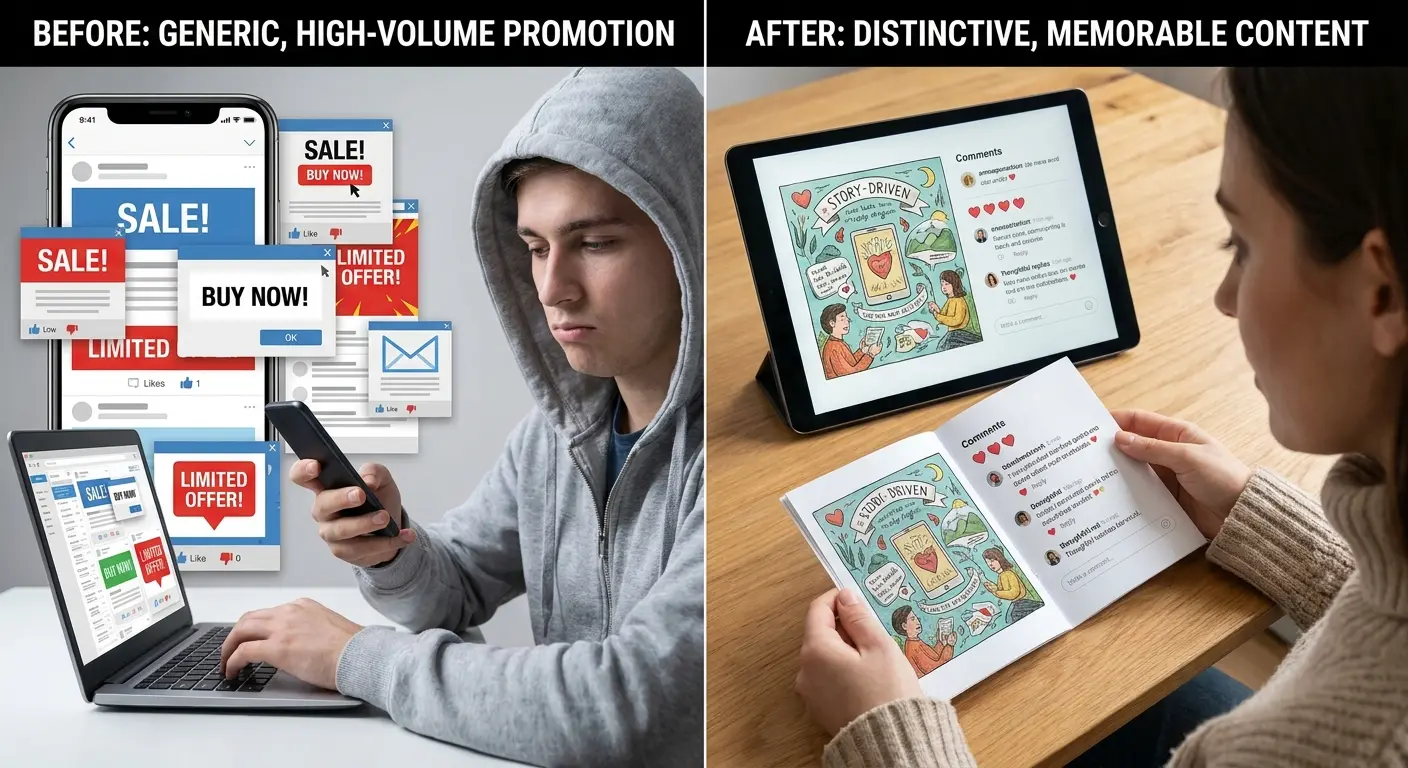
Look, I don’t have a perfect answer for how to balance reach and memorability, but here’s what’s worked: focus on being remembered by the right 100 people rather than seen by the wrong 10,000. Promotion amplifies what’s already there. If the underlying strategy is muddled, more promotion just spreads the confusion faster.
Integrating the 4 Ps Without Losing Nuance
You can’t optimize the 4 ps of marketing in isolation. Every decision you make in one area ripples through the others.
Change your pricing? You just changed what your product means. Change your distribution? Your promotion strategy is now telling the wrong story. Add a premium feature? Your budget pricing suddenly feels contradictory.
Most organizations structure teams around functional silos. The product team works on features. The pricing team sets rates. The sales team manages distribution. The marketing team handles promotion. Each group optimizes for their own metrics without full visibility into how their decisions affect the others.
This creates internal alignment problems that customers experience as brand incoherence. Your product team builds premium features. Your pricing team discounts aggressively to hit volume targets. Your distribution strategy prioritizes mass-market channels. Your promotion emphasizes exclusivity. None of these decisions is wrong individually, but together they tell four different stories.
Understanding what are the 4 ps of the marketing mix means recognizing that these elements must work in concert. The 4 ps of the marketing mix function as an integrated system, not a collection of independent tactics.
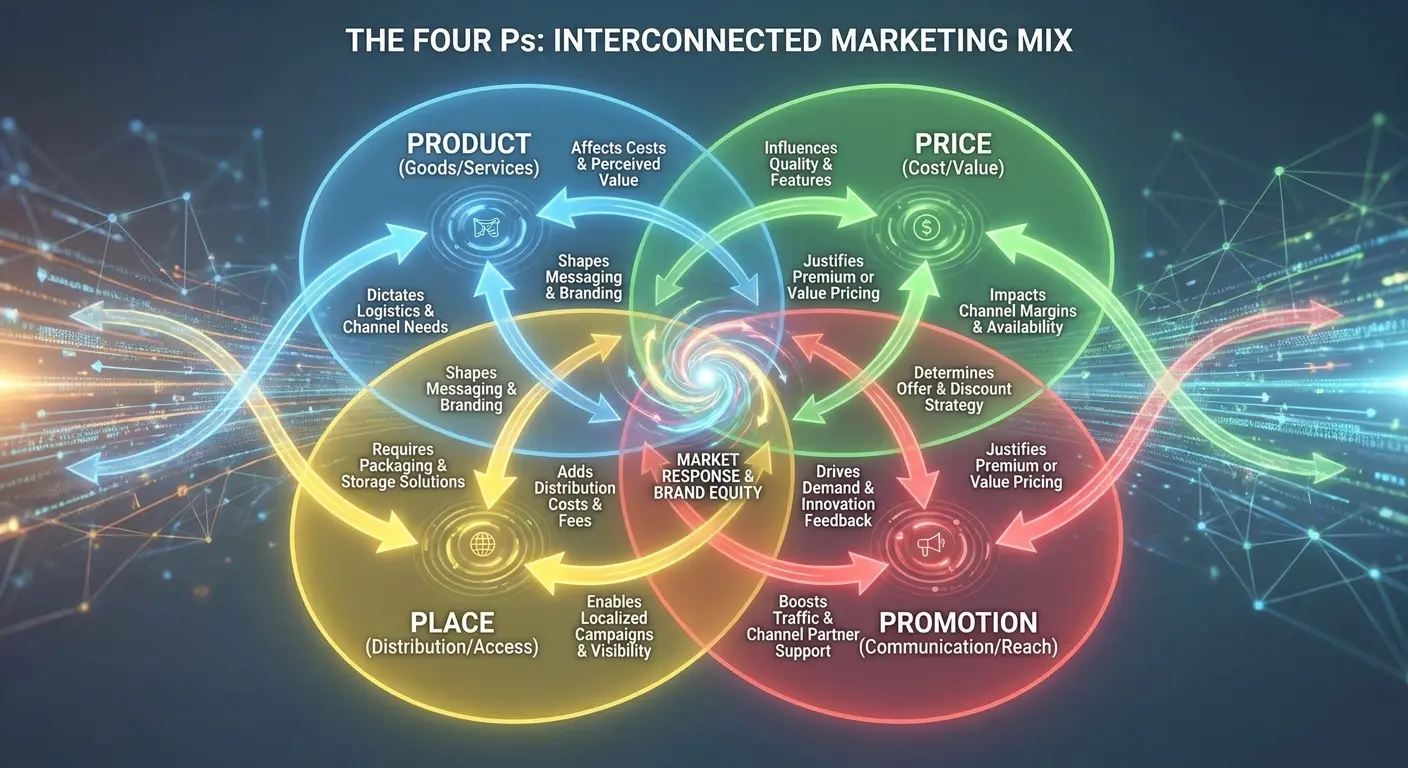
The real power of the 4 Ps emerges when you stop treating them as separate elements and start examining how they interact. Product decisions constrain pricing options. Pricing signals shape promotional messaging. Distribution choices affect product perception. Promotion creates expectations that product must fulfill. These relationships create compounding effects, both positive and negative.
When the 4 Ps align, they reinforce each other and create a coherent brand experience. When they conflict, they create confusion and erode trust. Integration doesn’t mean making everything uniform. It means ensuring each element supports the same strategic story while allowing for appropriate variation in execution.
Integration requires someone (or some process) to hold the full picture and make tradeoffs. You can’t maximize every P simultaneously. Sometimes you accept narrower distribution to maintain premium positioning. Sometimes you simplify your product to hit a lower price point. Sometimes you limit promotional volume to preserve brand mystique.
The framework works when you use it to identify these tradeoffs explicitly rather than pretending they don’t exist. That’s the diagnostic function most teams miss. The 4 ps of marketing force you to articulate what you’re prioritizing and what you’re willing to sacrifice to maintain strategic coherence.
For businesses struggling with this integration challenge, we work with companies on this exact problem. Here’s our approach (https://themarketingagency.ca/blog/marketing-case-study-examples/) if you’re curious how we help identify where the 4 Ps are pulling in different directions.
This requires cross-functional collaboration and a willingness to make tradeoffs, because optimizing one P often requires compromises in another. The teams managing product, pricing, distribution, and promotion rarely sit in the same room, which is why so many brands deliver fragmented experiences. Integration is hard because it requires organizational alignment, not just strategic clarity. But without it, the 4 Ps become four separate strategies pulling in different directions instead of one unified approach that compounds value.
We work with businesses that are tired of marketing plans that look good on paper but fall apart in execution. The breakdown usually happens because the 4 Ps are pulling in different directions, creating customer confusion that no amount of tactical optimization can fix. If you’re seeing strong interest but weak conversions, or good initial sales but poor retention, the problem might not be your tactics. It might be misalignment in your foundational strategy. We help you audit what your Product, Price, Place, and Promotion are communicating to your market, then rebuild the framework so every element reinforces the same story. You can see how we approach strategic alignment at themarketingagency.com.
Final Thoughts
The four p’s haven’t failed you. You’ve been using them wrong.
They’re not a template to fill out. They’re questions to ask repeatedly: What is our product really delivering in the customer’s life? What is our pricing signaling about our positioning and who we’re for? Where are the friction points in our distribution that undermine the experience we promise? What is our promotion making memorable, and does it align with what we want to be known for?
When you shift from checklist thinking to diagnostic thinking, understanding how to use the 4 ps of marketing becomes about asking better questions rather than filling in blanks. The 4 p’s of marketing become powerful tools for identifying the gaps between your intended strategy and your customer’s lived reality. This is the part that’ll make your head hurt, but it’s also the only part that matters. Not in optimizing individual elements, but in ensuring they work together to tell a coherent story that your market can understand, believe, and act on.
The framework is simple. The work of integration is not. But that’s exactly why most of your competitors won’t do it. They’ll keep treating 4 ps marketing as separate line items, wondering why their marketing feels fragmented and their results stay inconsistent.