



Most creators are optimizing for the wrong thing. They’re chasing views, viral moments, and follower counts while completely missing what makes TikTok valuable for building a business or personal brand. The conventional wisdom treats the platform as a visibility lottery where success means getting seen by as many people as possible. But after watching hundreds of creators burn out chasing the wrong metrics, one thing became obvious: getting seen doesn’t equal being remembered.
The shift starts with understanding what you’re building toward. Are you creating content designed to rack up views, or are you creating content that makes people think, “I need to follow this person”? These require fundamentally different approaches.
The share of U.S. adults who use TikTok has nearly doubled from 21% in 2021 to 37% in 2025, reflecting a fundamental shift in how audiences consume content. This growth isn’t just about entertainment. It signals a transformation in user behavior that most creators are completely missing. While everyone’s focused on chasing viral moments, the real opportunity lies in understanding that this expanded audience is using the platform in entirely new ways, treating it less like an entertainment feed and more like a discovery engine for authentic voices they can trust.
TikTok’s real power isn’t in its reach. It’s in its ability to create parasocial intimacy at scale (that’s our term for it). That feeling viewers get when they watch your content and feel they know you, trust you, understand your perspective. This is what converts viewers into customers, followers into advocates, casual scrollers into community members.
The Visibility Trap Everyone Falls Into
We see this pattern constantly. Creators optimize for views and wonder why nothing happens afterward. Their videos get distributed widely, but the audience doesn’t stick around. They don’t engage deeply.
They don’t convert.
The platform’s design tricks you. You post something that hits 500,000 views, and the dopamine rush convinces you that you’ve figured it out. Then you try to recreate that success and can’t. Meanwhile, accounts with moderate but consistent engagement are quietly building something sustainable. Better follower retention, higher conversion rates, audiences that show up reliably.
When you use TikTok with visibility as your primary goal, you end up creating content designed to be watched but not remembered. You jump on trending sounds that have nothing to do with your message. You create hooks designed to stop the scroll but deliver nothing worth staying for. You optimize for the algorithm’s distribution preferences instead of audience connection.
I watched a small business owner post a trending dance video that hit 500,000 views but generated zero sales inquiries. The same creator later posted a 45-second video explaining their unique production process. It got 8,000 views but resulted in 23 direct messages, 12 website visits, and 4 actual customers. The dance video optimized for the algorithm’s distribution preferences. The process video optimized for audience connection. One created visibility. The other created influence.
Look at this:
|
Metric |
Visibility-Focused Approach |
Influence-Focused Approach |
|---|---|---|
|
Primary Goal |
Maximum views |
Right audience engagement |
|
Content Strategy |
Trend-chasing |
Perspective consistency |
|
Success Indicator |
Viral spikes |
Steady conversion rates |
|
Audience Quality |
Broad, disengaged |
Narrow, invested |
|
Long-term Value |
Follower churn |
Community retention |
|
Business Impact |
Low conversion |
Measurable ROI |
That table shows you everything you need to know about why virality doesn’t equal influence.
What “Using TikTok” Actually Means in 2025
User behavior has evolved dramatically, and most creators haven’t adjusted their strategy to match. TikTok isn’t just a discovery platform anymore. It’s becoming a search engine and a community hub, which changes everything about how you should approach content creation.
According to a recent Adobe study published by Social Media Today, nearly half of U.S. consumers now use TikTok as a search engine, drawn to its short-form videos, personalized content, and authentic storytelling. A number that has jumped nearly 20% in just two years. This behavioral shift means creators who still approach TikTok purely as an entertainment platform are missing the majority of search-driven discovery opportunities that could connect them with audiences actively looking for solutions, not just scrolling for distraction.
The generational divide tells you where this is heading. About 63% of adults under 30 use TikTok, compared with just 12% of those 65 and older, according to Pew Research Center. 63% of people under 30 are on TikTok. Only 12% of people over 65 are. That gap tells you everything. Your parents aren’t here, but your customers probably are. This concentration of younger users who treat the platform as a primary information source (not just entertainment) means your content strategy must account for both discovery modes simultaneously.
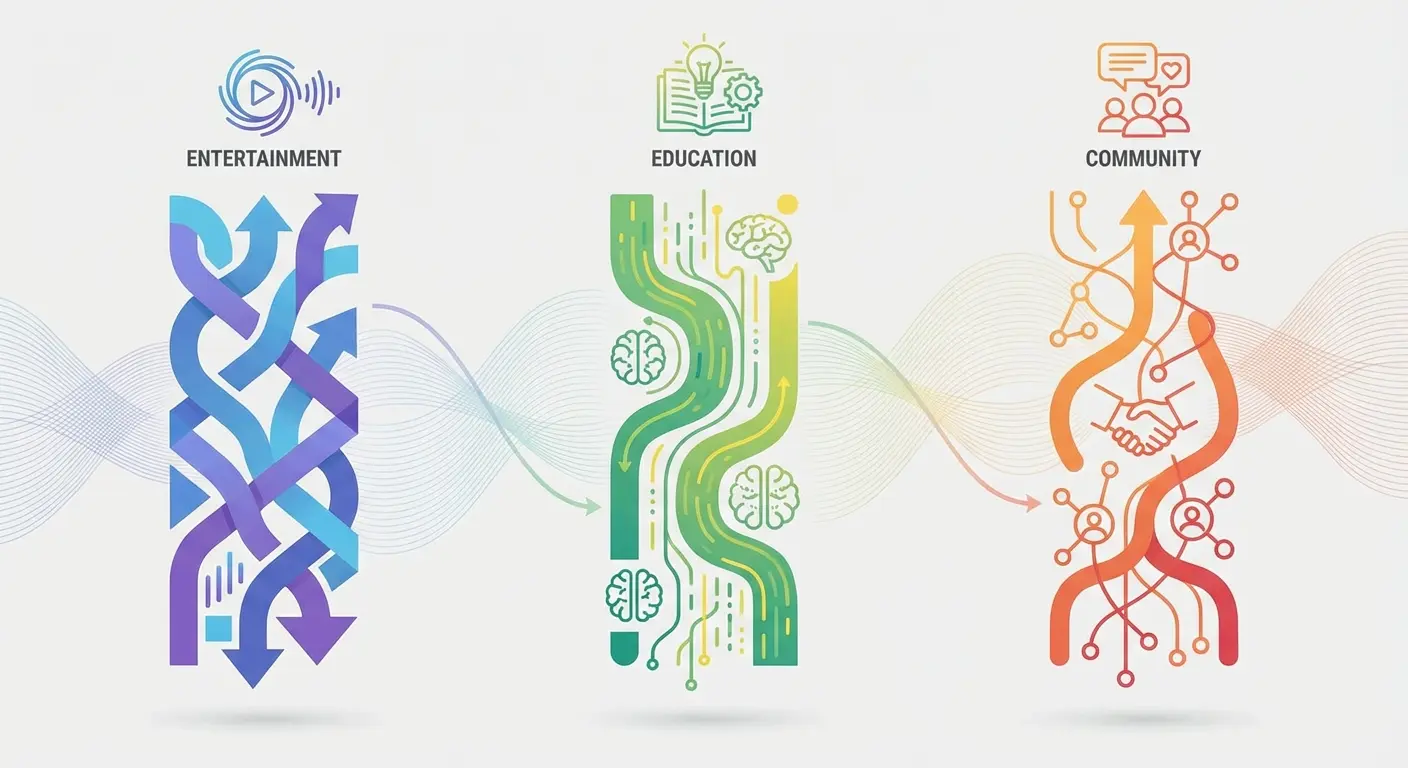
Effective TikTok in 2025 means picking a lane: entertainment, education, or community. The creators winning right now understand which function they’re serving and structure their content accordingly. They’re answering the questions their target audience is actively searching for while building a recognizable voice that keeps people coming back.
Understanding how to use TikTok strategically shares common ground with TikTok case study secrets that reveal what drives business results on the platform.
The Algorithm Doesn’t Care About Your Production Value
Something that frustrates professionally trained videographers: a shaky phone video often outperforms their carefully lit, perfectly edited content. The algorithm doesn’t measure production quality. It measures whether your content keeps people on the platform.
I’ve seen creators invest in ring lights, microphones, editing software, and professional backdrops, then watch their performance decline. Why? Because they started optimizing for the wrong thing. They made content that looked good instead of content that resonated. (I once spent $400 on a microphone thinking it would change everything. It didn’t. The video I shot on my phone in my car still outperformed everything I made in my “studio,” which was really just a corner of my living room with a ring light.)
TikTok’s recommendation system is built to identify content that generates engagement, not content that meets production standards. The algorithm ignores production quality. What matters? Whether people stick around. Perfect lighting means nothing if viewers bounce after three seconds.
The algorithm doesn’t measure what you think it does. Completion rate matters, but it’s not the holy grail everyone thinks it is. Watch time velocity (how quickly people rewatch your content) often matters more. A video people watch three times is more valuable than a video people watch once to completion.
The Numbers That Matter
The algorithm weighs engagement signals differently, and most creators don’t understand the hierarchy. A video with 1,000 views and 200 comments will likely get more algorithmic push than a video with 10,000 views and 50 comments. The algorithm recognizes concentrated value over distributed visibility.
Engagement rates typically fall between 4-8% on TikTok, with 8-12% considered strong and anything above 12% outstanding. But most creators miss this. These percentages measure active participation (comments, shares, saves) divided by reach, not passive consumption.
A video with 1,000 views and a 15% engagement rate (150 meaningful interactions) will consistently outperform a video with 50,000 views and a 2% engagement rate (1,000 interactions) because the algorithm recognizes concentrated value over distributed visibility.

The difference between passive and active engagement determines your content’s reach:
|
Engagement Type |
Algorithm Weight |
What It Signals |
How to Optimize |
|---|---|---|---|
|
Video Views |
Low |
Initial interest |
Hook in first frame |
|
Likes |
Medium |
Passive approval |
Relatable content |
|
Comments |
High |
Active engagement |
Ask questions, create debate |
|
Shares |
Highest |
Endorsement value |
Create “send this to” moments |
|
Saves |
Highest |
Future reference |
Include actionable frameworks |
|
Re-watches |
Highest |
Replay value |
Layer insights throughout |
Shares and saves signal that your content has value beyond the moment someone discovered it. When someone shares your video, they’re essentially endorsing it to their network. When someone saves it, they’re telling the algorithm this content is reference-worthy. These signals carry exponentially more weight than a passive like.
Why Completion Rate Is Overrated
The common advice to “hook them in the first second” has created an entire generation of content that’s watched but not valued. I’m not saying hooks don’t matter. They do. But optimizing solely for completion rate often means you’re creating content that people watch all the way through and immediately forget.
A 60-second video with a 70% completion rate and high replay value outperforms a 15-second video with a 95% completion rate and no replays. The algorithm recognizes the difference between content people finish and content people value.
A marketing consultant posted two videos in the same week. Video A was 12 seconds long with a quick tip about email subject lines. It achieved a 94% completion rate but averaged 0.8 seconds of watch time per viewer and generated 3 saves. Video B was 58 seconds long, diving deep into a counterintuitive email strategy. It had a 68% completion rate but averaged 47 seconds of watch time per viewer, was rewatched by 34% of viewers, and saved 127 times. Video B received 8x more algorithmic distribution over the following 72 hours because the algorithm recognized genuine value, not just completed viewing.
Focus on creating moments of value that make people stop scrolling, rewind, or watch multiple times. That’s what the algorithm rewards.
Posting Frequency Is a Trap
The advice to “post three times a day” is exhausting creators and diluting their content quality. I’ve looked at hundreds of accounts at this point. The pattern is obvious once you see it: consistency in perspective, tone, and value proposition matters infinitely more than consistency in posting schedule.
Accounts posting twice a week with a strong point of view outperform accounts posting daily with scattered messaging. The algorithm doesn’t reward frequency. It rewards resonance. When your content consistently delivers a specific perspective or value, the algorithm learns who to show it to. When your content is all over the place, the algorithm can’t figure out your audience.
Batching content to maintain a daily posting schedule often leads to weaker material. You’re creating to fill a calendar instead of creating because you have something worth saying. Your audience can tell the difference, and so can the algorithm.
The principles of sustainable content creation align closely with strategies outlined in our guide on top social media marketing agencies that prioritize quality over volume.
Before posting your next video, ask yourself: Would someone recognize this as yours without seeing your face? Does it sound like you, or does it sound like you’re trying to hit a posting quota? If you’re not sure, you probably already know the answer. Does this add to your body of work or dilute your message? Are you posting this because you have something to say, or because it’s “time to post”? If someone watched this and three of your previous videos, would they understand what you stand for? Does this video serve your audience’s stated needs or your assumption of what they want?
If you can’t answer yes to most of these questions, you’re probably posting for the wrong reasons.
The Real Definition of Consistency
Consistency means showing up with the same energy, perspective, and value. Not the same frequency. I’ve worked with creators who post irregularly but have deeply loyal audiences because their voice never wavers. Their content is immediately recognizable, even when they explore different topics or formats.
Your content throughline (that’s our term for it) is the consistent angle or perspective that makes your content yours. It might be your contrarian take on industry standards, your specific framework for solving problems, or your unique combination of expertise and personality. Whatever it is, it should be present in every video you create.

Maintaining thematic consistency while exploring different formats and topics is possible when you understand your throughline. A creator focused on sustainable business practices can talk about marketing, operations, hiring, or product development. As long as they filter every topic through their sustainability lens, their content remains consistent.
Finding Your Sustainable Pace
Your posting rhythm should support content quality, not undermine it. I’m not going to prescribe a specific schedule because what works for you depends on your resources, creative process, and the complexity of your content. Most creators can’t sustain more than 2-3 quality posts per week. If you think you’re the exception, you’re probably not. Test it, but don’t lie to yourself about burnout.
Test different frequencies and pay attention to what happens to your content quality and your mental state. Start with what feels sustainable. Track how many hours you spend creating, your stress level (1-10), and your content quality self-assessment (1-10). Then try adding one additional post to your weekly total for a week. Track the same metrics, plus engagement rate per video. Compare the weeks. Which posting frequency maintained the highest average engagement rate? At what frequency did your content quality scores decline? Which schedule allowed time for comment engagement and community building? Are you creating content you’re proud of, or just filling a calendar?
Find the pace where you can consistently deliver your best work. For some creators, that’s five times a week. For others, it’s twice a week. Both can build successful presences if the content quality and perspective remain strong.
How to Structure Content for Retention, Not Completion
Most creators front-load all their value to keep people watching. They put their best insight in the first three seconds, then spend the rest of the video elaborating on something viewers already understood. This approach gets decent completion rates but terrible replay value.
I recommend a different approach: distribute value throughout your video in ways that encourage replays and saves. Create what I call “layered content” where casual viewers get one level of value while engaged viewers who watch multiple times discover additional insights.
This structure builds deeper connection with your audience while still performing well algorithmically. The algorithm doesn’t just measure whether people watched to the end. It measures whether they found enough value to watch again, save for later, or share with someone else.
Once you stop chasing views, your entire structure changes. You’re not trying to trick people into watching. You’re giving them reasons to return.
The Power of Mid-Video Hooks
Placing your strongest insight or most valuable moment in the middle of your video (rather than the beginning) can increase both completion rates and replays. People who make it to the middle are already engaged. When they encounter your best material there, they’re more likely to rewatch to catch details they missed or to verify they understood correctly.

The psychology of rewatching is simple. People rewatch content when they believe there’s something they missed or when they want to capture specific information. If all your value is in the first five seconds, there’s no reason to rewatch. If your most valuable insight appears at the 30-second mark of a 50-second video, viewers have a reason to return.
This doesn’t mean burying your hook. You still need to capture attention immediately. But instead of giving everything away upfront, you’re creating a journey where the payoff comes in the middle, rewarding people who stick around and giving them something worth revisiting.
Creating Moments Worth Screenshotting
Including visual or verbal content that viewers want to capture extends your content’s life beyond the platform and signals high value to the algorithm. Whether it’s a framework, a quote, or a specific piece of advice, screenshot-worthy moments transform standard videos into reference resources.
Incorporate these moments naturally. You’re not creating a slide deck. You’re presenting information in a way that makes people think, “I need to save this.”
A business strategist created a 52-second video about pricing psychology. At the 31-second mark, she displayed a simple 2×2 matrix showing “Value Perception vs. Price Point” with four quadrants labeled: “Commodity,” “Premium,” “Overpriced,” and “Steal.” She held the frame for 4 seconds while explaining it verbally. That single frame was screenshotted 1,847 times, saved 3,200 times , and the video was rewatched by 41% of viewers who returned specifically to capture that framework. The screenshot-worthy moment transformed a standard educational video into a reference resource that viewers returned to and shared with colleagues.
Think about what information your audience would want to reference later. Frameworks, formulas, checklists, or counterintuitive insights all work. Present them clearly enough to be captured in a screenshot, but integrate them naturally into your narrative.
The Comment Section Is Your Real Distribution Engine
Most creators treat comments as a vanity metric or an afterthought. They respond with “Thanks!” or a heart emoji and move on.
This is a massive missed opportunity.
Strategic comment engagement can multiply your reach more effectively than any other tactic. The algorithm treats comment activity as a signal of content value. When a video continues generating new comments hours or days after posting, TikTok interprets this as ongoing relevance and extends the distribution window.
But most people miss this: comments aren’t just engagement metrics. They’re opportunities to create additional content, test ideas, and build relationships that lead to long-term audience growth.
When you use TikTok strategically, you approach comments as a distribution engine, not a feedback mechanism. Every comment thread is a chance to spark conversation that attracts new viewers, demonstrates your expertise, and deepens connection with existing followers.
How to Engineer Conversations, Not Just Responses
There’s a difference between replying to comments and creating comment threads that attract new viewers. A simple “Thank you!” closes the conversation. A thoughtful response that introduces a new angle or asks a follow-up question keeps it going.
You want threads that other viewers want to read and join. When someone leaves a comment, consider whether your response could generate additional engagement. Can you ask a question that invites them to elaborate? Can you introduce a related concept that might spark debate? Can you share a quick example that adds value to the original comment?
Identify which comments are worth responding to based on their potential to generate additional engagement. Thoughtful questions, dissenting opinions, and requests for clarification all present opportunities for meaningful threads. Generic praise, while nice, doesn’t create conversation.
Pinned comments are strategic real estate. Use them to frame the conversation you want to have, ask a specific question that generates responses, or highlight a perspective that adds context to your video. A well-crafted pinned comment can generate hundreds of replies, each one signaling to the algorithm that your content is worth distributing further.
Encouraging debate without being divisive is an art. You’re not trying to create conflict. You’re inviting different perspectives. Phrases like “Curious what others think about this” or “I know this is controversial, but…” signal that you’re open to discussion while maintaining your position.
Why Your First Three Videos Should Probably Flop
New creators put enormous pressure on themselves to succeed immediately. They study trending formats, invest in equipment, and agonize over their first few videos. Then they post, get 200 views, and feel defeated.
Your initial videos should be testing grounds for voice, format, and perspective, not polished final products. Give yourself permission to experiment without the pressure of immediate success.
Your first content teaches you what resonates with you creatively and what attracts the right audience, even if that audience is small initially. These videos are research, not performance. You’re learning what feels natural to create, what perspective feels authentic, and what type of viewer you want to attract.
The notion that you need to “crack the algorithm” immediately is nonsense. The algorithm is a tool for distribution, not a puzzle to solve. When you’re learning how to use TikTok for building influence, you recognize that your early content is about finding your voice, not finding viral success.
What to Actually Test in Your Early Content
Forget testing trending sounds or formats. Test different perspectives, tones, and value propositions. This is how you identify your unique angle.
Try presenting the same information in different ways. Record one video where you’re teaching, another where you’re storytelling, and a third where you’re challenging conventional wisdom. See which approach feels most natural and generates the most genuine engagement.
Test different content lengths. Some creators thrive in 15-second bursts. Others need 90 seconds to build their argument. There’s no universal right answer, only what works for your style and message.
Experiment with different levels of vulnerability or personality. Some audiences respond to polished professionalism. Others connect with raw authenticity. You won’t know what resonates until you test.
Change one variable at a time and pay attention to both how you feel creating the content and how your audience responds. You’re looking for the intersection of what you enjoy creating and what generates genuine interest.
Reading the Right Signals From Low-Performing Content
View counts don’t tell the whole story. A video with 300 views and 15 thoughtful comments might be more successful than a video with 30,000 views and no meaningful engagement.
When analyzing early performance, look beyond numbers. Which videos attracted the right people? Which ones generated meaningful comments that revealed what your audience cares about? Which ones tested an angle worth developing further?
Sometimes your lowest-performing video numerically is your most successful strategically. It might have attracted exactly the audience you want to build for, even if that audience is small. It might have tested a perspective that differentiates you from everyone else in your space. It might have felt most authentic to create, which matters more than you think.
Pay attention to the quality of engagement, not just the quantity. Three comments from people genuinely interested in your perspective are more valuable than 50 comments saying “Love this!” The former tells you you’re onto something. The latter tells you nothing.
Turning Viewers Into Community Members
There’s a gap between building an audience and building a community that most creators never bridge. An audience watches. A community participates. An audience is passive. A community is invested.
Building authentic community on TikTok requires the same strategic thinking found in successful Instagram case study analysis where engagement depth matters more than reach.
Transforming passive viewers into active participants requires intentional design in how you structure content, respond to engagement, and create opportunities for audience participation. You’re not broadcasting to people. You’re creating belonging with them.
Pew Research Center shows that roughly one-in-five U.S. teens report being on TikTok “almost constantly,” with Black and Hispanic teens more likely than White teens to be almost-constant users. This level of platform immersion means your most engaged potential community members aren’t casual scrollers. They’re deeply embedded in TikTok culture and expect genuine participation, not broadcast-style content. The creators who successfully build community recognize this intensity and create content that rewards that level of attention with insider access, shared language, and meaningful interaction.
The Invitation Strategy
Regularly invite your audience into the content creation process through questions, polls, or challenges that give them ownership. This isn’t about crowdsourcing every decision. It’s about making your community feel heard and valued.

The invitations need to feel natural, not forced. “What should I talk about next?” feels generic. “I’m torn between covering X or Y. Which one would help you more right now?” feels specific and genuine.
Follow through on audience input in visible ways. If someone suggests a topic and you create content around it, mention them. If multiple people ask the same question, address it directly and acknowledge that you’re responding to their requests. This reinforces that their participation matters.
Balance maintaining your creative vision with incorporating community feedback. You’re not obligated to create everything your audience requests, but you should demonstrate that you’re listening and considering their input. Sometimes the best response is explaining why you’re not covering a suggested topic. That transparency builds trust.
Creating Inside Jokes and Shared Language
Developing recurring phrases, concepts, or references creates a sense of insider status among your regular viewers. This shared language strengthens community bonds and makes your content more recognizable.
You can’t force this. Inside jokes and shared language develop organically through consistent use. Maybe you have a specific way of describing a common problem. Maybe you use a particular phrase to transition between points. Maybe you reference previous videos in ways that reward longtime followers.
Repetition without explanation. When new viewers encounter your shared language, they either figure it out from context or ask in the comments. Both outcomes strengthen community. Longtime followers get to feel like insiders. New viewers get to join something that already exists.
Watch how your audience adopts your language. When they start using your phrases in comments or creating content that references your concepts, you’ve successfully built shared vocabulary. This is community formation in action.
When to Ignore Your Analytics Entirely
Data is useful until it isn’t. Over-optimization based on analytics can homogenize your content and strip away the unique elements that build lasting influence.
Analytics tell you what worked, not necessarily what will work. They’re backward-looking by nature. Breakthrough content often comes from ignoring past performance patterns to try something genuinely new.
I’m not advocating for ignoring data completely. I’m saying that trusting your creative instincts over data matters in specific situations, particularly when you’re trying to innovate or establish a new direction.
The Danger of Chasing Your Own Outliers
Trying to recreate your viral hits often leads to diminishing returns. Outlier performance usually results from timing, luck, or algorithmic quirks that can’t be reliably reproduced.
When a video performs 10x better than your average, resist the urge to make five more videos just like it. The algorithm doesn’t want repetition. It wants variety. Your audience doesn’t want the same video over and over. They want evolution.
Study your consistent performers instead of your viral anomalies. Videos that reliably generate strong engagement relative to your baseline are more instructive than one-off viral moments. They reveal what your core audience values, which is more actionable than understanding what attracted a random viral audience.
Use analytics as information rather than instruction. Your data can tell you what resonated, but it can’t tell you what to create next. That requires creative judgment, understanding of your audience’s evolving needs, and willingness to take risks.
Trusting Your Creative Instincts
Periodically create content that feels right even when it doesn’t fit your performance patterns. Innovation requires risk. Some of your most important content might not perform well immediately but establishes positioning that pays off long-term.

When to trust data: when you’re optimizing existing content types, when you’re trying to understand audience preferences, when you’re making tactical decisions about posting times or formats.
When to trust your gut: when you’re trying something new, when you’re establishing a new direction, when you’re creating content that feels important even if you can’t articulate why, when data is telling you to play it safe but your instincts say to take a risk.
I used to think posting frequency didn’t matter at all. I was wrong. It does matter, just not in the way people think. It’s not about hitting a number. It’s about not disappearing for so long that people forget you exist. There’s a difference.
The creators who build lasting influence know when to follow the data and when to ignore it. They use analytics to inform their decisions, not dictate them.
When you’re ready to scale beyond organic content, exploring TikTok Ads Manager review insights can help you understand paid amplification options.
If you’ve actually implemented any of this and you’re seeing results, you might hit a ceiling where organic content isn’t enough anymore. That’s usually when people reach out to us. Not because they need help with content, but because they need help turning attention into revenue. The Marketing Agency works with brands who’ve figured out the content piece but need strategic support connecting social presence to revenue goals, building systems that scale, or developing integrated campaigns that work across channels. If that’s where you’re at, let’s talk. If not, keep doing what’s working.
Final Thoughts
Look, most of what I’ve said here goes against every “TikTok growth hack” thread you’ve read. You’re going to be tempted to ignore it and chase the next viral sound.
Do what you want.
But when that doesn’t work (and it probably won’t), come back to this. TikTok’s real value lies in building genuine influence rather than chasing viral moments. Consistency in voice matters more than posting frequency. Engagement quality trumps view counts. Community depth matters more than community size.
Success on the platform comes from playing a different game than most creators. While everyone else optimizes for visibility, you’re optimizing for connection. While they chase trends, you’re building a recognizable perspective. While they measure success in views, you’re measuring it in conversion, retention, and genuine influence.
This approach builds sustainable presence rather than temporary visibility. It attracts audiences that convert rather than audiences that churn. It creates business value rather than vanity metrics.
The advantage of approaching TikTok strategically rather than reactively is simple: you’re building something that compounds over time instead of starting from zero with each video. Your audience knows what you stand for. Your content reinforces your positioning. Your community grows because people want to be part of what you’re creating.
For those looking to expand their strategic approach beyond TikTok, our comprehensive guide on top content marketing agencies provides insights into building integrated content systems across platforms.
Build something that lasts instead of something that spikes and dies.
That’s it. That’s the whole thing.