Table of Contents
-
Why Your Facebook Page Isn’t a Billboard (It’s a Business Asset)
-
The Overlooked Truth: Community Commerce Beats Ad Revenue Every Time
-
Building Your Monetization Foundation Without Selling Out
-
Facebook’s Native Revenue Tools (And Why Most People Use Them Wrong)
-
The Community-First Product Development Strategy
-
Turning Engagement Into Email Equity
-
Strategic Partnership Revenue That Doesn’t Feel Like Sponsored Content
-
Subscription Models That Work for Pages Under 50K Followers
-
When to Scale Up (And What Attribution Actually Tells You)
-
Final Thoughts
The Short Version
Most people try to monetize Facebook by building an audience, then begging brands for sponsorship deals. That’s backwards and it caps out fast.
The pages making real money? They’re building businesses with their followers, not on them. They’re using Facebook’s tools (Stars, Shops, subscriptions) as a system, not one-off revenue streams. And they’re moving people to email because Facebook owns your audience until you don’t.
You don’t need 100K followers. You need 100 people who’d actually miss you if you disappeared.
Here’s how to build that.
Why Your Facebook Page Isn’t a Billboard (It’s a Business Asset)
Most Facebook monetization advice boils down to: get big, then sell ads. Build your follower count to 50K or 100K, attract sponsors, maybe make a few hundred bucks per post if you’re lucky.
I’ve watched this play out dozens of times. Page owner grinds for two years, hits 75K followers, lands their first sponsor deal for $500, and realizes they just spent 24 months building someone else’s marketing channel.
The pages actually making money (real, quit-your-job money) aren’t doing that at all.
They figured out something most people miss: your Facebook page isn’t a billboard you rent out to advertisers. It’s a storefront, a focus group, and a product lab all in one. Your followers aren’t the product you’re selling. They’re your business partners.
And that shift? It changes everything.
According to Epidemic Sound’s research, 35% of full-time and part-time creators plan to expand their Facebook presence over the next 12 months. They’re not chasing the next hot platform. They’ve figured out something the rest of us are sleeping on.

Look at the pages making consistent money (not viral-moment money that disappears). They’ve built something where the community participates in creating value, not just consuming content. A 15K-follower page in the urban gardening niche makes $4,500/month because they know exactly what their people need and they built it together. Meanwhile, a 200K-follower page promoting affiliate links makes $800/month because they’re still treating their audience like traffic to monetize.
The difference isn’t the follower count. It’s the model.
Here’s the thing about your page: it gets more valuable every single day, but only if you’re intentional about what you’re building. Every post, every comment thread, every poll you run is either building toward something that makes money or it’s just noise.
I know which one pays rent.
We’ve worked with page owners who have modest followings but generate more revenue than influencers with ten times their audience. They understood this fundamental shift. Understanding how to monetize Facebook isn’t about getting big enough to matter. It’s about building something valuable enough that people want to participate in its growth.
The Overlooked Truth: Community Commerce Beats Ad Revenue Every Time
Here’s what nobody tells you: the pages making real money aren’t optimizing for CPM rates or chasing sponsor deals. They’re making commerce happen because the community exists.
What’s community commerce? It’s when your audience buys things, creates things, or connects with each other because they’re part of what you’ve built. You’re not interrupting their feed with ads. You’re offering stuff they actually want.
Many small businesses only make a few hundred dollars when they rely solely on traditional Facebook monetization methods. Higher earnings require niche audiences, 10,000 or more engaged followers, and consistent output, but even then, the linear growth model has clear limitations.
Ad revenue scales linearly at best. More followers equals more money, but the rates stay flat.
Community commerce scales exponentially because you’re not just adding audience members. You’re adding collaborators, customers, and people who recruit more of the same.
Here’s a real example. Maria (not her real name, but close enough) ran a 15K-follower urban gardening page. Instead of chasing sponsorships from generic gardening brands, she launched a seed-sharing marketplace. Her followers could trade rare varieties they’d been asking about in comments for months. She added a $20/month subscription for personalized growing plans based on specific climates. Then she created a planting calendar, but here’s the thing: she built it with input from her most active members.
Six months in? $4,500/month.
Meanwhile, a 200K-follower page in the same niche was still promoting Amazon affiliate links and making maybe $800/month. They were guessing at what worked based on what other people said. Maria knew what her people needed because she’d been reading their comments for two years.
Your engagement rate matters more than your reach. A thousand people who actually talk to you are worth more than 100K people who scroll past. You probably already know this in your gut, but most monetization strategies don’t reflect that reality.
When you focus on how to make money on Facebook through community commerce, you’re building something sustainable instead of chasing algorithmic trends that change every three months.
Building Your Monetization Foundation Without Selling Out
Look, monetization anxiety is real.
You’ve built something people value, and you’re worried that introducing revenue streams will break the trust or change the dynamic. I get it. I’ve been there. Three years ago, I launched a “premium content tier” for a client’s 30K-follower page. We paywalled the best stuff, promoted it hard, and got… 11 subscribers.
Eleven.
You know why? Because we were just hiding the same content behind a paywall. We weren’t creating anything new. Those 11 people cancelled within two months, and I had to refund them because I felt like a scammer.
That’s when I figured out the actual formula.
The solution isn’t to avoid monetization. It’s to make sure your revenue model serves the community first and extracts value second. When those priorities flip, people feel it immediately and they leave.
Start by looking at what your audience already asks for. Scroll through your comments from the past 30 days and write down every question, request, or problem people mention. That list is your monetization roadmap. You’re not inventing needs. You’re responding to ones that already exist.
The same principles that drive successful email marketing campaigns apply here: value first, monetization second. We’ve tested this across dozens of pages, and the pattern holds true every time.
Spend 30 minutes reading your comments from the past month. Write down every question someone asked. Every problem they mentioned. Every time someone said “I wish there was…” or “Does anyone know how to…” That’s your product roadmap right there. You’re not making this up. They’re literally telling you what to build.
Test offers before building anything. Create a post asking “if I created [specific solution to specific problem], would you be interested?” The responses tell you whether there’s actual demand or just polite interest.
Polite interest doesn’t pay bills.

Your first monetization move should feel like a natural extension of what you already do. If you run a page about sourdough baking, selling a detailed starter guide makes sense. Promoting a random dropshipping product doesn’t, even if the commission is higher. This is where understanding how to monetize Facebook content properly separates successful pages from struggling ones.
Be transparent when you’re testing monetization. Tell your audience you’re trying ways to make the page sustainable so you can create better content. Most people want you to succeed because your success means they keep getting value.
Some people are going to complain no matter what. Let them. They weren’t going to buy anyway.
Facebook’s Native Revenue Tools (And Why Most People Use Them Wrong)
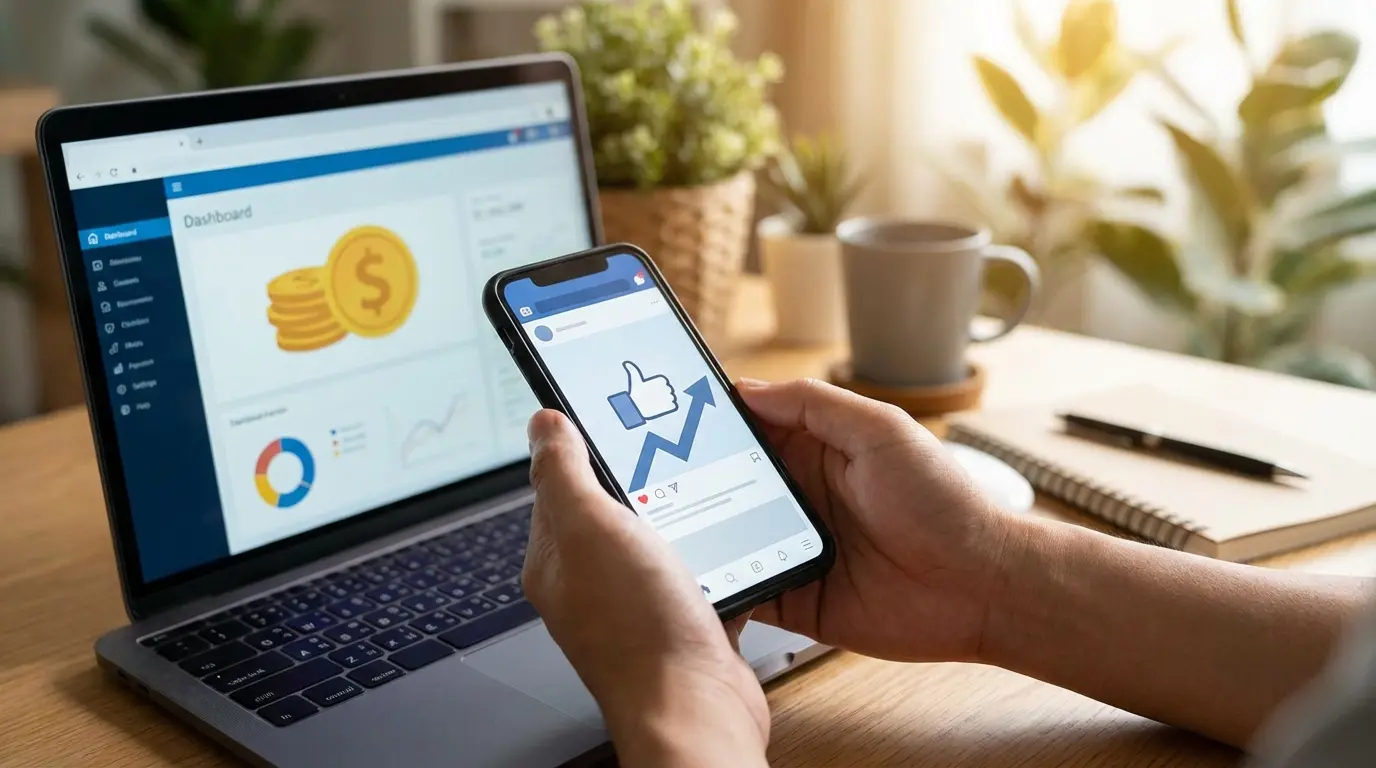
Facebook recently updated its Professional Dashboard on desktop (Metricool reports), introducing new insights, smoother navigation, and better performance tracking. The update includes a redesigned home screen with highlights on earnings, performance, and audience engagement, plus simplified navigation to quickly find facebook monetization tools and analytics.
This makes it easier than ever to track how your revenue strategy performs across different streams. Most page owners still treat each tool as a separate thing, which is exactly why they underperform.
Facebook Stars and Live Video Revenue
Stars seem like small-time revenue, and if you use them alone, they are. The mistake is treating Stars as the entire strategy instead of one piece in a larger system.
Look, I’m not going to pretend Stars are going to make you rich. Each Star sent equals $0.01, and Facebook requires you to maintain a follower count of more than 500 for at least 30 consecutive days to activate Stars. A penny per Star means you need people to send you 100,000 Stars to make $1,000. If you’re getting 100,000 Stars regularly, you’ve either figured something out that I haven’t, or you’re doing something that violates Facebook’s terms of service. Probably both.
Stars work best when they’re part of regular live content that provides genuine value. You’re not begging for Stars. You’re creating content so useful that people want to support it.
The psychology is completely different.
Run weekly live Q&A sessions where you solve specific problems in real time. People send Stars not because you asked, but because you just saved them three hours of frustration. That’s the exchange rate that matters when you’re figuring out how to monetize your facebook page effectively through live engagement.
Combine Stars with other calls to action. During a live session, mention your email list for people who want the detailed follow-up, your Facebook Shop for people who want the tools you’re discussing, and your subscription group for people who want ongoing access. Stars become the entry-level support option in a value ladder.
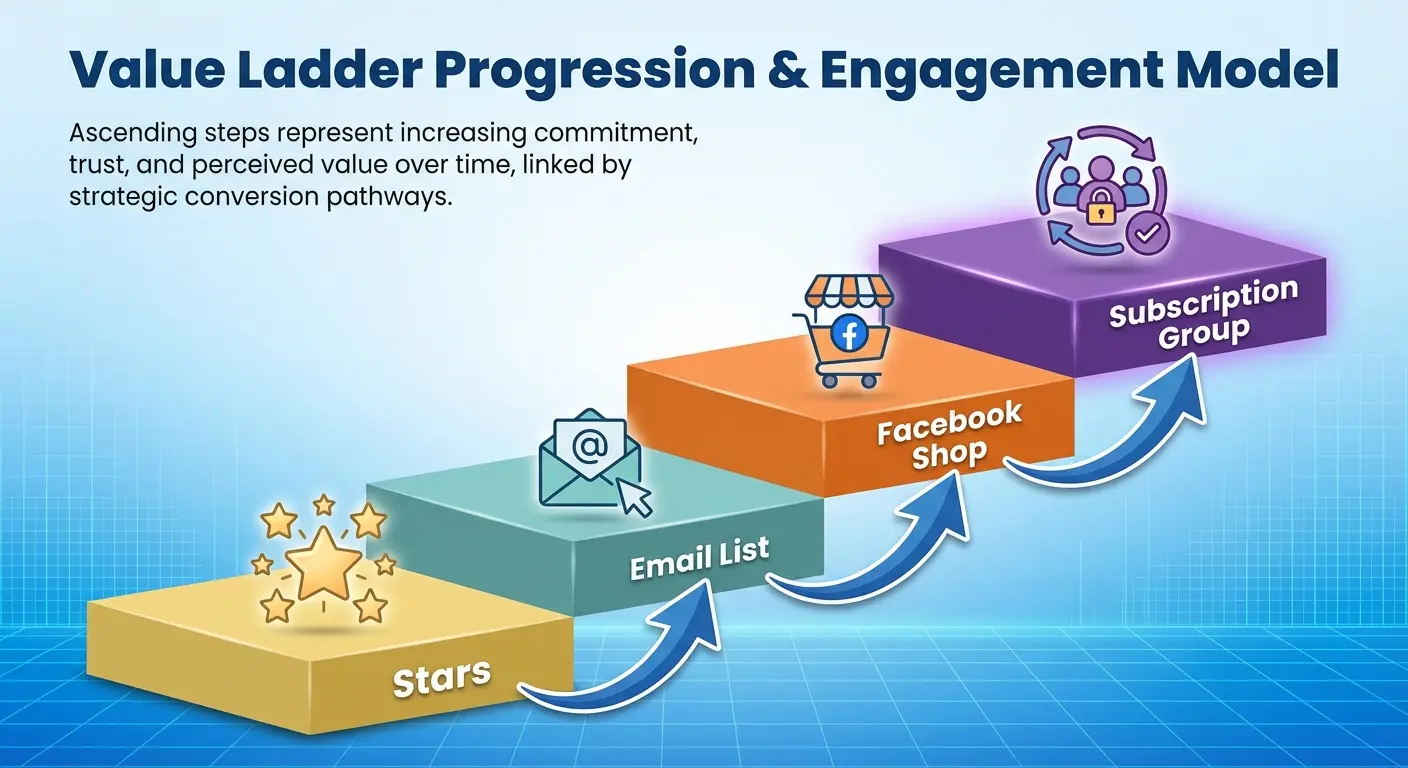
Most pages make $50-200 per month from Stars and consider that the ceiling. Pages that layer Stars into a broader system use them as a qualification mechanism. Someone who sends Stars is signaling they’re a potential customer for higher-ticket offers.
We’ve tracked this pattern across multiple pages. The Star senders convert to paid products at 3-4 times the rate of general followers. They’ve already demonstrated buying behavior, even if it’s micro-transactions. That data matters.
Facebook Subscriptions and Exclusive Content
Subscriptions fail when you’re just paywalling the same content you used to post for free. They succeed when you’re creating genuinely differentiated value that couldn’t exist without the subscription model.
Your subscription offering should solve a problem your free content identifies but doesn’t fully resolve. If your free content is “here’s what’s wrong,” your subscription content is “here’s exactly how to fix it, step by step.” The gap between those two states is where your revenue lives.
|
Subscription Tier |
Monthly Price |
What to Include |
Best For |
|---|---|---|---|
|
Entry Level |
$5-10 |
Exclusive posts, early access to content, basic community access |
Testing demand, building initial subscriber base |
|
Core Tier |
$15-30 |
Weekly live sessions, downloadable resources, priority responses, private group access |
Most engaged community members, sustainable recurring revenue |
|
Premium Tier |
$50-100 |
One-on-one consultations, personalized feedback, co-creation opportunities, direct messaging access |
Super fans, clients seeking transformation |
|
VIP/Founding Member |
$100-250 |
All premium benefits plus lifetime rate lock, input on content direction, exclusive product previews |
Early adopters, brand advocates, highest-value relationships |
Price subscriptions based on the outcome you deliver, not what you think people will pay. A $50/month subscription that saves someone $500/month in mistakes or inefficiency is a bargain. A $15/month subscription that offers “exclusive content” without defining the outcome is overpriced.
Start small with subscriptions. You don’t need 1,000 subscribers to make this worthwhile.
Fifty people paying $20/month is $1,000 in monthly recurring revenue, and it’s far easier to deliver high-quality value to 50 people than to 1,000. This is critical for understanding how to monetize facebook page content without needing massive scale first.
Your free content demonstrates expertise. Your subscription content delivers transformation. That’s the value exchange that converts followers into subscribers. We’ve seen pages launch subscription tiers with as few as 3,000 followers and generate meaningful revenue because they nailed this distinction.
Facebook Shops and Direct Commerce
Facebook Shops eliminate the friction between discovery and purchase, but only if you’re selling products your audience already wants.
The biggest Shop mistake is treating Facebook like Amazon. You’re not competing on selection or price. You’re competing on community fit and curation. Your audience trusts your taste and expertise, so the products you sell should reflect that.
Curated collections perform better than comprehensive catalogs. Instead of listing every possible product, create collections around specific outcomes. “Everything you need to start [specific hobby]” converts better than “all our products.” The specificity does the selling for you.

Use posts to tell product stories, not just list features. Show the product in use, explain why you chose it, share what problems it solves. The Shop is where the transaction happens, but your content is where the buying decision gets made.
Track which posts drive Shop visits and purchases. Facebook’s attribution tools show you this data, and it reveals which content types generate revenue versus which just generate engagement.
Those are not always the same thing. We’ve analyzed hundreds of pages and found that tutorial content drives 60% more Shop revenue than inspirational content, even though inspirational content gets twice the engagement. That’s the kind of insight that changes your entire content strategy when you’re serious about facebook content monetization.
The Community-First
The Community-First Product Development Strategy
Your Facebook page is a free focus group that most people completely waste. You can test product ideas, get feedback on pricing, and validate demand before spending a dollar on development.
This approach mirrors successful performance marketing strategies where validation precedes investment. The difference is you’re doing it organically through your existing community.
Post polls asking specific questions about problems your audience faces. “Which of these challenges is most frustrating for you right now?” gives you data on what to build. The comments often reveal nuances the poll options missed. Someone might vote for option A but explain in the comments why option B would work better if you tweaked one element.
That’s gold.
Share rough drafts, prototypes, or concepts and ask for feedback. People love being part of the creation process, and their input makes your final product better. You’re not outsourcing the work. You’re incorporating perspectives you’d otherwise miss.
A fitness page owner with 8,000 followers wanted to create a workout program but wasn’t sure which format would sell. They posted three options: a 30-day challenge PDF, a video course with daily follow-alongs, or a hybrid with both plus live check-ins. The poll received 340 votes, with the hybrid option winning at 62%.
They pre-sold 47 spots at $97 each before creating a single video. That’s $4,559 and validation of exactly what to build.
The community’s investment in the decision process meant a 94% completion rate, far higher than typical digital products. When people help shape what you’re building, they’re already bought in before you launch. That’s how to monetize facebook through genuine collaboration.
Pre-sell products before they’re finished. Create a detailed post explaining what you’re building, why it matters, and when it’ll be ready. Offer an early-bird price to people who commit now.
If nobody buys, you just saved yourself weeks of work on something the market didn’t want.
Document the creation process publicly. Share updates, challenges, and decisions. This builds anticipation and investment in your product’s success. By the time you launch, people feel like they’re part of the story.
The products that generate the most revenue are the ones your community asked for, helped shape, and felt ownership over. You’re not selling to them. You’re creating with them. We’ve tested this model across industries (from cooking pages to business consulting) and the pattern holds. Community-developed products convert at 3-5 times the rate of products you create in isolation.
Turning Engagement Into Email Equity
Facebook owns your audience until you move them to a platform you control. Email is that platform, and it’s your highest-ROI monetization tool even though it doesn’t generate immediate revenue.
Side note: I know everyone says “email is dead” and “nobody checks email anymore.” Those people are idiots. You know what’s actually dead? Hoping Facebook’s algorithm shows your posts to the people who followed you specifically to see your posts. That’s dead. Email? Email is checking your bank account after a launch and seeing actual money. Email is very much alive.
Email marketing generates the highest ROI of any digital marketing channel when done correctly, with returns ranging from $36 to $45 for every dollar spent, depending on the industry. Your Facebook page is the top of that funnel, but email is where the money lives.
Similar to strategies outlined in our lead generation case study, converting Facebook followers to email subscribers creates owned audience assets. The difference is night and day when algorithm changes hit.
Every piece of content you create should have a path to your email list. Not every post needs a hard sell, but your content strategy should move engaged followers onto your list one by one. Think of it as building insurance against platform risk while creating your highest-converting sales channel.
Create lead magnets that solve immediate problems. A PDF checklist, a template, a resource list. Something people can use right now.
The faster the value delivery, the higher the conversion rate.
Your lead magnet should deliver one quick win in the first page. Something they can do in the next 10 minutes that makes their life better. Then the rest of it can be your step-by-step process, common mistakes to avoid, and next steps. Make the headline about the exact outcome they’ll achieve, not the format. “Get 50 Sourdough Starter Recipes” is weaker than “Fix Your Flat Sourdough in 24 Hours (Even If You’ve Killed Three Starters Already).”
Use Facebook’s lead generation ads to grow your list, but only after you’ve validated that your organic posts convert. If your organic calls to action don’t work, paid traffic won’t fix that. You’ll just spend money learning the same lesson faster.
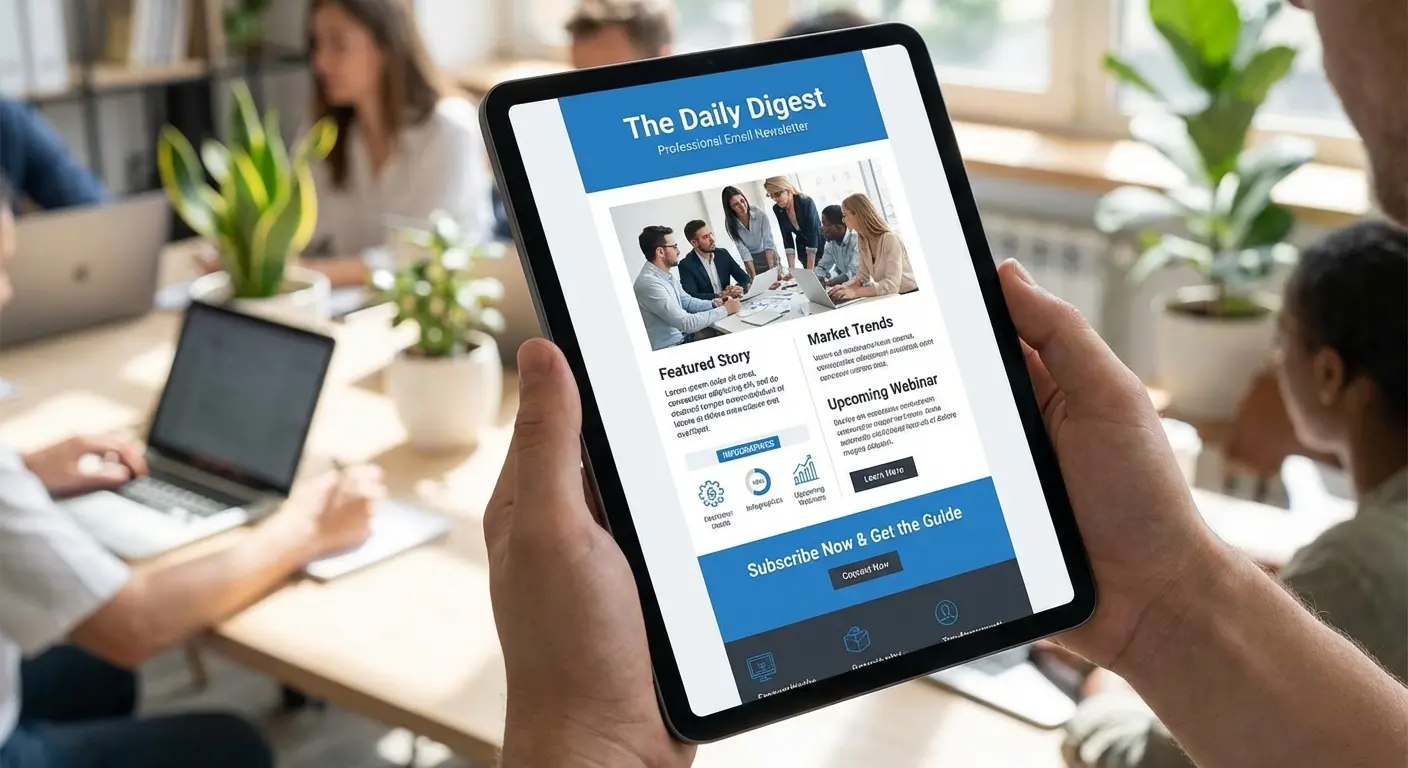
Your email list is where the actual selling happens. Facebook is for relationship building, trust development, and problem identification. Email is where you present solutions, make offers, and close sales. This is fundamental to understanding how to make money on facebook sustainably.
I’ve watched page owners ignore email for years, then panic when Facebook’s algorithm changes tank their reach overnight. The ones with strong email lists barely noticed because their revenue wasn’t dependent on Facebook’s whims.
That’s the insurance policy you’re building.
Meta’s recent policy changes and data collection practices have made relying solely on Facebook even riskier. As EFF reported, Meta’s tracking pixel is embedded in 30% of the world’s most popular websites, and the company continues to change how it handles user data and advertising. Building an email list gives you a direct line to your audience that Meta can’t control, alter, or take away when policies shift.
Strategic Partnership Revenue That Doesn’t Feel Like Sponsored Content
Sponsored posts feel gross to everyone involved because they’re usually misaligned from the start. The brand wants exposure, you want money, and your audience gets interrupted.
Nobody wins long-term.
Strategic partnerships work differently. You’re not renting out your audience’s attention. You’re connecting them with solutions that genuinely fit their needs while negotiating terms that reflect your value.
Position yourself as a distribution channel, not an influencer. Brands pay for distribution all the time (it’s called advertising), and your page is a highly targeted, engaged distribution channel. That framing changes the conversation and the pricing. When you understand how to monetize your facebook page as a distribution asset, you command higher rates and better terms.
Only partner with brands whose products you’d recommend without payment. Your reputation is worth more than any single sponsorship deal, and your audience will forgive a lot except feeling deceived.
Negotiate multi-post deals instead of one-off sponsorships. Brands get better results from consistent presence, and you get predictable revenue. A six-month partnership with monthly posts is more valuable than six individual sponsored posts negotiated separately.

Create partnership content that serves your audience first. If you’re promoting a tool, show exactly how you use it to solve a specific problem. The promotion is embedded in the value, not interrupting it.
We worked with a productivity page that partnered with a project management software company. Instead of posting “check out this tool,” they created a six-part series showing how they reorganized their entire content calendar using the software. Each post solved a specific workflow problem their audience had mentioned. The brand got featured throughout, but the content was genuinely useful. Conversion rates were 8 times higher than their previous sponsored posts, demonstrating effective facebook content monetization.
Charge based on engagement rates and list size, not just follower count. A page with 20K highly engaged followers and a 10K email list is worth more than a page with 100K passive followers and no list.
Make sure your pricing reflects that reality.
Subscription Models That Work for Pages Under 50K Followers
You’ve probably been told you need 100K followers before subscriptions make sense. That’s completely wrong, and it’s keeping you from revenue you could be generating right now.
The same principles that drive successful SaaS subscription models apply to Facebook page subscriptions: focus on retention and value delivery. Scale comes after you nail those fundamentals.
The subscription model that works for smaller pages is high-value, high-touch, and high-price. You’re not competing with Netflix on volume. You’re competing on transformation and access.
Ask yourself: would 100 people genuinely miss your content if it disappeared tomorrow?
If yes, you have enough audience for a subscription offering. Those 100 people are your founding members.
Price your subscription based on the outcome you deliver, not the content you create. A $50/month subscription that helps someone grow their business by $500/month is a bargain. A $10/month subscription that offers “bonus content” is just noise. The outcome determines the value, and the value determines the price.
A local real estate page with just 3,200 followers launched a $75/month subscription called “First Look Insider.” Subscribers got 48-hour early access to new listings before they hit the MLS, weekly market analysis calls, and direct access to the agent via a private group.
Only 28 people subscribed initially, but that generated $2,100 in monthly recurring revenue.
Within four months, word-of-mouth grew it to 67 subscribers ($5,025/month) without any paid advertising. The page owner restricted it to 100 subscribers to maintain the “insider” positioning and service quality. Scarcity was real, and it made the offer more valuable. This approach shows how the facebook content monetization program structure can work even for smaller, focused audiences.
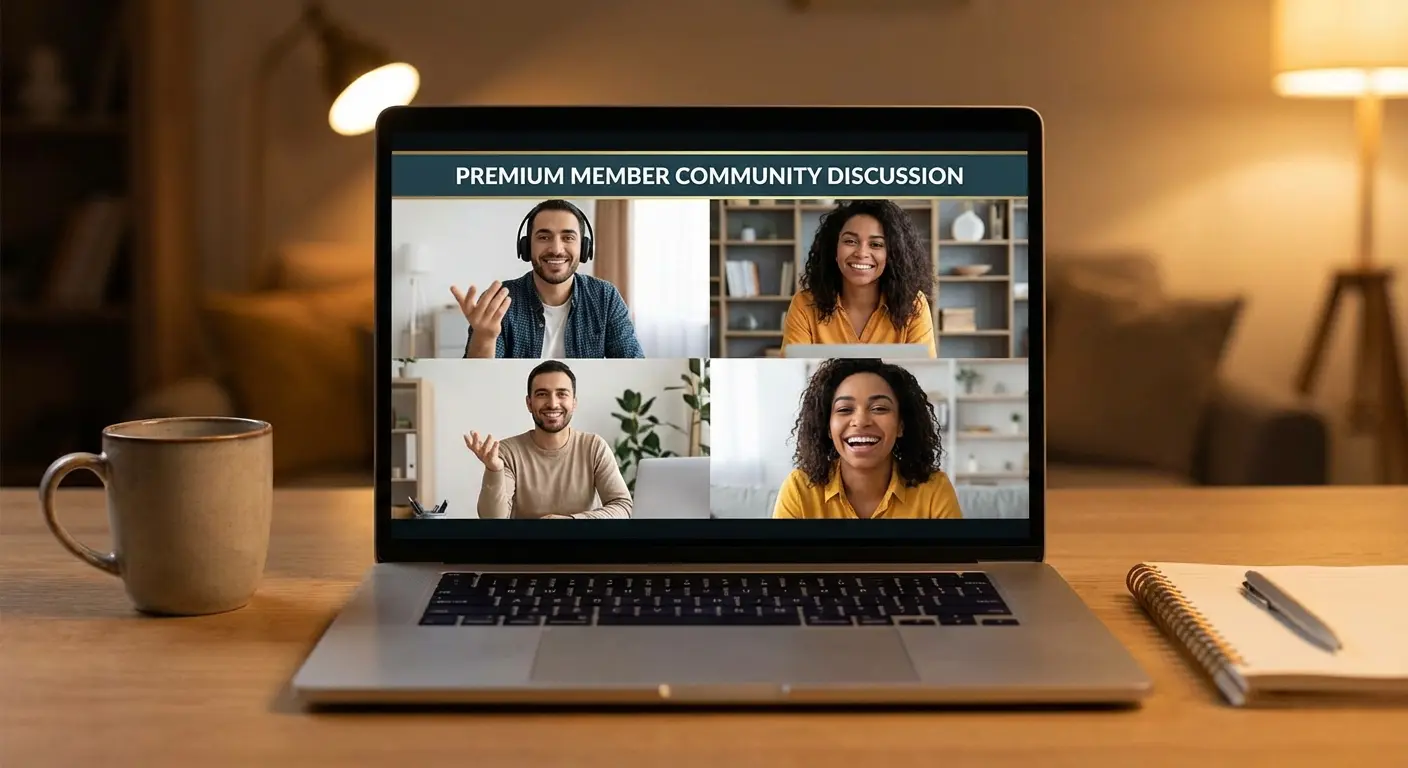
Build subscriptions around accountability and access, not just information. People can find information anywhere. They can’t find personalized feedback, community support, and direct access to you anywhere except your subscription offering. That’s what they’re paying for when they join.
Launch with a founding member rate and cap the number of spots. Scarcity is real when you’re delivering high-touch value, and it makes the decision easier for people on the fence. “Only 50 spots available at this price” works because it’s true. You can’t deliver quality to unlimited people, so the limitation becomes part of the value proposition.
Your subscription offering should be the thing you’d want to join if someone else was running it. That’s the quality bar that matters. If you wouldn’t pay for it, why should anyone else?
When to Scale Up (And What Attribution Actually Tells You)
You’ll know it’s time to scale when you’ve validated that a monetization method works consistently, not just once. A single successful product launch doesn’t mean you’ve found your model. It means you’ve had a good week.
Understanding which activities drive revenue requires the same analytical rigor we apply in advanced analytics for strategic growth. The data tells stories that gut feelings miss.
Attribution modeling shows you which Facebook activities lead to revenue. Most page owners think their viral posts are driving sales when it’s their tutorial posts that convert.
You need to know the difference before you scale.
Facebook’s native attribution tools are limited, so you’ll need to track manually at first. Use unique discount codes for different post types, track which lead magnets convert to customers, and monitor which content themes drive email signups that later become buyers. It’s tedious, but it’s the only way to know what’s working.
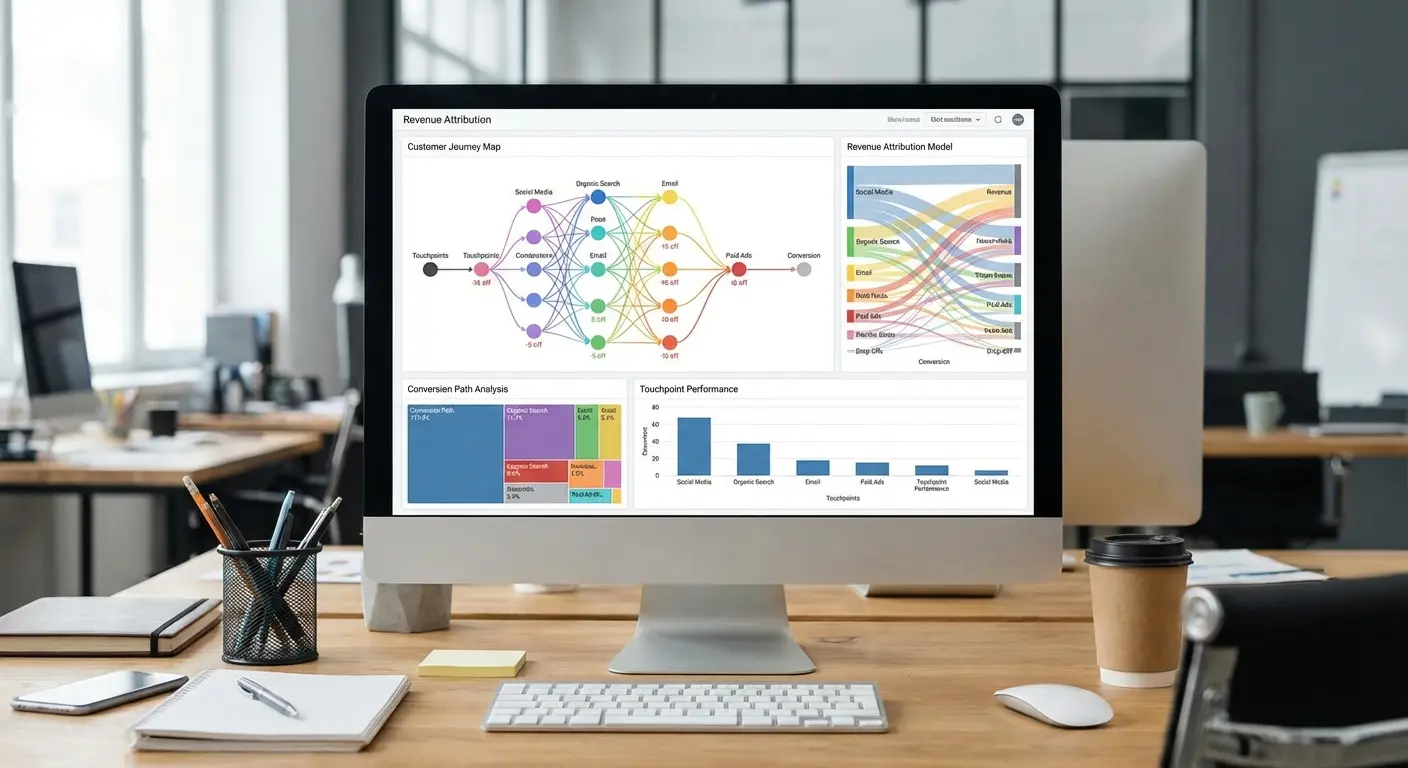
The data will surprise you. Posts that get tons of likes often generate zero revenue. Posts that get modest engagement but deep comments frequently drive the most sales.
You’re optimizing for the wrong metrics if you’re chasing vanity numbers.
Here’s what I mean. A post might not directly drive a sale, but it could be the touchpoint that builds enough trust for someone to join your email list, where they eventually buy three months later. Single-touch attribution misses that story entirely. We’ve tracked customer journeys that span 15-20 touchpoints before purchase. The first post they engaged with gets no credit in basic analytics, but it was essential to the eventual sale.
You’re ready to scale when you can predict revenue based on activity. If you know that posting three tutorials per week generates X email signups, and Y% of those signups become customers worth Z dollars, you have a model worth scaling.
Until you have those numbers, you’re guessing.
Scaling means doing more of what works and eliminating what doesn’t. It doesn’t mean doing everything bigger. Most page owners scale by adding more content types, more products, more complexity. That’s usually wrong. Scale by doubling down on the specific activities that drive revenue and cutting everything else. We’ve seen pages double revenue by cutting their posting frequency in half and focusing only on high-converting content types.
Final Thoughts
Your Facebook page can generate real revenue right now, regardless of your follower count. The constraint isn’t your audience size. It’s whether you’re building something that serves your community while creating value you can capture.
Everything we’ve covered points to the same core principle: monetization works when it’s embedded in value creation, not layered on top of it.
The pages that struggle financially are the ones treating monetization as something separate from their content strategy. The pages that thrive have made revenue generation inseparable from community building. They’re not doing two different things. They’re doing one thing that accomplishes both.
You don’t need to implement every strategy we’ve discussed. You need to pick the two or three that align best with what your community already asks for, validate that they work, and then scale them. Focus beats complexity every time.
The community-first revenue model takes longer to build than slapping ads on your page or accepting every sponsorship offer that comes your way. It also lasts longer, scales better, and feels better to everyone involved.
You’re building a business asset, not just chasing quick money.
Your page is already worth something. You’ve built it. People show up. They comment. They care.
The question is whether you’re going to actually make money from it, or just keep collecting likes that don’t pay rent.
Pick one monetization thing from this post. Not all of it. One thing. Test it this week. A lead magnet. A poll about a product idea. A $10/month subscription for your ten most engaged followers.
I don’t care which one. Just start.
Because here’s what I’ve learned after doing this for years: the pages that make money aren’t the ones with perfect strategies. They’re the ones that started before they felt ready, messed something up, fixed it, and kept going.
Your move.