


Table of Contents
-
Why We Build Before We Understand
-
The Hidden Cost of Perfectly Executed Bad Ideas
-
What Custom Software Actually Solves (and What It Doesn’t)
-
Process Debt: The Thing No One Talks About
-
How to Know If You’re Ready (Spoiler: It’s Not About Budget)
-
Building for Humans Who Don’t Want to Change
-
The Maintenance Myth Everyone Believes
-
When Off-the-Shelf Is Actually the Brave Choice
-
Final Thoughts
The Short Version (If You’re in a Hurry)
Most custom software projects fail not because of bad code, but because teams automate broken processes. You’re just doing the wrong thing faster.
Process debt is worse than technical debt. At least developers talk about technical debt. Process debt just compounds silently until you’ve built an entire system around a workflow that made sense in 2015.
Budget doesn’t mean you’re ready. I’ve seen companies with millions to spend fail because they couldn’t document a process that everyone agreed on.
Users will kill your project faster than bugs will. Yet teams spend 90% of planning on features and maybe 10% on adoption strategy.
Off-the-shelf often takes more guts than custom because you have to admit your problems aren’t special.
Why We Build Before We Understand
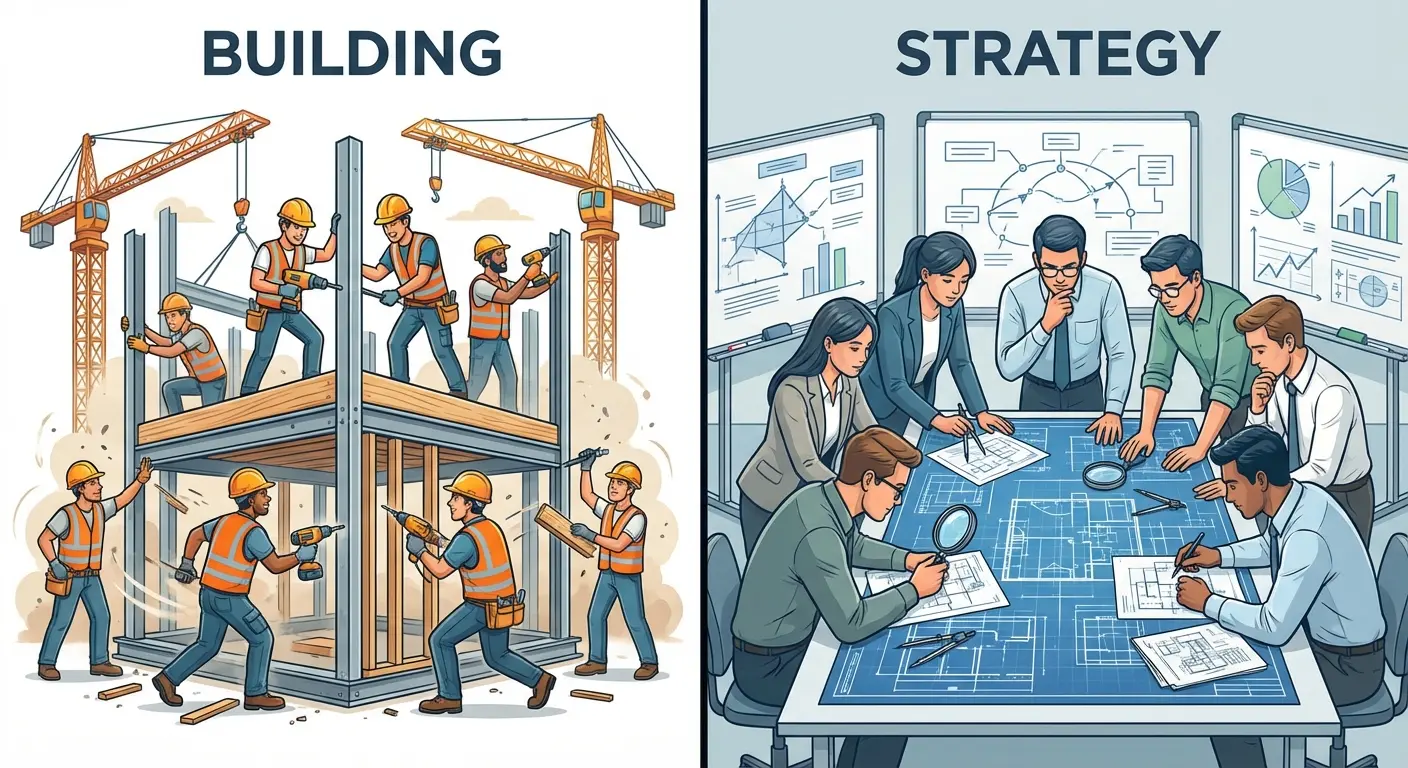
I’ve seen this exact pattern play out so many times I can predict the meeting where it happens. Someone identifies a problem, usually in a Slack thread or a frustrated email, and within weeks there’s a development team spinning up. The impulse to build is powerful, almost irresistible. There’s something deeply satisfying about creating a solution, about moving from abstract frustration to concrete action.
Nobody’s asked whether we understand the problem. Nobody’s questioned if software is even the right solution.
We just… build.
The global custom software development market was estimated at USD 43.16 billion in 2024 and is projected to reach USD 146.18 billion by 2030, growing at a CAGR of 22.6%. That explosive growth tells us something important: organizations everywhere are building custom software at an unprecedented rate. But the numbers don’t tell you how many of those projects actually solved the problem they were built for.
The rush to participate in digital transformation can override the strategic pause needed to ensure you’re transforming toward something better, not just different. Teams confuse activity with progress, mistaking the excitement of building something new for the harder work of diagnosing what’s broken.

The Comfort of Building Over Questioning
Building feels productive. Questioning feels like stalling.
When you’re in a status meeting and someone asks what progress you’ve made, “we completed three sprints and delivered five features” sounds infinitely better than “we spent two weeks challenging our assumptions about the problem.” The first answer gets nods of approval. The second gets uncomfortable silence and questions about when you’ll start making real progress.
Have you been in that meeting? The one where someone suggests building custom software and everyone nods because questioning it feels like you’re against innovation?
This dynamic creates enormous pressure to start building before you truly understand what you’re building or why. Stakeholders want to see something tangible. Competitors seem to be moving faster. The budget is approved and the clock is ticking. Who has time to sit around asking philosophical questions about whether we’re solving the right problem?
I get it. The pressure to show progress is real, and questioning your approach can feel like you’re not doing anything. But the teams that slow down at the beginning move faster overall. They don’t spend months building the wrong thing, then more months rebuilding it correctly.
The discomfort of admitting your current processes are fundamentally flawed, not just inefficient, is significant. It’s easier to believe you just need better tools than to acknowledge the workflow itself is broken. Custom software becomes the convenient answer because it promises a perfect fit without requiring you to confront uncomfortable truths about how you operate.
When “Custom” Becomes a Status Symbol
I worked with a manufacturing company once, mid-sized, made industrial fasteners, the kind of stuff nobody thinks about. Their CEO got it in his head that “industry leaders don’t use commodity software.” I don’t know where he heard that. Maybe a conference. Maybe a vendor pitched him. Doesn’t matter.
He believed it, and that belief cost them $2.3 million.
Some organizations pursue custom software the same way they approach digital transformation initiatives as a badge of innovation rather than solving business problems. There’s an ego component we need to talk about.
Off-the-shelf feels like settling. It suggests you’re ordinary, that your problems are common, that you’re not special enough to warrant a unique solution. Custom software, on the other hand, signals that you’re sophisticated, that your operation is complex enough to require bespoke tools, that you’re a leader rather than a follower.
This mindset leads to companies pissing away millions reinventing solved problems. They spent eighteen months developing features that replicated 90% of what existing ERP systems already offered. The remaining 10% of “unique” functionality addressed edge cases that occurred fewer than six times per year.
Two years post-launch, the system required three full-time developers for maintenance, while their competitors using off-the-shelf solutions had redeployed those resources to competitive advantages like predictive maintenance algorithms and customer experience improvements. The custom system became a monument to misplaced pride rather than a strategic asset.
Leadership sometimes equates custom software with innovation, even when the business problem is entirely ordinary. Your invoicing process probably isn’t revolutionary. Your customer onboarding workflow likely shares 95% of its logic with thousands of other companies.
That’s okay.
The question isn’t whether your needs are unique. It’s whether the 5% that’s different justifies the cost of building and maintaining 100% of the solution yourself.
The Hidden Cost of Perfectly Executed Bad Ideas
We need to talk about successful failures. These are projects that meet every technical milestone, deliver on time and on budget, and produce custom software that works exactly as specified. The development team did everything right.
The problem? They built the wrong thing.
This happens more often than anyone wants to admit. A team flawlessly executes a project based on faulty assumptions, and nobody realizes the mistake until launch day when the custom software works perfectly but solves nothing. Traditional project success metrics like on time, on budget, meets requirements, completely miss the point.
The sunk cost fallacy keeps these projects alive long after their fundamental flaws become obvious. “We’ve already invested so much” becomes the justification for throwing good money after bad, for continuing to maintain and support custom software that doesn’t deliver business value.
Your Process Problems Don’t Disappear at Scale
If your current workflow is convoluted, automating it just means you’ll execute bad decisions more efficiently.
Software amplifies whatever you feed it, whether functional or dysfunctional. Give it a good process and you’ll get good results faster. Give it a broken process and you’ll get broken results at scale.
Many enterprise platforms are more than two decades old and, in several cases, “the people or the company that wrote the code, the source code, the applications are no longer living,” according to AI and Robotics expert Thomas Anglero. This creates a dangerous scenario where teams automate processes nobody fully understands anymore.
You’re encoding decades-old workarounds into modern systems without questioning whether those workarounds still serve any purpose. The custom software executes flawed logic at digital speed, making the problem worse, not better.
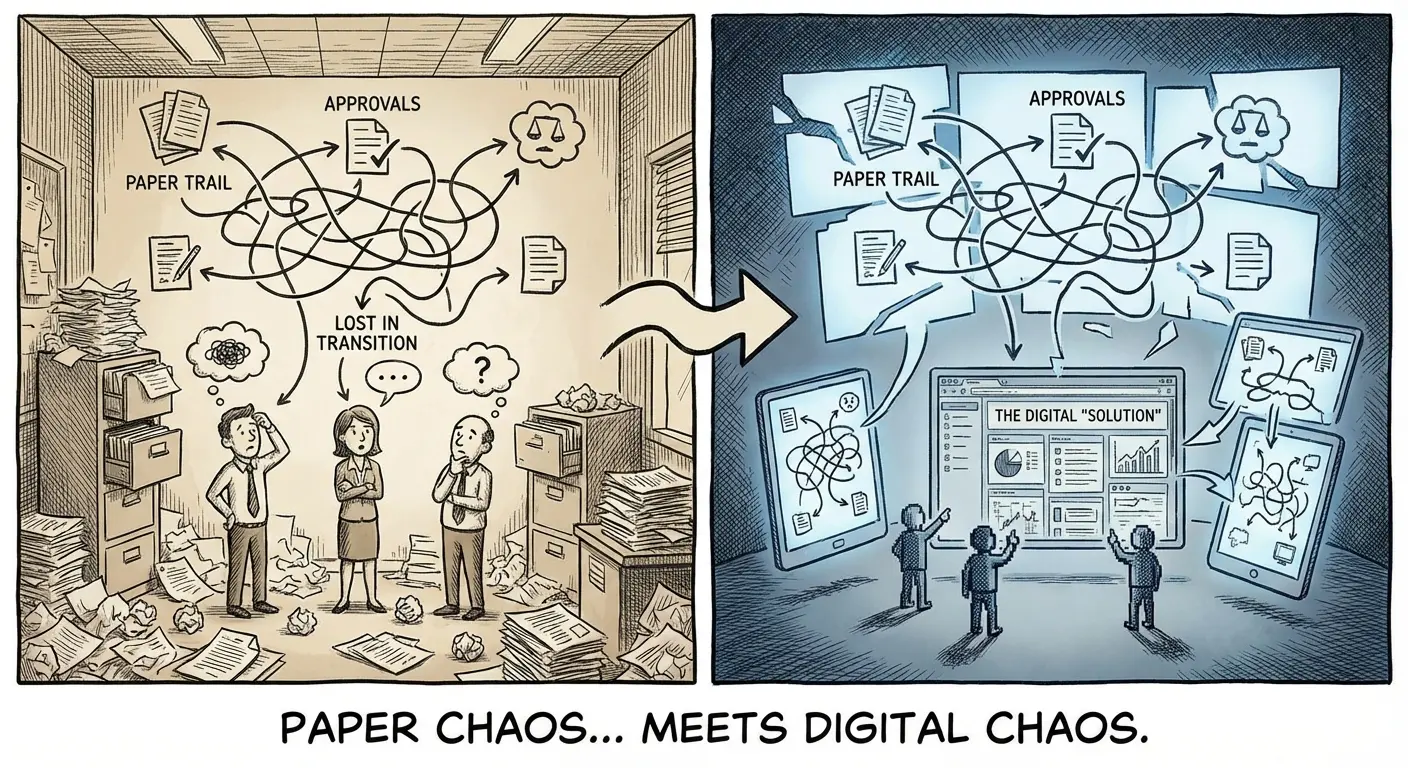
A healthcare network automated their patient referral process by digitizing the exact workflow staff had used with paper forms for fifteen years. The original paper process included seven approval signatures because, a decade earlier, there had been a billing dispute that required multiple department heads to verify insurance coverage.
That dispute was resolved years ago. Insurance verification became automated through a different system. But nobody questioned why seven signatures were still required.
The new customized software faithfully replicated all seven approval steps, creating digital bottlenecks that were slower than the paper process. Now people had to log into a system, wait for email notifications, and navigate multiple screens instead of simply signing a form that was handed to them. The hospital spent $340,000 to make a bad process worse.
The Specification Trap
Detailed requirements documents create false confidence. Teams spend months documenting every feature and edge case, believing thoroughness equals correctness. The resulting document becomes a security blanket. Look how much we’ve thought this through, how could we possibly be wrong?
But precision isn’t the same as accuracy.
You can be precisely wrong, documenting in excruciating detail a custom software development solution that misses the mark entirely. These comprehensive specifications often lock in assumptions before they’ve been tested. Once something is written down, approved by stakeholders, and incorporated into contracts with a custom software development company, it becomes very difficult to change.
I’ve watched teams defend obviously flawed requirements because “that’s what the spec says” and changing it would require renegotiating contracts, updating documentation, and admitting they got it wrong. The specification becomes more important than the outcome.
Which is insane, but here we are.
What Custom Software Actually Solves (and What It Doesn’t)
Understanding when to build versus buy becomes clearer when you examine application modernization case studies that reveal the true cost of custom development. Let’s be honest about what custom software can and cannot fix.
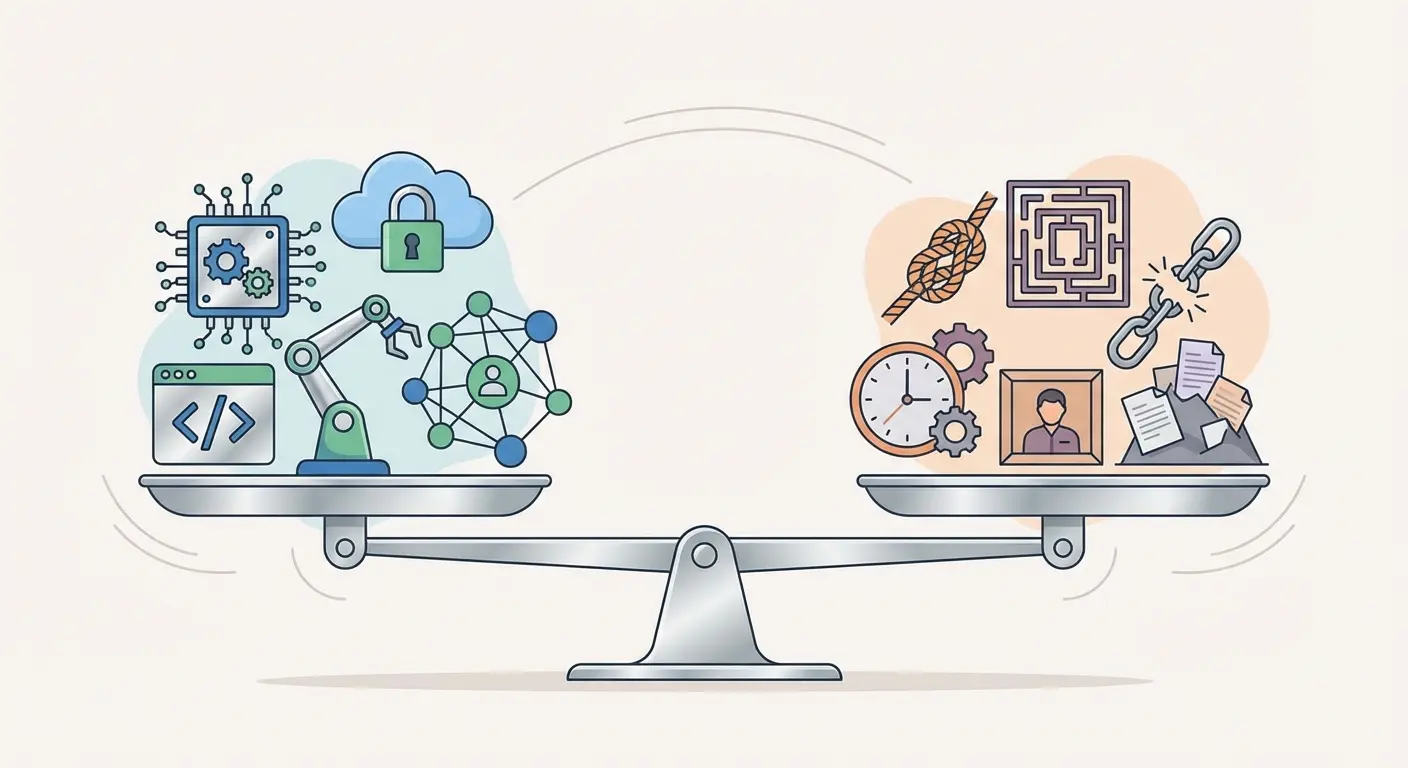
Custom software makes strategic sense in specific scenarios: when you need unique competitive advantages that no market solution addresses, when you’re dealing with complex integrations across incompatible legacy systems, or when your workflows are so specialized that no commercial equivalent exists.
But custom software cannot fix unclear business strategy, lack of process documentation, poor team communication, or resistance to change. These are organizational problems, not technical ones. No amount of elegant code will solve them.
What Custom Software Can Actually Fix:
-
Unique competitive differentiation that no market solution addresses
-
Complex integration across incompatible legacy systems
-
Highly specialized workflows with no commercial equivalent
-
Regulatory compliance requirements specific to your operation
-
Proprietary algorithms or intellectual property protection
-
Scale limitations of existing platforms
What Custom Software Cannot Fix:
-
Unclear business strategy or undefined goals
-
Poor communication between departments
-
Lack of executive alignment on priorities
-
Resistance to change or unwillingness to adapt
-
Absence of documented processes
-
Cultural dysfunction or low organizational maturity
I’ve watched organizations try to use custom software as a forcing function, like “if we build it this way, people will have to change.” That rarely works. Custom software can enable change, but it can’t create the will to change.
Competitive Differentiation vs. Table Stakes
There’s a critical distinction between features that genuinely set you apart and capabilities that every competitor already has. Custom software makes sense when it enables something your market can’t easily replicate. It’s wasteful when you’re building a slightly different version of standard functionality.
After two years of sluggish growth, demand for custom software is finally showing signs of revival, driven by entrepreneurs’ push to adopt AI and the unavoidable need to modernize legacy IT systems (Nearshore Americas). This resurgence isn’t about building custom versions of standard features. It’s about creating systems that can integrate AI, manage massive data volumes, and adapt rapidly to changing needs.
Organizations are discovering that their competitive edge lies not in having a custom CRM interface, but in having systems that can leverage proprietary data and algorithms in ways their competitors cannot replicate.
Think about which parts of your operation truly need to be unique and which should leverage proven custom software solutions. Your invoicing process probably doesn’t need to be special. Your customer service workflow likely follows patterns that thousands of other companies use successfully. Save your custom development budget for the things that make you different in ways your customers care about.
Integration Complexity as a Valid Trigger
Sometimes custom software is the only practical way to connect disparate systems that must work together. I’ve seen scenarios where the cost and risk of building middleware or custom integrations is genuinely lower than forcing incompatible platforms to communicate through standard APIs.
This is particularly true when you’re dealing with legacy systems that predate modern integration standards, or when you need real-time data synchronization across platforms that weren’t designed to talk to each other. Custom software development services can build the connective tissue that makes your technology ecosystem function as a coherent whole.
But we need to be careful. Integration challenges can become an excuse to rebuild everything when the real issue is that you’ve accumulated too many tools without a coherent strategy. Before you build custom software to integrate fifteen different platforms, ask whether you should have fifteen different platforms in the first place.
Process Debt: The Thing No One Talks About
Technical debt gets plenty of attention in software development circles. Developers actively discuss it, plan sprints to address it, and warn stakeholders about the consequences of ignoring it.
Process debt, on the other hand, is invisible until you try to automate it.
Process debt is the accumulated inefficiencies and workarounds that become embedded in how organizations operate. It’s the seven-step approval process that made sense five years ago but hasn’t been questioned since. It’s the manual data entry that compensates for two systems that don’t integrate. It’s the exception handling that’s become standard practice because nobody remembers why the exception exists.
Processes evolve through accretion. Each new hire adds their own modifications. Each department contributes their requirements. Each crisis spawns a new safeguard. Over time, the original logic gets buried under layers of additions until nobody can explain why things work the way they do. They just know that’s how it’s done.
The danger is that custom software can permanently encode these inefficiencies, making them harder to fix later. Once a workaround is built into the system, it stops being a workaround and becomes “how the system works.” Changing it requires code changes, testing, deployment, and training instead of just updating a procedure document.
Inherited Workflows Nobody Remembers Designing
Many business processes exist simply because “that’s how we’ve always done it.” Nobody remembers the original constraint that made the process necessary. Nobody questions whether that constraint still exists.
I’ve worked with teams who discovered that the reason for a seven-step approval process was a regulation that changed five years ago. Others found that a mandatory review step existed because of a manager who left the company three years earlier. The process outlived its purpose, but nobody thought to question it.
This is process archaeology, excavating the layers of your workflow to understand what’s essential versus what’s historical artifact. It’s uncomfortable work because it often reveals that significant portions of your daily operations serve no current purpose.
Before you automate anything, you need to understand why it exists. Otherwise, you’re just building faster ways to do unnecessary work.
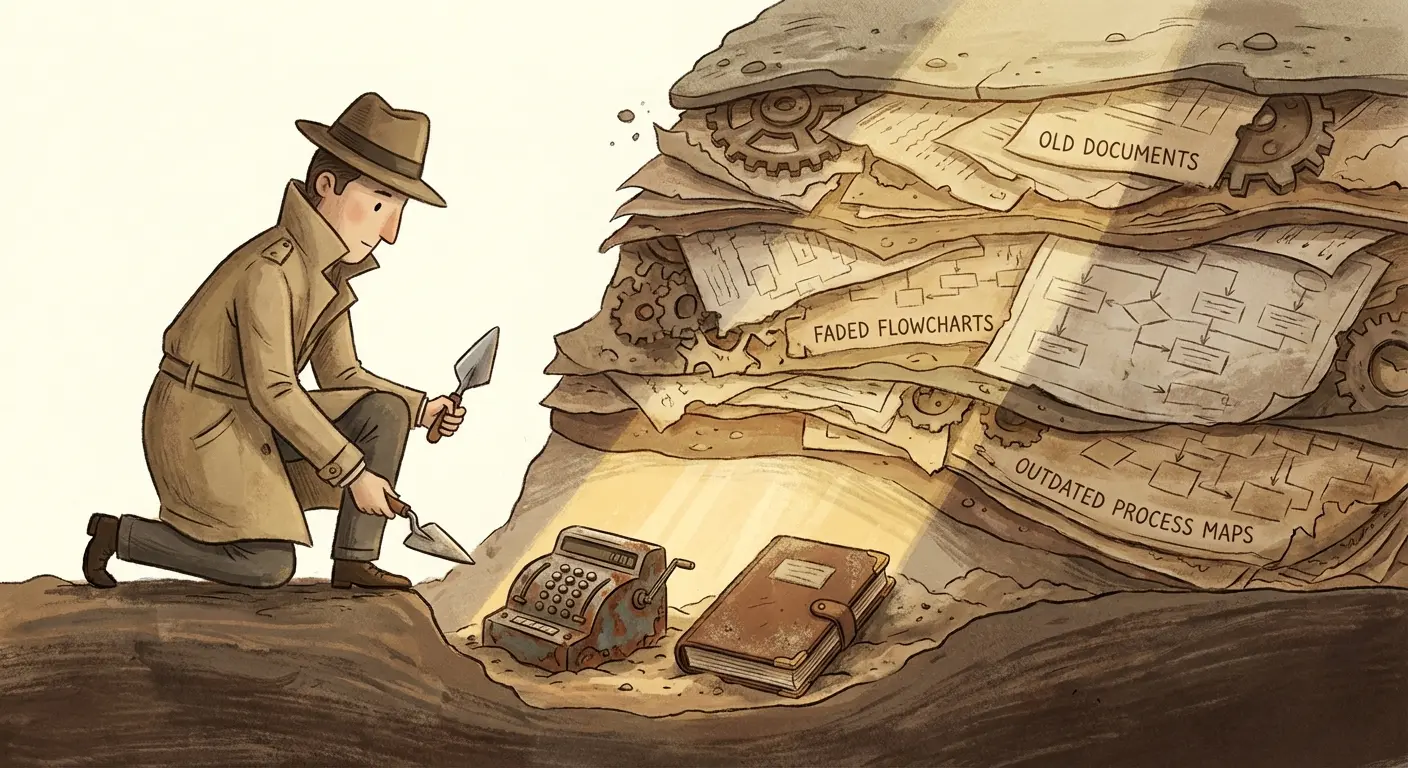
Here’s a rough framework for uncovering process debt (not gospel, just what’s worked for me):
-
Document the current process step-by-step as it actually happens, not how the manual says it should happen
-
Interview at least three people who execute the process regularly about why each step exists
-
Identify any steps that exist “because we’ve always done it that way”
-
Research when each step was introduced and what business constraint triggered it
-
Verify that historical constraints still exist (regulations, vendor limitations, technical restrictions)
-
Map exception handling and workarounds that have become standard practice
-
Calculate the actual time and cost per transaction
-
Identify steps that exist solely to compensate for limitations in other systems
-
Test whether removing each step would create risk or merely discomfort
This list isn’t exhaustive. Just the stuff that’s bitten me most often.
The Compounding Interest of Bad Processes
Process debt grows exponentially when automated. A manual workaround might waste 10 minutes per transaction, affecting only the person doing it. Once it’s built into custom software, it affects every user, every day, forever, or until someone has the courage and budget to fix it.
The cost of fixing process debt increases dramatically post-launch. During the planning phase, changing a workflow is a conversation. After development starts, it’s a change request. After launch, it’s a major enhancement that requires budget approval, development cycles, testing, and retraining. Organizations often live with known inefficiencies rather than face the disruption of fixing them.
Teams identify problems during user acceptance testing but decide to launch anyway because “we can fix it in the next release.” That next release gets deprioritized because new features seem more important than fixing what’s already built. Years pass, and the inefficiency becomes permanent.
The compounding effect is real. One automated bad process creates downstream problems that require more workarounds, which get automated, creating more problems. Before long, you have a system that’s technically functional but operationally dysfunctional, and nobody can untangle it without
How to Know If You’re Ready (Spoiler: It’s Not About Budget)
Having money doesn’t mean you’re ready to build custom software. I’ve seen well-funded projects fail spectacularly because the organization wasn’t prepared for what custom development actually requires.
Readiness isn’t about financial resources. It’s about organizational maturity. Can you document processes that multiple people agree on? Do you have clear success metrics beyond “we built the thing”? Does executive sponsorship extend past launch day? Are you honest about what will need to change?
These questions matter more than your budget. A custom software development company can build whatever you ask for, but they can’t make your organization ready to use it effectively.
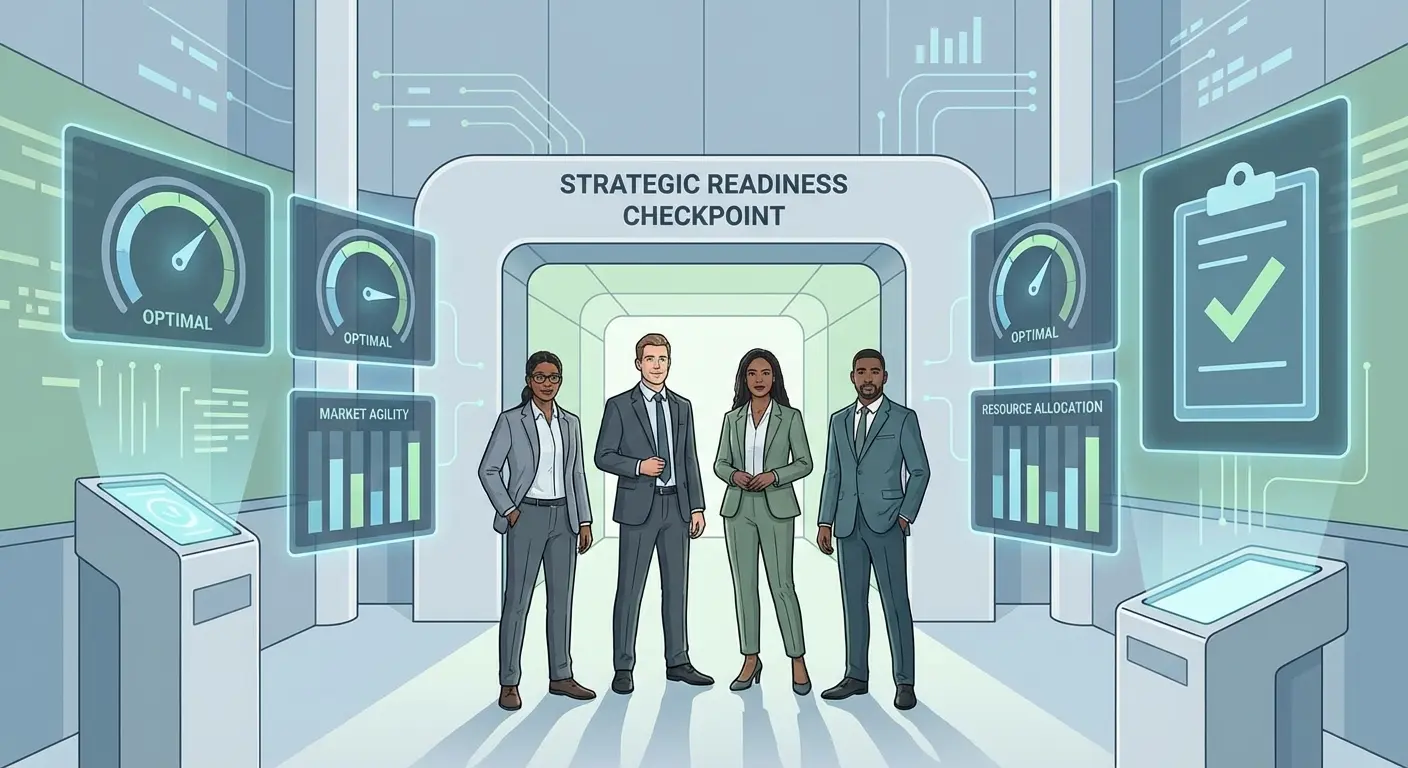
Red flags that suggest you’re not ready, regardless of budget: frequent leadership turnover, inability to articulate the problem without referencing a solution, or expectation that custom software will “force” people to work differently. If you’re counting on custom software to solve organizational dysfunction, you’re setting yourself up for expensive disappointment.
The Process Documentation Test
Can you document your current process in a way that two different people interpret identically?
If not, you’re not ready to build custom software around it.
Vague process maps lead to expensive rework. “We need to streamline approvals” isn’t specific enough to build from. “Approvals under $5,000 require manager sign-off within 24 hours; approvals $5,000-$25,000 require director approval within 48 hours; approvals over $25,000 require VP approval with finance review.” That’s specific enough.
Documentation isn’t bureaucracy. It’s the blueprint that determines whether your custom software will match how work happens. Without it, custom software developers make assumptions, stakeholders have different expectations, and users get software that doesn’t fit their reality.
Teams skip this step because it feels tedious. They’re eager to start building, and documentation seems like overhead. Then they spend three times as long in development because requirements keep changing as people realize they never agreed on what the process should be.
Organizational Change Capacity
Custom software always requires behavioral change. People need to learn new interfaces, adapt to different workflows, and abandon familiar habits. Yet most organizations assess readiness purely on technical and financial dimensions, completely ignoring whether their team has the bandwidth and willingness to adopt new tools.
Look, I know you’re getting pressure from above to “do something.” I know your CEO read an article about digital transformation and now expects a custom solution by Q3. I know the budget’s approved and everyone’s excited. That’s exactly when you need to slow down, even though it feels impossible.
Evaluate your recent change initiatives. How were they received? Did people modify their behavior or just wait for things to return to normal? Did adoption happen because the change was genuinely better, or because leadership mandated it and monitored compliance?
Teams that are already overwhelmed don’t have capacity for another major change, no matter how good the custom software development service is. You need organizational slack, time and mental space for people to learn, adapt, and provide feedback during implementation.
Building for Humans Who Don’t Want to Change
The human factors in software adoption mirror challenges we’ve seen in digital transformation manufacturing projects where technical excellence meant nothing without user buy-in.
User resistance kills more projects than technical failures. I’ve seen this repeatedly: custom software that works perfectly from a technical standpoint but sits unused because people found ways to stick with their old methods.
Why do people resist new custom software even when it’s objectively better? Loss aversion is powerful. The current system, however flawed, is familiar. People know its quirks, have developed workarounds, and feel competent using it. New custom software means starting over as a beginner, making mistakes in front of colleagues, and losing the efficiency that comes from muscle memory.
There’s also the disruption to established routines. Work isn’t just about outputs. It’s about rhythm, autonomy, and the small satisfactions that make the day tolerable. New custom software disrupts all of that, and the promise of future efficiency doesn’t compensate for present discomfort.
Involving users early isn’t just good practice. It’s essential survival strategy. When people help shape the solution, they develop ownership. When it’s imposed on them, they develop resistance.
The fallacy of “if we build it, they’ll adapt” has killed countless projects. Mandates from leadership rarely overcome genuine usability problems. You can force people to log into the system, but you can’t force them to use it effectively or honestly.
The Adoption Curve Nobody Plans For
Most teams plan for launch day as if it’s the finish line.
In reality, it’s the starting gun for a months-long process of behavior change.
The typical adoption pattern: initial enthusiasm from early adopters who are excited about new technology, followed by a long plateau where the majority of users find reasons to stick with old methods. Some cite the learning curve. Others claim the new system doesn’t fit their specific needs. Many just quietly continue doing things the old way while entering minimal data into the new system to satisfy reporting requirements.
The global custom software development market was valued at USD 53.02 billion in 2025 and is expected to reach USD 334.49 billion by 2034, expanding at a CAGR of 22.71%. This growth is driven by increasing demand for tailored digital solutions, AI integration, and automation. But the uncomfortable truth is that many of these custom systems will be built, deployed, and then quietly abandoned or underutilized because teams failed to plan for the human side of implementation.
The technology works. The people don’t use it.
Planning for adoption means acknowledging that your launch date is the beginning of a months-long process of behavior change, not the end of the project. You need strategies for identifying and empowering champions, the users who embrace the new system and help their colleagues through the transition. You need feedback loops that influence development, showing people their input matters. You need to recognize when resistance signals a real problem versus simple change aversion.
A logistics company built a sophisticated route optimization system that could reduce fuel costs by 18% and delivery times by 25%. The custom software was technically flawless, and executive leadership mandated its use across all dispatch operations.
Six months post-launch, less than a third of dispatchers were using the system. The rest had reverted to their manual planning methods, entering fake data into the new system just to satisfy reporting requirements.
When the project team finally interviewed the dispatchers, they discovered the custom software eliminated the small adjustments drivers and dispatchers had developed over years of working together. Accommodations for a driver’s medical appointments, preferences for certain routes, informal agreements about overtime. The system was objectively more efficient, but it treated drivers as interchangeable resources rather than humans with lives outside work.
The company eventually rebuilt the system with input from dispatchers, adding flexibility for the human factors they’d originally dismissed as inefficiency. Adoption jumped to around 90% within three months of the redesign.

When Efficiency Feels Like Punishment
Sometimes new customized software eliminates steps that gave people breathing room or autonomy in their day. What looks like waste from a process optimization perspective might be valued time for thinking, relationship building, or simply catching your breath between tasks.
I’ve seen “streamlined” workflows that removed every moment of discretion, turning skilled workers into button-pushers following rigid scripts. The custom software was faster, but people hated it. Turnover increased. Quality decreased. The efficiency gains on paper evaporated in the reality of disengaged workers doing the minimum required.
Design for human needs like variety, mastery, control, not just measurable outputs. Consider the full experience of using your custom software, not just the time savings. Sometimes the best process isn’t the fastest one.
The Maintenance Myth Everyone Believes
Most organizations budget for development but drastically underestimate ongoing costs. They think maintenance means occasional bug fixes and maybe an update when the operating system changes.
That’s not maintenance. That’s life support.
True maintenance is continuous realignment with evolving business needs, market conditions, and user expectations. Your software development solution needs to grow with your business, and that requires ongoing investment.
Enterprise software accounts for about 60% of the custom software market, with large IT vendors controlling more than 60% of total revenue. These vendors understand that the real profit isn’t in the initial build. It’s in the years of maintenance, updates, and continuous evolution that follow.
When organizations budget for custom software, they typically allocate 70-80% of funds to development and only 20-30% to the entire lifecycle that follows. This mismatch between market reality and buyer expectations is why so many custom systems become expensive liabilities within 24 months of launch.

“Set it and forget it” is fantasy. Custom software becomes legacy the moment it stops evolving.
Your Business Will Change Faster Than You Think
Business requirements that seemed permanent at launch often shift within months. New regulations emerge. Competitors change the game. Customer expectations evolve. Your own strategy pivots.
Custom software built for today’s reality can become tomorrow’s constraint if you haven’t planned for adaptation. The features you thought were essential become irrelevant. The workflows you optimized get replaced. The integrations you built break when vendors update their APIs.
I’ve watched organizations struggle with custom software that was perfect for the business they were three years ago but completely misaligned with the business they are today. The system works exactly as designed, which is precisely the problem. The design is obsolete.
Think through what flexibility you’ll need. Which parts of the system should be designed for easy modification? Where do you need configuration options rather than hard-coded logic? What assumptions are you making about the future that might be wrong?
The Team You Built With Won’t Be the Team That Maintains It
Developers move on. The people who understand every decision and quirk often leave for other opportunities, taking their knowledge with them. You’re left with code that nobody fully comprehends, a black box that works until it doesn’t, and then nobody knows how to fix it.
This knowledge transfer problem plagues custom software. Documentation helps, but it’s never complete. The real understanding lives in the heads of the people who made the decisions, debated the trade-offs, and know why things are the way they are.
When you use external custom software developers, this risk intensifies. The team that built your system works for a vendor with dozens of other clients. They’re not sitting around waiting for your maintenance requests. They’ve moved on to other projects, and the people assigned to support your system are learning it for the first time.
Build systems that don’t require detective work just to change one damn thing. Write code that explains itself. Document not just what the system does, but why it does it that way. Create knowledge-sharing practices that transfer understanding before people leave.
When Off-the-Shelf Is Actually the Brave Choice
The build versus buy decision parallels what we’ve observed in enterprise marketing automation implementations where configured platforms often outperform custom builds.
Choosing an off-the-shelf solution often requires more courage than building custom software.
Why? Because it forces immediate confrontation with process problems.
When you can’t customize every field and workflow, you must decide what’s truly essential versus what’s just familiar. You have to justify why your process is special, and often you discover it isn’t. The discipline of adapting to proven software reveals inefficiencies you didn’t know existed.
The United States continues to lead global digital innovation, driven by advanced cloud infrastructure, AI adoption, low-code/no-code development, enterprise modernization, and a thriving startup ecosystem (AI Journ). This technological maturity means off-the-shelf custom software solutions are far more sophisticated and customizable than they were even five years ago.
Low-code platforms now offer configuration options that used to require custom development. API-first architectures make integration dramatically easier. Choosing off-the-shelf today doesn’t mean accepting rigid limitations. It means leveraging billions of dollars in R&D that vendors have already invested, then focusing your custom software build budget on the 10% of functionality that truly differentiates your business.

Constraints That Force Clarity
Off-the-shelf software’s limitations can be valuable. When you can’t have everything your way, you’re forced to prioritize and question assumptions.
I’ve worked with teams who discovered their “must-have” requirements were nice-to-haves once they had to choose between them and going live six months earlier at half the cost. The exercise of fitting into existing software clarified their actual needs versus wants.
Constraints force conversations that should have happened anyway. Why do we need this field? Who uses this report? What would break if we simplified this workflow? These questions are easier to avoid when you’re building custom software that can accommodate every request.
Before you build a custom CRM, have you actually tried HubSpot, Salesforce, or Pipedrive configured properly? And I mean really tried, not just a 30-day trial where you imported some data and clicked around. Most teams dismiss off-the-shelf before they’ve seriously tested it.
The Hidden Cost of Optionality
The paradox of choice in software mirrors broader process automation challenges where too much flexibility creates operational paralysis.
Custom software offers infinite flexibility, which sounds ideal until you realize that every option requires a decision, documentation, training, and maintenance. Too many choices paralyze users and create complexity that outweighs the benefits.
Sometimes the best solution is the one that makes reasonable assumptions and removes decisions from your plate entirely. You don’t need to configure everything. You need custom software that works well enough for your needs without requiring a PhD to operate.
Every custom software application feature you add is a feature you own forever. Every configuration option is another thing that can be set wrong. Every workflow variation is another scenario to test, document, and support.
Off-the-shelf solutions have already made many of these decisions for you, based on what works for thousands of other organizations. That’s not settling. That’s learning from collective experience.
You’re not alone if you’ve struggled to determine whether a custom software build is the right move or how to avoid the pitfalls we’ve outlined here. I’ve seen teams wrestle with these questions across industries, and the organizations that succeed are the ones who do the hard diagnostic work before writing a single line of code.
At The Marketing Agency, we help businesses untangle their process debt and determine what needs to be custom versus what’s better solved with existing tools. Our approach starts with understanding your operation, not pitching custom software development solutions. If you’re facing pressure to build but aren’t sure you’re solving the right problem, we should talk.
Final Thoughts
Custom software is neither inherently good nor bad. It’s a tool that amplifies whatever foundation you build it on.
I’m probably too close to this topic to be objective. I’ve watched too many talented developers build brilliant solutions to the wrong problems. I’ve sat in too many post-mortem meetings where everyone’s confused about why the software works perfectly but nobody uses it. And I’ve definitely been the person who pushed a project forward when I should have pumped the brakes and asked harder questions.
So yeah, I have opinions here.
The overlooked angle throughout this entire conversation has been that success depends less on development skill and more on honest assessment of organizational readiness, process clarity, and willingness to change.
Slow down and question your assumptions before committing resources. View the decision to build custom software as the beginning of a long-term relationship, not a project with an end date. You’re not just buying custom software development solutions. You’re committing to years of maintenance, evolution, and adaptation.
The goal here is to help you make more thoughtful decisions that account for the full lifecycle of custom software, not just the exciting development phase. Too many organizations focus on launch day and ignore everything that comes after. They celebrate going live, then quietly struggle with adoption, maintenance, and the realization that they’ve created something that doesn’t quite fit.
Choosing not to build custom software can be just as strategic as choosing to build. Both decisions require courage when made for the right reasons. Sometimes the brave choice is admitting that your problem doesn’t need a custom solution, that your processes aren’t special enough to warrant building from scratch, that your resources are better spent elsewhere.
I’ve seen organizations transform their operations with off-the-shelf tools configured intelligently. I’ve also seen custom software deliver genuine competitive advantages that justified every dollar spent. The difference wasn’t the technology. It was the clarity of thinking that preceded the decision.
Before you start building, ask yourself: Are we automating a good process or a broken one? Do we understand why our current approach fails? Have we eliminated unnecessary steps, or are we just making them faster? Are our people ready to change, or are we hoping custom software will force the issue?
These questions are uncomfortable because they require admitting what you don’t know and confronting what isn’t working. But answering them honestly will save you from the hidden costs of perfectly executed bad ideas, from process debt that compounds faster than you can pay it down, from custom software that works flawlessly but solves nothing.
Look, some of you are going to read this and build custom software anyway. That’s fine. Maybe you’re the exception. Maybe your situation really is different. But before you do, just… slow down. Ask the uncomfortable questions. Make sure you’re not just automating your way into an expensive corner.
The market’s going to keep growing. Companies will keep building. Some will nail it. Most won’t. And the difference usually isn’t the code. It’s whether anyone bothered to ask if they were solving the right problem in the first place.
Remember that CEO who spent $2.3 million because “industry leaders don’t use commodity software”? His company’s now using Salesforce like everyone else. Turns out being an industry leader is about what you do for customers, not whether your software is bespoke.