



Table of Contents
- The Conversion Illusion: When Traffic Doesn’t Equal Revenue
- Why Most Affiliate Blogs Optimize for the Wrong Audience
- The Intent Gap: Matching Content Types to Buyer Readiness
- Attribution Breakdown: What Actually Drives Your Affiliate Clicks
- Content Decay and the Refresh Strategy Nobody’s Talking About
- The Segmentation Problem: One Blog, Multiple Revenue Streams
- Measuring What Matters: Beyond Click-Through Rates
- Working with The Marketing Agency
- Final Thoughts
TL;DR
- You’re attracting readers who will never buy because you’re chasing search volume instead of purchase intent
- Your attribution model is broken, giving credit to the wrong content and hiding what actually drives sales
- Your big informational posts rarely convert directly, but they warm up audiences for your comparison content (and you’re probably about to delete them)
- Product prices and features change constantly, which means content decay kills your affiliate revenue faster than it hurts your rankings
- Segment by audience buying stage, not just topic, and you’ll finally see which content makes money versus which just burns time
- Click-through rate means nothing if people bounce after clicking your affiliate link
You’re getting 50,000 visitors a month and making $347 in commissions.
I know because I’ve looked at over 200 affiliate blogs in the past two years, and this is the most common problem I see. You’re doing everything the SEO guides tell you to do. Comprehensive content, good rankings, decent traffic. But your bank account doesn’t match your analytics dashboard.
The affiliate marketing industry is about to hit $17 billion in 2026, up from $13 billion in 2022, according to NewMedia. That’s a $4 billion jump in four years, and honestly, it’s changing everything about how brands find customers and how creators make money. More than 80% of brands worldwide now run affiliate programs. But here’s the uncomfortable truth most of them won’t tell you: they have no idea which content drives revenue versus which just drives traffic.
The difference comes down to one mistake: you’re optimizing for the wrong metrics.
The Conversion Illusion: When Traffic Doesn’t Equal Revenue
I’ve seen countless affiliate marketing blogs with impressive visitor counts and dismal bank balances. The disconnect isn’t mysterious. You’re making a strategic mistake, and I’ve made it too.
Most bloggers build audiences of researchers instead of purchasers. They create content that ranks well but converts poorly. This happens because the starting assumption is wrong: more traffic does not automatically mean more money.
Blogs with modest traffic often destroy high-traffic competitors in affiliate earnings. They’ve figured out audience quality. They’re attracting fewer people, but the right people. Meanwhile, their high-traffic competitors are drowning in visitors who consume content without ever pulling out a credit card.
Why Your Analytics Are Lying to You
You’re looking at 50,000 monthly visitors and wondering why your affiliate commissions barely cover your hosting costs. The numbers look impressive in your analytics dashboard, but your bank account tells a different story.
Here’s what’s happening.
You’ve built an audience of researchers, not purchasers. Your content ranks well for broad, informational queries that attract people in the earliest stages of awareness. They’re not ready to buy anything yet, and many never will be.

Google rewards comprehensive content that answers questions thoroughly. That’s great for rankings. But those “best practices” often lead you to create content that serves tire-kickers rather than decision-makers.
According to Post Affiliate Pro, affiliate marketing influences at least 16% of all online orders. But here’s what that statistic doesn’t tell you: the vast majority of your traffic may never contribute to that 16%. You’re accidentally optimizing for volume over value, attracting visitors who consume content without ever clicking through to purchase.
The Traffic Quality Spectrum
Let me show you something that’ll probably annoy you.
Someone searching “what is email marketing software” is looking for basic information. They might be a student doing homework. They might be browsing. They’re definitely not ready to buy.
Someone searching “convertkit vs mailchimp pricing comparison” has a credit card ready and needs validation for a decision they’re already leaning toward.
Your content strategy needs to account for this deliberately. Most affiliate marketing blogs accidentally skew toward the low-intent end because those keywords have higher search volumes and feel easier to rank for.
I worked with two affiliate blogs in the project management software niche last year. Blog A had a 5,000-word guide titled “What is Project Management?” that attracted 10,000 monthly visitors but generated only 20 affiliate clicks. Blog B had a 2,000-word comparison titled “Asana vs Monday.com for Remote Teams Under 10 People” that attracted 800 monthly visitors but generated 65 affiliate clicks.
Blog B’s content targeted readers who had already moved past the awareness stage and were actively comparing specific solutions. Different audience, completely different purchase intent, dramatically higher conversion rate.
Volume Versus Value: The Math Nobody Wants to Do
Run this calculation for your own affiliate blog: take your total monthly traffic and multiply it by your conversion rate (affiliate clicks that result in purchases, not just clicks). Now compare that to a competitor with half your traffic but double your conversion rate.
They’re making more money than you with less effort on traffic generation.
Why?
They’ve built content that attracts a smaller, more qualified audience.
Look, I’m not saying you should abandon top-funnel content entirely. But you need to stop treating all traffic as equally valuable in your content planning and budget allocation.
| Traffic Scenario | Monthly Visitors | Click-Through Rate | Affiliate Clicks | Post-Click Conversion | Actual Sales | Revenue Per Visitor |
|---|---|---|---|---|---|---|
| High Volume Blog | 50,000 | 2% | 1,000 | 2% | 20 | $0.08 |
| High Quality Blog | 8,000 | 5% | 400 | 8% | 32 | $0.80 |
Assumes $200 average commission per sale. The high-quality blog generates 60% more revenue with 84% less traffic.
Why Most Affiliate Blogs Optimize for the Wrong Audience
Your keyword research tool shows you search volume, difficulty score, and maybe even CPC data. What it doesn’t show you: how many of those searchers are in-market for the products you’re promoting.
This blind spot is costing you thousands in potential commissions every month, and you don’t even know it’s happening.
The problem starts with the tools themselves. SEO platforms are built for general SEO, not specifically for affiliate revenue optimization. They’ll happily suggest “beginner’s guide” content all day long because those terms have massive search volume. But beginners don’t buy. They research, bookmark, and disappear.
The SEO Tool Trap
Tools like Ahrefs and SEMrush are invaluable for many things. Revenue optimization for affiliate blog content isn’t one of them.
These platforms can’t tell you that someone searching “what is project management” is probably a college student writing a paper, while someone searching “asana vs monday for agencies” is a decision-maker with budget approval. Both queries might show similar difficulty scores, but their revenue potential is worlds apart.
Research from Post Affiliate Pro reveals that 81% of consumers conduct online research before making a purchase. This validates the importance of informational content, sure. But it also exposes the trap: if your content only serves the research phase without guiding readers toward decision-making, you’re doing the work while your competitors capture the sale.
Or worse, they come back six months later when they’re ready to purchase and click through from someone else’s review post because they’ve forgotten about your beginner’s guide entirely.
The Authority Content Paradox
You need authority-building content to establish credibility. Nobody trusts a site that only publishes “buy now” comparison posts.
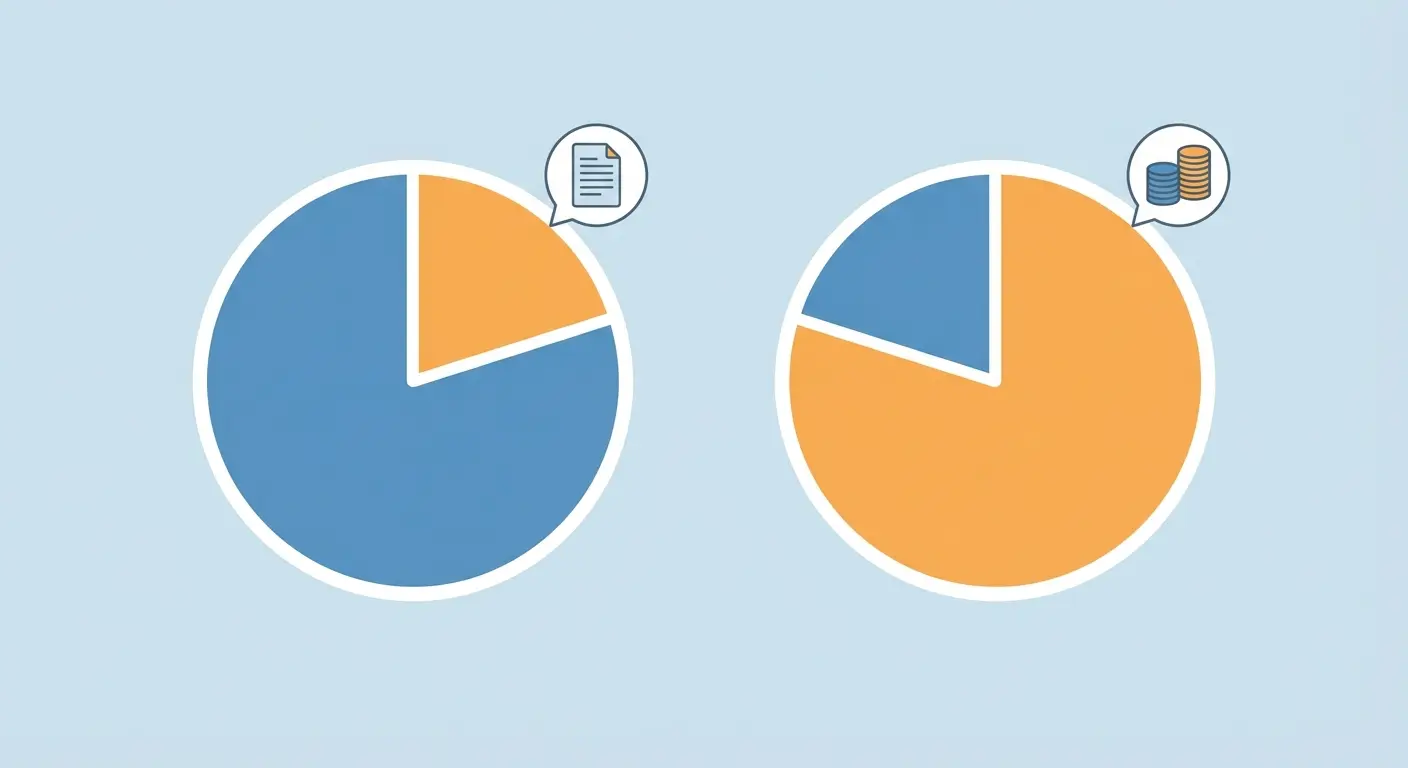
But here’s the thing most affiliate bloggers get completely backwards. They’re publishing 80% educational content and 20% conversion-focused content, when the revenue distribution is inverted.
Your comprehensive guides and tutorials might represent 80% of your traffic, but your comparison posts and buyer’s guides probably generate 80% of your revenue. Plan your content calendar accordingly.
I’ve audited dozens of affiliate marketing blogs and the pattern is consistent: creators spend most of their time on content that builds audience while neglecting the content that monetizes that audience.
Audience Mismatch and the Bookmark Problem
Here’s a pattern you’ve probably noticed in your analytics: high time-on-page for your ultimate guides, but low conversion rates. People are reading, engaging, even bookmarking your content.
They’re just not buying anything.
That’s because they’re early in their journey. Your content is genuinely helpful, which is why they’re engaging with it. But helpful doesn’t always mean profitable in affiliate marketing for bloggers.
You need to build a bridge between your authority content and your conversion content. Internal linking isn’t enough. You need to explicitly guide readers from education to evaluation.
According to a recent analysis by Website Planet, platforms like Wix now offer over 50 affiliate-specific integrations including UTM tracking and conversion analytics tools. This shift reflects the industry’s recognition that affiliate success requires more than just content creation. It demands strategic funnel architecture.
The Intent Gap: Matching Content Types to Buyer Readiness
Forget the traditional marketing funnel for a second. It doesn’t work the way they taught you.
In affiliate marketing for bloggers, you’re dealing with readers at vastly different stages of readiness, and treating them all the same is killing your conversion rates.
The mistake most bloggers make is creating content without considering where their readers are in the buying journey. They publish whatever ranks well or seems interesting, building a disjointed collection of articles that don’t guide readers anywhere.
The Four Stages of Affiliate Content (That Matter)
In affiliate marketing, you’re dealing with four distinct content types, each serving a different purpose:
Discovery content answers “what” and “why” questions. It builds your audience but rarely converts directly.
Evaluation content compares options and explores “which” and “how to choose” questions. This is where interest becomes intent.
Decision content addresses “versus” comparisons and specific product questions. Readers here are ready to buy and need final validation.
Support content helps existing users get more value from products they’ve already purchased (yes, this can still generate affiliate revenue through upgrades and related products).
Each type requires a different approach, different structure, and different expectations for conversion performance.
Search Intent Signals You’re Probably Missing
Certain words in search queries telegraph buying intent more clearly than others. “Best” is overused and increasingly low-intent. Everyone knows “best laptop” articles are affiliate content now, so those searches attract skeptical researchers.
But “vs” or “versus” in a query? That person is comparing specific options they’re already considering. “Worth it” or “is it worth” signals someone seeking validation for a purchase they’re leaning toward.
“Alternative to [specific product]” means they’ve already decided on the category and use case but are price-shopping or feature-comparing. These are gold for affiliate content.

A search for “email marketing software” attracts 22,000 monthly searches with broad, educational intent. A search for “Mailchimp vs ConvertKit for course creators” attracts only 320 monthly searches, but those 320 searchers have already identified their specific use case, narrowed their options to two platforms, and are comparing features for their exact scenario. The second query may deliver 1/70th the traffic, but conversion rates are often 10-15x higher because the searcher is in decision mode, not discovery mode.
Content Structure for Each Stage
Your discovery content should be comprehensive and genuinely educational, with minimal affiliate links. One or two contextual mentions maximum. The goal is building trust and capturing email addresses.
Evaluation content needs more structure: comparison tables, pros and cons lists, clear use-case scenarios. You’re helping people narrow their options, which means you need to be honest about drawbacks and limitations.
Decision content should be laser-focused. Don’t try to cover 20 products. Compare two or three directly, with specific pricing, features, and use cases. Make a clear recommendation and back it up with reasoning.
When you’re updating a comparison post, you need three things: current pricing (with the date you checked), screenshots showing the actual interface, and an honest take on who each tool is actually best for. Everything else is noise.
The Internal Funnel Nobody Builds
You’ve got all these content types scattered across your affiliate marketing blog post library with no intentional connection between them. Someone lands on your beginner’s guide, reads it, and leaves.
Build explicit pathways. At the end of your “what is project management software” post, don’t just link to your “best project management tools” roundup. Create a bridge: “Now that you understand what to look for, here’s how the top three options compare for small teams specifically.”
Your internal linking should mirror the buyer’s journey, not just topical relevance, similar to how effective internal linking case studies demonstrate the power of strategic content connections.
Attribution Breakdown: What Actually Drives Your Affiliate Clicks
Your affiliate dashboard is lying to you.
Well, not lying exactly. More like telling you a technically true thing that leads you to completely wrong conclusions.
It shows you which post got the last click before someone bought. That’s useful. But what about the three other posts that same person read over two weeks before they finally clicked? Those posts warmed them up, built trust, answered their questions.
But you’re giving them zero credit.
So you double down on the posts getting final clicks and ignore (or delete) the posts that are actually doing the heavy lifting of convincing people to buy.
I watched someone do this last year. She deleted a “low-performing” post that got the final click on exactly zero purchases. Three months later her revenue dropped 30%. Turned out that post appeared in the journey before conversion for almost a third of her sales. It was warming people up. She killed it because her attribution model was broken.
Last-Click Attribution Is Killing Your Strategy
According to Wix’s affiliate marketing research, 74% of online shoppers visit multiple affiliate websites before making a purchase decision. This multi-touch behavior means that the content receiving the final click is rarely the only content influencing the purchase. Yet most affiliate marketers optimize exclusively for last-click performance, systematically undervaluing the content that initiates and nurtures the buyer’s journey.
I’ve analyzed hundreds of conversion paths and the pattern is clear: purchases happen after multiple touchpoints, multiple sessions, and multiple pieces of content. Your analytics probably show this as separate sessions. You’re treating them as different visitors when they’re the same person at different stages of their journey.
The Real Customer Journey on Your Blog
Most purchases from affiliate content don’t happen on the first visit. Readers discover your site through an informational post, browse a few related articles, leave, come back a week later through a different post, read your comparison guide, and then finally click an affiliate link.
Set up multi-channel funnel reports in Google Analytics (or equivalent in your analytics platform) to track how many conversions have assisted interactions from other content before the final click, similar to methodologies outlined in advanced analytics for strategic growth.
Content That Converts Versus Content That Assists
Your “ultimate guide” posts might not generate many direct affiliate clicks, but they could be responsible for building the trust that leads to conversions three articles later.
Here’s how to test this: look at your conversion paths. Which content appears most frequently in the journey before a conversion, even if it’s not the final touchpoint?
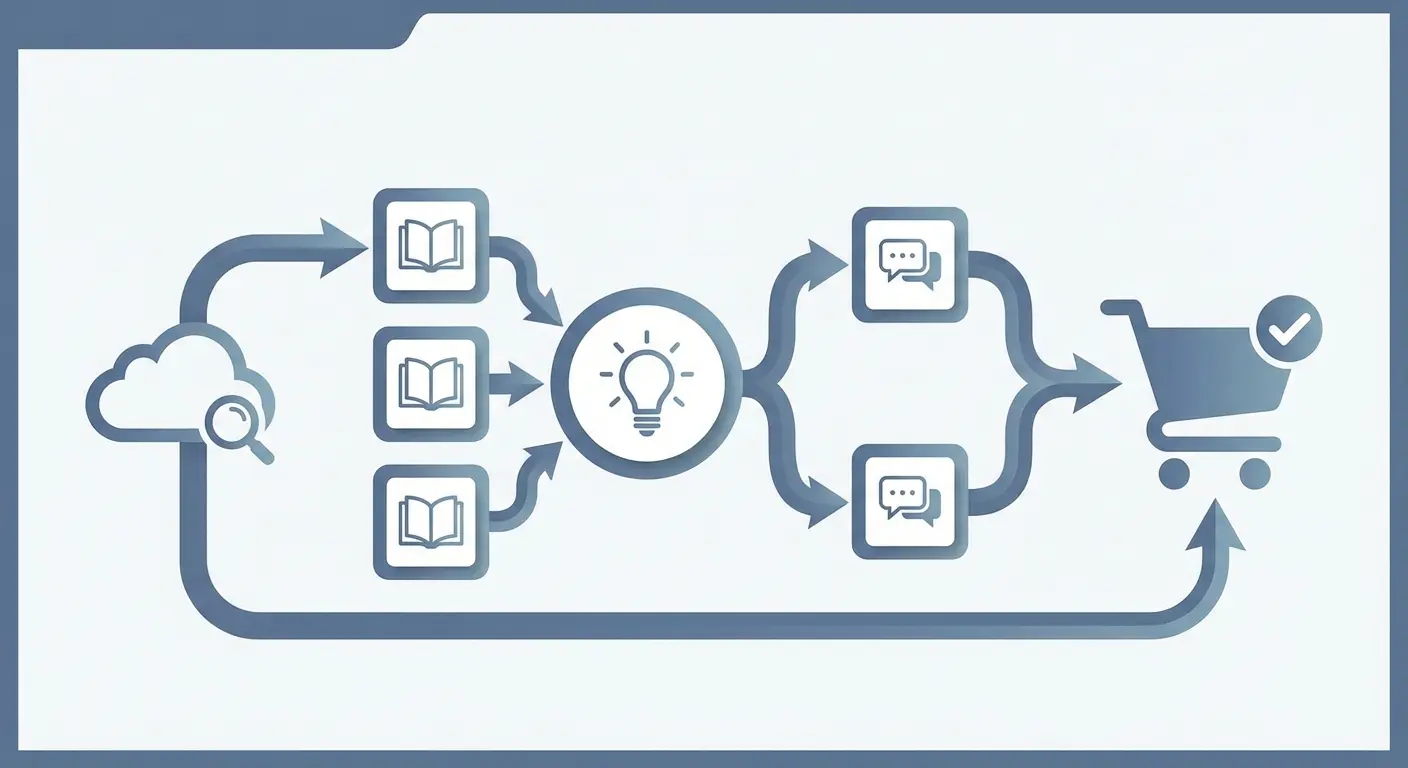
That content is valuable even if it doesn’t show up in your affiliate dashboard’s top performers. Cutting it because it doesn’t “convert” would be like removing the foundation of your house because it doesn’t have any windows.
| Content Type | Direct Conversions | Assisted Conversions | Total Conversion Value | True ROI Assessment |
|---|---|---|---|---|
| Ultimate Guide | 12 | 247 | High | Undervalued in last-click model |
| Comparison Post | 156 | 43 | High | Properly valued |
| Product Review | 89 | 78 | Medium | Moderately valued |
| Beginner Tutorial | 3 | 312 | High | Severely undervalued |
This table illustrates how last-click attribution systematically undervalues high-assist content.
Time Lag and the Patience Problem
Affiliate conversions can take days or weeks from first touch to purchase, especially for higher-priced products or B2B tools.
Your newest content might be performing better than you think, but you’re judging it too quickly. That comprehensive guide you published last month might start showing its real value three months from now when the people who read it are finally ready to buy.
Build time-lag reports to understand your typical conversion timeline. Then adjust your content performance evaluations accordingly. I’ve seen affiliate blogs delete content after 30 days of “poor performance” when the average conversion timeline for that niche was 45-60 days. They were pulling the plug right before the payoff.
Content Decay and the Refresh Strategy Nobody’s Talking About
Your most successful affiliate marketing blog post from two years ago still ranks well and drives traffic. But the product you recommended as “best overall” has been surpassed by newer options, and the pricing you quoted is outdated.
Readers are clicking through to the product page, seeing different information, and bouncing. Your conversion rate on that post has dropped 40% over the past year, but you haven’t noticed because the traffic is still there.
Content decay in affiliate marketing isn’t just about rankings. It’s about accuracy, relevance, and trust. Outdated information kills conversions even when your SEO is solid. This is the invisible revenue leak that most affiliate bloggers never identify because they’re watching the wrong metrics.
Why Your Top Posts Are Secretly Bleeding Revenue
Run these numbers for your own site. They’ll piss you off.
A post that generated $2,000 in commissions last year might be generating $1,200 this year with the same traffic levels. You’re losing $800 annually from that single post, multiplied across your entire content library.
Product features change. Competitors launch better alternatives. Pricing structures shift. Your two-year-old comparison is recommending products based on features that no longer exist at prices that are no longer accurate.
The Refresh Priority Matrix
You can’t update everything constantly. You need a system for prioritizing refreshes based on revenue impact, not just traffic.

Start with your decision-stage content (comparisons, reviews, buyer’s guides). These need quarterly updates at minimum because they directly drive conversions.
Your discovery content can be refreshed less frequently, maybe twice a year, unless there’s been a major shift in the industry or technology you’re covering.
Track your conversion rates by post over time. A declining conversion rate with steady traffic is your signal that content needs updating, even if the rankings haven’t dropped.
Here’s what actually needs your attention:
Update quarterly: Product comparison posts, “best ” roundups, pricing-focused articles, feature comparison tables, current year buying guides.
Update twice a year: Category overview guides, “how to choose” articles, industry trend pieces, tool alternatives lists.
Update annually: Foundational tutorials, concept explainers, historical context pieces, evergreen how-to guides.
What to Update (And What to Leave Alone)
Don’t just update publish dates and call it a refresh. Readers can tell, and Google is getting better at detecting it too.
Check current pricing, feature sets, and availability for every product mentioned. Read recent user reviews to see if sentiment has shifted. Look for new competitors that have entered the market since you last updated.
But here’s what you shouldn’t change unnecessarily: your core recommendations if they’re still valid. Changing your “best pick” every quarter makes you look indecisive or biased toward whoever’s offering the highest commission rate this month.
The Compound Effect of Consistent Updates
Fresh content ranks better, but that’s not the main reason to update your affiliate blog posts regularly. Updated content converts better because it’s accurate and trustworthy.
A visitor who sees current pricing and recent publish dates is more likely to trust your recommendation and click through. They’re not second-guessing whether the information is still valid.
This compounds over time. Your regularly-updated posts build a reputation for reliability, which increases conversion rates across your entire site as readers learn to trust your content.
A recent industry report from Taboola found that affiliate marketers can achieve an average return on ad spend (ROAS) of 12:1 through strong publisher partnerships. However, the same research revealed that up to 28% of marketing executives don’t know the effect that affiliate marketing has on their revenue. That’s a knowledge gap often caused by failing to track content decay and its impact on conversion rates over time.
The Segmentation Problem: One Blog, Multiple Revenue Streams
You’re writing about email marketing tools for solopreneurs, enterprise marketing automation platforms, and free newsletter services all on the same blog.
Each of these audiences has different needs, budgets, and decision criteria. When an enterprise marketing director lands on your site and sees content primarily aimed at solopreneurs, they leave. You’ve lost a high-value conversion because your positioning is muddled.
Your blog needs clearer lanes, even if you’re covering the same general category. The lack of segmentation is confusing your best prospects and diluting your conversion potential across every audience segment you’re trying to serve.
Why Your Positioning Is Confusing Your Best Prospects
I’ve seen this play out repeatedly: an affiliate marketer for bloggers creates comprehensive content covering tools at every price point, from $10/month solutions to $5,000/month enterprise platforms.
The result? Nobody feels like the content is for them.
The solopreneur thinks you’re too focused on complex enterprise needs. The enterprise buyer thinks you’re too basic. Both leave to find content that speaks directly to their situation.
Revenue Concentration and the 80/20 Reality
Pull your affiliate earnings by product category or audience segment. I’m willing to bet 80% of your revenue comes from 20% of your content aimed at a specific audience type.

You’re spending equal effort creating content for all your segments when you should be doubling down on the one that pays your bills.
Look, I’m not saying abandon other segments entirely. But be honest about where your revenue comes from and allocate your content creation time accordingly.
Data from Wix shows that nearly three in five (58%) brands and agencies report that affiliate marketing helped them increase brand awareness. But when it comes to revenue generation, the distribution is rarely even across audience segments. Most successful affiliate marketers discover that a small percentage of their audience segments generate the vast majority of their commissions, yet they continue spreading effort equally across all segments.
Creating Distinct Content Paths
Consider structuring your blog with clear sections or categories for different audience maturity levels or use cases. “For Small Teams,” “For Enterprises,” “For Beginners,” whatever makes sense.
This serves two purposes: it helps readers self-select into the content that’s relevant to them, and it helps you maintain focus when creating content for each segment.
Your internal linking should generally keep readers within their segment until they’re ready to move up or down the sophistication ladder.
I worked with a project management software affiliate blog last year. They segmented content into three distinct paths: “For Freelancers” (promoting tools under $15/month), “For Growing Teams” (promoting tools in the $50-200/month range), and “For Agencies” (promoting enterprise solutions $500+/month). Each path had its own comparison posts, feature guides, and recommended tools. A freelancer reading a comparison between Trello and Asana never saw content about enterprise solutions they couldn’t afford, while an agency decision-maker immediately found content relevant to their budget and team size. This segmentation increased overall conversion rates by 34% because each visitor received recommendations aligned with their purchasing power.
The Niche-Down Dilemma
Conventional wisdom says to niche down as much as possible. But in affiliate marketing, going too narrow can limit your revenue potential because you run out of products to promote and keywords to target.
The sweet spot is narrow enough that you have a clear audience with specific needs, but broad enough that you have room to grow and multiple revenue streams within that niche.
You’re looking for “project management for creative agencies” rather than “project management software” (too broad) or “project management for freelance graphic designers using Macs” (too narrow).
Measuring What Matters: Beyond Click-Through Rates
You’ve optimized your affiliate links to achieve a 5% click-through rate. That sounds impressive until you realize that only 2% of those clicks result in purchases.
You’re celebrating the wrong metric. A 3% CTR with a 10% post-click conversion rate generates more revenue than a 6% CTR with a 2% post-click conversion rate.
Focus on the full funnel, not just the part you control directly. Your affiliate network or program dashboard shows you conversion rates on the clicks you send. Start tracking that data alongside your CTR.
Why CTR Is a Vanity Metric
Click-through rate tells you how compelling your calls-to-action are. That’s useful information, but it’s incomplete. What you need to know is how many of those clicks turn into actual purchases.
I’ve audited affiliate blogs with impressive CTRs that were sending completely unqualified traffic to merchant sites. High clicks, low conversions, minimal revenue.
Revenue Per Visitor: The Only Metric That Matters
Take your total affiliate earnings for a specific post and divide it by the total number of visitors that post received. That’s your revenue per visitor (RPV).
This single metric accounts for everything: traffic quality, conversion rate, average order value, and commission structure. A post with 1,000 visitors and $500 in commissions (RPV of $0.50) is more valuable than a post with 10,000 visitors and $2,000 in commissions (RPV of $0.20).

Track RPV monthly for each of your key posts. When it drops, investigate why. When it rises, figure out what changed so you can replicate it.
The Metrics Dashboard You Should Build
Stop obsessing over your Google Analytics dashboard showing pageviews and bounce rate. Build a spreadsheet that tracks what matters for revenue when learning how to make an affiliate marketing blog that converts.
For each major post, track: monthly visitors, affiliate clicks, confirmed conversions (from your affiliate dashboard), total commissions earned, and RPV. Update it monthly.
Add a column for conversion rate trends. If your clicks are steady but conversions are dropping, your content might be outdated or the product you’re promoting has quality issues that are causing buyer’s remorse and returns.
Post-Click Behavior and the Blind Spot
Most affiliate marketers have no idea what happens after someone clicks their affiliate link. You send the click, wait for the conversion notification, and that’s it.
Some affiliate networks provide post-click analytics. Use them. How long are visitors staying on the product page? Are they adding to cart but not completing purchase? Are they bouncing immediately?
This data tells you whether you’re sending qualified traffic or just sending clicks. If people are bouncing immediately after clicking through, your content might be misrepresenting the product or attracting the wrong audience.
If you’re using Google Analytics 4, you can import conversion data from some affiliate networks to track revenue, not just clicks. This requires some technical setup, but it’s worth it. You’ll see which traffic sources and content types generate not just clicks, but revenue.
Your SEO strategy should optimize for revenue-generating keywords, not just traffic-generating keywords, similar to approaches detailed in comprehensive SEO case studies.
Seasonal Patterns and Budget Cycles
Your affiliate revenue probably has patterns you haven’t fully mapped. B2B tools see budget cycles (end of quarter, end of year). Consumer products have holiday patterns.
Track your revenue by month over multiple years. You’ll spot patterns that should inform your content calendar. Publish your comparison posts for business software in November and December when companies are making budget decisions for the next year.

Don’t publish your big gift guide in December. Publish it in October when people are starting to research. By December, they’ve already decided based on someone else’s October content.
Research from NewMedia reveals that affiliate marketing delivers an average ROI of 12:1, one of the highest across digital channels. However, this impressive return only materializes when marketers track the right metrics. Nearly 65% of affiliate marketers report that their programs generate at least 20% of overall company revenue, but this concentration only becomes visible when you move beyond surface-level metrics like pageviews and CTR to track revenue per visitor and conversion completion rates.
Working with The Marketing Agency
You’ve got traffic, you’ve got content, but you’re still not sure which pieces of your strategy are working.
That attribution problem we talked about earlier? It’s not just theoretical. It’s costing you real money every month you misallocate your content budget.
We work with affiliate marketers and content businesses to build attribution models that reveal the full customer journey on your site, similar to methodologies we’ve developed through proven marketing case studies.
Our approach is rooted in data, not guesswork. We’ll help you set up tracking that shows the real relationship between your traffic and your revenue, so you can make content decisions based on ROI rather than vanity metrics.
If you’re tired of optimizing for traffic that doesn’t convert, let’s talk. Our team can audit your current content performance, identify the gaps in your conversion funnel, and build a strategy that prioritizes revenue over rankings when implementing affiliate marketing on your blog.
Final Thoughts
The hardest part of shifting your affiliate strategy isn’t the tactical changes. It’s letting go of the metrics you’ve been chasing for years.
Traffic feels good. Watching your visitor count climb month over month provides tangible evidence that you’re making progress. But progress toward what? If your revenue isn’t climbing proportionally, you’re just getting better at attracting people who won’t buy from you.
Look, I’m not saying your existing content is worthless. You need to understand what each piece of content is accomplishing. Your beginner’s guide might not convert directly, but if it’s consistently appearing in the path to conversion, it’s valuable. Your comparison post might have lower traffic, but if it’s generating 60% of your revenue, it deserves more of your attention and update schedule.
Start with one change: track revenue per visitor for your top 20 posts for the next three months. You’ll learn more about what’s working than you’ll learn from any amount of time spent in Google Search Console looking at impressions and clicks.
The affiliate blogs winning right now aren’t the ones with the most traffic. They’re the ones that figured out how to attract fewer people who are more likely to buy. Understanding how to make an affiliate marketing blog that converts means focusing on buyer intent, proper attribution, and revenue metrics rather than vanity traffic numbers.