



Let’s be real: market timing is rarely perfect. But if you look at the numbers right now, the door is wide open for new players who actually know what they’re doing. About 55% of companies are already outsourcing their PPC management services, and with global search ad spend projected to hit $351.5B in 2025 (according to GigRadar), the money is on the table.
The demand isn’t the issue. The real problem? It’s not finding clients; it’s building a PPC business that can handle those clients without imploding. Most agencies fail because they drown in operational chaos, not because they can’t run an ad.
Table of Contents
We’ve laid this guide out to follow the actual lifecycle of an agency, from that first “aha” moment to planning your exit. Jump to the section that matches where you’re currently stuck:
-
Defining the Agency Identity and Business Model
-
Building the Operational Infrastructure
-
Client Acquisition and Retention Dynamics
-
Financial Health and Scaling
-
The Marketing Agency Perspective
-
Final Thoughts
TL;DR
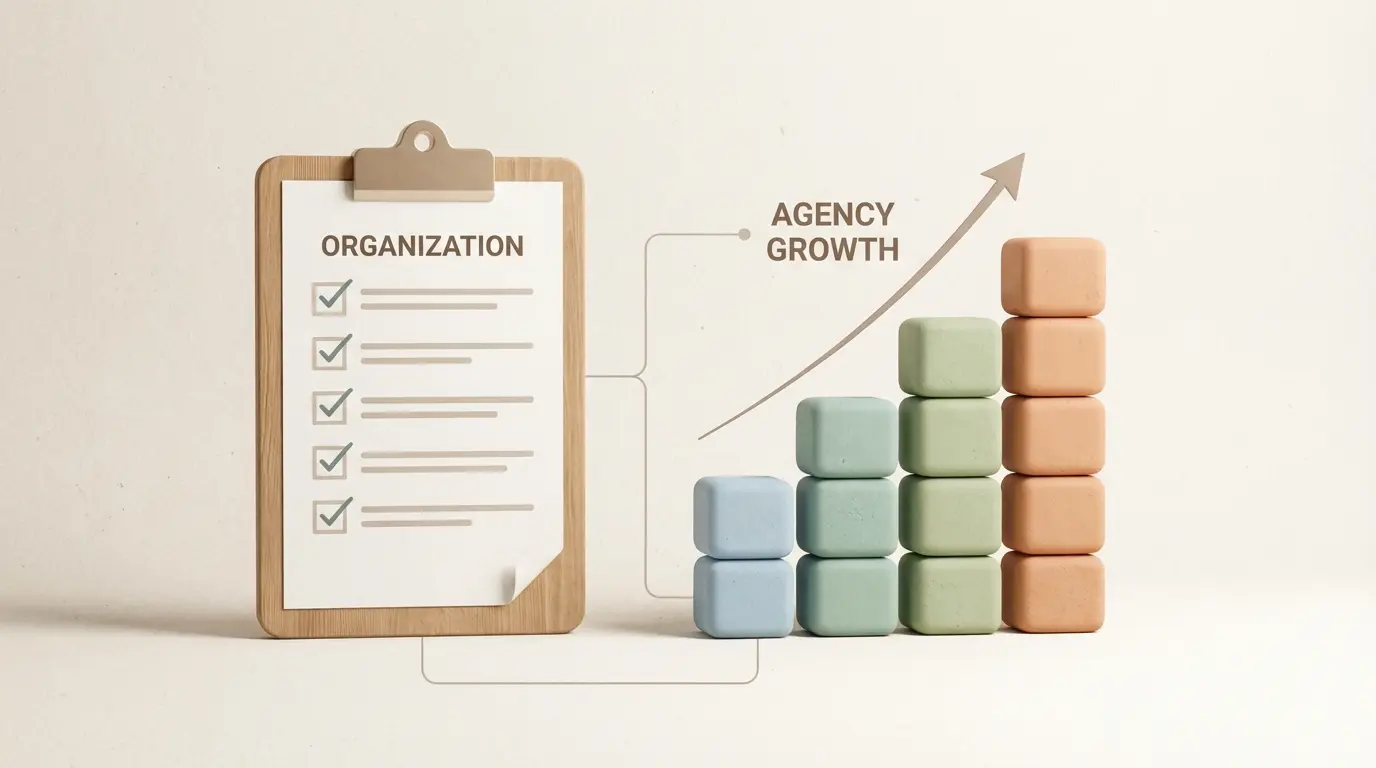
We know you’re busy. If you just want the cheat sheet on how to start a ppc agency without the fluff, here are the core principles that will save you a lot of headaches regarding niches, cash flow, and tech.
-
Niche down: Specialization beats being a jack-of-all-trades every time. Pick a vertical or platform so you can charge more and stress less.
-
Protect your cash: Never, ever front client ad spend on your own credit cards. Manage your liability, or one bad client will bankrupt you.
-
Systems over heroes: You can’t scale if you’re the only one who knows how to do things. Document your SOPs before you hire anyone.
-
Talk data, not deliverables: Retention happens when you explain the “why” behind the numbers, not just when you email a PDF report.
-
Future-proof now: Start optimizing for AI and LLMs immediately so your clients show up in generative search results.
Defining the Agency Identity and Business Model
You can’t help everyone, and you shouldn’t try. Before you launch, you need to figure out exactly who you serve and how you get paid. The “spray and pray” method—taking any client with a pulse and a credit card—is the fastest route to burnout. You wouldn’t launch a PPC campaign without targeting settings, right? Don’t launch your business without them either. When figuring out how to start a ppc agency, knowing who you are is step one.
Niche vs. Generalist Positioning
This is your first big fork in the road: do you service everyone, or do you specialize? Specializing lets you charge premium fees and streamline your work because you aren’t reinventing the wheel for every new account. Being a generalist gives you a bigger pool of potential clients, but the operational complexity usually creates a nightmare for your margins.
The data backs up the specialist route. Start small. Focus on one niche and one service. 80% of agencies that do this see higher demand, as noted by GigRadar. Clients want experts, not generalists.

If you look at the 10 best PPC agencies, you’ll see a pattern: the big winners dominated a specific sector before they ever thought about branching out. They earned the right to expand by winning in a small pond first.
Vertical Expertise
Picking a specific vertical lets you template your success. Look for industries with high customer lifetime value (LTV) but terrible ad standards. If you pick Real Estate, for example, you aren’t just selling “PPC management.” You’re selling qualified homebuyer leads. That lets you speak the client’s language, not just Google’s language.
Platform Specialization
Alternatively, specialize by platform. Become the absolute master of one tool before touching another. Being “The Google Shopping Expert” is way easier to sell early on than being a “Full-Stack Digital Marketer.” Clients trust specialists because they believe you know the secret sauce that solves their specific problem.
Structuring the Revenue Model
How you price determines your cash flow and your relationship with the client. You need a model that aligns your incentives with their success but still protects your bottom line.
|
Pricing Model |
Pros |
Cons |
Best For |
|---|---|---|---|
|
% of Ad Spend |
You grow as they scale; it’s the industry standard. |
Revenue takes a hit if they cut budget; bad for small accounts. |
Established agencies with big-budget clients. |
|
Flat Retainer |
Predictable cash flow; easy to plan around. |
Scope creep is real; you don’t automatically earn more if they grow. |
New agencies that need stability. |
|
Performance |
Huge earning potential; very easy to sell. |
High risk; income rollercoasters; arguments over attribution. |
Advanced media buyers who control the whole funnel. |
|
Hybrid (Base + %) |
Covers your costs but leaves room for upside. |
A bit harder to explain and invoice. |
Scaling agencies protecting their margins. |
Percentage of Ad Spend
This is the classic model. It scales your revenue as the client scales their budget. Just make sure you set a minimum floor to keep things profitable. A common structure is “15% of spend or $1,000, whichever is higher.” This protects your time when managing smaller accounts that still need a lot of love.

Flat Retainer Fee
A steady monthly fee based on the scope of work creates stability. Just be careful—create tiered packages based on the number of campaigns or ad groups. If you don’t, scope creep will eat you alive.
Performance-Based Pricing
Here, you get paid per lead or sale. High risk, high reward. Only do this if you control the landing page and the tracking. You also need historical data to prove the math works. Without control and data, you’re just gambling with your time.
Legal and Administrative Foundation
You need to look legit to handle other people’s money. You need a legal shield and clear contracts to operate without looking over your shoulder.
The “Cover Your Butt” Checklist:
-
[ ] Entity Registration: File your LLC. Do it now.
-
[ ] EIN Acquisition: Get your Employer Identification Number from the IRS so you can open a bank account.
-
[ ] Business Banking: Open a dedicated business checking account. Never mix business and personal funds.
-
[ ] MSA Drafting: Create a Master Services Agreement that covers payment terms and how to fire each other.
-
[ ] Liability Clause: Make sure your contract explicitly says you are not liable for ad platform charges.
Entity Formation
Do not run this as a sole proprietorship if you are touching ad budgets. Register an LLC or Corporation to keep your personal assets safe. If a client disputes a massive ad spend bill, you don’t want your personal savings on the line.
Partner Agreements
Contracts need to be crystal clear on who owns the ad account and when you get paid. Your Master Services Agreement needs an Ad Spend Liability clause. You should never be on the hook for the client’s media bill. Also, the ad account should always belong to the client—it builds trust and transparency.
Building the Operational Infrastructure
A PPC agency is just a collection of workflows. If you don’t have infrastructure, you’ll cap out at 5-10 clients before you burn out. This is the unsexy part of how to start a ppc agency, but it’s the most important.
The Technical Ecosystem
You need a software stack to manage bids, report results, and make sense of the data. Native ad platforms aren’t enough anymore.

Reporting Tools
Clients care about the story, not the spreadsheet. Automate your reporting with tools like Looker Studio or AgencyAnalytics. Set these up to show ROI and ROAS, not vanity metrics like impressions. The report needs to answer one question: “What did I get for my money?” To really impress them, use a marketing ROI calculator to show the exact financial impact of your work.
Click Fraud Protection
In competitive niches, bots will eat your budget. Use software like ClickCease to block the junk. This is a great value-add to sell to clients—it shows you’re actively guarding their wallet.
CRM Integration
PPC doesn’t stop at the click; it stops when the cash register rings. Connect Google Ads to CRMs like HubSpot or Salesforce. Use Offline Conversion Import so you can optimize for actual revenue, not just leads. This connects your work directly to their bottom line.
Workflow and Fulfillment
How does the work actually get done? Who pushes the buttons, and how do you make sure they don’t mess it up?
White Labeling vs. In-House
Decide early: are you hiring staff or using a white-label partner? If you’re a sales machine, find a white-label partner to do the work. If you’re a technical wizard, do it yourself until you’re at capacity.
A heads-up from Vocal.media on why these partnerships can get rocky: “PPC doesn’t fail because clicks stop coming. It fails because pressure shows up faster than trust.” Pick your partners wisely.
The White Label Math: You land a Dentist for $1,500/month. You pay a White Label partner $600/month to run the ads. You keep $900 and just manage the relationship. If you do it in-house, you keep the whole $1,500, but you lose 5 hours a week managing the account. What is your time worth?
Standard Operating Procedures (SOPs)
Write everything down. Create checklists for Onboarding, Weekly Optimization, and Monthly Reporting. It’s the only way you’ll ever be able to hire someone to replicate your results. Consistency is your product.
Weekly Optimization Cheat Sheet:
-
Budget Check: Are we spending too fast or too slow?
-
Search Term Review: Nuke the irrelevant terms (Negative Keywords).
-
Bid Adjustments: Bid up on winners, bid down on losers.
-
Ad Copy Review: Pause the worst ad, write a new challenger.
-
Quality Score Audit: Fix anything with a QS below 5.
Quality Assurance Protocols
Mistakes in PPC cost real money, instantly. Implement a “four-eyes” policy where a second person (or a detailed checklist) reviews everything before it goes live. Catching an error internally is way better than the client catching it on their credit card statement.
AI and LLM Optimization
You have to optimize for the machines now. Structure your client data so it’s readable by Large Language Models like ChatGPT and Gemini. You want your client’s brand to show up in AI-generated answers.
As Search Engine Land puts it, we’re moving toward “Agentic AI… where execution increasingly moves to AI – while marketers focus on strategy.” You need to understand generative engine optimization to ensure your clients are the ones being recommended by the AI.

Client Acquisition and Retention Dynamics
Getting clients takes trust; keeping them takes results. Here is the lifecycle of a client relationship.
Inbound Marketing for Agencies
You have to practice what you preach. Your agency’s marketing is your ultimate case study. A scaling system relies on inbound via content/SEO (14.6% close rate), social media, and paid funnels, according to GigRadar.
Content Strategy
Show, don’t just tell. Publish case studies that break down the Problem, Solution, and Result. Show the math. Clients want to see that you understand the mechanics. A detailed PPC case study that proves you know how to hit a specific ROAS is worth ten sales pitches.

SEO for Agencies
Rank for what your clients are searching for. Create “Vs” pages—like “Google Ads vs. Facebook Ads for Plumbers”—to catch people who are ready to buy.
The Sales Process
Selling PPC services is basically selling money at a discount. You’re convincing a client that giving you $1 will get them $3 back.
The Audit/Strategy Call
Don’t pitch; diagnose. Offer a free audit. Look for wasted spend—missed negative keywords, bad geo-targeting. Pointing out waste pays for your fee and builds instant trust.
The Audit Pivot: You’re on a call with an HVAC guy. You see he’s bidding on “Home Depot air conditioner prices.” You say, “Hey, you’re paying $15 a click for people looking to buy a cheap box unit, not your installation service. If we pause that one keyword, I save you $600 a month right now.” Boom. You just justified your fee in 30 seconds.
Proposal Construction
Proposals are roadmaps. Give them three budget tiers. Show the projected traffic and conversions for each. It gives them control while guiding them to the right choice.
Pricing Psychology
Frame your fee against the upside. It’s not a cost; it’s the investment required to manage the ad spend efficiently. Focus on the net return.
Onboarding Excellence
The first 30 days make or break the relationship. If it’s messy now, they’ll churn later.

Access and Permissions
Make the tech handoff smooth. Use a form to collect Google Ads Customer IDs, Analytics access, and Merchant Center access all at once. Chasing passwords is a waste of your life.
Goal Setting
Agree on what “winning” looks like. Define a primary KPI (like Cost Per Acquisition) and a timeline. Manage expectations now so they aren’t disappointed later.
Client Retention Strategies
It is way cheaper to keep a client than to find a new one. Be transparent and keep the strategy moving.
Reporting Cadence
Consistency builds trust. Get on a video call once a month to review the report. Don’t just send a PDF; interpret the data. They pay you for the context.
Upselling Services
Expand the account. If PPC is working, pitch Email Marketing to squeeze more value out of those leads. It makes you stickier.
Attribution Modeling
Prove your worth beyond the last click. Move clients to Data-Driven attribution. Show how your top-of-funnel ads helped the final sale. It reveals your true value.
Financial Health and Scaling
Turning a freelance gig into a real agency takes financial discipline. This is where the people who know how to start a ppc agency separate themselves from the people who just know how to run ads.
Cash Flow Management
PPC agencies die from cash flow issues, usually because they front ad spend.
|
Cash Flow Scenario |
Risk Level |
Mitigation Strategy |
|---|---|---|
|
Fronting Ad Spend |
Critical |
Never do this. If the client ghosts you, you owe Google the money. |
|
Arrears Billing (Net-30) |
High |
You work for 30 days before invoicing? No thanks. Use auto-charge. |
|
Upfront Retainer |
Low |
Charge the fee on the 1st of the month before you lift a finger. |
|
Project-Based |
Medium |
50% deposit to start, 50% on launch. |
Managing Ad Spend Float
I cannot stress this enough: never put client ad spend on your card unless you have massive credit lines and iron-clad contracts. Ideally, put the client’s card on the ad platform. It removes the risk of you getting stuck with the bill.

Invoicing Cycles
Charge management fees upfront. Do not work in arrears. Get paid for the time you are about to commit.
Hiring and Team Building
Scaling takes people. Knowing who to hire first is the trick.
The First Hire
Don’t hire a media buyer first; hire a project manager or admin. Get rid of the scheduling, billing, and reporting tasks so you can focus on strategy and sales.
The Project Manager Unlock: You spend 10 hours a week on admin. You hire a virtual PM for $20/hour ($800/month). You buy back 40 hours of your life. If you use that time to close just one $1,500 client, that hire paid for itself twice over.
Media Buyers vs. Account Managers
Technical skills and people skills are different. Hire introverted data nerds for buying and organized extroverts for client comms. Unicorns who do both are rare (and expensive).

Remote vs. Local Talent
Use geo-arbitrage. Hire great technical talent in lower cost-of-living areas. Just make sure their English is perfect if they are client-facing.
Exit Strategy and Valuation
Build this thing like you plan to sell it. It forces you to build systems, not just a job for yourself.
Valuation Metrics
Agencies are valued on EBITDA and recurring revenue. Focus on Monthly Recurring Revenue (MRR) contracts, not one-off projects. MRR boosts your valuation multiple.
Building Asset Value
IP increases value. Build proprietary scripts, reporting dashboards, or a unique methodology. These are assets that stay with the business even if you leave.
The Marketing Agency Perspective
If this roadmap looks intimidating, it’s because running a high-performance PPC agency takes a mix of obsessive curiosity and hard data science. That is exactly where The Marketing Agency lives. While you’re learning how to start a ppc agency, you can look to us as a benchmark for what a mature operation looks like.
Check out our full agency case study to see how we put these systems into practice.
We offer PPC services ranging from $750 to $5,000 per month. As a new agency, use that to gauge where you fit. Are you the budget option, or can you match the data-backed strategies that justify premium pricing?
We always tell people: if you want fast traction, use PPC. But to maximize ROI, you need Email Marketing and Inbound Marketing too. A real digital marketing agency understands the whole ecosystem. Attribution modeling validates the need for the technical infrastructure we talked about earlier.
We are already implementing LLM Optimization to make sure brands show up in AI search results. If you’re starting today, this isn’t optional. It’s the new baseline.
Maybe you’re great at sales but lack the technical depth. Our focus on proprietary systems makes us a perfect example of the White Label partner mentioned earlier. We don’t guess; we use science to boost the bottom line.

Whether you build this yourself or partner with experts like The Marketing Agency, the goal is the same: stop gambling on marketing and start thriving on data.
Final Thoughts
Starting a PPC agency isn’t about writing the best ad copy. It’s about being the best at managing expectations, data, and money. You have the blueprint now. The difference between the agencies that crash and burn and the ones that exit for millions is in the boring details—the contracts, the tracking pixels, and the cash flow. Now, go build your machine.