



So, you want to move from freelancer to agency owner. It’s the natural progression. You’re good at what you do, you’re maxed out on hours, and you want to scale. But there is a massive difference between being a great writer and running a great business. This guide isn’t just about picking a logo; it’s about the operational, financial, and psychological shifts you need to make to survive.
With 85% of businesses having seen an increase in demand for content in the last year, the opportunity is right there for the taking. But if you don’t structure this thing correctly from day one, you’re just building yourself a job you can’t quit.
The “Too Long; Didn’t Read” Version
If you’re in a rush and just want the fast track, here is the reality of building an agency that lasts past its first birthday. These are the rules you need to memorize:
-
Shift your focus immediately from “freelancer output” to building an asset-based infrastructure.
-
Choose a hybrid retainer model. You need cash flow stability, but you also need creative flexibility.
-
Pick a niche. Generalist agencies get killed in price wars; specialists name their price.
-
Protect your runway with strict financial terms like Net 15 or upfront payments.
-
Use AI for research and structure to become a “content engineering” firm, not just a writing shop.
-
Sales require a mix of “building in public” and high-utility video audits.
-
Retention comes from proving ROI through data attribution, not showing off vanity metrics like page views.
Building the Foundation: Mindset and Mechanics
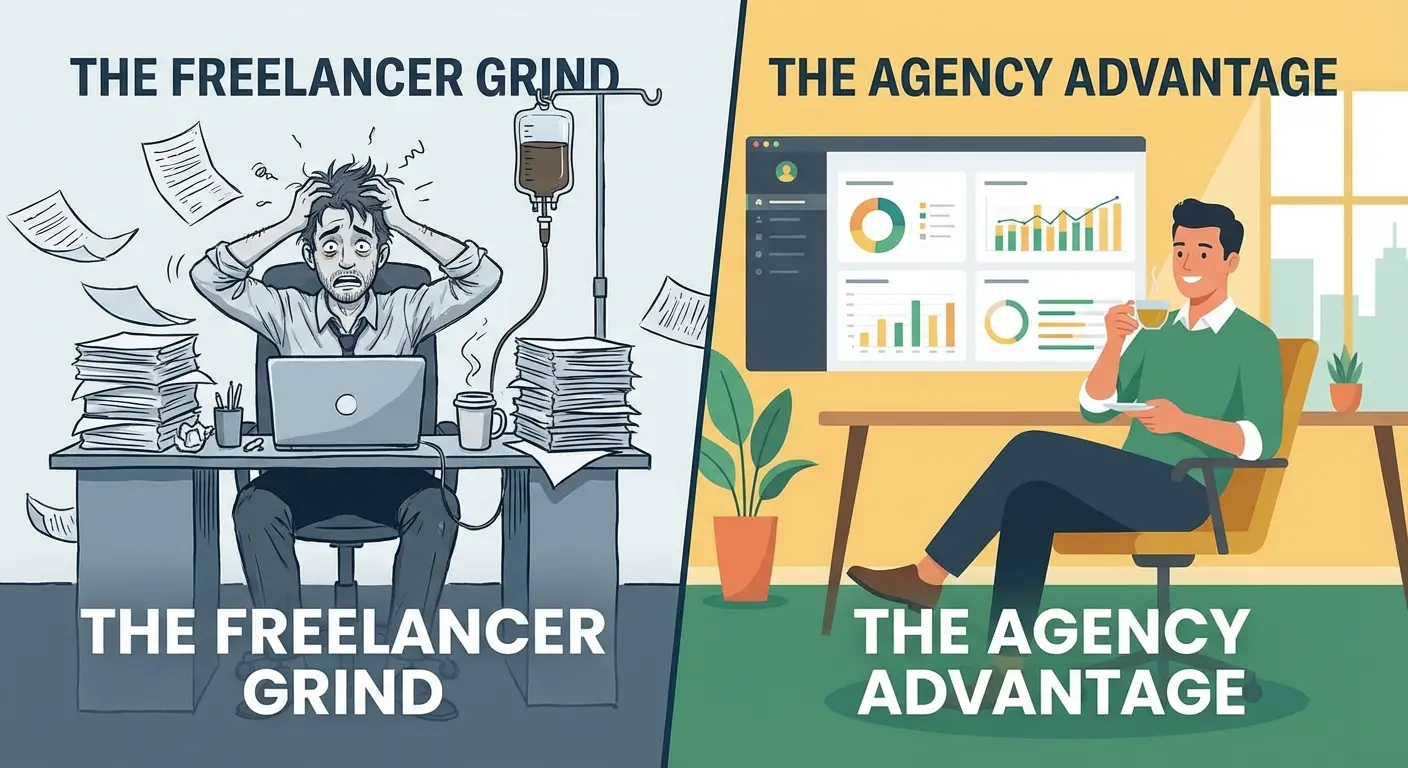
Before you hire a single person or sign a client, you need to fix your business mechanics. You can’t build a skyscraper on a swamp. The biggest hurdle here is usually psychological: you have to stop selling “time” and start selling “assets” and infrastructure.
Factory Line or Custom Studio?
This is the first major fork in the road. How are you packaging your brainpower? You have to decide if you are running a high-volume production line or a high-touch strategy room. Your choice here dictates your costs and your margins.
|
Feature |
Productized Services |
Bespoke Strategy |
The Hybrid (Recommended) |
|---|---|---|---|
|
Primary Deliverable |
Fixed assets (e.g., 4 blogs/mo) |
Custom consulting & solutions |
Retainer base + points system |
|
Sales Cycle |
Short (Transactional) |
Long (Relationship-based) |
Medium (Consultative) |
|
Scalability |
High (Factory model) |
Low (Requires senior talent) |
High (Standardized yet flexible) |
|
Profit Margin |
Volume-dependent |
High per-unit, lower volume |
Balanced & Recurring |
|
Client Perception |
Vendor/Commodity |
Strategic Partner |
Agile Partner |
Productized Services vs. Bespoke Strategy
Fixed-scope packages make operations easy, but you hit a ceiling on what you can charge. Bespoke strategy allows for huge retainer fees, but “scope creep” and non-billable meetings will eat you alive if you aren’t careful. You need to know which game you are playing.

The Sweet Spot: The Hybrid Model
For most new agencies, the best path blends the two. Charge a recurring base fee for account management and strategy, then use a points-based system for deliverables. This protects your cash flow and lets you pivot from blog posts to white papers month-to-month without having to renegotiate the contract.
Pick a Niche (Seriously, Do It)
The fear of missing out keeps many agency owners from niching down. But here is the truth: Generalists struggle to compete on value, so they end up competing on price. You need to select a vertical where you can claim deep expertise, whether that is SaaS, Real Estate, or Fintech.
To see how the big players do it, analyze the top content marketing agencies currently dominating the market—they almost all have a specific “thing.”
Recent industry movements highlight this. A listicle from Nerdbot regarding the “10 top-rated digital marketing agencies in Chicago” shows that the winners are the ones who carved out an identity, like Digital Third Coast focusing on SEO/PR or INSIDEA specializing as a HubSpot Diamond Partner.
Vertical vs. Horizontal Specialization
Focusing on a specific industry (Vertical) reduces the learning curve. If you master local SEO for Real Estate, you become the go-to expert rather than just another vendor. Alternatively, you can specialize in a format (Horizontal), like video-first content or B2B white papers, positioning yourself as a technical expert across industries.

The “Blue Ocean” Audit
Don’t just pick a niche because it sounds cool. Validate it. Conduct a competitor audit to find industries that have money but look terrible online.
Here is how you do it:
Imagine you are targeting “Supply Chain Logistics.”
-
Search: Google “Supply Chain Management Software Blog.”
-
Analyze: Look at the top 5 results. Are they posting generic updates? Is the website design from 2015?
-
Verdict: If the competitors have high revenue (expensive software) but low-quality content, you have found a “Blue Ocean.” You can enter this market and dominate quickly because the bar is set so low.
The Money Talk
Agencies don’t die because they aren’t profitable; they die because they run out of cash. You need to establish a pricing floor that covers production plus the “invisible” costs of software, sales, and admin time. Profitability is a math problem, not a feeling.
Before you send that first proposal, run your numbers through a marketing budget calculator to ensure your pricing aligns with reality while maintaining your margin.
Watch Your Effective Hourly Rate (EHR)
Flat fees can be a trap. If you charge a $2,000 retainer but it takes you 40 hours to fulfill, you are earning $50/hour. After overhead and taxes, that is likely less than you made as a freelancer. You have to track your internal hours to know if you are actually scaling or just drowning.
Cash Flow Management
Get paid faster. Advocate for strict payment terms, like Net 15 or upfront payment for the month. You should never finance your client’s marketing with your own bank account.
Operations: Building the Machine
Strategy is useless without execution. You need a workflow that runs even when you aren’t looking at it. This section covers the tools and systems required to scale without sacrificing quality.
Workflow and Project Management
If the process only lives in your brain, you can never scale. You need a centralized “source of truth” for every task. This is critical because forty-five percent of B2B marketers lack a scalable model for content creation, and that chaos is the primary bottleneck to growth.
You need the right tools. Check out a comprehensive SEO content tools review to pick the platforms that fit your specific workflow.
The Magic of SOPs (Standard Operating Procedures):
Document everything. If you get hit by a bus (or just want to take a nap), can someone else publish a blog post? If not, write an SOP.
-
Process Name: Blog Post Publishing
-
Trigger: Draft approved by Editor
-
Steps:
-
Upload text to WordPress.
-
Set H1, H2, and H3 tags.
-
Add Alt Text to all images.
-
Input Meta Description.
-
Check internal links.
-
-
Done: Post is live and URL is shared in Slack.

Client Portals and Asset Management
Transparency builds trust. Use project management tools to give clients a “view only” window into progress so they aren’t emailing you for status updates every day.
Also, organize your files. Rigid naming conventions and folder structures ensure your team never wastes billable hours looking for “final_final_v3.docx.” Efficiency is where your margin lives.
Embrace the Robots (But Don’t Let Them Drive)
You can’t ignore AI. Modern agencies must leverage Large Language Models (LLMs) to optimize research and structure. We are moving from “content writing” to “content engineering.” AI isn’t here to replace your writers; it’s here to make them significantly more powerful.
LLM Optimization for Search
Standard SEO isn’t enough anymore. You need to structure content to be readable by AI discovery engines like ChatGPT or Gemini. This represents the future of search, often called generative engine optimization, which focuses on ranking in AI answers rather than just blue links.
Automated Reporting and Prediction
Stop manually building reports. Connect APIs to a dashboard to give real-time visibility. Use AI tools to analyze datasets and predict trending topics so your clients can capture traffic before their competitors even wake up.
The AI-Enhanced Content Brief
Don’t just tell a writer to “write about cloud security.” Use AI to generate a comprehensive brief. This ensures writers start with a data-backed outline and cuts revision cycles in half.
Example Brief:
-
Primary Keyword: Cloud Security Solutions
-
User Intent: Informational/Commercial Investigation
-
Semantic Entities: Encryption, zero trust, AWS vs. Azure.
-
Competitor Gap: “Competitors miss HIPAA compliance—add a section on this.”
-
Structure: H2: Why Legacy Firewalls Fail; H2: The Rise of Zero Trust.

Getting Clients: The Sales Engine
Knowing how to start an agency is useless if you can’t acquire clients. You need a pipeline that attracts high-value partners who value expertise, not bargain hunters looking for cheap labor.
Inbound: Build in Public
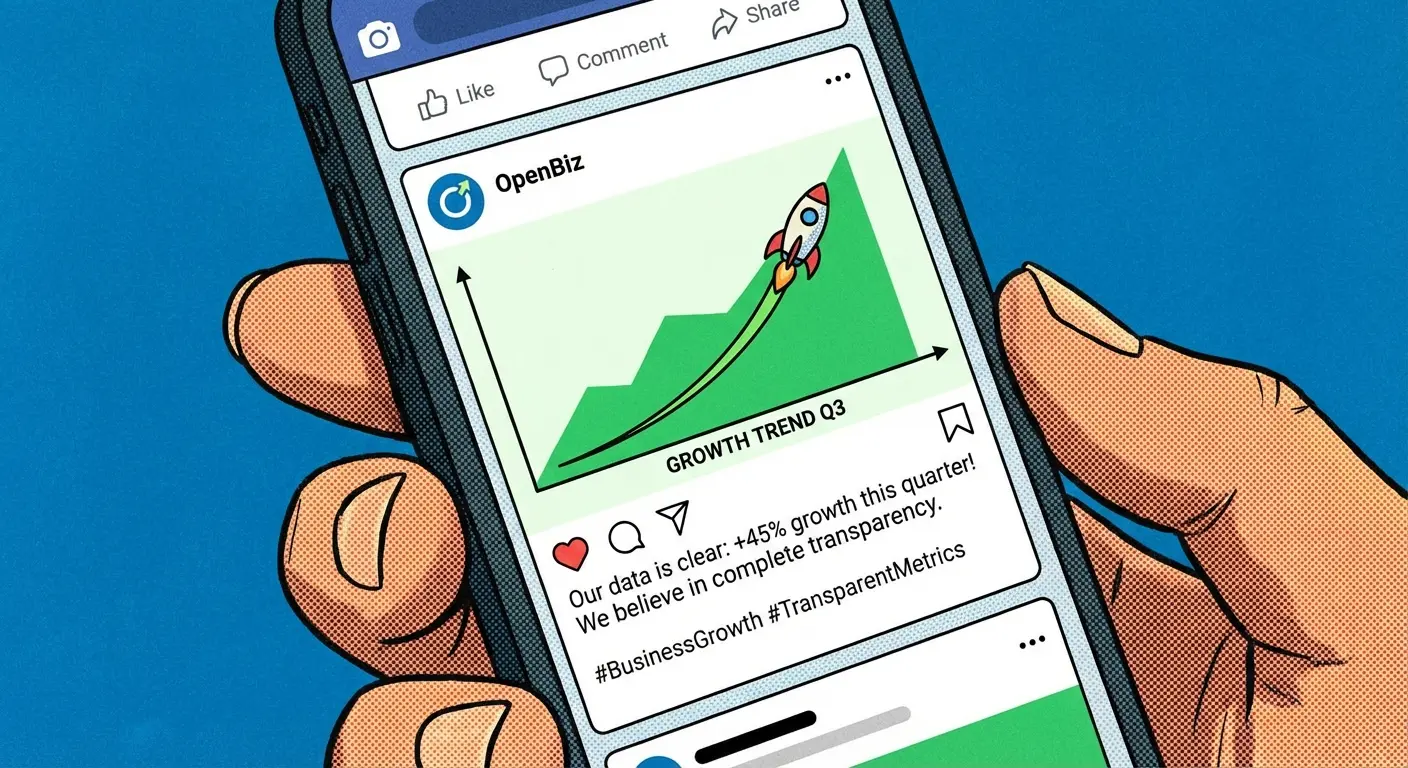
If you can’t market yourself, why would anyone trust you to market them? You have to “eat your own dog food.” Share your wins, losses, and experiments on social platforms. Documenting your journey to start an agency creates a narrative that attracts clients who value process over empty promises.
High-Utility Lead Magnets
Generic checklists are dead. Create calculators, templates, or deep industry reports that solve specific problems. Give away value to earn the right to ask for their email.
Outbound: The Video Audit
Waiting for leads is risky. But cold calling is miserable and inefficient. Instead, try the personalized video audit.
Send a short Loom video analyzing a prospect’s current content gaps. This provides immediate value and proves you know your stuff before you ever ask for a meeting. With 78% of content marketers planning to invest in video in 2023, this format grabs attention way better than a text email.

Pricing Psychology
Your pricing dictates how people see you. Avoid hourly billing because it punishes you for being fast. Use the “Decoy Strategy” to guide clients to the package you actually want to sell.
|
Tier |
Pricing Strategy |
Inclusions |
Psychological Role |
|---|---|---|---|
|
Tier 1 (The Anchor) |
High ($10k+) |
Full strategy, video, PR |
Makes Tier 2 look affordable. |
|
Tier 2 (The Core) |
Medium ($5k) |
Core strategy, 4 assets |
The “Safe Choice” you want them to buy. |
|
Tier 3 (The Downsell) |
Low ($2.5k) |
Maintenance mode |
For budget clients (low margin). |
The Proposal Phase
The proposal is a sales asset, not just a contract. Reiterate their pain points and map your deliverables to their business outcomes. To prove you can do it, include a relevant agency case study.
The “No-Regret” Checklist:
-
[ ] Problem Statement: Did you articulate their pain?
-
[ ] Solution Map: Does every deliverable solve a problem?
-
[ ] Timeline: Are dates realistic?
-
[ ] Pricing: Did you use the Decoy strategy?
-
[ ] “Out of Scope”: Did you state what you won’t do?
-
[ ] Proof: Did you include a case study?
Also, stop working for free. Charge for discovery. This filters out non-serious clients and ensures you get paid for the deep-dive research.
Keeping Clients and Scaling Up
Winning the client is just the beginning. Keeping them is where the profit margin lives. This section is about consistency and scaling without burning out.
Move Beyond Vanity Metrics
Clients stay when they see results. You need to report on business impact, not just “page views.” Use attribution modeling to prove ROI.
Transparency is the new standard. Zib Digital recently made news for their 24/7 performance dashboards, giving clients real-time clarity. You need to meet that bar.
The Data-First Calendar
Every piece of content needs a reason to exist. Don’t publish for volume; publish for conversion based on keyword intelligence.

Hiring Talent
You can’t do everything forever. When it’s time to build a team, consider the “Editor-in-Chief” model. Hire a strong internal strategist or editor first, and let them manage a network of freelance writers. This keeps your fixed costs low while ensuring quality control remains in-house.
Look for “T-Shaped” marketers—people with deep expertise in one area but broad knowledge of others. They are invaluable for a growing agency.
Scaling via Partnerships
To truly scale, you might need to offer services outside your core competency. Don’t be afraid to partner up. Use white-label partnerships to offer full-service solutions without bloating your payroll.
The White-Label Win:
If a client asks for a website redesign to host their new blog, don’t say “no.” Say “yes,” partner with a dev agency, mark up their fee, and manage the project. The client gets a seamless experience, and you get extra revenue with zero coding required.

The Hard Truth
Here is the reality of agency life: You can’t be an expert at everything immediately. While you focus on the creative and strategic elements of content, you will inevitably hit technical hurdles. This is where having a specialized partner becomes your competitive advantage.

Learning how to start a content marketing agency reveals that while you handle the “art” of content, you need a partner to handle the “science”—the technical SEO, web dev, and data attribution.
The Marketing Agency bridges this gap. We don’t just service direct clients; we empower growing agencies by providing the technical backbone they lack.
-
Data Over Guesswork: You craft the voice; we provide the keyword intelligence to ensure that voice reaches the right audience. We use the 80/20 rule to find the efforts that drive the most results.
-
Technical Foundation: Content fails on a broken website. Our Web Development team ensures your clients have fast, optimized sites that act as the perfect vessel for your content.
-
Future-Proofing: As you start your agency, you must look ahead. We specialize in LLM Optimization, structuring content so your clients appear in AI-generated answers (ChatGPT, Gemini).
-
Transparent ROI: We believe in partnership. We help you with high-level attribution modeling so you can prove to your clients exactly where every dollar is going, turning your agency from a cost center into a revenue generator.
Whether you need a white-label partner to handle complex Real Estate SEO or a technical team to execute a site migration, The Marketing Agency provides the infrastructure you need to scale without the overhead. Let’s build something great together.