


Table of Contents
-
Why Most Creators Are Missing Out on Real Revenue
-
The Infrastructure Problem
-
Building Your Off-Platform Revenue Engine
-
The Attribution Trap and How to Escape It
-
When to Bring in Strategic Support
-
Final Thoughts
TL;DR
Most Instagram advice tells you to chase brand deals. That’s limiting. Your Instagram should drive people to platforms you actually own (email, your website, etc.). The money’s in the backend systems: tracking what content makes you money (not just likes), capturing emails, and building an actual funnel. Your follower count matters way less than your infrastructure. Most creators optimize for vanity metrics and miss the data that predicts revenue.
Why Most Creators Are Missing Out on Real Revenue
The standard Instagram playbook: grow your following, boost engagement, pitch brands, get sponsored posts. Rinse and repeat.
It works. Sort of. But you’re capping your income hard if that’s all you’re doing.
Here’s the thing: most creators treat Instagram as both the place where they find people AND the place where they make money. That’s the problem. You’re renting attention from Meta and praying they keep showing your content to people who already follow you. (Spoiler: they won’t.)
When you optimize only for brand deals, you’re building a business on quicksand. Everything depends on an algorithm you don’t control, brand budgets that disappear the second the economy hiccups, and engagement rates that drop every time Instagram changes how the feed works. One algorithm update can cut your reach in half overnight. It’s happened before. It’ll happen again.

What people miss: Instagram is incredible at generating attention. It’s terrible at converting that attention into sustainable revenue.
Instagram wants people to stay on Instagram. Every feature they build (Reels, Stories, Shopping, DMs) is designed to keep you scrolling inside the app. Your goal should be the opposite. Extract value from that attention by moving people to platforms you actually own.
A fitness creator I know had 15,000 followers and was posting workout tips three times a week. Pretty good engagement. She was landing occasional brand deals with supplement companies that paid $500 to $800 each, making around $2,000 a month. Felt stuck.
When she shifted strategy to use Instagram as a discovery tool (driving followers to a free email course that led to a $97 training program) her monthly revenue jumped to $8,500 within four months. Same content themes, same follower count, completely different infrastructure behind the scenes.
According to Foursixty, a creator with 79,000 subscribers charging just $0.49 per month for exclusive content generates over $38,700 in monthly revenue before taxes and fees. Massive follower counts aren’t the only path to substantial income. The difference? They built systems that convert attention into recurring revenue rather than chasing one-off brand deals.
Understanding how to make money on Instagram requires looking beyond the platform itself. Similar to successful Instagram case studies that reveal the real revenue happens off-platform through strategic design, we’ve seen this pattern repeatedly: creators who treat Instagram as a discovery mechanism rather than a sales platform consistently outperform those who try to monetize directly on the platform.
The key to monetizing Instagram effectively isn’t about finding more brand partnerships or increasing your posting frequency. It’s about building the right systems and infrastructure that transform casual followers into paying customers.
The Infrastructure Problem
Creators obsess over content quality. Which makes sense. Content is what people see. But the infrastructure behind it? The stuff that actually makes you money? Most people ignore it completely.
You could have the most viral Reels in your niche and still make zero dollars if you don’t have tracking and conversion systems running in the background. At that point, you’re just making expensive entertainment.
Where does this break down? Three places:
You’re not tracking which Instagram posts drive actual revenue. Not likes. Not saves. Dollars. You probably have no idea which post led to your last sale.
You don’t have a real system for capturing contact info. Someone watches your Reel, loves it, scrolls past. Gone forever. No email, no follow-up, no second chance.
You’re missing the attribution data that shows which content moves people toward buying. That educational carousel? It might be driving 10x more sales than your entertaining Reels, even though it gets half the engagement. But you don’t know that because you’re not tracking it.
As Printify reported in early 2026 (Desert Sun), even nano-influencers with as few as 500 engaged followers can begin earning through affiliate marketing, product sales, and exclusive content subscriptions. But only when they have the proper infrastructure in place to track and convert that attention into revenue.
Building this infrastructure means using tools that most creators don’t even know exist. UTM parameters on every link you share. A customer data platform (or honestly, even just a really detailed spreadsheet) that connects Instagram engagement to email signups, website visits, and purchases. Retargeting pixels installed so you can follow up with people who showed interest but didn’t convert immediately.
What you need to set up:
UTM parameters on every link (use Bitly or whatever). Some way to track those links to actual conversions. Retargeting pixels on your landing pages. A system connecting Instagram activity to sales (spreadsheet works fine). Email platform hooked up to your payment processor. Conversion tracking enabled in Meta Business Suite. Weekly check-in on what’s actually working. Clear documentation of which content types drive revenue vs. engagement.
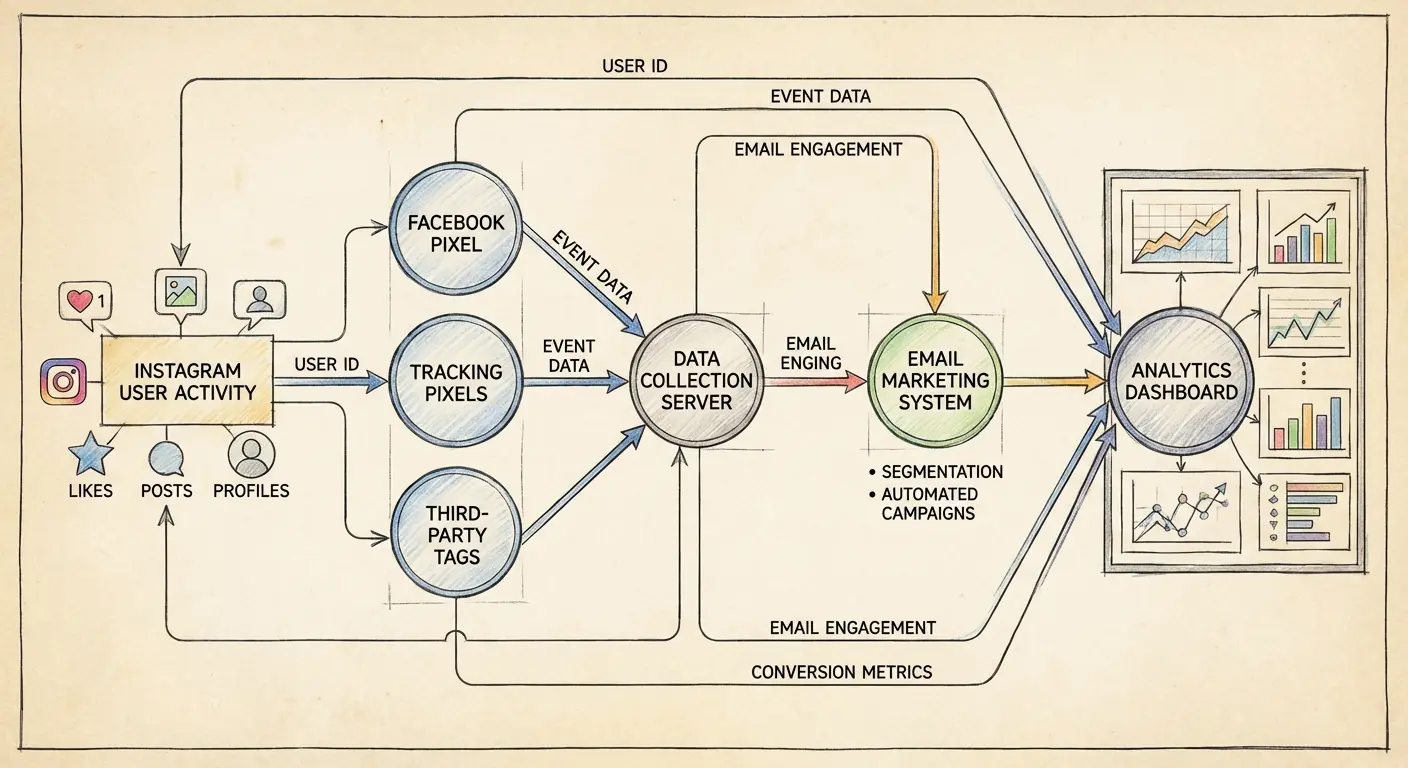
Does this sound technical? Yeah, because it is. It’s boring as hell, honestly. Which is exactly why most creators skip it, then wonder why they’re stuck at $3K a month despite having 50,000 followers.
The creators making serious money (we’re talking six and seven figures annually from Instagram-sourced traffic) aren’t necessarily better at content creation. They’re better at building systems that capture value from every piece of attention they generate, often using email marketing strategies to convert Instagram traffic into sustainable revenue.
They know which Instagram Story drove 47 email signups last Tuesday. They know that educational carousel posts generate 3x more qualified leads than entertainment-focused Reels, even though the Reels get more engagement. This level of insight completely changes how you approach Instagram. Suddenly you’re making decisions based on revenue data rather than vanity metrics.
Without proper tracking systems, you’re essentially guessing which content drives revenue versus which content just drives engagement. The distinction matters enormously when you’re trying to scale your income beyond sporadic brand deals.
Building Your Off-Platform Revenue Engine
Your Instagram account should function as the top of a funnel, not the entire funnel.
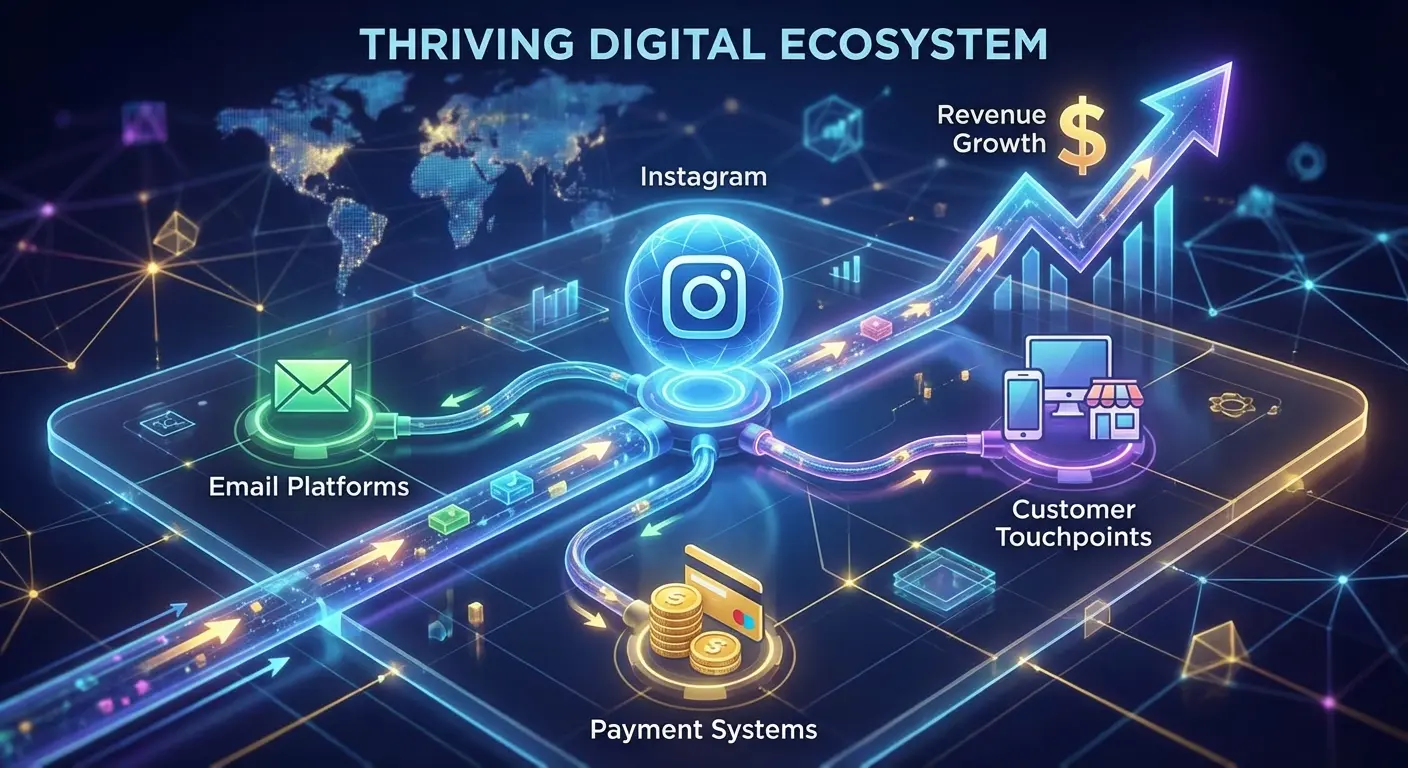
The real money? That happens when you build a system where each platform has a specific job. Instagram generates attention. Email builds relationships. Your website converts sales.
Instagram showcases your expertise or entertains your target audience. That content includes strategic CTAs that move people to platforms you own (email lists, SMS lists, private communities, your actual website). Those owned channels are where you build relationships, provide deeper value, and make offers that convert attention into revenue.
I’ve watched creators build systems with multiple revenue layers: a free email newsletter that includes affiliate recommendations (first revenue layer), a paid community or course for people who want deeper access (second layer), and high-ticket consulting or services for those who need personalized support (third layer). Instagram feeds all three layers, but the money happens entirely off-platform.
|
Revenue Layer |
Platform |
Average Price Point |
Monthly Revenue Potential |
|---|---|---|---|
|
Discovery Content |
|
$0 (free) |
Audience growth |
|
Email Newsletter + Affiliates |
|
$0-50 commission/sale |
$500-2,000 |
|
Digital Product/Course |
Email + Website |
$47-297 |
$1,500-8,000 |
|
Paid Community |
Dedicated platform |
$29-99/month |
$2,000-15,000 |
|
High-Ticket Services |
Email + DMs |
$1,500-10,000 |
$3,000-50,000+ |
Take this graphic designer with 8,200 followers. Nothing crazy. She built a three-layer system: Instagram showcased her portfolio and design tips, driving followers to a free “Brand Identity Checklist” that captured emails. Her newsletter included affiliate links to design tools (bringing in $400 to $800 monthly) and promoted her $197 brand design template pack (selling 15 to 25 per month). High-engagement subscribers received invitations to her $2,500 custom brand design service. Total monthly revenue: $6,500 to $9,000, with Instagram providing zero direct income but feeding every revenue stream.
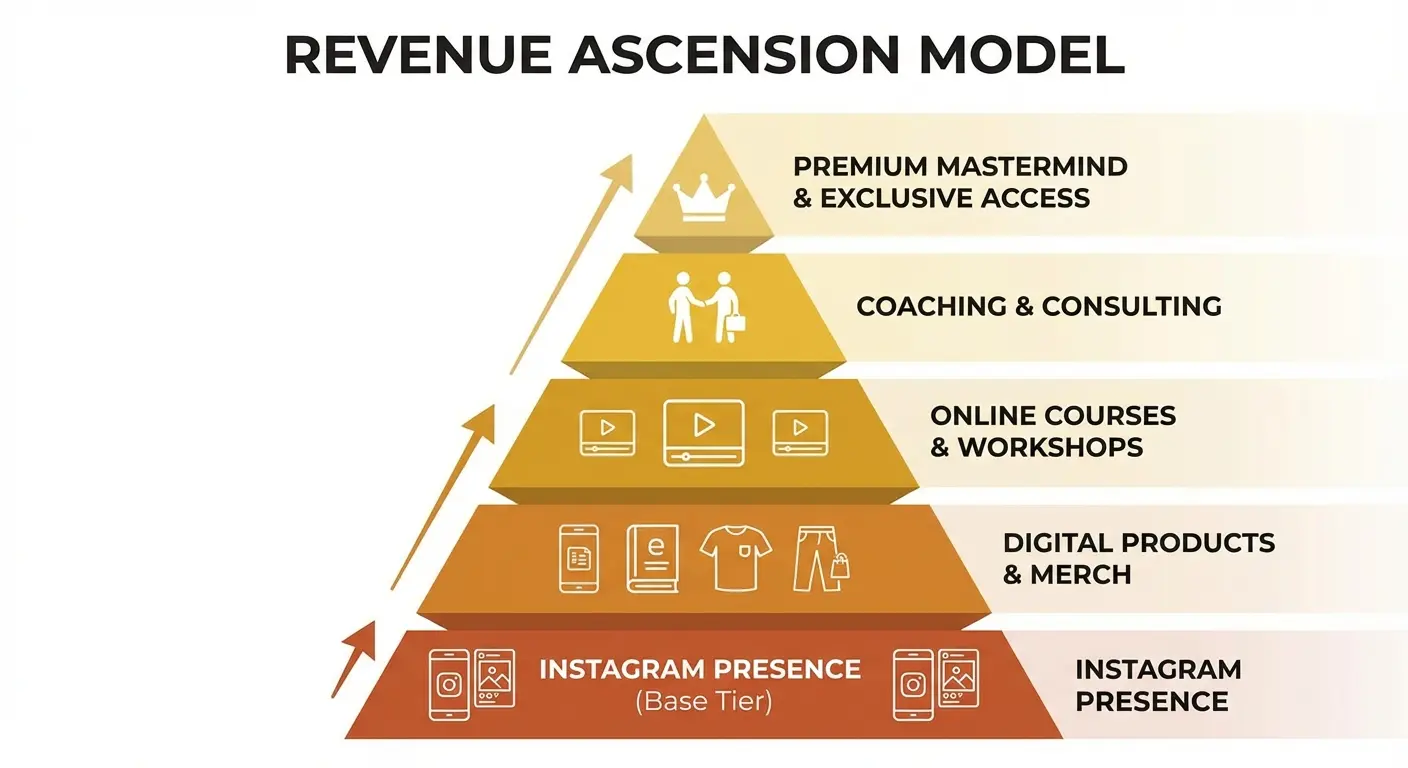
What’s great about this approach? Lifetime value goes way up. Someone discovers you on Instagram, joins your email list, buys your $97 product, then eventually hires you for $5,000 in consulting. That’s worth infinitely more than someone who sees your sponsored post, clicks through to some brand’s website, and you never hear from them again.
You’re also building an asset that appreciates over time. Your email list grows more valuable with each subscriber because you can monetize it repeatedly through new offers, affiliate partnerships, and product launches. Your Instagram following, by contrast, delivers diminishing returns as organic reach continues to decline across social platforms.
The question of how many followers you need becomes less relevant when you’re focused on building systems that convert even small audiences into substantial revenue. I’ve worked with creators who generate $15,000+ monthly with under 5,000 followers because they’ve built sophisticated conversion systems behind their Instagram presence.
Email marketing remains the highest-ROI channel for most creators, yet Instagram-focused creators barely use it. Every post you publish should be moving people from Instagram (which you don’t own) to your email list (which you do).
According to Wix, 80% of people surveyed said Instagram helps them discover and buy new products or services, demonstrating the platform’s power as a discovery engine that drives traffic and sales to external revenue channels. The key is having somewhere valuable to send that traffic.
Your lead magnets need to be specific and immediately valuable. Generic “sign up for tips” CTAs don’t work anymore (if they ever did). You need offers that solve a specific problem your Instagram content has highlighted. If your Reel about overcoming creative blocks gets 50,000 views, your CTA should offer a downloadable framework for generating content ideas, not a vague newsletter signup.
How to create lead magnets that work:
Review your top 10 Instagram posts by saves and shares (not just likes). Note the specific problem or question each piece addresses. Identify the 2-3 topics that generate the most DM questions.
Choose one high-performing topic. Develop a resource that provides the “next step” beyond your Instagram content. Format options: PDF checklist, template, mini-course, resource list, calculator, or swipe file.
Create a simple landing page (can be a link-in-bio page). Write benefit-focused copy (what they’ll achieve, not what they’ll get). Set up email automation to deliver the lead magnet. Include 2-3 follow-up emails that provide additional value before any pitch.
Mention the lead magnet in relevant Instagram captions. Create a dedicated Story Highlight. Reference it in comments when people ask related questions. Pin a comment with the link on high-performing posts.
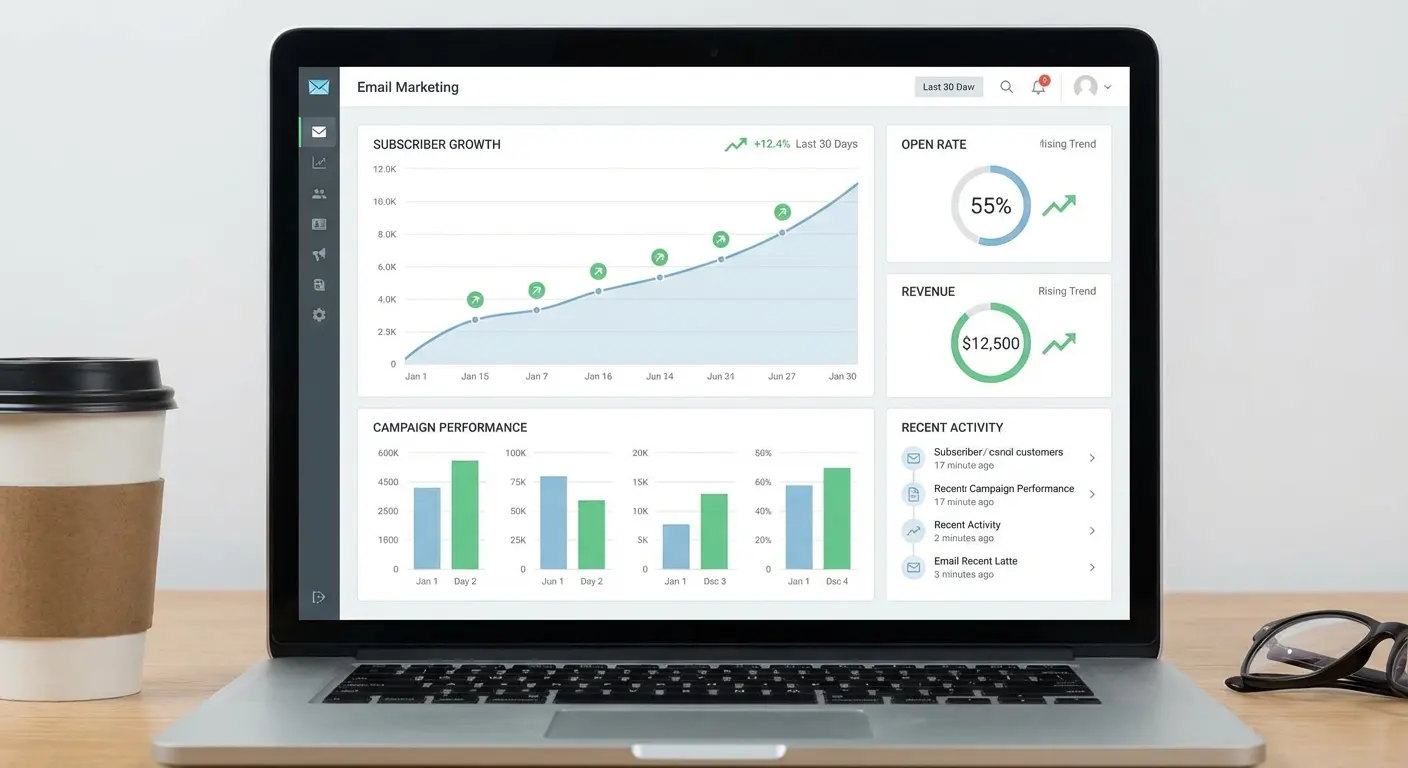
Once people are on your email list, you can monetize through several mechanisms that simply aren’t possible on Instagram. You can send affiliate promotions without worrying about algorithm suppression, similar to successful affiliate marketing campaigns that generate consistent revenue. You can launch products with detailed sales sequences that build desire over multiple touchpoints. You can segment your list based on behavior and send targeted offers to people who’ve demonstrated specific interests.
The revenue potential here is substantial. Email marketing can generate anywhere from $1,200 to $10,000+ per month, depending on your list size (1K vs. 10K subscribers), what you’re selling ($27 products vs. $297 courses), and how often you actually email them. That’s recurring revenue that doesn’t depend on Instagram’s algorithm deciding to show your content.
Product development should be directly informed by what’s working on Instagram. Which topics generate the most saves? Which questions appear repeatedly in your DMs? What problems do your followers explicitly say they’re struggling with? Your Instagram content is essentially free market research. You just need to pay attention to the signals.
Services and consulting represent the highest revenue per customer, but they require credibility and trust that takes time to build. Your Instagram presence establishes that credibility at scale. Someone who’s been following your content for months and seeing consistent value is infinitely more likely to invest in high-ticket services than a cold prospect.
The Attribution Trap and How to Escape It
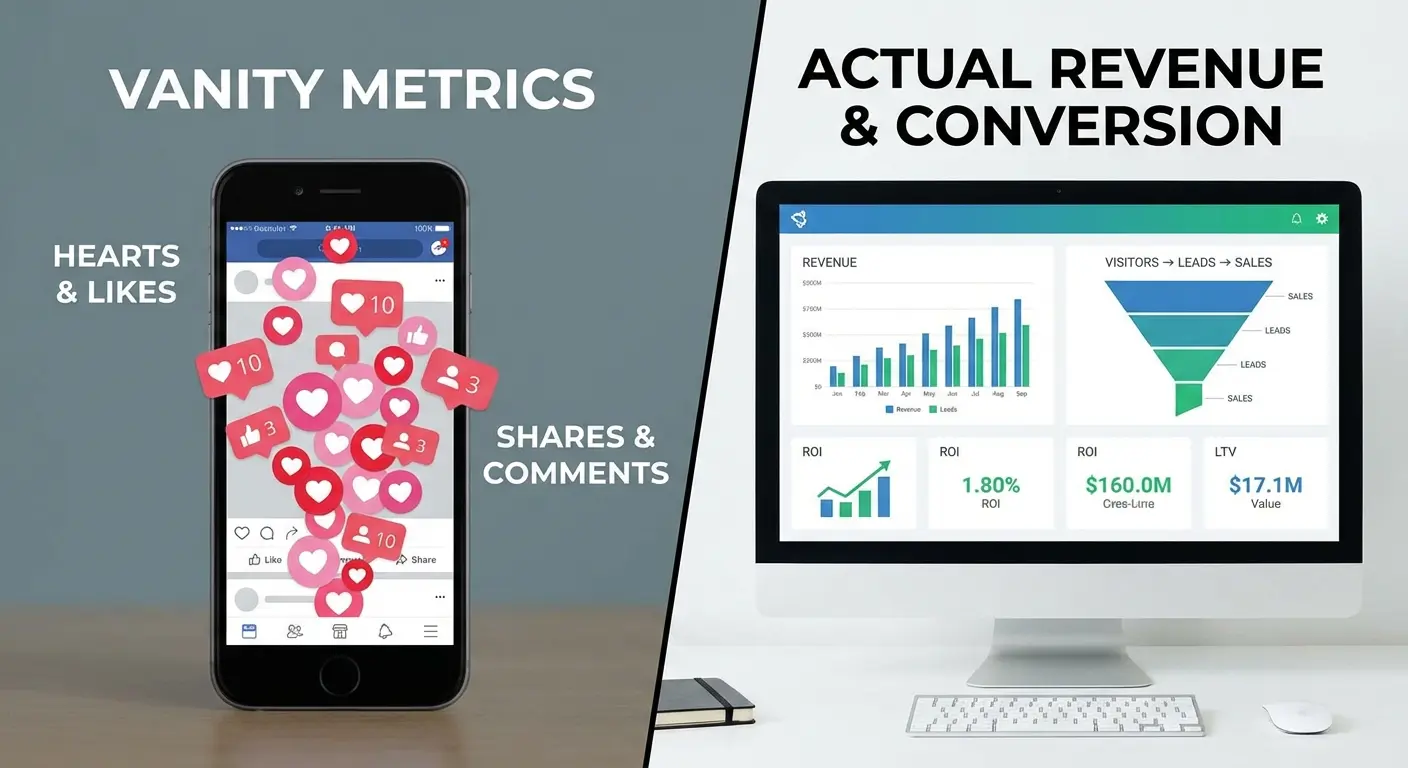
Instagram’s analytics tell you which posts got the most likes, comments, shares, and saves. What they don’t tell you is which posts generated revenue.
That distinction matters more than almost anything else.
You’re probably making decisions based on engagement metrics because that’s what Instagram makes visible and easy to track. High engagement feels good. It validates your content and suggests you’re doing something right. But engagement and revenue generation are not the same thing, and focusing on one often comes at the expense of the other.
What Instagram Shows You What Drives Revenue Why the Gap Matters Likes, comments, shares Link clicks, email signups, purchase behavior High engagement doesn’t equal buying intent Impressions, accounts reached Qualified traffic to owned platforms Broad reach often means diluted audience Views, saves, profile visits Conversion rate by content theme Entertainment performs differently than education New followers, follower count Email list growth, customer acquisition Followers are rented; subscribers are owned
Attribution modeling connects Instagram activity to actual money. You need to know that the educational post you spent three hours on drove 12 email signups and 2 sales, while that entertaining Reel with 10x the engagement? Zero conversions. Without that data, you’re guessing.
A business coach with 22,000 followers was creating a mix of motivational quotes (high engagement) and tactical business advice (lower engagement). After setting up UTM tracking on all her links, she discovered that her tactical posts drove over 3x more email signups and generated almost 90% of her course sales, despite receiving far fewer likes. She shifted her content ratio from 70% motivational to 70% tactical, and her monthly revenue increased from $3,200 to $11,400 within three months. Same follower count.
Building proper attribution requires technical setup that most creators skip. You need unique tracking links for every CTA. Link-in-bio tools like Linktree, Beacons, or Stan Store help here, but they’re not sufficient on their own. You need to connect your email marketing platform (ConvertKit, MailChimp, whatever you’re using), payment processor, and analytics tools so you can trace the customer journey from Instagram impression to purchase.
The insights you gain from proper attribution completely change your content strategy. You’ll discover that certain content formats, topics, or CTAs dramatically outperform others in terms of revenue generation. You’ll stop wasting time on content that looks good in the Instagram analytics dashboard but doesn’t move your business forward.
I’ve worked with clients who discovered that 80% of their revenue came from 20% of their content themes, but they were only creating that high-value content 10% of the time because it didn’t generate as much engagement. Attribution modeling revealed the disconnect and allowed them to rebalance their content strategy toward revenue.
This is why the question “does Instagram pay you” misses the point entirely. The platform doesn’t pay you directly, but the data it generates can guide you toward what converts. Instead of wondering whether Instagram compensates creators directly, successful monetizers focus on building attribution systems that reveal which content drives actual revenue.
When to Bring in Strategic Support
Look, I’m going to be straight with you: this is complicated stuff. Most creators got into this because they like making content. Not because they wanted to become experts in attribution modeling and conversion rate optimization. Nobody dreams of setting up UTM parameters.
According to The Motley Fool, research firm Emarketer forecasts that Instagram’s U.S. ad revenue will reach $32.03 billion in 2025, a 24.4% year-over-year increase. This demonstrates that businesses and creators who understand how to use the platform’s advertising and targeting capabilities have access to an increasingly sophisticated revenue system.

The challenge is that the infrastructure and systems we’ve outlined are what separate creators making a few thousand dollars per month from those building sustainable six and seven-figure businesses. You can’t skip the systems and expect to scale revenue, but you also don’t have to build them yourself.
If you’re reading this and thinking “I don’t want to deal with UTM parameters and attribution modeling,” I get it. That’s literally why The Marketing Agency exists. We build this backend infrastructure for creators who want to focus on content.
I’m obviously biased here since that’s what we do, but if you’re generating attention on Instagram and not capturing the revenue you should be, you’ve got an infrastructure problem. We fix that. We focus on performance and ROI, which means connecting your Instagram presence to revenue growth rather than vanity metrics.
That includes PPC campaigns to amplify your best-performing content, email marketing systems that convert Instagram followers into customers, and inbound marketing strategies that guide people through your entire system. Our approach is rooted in data and attribution modeling, so you’ll know what’s working rather than guessing based on engagement rates.
You shouldn’t have to choose between creating great content and building great systems. The most successful creators we work with focus on what they do best (creating content that resonates) while we handle the infrastructure that captures and converts the attention that content generates, using our expertise in marketing automation to scale their revenue efficiently.
Or you can build it yourself. Both work. Just don’t skip building it entirely.
Final Thoughts
Instagram’s not going anywhere. It’s still one of the best ways to get attention at scale.
But attention doesn’t pay your rent. Systems do.
You can keep chasing engagement metrics and hoping brand deals eventually turn into real money. Or you can build infrastructure that turns your Instagram into an actual business.
This isn’t about working harder. You’re probably already maxed out. It’s about working smarter by building systems that capture value from the attention you’re already generating.
Your content is doing its job. It’s generating attention. The question is: what are you doing with that attention?
Real talk: Every week you wait to set up tracking and attribution is another week of lost revenue. You’re creating content, getting engagement, and watching most of that value disappear because you don’t have systems to capture it.
Instagram’s organic reach has dropped significantly since 2022. It’s going to keep dropping. The sooner you build systems that don’t depend on Instagram’s algorithm, the better.
Three years from now, the creators making serious money won’t be the ones with the biggest followings. They’ll be the ones who built systems, owned their audience data, and optimized for revenue instead of likes.
Start building now.