


The market research industry is set to cross the $90 billion mark this year. That is a staggering amount of money being poured into understanding what people want, yet companies still manage to launch products that flop. I remember early in my career, I convinced a client to go all-in on a “viral” video campaign for a demographic we thought we nailed. We spent weeks on production. We launched. Crickets.
It turned out our target audience didn’t hang out on that platform, and they definitely didn’t care about the problem we were solving. We burned the budget on a hunch. In this economy, you can’t afford to guess anymore. The margin for error is gone. While plenty of market research companies promise the world, finding the right partner means finding someone who can turn raw data into a roadmap that actually makes money. Whether you need deep ethnographic studies or quick-turn sentiment analysis, the agencies below are the ones changing how we see the consumer landscape in 2026.
Table of Contents
Here is the list of the major agencies and criteria we cover here. Scan the list to jump to the partner or methodology that fits what you’re trying to do.
- TL;DR: The Quick List
- Comparison Table
- What to Look for (Don’t Get Burned)
- 1. Nielsen
- 2. Kantar
- 3. Ipsos
- 4. Attest
- 5. Suzy
- 6. Pollfish
- 7. Mintel
- 8. Gartner
- 9. Highlight
- 10. GWI (GlobalWebIndex)
- Notable Mentions
- FAQs
- Final Thoughts: Turning Insights into Revenue
TL;DR
If you want the highlights without the deep dive, here is the breakdown. We matched specific needs—like speed, depth, or B2B focus—with the agency best suited for the job.
- Best for TV & Media Measurement: Nielsen
- Best for Brand Strategy & Consulting: Kantar
- Best for Public Opinion & Polling: Ipsos
- Best for Fast Consumer Profiling: Attest
- Best for Real-Time Agile Feedback: Suzy
- Best for DIY Mobile Surveys: Pollfish
- Best for CPG Product Innovation: Mintel
- Best for B2B Tech Advisory: Gartner
- Best for Physical Product Testing (IHUT): Highlight
- Best for Global Audience Psychographics: GWI
Agency Comparison Table
| Agency | Best For | Speed | Methodology Focus |
|---|---|---|---|
| 1. Nielsen | TV & Media Measurement | Slower (Custom) | Quantitative / Panel |
| 2. Kantar | Brand Strategy & Consulting | Medium | Quant/Qual/Consulting |
| 3. Ipsos | Public Opinion & Polling | Medium | Quant/Qual / Neuro |
| 4. Attest | Fast Consumer Profiling | Fast (Days) | Quantitative Platform |
| 5. Suzy | Real-Time Agile Feedback | Real-Time | Hybrid (Quant/Qual) |
| 6. Pollfish | DIY Mobile Surveys | Real-Time | Mobile Delivery |
| 7. Mintel | CPG Product Innovation | Instant | Secondary / Database |
| 8. Gartner | B2B Tech Advisory | Long-term | Advisory / Expert |
| 9. Highlight | Physical Product Testing | Fast (Physical) | Logistics / Sensory |
| 10. GWI | Global Psychographics | Instant | Quantitative / Data |
What to Consider When Looking for Market Research Agencies
Before you sign a contract, you need to know exactly what you’re buying. Not all data is created equal. I’ve seen companies pay premium prices for data they could have scraped themselves, and I’ve seen others cheap out on panels only to get bot-filled responses. When vetting market research agencies, here is the criteria I actually use:
- Methodology & Specialization: You need to know if they specialize in Quant (numbers, surveys) or Qual (focus groups, ethnography). Some agencies like Highlight focus entirely on the physical logistics of testing products, while others like Gartner are strictly advisory.
- Speed & Agility: Speed is currency in 2026. Traditional timelines of 6-12 weeks are usually too slow. Platforms like Suzy or Pollfish can get you answers in hours. You have to decide if you need deep academic rigor or rapid iteration.
- Data Quality & Reach: Where do the people come from? You want vetted panels or probability sampling (like MRI-Simmons). Low-quality data leads to expensive mistakes.
- Technology & AI Integration: The best agencies are using AI for open-end analysis and synthetic respondents to lower costs. This isn’t a gimmick anymore; it’s a necessity for efficiency.
- Actionability: Data sitting in a PDF is useless. You want interactive dashboards, strategic consulting, or direct integration with your marketing stack.
1. Nielsen
Best Known For Global Audience Measurement
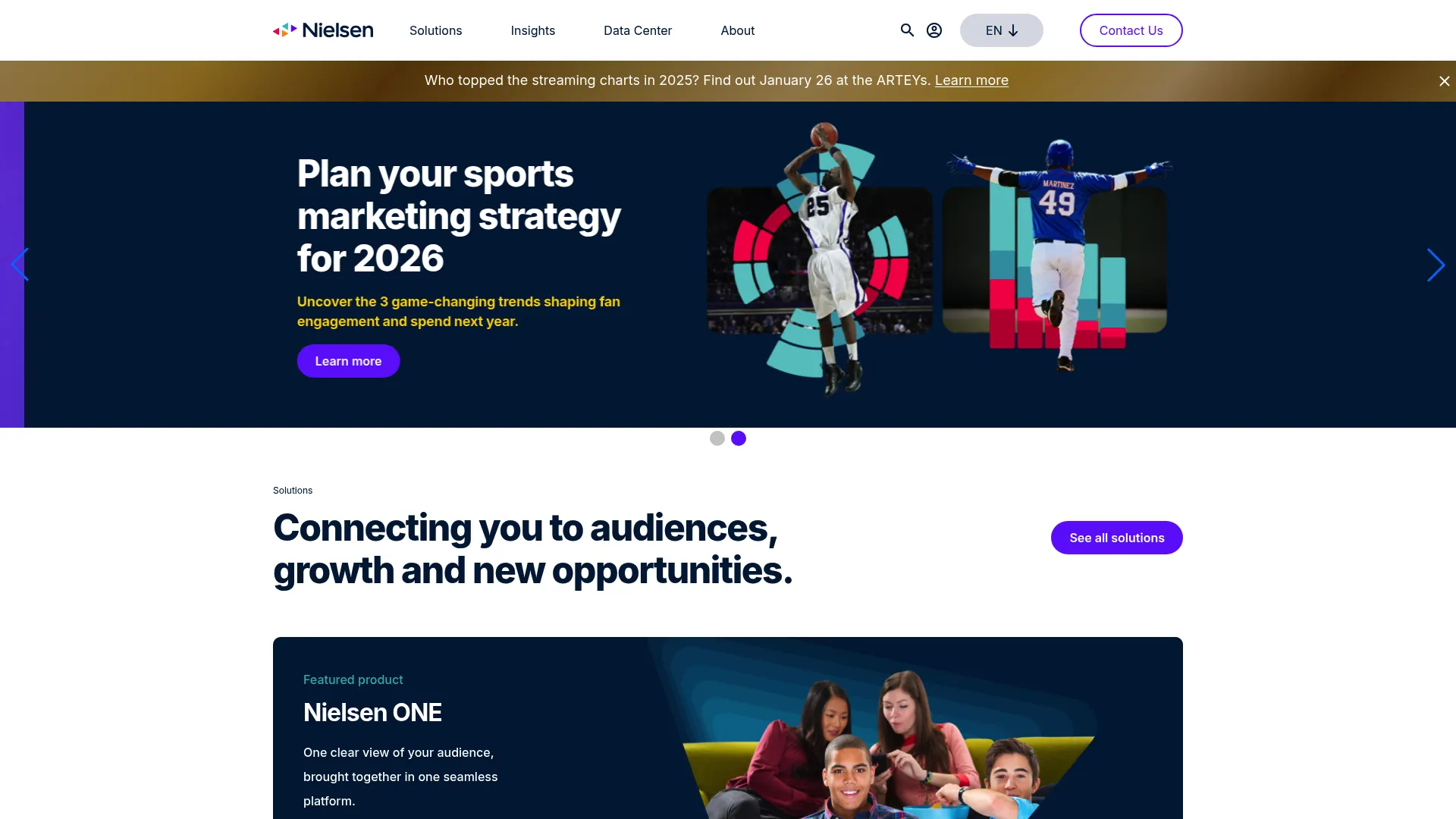
Nielsen is the heavyweight. When you think of audience measurement, you think of them. They provide the definitive view of consumer behavior across media platforms, from linear TV to streaming and digital. While plenty of new market research companies are trying to disrupt the space, Nielsen remains the default choice for large enterprises that need established industry credibility. They don’t just guess who is watching; they define the currency the media industry trades on.
Features
- Cross-Media Measurement: They track audiences across every screen.
- Marketing Optimization: Tools to improve ROI based on audience data.
- Content Metadata: Granular details on what people are watching.
- Consumer Segments: Deep categorization of viewer demographics.
Pros
- Extensive Global Reach: They operate everywhere you likely do business.
- Established Credibility: Their data holds up in boardrooms and investor meetings.
- Massive Data Coverage: The sheer volume of their panel is hard to beat.
Cons
- High Cost Barrier: This is enterprise-level pricing.
- Complex Contracts: Engagement isn’t quick or simple.
- Slower Turnaround: Custom studies can take 4-8 weeks.
Criteria Evaluation
- Methodology: 5/5 (The industry standard)
- Speed: 3/5 (Slower turnaround for custom studies)
- Data Quality: 5/5 (Gold standard panel data)
- Tech Capabilities: 4/5 (Advanced analytics)
Community Reviews and Expert Recommendations
(Source: Nielsen Panel Community)
Participants in Nielsen panels generally feel a sense of importance, knowing their viewing habits impact ratings. Reviews highlight that Nielsen uses representative sampling—think of how a scientist studies a lake rather than draining the whole lake. Panelists appreciate that their data is confidential and not used for direct sales. However, the process is rigorous; they track media habits over time, which requires commitment from the participants.
Price
Pricing is Custom/Enterprise level.
Check out Nielsen
2. Kantar
Best Known For Brand Tracking and Consulting
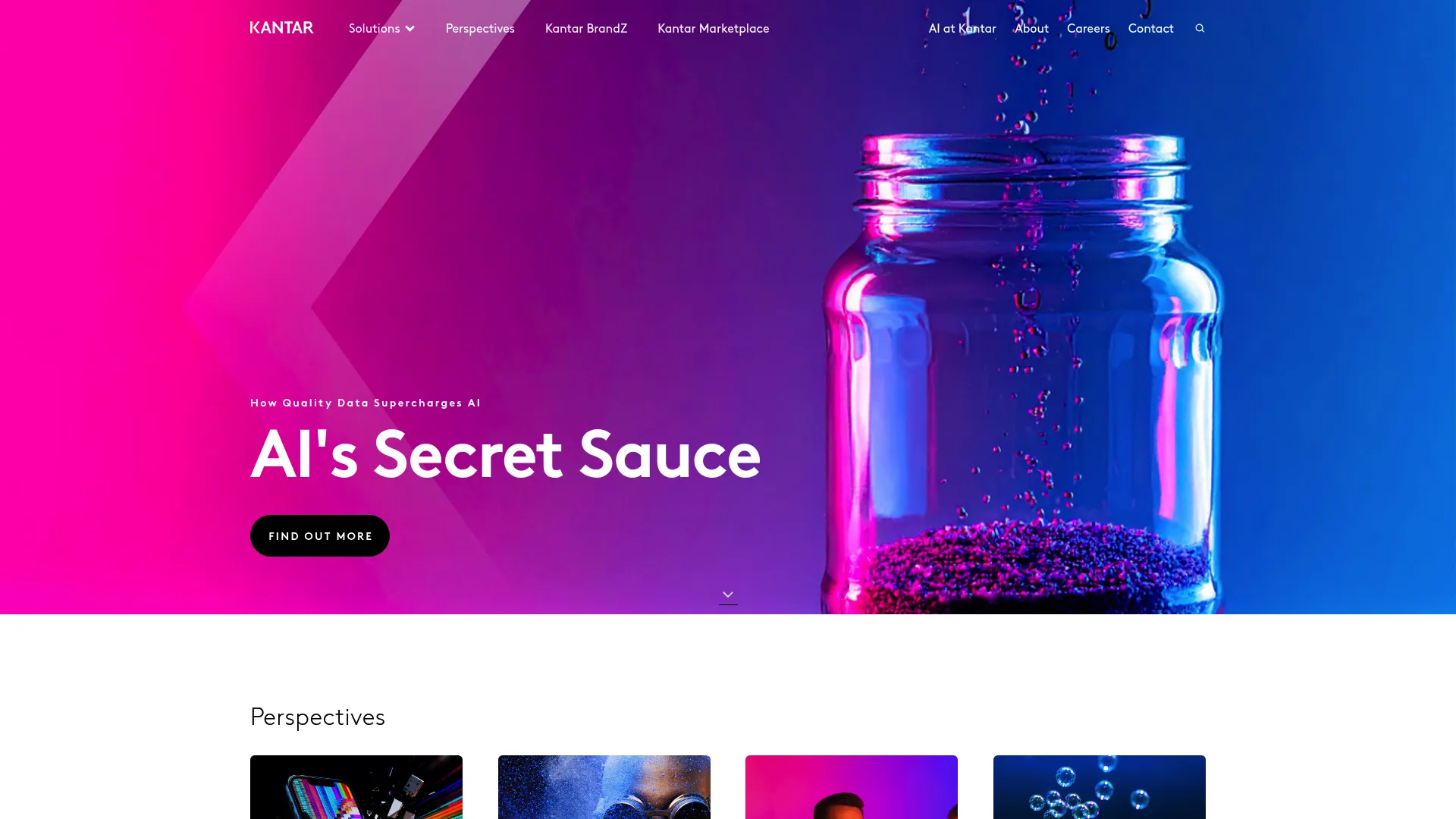
Kantar excels at understanding the “why” behind the buy. They are a data, insights, and consulting powerhouse that focuses on the complete consumer journey. If you’re looking for brand guidance, shopper insights, or sustainability research, this is where you go.
Unlike strictly data-focused market research companies, Kantar provides a narrative. Their “BrandZ” reports are essentially the industry benchmarks for brand equity.
Features
- Marketplace: An on-demand store for quick insights.
- Worldpanel: Tracks continuous purchase behavior.
- Creative Testing: Validates ad concepts before you spend media budget.
- BrandZ: The definitive report on brand value.
Pros
- Strategic Rigor: They offer deep consulting, not just data dumps.
- Consumer Understanding: They map the entire journey.
- Global Scale: Massive reach for international brands.
Cons
- Premium Pricing: You pay for the expertise.
- Complex Engagement: It can take time to set up large studies.
- Enterprise Focus: Not ideal for small startups.
Criteria Evaluation
- Methodology: 5/5 (Deep strategic rigor)
- Speed: 3/5 (4-10 weeks for custom studies)
- Data Quality: 5/5 (High-quality panels and TGI data)
- Tech Capabilities: 4/5 (AI integration and Marketplace)
Community Reviews and Expert Recommendations
(Source: Kantar Corporate News)
Internal and external reviews point to a company in transformation. Since becoming independent, they have focused heavily on “tech-enabled, talent-centric” strategies. Clients in Greater China specifically noted the expansion of the cloud-based “Kantar Marketplace,” which allows for faster insights. The sentiment is that Kantar is successfully modernizing to bring insights “faster, smarter, and more cost-effectively.”
Price
Project-based and subscription models.
Visit Kantar
3. Ipsos
Best Known For Public Opinion Polling
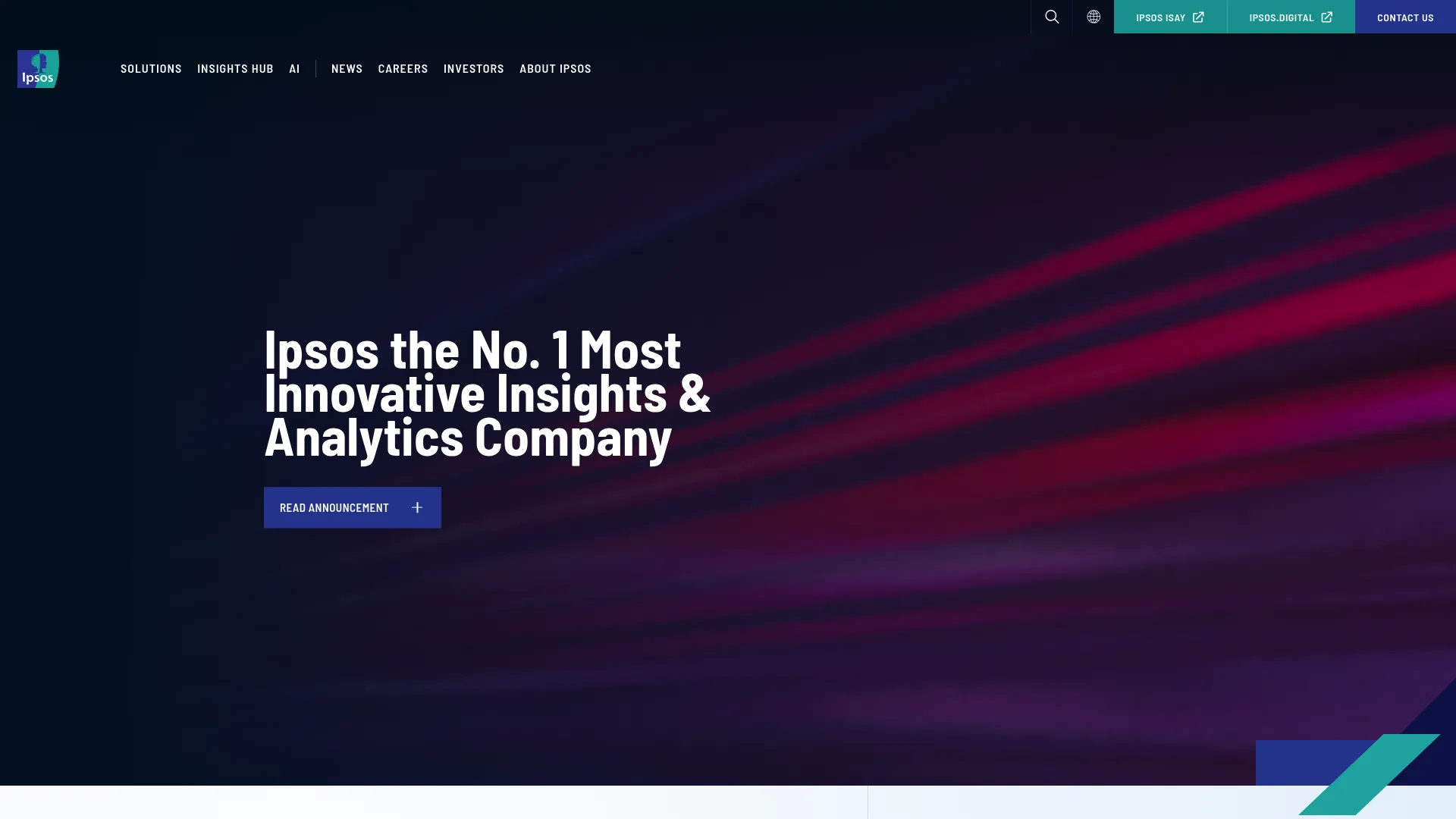
You’ve likely seen Ipsos cited in the news during election cycles. Among multinational market research companies, they are famous for political polling, but their capabilities go way beyond that. They are equally adept at innovation and product development research.
They offer specialized services across advertising, customer loyalty, and public affairs. If you need to know what the general population thinks about a policy or a new soda flavor, Ipsos has the reach.
Features
- Social Listening: Monitoring conversations at scale.
- Affluent Survey: Specifically targets high-income consumers.
- Simstore: Virtual shelf testing for retail environments.
- Neuro-marketing: Biometric responses to creative.
Pros
- Global Expertise: They operate in over 100 countries.
- Analytical Rigor: They use advanced statistical methods.
- Diverse Methods: From surveys to neuroscience.
Cons
- High Costs: Quality research comes at a premium.
- Lengthy Timelines: Complex studies take weeks or months.
Criteria Evaluation
- Methodology: 5/5 (Diverse capabilities)
- Speed: 3/5 (6-12 weeks for complex studies)
- Data Quality: 5/5 (KnowledgePanel is highly representative)
- Tech Capabilities: 4/5 (Ipsos.Digital platform)
Community Reviews and Expert Recommendations
(Source: SurveyPolice & Trustpilot)
The feedback from the participant side (Ipsos iSay) is mixed. Long-time users appreciate the variety of rewards (PayPal, Amazon) and the legitimacy of the company—it is definitely not a scam. However, recent reviews from 2025 and 2026 highlight frustration with being “screened out” of surveys after spending time on them, and some users report issues with account suspensions. On the flip side, satisfied users love the mobile app and the ability to test physical products sent to their homes.
Price
Custom project pricing; significant budget usually required.
Check out Ipsos
4. Attest
Best Known For Fast Enterprise Consumer Research
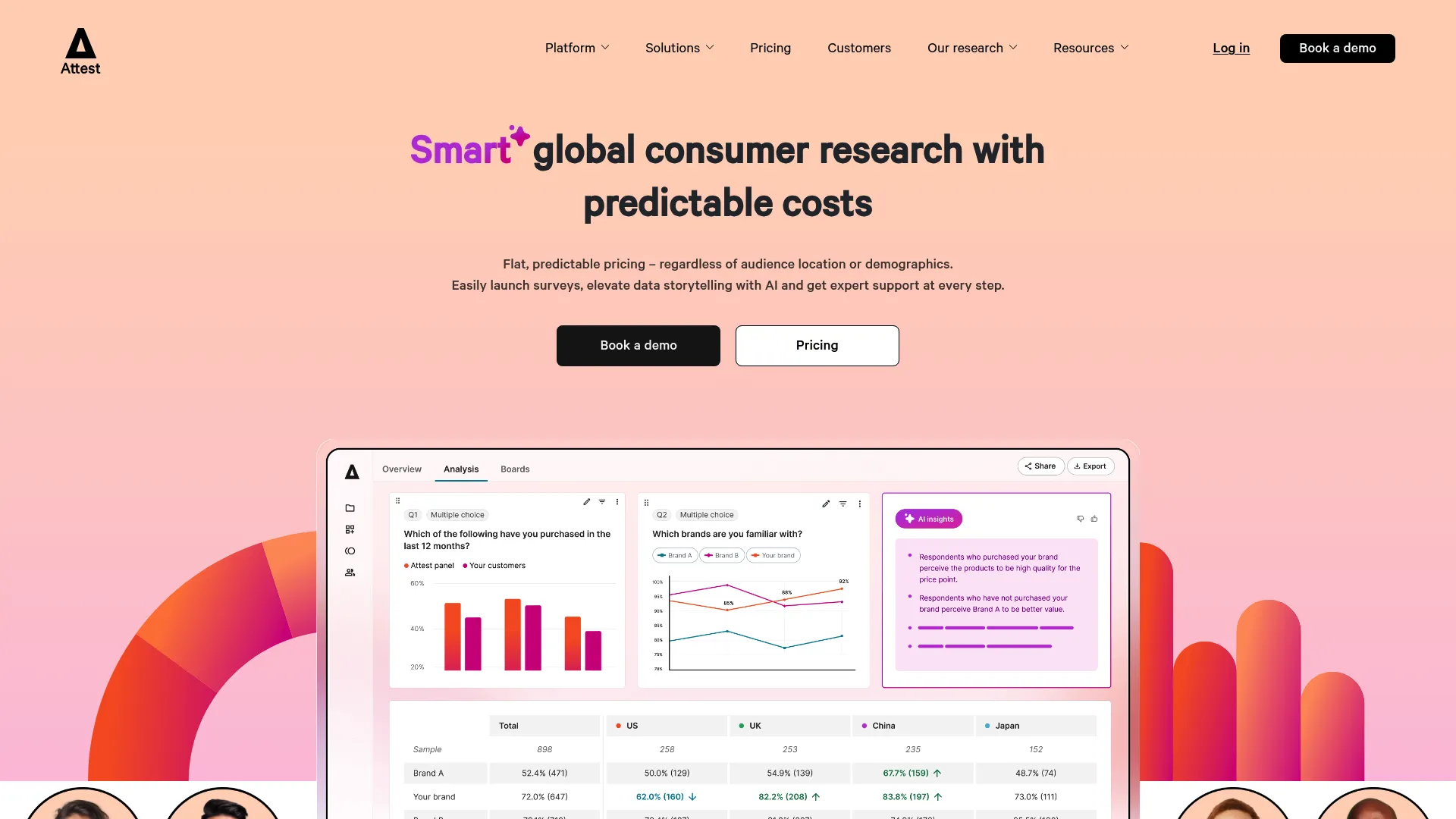
Attest bridges the gap between scrappy DIY tools and expensive full-service market research companies. They offer on-demand access to 150 million respondents across 59 countries. The platform is designed for speed and scalability.
You can test creative, track brand health, and profile consumers without waiting weeks for a consultant to email you back. It puts the power in your hands but keeps the data quality high.
Features
- Brand Tracking: Monitor your brand health over time.
- Consumer Profiling: Deep dives into demographics and psychographics.
- Creative Testing: A/B test assets quickly.
- Interactive Dashboard: Visualize data instantly.
Pros
- Predictable Pricing: Flat-rate models help with budgeting.
- Fast Turnaround: Results often come in days.
- User-Friendly: The interface is intuitive for non-researchers.
- Data Quality: Three layers of checks to ensure real humans.
Cons
- Consumer Focus: It is less effective for very niche B2B audiences.
Criteria Evaluation
- Methodology: 4/5 (Quantitative surveys with qual capabilities)
- Speed: 5/5 (Results in days)
- Data Quality: 4.5/5 (Access to 150M+ consumers)
- Tech Capabilities: 5/5 (Intuitive dashboard)
Community Reviews and Expert Recommendations
(Source: TrustRadius)
Users describe Attest as a platform that turns consumer understanding into a competitive advantage. The main sentiment is that it simplifies the process of running regular research. Marketers appreciate the ability to continuously uncover opportunities without the friction of traditional agency contracts.
Price
Flat rate per audience/subscription.
Visit Attest
5. Suzy
Best Known For Real-Time Agile Research
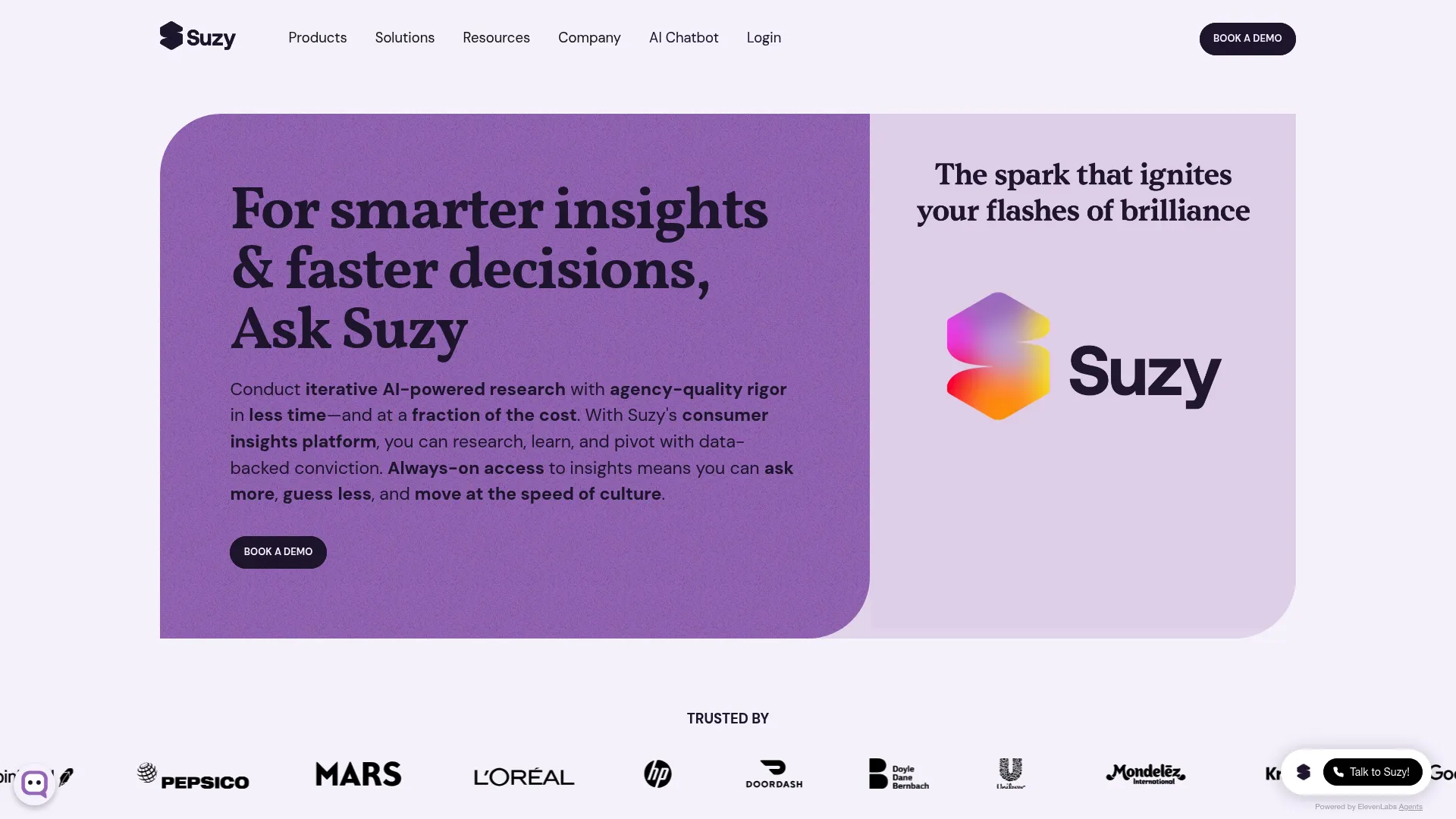
Suzy is built for the speed of modern business. It is a vertically integrated platform that lets you “pulse” check consumers instantly. This is ideal for agile product teams that need validation on concepts, packaging, or messaging in real-time.
Unlike legacy market research companies that rely on third-party vendors, Suzy owns the audience, meaning you aren’t waiting for a middleman to find participants.
Features
- Suzy Insights: Rapid quantitative surveys.
- Suzy Live: Real-time video interviews and focus groups.
- Suzy Audiences: Retargeting capabilities.
- Integrated Cloud: All your research lives in one place.
Pros
- Extremely Fast: You can get answers in 24-48 hours.
- Cost-Effective: Retainer models encourage frequent testing.
- Hybrid Capability: Integrates Quant and Qual seamlessly.
Cons
- Depth Limitations: It replaces quick validation, not multi-month ethnography.
Criteria Evaluation
- Methodology: 4/5 (Combines Quant/Qual/AI)
- Speed: 5/5 (24-48 hour turnaround)
- Data Quality: 4/5 (Active proprietary community)
- Tech Capabilities: 5/5 (Integrated research cloud)
Community Reviews and Expert Recommendations
(Source: Suzy Approved Book Reviews – Context Note: The provided source text appears to be a book review blog called “Suzy Approved” rather than reviews of the software platform Suzy. I will focus on the general industry reputation and the platform’s stated value proposition from the Learnings doc to ensure accuracy, while acknowledging the platform’s specific features.)
Suzy is widely recognized in the industry for breaking down the barriers between researchers and consumers. By owning their own panel, they eliminate the “middleman” lag time. Users typically praise the interface for being modern and the ability to pivot questions based on immediate feedback.
Price
Subscription and license-based models.
Check out Suzy
6. Pollfish
Best Known For DIY Mobile Surveys
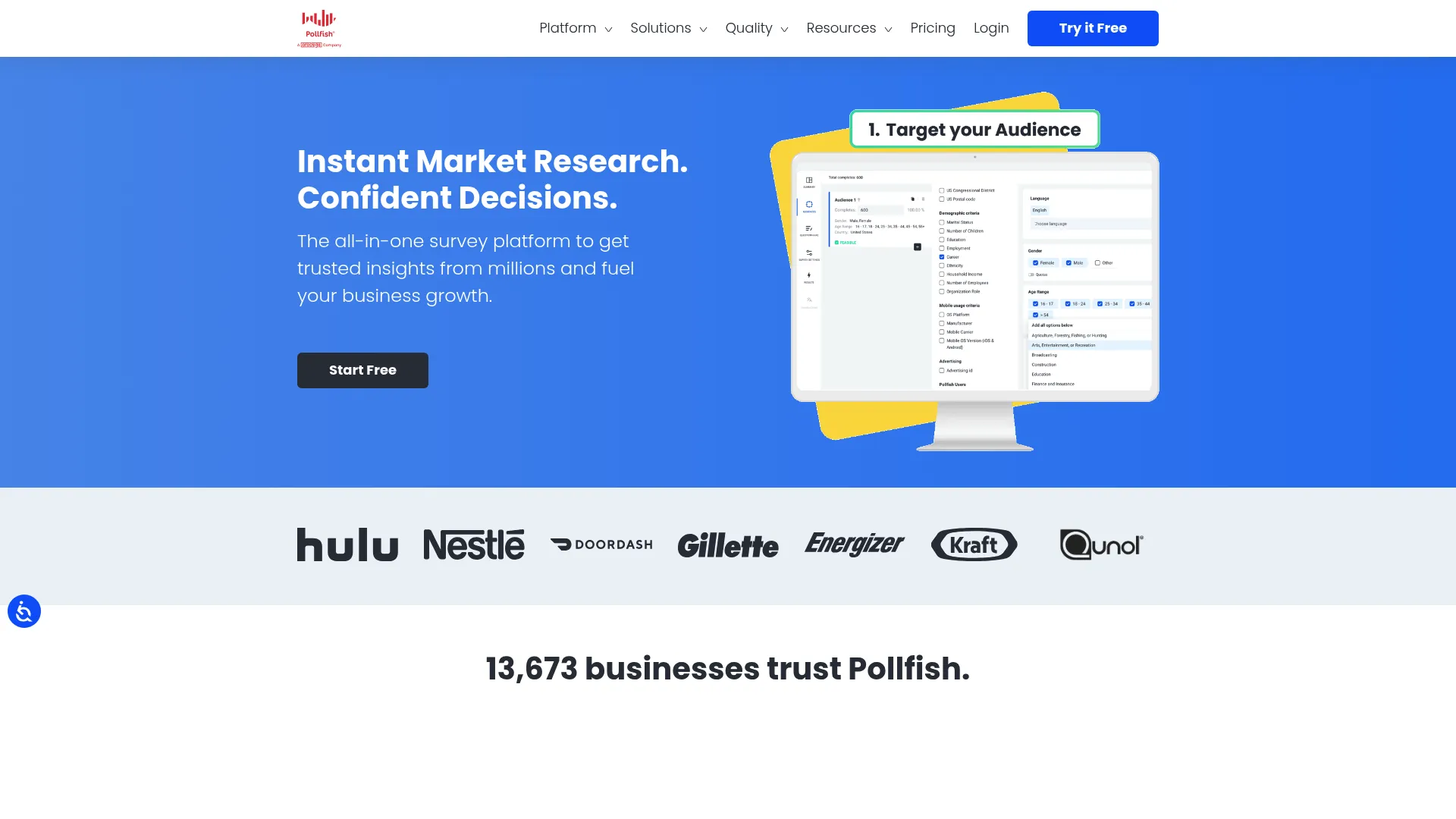
Pollfish takes a different approach. Instead of building a dedicated panel of professional survey-takers like most market research companies, they deliver surveys inside mobile apps that people are already using. This ensures high engagement and an organic respondent experience.
It is a powerful DIY tool for researchers who need data immediately without signing long contracts. You write the questions, you hit send, and the results stream in.
Features
- Mobile-App Delivery: Reaches people where they spend their time.
- Conversational AI: Helps improve the respondent experience.
- Global Reach: Access to over 100M respondents via the Prodege network.
- Advanced Targeting: Filter by demographics and behaviors.
Pros
- Transparent Pricing: Pay-per-response means no hidden fees.
- Incredible Speed: You can finish a Gen Pop study in hours.
- No Subscriptions: Great for one-off projects.
Cons
- DIY Heavy: You need to know how to write a good survey.
- Support: Some users find advanced features lacking compared to Qualtrics.
Criteria Evaluation
- Methodology: 4/5 (Mobile delivery)
- Speed: 5/5 (Hours for Gen Pop)
- Data Quality: 4/5 (AI fraud detection)
- Tech Capabilities: 4.5/5 (Conversational AI)
Community Reviews and Expert Recommendations
(Source: Software Advice)
Reviews are generally positive regarding speed and customer service. Users love the “live updates” feature where they can see results coming in instantly. One user noted, “I submitted a survey at 6pm and had results by 8am.” The pay-as-you-go model is a huge hit for budget-conscious marketers. However, some negative reviews mention issues with survey scheduling and occasional disqualifications. A few users felt the “quality” of responses was mixed, suggesting some respondents might rush through answers.
Price
Starts at $0.95 per response.
Visit Pollfish
7. Mintel
Best Known For Market Intelligence and Trends
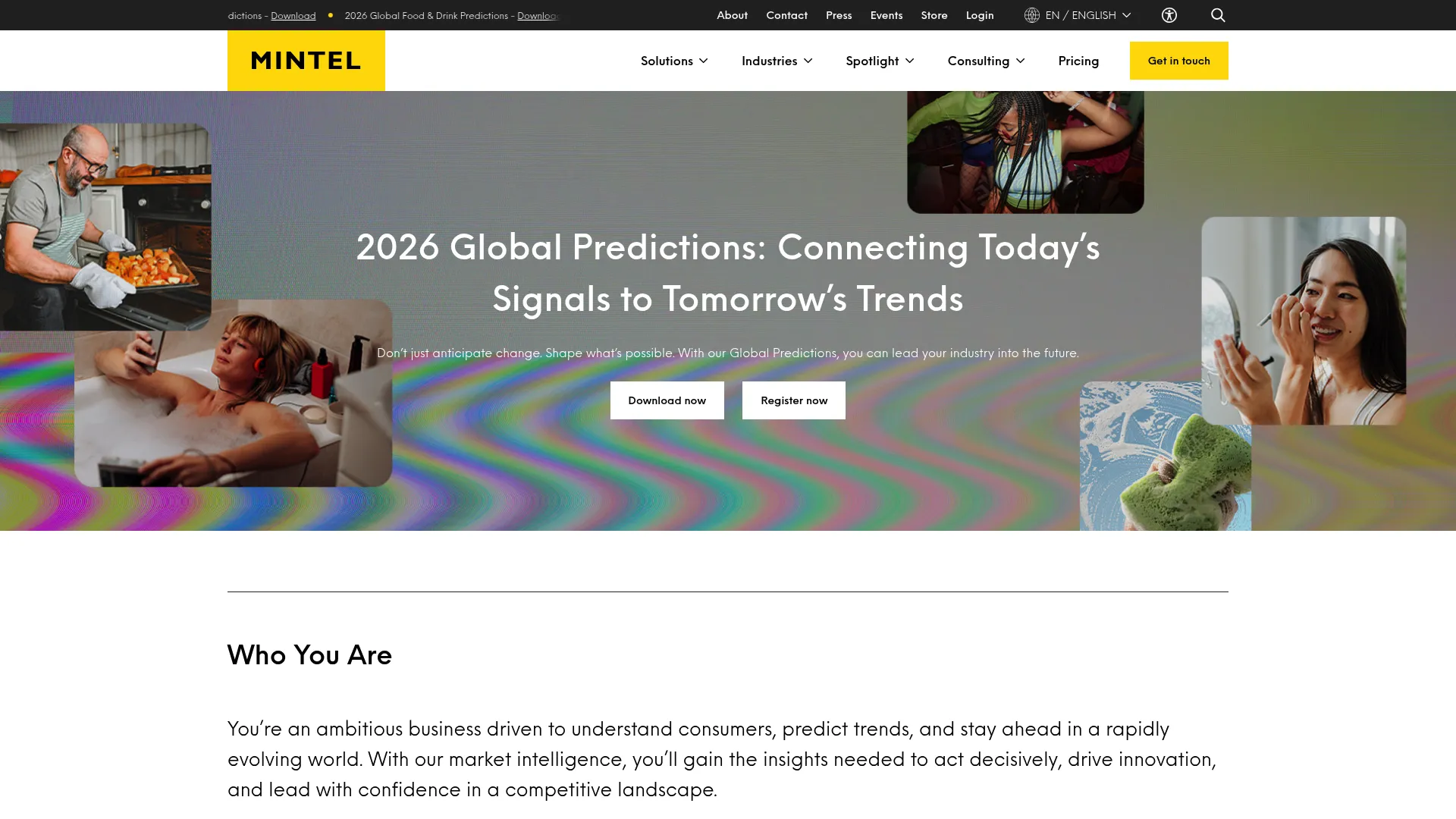
Mintel is less about running a new survey for you and more about giving you access to a massive library of intelligence that already exists. They are the gold standard for CPG innovation teams. While other market research companies focus on asking consumers what they want, Mintel tracks what they are actually buying.
Their Global New Products Database (GNPD) tracks product launches globally. If you want to know what flavor of sparkling water is trending in Japan before you launch in the US, Mintel is your partner.
Features
- GNPD: A database of product launches with packaging details.
- Trend Forecasting: Predicting what consumers will want next.
- Market Sizing: Estimating the value of specific categories.
- Competitive Intelligence: Seeing what your rivals are launching.
Pros
- Detailed Analysis: Their reports are curated by expert analysts.
- CPG Focus: Unmatched depth for consumer packaged goods.
- Instant Access: You don’t have to wait for fieldwork; the data is there.
Cons
- Report-Heavy: It is secondary research, not custom primary fieldwork.
Criteria Evaluation
- Methodology: 4/5 (Secondary research & trend analysis)
- Speed: 4/5 (Instant access to database)
- Data Quality: 5/5 (Expert analyst curation)
- Tech Capabilities: 4/5 (Global New Products Database)
Community Reviews and Expert Recommendations
(Source: TrustRadius)
Mintel is viewed as a premium market intelligence platform. Users rely on it for industry-specific information that is hard to find elsewhere. The analysis is considered top-tier, providing context that raw data often misses.
Price
Subscription-based access.
Check out Mintel
8. Gartner
Best Known For Tech Research and Advisory
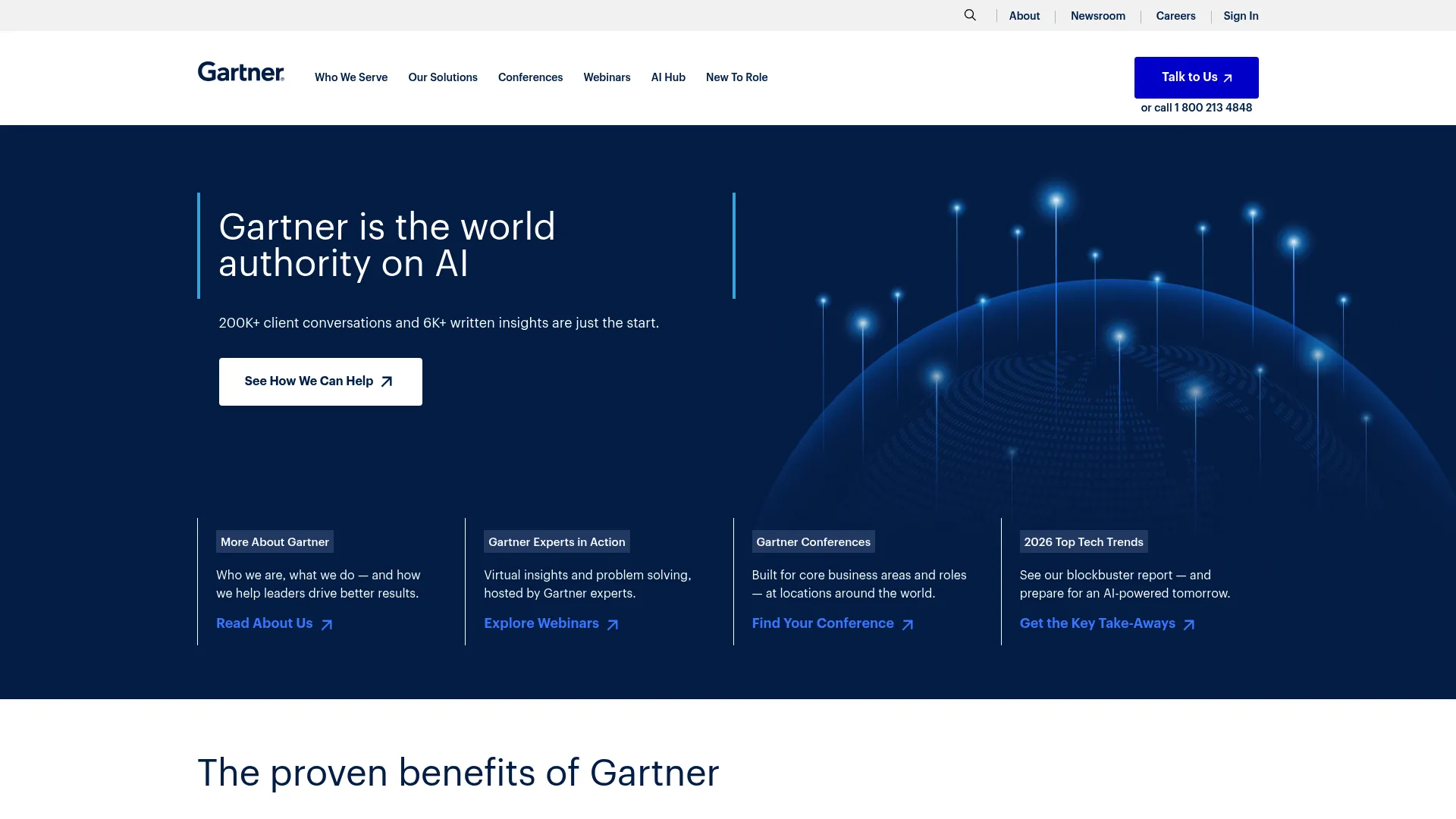
If you’re in the B2B technology space, Gartner is the bible. They provide objective insights to executives to help them make smarter decisions regarding tech investments and digital transformation. They stand apart from typical market research companies by offering high-level advisory services.
They are famous for their “Magic Quadrant” reports, which rank vendors based on execution and vision. They don’t just survey people; they advise the biggest companies in the world on strategy.
Features
- Magic Quadrant: The industry standard for vendor ranking.
- Hype Cycle: Visualizing the maturity of new technologies.
- Expert Consultations: Direct access to analysts.
- Benchmarking Tools: Compare your performance against peers.
Pros
- Unmatched Authority: A Gartner citation is instant credibility.
- Strategic Depth: They help you plan for the next 5-10 years.
- Peer Insights: Verified reviews from enterprise users.
Cons
- Very Expensive: High-tier subscriptions are the norm.
- Niche Focus: Exclusively for B2B/Tech/Enterprise.
Criteria Evaluation
- Methodology: 5/5 (Rigorous expert analysis)
- Speed: 3/5 (Focus on long-term strategy)
- Data Quality: 5/5 (Industry standard)
- Tech Capabilities: 3/5 (Advisory focus)
Community Reviews and Expert Recommendations
(Source: Gartner Peer Insights)
Gartner Peer Insights is a platform where tech buyers review vendors. Users value the “Voice of the Customer” reports which aggregate these peer reviews. The general consensus is that Gartner provides the confidence needed to make massive purchasing decisions. It reduces the risk of buying the wrong software.
Price
High-tier subscription/membership.
Visit Gartner
9. Highlight
Best Known For Physical Product Testing (IHUT)
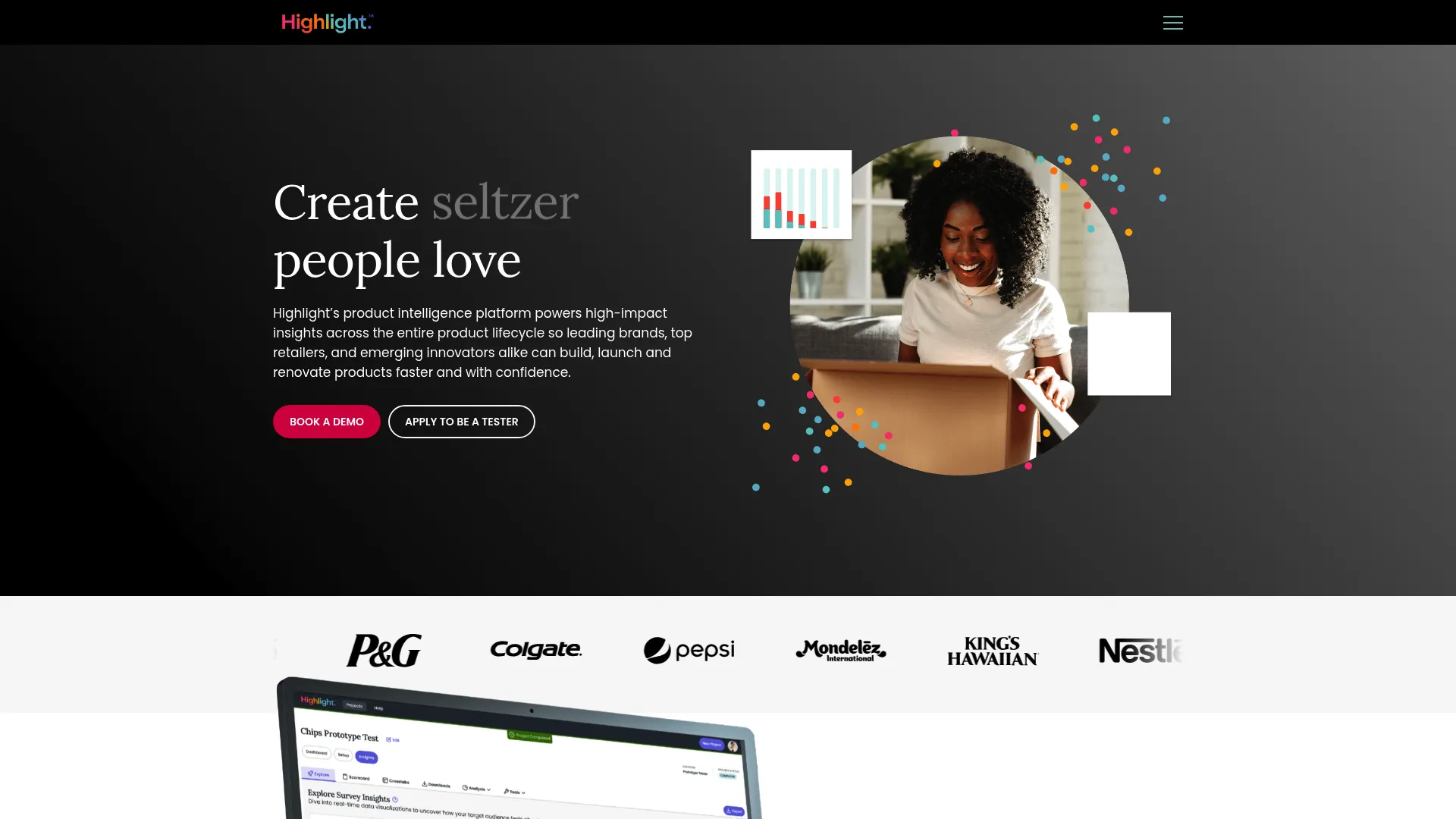
Highlight solves a very specific, very annoying problem: logistics. If you need to get a physical candy bar, lotion, or gadget into the hands of 500 people and get their feedback, Highlight handles it.
Unlike digital-only market research companies, they manage the shipping to curated communities and collect sensory feedback, photos, and videos. It is a modern, tech-enabled approach to traditional product validation that used to take months.
Features
- Turnkey Logistics: They handle the shipping and fulfillment.
- Sensory Evaluation: Structured feedback on taste, smell, and feel.
- Video Feedback: See people using your product.
- Automated Scorecards: Instant grading of your product’s performance.
Pros
- High Authenticity: Real-world testing in people’s homes.
- High Completion Rates: 90%+ of participants finish the study.
- Fast for Physical: 2-3 weeks is lightning speed for shipping goods.
Cons
- Physical Only: Not for software or service companies.
Criteria Evaluation
- Methodology: 5/5 (Physical product testing)
- Speed: 4/5 (Fast for physical testing)
- Data Quality: 5/5 (Video feedback ensures reality)
- Tech Capabilities: 4.5/5 (Automated logistics)
Community Reviews and Expert Recommendations
(Source: Highlight Case Studies)
Brands use Highlight to drive launches on tight timelines. Case studies show that companies can reveal the right balance of flavor and ingredients quickly. The platform is praised for powering “high-impact insights” across the entire product lifecycle, helping emerging innovators renovate products with confidence.
Price
Based on sample size and logistics complexity.
Check out Highlight
10. GWI (GlobalWebIndex)
Best Known For Audience Profiling and Psychographics
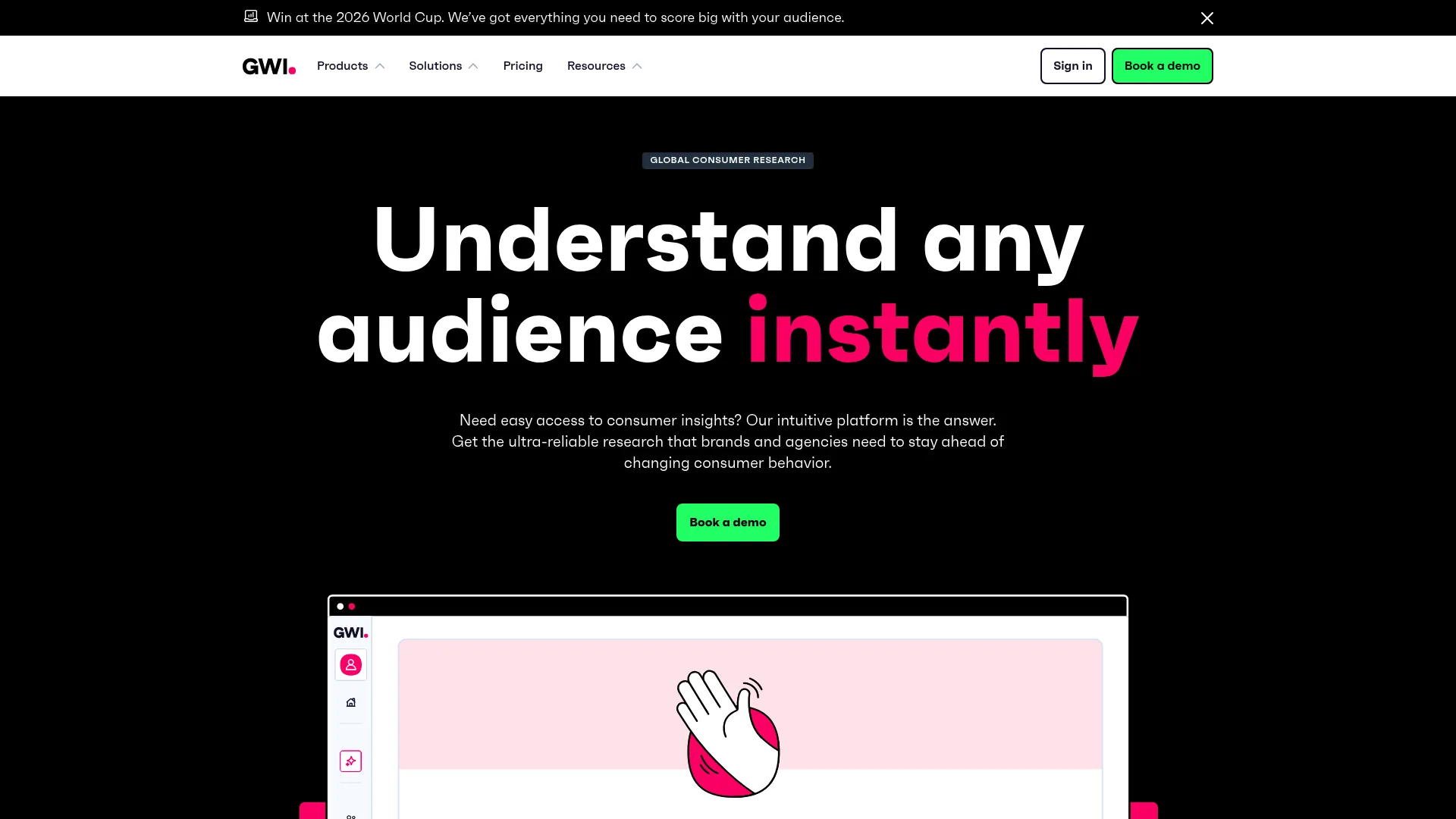
GWI provides “modernized consumer research” via an on-demand platform. They are excellent for building detailed buyer personas. If you need to understand the media consumption habits, attitudes, and psychographic profiles of Gen Z in Brazil versus Boomers in the UK, GWI has the data ready.
While some market research companies require you to launch a new study for every question, GWI offers massive, ongoing survey data that you can slice and dice instantly.
Features
- Audience Builder: Create custom segments based on thousands of data points.
- GWI USA: A specific, deep dataset for US consumers (250M+ represented).
- Chart Builder: Exportable visuals for your presentations.
- Global Coverage: Data across 50+ markets.
Pros
- User-Friendly: The platform is easy to navigate.
- Instant Access: No waiting for fieldwork; the data is already there.
- Media Planning: Great for figuring out where to buy ads.
Cons
- Subscription Model: Custom research is usually an add-on.
Criteria Evaluation
- Methodology: 4.5/5 (Massive ongoing survey)
- Speed: 5/5 (Instant access)
- Data Quality: 5/5 (250M+ US consumers represented)
- Tech Capabilities: 5/5 (Easy-to-use platform)
Community Reviews and Expert Recommendations
(Source: GWI Blog/General Sentiment)
GWI is frequently cited in marketing blogs and reports for its depth of data. Users appreciate the ability to get granular with “psychographics”—understanding not just who people are, but what they value. It is a staple for strategy teams at ad agencies.
Price
Subscription tiers.
Visit GWI
Notable Mentions
While the top 10 cover the major bases, these four agencies are excellent for specific niches and deserve a look.
Forrester
Similar to Gartner, Forrester is a powerhouse for technology and customer experience (CX) research. They are ideal for businesses looking for “customer obsession” strategies and tech adoption trends.
Visit Forrester
Bixa
A boutique studio specializing in Gen Z insights and deep qualitative research. If you need to understand the “why” behind behavior rather than just the numbers, Bixa is a strong choice.
Visit Bixa
Westat
An employee-owned firm known for large-scale data collection for government, health, and social policy. Best for public sector or large-scale academic-style research projects.
Visit Westat
Qualtrics
An “Experience Management” (XM) platform. While they offer research services, they are best known as a software platform for enterprises to manage customer and employee feedback internally.
Visit Qualtrics
Frequently Asked Questions
What is the difference between Quantitative and Qualitative research?
Quantitative research is about numbers and hard data—think surveys with 1,000 people giving you percentages. Qualitative research is about depth and emotion—think focus groups or interviews where you learn why people feel a certain way. Agencies like Nielsen lean Quant; agencies like Bixa lean Qual.
How much does market research cost?
It varies wildly. A DIY survey on Pollfish might cost you $500. A custom brand tracking study with Kantar or Ipsos can run into the tens or hundreds of thousands of dollars. With larger market research companies, you generally pay for the access to hard-to-reach audiences and the expertise of the analysis. If you need help determining how much budget to allocate for research versus execution, our business consultants can help model your ROI.
Should I use a DIY platform or a full-service agency?
If you have a research background and need answers tomorrow, use a DIY platform like Attest or Pollfish. If the stakes are high (like a global product launch) and you need strategic guidance to avoid a disaster, hire a full-service partner like Kantar.
How is AI changing market research?
AI is making everything faster. It is being used to analyze open-ended text responses instantly, detect fraud in survey panels, and even create “synthetic” respondents to model behavior. Agencies not using AI, like Suzy or GWI are, will likely fall behind on speed and price.
How do I choose the right agency?
Look at your timeline and your budget. If you have 24 hours, you can’t use Nielsen. If you need to test a physical soap bar, you need Highlight. Match the methodology to your specific business problem, not just the agency’s reputation.
Final Thoughts
Market research agencies provide the data—the “what” and the “why” of consumer behavior. But data alone doesn’t drive revenue; execution does. Once you’ve validated your product with Highlight or defined your audience with GWI, you need a partner to actually activate those insights.
- From Data to Strategy: We believe your business shouldn’t gamble on marketing. We thrive on strategies rooted in data and science. For a comprehensive approach that moves beyond just data collection, explore our full suite of digital marketing solutions.
- AI-Ready Execution: As search evolves, simply ranking on Google isn’t enough. Our LLM Optimization services structure your content to be readable by AI, ensuring your brand is discoverable. Learn more about how we utilize AI to predict trends and optimize performance in real time.
- Building the Infrastructure: If your research indicates a need for a better user journey, our Web Development team builds sites prioritizing speed and conversion.
- Localized Dominance: We apply granular SEO strategies that align with the specific buyer intents revealed by your market research.
You have the insights. Now let’s do something with them.
Ready to move from research to revenue?
Explore The Marketing Agency’s Data-Driven Solutions

 By
By