



Your PPC budget is bleeding out, and you’re looking in the wrong places. You’re tweaking bids, testing ad copy, adjusting by device (all the stuff that feels like optimization). Meanwhile, the real money disappears into audience overlap you’re not tracking, attribution models that lie to your face, and platform defaults literally designed to spend your budget faster, not smarter.
According to DesignRush’s 2026 PPC Statistics report, advertisers lost $84 billion to ad fraud in 2023 alone, representing 22% of global ad spend. But fraud is just one line item in a much bigger efficiency problem. The accounts that actually perform aren’t running bigger budgets or fancier tools. They’re running weekly search query audits, incrementality tests, and manual guardrails around automation that would otherwise spend like a drunk sailor.
Effective ppc optimization requires a methodical approach to identifying and eliminating these hidden drains on your budget. I’ve been digging through underperforming accounts for years. Surface metrics look fine, but money hemorrhages in places nobody’s watching. What I found changed how I think about paid search entirely.
Table of Contents
-
The Invisible Drain: Audience Overlap and Cannibalization
-
Why Your Attribution Model is Lying to You
-
The 3 AM Problem: When Your Ads Run But Your Buyers Don’t
-
Negative Keywords Aren’t Enough (And Never Were)
-
Creative Fatigue Happens Before You See It in the Data
-
The Search Query Report is Your Most Underused Asset
-
Bid Strategies That Actually Account for Customer Lifetime Value
-
Platform Defaults Are Designed to Spend, Not Convert
-
Quality Score Isn’t Just About Relevance
-
When to Kill a Campaign That’s “Performing”
TL;DR
-
Your campaigns are bidding against each other (audience overlap), and it’s inflating CPCs by 30-50%
-
Attribution models give credit to touchpoints that didn’t actually drive the conversion. Run incrementality tests to find out what’s really working
-
Platform defaults are designed to spend your budget fast, not efficiently. You need manual guardrails on everything
-
Weekly search query reviews catch waste before it compounds. That template negative keyword list from six months ago is already outdated
The Invisible Drain: Audience Overlap and Cannibalization
How Overlap Inflates Your Costs
Everyone obsesses over keyword match types and bid adjustments. That’s table stakes. The real budget drain? Audience overlap. And I’d bet money you’re not monitoring it.
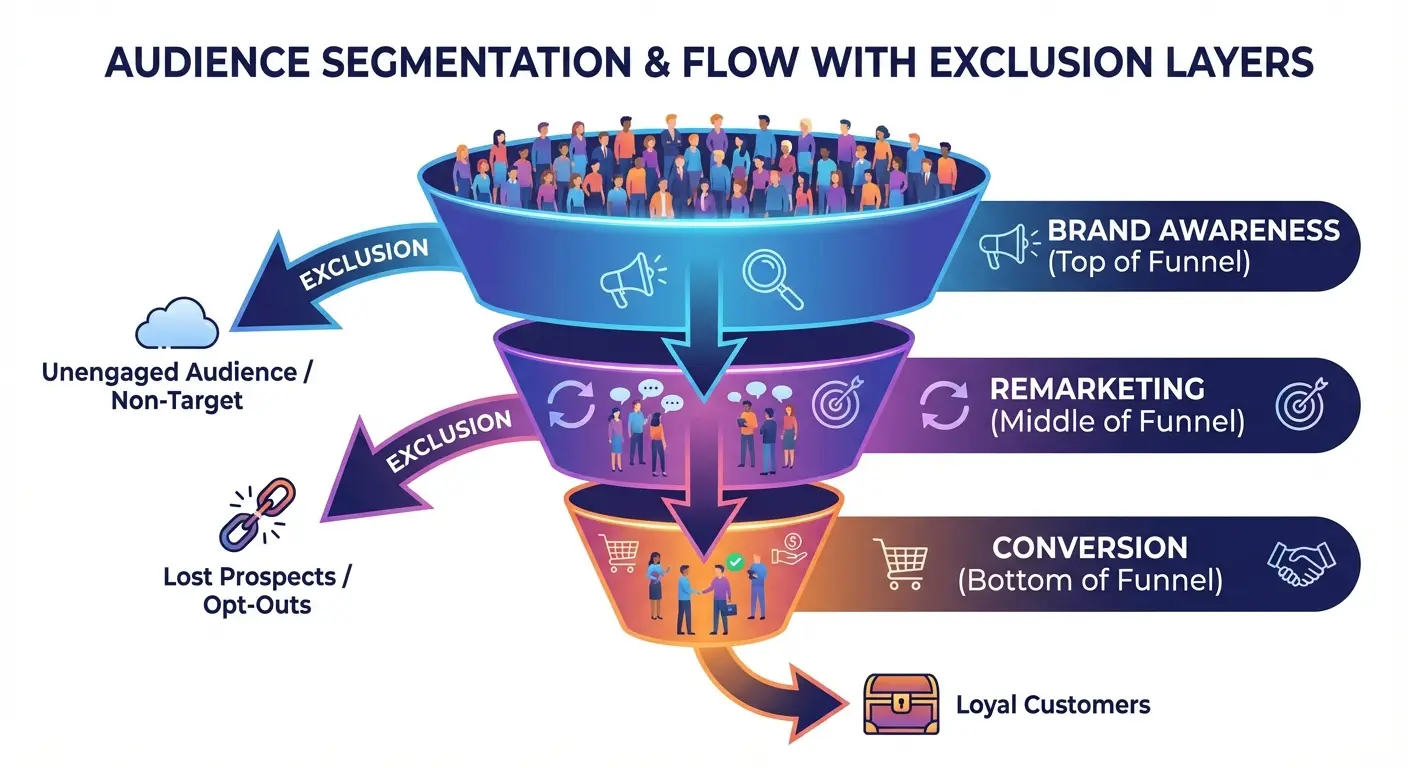
Here’s what’s happening: Your brand awareness campaign targets User A. Your remarketing campaign also targets User A. Your search campaign? Also User A. You’re running three campaigns, all bidding on the same person.
Congrats. You’re competing with yourself and driving up your own CPCs.
Platform algorithms don’t care if you’re wasting money competing with yourself (in fact, they benefit from it). Overlap analysis requires pulling audience membership data and cross-referencing it against campaign structures, something most advertisers skip entirely.
The fix isn’t just exclusion lists. You need sequential targeting that moves users through a funnel instead of bombarding them from all angles at once. Understanding what is ppc optimization means recognizing that true efficiency starts with eliminating self-competition before you ever touch bid adjustments. This is where real ppc optimization begins. Not in the tactics everyone talks about, but in the structural problems nobody sees.

|
Overlap Scenario |
What’s Happening |
Impact on CPC |
Fix Required |
|---|---|---|---|
|
Brand awareness + Remarketing targeting same users |
Both campaigns bid on identical audience |
30-50% CPC inflation |
Exclude remarketing audiences from awareness campaigns |
|
Search + Display hitting converted customers |
Wasting impressions on existing customers |
20-40% budget waste |
Create post-conversion exclusion lists across all campaigns |
|
Multiple remarketing windows overlapping |
7-day, 30-day, and 90-day lists compete |
Diminishing returns on frequency |
Establish sequential remarketing with mutual exclusions |
|
Geographic campaigns with audience layering |
Location + interest targeting creates double-bidding |
Variable, often 25%+ |
Audit audience and location intersection monthly |
A SaaS company running three campaigns discovered they were targeting the same 40,000-person audience across brand awareness (cold traffic), remarketing (warm traffic), and a promotional campaign. When they implemented sequential exclusions (removing anyone who entered the remarketing pool from the awareness campaign and excluding converted users from both), their average CPC dropped from $4.20 to $2.85 within two weeks.
More importantly, their conversion rate increased by 34% because users received contextually appropriate messaging based on funnel stage rather than seeing three different value propositions simultaneously.
I’ve seen this pattern repeat across dozens of accounts. The problem wasn’t the campaigns themselves, but how they interacted with each other. Effective ppc optimization addresses these structural inefficiencies before diving into tactical adjustments.
Why Your Attribution Model is Lying to You
The Last-Click Illusion
Last-click attribution makes PPC look like a hero. It’s not. It’s just the last thing someone clicked before converting.
Your display campaign introduced the brand. Your email sequence built trust. Your blog content answered their objections. But PPC gets 100% of the credit because someone clicked an ad five minutes before buying. That’s not driving demand. That’s intercepting it at the finish line.
This creates a dangerous feedback loop where you over-invest in bottom-funnel tactics and starve the channels that generate demand. You’re optimizing for efficiency in a vacuum, ignoring the ecosystem that makes those efficient conversions possible.
The solution isn’t switching to a different attribution model (though that helps). You need to run incrementality tests that measure what happens when you turn channels off entirely. Only then do you see true contribution versus correlated touchpoints. Proper ppc optimization requires understanding the difference between correlation and causation in your conversion paths.
Research shows that PPC visitors are 50% more likely to purchase than organic visitors, but this statistic exemplifies the last-click attribution problem. It measures correlation, not causation. The PPC click happens last because the user is ready to buy, not necessarily because PPC created that readiness. Without incrementality testing, you can’t distinguish between channels that drive demand and channels that simply capture it at the moment of conversion.
Multi-Touch Models Still Miss the Point
Multi-touch attribution spreads credit across touchpoints, which sounds more sophisticated. But it still doesn’t answer the fundamental question: would this conversion have happened without this specific channel?
Position-based and time-decay models assign value based on arbitrary rules (first and last touch get more credit, or recent touches matter more), but these are assumptions, not insights. A user might click five ads before converting, but four of those clicks could be completely unnecessary. You’re giving partial credit to interactions that added zero incremental value.
I’ve seen accounts where removing mid-funnel touchpoints increased conversion rates because it reduced decision fatigue. The real work is isolating causal impact, not just documenting the customer journey. That requires holdout groups, geo-split testing, and a willingness to accept that some of your “performing” campaigns might be passengers, not drivers. This level of rigor is necessary when you optimize ppc campaigns for true incremental value.
For more detailed guidance on running tests that reveal true campaign performance, see our comprehensive PPC case study analysis that demonstrates incrementality testing in action.
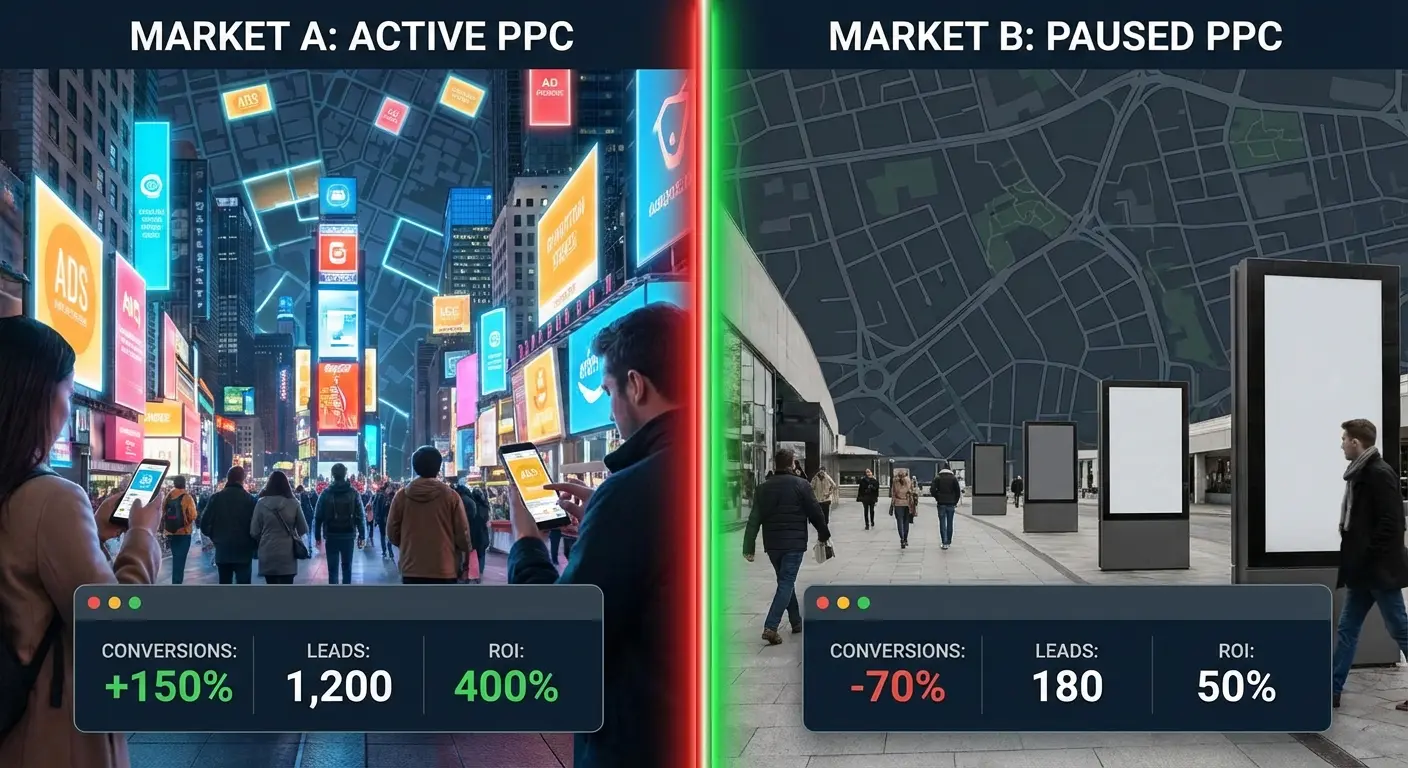
According to a recent Search Engine Land analysis on SEO-PPC collaboration, teams are increasingly adopting guerrilla testing (turning campaigns on or off in specific markets to measure true incrementality). This lo-fi approach helps quantify whether PPC ads on branded terms are capturing conversions that would have occurred organically anyway, making paid results appear stronger than they are.
The article emphasizes that “PPC ads on branded terms can capture conversions that would have occurred organically, making paid results appear stronger and SEO weaker.” I’ve used this approach with clients who were convinced their branded campaigns were critical, only to discover that 70% of those conversions happened anyway when we paused the campaigns in test markets. Understanding what is ppc optimization at this level means questioning even your best-performing campaigns.
Incrementality Testing Checklist:
☐ Select test markets with similar baseline performance (conversion volume within 15% variance)
☐ Establish 4-week baseline period with all campaigns running normally
☐ Pause target campaign in test markets only (keep control markets running)
☐ Run test for minimum 2 weeks (4 weeks preferred for statistical significance)
☐ Monitor total conversions (all channels) in test vs. control markets
☐ Calculate true incrementality: (Control conversions – Test conversions) / Baseline conversions
☐ Document conversion sources that increased during pause period
☐ Repeat test in different markets to validate findings
☐ Adjust attribution weights based on proven incremental contribution
The 3 AM Problem: When Your Ads Run But Your Buyers Don’t
You’re running ads at 3 AM because you see traffic at 3 AM. Makes sense, right?
Wrong.
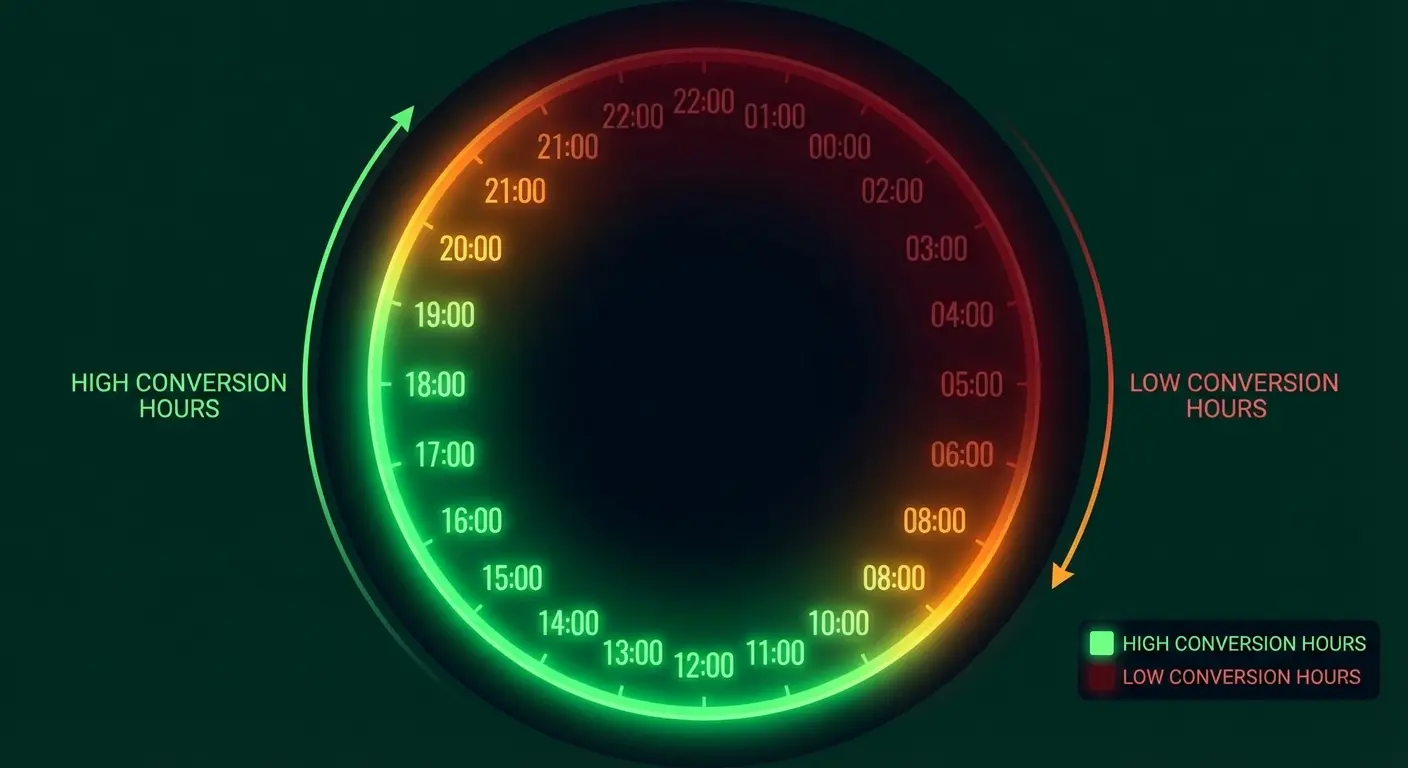
Traffic doesn’t equal intent. Those 3 AM visitors? They’re browsing, researching, killing time. They’re not pulling out their credit card. But you’re paying for those clicks anyway because your ad schedule is based on impression volume, not conversion data.
Different hours attract different user intent, and collapsing that nuance costs you. B2B buyers research during work hours but often can’t complete purchases until they get budget approval. E-commerce impulse buys spike during lunch breaks and evening wind-down time. Service businesses get quote requests heaviest on Monday mornings when people are planning their week.
You need conversion data by hour and day, not just impression or click data. Then you need the discipline to cut spend during low-intent windows, even if volume is there.
Platforms will happily spend your budget 24/7 because their incentive is spend velocity, not your conversion efficiency. Strategic ppc optimization involves aligning your ad schedule with buyer behavior patterns, not just traffic volume. I’ve pulled hourly conversion data for hundreds of accounts, and the variance is staggering. Often 5-7x differences in conversion rates between peak and off-peak hours within the same account. These tips for ppc ad scheduling can dramatically improve campaign efficiency without changing anything else about your targeting or creative.
|
Business Type |
Peak Conversion Hours |
Low-Intent Hours (Cut Spend) |
Conversion Rate Variance |
|---|---|---|---|
|
B2B SaaS |
Tuesday-Thursday, 10am-3pm |
Weekends, before 8am, after 7pm |
3-5x difference |
|
E-commerce (Impulse) |
12pm-1pm, 8pm-10pm |
2am-6am, during commute hours |
2-4x difference |
|
Professional Services |
Monday 8am-11am, Friday 2pm-5pm |
Wednesday evenings, weekends |
4-6x difference |
|
Local Services |
Monday-Tuesday 7am-10am |
Late nights (after 9pm), Sunday |
3-7x difference |
I had a personal injury lawyer who was convinced his ads needed to run 24/7 because “accidents happen at night.” Technically true. But when we pulled hourly conversion data, we found that 10 PM to 6 AM was generating 18% of his clicks and 3% of his actual leads.
Turns out people Google “car accident lawyer” at 2 AM, but they don’t fill out contact forms until Monday morning when they’re sober and at work.
By cutting ad spend during these hours and reallocating the budget to Monday and Tuesday mornings (when conversion rates were 6x higher), we reduced his cost per qualified lead by 41% without changing anything else about the campaigns. The total click volume dropped by 15%, but conversion volume increased by 22%. This is what ppc optimization looks like when you stop optimizing for vanity metrics and start optimizing for revenue.
Negative Keywords Aren’t Enough (And Never Were)
The Maintenance Gap
You built a negative keyword list during campaign setup. Maybe you even borrowed a template from an agency or industry list. Called it done.
That was six months ago.
Here’s the problem: that list is already outdated. Search behavior evolves constantly. New products launch, trends shift, your competitors change their messaging, and suddenly you’re paying for clicks on queries that didn’t even exist when you built that list.
A negative keyword strategy that isn’t updated weekly is basically abandoned.
You need a process where someone reviews search query reports, identifies waste, and adds negatives on a recurring schedule. I’m talking about queries that seem adjacent but convert terribly, branded terms from competitors that you’ll never win, and informational searches from users who have zero purchase intent.
The goal isn’t just blocking obvious junk. You’re hunting for patterns in low-converting queries that reveal fundamental mismatches between what you’re bidding on and what users want. Learning how to optimize ppc campaigns effectively means committing to weekly negative keyword maintenance, not just initial setup. I’ve seen accounts where this single discipline recovered 15-25% of wasted spend within the first month.
Understanding the broader context of paid search strategy helps inform your negative keyword approach. Our guide on Google Ads best practices provides additional framework for campaign structure decisions.
Weekly Search Query Review Protocol:
Step 1: Data Pull (15 minutes)
– Export search query report for past 7 days with clicks ≥ 2
– Filter by campaigns with conversion tracking enabled
– Include columns: query, clicks, cost, conversions, conv. rate
Step 2: Pattern Identification (20 minutes)
– Sort by spend (high to low) and flag queries with 0 conversions
– Identify modifier patterns: “free,” “DIY,” “how to,” “tutorial,” “jobs,” “salary,” “course,” “cheap,” “download”
– Look for competitor brand names appearing in your queries
– Note informational queries (who/what/when/where/why questions)
Step 3: Negative Keyword Addition (10 minutes)
– Add exact match negatives for specific wasteful queries
– Add phrase match negatives for modifier patterns
– Add broad match negatives cautiously (only for clearly irrelevant terms)
– Document reasoning in shared spreadsheet for team reference
Step 4: Review Threshold (5 minutes)
– Any query with $50+ spend and 0 conversions = immediate negative
– Any query with 10+ clicks and <0.5% conversion rate = review for negative
– Queries with 1 conversion but suspicious intent = monitor for one more week
Phrase and Broad Match Require Different Negative Strategies
Exact match keywords need minimal negative keyword support because you’re already controlling the query tightly. Phrase and broad match are different beasts entirely.
Broad match in particular will find “relevant” queries that are technically related but commercially useless. You bid on “marketing software,” and you get clicks for “free marketing software for students” or “marketing software tutorials.” Those users aren’t buyers. They’re researchers, students, or people looking for free alternatives.
Your negative list for broad match campaigns needs to be three times longer than your positive keyword list, minimum. You’re not trying to block everything. You’re sculpting traffic toward commercial intent by methodically eliminating non-buyer queries. That means negating terms like “free,” “tutorial,” “DIY,” “how to,” “job,” “salary,” “course,” and dozens of other modifiers that signal research, not purchase readiness.
I’ve managed accounts where the broad match negative list exceeded 2,000 terms because we were aggressively protecting budget from informational queries. The campaigns performed better not because we found magic keywords, but because we stripped away everything that wasn’t buyer intent. This is how to optimize ppc campaigns when you’re working with match types that give platforms room to interpret your targeting.

Creative Fatigue Happens Before You See It in the Data
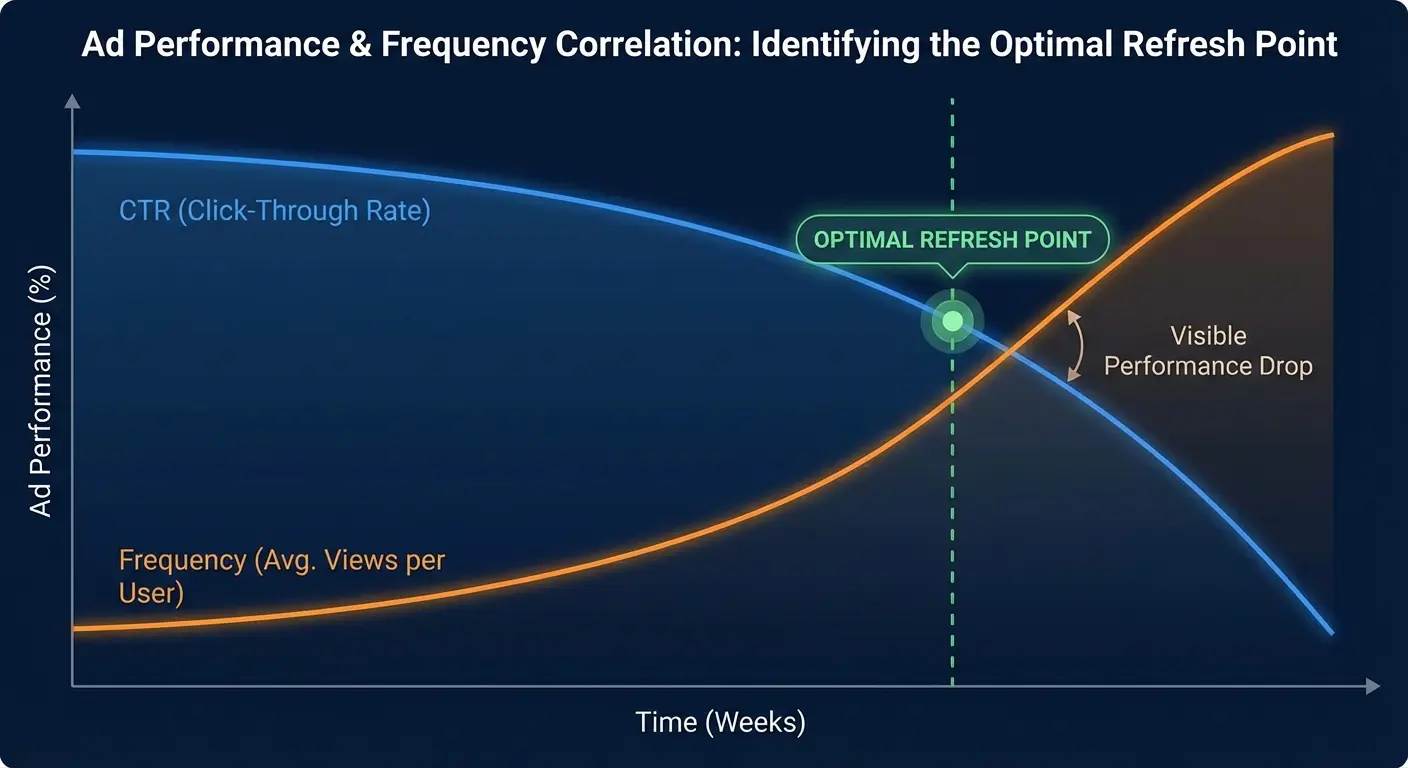
By the time your CTR drops, your creative is already dead. You’re just looking at the corpse.
Creative fatigue happens weeks before you see it in the data. Users stop noticing your ad, then they stop clicking it, then (finally) your CTR drops enough for you to notice. You’re always behind.
Frequency matters more than most advertisers track. If the same person sees your ad eight times without converting, showing it a ninth time won’t suddenly work. You need rotation schedules based on impression frequency, not just performance metrics.
Platforms won’t tell you when to refresh creative because they benefit from you continuing to spend. You need to set internal rules: after X impressions to the same audience segment, rotate to new creative. Test new angles, different value propositions, varied visual treatments.
The goal isn’t just maintaining CTR. You’re preventing ad blindness that degrades all your metrics slowly over time. Proactive creative refresh keeps campaigns efficient before decay shows up in dashboards. Effective ppc optimization includes scheduled creative rotation based on frequency caps, not just performance declines.
Data from ThatCompany’s PPC Statistics analysis reveals that the average CTR for Google Ads is 6.42%, but this baseline masks significant creative fatigue patterns. Campaigns that maintain consistent creative for more than 30 days without refresh typically see CTR degradation of 15-25% even when overall account averages appear stable. The metric appears healthy in aggregate because new campaigns and fresh creative offset the declining performance of stale ads, creating a false sense of security.
The Search Query Report is Your Most Underused Asset
Intent Signals Hidden in Plain Sight
Your search query report isn’t just a list of what people typed into Google. It’s a window into what they actually want, and it’s full of stuff your keyword research tools never predicted.
You bid on “CRM software.” Cool. But look at your search queries: people are typing “CRM software with email automation” and “CRM that integrates with Shopify.” Those modifiers? That’s gold. That’s real demand, in real language, from real people with real problems.
You can build entire campaigns around high-converting long-tail queries you discovered in search reports, not keyword planners. Even better, you can update your ad copy and landing pages to speak directly to those specific needs.
Keyword tools predict search volume based on historical data. Search query reports show you real-time demand from actual humans with problems. The difference is massive. Mining your search query report for intent signals is one of the most valuable strategies for effective ppc optimization.
The process of analyzing search queries mirrors the data-driven approach we use in our performance marketing case studies, where user behavior patterns inform strategic decisions.
A recent Search Engine Journal article on PPC optimization emphasizes how analyzing customer conversations and search queries reveals “true language keywords that your customers are likely typing into search or ChatGPT.” The article specifically identifies high-value seed keywords by industry: legal services see strong performance from [free consult] and [local attorney], home services from [emergency repair] and [same-day service], and medical/dental from [accepts insurance] and [licensed doctor]. These insights come from manually reviewing search query data and customer transcripts rather than relying on keyword planning tools that miss the nuanced language real buyers use.
Queries That Convert Versus Queries That Click
High CTR doesn’t mean high conversion rate. Some queries generate tons of clicks because they’re compelling or urgent, but the people behind those searches aren’t ready to buy.
You’ll see queries with 8% CTR and 0.5% conversion rate sitting next to queries with 2% CTR and 6% conversion rate. Which one is more valuable?
You need to segment your search query report by conversion rate, not just clicks or impressions. Find the queries that convert disproportionately well and build campaigns specifically around them, even if volume is low. Find the queries that click but never convert and add them as negatives, even if they’re “relevant.”
Relevance doesn’t pay your bills. Conversions do.
This analysis requires exporting search query data and joining it with conversion data, which takes more effort than scanning a dashboard, but it’s where real optimization lives. These are the ppc optimization techniques that separate accounts that perform from accounts that coast.
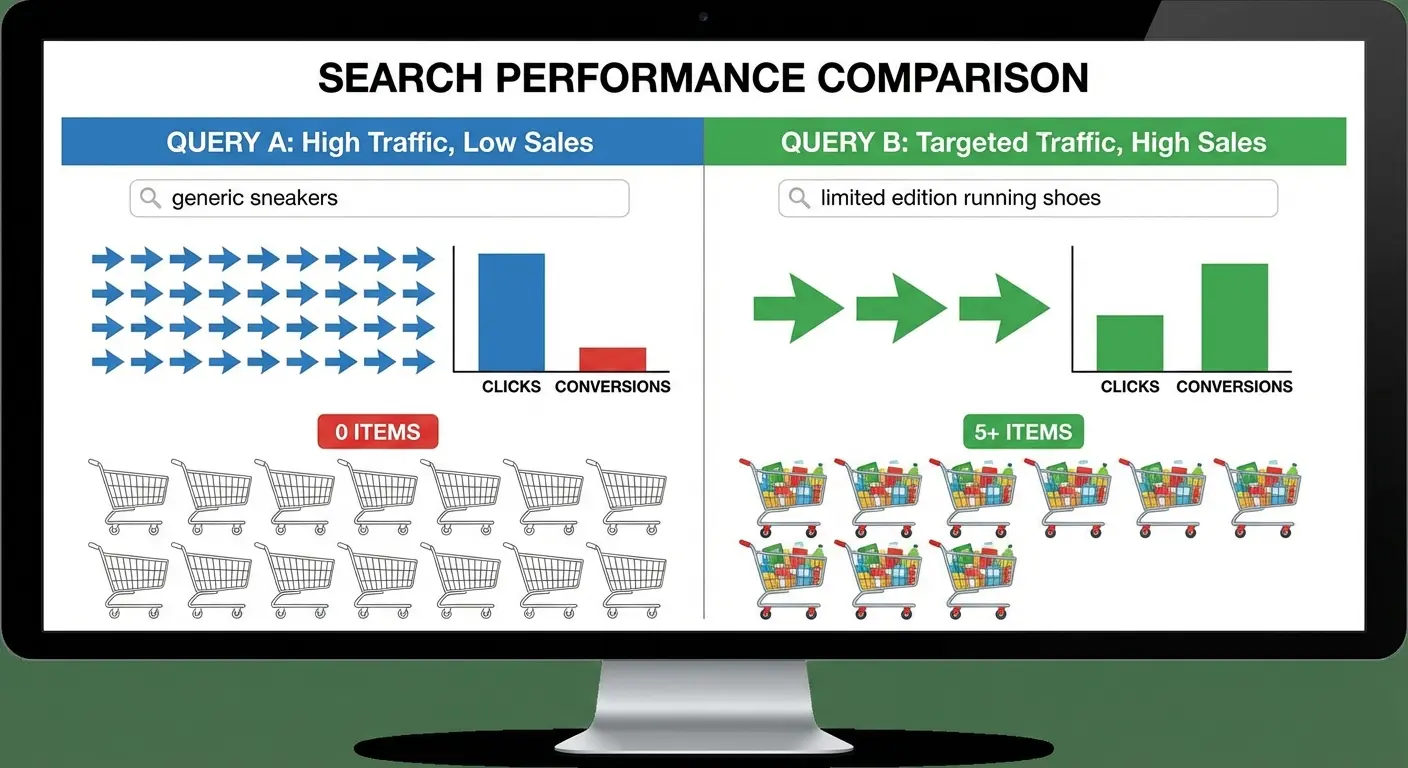
An accounting software company analyzed 90 days of search query data and discovered that queries containing “for small business” had a 4.2% CTR but only 0.8% conversion rate, while queries with “enterprise accounting software” had just 1.9% CTR but converted at 7.3%.
The small business queries generated 4x more clicks and looked successful in CTR reports, but the enterprise queries delivered 6x more customers. They reallocated 60% of their budget from small business terms to enterprise-focused keywords, accepting lower click volume in exchange for dramatically higher conversion rates. Revenue from PPC increased 89% while total clicks decreased by 31%. This is what ppc optimization looks like when you stop chasing volume and start chasing value.
Bid Strategies That Actually Account for Customer Lifetime Value
Cost-per-acquisition targets treat all customers as equal. They’re not.
A customer who buys once and ghosts you? Not the same as a customer who subscribes for three years and refers five friends. But your CPA bidding strategy doesn’t know that. It just sees “conversion” and treats them identically.
Optimizing bids around CPA ignores this reality and pushes you toward acquiring cheap customers who churn fast instead of valuable customers who cost more upfront but deliver exponentially more revenue over time. You need to feed lifetime value data back into your bidding strategy, either through enhanced conversions, offline conversion imports, or value-based bidding rules.
That means tracking which acquisition sources produce high-LTV customers and adjusting bids accordingly. Maybe your $50 CPA from branded search delivers customers worth $500 over their lifetime, while your $30 CPA from broad match delivers customers worth $100. You should be willing to pay more for the branded search click, but a pure CPA strategy would push you the opposite direction.
Value-based bidding requires integrating your CRM or subscription data with your ad platform, which is technically annoying but strategically critical. Ppc bid optimization becomes far more sophisticated when you factor in long-term customer value rather than just initial acquisition cost. I’ve helped clients build these integrations, and the shift in perspective is dramatic. Suddenly campaigns that looked inefficient become your best performers.
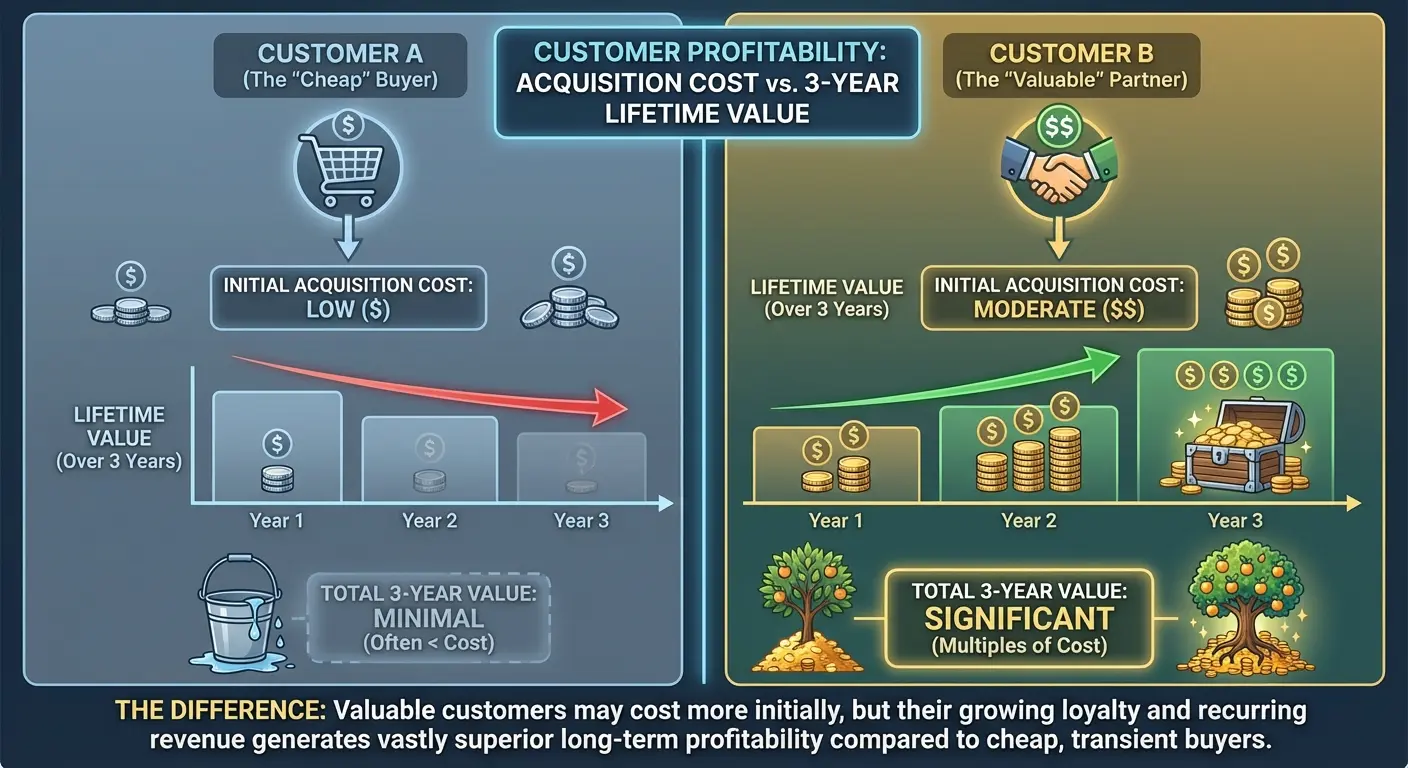
According to WebFX’s PPC statistics, businesses make $2 for every $1 spent on PPC on average, but this aggregate metric obscures massive variance in customer value. When you segment by customer lifetime value rather than initial conversion, the ROI picture changes dramatically. High-LTV customers often come from campaigns with higher initial acquisition costs but deliver 3-5x better long-term returns than campaigns optimized purely for low CPA. This is why ppc optimization that ignores LTV is incomplete.
Platform Defaults Are Designed to Spend, Not Convert
The Auto-Apply Trap
Google wants to help you. (Sure they do.)
Their auto-apply recommendations promise better performance. What they actually deliver? More spend. “Expand to broad match” means more impressions (and more spend). “Add more audiences” means more reach (and more spend). “Increase budget to capture missed opportunities” means… you get it.
Platforms are incentivized to maximize ad revenue, not your ROI. Their recommendations often serve their goals, not yours. You need to disable auto-apply features and review every recommendation manually before implementing it. Some are genuinely useful. Many are budget traps disguised as optimizations.
The default campaign settings are similarly designed for spend velocity: broad targeting, automatic placements, and accelerated delivery all prioritize getting your budget out the door fast. Tighter control requires manual overrides that most advertisers never implement because they assume platform defaults are optimized for performance. They’re optimized for spend. True ppc campaign optimization requires questioning every platform recommendation and default setting.
For agencies looking to manage these challenges across multiple client accounts, our guide on starting a PPC agency covers the operational frameworks needed to maintain quality control at scale.
Smart Bidding Needs Guardrails
Automated bid strategies work well once you have enough conversion data and clear constraints. Without those, they’ll happily spend your entire budget chasing incrementally worse conversions.
Smart bidding algorithms optimize toward your goal (maximize conversions, target CPA, target ROAS), but they don’t know your business context. They don’t know that conversions from certain geographies have higher fraud rates, or that mobile conversions have lower average order values, or that conversions during certain hours are more likely to result in refunds.
You need to layer manual controls on top of automated bidding: geo adjustments, device bid modifiers, audience exclusions, and budget caps that prevent runaway spend. Smart bidding is a tool, not a strategy. It executes efficiently within the parameters you set, but it won’t set smart parameters for itself.
When you optimize ppc campaigns using automation, the quality of your guardrails determines the quality of your results. I’ve seen smart bidding perform brilliantly in accounts with tight constraints and terribly in accounts that gave it free rein. The algorithm isn’t magic. It’s math operating within boundaries you define.

Quality Score Isn’t Just About Relevance
Quality Score gets reduced to “make your ads relevant to your keywords,” which is true but incomplete. Quality Score is a composite metric that includes expected CTR, ad relevance, and landing page experience. That last one trips up more advertisers than the first two combined.
You can have perfectly relevant ads and keywords, but if your landing page loads slowly, has intrusive pop-ups, or doesn’t deliver on the promise in your ad copy, your Quality Score suffers. Lower Quality Score means higher CPCs and worse ad positions, which compounds over time.
A campaign that starts with mediocre landing page experience can’t be fixed just by tweaking ad copy. You need to address page speed, mobile usability, content clarity, and conversion path friction.
Quality Score also has a historical component. If your account has a track record of low CTR or poor landing page experience, new campaigns inherit some of that baggage. Rebuilding Quality Score takes consistent performance over weeks, not quick fixes.
Look, I’ll be honest. For the first two years I ran PPC, I thought Quality Score was mostly bullshit. A made-up metric Google used to make you feel bad. Then I actually fixed landing page speed for a client (took their load time from 4.2 seconds to 1.1 seconds), and their Quality Scores jumped from 4/10 to 8/10 across the board. CPCs dropped 40% overnight. Same ads, same keywords, same everything else.
I was very, very wrong about Quality Score.
Advanced ppc optimization techniques include methodical Quality Score improvement through landing page optimization, not just ad copy refinement. I’ve worked with clients who improved Quality Scores from 4/10 to 8/10 over three months purely through landing page work, and their CPCs dropped by 40% as a result.
When to Kill a Campaign That’s “Performing”
Opportunity Cost You’re Not Measuring
A campaign can be profitable and still be a terrible use of your budget. Sounds weird, but hear me out.
Your branded search campaign is pulling 3X ROAS. Looks good, right? Except your non-branded campaigns are hitting 5X ROAS. Every dollar you’re spending on that 3X campaign is a dollar you’re NOT spending on the 5X campaign. That’s opportunity cost. And it’s invisible in your dashboard.
You need to evaluate performance relative to your best opportunities, not just against break-even. Even worse is when a campaign appears profitable but is cannibalizing higher-margin opportunities. Your branded search campaign might have a great ROAS, but if 80% of those clicks would have come to you organically anyway, you’re paying for traffic you’d get for free.
The incrementality question matters more than the performance metrics. You should regularly run holdout tests where you pause campaigns and measure what happens to overall conversions. Some campaigns are genuinely driving incremental revenue. Others are just intercepting demand that was already headed your way.
Understanding these ppc campaign optimization tips helps you make better budget allocation decisions based on true incremental value. I’ve had uncomfortable conversations with clients about killing their “best performing” campaigns because those campaigns were cannibalizing organic traffic or blocking tests that could perform better.

Campaigns That Block Better Tests
Every dollar you spend on an existing campaign is a dollar you’re not spending testing something new. If your account is maxed out on budget and every campaign is “performing well enough,” you have no room to experiment with new audiences, new creative angles, or new channels that might perform even better.
Killing a profitable campaign sounds counterintuitive, but it creates space for discovery. You might find that reallocating 20% of your budget from a mature campaign into a new test unlocks a higher-performing opportunity that scales better.
The best PPC accounts aren’t the ones that optimize existing campaigns to perfection. They’re the ones that constantly test new approaches and kill old campaigns that are merely good to make room for campaigns that could be great. Strategic ppc optimization includes knowing when to sunset successful campaigns to fund higher-potential opportunities. This is the hardest sell to clients, but it’s also where the biggest breakthroughs happen.
Working With Teams Who Understand the Details
These optimization layers require constant attention, technical depth, and a willingness to challenge platform defaults. If you’re running PPC in-house and feeling stretched thin, or if your current agency treats optimization as a monthly check-in rather than a continuous process, you’re probably leaving significant performance on the table.
Understanding what is ppc optimization at this level means recognizing that it’s not a one-time setup but an ongoing discipline.
At The Marketing Agency, we approach PPC with the same data-obsessed rigor we apply to every channel. We’re not interested in vanity metrics or surface-level tweaks. We dig into search query reports weekly, run incrementality tests to validate what’s working, and build bidding strategies around your customer lifetime value, not just acquisition cost.
If you’re tired of agencies that set campaigns and coast, or if you’re drowning in data without clear answers about where to optimize next, we should talk. Book a free strategy call and we’ll audit where your biggest opportunities are hiding. This is what ppc optimization looks like when it’s done right: relentless, focused on what moves revenue, not what looks good in a report.
Final Thoughts
Ppc optimization isn’t about finding one big lever to pull. It’s about methodically eliminating waste in places most advertisers never look: audience overlap, attribution blind spots, timing mismatches, and creative fatigue that sets in before metrics decline.
The accounts that win aren’t the ones with the biggest budgets. They’re the ones that treat ppc optimization as an ongoing discipline, not a one-time setup. You need processes for weekly search query reviews, monthly incrementality tests, and quarterly creative refreshes. You need to question platform defaults and build manual guardrails around automated systems.
Most importantly, you need to measure performance relative to opportunity cost, not just against break-even. A campaign that’s profitable but mediocre is still mediocre.
Look, I’ve been doing this long enough to know that most PPC advice sounds the same. “Test more.” “Optimize your Quality Score.” “Use negative keywords.” Everyone says it. Few people actually do it consistently.
The difference between accounts that coast and accounts that crush it isn’t secret tactics or insider knowledge. It’s discipline. It’s pulling search query reports every single week even when you don’t feel like it. It’s running incrementality tests that might prove your best campaign is actually worthless. It’s killing profitable campaigns to make room for better ones.
That’s not sexy. It’s not a growth hack. It’s just work. But it’s the work that actually moves the needle.