


Table of Contents
-
Why Most Local SEO Audits Miss the Actual Problem
-
The Pre-Audit Homework Nobody Talks About
-
Citation Consistency Isn’t Just About NAP Anymore
-
Your Google Business Profile Has a Trust Problem You Can’t See
-
The Review Velocity Trap That’s Killing Your Rankings
-
Local Link Equity: Stop Counting, Start Qualifying
-
On-Page Local Signals Beyond the Obvious Schema Markup
-
Competitor Gap Analysis That Actually Reveals Opportunity
-
The Technical Debt Hiding in Your Location Pages
-
Mobile Experience Auditing for Actual Local User Behavior
-
Turning Audit Findings Into a Prioritized Action Roadmap
TL;DR
Most local SEO audits are useless because they check boxes instead of figuring out why your competitor with fewer reviews outranks you. The stuff that actually matters: review patterns (not totals), local links from community organizations, location page content that isn’t template garbage, and mobile experience for people searching at 11 PM with an emergency. Oh, and your Google Business Profile has trust issues you can’t see in the dashboard. Review velocity beats review count every time. Local links from your chamber of commerce matter more than links from national directories with high domain authority. And if your location pages are 90% identical with just the city name swapped, you’re not sending local signals. You’re sending duplicate content signals.
Why Most Local SEO Audits Miss the Actual Problem
Last month, a client forwarded me their audit report from another agency. Forty-seven pages. Color-coded priority matrix. Executive summary with action items. They’d paid $2,800 for it.
Know what it didn’t tell them? Why the HVAC company with a website that looked like 2003 threw up on it was outranking them in the map pack. Despite having fewer reviews. Despite having worse content. Despite having a mobile site that barely functioned.
The audit confirmed their NAP was consistent across directories. It flagged some missing alt tags. It noted their Google Business Profile was “complete.” Then it recommended they build more citations, add schema markup, and optimize their meta descriptions.
Their rankings didn’t move. Not even a little.
Here’s what that expensive audit completely missed: the competitor had something they didn’t. Review velocity. The competitor was getting 2-3 reviews every single week like clockwork. My client? They’d gotten 50 reviews in one month (after launching a campaign) and then nothing for six months. Google saw one business with consistent customer engagement and another with suspicious review patterns.
According to recent industry research, 58% of businesses don’t optimize for local search. I don’t know if that number’s totally accurate (how would they even measure that?), but it matches what I see. Most of your competitors are winging it, which means if you approach auditing correctly, you’ve got a real advantage.
The problem is that standard local SEO audits operate from a flawed assumption: if you fix the checklist items, rankings follow. That’s not how this works anymore. Google’s local algorithm doesn’t reward completeness. It rewards relevance, proximity, and (this is the part most audits never examine) trust signals.

The audit work that actually moves rankings starts with a completely different question: What is Google seeing in this specific market that makes it trust certain businesses over others?
You can’t answer that by running your own site through a tool. You answer it by studying who’s winning, identifying what they have in common, and then diagnosing where your presence falls short of those patterns.
Look, I’m not saying your NAP consistency doesn’t matter. It does. But I’ve seen businesses obsess over whether their suite number has a period or a hashtag while completely ignoring the fact that they haven’t gotten a review in four months. That’s backwards.
This isn’t about being perfect. It’s about being comparatively stronger in the signals that actually matter for your particular service category and geographic area. A proper local SEO audit focuses on what Google weighs most heavily in your market, not what a generic checklist says matters universally.
The Pre-Audit Homework Nobody Talks About
Pull up an incognito window right now. Search for your primary service plus your city.
Who’s in the map pack? At least one business you’ve never considered a real competitor is probably sitting there. Maybe they’re smaller than you. Maybe their website makes your eyes hurt. Maybe they have half your reviews.
They’re still outranking you, which means they’re doing something right that you’re not.
Your local SEO audit should start here, not with your own website. Document the top five map pack results and top five organic results for your three most important local search queries. You’re building a competitive baseline that will inform every single decision you make during the actual audit process.
I know this sounds obvious, but most businesses skip this step entirely. They audit themselves in a vacuum, find a bunch of issues, fix them, and wonder why nothing changed. The issues they fixed weren’t the ones creating the ranking gap.
What to Extract from Competitor Analysis
Review patterns come first. How often do top-ranking competitors get reviews? Are they clustered (suggesting campaigns) or distributed evenly? Do they respond to reviews, and if so, how quickly?
These patterns reveal whether Google is rewarding consistent engagement or if your market tolerates sporadic activity. In my experience, consistent beats clustered every single time, but you need to verify that in your specific market.
Check their citation profiles. Where are they listed that you’re not? More importantly, which citations do ALL of them share? Those directories probably carry more weight in your market.
I’ve found that industry-specific directories often matter way more than high-authority general directories, but you won’t know which ones until you study who’s winning. A link from Avvo matters more for lawyers than a link from a random DA 70 directory that accepts every submission.
Examine their content depth on location and service pages. Are they publishing 200-word placeholder pages or comprehensive resources? Do they include local landmarks, neighborhood names, or service area specificity that you’re missing?
The content depth that wins varies dramatically by market and vertical. I’ve seen markets where thin content ranks fine and others where you need 1,500+ words to compete. The only way to know is to look at what’s actually ranking.
Study their link profiles with a geographic filter. Who’s linking to them from local sources? Are they earning links from local news, chambers of commerce, industry associations, or community organizations?
This intelligence tells you which local link sources Google trusts most in your area. And trust me, this matters way more than most SEOs admit.
Before you audit anything:
-
Search your main service + city in incognito (not logged in, not on your network)
-
Screenshot the map pack – who’s there that surprises you?
-
Check their review counts and dates (just eyeball when they got their last 5-10 reviews)
-
Look at their actual location pages – are they writing real content or template junk?
-
See who links to them locally (chamber? news? community organizations?)
-
Note their GBP categories and posting frequency
-
Check if they respond to reviews and how fast
-
Look for patterns across ALL the top rankers, not just one
You’re looking for patterns, not building a perfect spreadsheet. Spend 90 minutes on this, not three days.
Identifying Market-Specific Ranking Factors
Some verticals weight certain factors more heavily, and you need to know which ones matter in yours.
Medical practices see enormous ranking impact from review quantity and recency. Home service businesses benefit disproportionately (okay, I mean they benefit way more than other industries) from service area pages and local link equity. Restaurants live and die by review sentiment and photo engagement.
Your competitive reconnaissance should reveal which factors appear most correlated with top rankings in your specific market. That intelligence determines where you’ll focus your audit energy.
There’s no point optimizing schema markup if the top five results in your market all win on review velocity and local link volume. I learned that the expensive way on a client project in 2021 where I spent weeks perfecting technical details while their competitor was just getting more reviews every week.
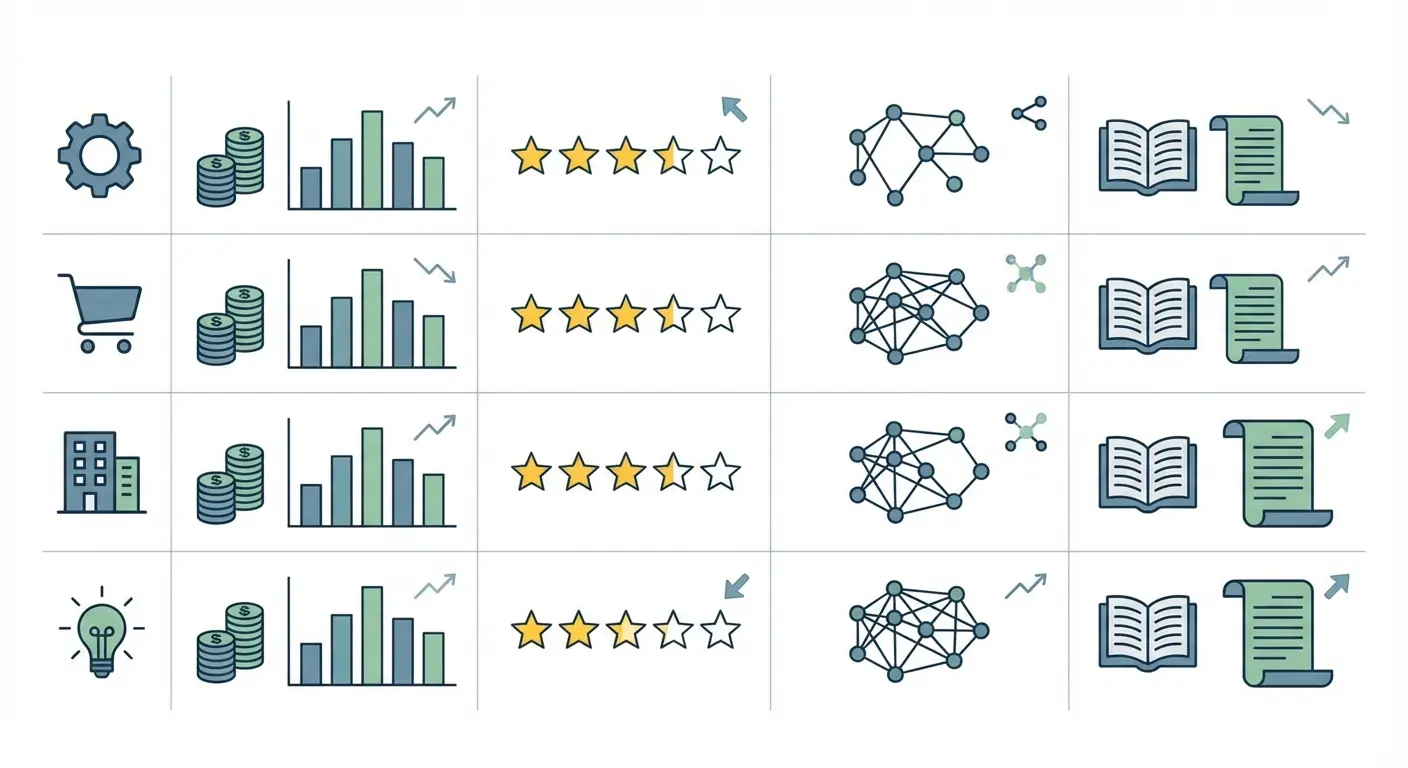
A plumbing company in San Antonio (real client, changed the city) discovered through competitive analysis that all five top-ranking competitors had active links from the local chamber and at least two home improvement blogs. Despite having more reviews than any competitor, they weren’t ranking because they had zero local links.
We shifted focus from review generation (where they were already strong) to local link acquisition. It took about four months of relationship building and genuine community involvement, but they moved from position 8 to position 2 in the map pack. One of those local blog links came from sponsoring a little league team. Cost them $500. That link probably did more for their rankings than the $3,000 they’d spent on directory submissions the previous year.
Citation Consistency Isn’t Just About NAP Anymore
Yes, your business name should be spelled the same everywhere. Your phone number shouldn’t have variations. Your address format should be consistent.
You already knew that. Every local SEO audit since 2012 has told you that, and honestly, if you’re still getting this wrong, we need to have a different conversation.
What most audits don’t examine is citation context and quality. Google doesn’t treat all citations equally. A listing on the Better Business Bureau carries different weight than a listing on a random directory that accepts every submission without verification.
Citation Source Authority in Your Vertical
Check where you’re cited, not just whether the NAP matches. Are you present on the industry-specific directories that Google uses to verify business legitimacy in your category?
For restaurants, that might be OpenTable or Yelp. For contractors, Angi or HomeAdvisor. For medical practices, Healthgrades or Vitals. For lawyers, Avvo and Martindale.
Missing citations on high-authority, vertical-specific platforms creates trust gaps. Google cross-references your business information across sources it considers authoritative for your industry. Absence from those sources doesn’t just mean missed opportunities; it can trigger uncertainty about your legitimacy.
I’ve audited businesses with perfect NAP consistency across 50 directories who still struggled with rankings because they were absent from the three industry-specific platforms Google weighted most heavily in their vertical. The citation work that matters isn’t about quantity. It’s about presence on the sources Google trusts for your specific business type.
Category Consistency Across Platforms
Here’s what standard audits miss entirely: category selection consistency across your citation profile.
If you’re listed as “HVAC Contractor” on Google Business Profile, “Heating and Air Conditioning” on Yelp, and “Home Services” on Facebook, you’re sending mixed signals about what you actually do.
Google builds entity understanding through pattern recognition. When your business category varies across trusted sources, it weakens the algorithm’s confidence in what you do. That ambiguity costs you rankings for your core services.
Check every citation for category selection. They don’t need to be identical (platforms offer different category options), but they should be conceptually aligned and prioritize the same primary service. If you’re primarily an HVAC company that also does plumbing, every platform should reflect that priority, not randomly alternate between the two.
|
Citation Platform |
Category Selection Priority |
Impact on Local Rankings |
|---|---|---|
|
Google Business Profile |
Primary category appears in 38% of top 3 rankings with target keyword in business name |
Critical – this determines primary search categorization |
|
Bing Places |
Should mirror GBP primary category |
High – secondary search engine validation |
|
Apple Maps |
Must align with GBP for consistency |
High – iOS user searches and Siri results |
|
|
Business category feeds social search |
Medium – social signal validation |
|
Yelp |
Industry-specific category selection |
High – trusted review platform authority |
|
Industry Directories |
Vertical-specific categorization |
High – niche authority verification |
|
Yellow Pages |
Probably doesn’t matter unless you’re targeting 65+ demographic |
Low – declining relevance |
The Attributes and Hours Problem
Your business hours are wrong somewhere. I guarantee it.
Maybe you updated your Google Business Profile but forgot about Bing Places. Maybe your Facebook page still shows your pre-pandemic hours. Maybe your Yelp listing has seasonal hours from two years ago.
These inconsistencies matter more than most people realize. When Google encounters conflicting information about your hours across multiple sources, it can’t confidently display that information in search results. Users might see “Hours might be different” or no hours at all, which absolutely kills click-through rates.
The same applies to attributes. If your GMB says you offer wheelchair accessibility but three other citations say nothing about it, you’re missing opportunities to appear in filtered searches where users specifically want that attribute.
Check that every attribute you claim on your primary listings appears consistently across your top citation sources. And for the love of all that is holy, update your hours everywhere at the same time when they change.
A dental practice (real client, won’t name them) lost an estimated 30-40% of their phone calls over a three-month period based on their call tracking logs (though honestly their tracking was kind of a mess, so I’m estimating). Turned out their Google Business Profile showed they closed at 5 PM while their website and Yelp listing showed 6 PM.
Patients searching after 5 PM assumed they were closed and called competitors instead. The inconsistency also triggered Google’s “call to verify hours” disclaimer, which further reduced trust. After we corrected the discrepancy across all platforms, phone call volume came back over the next few weeks. Not instantly—it took time for Google to re-verify everything—but it came back.
Your Google Business Profile Has a Trust Problem You Can’t See
Your Google Business Profile might be 100% complete according to the dashboard. Every field filled, photos uploaded, posts published.
Research shows that customers are 2.7x more likely to view a business as reputable if it has a complete Google Business Profile, and businesses with complete profiles are 50% more likely to be considered for potential purchases. But completeness alone isn’t enough.
Google evaluates how you maintain and engage with that profile over time, and these behavioral patterns matter way more than checking boxes.
The Update Frequency Signal
When was the last time you updated something in your GMB profile? Not posted, not added a photo, but actually changed core business information?
Businesses that never touch their profiles after initial setup trigger a specific pattern. Google knows that legitimate,
actively managed businesses update their information periodically. They add new services, adjust hours for holidays, refine their business description as their positioning evolves.
Profiles that remain completely static for years look abandoned or minimally managed. That doesn’t inspire algorithmic confidence.
Pull your GMB edit history. If you haven’t made a meaningful update in six months, that’s a flag. You don’t need to change things arbitrarily (please don’t), but you should be refining and improving your profile as your business evolves.
I’m not 100% sure how heavily Google weights this, but the correlation between active profile management and rankings is strong enough that I treat it as important.
Photo Engagement Matters More Than Photo Quantity
You’ve uploaded 50 photos to your GMB profile. Good start. Which ones are users actually viewing? Which ones are they engaging with? Which ones appear in your knowledge panel?
Google tracks photo performance within your profile through the insights dashboard. I believe they use engagement as a ranking signal, though they’ve never explicitly confirmed this. The correlation is strong enough that I pay attention to it.
If your most recent 20 photo uploads have zero engagement while your original five photos from 2019 still get all the views, that tells Google something about content quality and relevance.
Check your photo performance through GMB insights. Are users engaging with your photos? Are they viewing your interior shots, product photos, or team images?
If engagement is minimal, your photos might be generic, low-quality, or irrelevant to what users want to see. I’ve found that photos showing actual work, real team members, and specific services consistently outperform stock-looking images. People can smell stock photos from a mile away.
The Suggested Edits Red Flag
Check your GMB dashboard for suggested edits right now. These are changes that users or Google itself have proposed to your listing. Maybe someone suggested different business hours. Maybe Google suggested a different category. Maybe a user tried to change your phone number (this happens more than you’d think, usually from competitors or confused customers).
Every suggested edit you ignore sends a signal. It tells Google that you’re not actively monitoring your profile.
Even if the suggested edits are wrong (and they often are), you need to review and reject them. That action demonstrates active management and tells Google you’re paying attention.
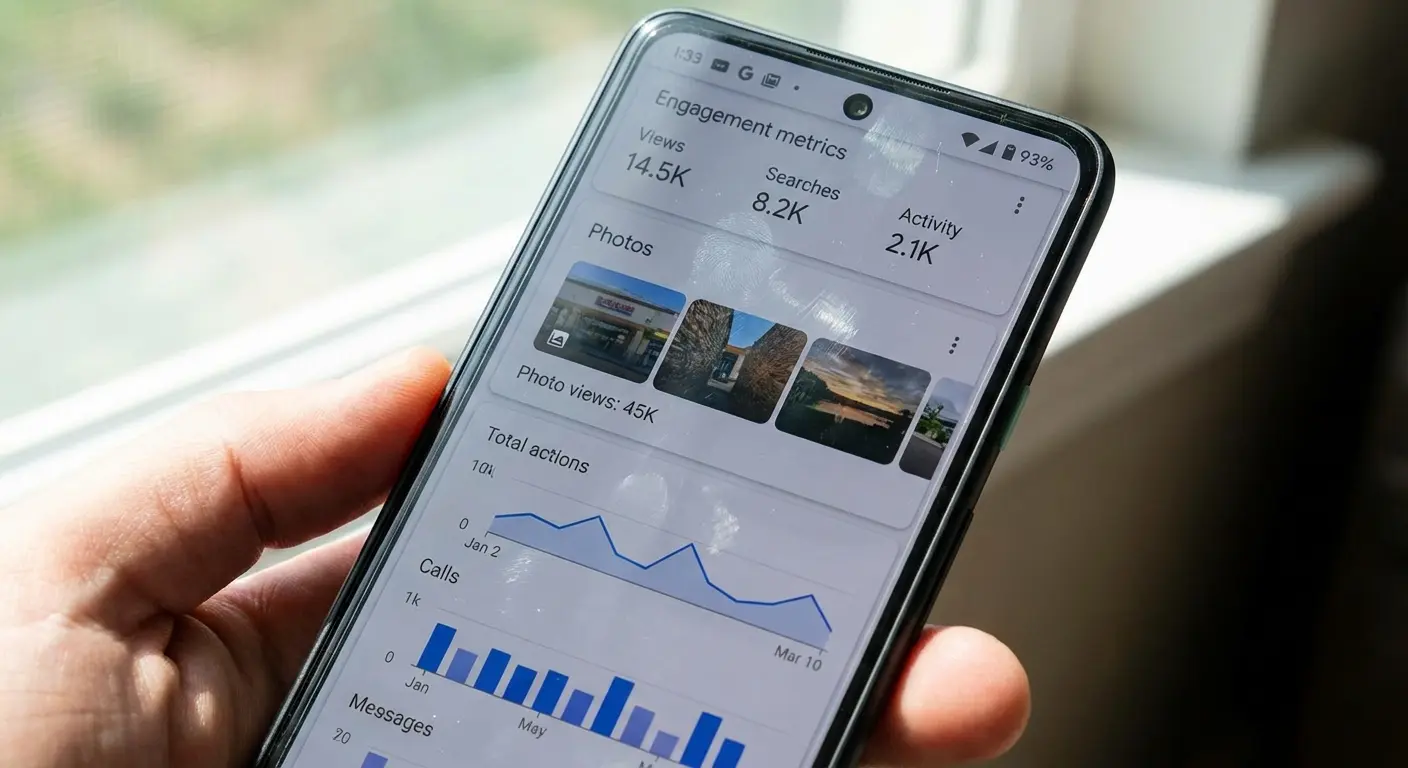
Profiles with multiple unreviewed suggested edits look neglected. Google’s local algorithm favors businesses that demonstrate active presence management. Check for pending suggested edits and establish a process for monitoring them weekly. Set a calendar reminder for Monday mornings. Five minutes. That’s it.
The Review Velocity Trap That’s Killing Your Rankings
You have 127 reviews with a 4.7-star average. Your competitor has 89 reviews with a 4.6-star average. They rank above you.
The difference isn’t the totals. It’s the patterns.
Google’s local algorithm doesn’t just count reviews. It evaluates review velocity, distribution, and authenticity signals. A business that receives 50 reviews in one week after six months of silence looks suspicious. A business that consistently receives 2-3 reviews per week looks legitimate and actively serving customers.
What Natural Review Velocity Looks Like
Pull your reviews into a spreadsheet and chart them by month. What you’re looking for are patterns that suggest authenticity versus patterns that suggest campaigns.
Natural review velocity for most businesses shows some variation but maintains relative consistency. You might get more reviews during busy seasons and fewer during slow periods, but the pattern should be predictable and logical for your business type.
Red flags include long periods of zero reviews followed by sudden clusters, identical review lengths or language patterns across multiple reviews, or reviews that all mention the same specific details (suggesting you told customers exactly what to say).
If your review pattern shows any of these characteristics, Google’s spam detection systems have likely flagged your profile. That doesn’t mean you’ll lose reviews, but it does mean those reviews carry less ranking weight than they should.
I’ve seen businesses with 200+ reviews rank below competitors with 80 reviews because the velocity patterns triggered algorithmic skepticism. It’s frustrating as hell to watch, but it’s real.
Response Patterns as Trust Indicators
Do you respond to every review, some reviews, or no reviews? More importantly, do you respond consistently?
Businesses that respond to every five-star review but ignore three-star reviews send a specific signal. Businesses that respond immediately to some reviews but take weeks to respond to others show inconsistent engagement. Businesses that suddenly start responding to reviews after years of silence look like they just hired an SEO agency (which Google can detect and discount).
Your review response pattern should be consistent and sustainable. If you’re going to respond to reviews, commit to a pattern you can maintain long-term.
Here’s a controversial take: responding to every review is ideal, but responding to none is better than responding sporadically. Sporadic responses suggest campaign-driven management rather than genuine customer engagement. If you can’t commit to consistent responses, don’t start.
Review Content Depth and Specificity
Google can evaluate review content quality. Reviews that mention specific services, employee names, project details, or unique business characteristics carry more weight than generic “great service” reviews.
Check your recent reviews for specificity. Do customers mention what you actually did for them? Do they reference specific aspects of your service or products? Do they include details that could only come from genuine experience with your business?
If your reviews are mostly generic praise without specific details, they’re not contributing as much ranking power as they could. You can’t control what customers write, but you can encourage specificity by asking better questions when requesting reviews.
Instead of “leave us a review,” try “we’d love to hear about your experience with [specific service].” The difference in response quality is dramatic.
A home remodeling contractor I worked with analyzed their review content and discovered that about 80% of their reviews said variations of “great work” or “highly recommend” without mentioning specific projects. Meanwhile, their top-ranking competitor had reviews that detailed kitchen renovations, mentioned specific materials used, referenced project timelines, and named crew members.
We changed their review request approach to ask: “Could you share a few details about your kitchen remodel project?” Within three months, their new reviews included substantially more specific content. Their map pack ranking improved from position 6 to position 3. I can’t prove it was only the review content change (we made other improvements too), but the timing was pretty clear.
Local Link Equity: Stop Counting, Start Qualifying
Your backlink tool shows 847 links. Impressive number. Completely meaningless metric for local rankings.
What matters isn’t how many sites link to you. It’s whether those links help Google understand your local relevance and topical authority.
A link from a national directory with a DA of 70 might look impressive in your audit report. A link from your local chamber of commerce with a DA of 35 probably carries more local ranking weight.
Google’s local algorithm prioritizes geographic and topical relevance over raw authority metrics. I know this contradicts what most SEO blogs tell you, but you can test it yourself—search any local query and you’ll see sites with lower DA outranking higher DA sites constantly.
Geographic Proximity in Link Evaluation
Pull your backlink profile and filter for links from domains in your state, then your city, then your immediate service area. These are your local links, and they matter way more than most people realize.
Google uses links to understand geographic relevance. When multiple local organizations, businesses, and publications link to you, it reinforces your connection to that geographic area.
A restaurant in Austin with links from Austin Monthly, the Austin Chamber of Commerce, and several other Austin-based businesses sends stronger local signals than one with links from national food blogs.
Calculate what percentage of your total link profile comes from local sources. If it’s under 20%, you have a local link deficit that’s probably impacting rankings.
I’ve audited businesses with hundreds of backlinks who struggled in local search because fewer than 10% came from geographically relevant sources. They’d spent thousands on link building, just in completely the wrong places.
Topical Relevance Over Domain Authority
A link from a local news article about your industry carries more weight than a link from a random blog post on a high-authority site. Google evaluates the topical context around links.
When you earn a link from a source that covers topics related to your business, Google interprets that link as an authority signal within your vertical. When you earn a link from a completely unrelated source, it might pass some general authority but doesn’t reinforce your topical expertise.
Check your link profile for topical alignment. Are your links coming from sources that cover your industry, your service category, or related topics? Or are they scattered across random directories and unrelated blog posts?
If it’s mostly the latter, you’ve been building the wrong links.
|
Link Source Type |
Geographic Relevance |
Topical Relevance |
Estimated Local Ranking Impact |
Acquisition Difficulty |
|---|---|---|---|---|
|
Local Chamber of Commerce |
High (city-specific) |
Medium (business general) |
Very High |
Low-Medium (membership required) |
|
Local News Coverage |
High (city/regional) |
High (if industry-related) |
Very High |
High (editorial, earned) |
|
Local Business Directories |
High (city-specific) |
Medium (category-based) |
Medium |
Low (submission-based) |
|
Industry Association (Local Chapter) |
High (regional) |
Very High (niche-specific) |
Very High |
Medium (membership/participation) |
|
Community Organization |
High (neighborhood) |
Low-Medium |
High |
Low-Medium (sponsorship/partnership) |
|
National Directory |
Low (nationwide) |
Low-Medium |
Low |
Low (submission-based) |
|
Local Blog/Publication |
High (city-specific) |
Variable |
High |
Medium-High (relationship-based) |
|
Municipal/Government Site |
Very High (official) |
Medium |
Very High |
Medium (requires civic involvement) |
|
Random high-DA directory |
Low |
Low |
Who cares |
Low (waste of time) |
The Community Organization Link Advantage
Links from chambers of commerce, business associations, local charities, community organizations, and municipal websites carry specific trust signals that other links don’t.
These organizations typically vet their members or partners, so links from them function as third-party legitimacy verification. This is speculation on my part, but it makes logical sense: if Google trusts the BBB to verify businesses, and the BBB links to you, that’s a trust transfer.
Google recognizes these patterns. A business linked from the local chamber, a community foundation, and a business improvement district demonstrates community integration that goes beyond simple citation presence.
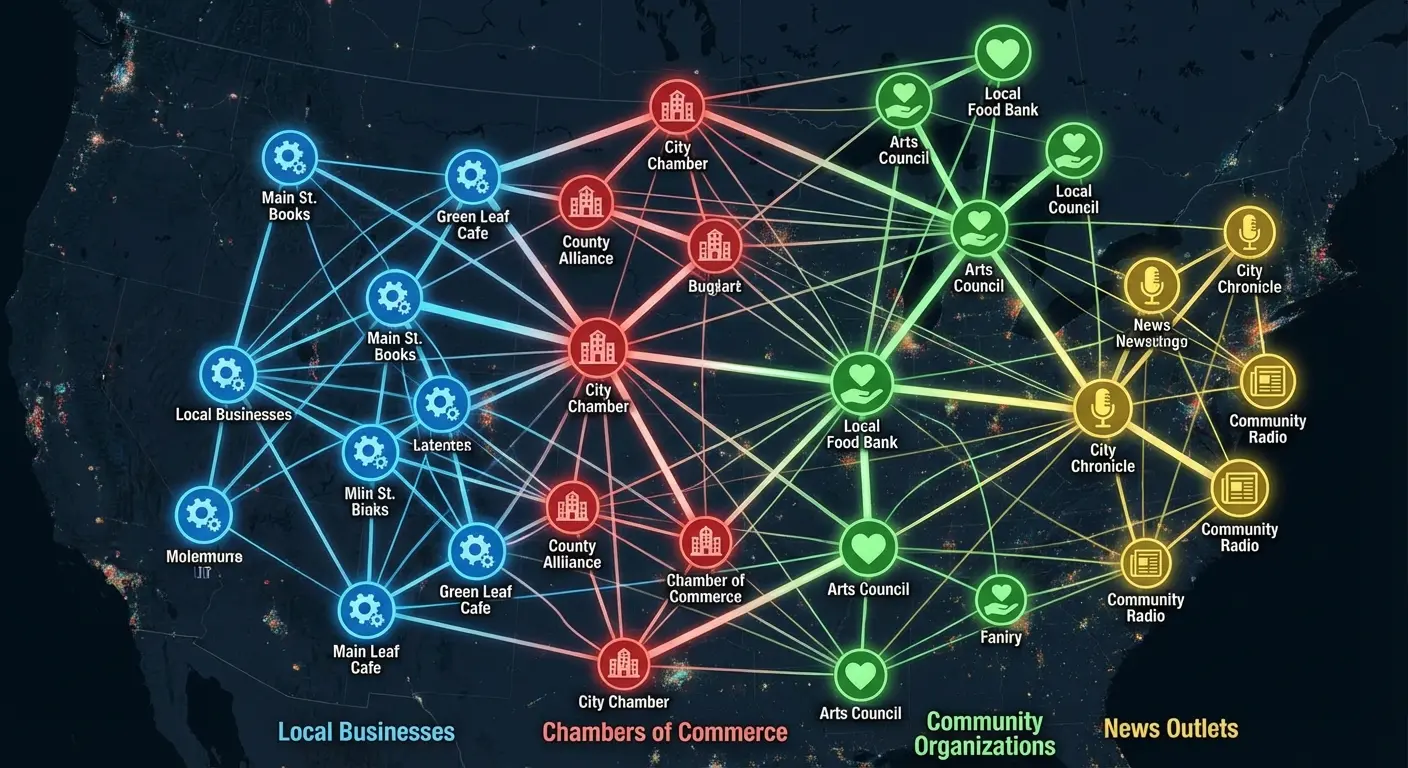
Specifically identify and count these high-trust local links. If you have zero links from community organizations despite being in business for years, that’s a gap worth addressing.
These links are often easier to earn than editorial links (through memberships, sponsorships, or partnerships) and carry disproportionate ranking weight. I’ve seen single links from respected local organizations move rankings more than dozens of directory submissions.
Side note: I once had a client who’d been in business for 15 years, sponsored three little league teams, sat on the chamber board, and donated to local charities. Zero local links. Nobody had told them to ask for links from these organizations. We got five local links in one month just by reaching out to organizations they already had relationships with. Their rankings jumped two positions in the map pack within 60 days.
On-Page Local Signals Beyond the Obvious Schema Markup
Your schema markup is perfect. You’ve got LocalBusiness structured data on every page. Your NAP appears in your footer.
Google still doesn’t understand your local relevance as well as it should.
On-page local signals extend far beyond schema implementation. Google evaluates how deeply you’ve integrated location-specific information into your content, not just your markup.
Location Content Depth and Specificity
Pull up your primary location or service area page. Does it mention your city name three times in generic sentences, or does it demonstrate genuine local knowledge and integration?
Pages that rank well in local search typically include specific neighborhood names, local landmarks, service area boundaries, and references that could only be written by someone with actual local knowledge. They mention the specific communities they serve, reference local characteristics that affect their service delivery, and demonstrate understanding of location-specific customer needs.
Check every location page for content depth and local specificity. If your Dallas page and your Houston page are 90% identical with only the city name swapped, you’re not sending strong local signals. You’re sending duplicate content signals with minimal local differentiation.
I’ve seen this mistake so many times it makes me want to throw my laptop through a window. Businesses create 15 location pages from a template, swap out the city names, and wonder why they don’t rank. Google sees 15 pages with 85% identical content. That’s not 15 signals of local presence—that’s one signal duplicated 15 times.
Internal Linking Structure for Location Pages
How do your location pages connect to each other and to your main service pages? Your internal linking architecture either reinforces your local footprint or creates confusion about your geographic focus.
Businesses with multiple locations often make critical mistakes here. They create location pages but don’t link between them in a logical hierarchy. They link from their homepage to their primary location but bury secondary locations three clicks deep. They fail to cross-link between location pages and relevant service pages.
Check your internal linking with a focus on location page connectivity. Every location page should link to your main service pages (establishing what you do there). Your homepage should link to all location pages with equal prominence (establishing your geographic footprint). Location pages should link to each other when it makes sense (establishing your service area scope).
This isn’t rocket science, but most businesses get it wrong.
Location Page Content Audit Template:
Page URL: _________________
Target Location/Service Area: _________________
Content Evaluation:
-
Word count: _______ (aim for 800+ words in competitive markets)
-
Unique content percentage: _______ (target 70%+ unique vs. other location pages)
-
Neighborhood names mentioned: _______ (list them)
-
Local landmarks referenced: _______ (list them)
-
Service area boundaries defined: Yes / No
-
Location-specific customer pain points addressed: Yes / No
-
Local testimonials or case studies included: Yes / No
-
Embedded Google Map: Yes / No
-
LocalBusiness schema implemented: Yes / No
-
Schema includes all relevant properties: Yes / No
Internal Linking:
-
Links to homepage: Yes / No
-
Links from homepage: Yes / No
-
Links to all relevant service pages: _______ (count)
-
Links from other location pages: _______ (count)
-
Links to other location pages: _______ (count)
Priority Action Items:
-
_________________
-
_________________
-
_________________
The Location Page Cannibalization Problem
Here’s a pattern I see constantly: businesses create separate pages for overlapping service areas and accidentally create ranking conflicts.
They have a page for “Dallas SEO Services” and another for “DFW SEO Services” and another for “North Texas SEO Services,” all targeting essentially the same geographic area with the same services.
Google doesn’t know which page to rank, so it often ranks none of them well. You’ve diluted your local signals across multiple competing pages instead of consolidating them into one authoritative resource.
Look for these cannibalization issues. Check for multiple pages targeting the same service in overlapping geographic areas. Consolidate them into single, comprehensive location pages rather than fragmenting your local authority.
I helped a business recover significant rankings simply by merging three weak location pages into one strong page that Google could confidently rank. They’d been competing with themselves for two years without realizing it.
Competitor Gap Analysis That Actually Reveals Opportunity
You’ve audited your own presence. You’ve identified dozens of issues. You have no idea which ones actually matter for your rankings.
The data is clear: businesses in the local map pack get 126% more traffic and 93% more calls, website clicks, and requests for directions compared to businesses ranked in spots 4-10. Understanding what separates map pack businesses from the rest isn’t optional—it’s the difference between growth and stagnation.
This is where comparative analysis becomes critical. The gaps that matter most aren’t the ones flagged by an audit tool. They’re the ones that separate you from the businesses currently outranking you.
Building a Competitive Gap Matrix
Create a spreadsheet with your top five map pack competitors across the top and key ranking factors down the left side.
Include review count, review velocity (reviews per month), average review rating, citation count on major platforms, presence on industry-specific directories, local link count, content depth on location pages, GMB post frequency, and any other factors you identified during your pre-audit research.
What you’re looking for are patterns. Do all five competitors have 50+ reviews while you have 23? Do they all publish GMB posts weekly while you post monthly? Do they all have location pages with 1,000+ words while yours average 300?

These common strengths among top-ranking competitors reveal what Google is weighting heavily in your market. They’re your priority gaps.
The One Thing Principle
In most markets, one or two factors drive the majority of ranking differentiation. Everything else is secondary noise.
Your competitive gap analysis should reveal what those factors are. Maybe it’s review velocity. Maybe it’s local link equity. Maybe it’s content depth on service pages. Maybe it’s GMB engagement signals.
Once you identify the one or two factors where top competitors consistently outperform you, those become your primary focus. You don’t ignore everything else, but you prioritize closing those specific gaps before worrying about minor optimization details.
This is how you turn a 47-page audit report into an actionable strategy. You identify the highest-impact gaps and address those first.
I’ve seen businesses waste months perfecting technical details while ignoring the fundamental gap that was costing them rankings—usually something obvious in hindsight but invisible without proper competitive analysis. Don’t be that business.
The Technical Debt Hiding in Your Location Pages
Your location pages have technical problems that generic SEO audits don’t catch. These issues specifically impact local rankings in ways that broader technical SEO issues don’t.
The Template Content Problem
You built 15 location pages from a template. You swapped out the city names and addresses. You called it done.
Google sees 15 pages with 85% identical content. That’s not 15 signals of local presence. That’s one signal duplicated 15 times with minimal differentiation.
Check every location page for unique content percentage. If your pages share more than 50% of their content (excluding navigation, footers, and standard elements), you have a duplication problem that’s diluting your local rankings.
The solution isn’t minor rewording. It’s genuinely unique content that addresses location-specific factors: the neighborhoods you serve from that location, the specific customer needs in that area, the team members at that location, and the particular services most relevant to that market.
And look, I get it. Writing unique content for 15 location pages is tedious as hell. But it matters. Do it once, do it right, and you won’t have to do it again.
URL Structure and Geographic Signals
How are your location pages structured? Are they at yoursite.com/locations/dallas or yoursite.com/dallas or dallas.yoursite.com?
There’s no universally “correct” structure, but there is a principle: your URL structure should clearly communicate your geographic organization.
Subdirectories work well for businesses with multiple locations in a hierarchical relationship. Subdirectories with state-level organization (yoursite.com/texas/dallas) work for businesses with national footprints.
What doesn’t work is inconsistent structure where some locations live at one URL pattern and others use a different pattern. That inconsistency weakens Google’s understanding of your location architecture.
Flag these structural inconsistencies that create confusion about your geographic organization. If you’re going to reorganize, do it all at once, not piecemeal.
The Location Finder Crawl Trap
Many multi-location businesses implement location finders with filtering and pagination. Users can filter by service type, search by zip code, or browse paginated lists of locations.
These tools create enormous crawl waste. Google discovers hundreds of filtered and paginated URLs that don’t represent unique locations, just different ways of viewing your location list. You’re burning crawl budget on duplicate and low-value pages.
Check your site’s indexed pages for location finder variations. If Google has indexed 200 pages but you only have 25 locations, you’ve got a crawl efficiency problem.
Use robots.txt or noindex tags to prevent indexation of filtered and paginated location finder results. Your location finder can still work perfectly for users while keeping Google focused on your actual location pages.
Mobile Rendering Issues on Location Pages
Your location pages might render perfectly on desktop and break on mobile in ways that specifically impact local users.
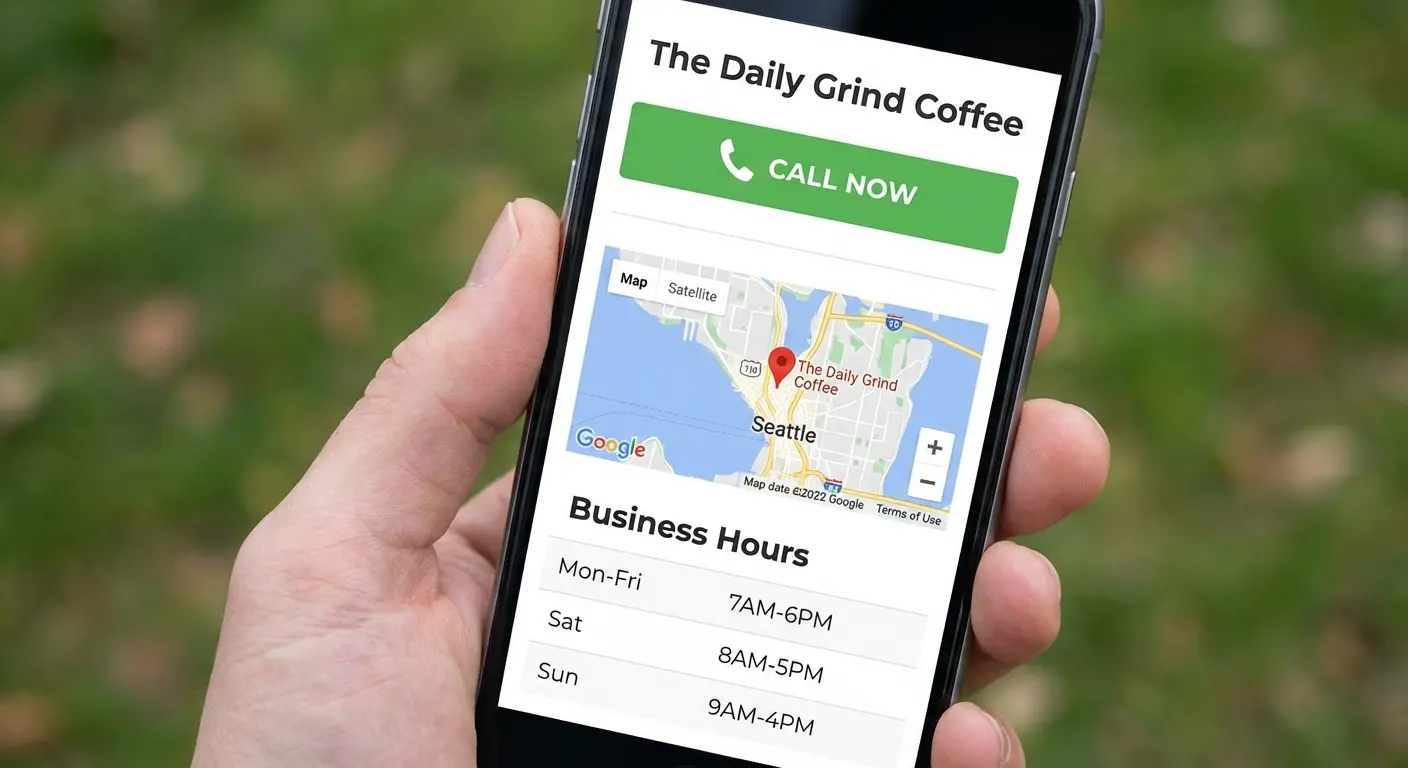
Phone numbers that aren’t tappable. Addresses that don’t link to maps. Hours that require zooming to read. Directions that don’t trigger navigation apps.
Local searches happen predominantly on mobile devices. Users searching for local businesses expect mobile-optimized experiences with tap-to-call, tap-to-navigate, and easily scannable information.

Check your location pages specifically on mobile devices. Don’t just check for responsive design. Test the actual user flows that local searchers use: calling from the page, getting directions, checking hours, viewing photos.
Any friction in these flows impacts both rankings and conversions. I’ve tracked mobile user sessions and found that users abandon sites within seconds if they can’t immediately find contact information or if the phone number isn’t tappable.
The importance of comprehensive technical auditing has never been more critical. Icepick Web Design & SEO recently expanded its local search optimization services (South Bend Tribune) to address the increasing need for businesses to establish stronger online presence in competitive markets, with a particular focus on advanced local search auditing capabilities and technical implementation of location-specific content strategies.
Mobile Experience Auditing for Actual Local User Behavior
Your site passes Google’s mobile-friendly test. Your Core Web Vitals are green. Your mobile experience still fails local searchers.
Generic mobile audits don’t account for local user behavior patterns. Someone searching for “emergency plumber near me” at 11 PM has different needs than someone browsing blog content. Your mobile experience needs to accommodate high-intent local searches with immediate information access.
The Three-Second Local Mobile Test
Pull out your phone right now. Search for your primary service plus your city. Click on your organic listing (not your GMB).
Can you find your phone number within three seconds without scrolling? Can you see your hours? Can you determine if you serve the searcher’s specific location?
If any of those answers is no, your mobile experience is failing local users. These aren’t nice-to-have features. They’re critical information points that local searchers need immediately.
Check your mobile experience specifically for information hierarchy. Your phone number should be visible above the fold on every location and service page. Your hours should be immediately apparent. Your service area should be clear without requiring users to dig through multiple pages.
While you’re perfecting your schema markup, your competitor is getting the call at 11 PM from the customer with the burst pipe and a $3,000 emergency budget. That’s not theoretical—that’s revenue walking out the door.
Map Integration and Direction Functionality
How many taps does it take to get directions to your location from your mobile site?
If the answer is more than one, you’re creating friction that local searchers won’t tolerate.
Your address should link directly to map applications. When users tap your address, their phone should offer to open Google Maps, Apple Maps, or their default navigation app. This isn’t just convenience—it’s expected functionality.
Check every location page for proper map integration. Your address should be marked up with appropriate schema and linked to map services. Better yet, embed an interactive map directly on your location pages so users can see exactly where you’re located without leaving your site.
Location-Aware Content Adaptation
Does your mobile site adapt based on the user’s location? If someone in Dallas visits your site, do they see Dallas-specific information prioritized? Or do they see generic national content that requires them to manually find their local information?
More sophisticated local sites use geolocation to surface relevant location content. They detect the user’s approximate location and highlight the nearest business location, show relevant local phone numbers, and display location-specific offers or information.
This level of adaptation isn’t necessary for every business, but it significantly improves user experience for multi-location businesses. Users get immediate access to relevant local information without navigating through location finders or dropdown menus.
Mobile optimization for local search continues to evolve rapidly. Local SEO Agency recently expanded its technical SEO services across South Africa (The Dispatch), emphasizing Core Web Vitals optimization, mobile page speed improvements, and user experience enhancements specifically designed for local searchers.
Turning Audit Findings Into a Prioritized Action Roadmap
You’ve completed your local SEO audit. You have a list of 73 things that need fixing. You’re overwhelmed and don’t know where to start.
This is where most audits fail. They identify problems but don’t provide a practical framework for addressing them.
I know this is getting long. If you’re skimming at this point, I get it. Here’s what you absolutely can’t skip: the prioritization framework. Because without it, your audit is just another unused report gathering digital dust.
The Impact vs. Effort Matrix
Take every issue identified in your audit and plot it on a simple two-axis matrix. One axis represents potential ranking impact (low to high). The other represents implementation difficulty (easy to hard).
Your priorities are the high-impact, easy-to-implement issues. These are your quick wins. Fix these first because they deliver meaningful results without requiring massive resource investment.
Examples: fixing hours inconsistencies, responding to reviews consistently, adding location-specific content to thin pages, claiming missing citations on major platforms.
Next, tackle high-impact, difficult-to-implement issues. These require more time and resources but will move rankings significantly.
Examples might include earning 50 new local links, completely rewriting all location pages with unique content, or implementing a systematic review generation process that maintains natural velocity.
Low-impact items go to the bottom of your list regardless of difficulty. Don’t waste time perfecting minor technical details if you’re still missing fundamental local signals.
I’ve watched businesses spend weeks optimizing image alt tags while ignoring the fact that they had zero local links. That’s backwards prioritization that delays real progress and honestly drives me crazy.
Sequencing for Cumulative Impact
Some improvements need to happen before others. You should fix technical issues that prevent proper indexing before worrying about content quality. You should establish citation consistency before pursuing high-authority citations. You should optimize your GMB profile before driving traffic to it through link building.
Sequence improvements logically. Group related tasks together. If you’re rewriting location pages, do all the on-page optimization at once rather than spreading it across months. If you’re cleaning up citations, complete the entire citation audit and correction process before moving to link building.
This approach creates momentum. You complete entire categories of improvements rather than making incremental progress across dozens of fronts simultaneously.
The psychological benefit of finishing complete initiatives shouldn’t be underestimated—it keeps teams motivated and focused. Plus, it’s just more efficient.
Setting Realistic Timelines
Local SEO improvements don’t produce overnight results. Google needs time to recrawl your site, reprocess your citations, and reevaluate your rankings based on new signals.
Most meaningful local SEO audit improvements take 30-60 days to impact rankings after implementation. Some take longer. Building local link equity might take six months to show significant ranking movement. Establishing consistent review velocity takes three months minimum before Google recognizes the pattern.
Set quarterly goals rather than weekly expectations. Measure progress in ranking movement, traffic growth, and lead generation over months, not days.
I track progress in 90-day cycles because that’s the realistic timeframe for seeing compound effects from multiple improvements working together. Anything shorter and you’re just stressing yourself out checking rankings daily.
When to Bring in Expert Help
Some audit findings require specialized expertise to address properly. Maybe you’ve identified technical issues that require developer resources. Maybe you need to build local links but don’t have established relationships with local organizations. Maybe you’re managing 50 locations and need enterprise-level tools and processes.
Look, if you’ve got 1-3 locations, you can probably handle most of this yourself. It’ll take time and effort, but it’s doable. If you’ve got 20+ locations and this all sounds overwhelming, that’s when you need help.
If you’re running a multi-location business struggling with citation consistency across dozens of locations, or if you’ve identified significant technical debt that’s beyond your team’s capabilities, The Marketing Agency specializes in exactly these complex local SEO challenges. We’ve built systems for auditing and optimizing local presence at scale, and we understand the nuances of local algorithm factors that generic SEO approaches miss.
The key is recognizing which improvements you can handle internally and which require outside expertise. Don’t let perfect be the enemy of good. Fix what you can fix yourself, and get help for the specialized work that will deliver disproportionate results (okay, I mean work that delivers way more impact than the effort required).
Final Thoughts
Your local SEO audit isn’t valuable because it identified problems. Every business has problems.
The audit becomes valuable when it reveals the specific gaps that separate you from top-ranking competitors in your market and provides a clear framework for closing those gaps systematically.
Most businesses approach local SEO with a checklist mentality. They want to confirm they’ve done everything “right” according to generic best practices. The businesses that win local rankings approach it differently.
They study what’s working in their specific market, identify the factors that correlate most strongly with top rankings, and prioritize improvements that address those specific factors.
Remember that competitor with 47 reviews who was outranking you? This is probably why. Their review velocity is consistent. Yours isn’t. Or they have local links you don’t. Or their location pages demonstrate actual local knowledge while yours are template garbage.
Your audit should reveal not just what’s broken, but what actually matters in your market. Not everything that’s imperfect needs fixing. Focus on the signals Google is weighting in your market, close the gaps that separate you from top performers, and build systems that maintain your local presence consistently over time.
Local SEO isn’t a one-time optimization project. It’s an ongoing process of maintaining trust signals, earning new reviews, building local relevance, and adapting to competitive changes in your market. Your audit is the starting point, not the destination.
The businesses ranking in the map pack didn’t get there by being perfect. They got there by being comparatively stronger in the signals that matter most.
I’ll leave you with this: Last year, a client came to me after doing their own audit. They’d found 73 issues. Fixed all 73 over six months. Saw zero ranking movement.
Know why? They’d fixed everything except the one thing that mattered in their market—review velocity. They had 200 reviews from 2019-2020 and basically nothing since. Google thought they’d gone out of business or were no longer actively serving customers.
We got them 30 reviews over three months through a simple, sustainable process (no incentives, no campaigns, just asking at the right time in the right way), and they jumped from position 7 to position 2.
Sometimes it’s not about fixing everything. It’s about fixing the right thing.
Your audit should show you exactly where to focus your energy to achieve the same results. Now go do the competitive analysis. Tomorrow, not next week. Because while you’re planning, your competitor is executing.