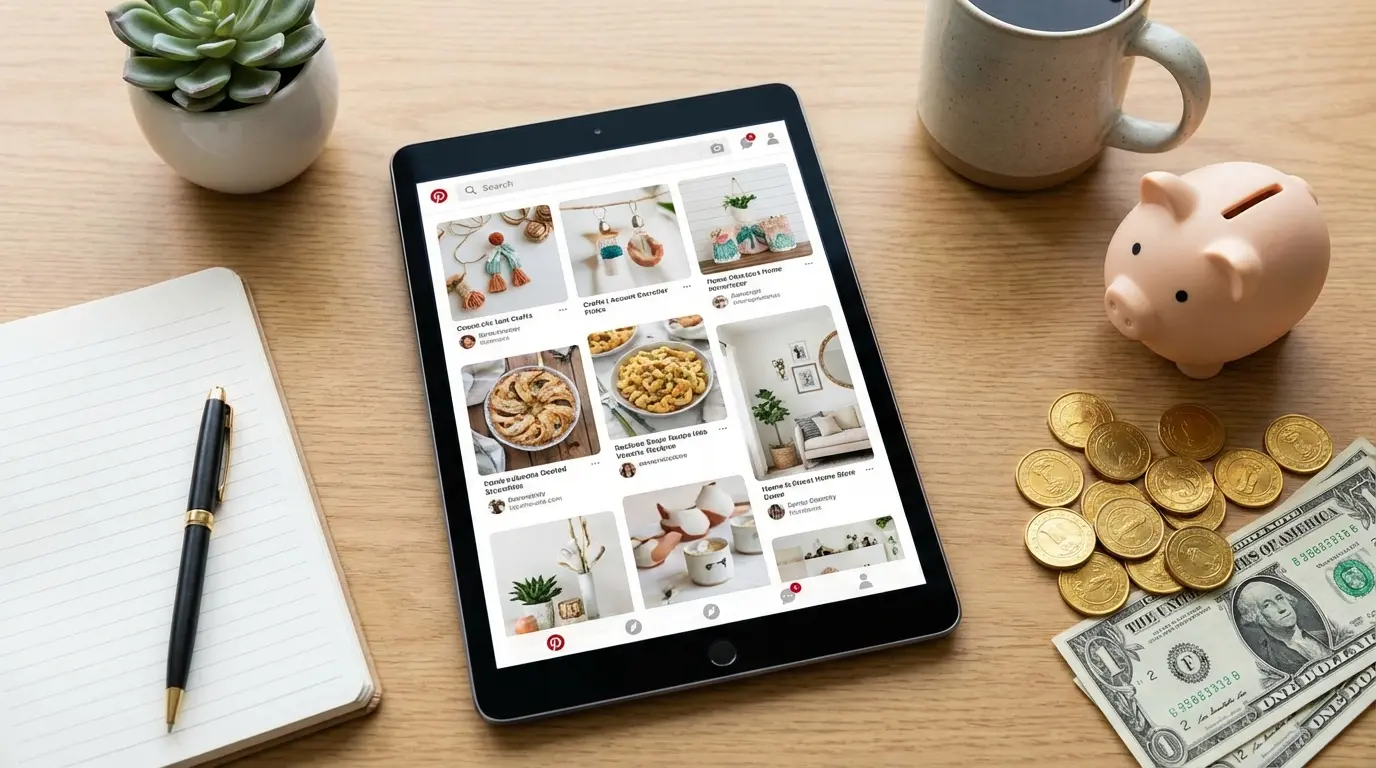
Look, most people have Pinterest completely backwards. They’re creating these gorgeous pins, obsessing over follower counts, checking their stats every day, and wondering why their bank account looks exactly the same. Here’s what actually matters: with 578 million active users, over half of Pinterest’s audience is actively scrolling to find products to buy. You’re not selling to people who need convincing. You’re connecting with buyers who’ve already decided to act.
Pinterest works like a visual search engine where people show up ready to buy. That’s it. That one fact changes everything about how you create content, where you focus your energy, and why some Pinterest accounts generate consistent revenue while others spin their wheels for months and give up.
Table of Contents
-
Why Pinterest Isn’t a Social Platform (And Why That Changes Everything)
-
The Reverse Psychology of Pinterest Commerce
-
Your Ideal Customer Is Already Way Ahead of Where You Think
-
Building for the Search Bar, Not the Feed
-
Why Your Pin Descriptions Matter More Than Your Product Copy
-
The 90-Day Delay You’re Not Accounting For
-
Affiliate Revenue Without the Sleaze Factor
-
Selling Services Through a Visual-First Platform
-
The Underutilized Power of Idea Pins for Monetization
-
Creating Product Ecosystems, Not One-Off Sales
-
When to Bring in Strategic Support
TL;DR
-
Pinterest users arrive with purchase intent already formed, which means you’re not convincing them to buy but helping them choose you
-
Results take 90 days. Everyone quits at day 60. Don’t be everyone
-
Pin descriptions are SEO copy that determines whether you rank and whether people click (treat them that way)
-
Affiliate marketing works on Pinterest when you solve problems, not when you push products
Why Pinterest Isn’t a Social Platform (And Why That Changes Everything)
Okay, let’s clear up the biggest mistake people make. Pinterest functions differently from traditional social platforms because it’s a visual discovery engine where people search, plan, and act, not just scroll. Pinterest isn’t social media. I don’t care what category it gets lumped into. It doesn’t work like Instagram, TikTok, or Facebook.
Users aren’t scrolling to see what their friends posted or to kill time. They’re actively searching for solutions to specific problems they’ve already decided to solve. Once you understand that Pinterest is a visual search engine with a save feature (not a social network with pretty pictures), your entire strategy shifts from engagement-chasing to intent-capturing.
Most people treat Pinterest like Instagram with a different color scheme. Pretty images, hoping for engagement, waiting for followers to turn into dollars. But here’s the uncomfortable truth: Pinterest users don’t care about you. At all. They care about their wedding, their kitchen remodel, their side hustle, or their meal prep routine.
You’re not building an audience in the traditional sense. You’re creating search results that happen to be visual.
This reframes everything. Your pins aren’t content pieces competing for attention in a feed. They’re answers to questions people are actively typing into the search bar. “Budget-friendly home office setup.” “Passive income ideas for teachers.” “Vegan meal prep for beginners.” Every single one of those searches represents someone who’s already decided to take action. They’re not browsing. They’re hunting.
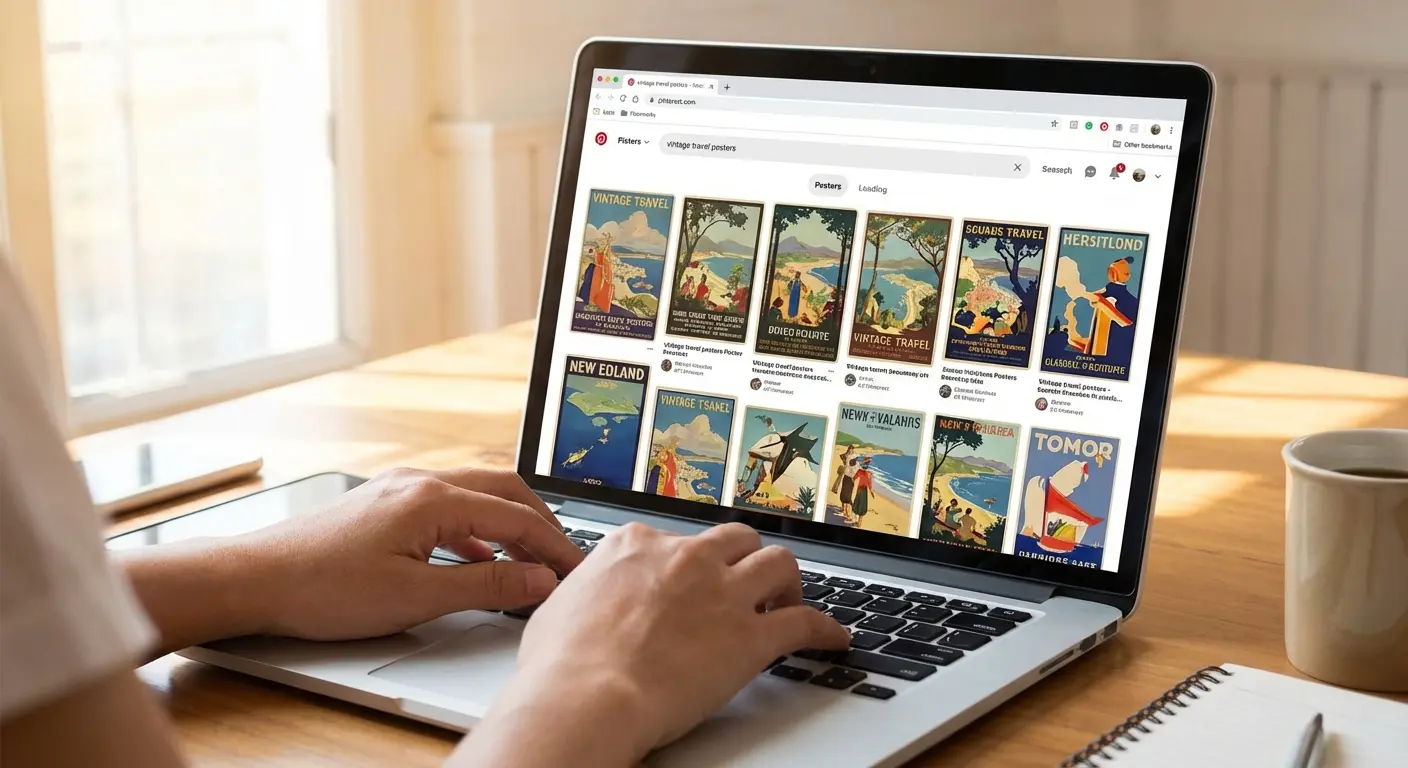
The money follows intent, not impressions. You could have 100,000 followers and make nothing if those followers aren’t searching for what you’re offering. I’ve seen it happen. Conversely, you could have 3,000 saves on a single pin and generate consistent revenue for months because that pin ranks for a high-intent keyword.
Take this example. A pin titled “Ergonomic Office Chair Under $200 for Remote Workers with Back Pain” doesn’t target everyone searching for office furniture. It speaks to remote workers who’ve already experienced back pain, tried cheaper solutions, and set a specific budget. When this pin appears in their search results, they’re not discovering a need. They’re finding the exact solution they’ve been hunting for. The specificity eliminates competition and captures someone at the moment they’re ready to purchase.
The User Journey You’re Actually Entering
People don’t stumble onto Pinterest and suddenly decide they need a product. They arrive with a goal already formed. Maybe they’re planning something (a trip, an event, a project). Maybe they’re solving a problem (organizing a small closet, finding work-from-home jobs). Your job isn’t to create desire. It’s to position your offer as the obvious next step in a journey they’ve already started.
And here’s where everyone screws up. A pin that says “Check out my Etsy shop!” doesn’t align with any search intent. But a pin titled “Minimalist Wedding Invitation Templates You Can Customize in Canva” speaks directly to someone who’s already decided they want DIY invitations and needs templates. That person is ready to buy. You’re just making it easy.
Understanding how to make money on Pinterest starts with recognizing this difference in user behavior. The platform rewards specificity and intent-matching, not broad appeals or personality-driven content. When you align your content with the way people actually use Pinterest (searching with purpose rather than scrolling mindlessly), you position yourself to capture buyers at the exact moment they’re ready to commit.
The Reverse Psychology of Pinterest Commerce
Traditional e-commerce pushes people toward a purchase. Pinterest works in reverse. Users start with a desired outcome and work backward to find the tools, products, or services that’ll get them there.
You’re not selling a product. You’re proving that your product is the missing piece in a plan they’ve already committed to.
Most marketing follows this path: awareness, interest, consideration, purchase. Pinterest flips it. Users arrive at the consideration stage. They’ve already done the awareness and interest work on their own. They know they want to redecorate their living room in a mid-century modern style. They know they need a content calendar template. They know they want to start a print-on-demand business.
Your pins need to assume this knowledge. Don’t waste space explaining why someone needs a content calendar. Show them what your content calendar includes, how it’s different from the free ones they’ve already rejected, and why it’ll save them time. The person searching “content calendar template for small business” has already tried the basic versions. They’re looking for something better.
And here’s where most people fumble. They create educational content when they should be creating decision-making content. Education has its place (we’ll get to that), but your core monetization pins should help people choose, not learn.
|
Traditional Marketing Funnel |
Pinterest Discovery Journey |
|---|---|
|
Awareness: Introduce the problem |
User already knows the problem |
|
Interest: Build curiosity |
User already researched solutions |
|
Consideration: Present options |
User enters Pinterest here |
|
Decision: Close the sale |
User searches for specific solutions |
|
Purchase: Transaction occurs |
Pin leads directly to purchase |
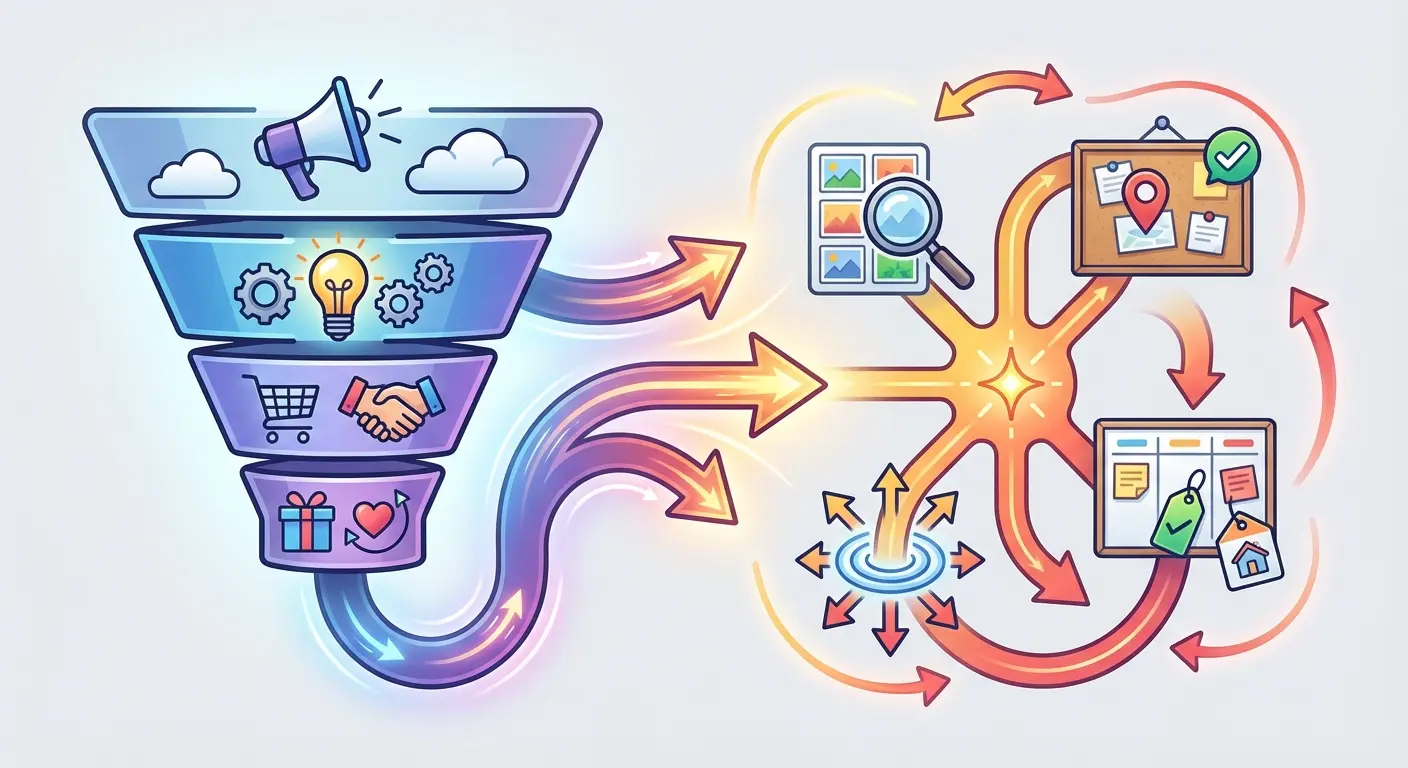
Positioning Your Offer as the Inevitable Choice
What makes someone click your affiliate link instead of the five others in the search results? It’s not your design. It’s not your brand. It’s specificity. A pin for “best running shoes” competes with ten thousand others. A pin for “best running shoes for flat feet and knee pain under $100” speaks to exactly one person, but that person is ready to buy today.
Add every qualifier your buyer is using. Price range, experience level, time constraints, specific pain points. The more precisely you match their search, the higher your conversion rate.
You’re not trying to appeal to everyone searching for running shoes. You’re trying to own the micro-niche of people whose exact situation matches what you’re offering. When someone with flat feet and knee pain sees your pin, they’ll recognize immediately that you understand their specific challenge. That recognition builds instant trust and dramatically increases click-through rates. This targeted approach is the foundation of how to make money on Pinterest. You’re meeting people exactly where they are in their buying journey with precisely what they need.
Your Ideal Customer Is Already Way Ahead of Where You Think
Someone searching “how to start a blog” on Google is a beginner. Someone searching “best WordPress themes for food bloggers” on Pinterest has already decided to start a food blog, chosen WordPress, and is now in the design phase. See the difference? They’ve compressed weeks of research into a specific visual search.
Your content needs to respect that timeline. Pins that explain what a blog is or why someone should start one won’t convert. Pins that showcase specific themes, compare features, or demonstrate what a finished food blog could look like will. You’re catching them right before they make a purchase decision, not at the beginning of their journey.

By the time someone searches on Pinterest, they’ve already done their research elsewhere. They’ve watched YouTube videos, read blog posts, scrolled through Reddit threads. Now they’re here to decide. Understanding where they are in their research process (and what they’ve likely already ruled out) allows you to create pins that speak to their current questions, not their past ones.
Physical products work exactly the same way. Someone pinning “small apartment furniture ideas” has already measured their space, decided on a style direction, and is now hunting for specific pieces that fit. They don’t need convincing that small-space furniture exists. They need to see what works in a room that looks like theirs.
Pinterest User Research Stage Checklist
Use this to identify where your target user actually is:
-
They’ve identified their problem or goal
-
They’ve researched basic solutions on Google or YouTube
-
They’ve ruled out options that don’t fit their constraints (budget, space, time, skill level)
-
They’ve narrowed their search to specific categories or product types
-
They’re now seeking visual confirmation and final comparisons
-
They’re ready to make a purchase decision within days, not weeks
(If they haven’t checked at least 4 of these boxes, they’re not on Pinterest yet)
What They’ve Already Rejected
By the time someone finds your pin, they’ve already scrolled past 50 other options. They’ve seen the cheap stuff, the overpriced stuff, the things that almost work. Your pin needs to immediately signal you understand what they’ve already ruled out.
If you’re selling premium products, acknowledge it in the pin title. “Luxury linen bedding for hot sleepers (yes, it’s worth it)” tells someone you know they’ve seen cheaper options and you’re going to justify the price difference. If you’re selling budget solutions, own that too. “Affordable desk organizers that don’t look cheap” speaks directly to someone who’s tired of flimsy plastic options but can’t spend $200.
Building for the Search Bar, Not the Feed
Your home feed on Pinterest is a nice-to-have. Search results are where you make money. Think about your own behavior. When you’re ready to buy something or commit to a project, do you scroll your feed hoping the right thing appears? No. You search for exactly what you need.
Keyword research isn’t optional on Pinterest. It’s literally the foundation of everything. You need to know what terms people use when they’re ready to take action. Not what sounds good to you. Not what you think they should be searching. What they actually type into the search bar when they’ve got their credit card ready.
Pinterest’s search bar auto-suggests terms as you type, and you need to pay attention to those. Start typing a broad term related to your niche and watch what Pinterest suggests. Those suggestions are real searches from real users. If Pinterest is suggesting “budget meal prep for one person,” that means enough people search that exact phrase to warrant auto-complete. Use it.
High-Intent Keyword Research Template
For each pin you create, complete this:
Broad Topic: _______________
Specific Search Phrase: _______________
User Intent Signal: (planning / comparing / ready to buy)
Qualifiers to Add:
-
Budget range: _______________ (be specific, “cheap” isn’t a number)
-
Experience level: _______________
-
Time constraint: _______________
-
Specific pain point: _______________
Final Keyword: _______________
Expected Monthly Searches: _______________
Competition Level: (low / medium / high)
The Long-Tail Advantage
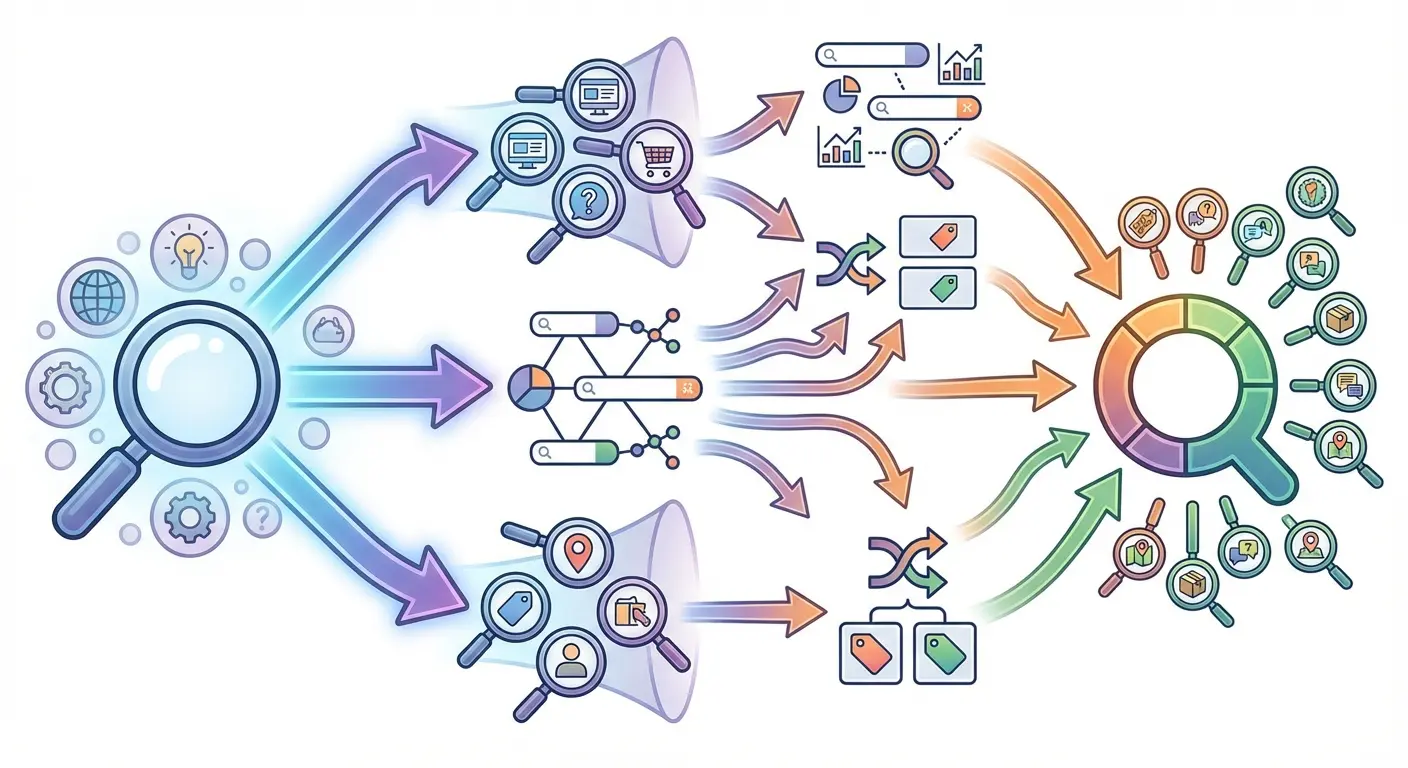
Broad keywords are competitive and low-intent. “Meal prep” could mean anything. “Meal prep for weight loss,” “meal prep for picky eaters,” “meal prep without a microwave” are all different audiences with different needs and different purchase intent. The more specific the search, the closer that person is to conversion.
Build your pin strategy around long-tail keywords. They have less competition, higher intent, and they allow you to create hyper-targeted content that converts. You’d rather rank #1 for a specific phrase that gets 500 searches per month than rank #47 for a broad term that gets 50,000. The person searching the specific phrase is ready to act.
Why Your Pin Descriptions Matter More Than Your Product Copy
Pin descriptions are doing work that most people don’t appreciate. They’re not just captions or afterthoughts. They’re the SEO foundation that determines whether your pin ranks, the persuasive copy that determines whether someone clicks, and the context that helps Pinterest understand who should see your content.
Even accounts with nearly a million impressions can see critically low conversion rates (as low as 18 outbound clicks over 30 days) when pin descriptions and calls-to-action aren’t optimized properly. A weak pin description tanks your reach and your revenue. A strong one compounds your results for months.
Your pin description needs to include keywords so Pinterest knows what your pin is about and who to show it to. It needs to be compelling enough that humans want to click. It needs to provide context that your image can’t convey. And it needs to do all of this without sounding like keyword-stuffed garbage.
Most people write pin descriptions the way they write Instagram captions. Cute, vague, personality-driven. That doesn’t work here. Pinterest isn’t indexing your personality. It’s indexing your keywords. If you’re pinning a product and your description says “Obsessed with this find!” you’ve told Pinterest absolutely nothing. It doesn’t know what the product is, who it’s for, or when someone should see it.
Compare that to: “Ergonomic office chair under $200 for remote workers with lower back pain. Adjustable lumbar support, breathable mesh, and easy assembly.” Pinterest now knows this is furniture, specifically an office chair, in a certain price range, solving a specific problem. It’ll show this pin to people searching those terms. The first description gets buried. The second one ranks.
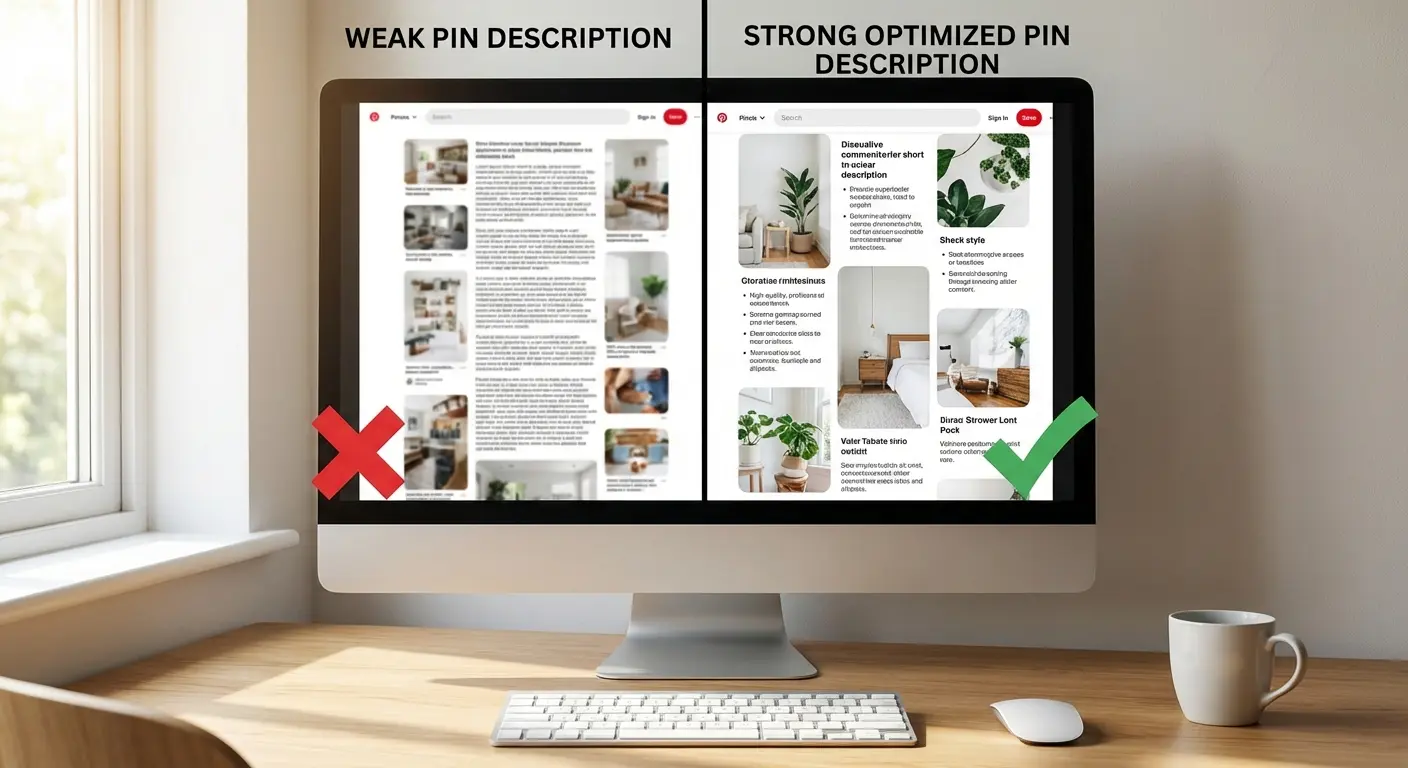
A food blogger creates a pin for a weeknight dinner recipe. Weak description: “This recipe is so good! Link in bio 😋” Strong description: “30-minute chicken stir-fry recipe for busy weeknights. High-protein, low-carb dinner idea using ingredients you already have. Perfect for meal prep or family dinners.” The strong version tells Pinterest exactly what the content is, who it’s for (busy people), what problem it solves (quick weeknight meals), and includes multiple keyword variations (chicken stir-fry, high-protein dinner, meal prep). It ranks for multiple searches and attracts the right audience.
Front-Loading Your Value Proposition
People skim. Pinterest truncates descriptions after the first few lines. You need to communicate value immediately. Don’t bury the lead with fluffy intros.
“Looking for an affordable office chair that supports your back? This ergonomic option under $200 includes adjustable lumbar support and breathable mesh” gets to the point. It tells someone exactly what they’re getting and why they should care before they’ve even expanded the description.
The rest of your description can include additional keywords, benefits, or use cases, but the first sentence needs to convert. Someone should be able to read that opening line and know whether this pin is relevant to them. That’s how you earn the click. Mastering how to make money on Pinterest means treating every description as a mini sales page that serves both algorithms and humans.
The 90-Day Delay You’re Not Accounting For
You post a pin today. Tomorrow, nothing happens. Next week, a few impressions trickle in. A month later, it’s getting steady traffic. Three months later, it’s one of your top-performing pins and it’s been generating sales consistently for weeks.
This is normal. This is how Pinterest works.
Most creators see early results within 30 to 90 days of consistent pinning, with success depending on content strategy, niche, and traffic sources. Pinterest content doesn’t perform like Instagram or TikTok content. You don’t post a pin and see results the same day. Pinterest rewards consistency and longevity, not virality. Your pins gain traction over weeks and months as they accumulate saves, clicks, and engagement signals that tell Pinterest they’re valuable.
People quit before they see results because they’re expecting Instagram-style performance. They want immediate likes, comments, and clicks. Pinterest doesn’t operate on that timeline. The algorithm tests your content slowly, showing it to small groups of users and measuring engagement. If people save it, click it, and spend time on the linked page, Pinterest shows it to more people. This process takes time.
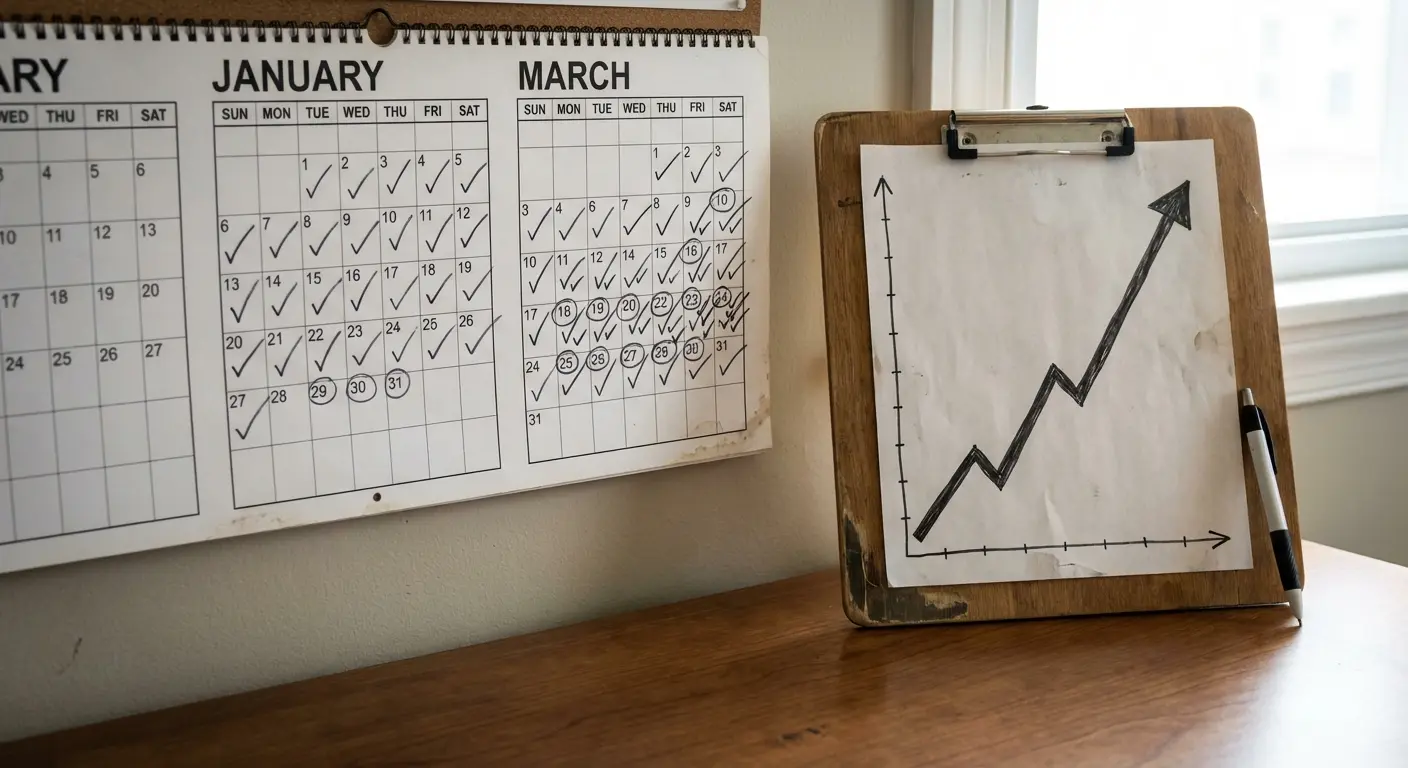
The upside? Once a pin gains traction, it keeps performing. You’re not constantly chasing the next viral post. You’re building a library of evergreen content that generates traffic and revenue on autopilot. A pin you created six months ago can still be driving sales today. That doesn’t happen on other platforms.
This delayed gratification frustrates people who expect immediate returns, but it’s what makes Pinterest so powerful for long-term monetization. I’ve watched pins sit dormant for eight weeks, then suddenly explode with traffic that sustains for months. The waiting period filters out people who aren’t committed to building something sustainable.
The Compounding Effect of Consistent Pinning
One pin won’t change your business. One hundred pins might. Consistency matters more than individual pin performance because you’re building momentum across your entire account. Each pin is a new entry point. Each one targets different keywords, appeals to different users, and has its own lifecycle.
When you publish regularly (I’m talking multiple pins per week, not one per month), you create a compounding effect. New pins start gaining traction while older pins continue to perform. You’re not relying on one piece of content to carry your revenue. You’ve got dozens working simultaneously, each contributing to your overall traffic and sales.
Affiliate Revenue Without the Sleaze Factor
Affiliate marketing on Pinterest is mostly garbage. People spam product links everywhere, create these obviously thirsty pins, and wonder why nobody clicks. It’s embarrassing to watch.
There’s a better way. Affiliate marketing works on Pinterest when you stop thinking like a salesperson and start thinking like a curator. You’re not trying to trick people into clicking your link. You’re genuinely recommending products that solve problems for your specific audience. Understanding how to earn money on Pinterest through affiliate partnerships requires a trust-first approach that most marketers skip entirely.
Start with product selection. Don’t promote something just because it has a high commission rate. Promote things you’d recommend to a friend who’s in your target audience’s situation. If you’re targeting new parents, promote the baby products that make life easier, not the ones with the best affiliate terms. Your credibility is worth more than a 10% commission.
Your pins should provide value even if someone doesn’t click. A pin titled “10 Kitchen Gadgets That Save Time (I Use #4 Daily)” gives someone useful information. They can screenshot it, save it for later, or click through to learn more. You’re not holding information hostage until they click your affiliate link. You’re offering genuine help, and the affiliate link is there if they want to take action.
|
Sleazy Affiliate Approach |
Trust-Building Affiliate Approach |
|---|---|
|
“Click here to buy now!” |
“5 blenders I tested for smoothie bowls (here’s what worked)” |
|
Generic product roundups |
Specific use-case comparisons |
|
Promotes highest commission |
Promotes best fit for audience |
|
No personal experience |
Shows actual results or usage |
|
Hides affiliate relationship |
Clearly discloses partnership |
|
Focuses on features |
Focuses on solving specific problems |
Creating Comparison and Roundup Content
Comparison pins perform exceptionally well for affiliate revenue. “Best Budget Blenders Under $50: Ninja vs. Hamilton Beach vs. Oster” helps someone make a decision. You’re doing the research work they’d have to do anyway, presenting it visually, and making it easy to choose. That’s valuable.
Roundup pins work similarly. “15 Productivity Apps for ADHD Entrepreneurs” or “Best Cruelty-Free Skincare for Sensitive Skin” aggregate options in one place. Someone searching those terms is actively looking for recommendations. They want someone to narrow down the options. You’re not being pushy. You’re being helpful.
The key is specificity in your comparisons. Don’t just list features. Explain which product works best for which situation. “The Ninja is best if you’re making single servings, the Hamilton Beach handles larger batches better, and the Oster has the most powerful motor for frozen ingredients.” Now someone can self-select based on their needs.
Selling Services Through a Visual-First Platform
Service providers struggle on Pinterest because they’re trying to pin something that doesn’t exist as a physical object. You can’t photograph a coaching session or a consulting package. But you can photograph the transformation. The before-and-after of a brand redesign. The organized calendar of someone who finally has their time management under control. The revenue graph of a business that implemented your strategy.
Your pins should showcase results, not services. Someone searching “how to grow Instagram followers” doesn’t want to see your headshot and a list of your coaching packages. They want to see a case study, a strategy breakdown, or a results snapshot that proves you know what you’re doing. The service sale comes after you’ve demonstrated competence.
Templates, worksheets, and free resources work exceptionally well for service-based Pinterest strategies. Create a pin for “Free Content Calendar Template for Service Providers” that links to a landing page where they can download it in exchange for an email address. Now you’ve got a qualified lead who’s interested in content planning. Your email sequence can nurture them toward your content strategy services.
Here’s a real example. A business coach specializing in pricing strategy creates a pin titled “Pricing Calculator for Service Providers (Free Download).” The pin shows a clean, professional screenshot of the calculator with sample numbers filled in. Someone searching “how to price coaching services” finds this pin, downloads the calculator, and receives a welcome email sequence that includes case studies of clients who increased their rates by 40% after working with the coach. Three emails later, they’re offered a paid pricing audit. The pin didn’t sell coaching directly. It demonstrated expertise and built trust through a valuable free resource.
Using Pinterest to Pre-Qualify Your Audience
Not everyone who clicks your pin should become a client. You want people who are the right fit, who can afford your services, and who are ready to invest. Your pins can do filtering work before someone ever reaches your website.
A pin titled “Why Your DIY Branding Isn’t Working (And When to Hire a Designer)” attracts people who’ve already tried the cheap route and are ready for professional help. A pin for “What to Expect When Hiring a Business Coach: Investment, Timeline, and Results” sets expectations upfront. You’re not trying to convince someone they need coaching. You’re speaking to people who’ve already decided and need to choose the right coach.
This pre-qualification saves you time and increases your conversion rates. The people who click through are already aligned with your pricing, your approach, and your philosophy. They’re not tire-kickers. They’re serious prospects who found you at exactly the right moment in their decision-making process.
The Underutilized Power of Idea Pins for Monetization
Idea Pins frustrate people because you can’t add a clickable link. That feels like a dealbreaker if you’re thinking short-term. But Idea Pins serve a different purpose. They’re authority-building content. They position you as someone worth following, someone who knows their stuff, someone whose standard pins are worth clicking when they do appear.
Think of Idea Pins as the top-of-funnel content that makes your middle and bottom-funnel pins more effective. You create an Idea Pin breaking down “5 Mistakes Killing Your Etsy Sales” with genuinely useful information. Someone saves it, benefits from it, and starts recognizing your brand. Later, they see your standard pin for “Etsy SEO Checklist Template” and they’re more likely to click because they already trust you.

Idea Pins also allow for deeper education than standard pins. You’ve got multiple pages to work with. You can walk through a process, show step-by-step transformations, or break down complex concepts visually. This is valuable for service providers, course creators, and anyone selling something that requires buyer education.
I’ve seen Idea Pins generate thousands of profile visits and follower growth that translates to increased clicks on monetized pins. The lack of a direct link forces you to provide value without asking for anything in return, which paradoxically makes people more interested in what else you have to offer.
Content Formats That Perform
Tutorial-style Idea Pins work well. “How to Batch Create a Month of Pinterest Content in One Afternoon” gives actionable steps across multiple pages. Someone finishes that Idea Pin with practical knowledge they can use immediately. You’ve provided value without asking for anything in return. That builds goodwill.
Behind-the-scenes content also performs. “How I Grew My Email List from 0 to 5,000 Using Pinterest” tells a story across multiple pages, showing your process, your results, and your key takeaways. You’re not directly selling, but you’re demonstrating expertise that makes your paid offerings more attractive.
Myth-busting Idea Pins grab attention too. “5 Pinterest Myths Keeping You Broke” or “What Nobody Tells You About Selling Digital Products” creates curiosity and positions you as someone who sees through the noise. People save these, share them, and remember your name when they’re ready to invest in a solution.
Creating Product Ecosystems, Not One-Off Sales
Single-transaction thinking limits your Pinterest revenue. The real money comes from building systems where one purchase leads to another, where one pin introduces someone to your brand and multiple other pins guide them through your product range or service offerings.
You’re leaving money on the table if you’re only thinking about individual pin performance. Someone who buys one product from you is exponentially more likely to buy again than a cold audience member. Your Pinterest strategy should account for this. Understanding how to make money on Pinterest at scale means thinking beyond isolated conversions and building pathways that maximize customer lifetime value.
Map out your customer journey. What’s the entry-level offer? What comes next? What’s the premium option? Create pins for each stage. Someone might discover you through a pin for your $27 template, buy it, love it, and then search for more of your content. If you’ve got pins for your $97 course and your $500 coaching package, they’ll find those too. You’re not relying on a single conversion. You’re building a relationship.
This is especially powerful for digital product sellers. Your pins shouldn’t just promote your bestseller. They should showcase your entire catalog. Different people enter at different points. Some want the quick win (cheap template). Others want the comprehensive solution (expensive course). Both should be able to find you on Pinterest.
I’ve built product systems where a single customer discovers us through a free resource pin, downloads it, buys a low-ticket template, enrolls in a mid-tier course, and eventually invests in high-ticket services. All because we had pins targeting each stage of that journey. That’s the power of ecosystem thinking.
Cross-Promotion Within Your Content
Your pin descriptions and linked content should reference your other offers when relevant. If someone lands on your blog post about content planning (from a Pinterest click), that post should mention your content calendar template, your content strategy course, and your done-for-you services. You’re giving them options based on their budget and commitment level.
This isn’t pushy if it’s genuinely helpful. Someone reading about content planning clearly cares about the topic. Letting them know you have tools and services that make it easier is just good customer service. Some will buy immediately. Others will save the information for later. Either way, you’ve planted the seed.
Create pins that explicitly connect your offers. “Start with This Free Template, Then Upgrade to the Full System” acknowledges that people are at different stages. Some need to test the waters with something free. Others are ready to invest in the complete solution. Both paths should be visible and accessible through your Pinterest content.
When to Bring in Strategic Support
You can build a profitable Pinterest presence on your own. Many people do. But there’s a point where your time becomes more valuable than the money you’d spend on expert help. If you’re spending 15 hours a week on Pinterest and it’s pulling you away from client work, product development, or other revenue-generating activities, the math might not be working in your favor .
The question isn’t whether you can do it yourself. It’s whether you should. Pinterest strategy involves multiple skill sets (design, copywriting, SEO, analytics, funnel building). You might be great at some of those and weak at others. The weak areas hold back your results.
I’ve seen this pattern with dozens of clients at my agency. Business owners come to me after months of inconsistent Pinterest efforts. They understand the platform’s potential but can’t get traction because they’re missing key pieces. Maybe their pin design is solid but their keyword strategy is nonexistent. Maybe they’re pinning consistently but their landing pages aren’t converting. These aren’t knowledge gaps you can fix with a YouTube tutorial. They’re strategic gaps that require experience and problem-solving.
If you’re generating some results but hitting a ceiling, if you’re overwhelmed by the technical aspects, or if Pinterest is taking time away from your highest-value activities, that’s when bringing in expert help makes sense. I help businesses build Pinterest systems that generate ROI, not just vanity metrics. We focus on the performance indicators that matter (traffic that converts, not just impressions) and we build strategies rooted in data, not guesswork.
Pinterest monetization requires consistent effort, strategic thinking, and often technical knowledge that pulls you away from your core business. You’re managing keyword research, pin design, scheduling, analytics tracking, and funnel optimization. That’s a full workload on top of running your business. Knowing when to bring in expert support and what that support should look like (whether through comprehensive digital marketing services or specialized Pinterest strategy) can be the difference between Pinterest being a side hobby and a genuine revenue channel.
Final Thoughts
Look, Pinterest isn’t going to give you overnight success. If you want that dopamine hit of going viral, go to TikTok. But if you want to build something that’s still working six months from now without you touching it? Pinterest is the only platform that does that.
The businesses that succeed on Pinterest understand they’re playing a long game. They’re building search-optimized content libraries, not chasing viral moments. They’re helping people make decisions, not interrupting them with ads. They’re thinking in systems, not individual transactions.
Your Pinterest strategy should reflect your business model. Affiliate marketers need different approaches than service providers. Digital product sellers have different priorities than e-commerce brands. But the underlying principles remain constant: understand search intent, create content that matches it, optimize for discovery, and build systems that convert traffic into revenue.
The platform’s unique position as a visual search engine where users arrive with purchase intent already formed gives you an advantage that doesn’t exist elsewhere. You’re not convincing people to buy. You’re helping them choose you. Once you flip your thinking like this, everything changes. What you create, where you focus, why some accounts make money and others don’t.
Start with one niche, master the keyword research process, create pins that speak to high-intent searches, and give your content time to compound. The results won’t appear overnight, but when they do, they’ll keep working for months without additional effort. That’s the Pinterest advantage, and it’s available to anyone willing to understand how the platform actually works and build their strategy accordingly. Learning how to make money on Pinterest isn’t about shortcuts or hacks. It’s about respecting the platform’s unique mechanics and positioning your offers where ready-to-buy users are already searching.