



Table of Contents
-
Why Views Are a Lagging Indicator (And What to Track Instead)
-
The Cognitive Load Problem Most Creators Ignore
-
Pattern Interruption vs. Pattern Recognition: Picking Your Lane
-
Thumbnail Psychology Beyond Click-Through Rate
-
The First 8 Seconds Aren’t About Retention (They’re About Permission)
-
Why Your Best Videos Might Be Killing Your Channel Growth
-
Search vs. Browse: Building Content for Two Different Brain States
-
The Metadata Stack Nobody Talks About
-
When to Ignore Your Analytics Completely
Why Views Are a Lagging Indicator (And What to Track Instead)
Stop checking your view count.
I know you won’t. I still check mine too. But that number isn’t telling you what you think it is. By the time a view registers, you’ve already won or lost. The game happens earlier, in places your analytics dashboard doesn’t even show you.
Most creators optimize for views like they’re playing darts in the dark. They can hear when something hits, but they have no idea what they’re aiming at.
YouTube’s daily usage shows just how many people are on there. According to YouTube marketing statistics from Socinator, millions log in each day to watch tutorials, music videos, vlogs, and product reviews. If even a fraction of this audience engages with your channel, you can transform your growth curve. But here’s the thing: understanding the mechanics behind views matters way more than the view count itself.
Views don’t just materialize. They’re the end result of a chain of events you can’t see. And if you don’t understand that chain, you’re basically optimizing blind.
The Three Gates Every View Must Pass Through
Actually, let me rephrase that. There are three stages where you either win or lose a viewer. Most creators obsess over stage three while completely ignoring that stages one and two determine how many people even get the chance to watch.
|
Stage |
Metric |
What It Measures |
Why It Matters |
|---|---|---|---|
|
Gate 1: Impressions |
Impression volume |
How often YouTube shows your content to potential viewers |
Determines your maximum possible reach; limited impressions cap your view potential regardless of CTR |
|
Gate 2: Click Decision |
Click-through rate (CTR) |
Percentage of people who click after seeing your thumbnail/title |
Signals whether your packaging matches audience interest; low CTR means wasted impressions |
|
Gate 3: Satisfaction |
Watch time, retention, engagement |
How long viewers watch and how they interact with your content |
Tells YouTube whether to show your content to more people; drives future impression volume |
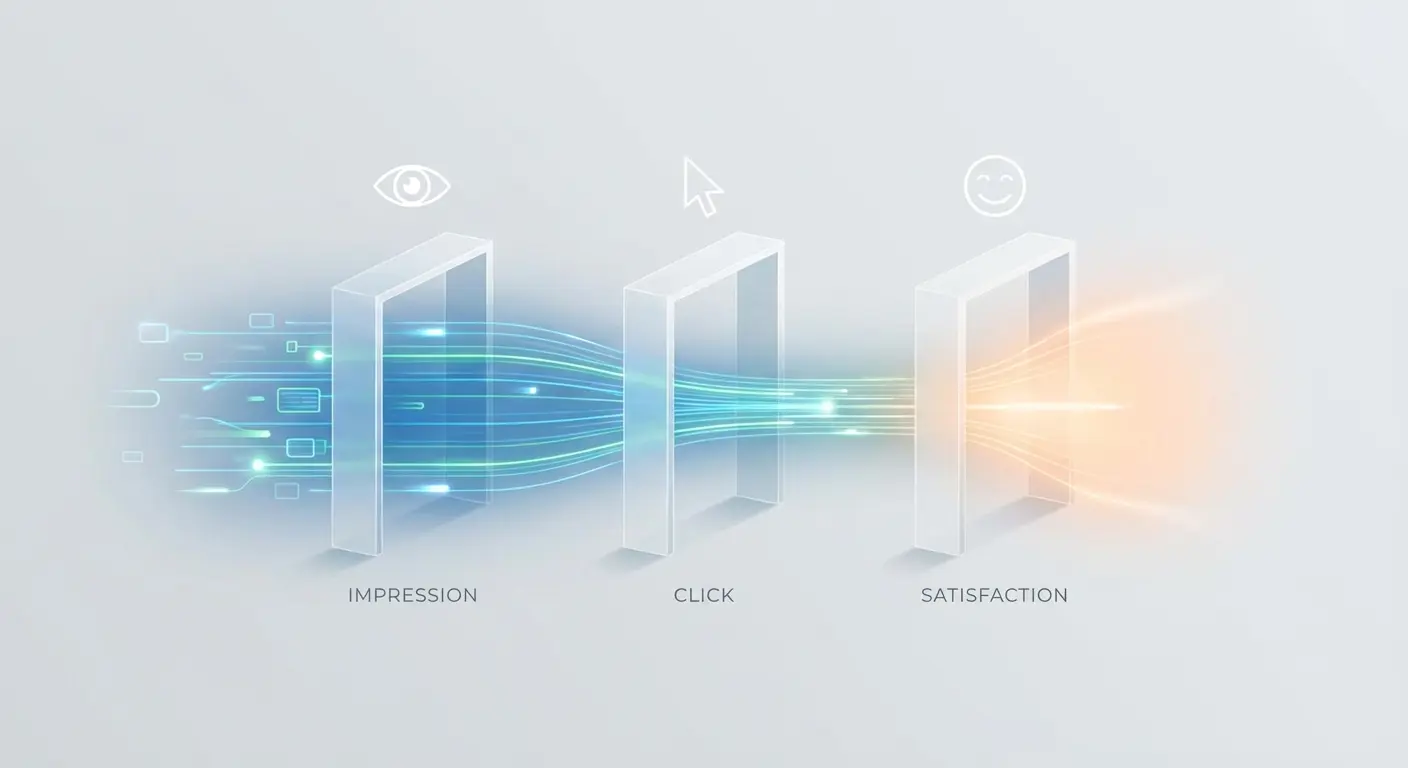
Impressions depend on how YouTube’s system categorizes your content and which audiences it believes will find value in it. This isn’t about gaming an algorithm. It’s about clarity.
When your content sends mixed signals (through metadata, viewer behavior patterns, or satisfaction metrics), the system becomes conservative about showing it to new audiences. Think about it: YouTube has billions of hours of content. Why would it risk showing viewers something that might disappoint them when it has safer bets available?
Why High Views on the Wrong Video Hurt You
I’m gonna say something that’ll piss off half the YouTube gurus: your viral video probably killed your channel.
A video that gets massive views from an audience that doesn’t connect with your broader content catalog damages your channel’s growth potential. YouTube’s recommendation system learns from these mismatched signals. It starts showing your future content to people who aren’t genuinely interested in what you create. Lower satisfaction signals follow. Then fewer impressions over time.
Look at what happens all the time with fitness channels. A creator who normally posts advanced powerlifting tutorials makes a beginner-friendly “how to do a push-up” video. It goes viral. 500,000 views. Sounds amazing, right?
Check what happens next. Most of those viewers are complete beginners who have zero interest in the creator’s typical content about periodization, progressive overload, or competition prep. When YouTube recommends the creator’s next video (about Romanian deadlift variations) to this beginner audience, they don’t click. Or they click and immediately bounce.
The algorithm learns that this creator’s subscribers don’t want their content. Future impressions tank, even to the creator’s core audience.
This creates a frustrating cycle where you feel like you need to recreate your “viral hit” instead of building on your core content. You end up chasing someone else’s audience instead of cultivating your own.
The Cognitive Load Problem Most Creators Ignore
Your biggest competition isn’t other creators in your niche. It’s the forgetting curve.
Viewers watch dozens (sometimes hundreds) of videos per week. Unless you’re building deliberate memory structures, you’re basically invisible even to people who enjoyed your content.
Getting more views isn’t just about attracting viewers once. It’s about making your channel unforgettable so they come back. Viewer memory compounds over time, which matters way more than any single video’s performance.
Why Consistency Isn’t About Upload Schedule
Everyone tells you to post consistently. What they don’t tell you is that consistency in presentation matters way more than consistency in timing.
Your brain creates shortcuts to reduce cognitive effort. When every video from a creator looks, sounds, and feels similar in structure, those shortcuts form faster and stick longer.
This doesn’t mean every video needs identical content. It means your intro style, visual branding, pacing, and even your speaking patterns should create recognizable patterns. Viewers shouldn’t need to work hard to know they’re watching your content. That recognition happens without them thinking about it, and it’s what triggers the thought “oh, I should check if they posted something new” days later.

The Paradox of Variety
Trying to appeal to everyone guarantees you’ll be memorable to no one. When you vary your content style, format, and topic area too broadly, you force viewers to re-learn who you are with every video. That’s exhausting. They won’t do it.
There’s genuine tension here. You need enough variety to avoid creative stagnation and to test what resonates. But too much variety fragments your identity in viewers’ minds.
The solution isn’t finding a perfect middle ground (those don’t exist). It’s being intentional about which elements stay consistent and which ones you allow to evolve.
Pattern Interruption vs. Pattern Recognition: Picking Your Lane
YouTube rewards two very different types of content, and most creators accidentally position themselves in the dead zone between them.
Backlinko tracked 1,000+ channels in 2025. According to their analysis on how to get YouTube subscribers, the ones that picked a lane and stuck with it? They averaged 3,000+ new subscribers monthly. The ones trying to do everything? Most stalled under 500. This data reinforces why picking your strategic lane matters more than ever in 2026.
The Scroll-Stopper Strategy
Some channels grow by being unpredictable. Every thumbnail looks different. Every title promises something you haven’t seen before. Every video delivers an experience that feels novel.
This works, but it’s exhausting to maintain. You’re basically competing in the attention economy’s heavyweight division, where novelty is your only moat.
Creators in this lane succeed through Browse features (Home feed, Suggested videos). They’re optimizing for that split-second decision where someone scrolling decides to stop. The content itself often features high production value, unexpected angles, or presentation styles that feel fresh. Mr. Beast operates here. So do most commentary channels covering current events.
The Reliability Strategy
Other channels grow by being exactly what viewers expect. Someone has a problem, searches for a solution, finds your video, and it delivers precisely what the title promised. Then they remember you exist the next time they have a related need. This strategy builds slower but compounds more reliably.
These creators win through Search and through building content libraries that continue generating views months or years after publication. They’re not chasing trends. They’re creating reference material. Your favorite cooking channel probably lives here. So do most educational tech channels.

Why the Middle Ground Fails
You can’t be both unpredictable and reliable. These strategies require opposite approaches to metadata, presentation, and content structure.
When you try to blend them, you confuse both YouTube’s system and potential viewers. Your content isn’t novel enough to win the scroll-stopper game, and it isn’t reliable enough to win the search-and-reference game.
The answer to getting more views isn’t trying to do everything. It’s mastering one strategic lane completely. Many creators struggle because they’re splitting focus between incompatible approaches.
If you’re still trying to figure out which content strategy aligns with your business goals, understanding how content marketing agencies approach strategic positioning can provide valuable perspective on making this choice.
Pattern Recognition Channel Checklist:
-
[ ] Consistent intro format (same music, same opening structure, same duration)
-
[ ] Recognizable thumbnail design system (consistent fonts, color palette, layout grid)
-
[ ] Predictable content structure that viewers can anticipate
-
[ ] Titles that clearly describe what the video delivers
-
[ ] Content that solves specific, searchable problems
-
[ ] Upload schedule viewers can rely on (even if infrequent)
-
[ ] Branding elements that appear in every video (logo placement, outro style)
Pattern Interruption Channel Checklist:
-
[ ] Unique thumbnail for each video that stands out in browse features
-
[ ] Titles that create curiosity gaps or promise novel perspectives
-
[ ] High production value that signals premium content
-
[ ] Trending topics or current events integration
-
[ ] Unpredictable content angles that surprise regular viewers
-
[ ] Strong hooks in first 10 seconds that stop scrolling behavior
-
[ ] Content optimized for suggested videos and home feed discovery
Pick a lane based on your natural strengths and the type of content you want to create long-term. Your view growth will accelerate once you stop sending mixed signals.
Thumbnail Psychology Beyond Click-Through Rate
Your thumbnail’s job isn’t getting clicks. (Anyone can make clickbait.) It’s getting clicked by the right people while actively repelling the wrong ones.
Thumbnails as Filtering Mechanisms
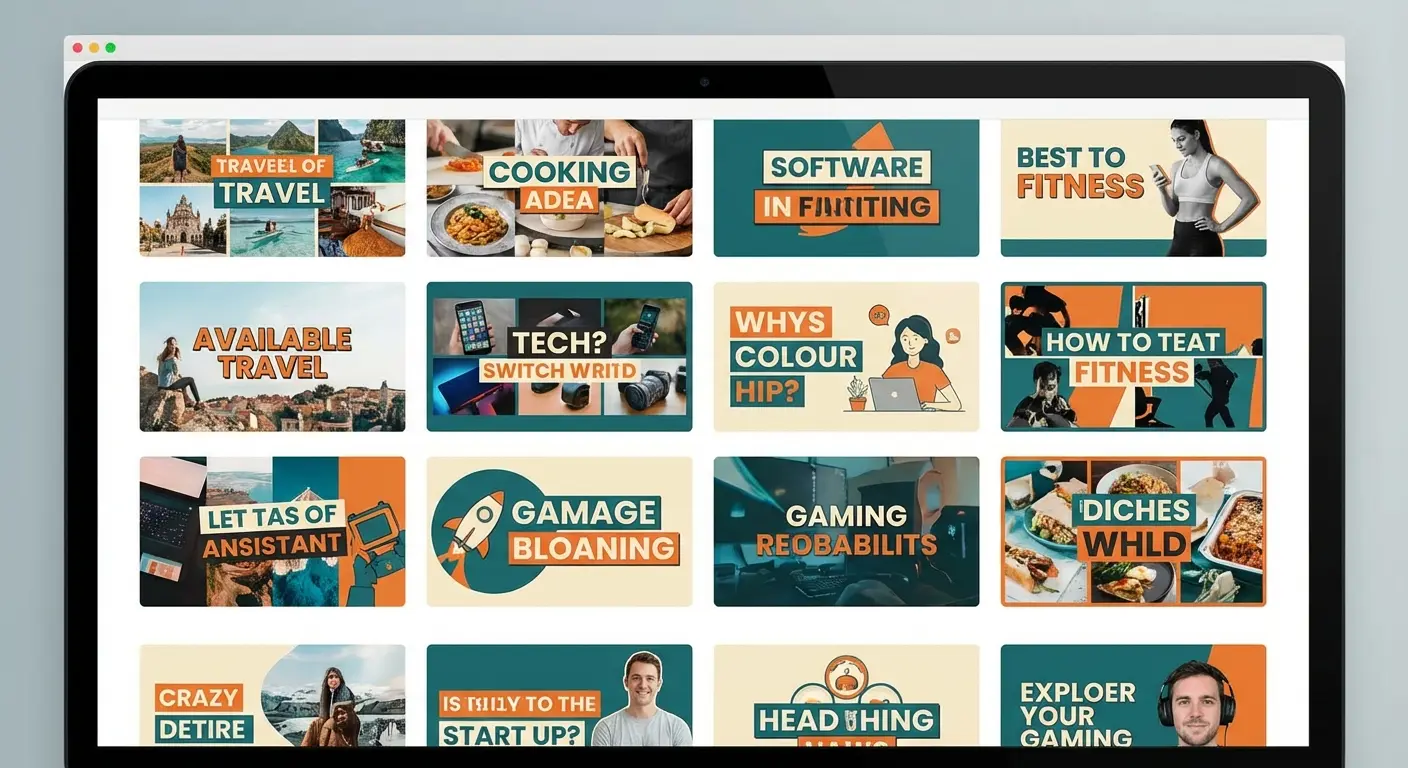
Every design choice in your thumbnail sends signals about who the content is for. Color palette, text density, facial expressions, composition style. All of these communicate at a glance whether this video is for someone like the viewer.
High click-through rates mean nothing if those clicks come from people who bounce after 20 seconds because the content didn’t match what the thumbnail promised.
You want self-selection. Someone scrolling should be able to accurately predict whether your video will deliver what they’re looking for. That requires thumbnails that communicate clearly, not just loudly.
The Recognition Test
Can someone who’s watched three of your videos identify your content from the thumbnail alone, even with the title hidden? If not, you’re making your audience work too hard to find you.
This doesn’t mean every thumbnail should look identical. It means your design system should be consistent enough that recognition happens automatically.
Think about how you recognize a friend in a crowd. You’re not consciously analyzing features. You’re pattern-matching against stored memories. That’s how viewers should experience your thumbnails.
When Consistency Becomes Stagnation
There’s a difference between consistent and repetitive. Consistent means using the same design system (layout grid, color palette, typography hierarchy). Repetitive means every thumbnail looks so similar that none of them stand out. You need consistency in structure with variation in execution.
The First 8 Seconds Aren’t About Retention (They’re About Permission)
You’ve been told to hook viewers in the first few seconds or lose them forever. That advice is creating worse content and training viewers to expect manipulation.
The Context Problem
When you jump straight into content without establishing what the video is about and why it matters, you force viewers into a state of uncertainty. They’re trying to figure out whether they’re in the right place while also trying to process your content. That’s cognitive overload, and it doesn’t feel good.
Your opening should answer three questions instantly: What is this video about? Who is it for? Why should I keep watching?
You can answer these in five seconds with clear, direct communication. You don’t need flashy graphics or manufactured urgency.
Compare two openings for a video about email marketing automation.
Opening A: “What if I told you that you could 10x your revenue in just 30 days using this one weird trick that marketers don’t want you to know about?”
Opening B: “This is a 12-minute tutorial on setting up abandoned cart email sequences in Klaviyo. If you run an e-commerce store and want to recover lost sales automatically, this will show you exactly how to build that system.”
Opening B gives permission to stay because viewers immediately know whether this video serves their needs. Opening A creates skepticism and forces viewers to wait through fluff to determine if the content is relevant.
Why Value Promises Backfire
“By the end of this video, you’ll know exactly how to…” openings have trained viewers to be skeptical. We’ve all clicked on videos that promised transformative insights and delivered generic advice. When you front-load promises, you’re asking viewers to trust you before you’ve earned it.
Better approach: demonstrate value immediately by starting with an insight, an observation, or a piece of information that’s genuinely useful. Show, don’t promise. The first 30 seconds should make someone think “oh, this person knows what they’re talking about” rather than “I hope this is worth my time.”
The Permission Framework
You’re not trying to trap viewers into watching. You’re giving them enough information to make an informed decision about whether to invest their time. That might sound counterintuitive when you’re trying to maximize retention, but here’s what happens: viewers who choose to stay (rather than feeling manipulated into staying) are far more likely to be satisfied with the experience.
And satisfaction is what drives recommendations.
Why Your Best Videos Might Be Killing Your Channel Growth
That video that got 10x your normal views? It might be the worst thing that happened to your channel. I’ve watched this pattern kill dozens of channels.
Research on top-performing YouTube content reveals something critical: when creators analyze their top 10 videos by views and check what percentage of viewers went on to watch another video on their channel within the same session, videos with significantly lower session continuation rates often indicate audience mismatch problems, according to YouTube analytics patterns documented by Socinator. This metric matters far more than raw view counts for sustainable growth.
The Audience Mismatch Trap
When a video significantly outperforms your baseline, it’s usually because it reached beyond your core audience. That sounds good until you look at what happens next.
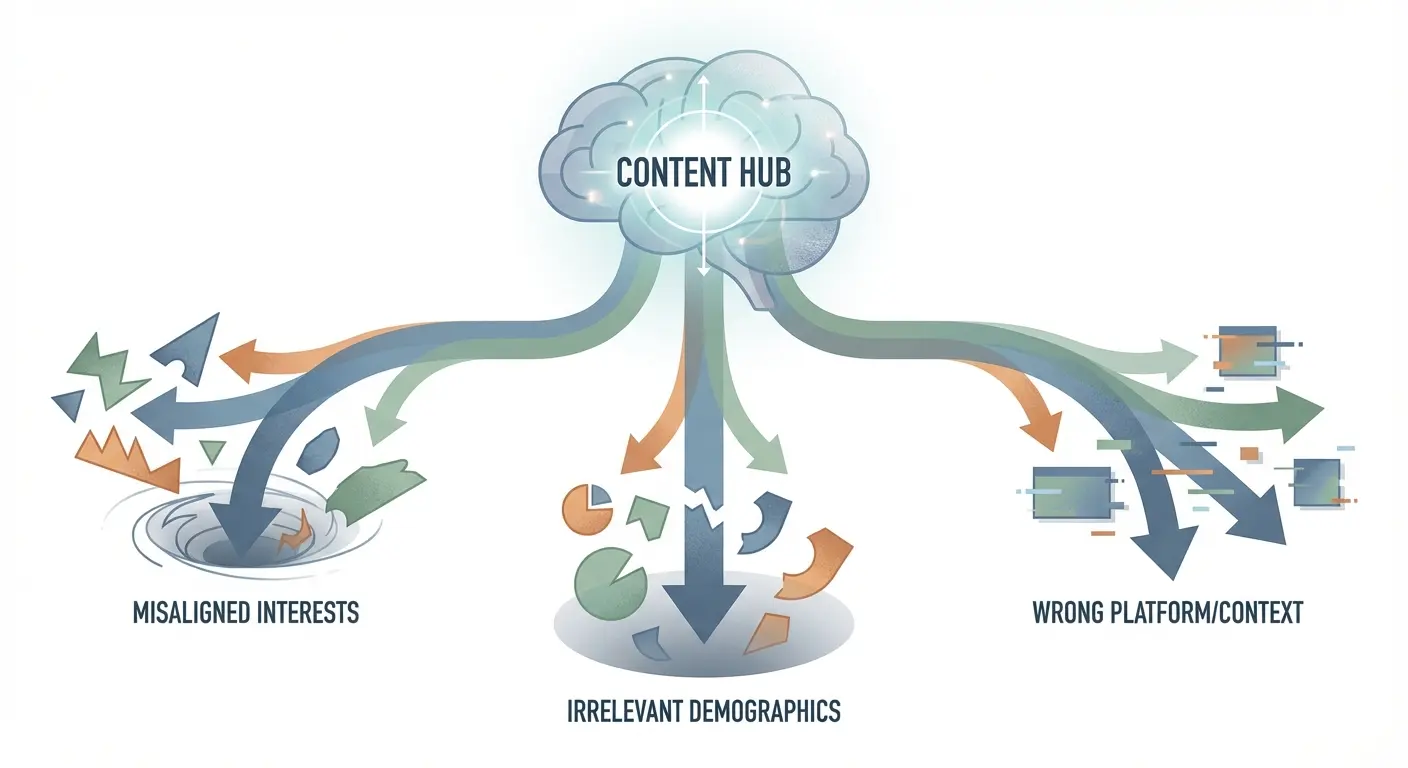
Those new viewers check out your other content, don’t find what they’re looking for (because they were attracted by an outlier), and leave. YouTube’s system notices. It learns that people who watch that viral video aren’t interested in your other content.
Now your future videos get recommended to an audience that’s already proven they’re not interested in what you typically create. Your impressions might go up, but your CTR and satisfaction signals go down. The algorithm interprets this as your content getting worse, when it’s just showing your content to the wrong people.
How to Audit Your Top Performers
Look at your top 10 videos by views. For each one, check what percentage of viewers went on to watch another video on your channel within the same session. If that number is significantly lower for your highest-viewed content, you’ve found your problem.
You don’t need to delete those videos (though sometimes that’s the right move). You do need to stop trying to recreate them. Your growth strategy should focus on the videos that attract viewers who stick around, not the videos that attract the most viewers period. Sustainable view growth comes from attracting the right viewers, not the most viewers.
The Subscriber Quality Question
Subscribers from outlier videos are often dead weight. They subscribed based on one piece of content that doesn’t represent your channel. They won’t watch your future uploads, which tanks your subscriber notification CTR, which signals to YouTube that your subscribers aren’t interested in your content. Quality over quantity isn’t just a platitude here. It’s mechanically how the system works.
Search vs. Browse: Building Content for Two Different Brain States
You’re creating content for two completely different types of viewers, and they’re not looking for the same things.
A recent 2025-2026 creator analysis on Vocal Media documented how three longer-form videos (ranging from detailed theory breakdowns to comprehensive film analyses) significantly outperformed shorter content, with one video reaching 735 views and generating 40.2 public watch hours. The creator noted that YouTube’s algorithm appears to favor suggesting longer videos to viewers in browse mode, particularly when the content demonstrates depth and keeps viewers engaged through extended watch sessions.
The Search Mindset
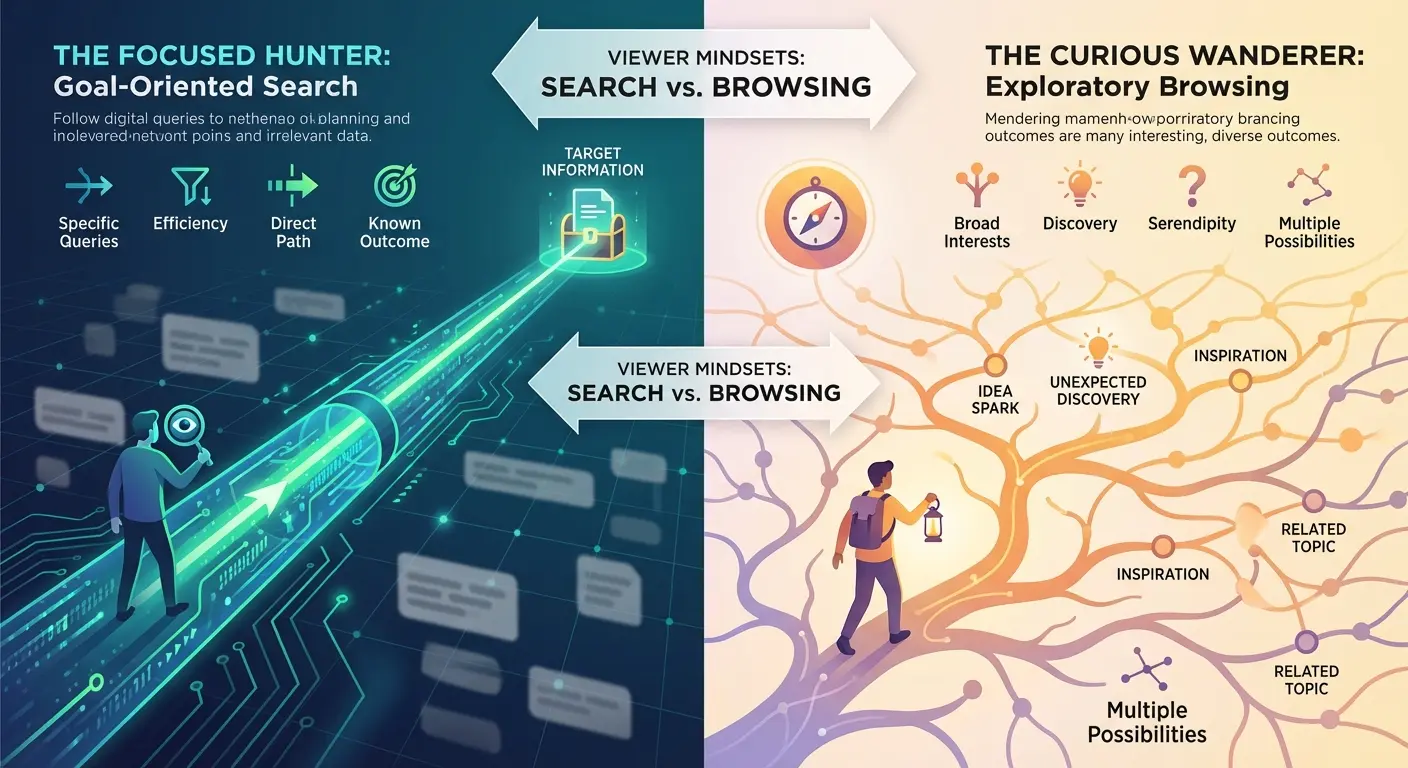
Someone searching has a specific need. They’re looking for an answer, a tutorial, a solution to a concrete problem. They’re evaluating videos based on whether the title and thumbnail suggest you can solve their specific issue. They’re not browsing. They’re hunting.
Content optimized for search needs descriptive titles that match natural language queries. Your thumbnail should communicate competence and clarity, not creativity. The video itself should deliver on the promise quickly and thoroughly. These videos often have longer average view durations because people came with intent. They’ll watch until their problem is solved.
The Browse Mindset
Someone browsing is in discovery mode. They’re scrolling through their home feed or suggested videos, open to being interested but not looking for anything specific. They’re making split-second decisions based on whether something looks intriguing enough to interrupt their scroll.
Browse-optimized content needs titles and thumbnails that create curiosity or promise entertainment. The video needs to earn continued attention because the viewer didn’t arrive with committed intent. They’re more likely to click away if the first 30 seconds don’t deliver immediate engagement. These videos often have shorter view durations but can reach much larger audiences.
Why Your Strategy Should Pick One
Most creators try to optimize for both. They create tutorial content but package it with curiosity-gap titles. Or they create entertainment content but title it as a how-to guide. This confuses both the system and viewers.
Search-optimized content builds a library that generates consistent views over time. Browse-optimized content generates spikes when it gets picked up by recommendation algorithms. Both strategies work. Trying to do both with the same video rarely does. Getting more views means choosing the right discovery mechanism for each piece of content.
This strategic thinking mirrors broader digital marketing principles, much the same way search engine marketing agencies segment campaigns by user intent.
|
Element |
Search-Optimized Approach |
Browse-Optimized Approach |
|---|---|---|
|
Title |
Descriptive, matches natural queries: “How to Fix Error 404 in WordPress” |
Curiosity-driven, promises insight: “The WordPress Mistake Killing Your Traffic” |
|
Thumbnail |
Clean, professional, text-focused showing competence |
Bold, emotional, visually striking with high contrast |
|
Opening |
Immediate value delivery, states problem and solution upfront |
Hook-driven, creates intrigue before revealing full context |
|
Length |
As long as needed to thoroughly solve the problem (often 10-20+ min) |
Tighter pacing, optimized for sustained engagement (varies widely) |
|
Content Structure |
Logical, step-by-step, easy to follow and reference |
Story-driven, entertainment-focused, emphasis on pacing |
|
Longevity |
Evergreen content that generates views for months/years |
Timely content that capitalizes on current interest |
How to Identify Your Natural Lane
Look at your traffic sources. If most views come from YouTube search, double down on search optimization. If most come from suggested videos and browse features, focus on browse optimization. Stop fighting your natural content type just because you think the other strategy looks more appealing.
The Metadata Stack Nobody Talks About
You’re probably optimizing your title and thumbnail while ignoring the metadata layers that help YouTube understand and categorize your content effectively.
Playlist Architecture as Discovery Tool
Playlists aren’t just organizational tools for viewers. They’re signals to YouTube about how your content relates to itself and to broader topics. When you group videos into well-structured playlists with clear themes, you’re teaching the system about the relationships between your content.
Someone watching one video in a playlist is way more likely to watch another from the same playlist. This creates binge-watching patterns, which generate strong satisfaction signals. Yet most creators either don’t use playlists or create them as an afterthought with generic names that don’t communicate value.
Instead of creating a playlist titled “Marketing Tips,” a business channel creates outcome-focused playlists: “Get Your First 1,000 Email Subscribers in 90 Days” (8 videos), “Double Your Website Traffic Without Paid Ads” (12 videos), and “Convert Cold Audiences into Paying Customers” (6 videos). Each playlist title promises a specific outcome, making viewers far more likely to commit to watching multiple videos in sequence. This approach drives significantly higher watch time and session duration.
Chapter Markers as Retention Signals
Chapters do more than help viewers navigate your video. They tell YouTube’s system what your video covers and allow the algorithm to recommend specific sections to viewers searching for particular information. A well-chaptered video can appear in search results for multiple different queries because each chapter represents distinct content.
Chapters also improve perceived value. Viewers can see at a glance that your video is structured and comprehensive. They’re more likely to commit to watching when they can see exactly what they’re getting and can skip to relevant sections if needed.
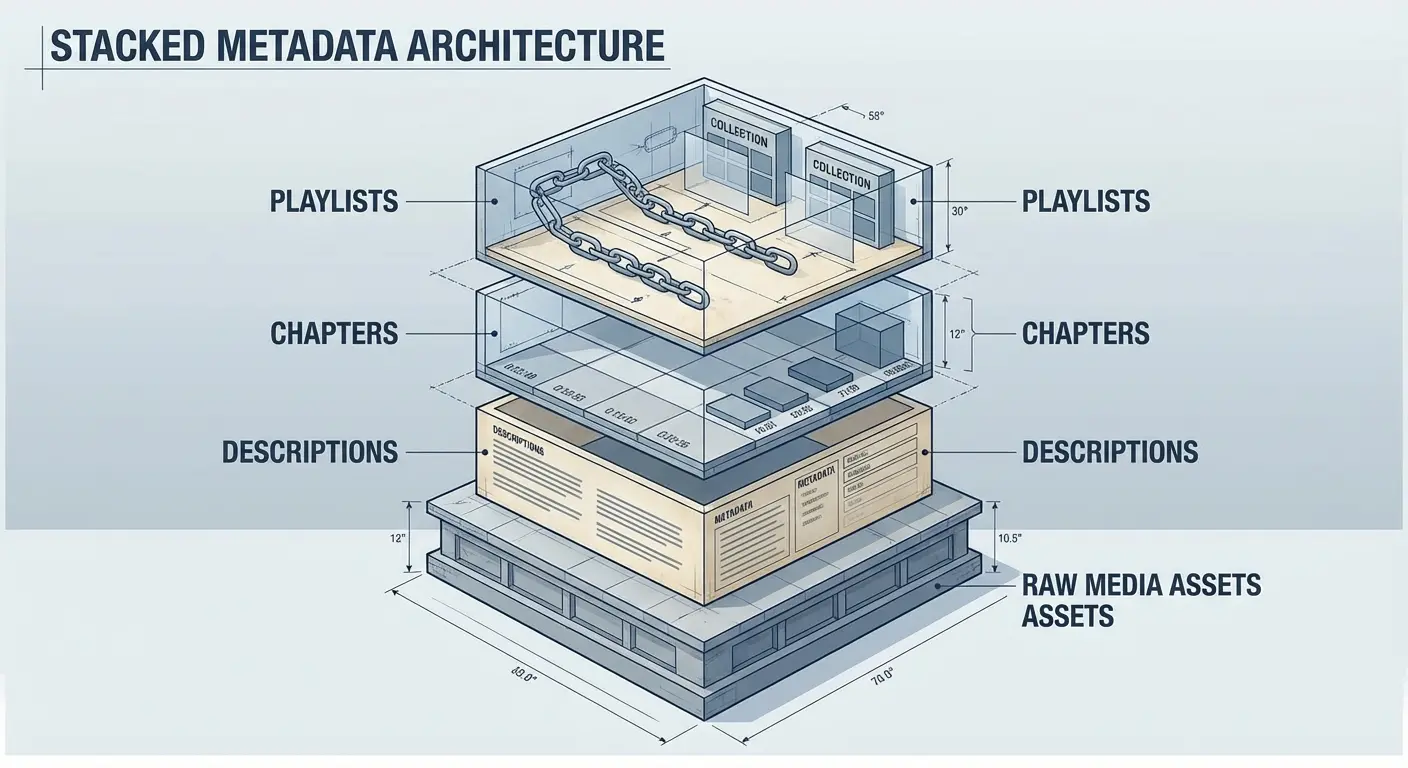
The Description as Context Layer
Your description shouldn’t just repeat your title. It should expand on it, providing context that helps both viewers and YouTube’s system understand what the video covers and who it’s for. Include related questions your video answers. Mention specific tools, techniques, or concepts you discuss.
This isn’t keyword stuffing. It’s comprehensive communication about what value your video provides. The first two lines matter most because they’re visible before the “show more” click, but the full description contributes to how YouTube categorizes and recommends your content.
Pin Comments as Expectation Management
Your pinned comment is prime real estate that most creators waste on asking for likes and subscriptions. Use it to set expectations, provide additional context, or address common questions that might come up. This reduces confusion and improves satisfaction because viewers get clarification before they need it.
When to Ignore Your Analytics Completely
Your analytics dashboard is lying to you. Not intentionally, but it’s showing you data without context, which is often worse than having no data at all.
The Transition Period Blindspot
When you’re shifting your content strategy, your analytics will look terrible for weeks or even months. Your existing audience might not resonate with the new direction. YouTube’s system needs time to figure out who your content is for now. Your numbers will dip, and every metric will scream at you to go back to what you were doing before.
This is exactly when you need to ignore your analytics. Not forever, but long enough to give the new strategy a fair test. You need at least 10-15 videos in a new direction before you can evaluate whether it’s working. Anything less and you’re just seeing noise from the transition itself.
When Sample Size Invalidates Conclusions
Small channels obsess over analytics that aren’t statistically meaningful yet. You can’t draw reliable conclusions from 100 views. You can’t even draw them from 1,000 views in most cases. The variance is too high. One video performing differently from another might just be random chance, not a signal that you’ve discovered something important.
Better approach: look for patterns across multiple videos over extended time periods. One video with 8% CTR and another with 5% CTR doesn’t tell you anything useful. Ten videos averaging 8% CTR and ten videos averaging 5% CTR, with the only difference being a specific variable you tested? Now you have something worth acting on.
The Satisfaction Signal Gap
YouTube’s system knows things about viewer satisfaction that your analytics dashboard doesn’t show you. It tracks whether viewers who watched your video went on to have a positive session overall. It knows whether they came back to YouTube the next day. It knows whether they sought out more content on similar topics.
You can’t see these metrics, which means your visible analytics are showing you an incomplete picture. Sometimes a video with “bad” retention numbers performs well in recommendations because the satisfaction signals you can’t see are strong. Trust the system’s behavior over your interpretation of limited data.
Final Thoughts
Look, I’m not gonna lie to you. This approach is slower and less exciting than chasing viral videos.
You won’t have a story about hitting 100K subscribers in 90 days. You won’t get invited on podcasts to share your “one weird trick.” You’ll just build a channel that works.
Most YouTube advice is optimized to sound good in a thumbnail, not to actually work. This advice? It’s boring. It’s slow. But it compounds instead of spiking and dying.
Getting more views isn’t about cracking a code or discovering some hidden algorithm trick. It’s about understanding how memory works, how decisions get made, and how to build content that serves viewers well enough that both they and YouTube’s system want to show it to more people.
This requires patience that feels uncomfortable in a culture obsessed with viral growth and overnight success. It requires making strategic choices that might hurt your numbers in the short term. It requires ignoring advice that worked for someone else’s channel in someone else’s niche with someone else’s audience.
You don’t need more views on your next video. You need a system that generates more views on every video over time. That’s the difference between a viral moment and a sustainable channel.
The work is harder. The results take longer. The path is less exciting to talk about.
But it works, which is more than you can say for most YouTube growth advice.
Your choice: chase the dopamine hit of one big video, or build something that still matters in three years. I know which one I’d pick. I also know which one most people will choose.
Good luck either way.