



Two creators. Same 500,000 views last month.
One made $4,500. The other made $430.
Not a typo. Same views. One made 10x more. And if you’re still asking “how much does YouTube pay per view,” you’re going to end up as the broke one.
Here’s why: YouTube doesn’t pay per view. Never has. The whole question is based on a misunderstanding of how the platform works. And that misunderstanding is costing you money.
Most creators earn between $0.01 and $0.03 per view according to IFTTT’s creator research. Sounds simple, right? It’s not. That number is completely useless without understanding the dozens of variables that determine whether your views translate to dollars or disappointment.
The creators who build real income on YouTube aren’t the ones chasing view counts. They’re the ones who understand the revenue mechanics that actually matter. I’ve analyzed what separates profitable channels from those stuck in the view-count hamster wheel, and the difference comes down to understanding what you’re measuring and why it matters.
Table of Contents
-
Why “Per View” Is a Myth That Holds Creators Back
-
The Real Revenue Model: RPM vs. CPM (And Why Most Creators Confuse Them)
-
What Actually Determines Your YouTube Earnings
-
The Hidden Variables That Tank (or Boost) Your Revenue
-
Why Two Channels With Identical Views Earn Wildly Different Amounts
-
How YouTube’s Algorithm Decides What Ads You Get (And What They Pay)
-
The Content Categories That Command Premium Ad Rates
-
When Views Don’t Equal Money: Understanding Watch Time Economics
-
Geographic Revenue Gaps You Can’t Ignore
-
Beyond AdSense: The Revenue Streams You’re Probably Underutilizing
-
Building a Channel Strategy Around Revenue Reality, Not View Counts
TL;DR
YouTube doesn’t pay per view. The platform operates on an RPM (Revenue Per Mille) model that factors in ad engagement, not just impressions. Most creators earn between $0.01 and $0.03 per view on average, but this number means nothing without context.
Your niche, audience location, watch time, and content type matter way more than raw view counts. CPM rates swing wildly based on advertiser demand, seasonality, and viewer demographics (ranging from $0.25 to $50+ per thousand impressions).
Premium content categories like finance, business software, and insurance command 10-20x higher ad rates than entertainment or gaming. Geographic location of your viewers creates massive revenue disparities. US viewers generate roughly 10x more revenue than viewers from developing nations.
YouTube Premium revenue, Super Thanks, memberships, and merchandise integration offer revenue independent of traditional ad metrics. Channels focused solely on view counts often sacrifice the factors that actually drive revenue growth.
Why “Per View” Is a Myth That Holds Creators Back
YouTube doesn’t pay creators based on video views at all. According to Hootsuite’s 2025 monetization research, the platform takes 45% of what advertisers pay, giving the remaining 55% to creators whose videos displayed the ad. But only when ads are viewed, not when videos are viewed.
So a video with a million views but minimal ad engagement generates vastly different revenue than a video with fewer views but high ad completion rates. The distinction matters more than you think.

The Question Everyone Asks (But Shouldn’t)
I get it. When you’re starting out, you want a simple answer. You want to know: if I get 100,000 views, how much money will I make?
The problem? YouTube’s ecosystem doesn’t work that way. Perpetuating this myth creates unrealistic expectations that lead to frustration and terrible strategy.
The question assumes a direct transaction between views and dollars that simply doesn’t exist. Views are one data point among dozens that determine earnings. Fixate on this single metric and you’ll miss the variables that determine whether those views generate $10 or $1,000.
YouTube’s opacity around creator earnings doesn’t help. The platform rarely provides clear guidance on monetization mechanics, and other creators’ income reports often lack crucial context. Someone might tell you they earned $5,000 from a million views, but they won’t mention their audience is 90% US-based viewers watching 15-minute finance videos. That context changes everything.
What You’re Actually Measuring (And Why It Matters)
YouTube’s payment structure is multi-layered and conditional. Ad engagement, viewer retention, and audience demographics all intersect to determine your earnings. Revenue is an outcome of multiple variables, not a simple multiplication of view count by a fixed rate.
Consider two creators who both hit 100,000 views in a month. Creator A produces 8-minute tech review videos watched primarily by viewers in the United States, with an average watch time of 6 minutes. Creator B makes 3-minute comedy sketches viewed mostly by audiences in Southeast Asia, with viewers dropping off after 90 seconds.
Creator A might earn $800-$1,200 that month, while Creator B earns $50-$80 from the exact same view count. The difference isn’t luck or algorithmic favoritism. It’s the predictable result of how YouTube’s revenue mechanics work when advertiser demand meets audience characteristics.
Understanding this distinction transforms how you approach content strategy. Instead of asking “how do I get more views,” you start asking “how do I attract viewers who generate higher revenue per view.” That shift in thinking separates creators who build real income from those who burn out chasing vanity metrics.
The Real Revenue Model: RPM vs. CPM (And Why Most Creators Confuse Them)
Okay, acronym time. CPM and RPM. You’ve seen these in your Creator Studio and ignored them because they sound like business school nonsense.
They’re not. They’re the difference between understanding your paycheck and being confused why you’re poor.
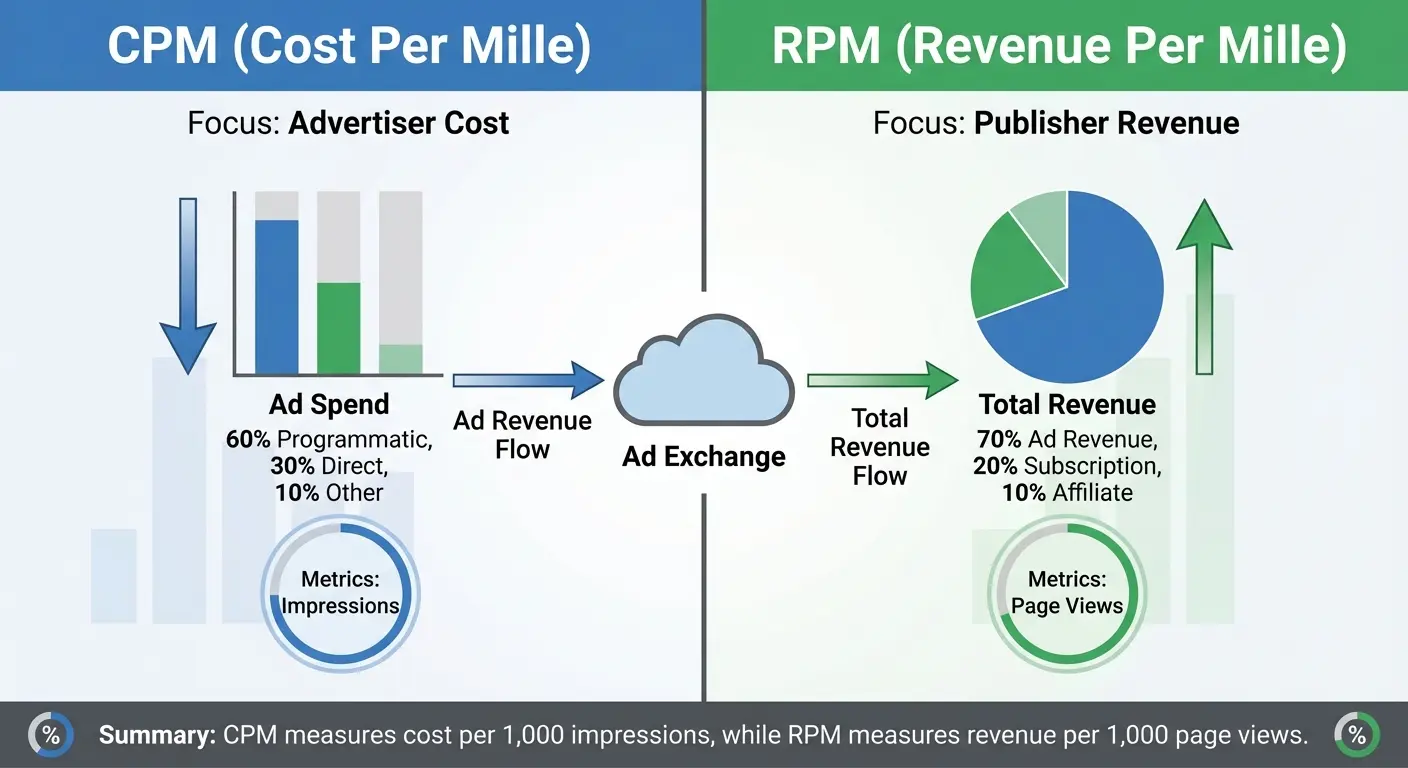
Two metrics govern YouTube earnings: Cost Per Mille (what advertisers pay) and Revenue Per Mille (what creators receive). Most creators confuse these numbers or use them interchangeably, which leads to wildly inaccurate income projections.
CPM represents the amount advertisers bid to show ads to 1,000 viewers. This number fluctuates based on auction dynamics, advertiser budgets, and competition for specific audience segments. When you hear someone mention a “$20 CPM,” they’re talking about what advertisers paid, not what the creator earned.
RPM is the number that hits your bank account. It’s your revenue per thousand views after YouTube takes its cut and after accounting for ad-blocked views, skipped ads, and viewers who don’t see ads at all. RPM is always lower than CPM, often significantly so.
|
Metric |
Definition |
Who It Matters To |
Typical Range |
|---|---|---|---|
|
CPM (Cost Per Mille) |
Amount advertisers pay to show ads to 1,000 viewers |
Advertisers and platform |
$0.25 – $50+ |
|
RPM (Revenue Per Mille) |
Amount creators earn per 1,000 views after YouTube’s cut and non-monetized views |
Creators |
$0.10 – $30+ |
|
Monetized Playback Rate |
Percentage of views that show ads |
Creators |
40% – 80% |
|
Ad Engagement Rate |
Percentage of served ads that viewers watch/interact with |
Creators and advertisers |
30% – 70% |
CPM: What Advertisers Pay
Advertisers don’t pay a flat rate for ad placement. They participate in an auction where they bid against other advertisers trying to reach similar audiences. The highest bidder wins the placement, and that winning bid becomes the CPM for that ad impression.
CPM rates vary dramatically based on factors like time of year, content category, and viewer demographics. A finance video targeting US viewers aged 35-55 might command a $30 CPM, while a gaming video targeting global viewers aged 13-18 might see a $2 CPM. Both are serving ads, but the advertiser demand differs by an order of magnitude.
RPM: The Number That Hits Your Bank Account
RPM accounts for real-world conditions that CPM doesn’t capture. Some viewers use ad blockers. Others skip ads immediately. YouTube Premium subscribers don’t see ads at all (though they generate different revenue). Some regions don’t have robust ad inventory, so ads simply don’t serve.
When you look at your Creator Studio dashboard, the RPM is what matters. This number tells you what you’re earning per thousand views after all the variables are factored in. A channel with a $15 CPM might see a $6 RPM once you account for YouTube’s revenue split, ad-blocker usage, and viewers who skip ads.
Back-of-napkin RPM calculator:
Here’s some math. I hate math too, but this matters:
-
Identify your niche’s average CPM (from Creator Studio analytics or industry benchmarks)
-
Apply YouTube’s 55% creator share: CPM × 0.55 = Your gross per-mille rate
-
Account for monetization rate (usually 50-70% of views show ads): Gross rate × 0.60 = Adjusted rate
-
Factor in ad engagement (viewers who don’t skip): Adjusted rate × 0.65 = Your estimated RPM
-
Calculate monthly earnings: (Monthly views ÷ 1,000) × Your RPM = Estimated monthly revenue
Example: $10 CPM × 0.55 × 0.60 × 0.65 = $2.15 RPM
Not exact, but close enough to know if you’re screwed.
The Revenue Split Nobody Talks About Enough
YouTube keeps 45% of what advertisers pay. This isn’t a secret, but creators often forget to factor it into their calculations. When you hear about a “$20 CPM,” your starting point for revenue calculations is $11 (55% of $20), not $20.
What does YouTube provide in exchange for that 45%? Hosting infrastructure, bandwidth for billions of video views, content delivery networks, discovery algorithms, payment processing, and advertiser relationships. Whether you think that’s a fair split is beside the point. It’s the reality of the platform’s economics.
This split affects every revenue calculation you make. If you’re comparing YouTube to other platforms or trying to project income based on CPM figures you’ve heard, remember to cut those numbers roughly in half before getting excited about your earning potential.
What Actually Determines Your YouTube Earnings
So what actually determines your paycheck?
Not views. We’ve established that. Here’s what matters:
Who’s watching. A 45-year-old in California is worth 10x more than a 16-year-old in Vietnam. Harsh? Yes. True? Also yes.
What you’re talking about. Finance videos get $30 CPMs. Gaming gets $3. Same effort, 10x different pay.
How long they watch. A 15-minute video with good retention can show 3 ads. A 5-minute video shows one. Three times the revenue from the same viewer.
Whether they actually watch the ads. Half your viewers skip ads immediately. Ad blockers kill another 20%. You’re only getting paid on what’s left.
All these variables multiply together. That’s why two channels with identical view counts can have 10x different earnings.
Ad Engagement Rates vs. View Counts
Not all views generate ad impressions. A view requires 30 seconds of watch time, but an ad impression requires that an ad was served and potentially watched. Your effective monetized playback rate (the percentage of views that show ads) varies dramatically based on audience behavior, ad blocker usage, and content classification.
The disconnect between views and revenue becomes stark when you examine ad engagement data. According to Hootsuite’s 2025 platform analysis, YouTube ads see an average view rate of 49-68%, depending on factors like video ad type or creative.
Translation: even under optimal conditions, nearly half of your video views may never generate ad impressions. The percentage can be way lower for channels with younger audiences or viewers from regions with high ad-blocker adoption rates.
A channel with 100,000 views might earn less than a channel with 50,000 views if the latter has better ad engagement rates. The difference comes down to who’s watching, how they’re watching, and whether ads are serving and being viewed.
The Watch Time Multiplier Effect
Longer watch times create more ad opportunities, which directly impacts revenue. YouTube allows mid-roll ads in videos that are 8+ minutes long, and creators who consistently produce longer content can serve multiple ads per view.
Here’s what they don’t tell you: if you jam three ads into an 8:01 video, viewers will leave. Space them out. Put them at natural breaks. I use one ad per 5 minutes of content. Keeps people watching, maximizes revenue.
The revenue difference between a 5-minute video with one ad and a 15-minute video with three ads is substantial, assuming identical CPM rates. The longer video generates roughly three times the revenue from the same number of views because viewers encounter three ad opportunities instead of one.
A personal finance creator produces two videos that both receive 50,000 views. The first video is 6 minutes long and can only show pre-roll ads, generating approximately $150 in revenue at a $6 RPM. The second video is 12 minutes long with two mid-roll ad breaks strategically placed at natural transition points.
This video generates $450 from the same 50,000 views. Three times the revenue because viewers encounter three ad opportunities instead of one. The creator didn’t need more views. They needed more ad inventory per view, which longer content naturally provides when executed well.
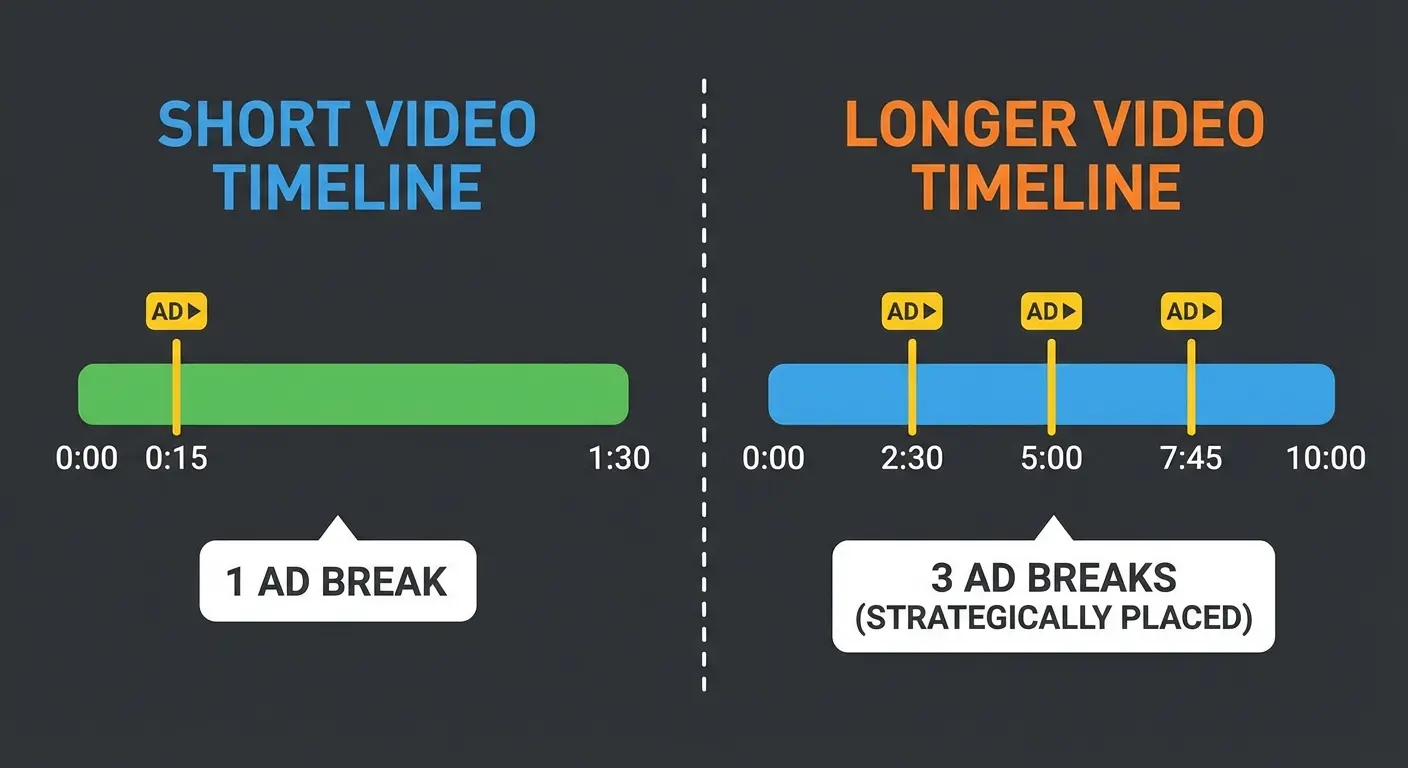
There’s a balance to strike. Padding content just to hit time thresholds often backfires because viewers recognize filler and abandon the video. Create genuinely valuable longer content that maintains engagement throughout , giving you both the watch time and the ad opportunities that drive revenue.
The Hidden Variables That Tank (or Boost) Your Revenue
Beyond the obvious factors, several less visible variables create massive revenue swings between seemingly similar channels. Content classification issues, advertiser-friendly guidelines, seasonal fluctuations, and audience loyalty all play roles that creators often overlook.
Advertiser-Friendly Content Guidelines (The Real Rules)
YouTube’s content classification system affects ad serving in ways that dramatically impact revenue. The platform categorizes content as fully monetized, limited monetization, or demonetized based on content signals.
Limited monetization means fewer ads serve on your videos. Even if your content isn’t demonetized, it might be classified as “not suitable for most advertisers,” which restricts which ads can appear. This limitation reduces your monetized playback rate and tanks your RPM regardless of view count.
Common triggers include strong language, controversial topics, sensitive current events, and certain types of content even when handled responsibly. Two videos with identical views can have 5-10x different earnings based purely on ad serving limitations.
I’m not suggesting you sanitize your content to please advertisers. But you should understand the trade-offs. If you create content that triggers limited monetization, you need alternative revenue streams to compensate for the reduced ad revenue.
Quick tip: if you swear in the first 30 seconds, you’re getting limited ads. Move the F-bombs to after the 2-minute mark. Stupid? Yes. Reality? Also yes.
Seasonality and Advertiser Budget Cycles
December is payday. January is broke month. Here’s why:
CPM rates fluctuate throughout the year based on advertiser spending patterns. Q4 (October through December) sees 2-3x higher CPMs due to holiday advertising budgets, while January often sees rates crater as advertisers recover from holiday spending.
Your RPM can swing wildly month-to-month even with consistent content and viewership. Understanding these cycles helps you set realistic expectations and plan your content strategy around revenue patterns.
|
Quarter |
Typical CPM Trend |
Advertiser Behavior |
Strategic Implications |
|---|---|---|---|
|
Q1 (Jan-Mar) |
30-50% below annual average |
Post-holiday budget recovery |
Focus on audience building, not revenue expectations |
|
Q2 (Apr-Jun) |
Slight recovery, 10-20% below average |
Gradual budget increases |
Test content formats, optimize for engagement |
|
Q3 (Jul-Sep) |
Near average rates |
Steady spending, back-to-school surge in September |
Consistent content production, prepare Q4 strategy |
|
Q4 (Oct-Dec) |
50-200% above average |
Holiday advertising blitz, maximum budgets |
Maximize content output, premium ad placement opportunities |
Smart creators plan their content calendar around these cycles. They build audience during low-revenue quarters and maximize output during Q4 when CPMs peak. They also avoid panicking when January revenue drops by 50% compared to December. It’s predictable, not a sign that something’s broken.
Audience Loyalty and Revenue Stability
Audiences who regularly return to a channel tend to have lower ad blocker usage and higher ad engagement rates because they’re invested in supporting the creator. This creates a meaningful difference in revenue quality between viral one-off views and core audience views.
Viral videos often bring viewers who’ve never heard of you and may never return. These viewers are more likely to skip ads or use ad blockers. They’re less invested in your success, so they’re less tolerant of ad interruptions.
Core audience members (your subscribers who watch every upload) behave differently. They’re more likely to watch ads because they want to support you. They’re less likely to use ad blockers on your content specifically. They generate higher-quality revenue per view.

This is why building a loyal subscriber base matters more for sustainable income than chasing viral moments. Viral views create temporary spikes, but loyal audiences create stable, predictable revenue that compounds over time.
Why Two Channels With Identical Views Earn Wildly Different Amounts
The abstract concepts become concrete when you compare channels with the same monthly view counts but vastly different earnings. These scenarios illustrate how the variables we’ve discussed combine to create dramatic revenue differences.
Case Breakdown: Finance Channel vs. Gaming Channel
Channel A focuses on retirement planning strategies, producing 15-minute videos that attract viewers aged 35-65 primarily from the United States and Canada. With 500,000 monthly views, an average CPM of $25, and a 65% monetization rate, this channel generates approximately $4,500 monthly ($25 × 0.55 YouTube share × 0.65 monetization × 500 views).
Channel B creates gaming highlight reels, producing 8-minute videos that attract viewers aged 13-24 from diverse global locations. With the same 500,000 monthly views but an average CPM of $3.50 and a 45% monetization rate (younger audiences use ad blockers more frequently), this channel generates approximately $430 monthly ($3.50 × 0.55 × 0.45 × 500 views).
The 10x earnings gap has nothing to do with content quality or audience size. It’s purely the economic reality of who’s watching and what advertisers will pay to reach them.
The finance creator isn’t working harder or creating better content. They’ve positioned themselves in a niche where advertiser demand is high and audience demographics align with premium ad rates. The gaming creator might have more engaged fans and better production quality, but those factors don’t overcome the fundamental economics of their niche.
Case Breakdown: US-Focused Channel vs. Global Channel
Two lifestyle channels both receive 400,000 monthly views. Channel C has 80% US-based viewers who watch home renovation content. Channel D has 80% viewers from developing nations who watch similar DIY content.
Channel C earns approximately $2,800 monthly with an average RPM of $7, driven by high CPMs from US home improvement advertisers. Channel D earns approximately $320 monthly with an average RPM of $0.80, reflecting the lower advertiser demand for audiences in those regions.
The 8-9x revenue difference exists despite nearly identical content, production quality, and engagement metrics. Geographic audience distribution alone accounts for the disparity.
Should creators deliberately target high-revenue geographies? That’s a strategic decision with trade-offs. Focusing on Tier 1 markets increases revenue per view but potentially limits total audience size. Serving global audiences builds larger communities but generates less revenue per view. Neither approach is inherently better. It depends on your goals and what you’re optimizing for.
How YouTube’s Algorithm Decides What Ads You Get (And What They Pay)
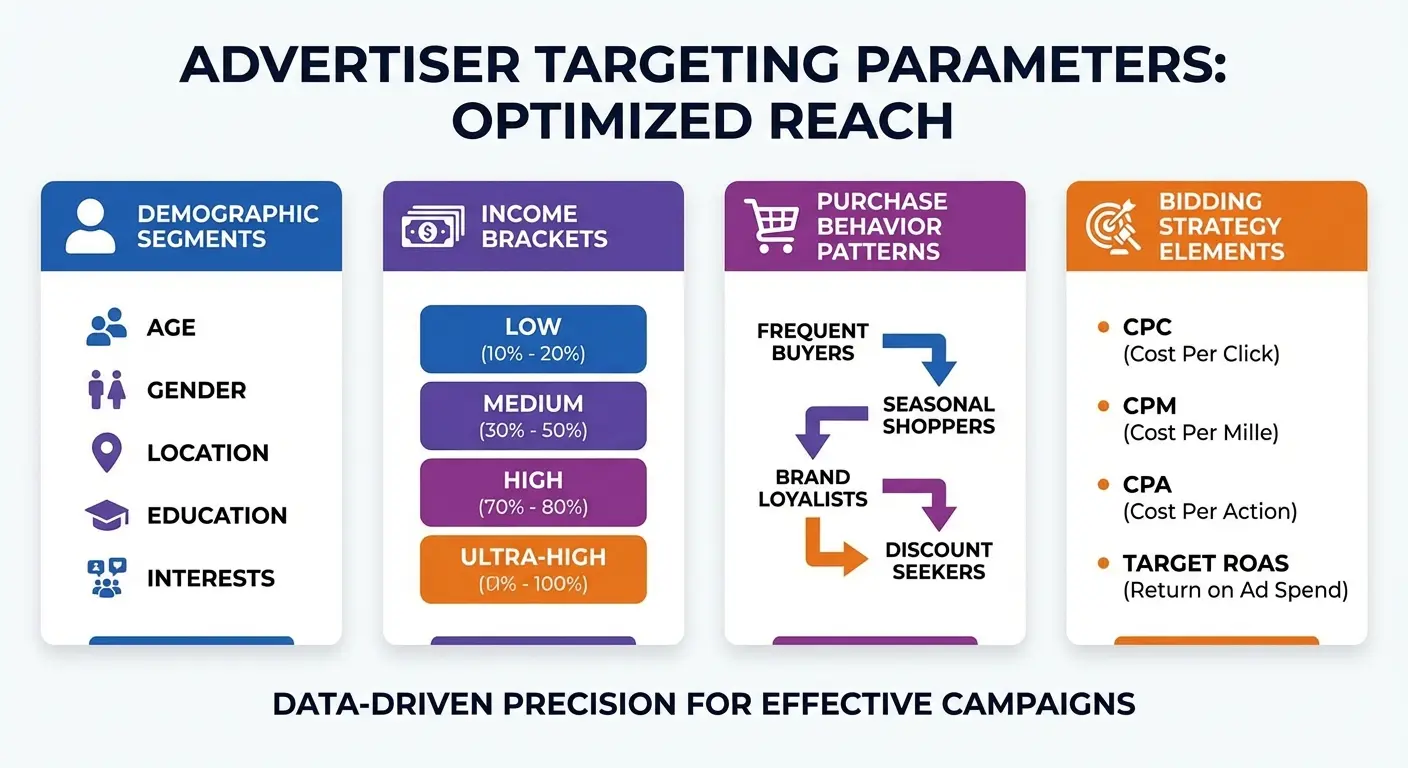
YouTube’s ad auction system matches ads to content and audiences through a complex algorithm that considers multiple signals. Advertisers set targeting parameters, YouTube analyzes content signals and viewer data, and the auction determines which ads serve and at what price.
You have indirect influence over your CPM through content choices and audience development, even though you can’t directly control the auction. Understanding what signals matter helps you make decisions that attract higher-value advertisers.
Content Signals That Attract Premium Advertisers
Premium advertisers look for content that demonstrates professionalism and attracts engaged, valuable audiences. Professional production quality matters (not because you need expensive equipment, but because polished content signals credibility).
Clear topic focus helps YouTube’s algorithm understand what your content is about, which improves ad matching. When the platform can confidently categorize your content, it can serve more relevant ads, which command higher CPMs.
Brand-safe language and topics matter more than most creators realize. Advertisers pay premium rates for content where their brand appears in a positive context. Content that avoids controversial topics, excessive profanity, or sensitive subjects naturally attracts more advertisers, which increases competition and drives up CPMs.
Audience engagement patterns signal content quality to both YouTube and advertisers. High retention rates, strong like-to-view ratios, and active comment sections all indicate that your audience values your content. These signals make your ad inventory more attractive to advertisers.
Audience Signals That Drive Up CPM
YouTube knows extensive demographic and behavioral data about viewers, and advertisers bid based on that data. Viewer age, income indicators, purchase history, and browsing behavior all influence which ads serve and how much advertisers pay.
Attracting the “right” audience from an advertiser perspective matters as much as attracting a large audience. A channel with 50,000 subscribers who are high-income professionals will generate more revenue than a channel with 200,000 subscribers who are teenagers with no purchasing power.
This doesn’t mean you should abandon your target audience to chase advertiser dollars. But it does mean you should understand the economic implications of your audience composition. If your audience skews toward demographics that advertisers don’t value highly, you’ll need to compensate through volume or alternative revenue streams.
The Content Categories That Command Premium Ad Rates
Content niches have dramatically different economic realities. Understanding the hierarchy of CPM rates by category helps you set realistic expectations and make informed decisions about what to create.
The Premium Tier: Finance, B2B, and Enterprise Software
Finance, business software, insurance, and B2B content regularly sees CPMs of $20-$50+. These industries have high customer lifetime values, which justifies expensive advertising. A single customer might be worth thousands or tens of thousands of dollars to these businesses, so they’ll pay premium rates to reach potential customers.
The earning potential in high-value niches continues to attract creators seeking sustainable income. Recent reporting from Financial News India highlighted that a YouTube channel based in India is earning ₹38 crore (approximately $4.5 million USD) annually by creating videos using AI in the financial education space.
This demonstrates how premium content categories combined with efficient production methods can generate substantial revenue even in markets traditionally considered lower-CPM regions.
Successfully competing in these spaces requires expertise, credibility, and professional presentation. You can’t fake your way into finance content. Audiences and advertisers both recognize when creators lack genuine knowledge. But if you have relevant expertise, these niches offer the highest revenue potential per view.
The Middle Tier: Lifestyle, Education, and DIY
Home improvement, cooking, education, and general lifestyle content sees CPMs of $5-$15. These categories attract consistent advertiser interest without commanding premium rates.
Advertisers in these spaces include consumer brands, kitchen equipment manufacturers, educational platforms, and home goods retailers. They have healthy advertising budgets but lower customer lifetime values than finance or B2B companies, which translates to moderate CPMs.
The advantage of middle-tier niches is that they often have lower barriers to entry and broader audience appeal. You don’t need specialized credentials to create cooking content or home organization videos. These categories also tend to have better audience building momentum because the topics have mass appeal.
Revenue expectations should be realistic. A successful channel in these niches might earn $3-$8 RPM, which means you need substantial view counts to generate full-time income. But the path to building that audience is often more straightforward than in specialized niches.
The Lower Tier: Entertainment, Gaming, and Commentary
Gaming, reaction videos, memes, and general entertainment see CPMs below $5. Advertiser demand is lower for these categories because audience demographics skew younger and content is less contextually relevant to most products.
This doesn’t mean you can’t build a successful channel in these spaces. Many creators operate in lower-CPM niches and compensate through higher volume, alternative revenue streams, or both. Gaming creators often earn more from sponsorships and merchandise than from AdSense. Commentary channels build Patreon communities that generate stable income independent of ad rates.
Honestly? For most creators, gaming content is starting on hard mode. The CPMs suck, the competition is insane, and unless you’re exceptionally entertaining, you’re going to burn out before you make real money. If you’re doing it anyway, you better have a merch strategy or sponsorship pipeline ready.
When Views Don’t Equal Money: Understanding Watch Time Economics
Some views are essentially worthless from a revenue perspective. Bot traffic, click farms, misleading thumbnails that generate clicks but immediate bounces, and content that attracts viewers who never engage with ads all create view counts without revenue.
The Bot Traffic Problem Nobody Admits To
Some creators artificially inflate view counts through purchased traffic or bot networks. This traffic generates zero revenue because YouTube’s systems detect and filter non-human traffic.
Even “real” but low-quality traffic from click farms or incentivized views doesn’t generate ad impressions. YouTube recognizes these patterns and excludes them from monetization. Worse, these practices can harm channel monetization by polluting audience data and triggering platform scrutiny.

Warning: Don’t buy views. Ever. YouTube detects it, and you’ll get demonetized. I’ve seen it happen to channels with 100k+ subs. Not worth it.
There are no shortcuts. The only traffic that generates revenue is genuine viewers who choose to watch your content and engage with ads. Any strategy that tries to game the system ultimately wastes time and money while potentially jeopardizing your channel’s standing.
Clickbait That Kills Your RPM
Misleading titles and thumbnails might generate initial clicks but create immediate abandonment. When viewers realize the content doesn’t match the promise, they leave. This tanks watch time and signals to YouTube that your content isn’t valuable.
This pattern leads to fewer ad impressions and lower revenue, even if view counts temporarily spike. YouTube’s algorithm prioritizes watch time and engagement over raw clicks, so clickbait strategies backfire in multiple ways.
There’s a distinction between effective, curiosity-driven titles and genuinely misleading clickbait. Good titles create curiosity while accurately representing the content. Clickbait makes promises the content doesn’t deliver. The former builds sustainable channels; the latter creates short-term spikes followed by algorithmic penalties.
Content Quality Audit Checklist:
Use this framework to identify if your views are generating optimal revenue:
-
Average View Duration: Is it above 50% of total video length?
-
Monetized Playback Rate: Are at least 60% of your views showing ads?
-
Traffic Sources: Is organic search/suggested videos above 70% of total traffic?
-
Audience Retention Graph: Does it show gradual decline or cliff drops?
-
Click-Through Rate: Is it between 4-10% (healthy range)?
-
Ad Blocker Rate: Check analytics (is it below 25 of your audience?)
-
Geographic Distribution: What percentage comes from Tier 1 markets?
-
Subscriber View Rate: Do subscribers account for 30%+ of views?
If you answered “no” to more than three items, you have a traffic quality problem, not a traffic volume problem.
Geographic Revenue Gaps You Can’t Ignore
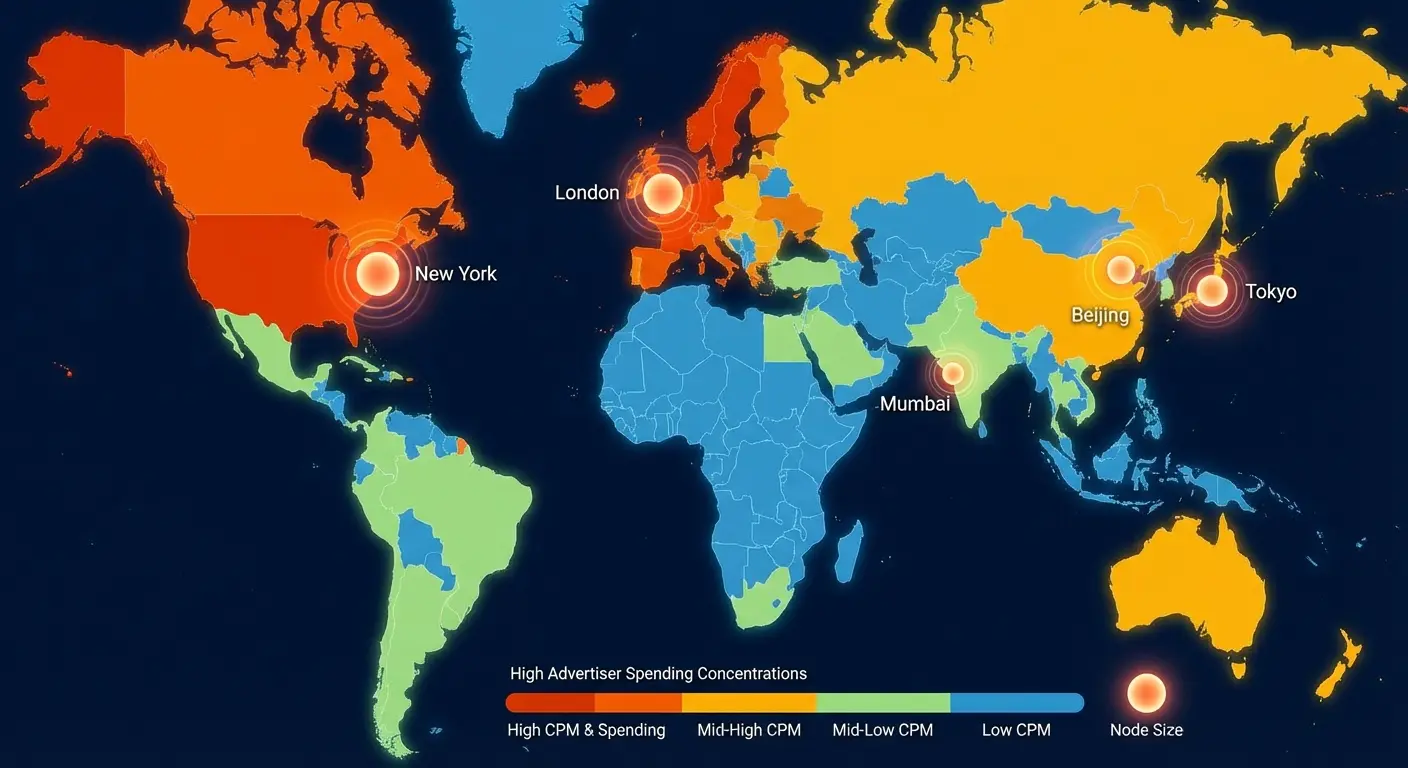
Viewer geography affects revenue more dramatically than almost any other factor. Specific CPM ranges by region reveal uncomfortable disparities that significantly impact earning potential.
The Tier 1 Markets: US, Canada, UK, Australia
Geographic location creates perhaps the most dramatic revenue disparities in YouTube’s monetization model. According to Hootsuite’s 2025 global CPM analysis, the United States commands an average CPM of $32.75, while Australia leads at $36.21, followed by Canada at $29.15.
These rates represent what advertisers pay before YouTube’s revenue split, meaning creators in these markets can expect RPMs of $18-$20 or higher in premium niches. Rates that dwarf what creators receive from audiences in lower-tier markets.
Why do these markets command premium rates? Advertiser purchasing power, market saturation, and consumer spending patterns all contribute. Companies know that US, Canadian, UK, and Australian consumers have higher disposable incomes and are more likely to purchase products advertised on YouTube.
Can you ethically and effectively appeal to these audiences without alienating global viewers or compromising content authenticity? Yes, but it requires strategic thinking about topics, language, and cultural references that resonate with these markets while remaining accessible to others.
The Tier 2 and 3 Markets: Everyone Else
This is the uncomfortable part nobody wants to say out loud: a viewer in Mumbai is worth 1/10th of a viewer in Manhattan.
Not because one person is more valuable as a human. Because advertisers pay different rates for different markets. It’s not fair. It’s economics.
Europe (outside the UK), Latin America, Asia, and Africa see CPMs of $0.25-$5. The economic factors driving these lower rates include lower advertiser budgets in these regions, reduced consumer purchasing power, and less competitive ad auctions.
This doesn’t mean these audiences are less valuable as human beings or less engaged with content. But the revenue implications are significant. A creator whose primary audience is in these regions needs to understand they’ll require substantially higher view counts to generate equivalent income, or they’ll need alternative monetization strategies.
The platform’s monetization structure continues to evolve, with implications for creators worldwide. As Simply Business UK reports in their 2025 monetization guide, YouTubers can now become eligible for the Partner Program through two pathways: either 1,000 subscribers with 4,000 public watch hours in the last 12 months, or 1,000 subscribers with 10 million public Shorts views in the last 90 days.
This dual-path eligibility has opened monetization opportunities for creators in lower-CPM markets who can leverage short-form content to reach the view thresholds more quickly, even if the per-view revenue remains lower than long-form content.
Should You Target Geography Deliberately?
If 80% of your audience is in low-CPM countries, you have three options:
-
Accept you need 10x the views to make the same money
-
Shift your content to attract Tier 1 viewers
-
Focus on revenue streams that aren’t geography-dependent
I’m not telling you which to choose. I’m telling you those are your options.
The hybrid approach works too (creating content that appeals to high-revenue markets while remaining accessible to global viewers). This requires understanding what topics, formats, and presentation styles resonate across cultures while still attracting premium advertiser interest.
Beyond AdSense: The Revenue Streams You’re Probably Underutilizing
AdSense is often the least lucrative revenue stream for established channels. Alternative monetization methods don’t depend on CPM rates or view counts, and diversification both increases total income and reduces dependence on algorithmic ad serving.
YouTube Premium Revenue: The Silent Earner
YouTube Premium subscribers generate revenue for creators without watching ads. Premium revenue is calculated based on watch time share (the more Premium subscribers watch your content, the more you earn from YouTube’s Premium revenue pool).
Premium viewers often generate comparable or better revenue than ad-supported viewers. They’re more engaged (they’re paying for the service, after all), and they watch more content without interruption. As YouTube’s subscription base expands, Premium revenue has become an increasingly significant portion of many creators’ income.
Don’t dismiss Premium subscribers just because they don’t see ads. They’re valuable audience members who contribute meaningfully to your revenue.
Memberships and Super Thanks: Direct Support Mechanics
YouTube’s built-in tools for direct audience support offer revenue opportunities independent of ad rates. Channel memberships allow subscribers to pay monthly fees for exclusive perks, while Super Thanks enables one-time payments on specific videos.
The economics are favorable. Creators keep approximately 70% of membership revenue after platform fees. Even small, engaged audiences can generate meaningful revenue through direct support if the relationship and value proposition are strong.
Realistic benchmarks suggest that 1-3% of engaged subscribers might convert to members. A channel with 10,000 engaged subscribers might have 100-300 members paying $5-$10 monthly, generating $500-$3,000 in stable, predictable revenue that doesn’t fluctuate with CPM rates or seasonality.
Affiliate Marketing and Sponsored Content Integration
Affiliate links and sponsored content often outperform AdSense for channels with engaged audiences. These revenue streams depend on audience trust and relevance rather than pure view counts.
A single well-placed affiliate link in a product review video can generate more revenue than months of AdSense earnings on that video. Sponsored content deals for mid-sized channels often range from $1,000-$10,000 per video, depending on niche and audience size.
Maintain authenticity while monetizing through partnerships. Disclose all affiliate relationships and sponsorships clearly. Only promote products you genuinely believe in. Your audience’s trust is more valuable than any individual sponsorship deal.
These revenue streams scale differently than ads. They depend on audience trust and relevance rather than algorithmic ad serving, which means they’re more stable and often more lucrative once you’ve built strong audience relationships.
Merchandise and Digital Products
YouTube’s merchandise shelf and external platforms enable creators to sell physical or digital products. Product revenue often has the highest margins of any monetization method.
Even small channels can generate meaningful income if they’ve built strong audience relationships. Offer products that genuinely serve your audience’s needs rather than just slapping your logo on generic merchandise.
What types of products work for different channel sizes and niches? Educational creators might sell courses or ebooks. Fitness channels might offer workout programs. Tech reviewers might create detailed buying guides. The product should extend the value you already provide through your content.
When does it make sense to invest in product development versus focusing on growing the channel first? Wait until you have at least 10,000 engaged subscribers before investing heavily in product creation. Below that threshold, focus on audience building. Above it, products can become a significant revenue stream that outpaces AdSense.

Building a Channel Strategy Around Revenue Reality, Not View Counts
Understanding how YouTube pays is only half the battle. The real work is making decisions based on that understanding. We need to move from knowledge to implementation.
Auditing Your Current Revenue Efficiency
Start by analyzing your existing channel to identify revenue optimization opportunities. Your Creator Studio analytics contain the answers, but you need to know which metrics matter and what they reveal.
Open Creator Studio → Analytics → Revenue tab. You’re looking for the ‘RPM’ number. Screenshot it. That’s your baseline.
Examine your RPM trends over the past six months. Is it increasing, decreasing, or stable? Declining RPM despite stable views suggests either seasonal factors or changes in your audience composition. Increasing RPM indicates you’re attracting more valuable viewers or improving ad engagement.
Traffic sources tell you where your views come from. Organic search and suggested videos generate higher-quality traffic than external sources or social media. If more than 30% of your traffic comes from external sources, you might be attracting viewers who aren’t genuinely interested in your content, which hurts watch time and ad engagement.
Audience demographics reveal who’s watching. Check the age, gender, and geographic distribution. If you’re creating finance content but your audience skews toward teenagers in developing nations, you have a mismatch between content and audience that’s killing your revenue potential.
Watch time patterns show whether viewers are engaged. Look at your average view duration as a percentage of video length. Anything below 40% suggests your content isn’t holding attention, which limits ad opportunities and signals to YouTube that your content isn’t valuable.
Do you have a traffic volume problem, a traffic quality problem, or a monetization strategy problem? Most creators assume they need more views when they need better views or better monetization approaches.
Content Decisions That Affect Your Bottom Line
Specific content choices impact revenue in predictable ways. Video length determines ad inventory. Videos under 8 minutes can only show pre-roll ads, while longer videos enable mid-roll placements that multiply revenue per view.
Topic selection influences which advertisers compete for your ad inventory. Creating content in high-CPM niches attracts premium advertisers, while entertainment content attracts lower-value ads. Neither choice is wrong, but the revenue implications differ dramatically.
Production style affects advertiser perception. Professional presentation signals credibility, which attracts brand-safe advertisers willing to pay premium rates. This doesn’t mean you need expensive equipment. It means your content should look intentional and polished within your budget constraints.
Should you prioritize evergreen content over trending topics? Evergreen content generates consistent views and revenue over time, while trending content creates spikes that fade quickly. The sustainable approach combines both. Trending content for growth, evergreen content for stable revenue.
When do longer videos make financial sense? When you can maintain audience engagement throughout. A 15-minute video that loses viewers after 5 minutes generates less revenue than a 7-minute video that keeps viewers until the end. Length matters, but retention matters more.
Here’s what works: Structure your 15-minute video with a payoff at the 7-minute mark. That’s right before most people drop off. Give them a reason to stay. That mid-roll ad at 8 minutes? It only pays if they’re still watching.
How do you balance audience preferences with advertiser-friendly content guidelines? Create content your audience wants while understanding which topics or presentation styles might trigger limited monetization. Make informed trade-offs rather than accidentally sacrificing revenue.
Setting Realistic Income Milestones
Different channel sizes earn vastly different amounts depending on niche and audience composition. Understanding realistic benchmarks helps you set achievable goals.
A channel with 100,000 subscribers in a premium niche (finance, B2B, insurance) with strong US audience concentration might earn $3,000-$8,000 monthly from AdSense alone. The same subscriber count in entertainment or gaming might generate $500-$1,500 monthly.
Does 100,000 subscribers automatically mean full-time income? No. Subscriber count is a vanity metric that doesn’t directly correlate with revenue. What matters is how many of those subscribers watch your videos, where they’re located, and what advertisers will pay to reach them.
Map out what growth needs to look like to hit specific income targets. If you want to earn $5,000 monthly from AdSense and your current RPM is $4, you need 1.25 million views per month. If your average video gets 20,000 views, you need to publish approximately 60 videos monthly. Which isn’t sustainable for most creators.
This math reveals why sustainable income usually requires multiple revenue streams, not just AdSense optimization. Combining AdSense with memberships, sponsorships, and affiliate revenue creates stability and increases total earnings beyond what ads alone can provide.
When to Pivot and When to Persist
Should you stick with low-revenue niches you’re passionate about or pivot toward higher-revenue opportunities? The answer depends on your personal goals, financial needs, competitive advantages, and audience building momentum.
If YouTube is a hobby and you’re not dependent on the income, pursue whatever content brings you joy. Revenue optimization doesn’t matter if you’re creating for fulfillment rather than profit.
If you’re trying to build a business, you need to make decisions that balance passion with economic reality. Can you find the intersection between what you enjoy creating and what generates meaningful revenue? That’s the sweet spot.
The hybrid approach works for many creators. Maintaining a passion project while building revenue-focused content separately. You might create gaming content because you love it while also producing tech tutorials that generate higher revenue. The gaming channel feeds your creative needs; the tech channel pays the bills.
Competitive advantages matter when deciding whether to pivot. If you have genuine expertise in a high-CPM niche, leaning into that advantage makes sense. If you’re trying to break into a crowded premium niche without relevant credentials, you’ll struggle to compete regardless of the revenue potential.
Audience building momentum is another factor. If you’ve already built an engaged audience in a lower-revenue niche, pivoting means starting over. Sometimes optimizing your existing audience through alternative monetization makes more sense than chasing a different audience in a higher-CPM category.

You’ve spent months analyzing your analytics, tweaking your content, and watching your RPM fluctuate without understanding why. The data tells you something isn’t working, but translating YouTube’s metrics into actionable strategy feels overwhelming.
I’ve worked with creators who were generating impressive view counts but struggling to convert that traffic into sustainable income. The pattern is almost always the same: they understand what YouTube pays but haven’t built a comprehensive strategy around the factors that drive revenue.
If you’re at the point where you need more than information (you need implementation support and strategic guidance tailored to your specific channel), it might be worth exploring whether working with specialists could compress your timeline from years of experimentation to months of focused growth.
Full disclosure: I run The Marketing Agency (themarketingagency.com). We help creators with exactly this stuff, turning views into actual money.
Do you need us? Probably not. Most of what we do is hold people accountable to actually implementing what they already know. Like everything in this article.
But if you’re the type who needs someone to build you a custom strategy and check in weekly, we exist. That’s the pitch. You can learn more at https://themarketingagency.com.
Final Thoughts
The question “how much does YouTube pay per view” isn’t just wrong. It’s a distraction from the real work of building a profitable channel. Every minute you spend obsessing over view counts is a minute you could spend optimizing the factors that determine your earnings: audience geography, content category, watch time, ad engagement, and monetization diversification.
The creators who build sustainable six-figure incomes on YouTube aren’t the ones with the most views. They’re the ones who understand that a finance channel with 50,000 monthly views can outearn an entertainment channel with 500,000 views. They recognize that a loyal audience of 10,000 subscribers in Tier 1 markets is more valuable than 100,000 subscribers scattered across low-CPM regions. They’ve stopped chasing viral moments and started building systematic revenue engines.
This doesn’t mean you should abandon your creative vision or only create content that maximizes CPM. But it does mean you should make decisions with full awareness of their economic implications. If you’re passionate about a low-revenue niche, lean into alternative monetization streams. If you’re building a business, not just a hobby, choose topics and formats that align with advertiser demand. If you’re somewhere in between, find the balance that serves both your creative fulfillment and your financial goals.
The complexity of YouTube’s revenue model works in your favor. Your earning potential isn’t determined by a single metric you can’t control. It’s determined by dozens of variables you can influence through strategic content decisions, audience development, and monetization diversification. The algorithm isn’t keeping secrets from you. The mechanics are visible in your analytics dashboard, waiting for you to study them and optimize accordingly.
You now understand more about YouTube monetization than 95% of creators on the platform. The question isn’t whether you can build a profitable channel. The question is whether you’ll apply this knowledge strategically or continue chasing the wrong metrics.
Here’s what you do tomorrow:
-
Open YouTube Studio
-
Go to Analytics → Revenue
-
Look at your RPM for the last 28 days
-
If it’s under $2, you have a niche problem or a geography problem
-
Click into ‘Geography’ and see where your views come from
-
If 60%+ are from low-CPM countries, read the geography section again
That’s it. 10 minutes. You’ll know more about your channel’s earning potential than 90% of creators.
Your next video? Make it 10 minutes instead of 6. Target a topic that US viewers search for. Structure it so people watch past the 8-minute mark. That’s three variables you can control today.
Or keep doing what you’re doing and wonder why your views don’t pay rent. Your call.