

Table of Contents
-
Why the “Per View” Math Doesn’t Add Up
-
TikTok’s Creator Fund: The Reality Behind the Pennies
-
Where TikTok Money Actually Comes From (It’s Not Views)
-
The Three Revenue Streams Most Creators Ignore
-
Monetization Eligibility: What You Need Before Earning Anything
-
How Engagement Rate Crushes View Count Every Time
-
Brand Deals and Sponsorships: The Real Payday
-
Affiliate Marketing on TikTok: Turning Views Into Transactions
-
TikTok Shop and Live Gifts: Direct Monetization That Actually Works
-
Building an Audience Worth More Than Views
-
When to Pivot Your Monetization Strategy
TL;DR
-
TikTok’s Creator Fund pays $0.02 to $0.04 per 1,000 views (basically nothing)
-
Views alone won’t pay your rent
-
Brand partnerships and TikTok Shop generate actual money
Why the “Per View” Math Doesn’t Add Up
$0.02 per thousand views.
There’s your answer. That’s what TikTok’s Creator Fund pays, and it’s so laughably low that you should forget I even told you.
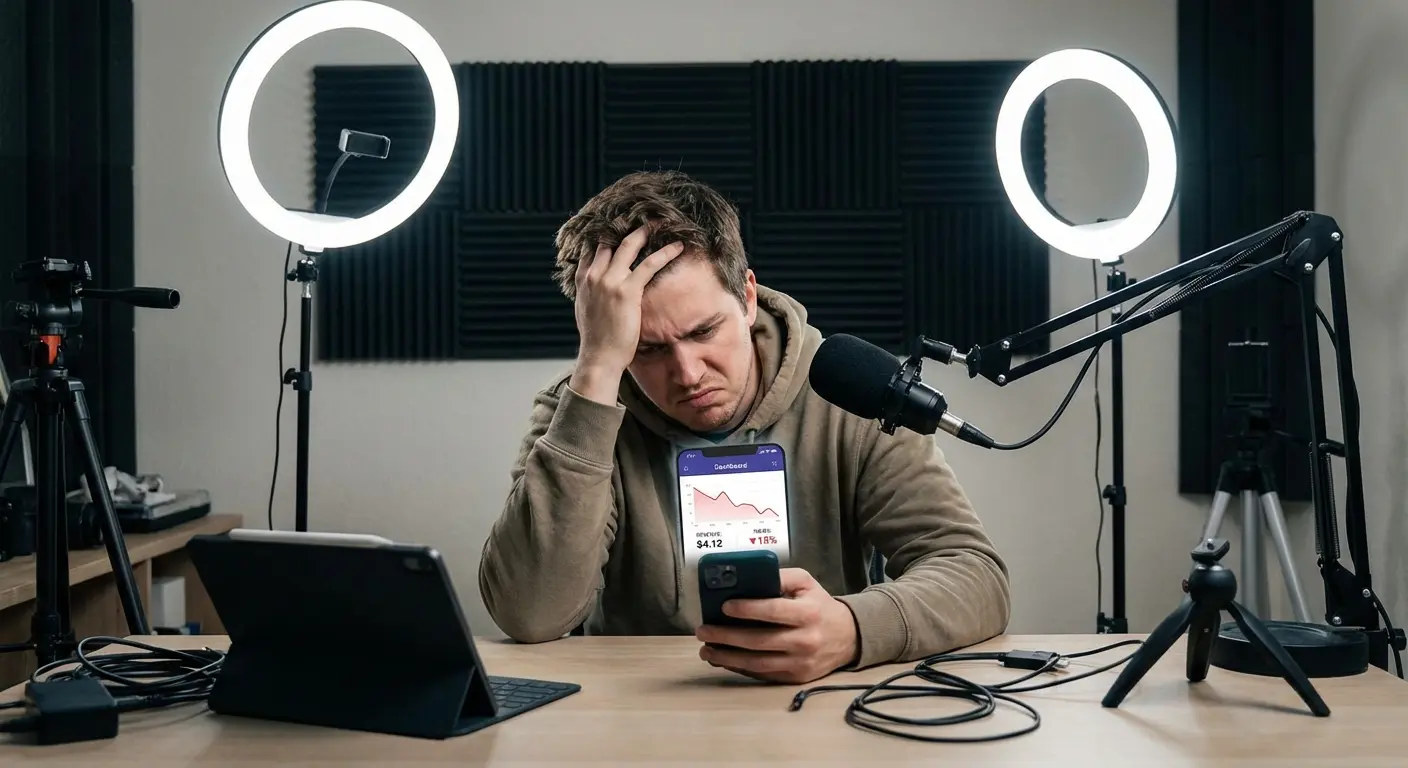
Look, when you’re Googling “TikTok pay per view” at 2am after your video hits 100K, nobody mentions this: that view count doesn’t mean what you think it means. YouTube trained us to think views equal money. TikTok doesn’t work that way. At all.
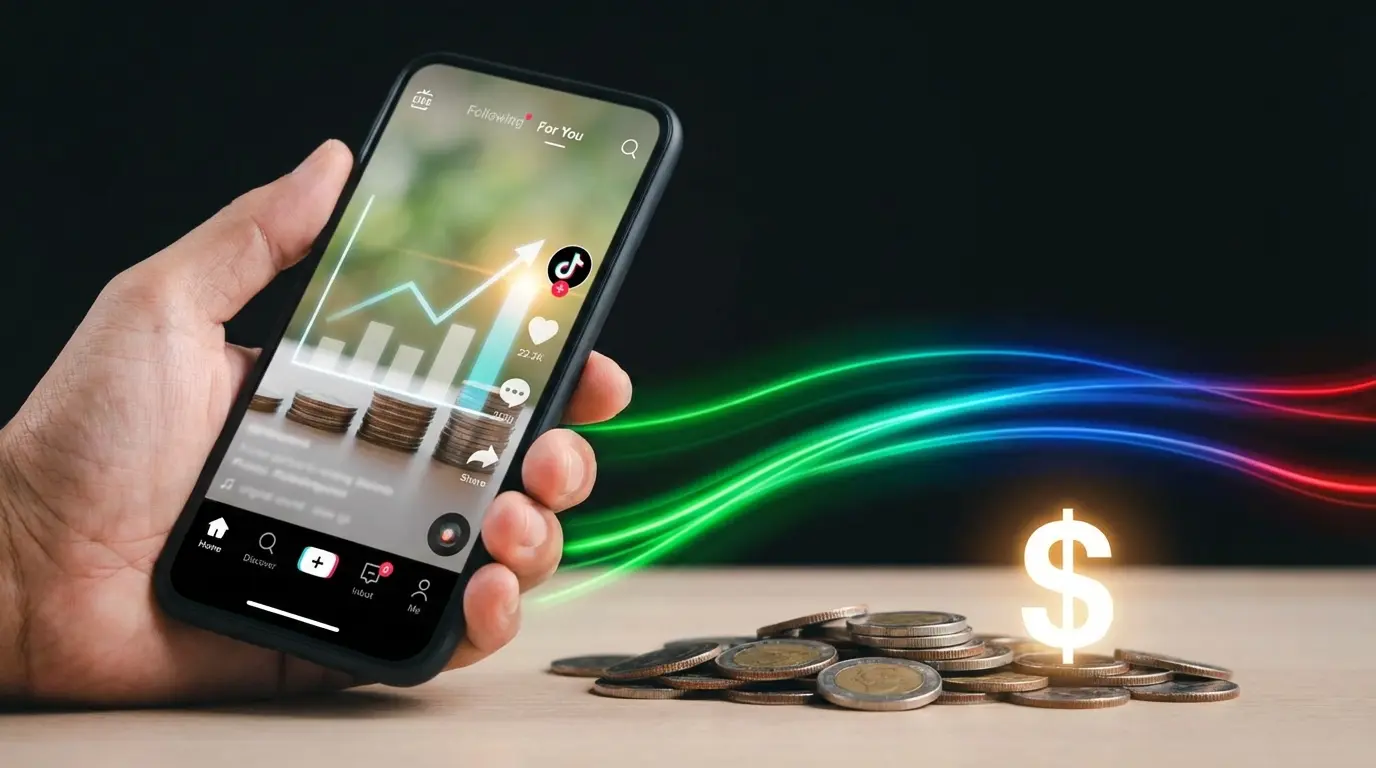
TikTok doesn’t split ad revenue like YouTube does. The whole system is different, and understanding this will save you months of chasing the wrong numbers. According to recent creator reports analyzed by Linktree, TikTok’s Creator Rewards Program now pays creators between $0.40 and $1.00 per 1,000 views. That’s way better than the old Creator Fund’s $0.02 to $0.04 rate, but it’s still one of the lowest direct payment rates out there.
What makes this complicated: TikTok’s algorithm cares about engagement and completion rate over everything else. A video with 10,000 views and 80% completion rate will often earn more than one with 100,000 views and 20% completion. The platform rewards content that keeps users scrolling within the app, not content that just racks up numbers.
Most creators I’ve worked with report Creator Fund earnings between $20 and $40 per million views.
Yes. You read that correctly.
That means you’d need roughly 25 million views to earn $1,000 through the Creator Fund alone. The tiktok pay per view rate is so minimal that focusing on it becomes a distraction from strategies that actually generate income. Suddenly, that viral video doesn’t look quite as profitable.
The real issue? Creators who focus on per-view earnings are optimizing for the wrong thing entirely. TikTok views are better understood as audience-building currency rather than direct income. Every view represents a potential follower, customer, or community member, not a fraction of a penny. When evaluating how much does TikTok pay per view, the answer consistently disappoints creators who haven’t discovered alternative monetization strategies.
TikTok’s Creator Fund: The Reality Behind the Pennies
How the Creator Fund Actually Calculates Payment
TikTok throws a fixed amount of money in a pot every day, then divides it between everyone. More creators join? Your slice gets smaller. It’s not scaling with growth. It’s a pie-cutting exercise where the pie stays the same size while more people show up with forks.
When the Creator Fund launched in 2020, early participants reported way higher rates (some claimed $0.05 to $0.08 per 1,000 views). As millions more creators joined, that fixed pool got divided into smaller and smaller slices. The fund didn’t scale proportionally with creator growth, which is why rates have tanked.
Current estimates from creators who’ve shared their analytics put the rate somewhere between $0.02 and $0.04 per 1,000 views. But it gets messier: your rate depends on viewer geography (US views typically pay more), video completion rate, engagement metrics, and whether viewers are logged in.
Creator Fund eligibility requires:
-
At least 10,000 followers
-
100,000 video views in the last 30 days
-
Age 18 or older
-
Account in good standing with Community Guidelines
Even after hitting these thresholds, you’ll need to maintain consistent performance to keep earning. Drop below 100,000 monthly views, and you’re out until you rebuild. The question of does tiktok pay for views is technically yes, but the answer is so underwhelming that it shouldn’t be your main focus.
|
View Count |
Creator Fund Earnings ($0.02-$0.04/1K) |
Creator Rewards Program ($0.40-$1.00/1K) |
|---|---|---|
|
10,000 |
$0.20 – $0.40 |
$4.00 – $10.00 |
|
100,000 |
$2.00 – $4.00 |
$40.00 – $100.00 |
|
1,000,000 |
$20.00 – $40.00 |
$400.00 – $1,000.00 |
|
10,000,000 |
$200.00 – $400.00 |
$4,000.00 – $10,000.00 |
Why Creators Are Leaving the Fund
Wild, right? Many successful TikTok creators deliberately stay out of the Creator Fund or leave after joining. Their reasoning comes down to a cost-benefit analysis that doesn’t favor the fund.
Several creators have reported (though TikTok hasn’t confirmed) that videos eligible for Creator Fund monetization receive less organic reach. The theory suggests TikTok reduces distribution to manage fund costs, since wider distribution means higher payouts. Whether this is true or algorithmic confirmation bias, enough creators believe it that they’ve made the calculation: better reach without the fund generates more valuable opportunities than restricted reach with pennies attached.
Hank Green, who has millions of followers across platforms, publicly shared his TikTok Creator Fund earnings to illustrate the problem. His videos with tens of millions of views earned him less than $100. He called the fund “catastrophically low” and pointed out that it disincentivizes quality content because the payment is so disconnected from the effort required.
Creators who do stay in the fund view it as passive income that requires no extra effort beyond what they’re already doing. They’ve already built other monetization streams and treat Creator Fund deposits as quarterly coffee money rather than rent money.
Jess (changing her name because she asked me to) does fitness content. 150K followers. Last year, she posted a home workout video that absolutely blew up. 1.3 million views.
Creator Fund payment: $45
Brand inquiries from that video: 3
Value of those brand deals: $3,500
That’s 77x more money from the opportunities the views created than from the views themselves. The $45 bought her coffee. The $3,500 paid her rent. This example perfectly illustrates how much does TikTok pay for views compared to what those same views can generate through smart monetization.
Where TikTok Money Actually Comes From (It’s Not Views)
TikTok isn’t your cash register. It’s your business card.
The platform builds audiences faster than anything else out there, then you point those people toward things that actually pay. Your course. Your coaching. Your affiliate links. Your products.
Creators earning six figures from their TikTok presence rarely make more than a few hundred dollars monthly from TikTok itself. Instead, they’ve built systems where TikTok views translate to email subscribers, product customers, course enrollments, or consulting clients. The views are the top of a funnel, not the bottom line. When people fixate on how much does TikTok pay directly, they miss the bigger picture of tiktok revenue potential through external channels.
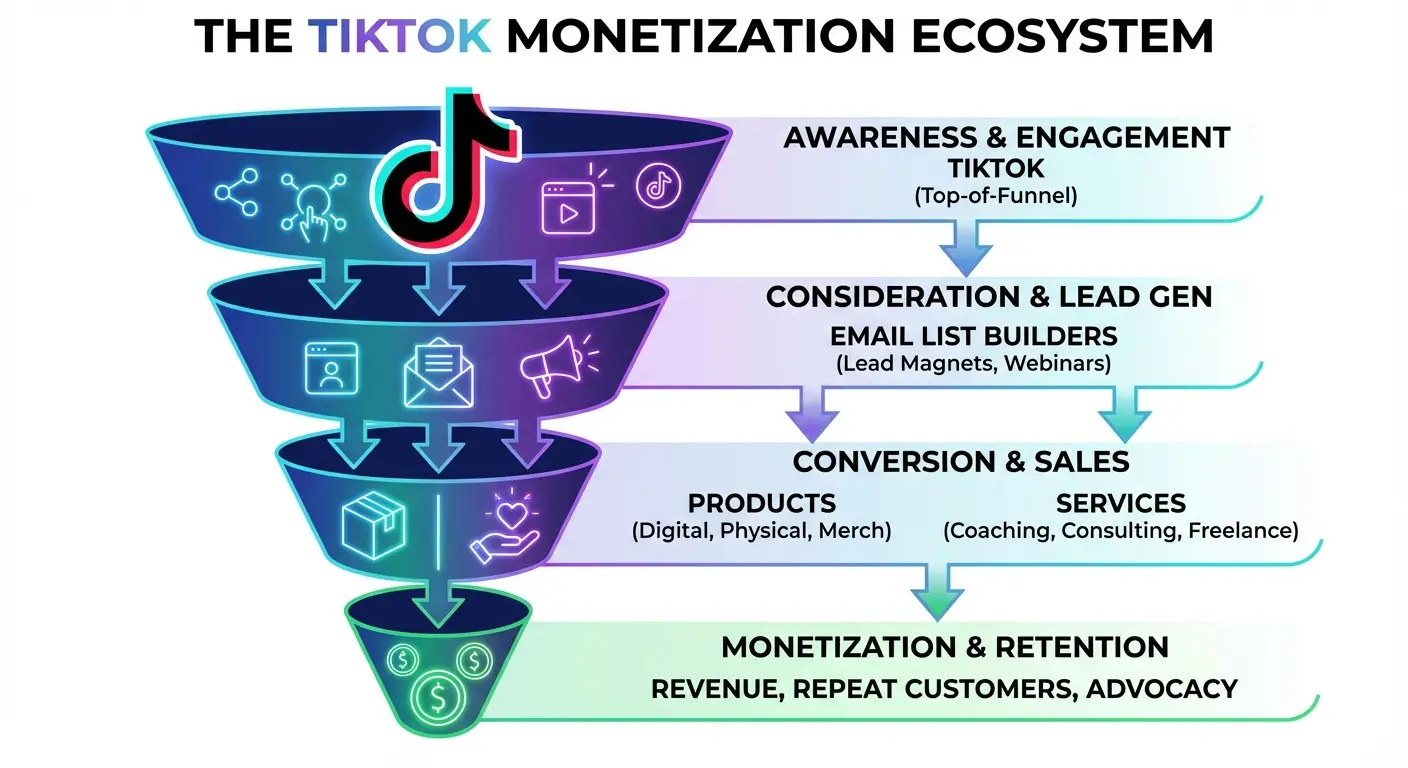
This distinction matters because it changes everything about your content strategy. If you’re optimizing for Creator Fund payments, you’ll focus on viral trends and high view counts. If you’re optimizing for audience building that leads to real revenue, you’ll focus on attracting the right viewers who’ll convert into customers or followers elsewhere.
The most profitable TikTok creators I’ve analyzed share a common pattern: they use the platform to demonstrate expertise, build trust, and direct interested viewers to monetization channels they control. Their TikTok content serves as free samples that lead to paid offerings. Understanding how much does TikTok pay becomes almost irrelevant when your real income comes from the business opportunities the platform creates.
The shift away from platform-dependent income has become increasingly urgent following recent platform volatility. As reported by Techpoint Africa, creators in countries including Nigeria, India, and many others currently lack access to TikTok’s official payout programs entirely. Even with millions of views, TikTok won’t pay these creators unless their region is supported. This geographic limitation has forced thousands of creators to develop external monetization strategies, proving that relying solely on TikTok’s direct payments is an inherently unstable approach regardless of your location. The question of how much does TikTok pay for views becomes moot when you’re geographically excluded from their payment programs entirely.
And yeah, we need to talk about the elephant in the room: TikTok might get banned. Again. Maybe for real this time.
This is exactly why building platform-dependent income is stupid. If TikTok disappears tomorrow, your Creator Fund balance disappears with it. Your email list? Still yours. Your products? Still yours. Your brand relationships? Still yours.
Treat every platform like it’s temporary, because it is.
The Three Revenue Streams Most Creators Ignore
Building an Off-Platform Business Through TikTok Traffic
Your TikTok account is rented space. The platform could change its algorithm, ban your account, or disappear entirely (remember Vine?). Smart creators treat it as a traffic source for assets they own.
The link in bio becomes your most valuable real estate. Creators who master this strategy don’t just drop a random link and hope for clicks. They create content specifically designed to make viewers want what’s on the other side of that link, whether it’s a free resource, a product, or exclusive content.
I use Beacons for my own link-in-bio (Linktree works too, but I like Beacons’ analytics better). These tools let you house multiple destinations behind a single link. Your TikTok content can reference different offerings (“link in bio for the free template” or “full tutorial in my bio link”), and viewers land on a page with multiple options. This turns casual viewers into owned audience members you can reach regardless of what TikTok’s algorithm does tomorrow.
Email list building through TikTok is particularly powerful because email subscribers convert at way higher rates than social media followers. A creator with 50,000 TikTok followers and 5,000 email subscribers will usually earn more from the email list than the TikTok account directly.
Link-in-Bio Optimization Checklist:
-
Create a dedicated landing page using Linktree, Beacons, or similar tool
-
Add your primary monetization offer (product, course, service booking)
-
Include a lead magnet (free download, template, or resource) to capture emails
-
Link to other platforms where you have presence (YouTube, Instagram, newsletter)
-
Add social proof (testimonials, follower counts, or results)
-
Update your TikTok bio with clear CTA directing to link
-
Create content that specifically references different link offerings
-
Track click-through rates and conversions using analytics
-
Test different CTAs in your videos to see what drives clicks
-
Refresh your link page monthly based on performance data
Digital Products and Services: Monetizing Your Expertise
You don’t need millions of followers to make real money if you’re selling something valuable. Creators with 10,000 engaged followers in specific niches often out-earn creators with 100,000 unfocused followers.
Digital products scale beautifully because you create them once and sell them repeatedly. A $47 template, a $197 course, or a $500 consulting package only needs to convert a tiny percentage of your audience to generate serious income. If 1% of 10,000 followers buy a $47 product, that’s $4,700 from a single launch.
The content strategy shifts when you’re building toward product sales. Instead of chasing viral trends, you create educational content that demonstrates your expertise and naturally leads viewers to want more depth than a 60-second video can provide. Your TikToks become free value that makes the paid offering obvious. When people ask how do you get paid on tiktok, this is one of the most reliable answers: by using the platform to market products you control.

Service-based creators (coaches, consultants, designers) use TikTok to showcase their thinking process and results. A business coach might share client transformation stories, a designer might show before-and-after rebrands, a fitness trainer might post workout tips. Each video builds credibility and makes viewers think, “I want them to help me.”
I know what you’re thinking: “I’m not a business person, I just want to make content.”
Cool. Then TikTok is a hobby, not an income source. There’s nothing wrong with that. Hobbies are great. But stop expecting hobby-level effort to generate business-level income.
The Creator Fund exists specifically for people who want to create without building a business. It pays accordingly.
The Subscription Model: Patreon, Substack, and Membership Platforms
Recurring revenue changes everything about creator sustainability. Instead of constantly selling, you build once and maintain, with predictable monthly income that compounds as you add subscribers.
Platforms like Patreon, Substack, and YouTube Memberships allow creators to offer tiered subscriptions with different benefits at each level. A $5 tier might include behind-the-scenes content, a $15 tier adds monthly Q&A sessions, and a $50 tier provides one-on-one consulting calls.
The key is creating content on TikTok that demonstrates the value subscribers will receive. Show glimpses of your exclusive content, share testimonials from existing members, and make it clear what problems your subscription solves or what community it provides access to.
Creators with just 500 paying subscribers at $10/month earn $5,000 monthly in recurring revenue. That’s more stable and predictable than chasing viral videos or hoping for brand deals. The subscription model rewards consistency and community building over viral moments.
Monetization Eligibility: What You Need Before Earning Anything
Different monetization methods have different gates, and understanding these thresholds helps you set appropriate goals rather than feeling frustrated at your current level.
Creator Fund requirements (as mentioned earlier) sit at 10,000 followers and 100,000 monthly views. That’s the highest follower threshold for TikTok’s native monetization features, which surprises many creators who assume it’s the entry point. Even when you hit these numbers and wonder how much does TikTok pay, you’ll still need to evaluate whether the fund is worth joining.
TikTok Shop access (in eligible countries) requires 5,000 followers and a business account. This lower threshold makes it accessible to smaller creators who’ve built engaged niche audiences. The focus here is on conversion rather than reach, so a tight community often outperforms a large unfocused following.
Brand partnership opportunities don’t have official minimums because brands set their own criteria. Micro-influencers (1,000 to 10,000 followers) can land partnerships if their audience demographics match brand targets and their engagement rates are strong. Nano-influencers (under 1,000 followers) occasionally secure partnerships in highly specific niches where their audience is exactly who a brand needs to reach.
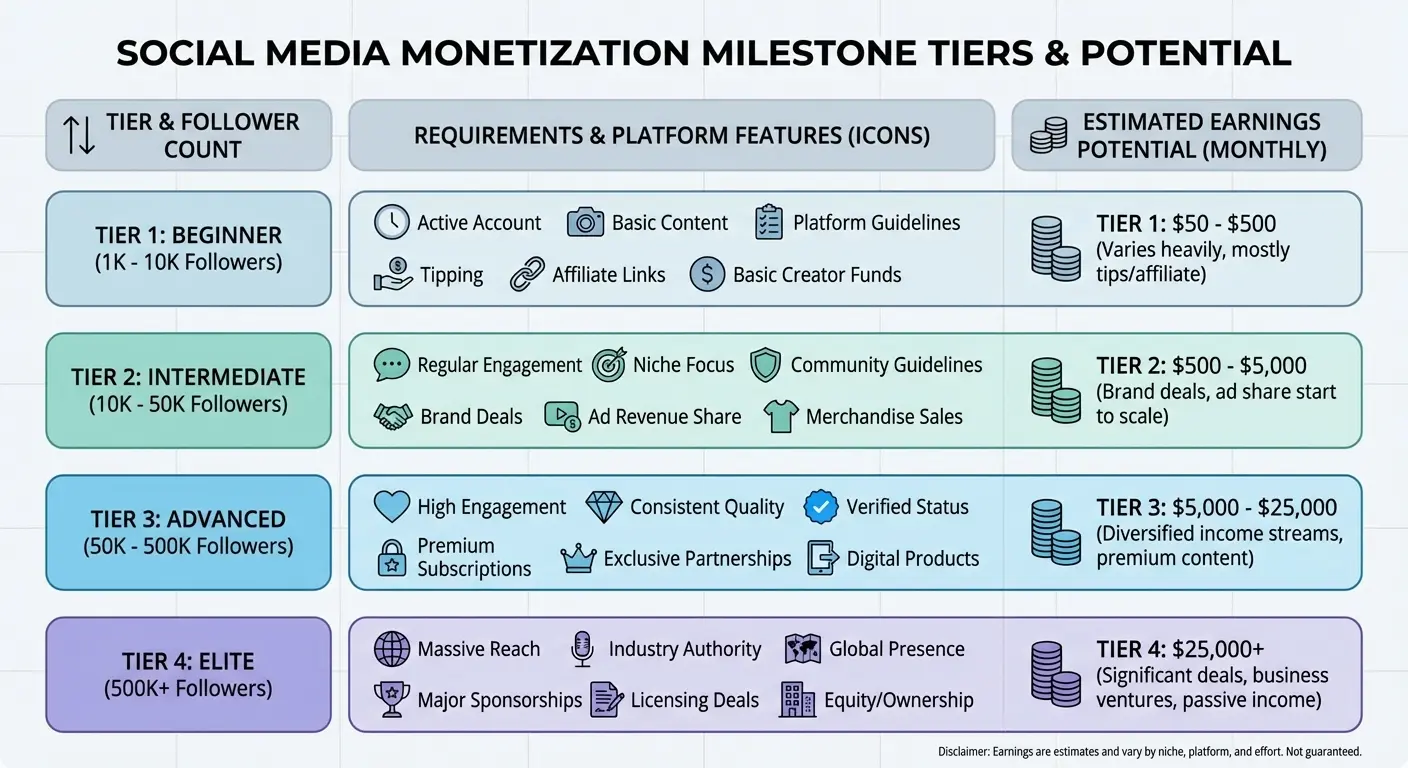
Live gifting requires 1,000 followers, making it one of the most accessible monetization features. Creators who go live regularly and build community can earn through virtual gifts that viewers purchase and send during streams. When evaluating how much does TikTok pay through different methods, live gifting often provides more immediate returns than the Creator Fund.
|
Monetization Method |
Follower Requirement |
Additional Requirements |
Geographic Restrictions |
|---|---|---|---|
|
Creator Fund |
10,000+ |
100K views in 30 days, 18+, good standing |
Limited countries (US, UK, Germany, France, Spain, Italy) |
|
Creator Rewards Program |
10,000+ |
100K views in 30 days, 1+ min videos, 18+ |
Limited countries (US, UK, Brazil, France, Germany, South Korea, Japan) |
|
Live Gifting |
1,000+ |
18+, 30-day account age, not a business account |
Most countries |
|
TikTok Shop |
5,000+ |
Business account |
Limited countries |
|
Brand Partnerships |
No official minimum |
Strong engagement rate, niche relevance |
No restrictions |
|
Affiliate Marketing |
No official minimum |
Authentic audience connection |
No restrictions |
How Engagement Rate Crushes View Count Every Time
A video with 5,000 views and 500 likes (10% engagement rate) is more valuable than a video with 50,000 views and 500 likes (1% engagement rate). Both got 500 likes, but the first video reached an audience that cares.
Engagement rate reveals audience quality. High engagement means your viewers aren’t just scrolling past. They’re stopping, interacting, and signaling to TikTok that your content deserves more distribution. The algorithm interprets engagement as content quality, which leads to more views, which leads to more opportunities for engagement, creating a compounding effect.
Brands evaluating creators for partnerships look at engagement rate first, follower count second. They’d rather work with a creator who has 10,000 highly engaged followers than 100,000 passive ones because engagement predicts conversion. If your audience doesn’t care enough to like or comment, they definitely won’t care enough to buy.
Calculating engagement rate is dead simple:
Add up your likes + comments + shares + saves. Divide by views. Multiply by 100.
So if you got 10,000 views and 800 total engagements, that’s 8%. Anything over 5% is solid. Over 10% is excellent. Under 2% means your content isn’t connecting.
Comments are particularly valuable because they indicate the highest level of engagement and boost your content more than passive likes. Content that sparks conversation (through questions, controversial takes, or relatable situations) tends to perform better long-term than content that’s merely entertaining.
But here’s the part nobody talks about: you can game engagement and destroy your monetization potential at the same time.
Posting “comment your favorite emoji” gets you comments. It also attracts people who engage but never buy. I’ve seen creators with 15% engagement rates struggle to sell a $27 ebook because they built an audience trained to comment, not convert.
The engagement you want? Questions about your process. People tagging friends who need your solution. Saves because they want to reference it later. That’s buying behavior disguised as engagement.
Engagement Rate Calculation Template:
1. Gather your metrics for a specific video:
– Total Views: _______
– Likes: _______
– Comments: _______
– Shares: _______
– Saves: _______
2. Calculate total engagements:
– Total Engagements = Likes + Comments + Shares + Saves
– Total Engagements = _______
3. Calculate engagement rate:
– Engagement Rate = (Total Engagements ÷ Total Views) × 100
– Engagement Rate = _______%
4. Benchmark your performance:
– Below 2%: Needs improvement – content may not resonate with audience
– 2-5%: Average – solid performance but room to grow
– 5-10%: Strong – above-average audience connection
– Above 10%: Exceptional – highly engaged community
Brand Deals and Sponsorships: The Real Payday
What Brands Actually Pay (And How to Price Yourself)
Brand deals. This is where actual money lives.
Micro-influencers (10K-50K followers) pull $500 to $2,000 per sponsored post. Mid-tier creators (50K-500K) see $2,000 to $10,000. Top-tier? We’re talking $10,000+ for a single 60-second video.
Compare that to the Creator Fund’s $20 per million views and you’ll understand why successful creators treat the Fund like finding change in their car. Nice surprise, not a business model. When people wonder how much do tiktokers make, brand partnerships represent the biggest income source for most successful creators.
Pricing usually follows a rough formula: $100 per 10,000 followers for a single in-feed video. This is a starting baseline that adjusts based on engagement rate, niche specificity, content exclusivity, and usage rights. A creator with 50,000 followers might charge $500 for a basic TikTok-only post, but $1,500 if the brand wants to use that content in their own ads or across multiple platforms.
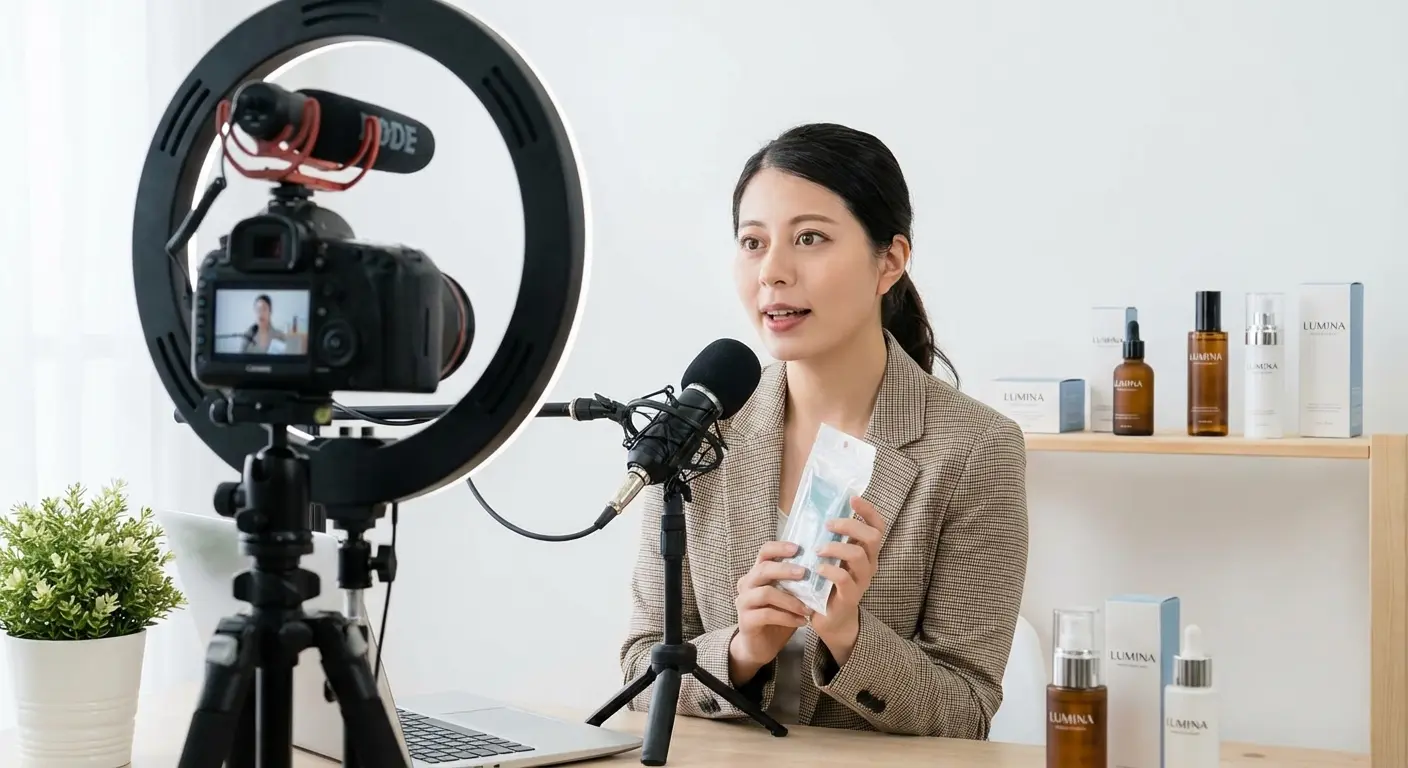
Niche matters enormously. A finance creator with 20,000 followers can charge more than a general entertainment creator with 100,000 followers because financial services brands are willing to pay premium rates to reach financially engaged audiences. B2B niches, health and wellness, and finance typically command higher rates than lifestyle or entertainment content.
Usage rights are where many new creators leave money on the table. If a brand wants to repurpose your content for their Instagram, website, or paid ads, that’s additional value you should charge for. A 30-day exclusivity period (where you can’t work with competitors) also warrants higher payment.
Don’t undervalue yourself trying to “get your foot in the door.” Brands have budgets, and they’ll pay fair rates to creators who demonstrate their worth. Undercharging trains brands to expect low rates and makes it harder for all creators to earn sustainably.
According to Influencer Marketing Hub research, Charli D’Amelio is estimated to earn up to $100,000 per sponsored TikTok post, demonstrating the upper end of earning potential for top-tier creators. Meanwhile, micro-influencers with 10,000-50,000 followers typically earn $100-$500 per sponsored post, and mid-tier creators with 50,000-500,000 followers can earn $500-$1,000 per collaboration. Rates that dramatically exceed what the Creator Fund could ever generate.
Finding and Pitching Brands (Without Waiting to Be Discovered)
Waiting for brands to find you is a passive strategy that leaves money on the table. Creators who proactively pitch land way more deals than those who just hope their DMs fill up with offers.
Start by identifying brands you already use and genuinely appreciate. Your pitch is infinitely more convincing when you can authentically speak to why you love a product. Make a list of 20 brands that align with your content niche and audience demographics, then research whether they have creator programs or marketing teams that work with influencers.
Your pitch should focus on what you’ll deliver for them, not what you want from them. Instead of “I have 30,000 followers and would love to work with you,” try “I create content for [specific audience], and I’ve noticed your brand aligns perfectly with their interests. I’d love to discuss creating content that introduces your [specific product] to my audience in an authentic way that drives engagement and conversions.”
A media kit streamlines this process. Include your key metrics (followers, average views, engagement rate), audience demographics, previous brand partnerships (if any), and examples of your best content. Keep it to one or two pages max. Brands don’t need your life story. They need to quickly assess whether you can deliver value.
Creator marketplaces like CreatorIQ, AspireIQ, and #paid connect brands with creators, but they usually take a percentage of your deal. Direct pitching keeps 100% of the payment in your pocket.
Rachel (not her real name) does skincare content. 25,000 followers. She identified five clean beauty brands she genuinely used and loved. She created a simple one-page media kit showing her 8.2% engagement rate, audience demographics (78% female, ages 25-34, primarily US-based), and three examples of product review videos that had performed well. She sent personalized pitch emails to each brand’s marketing team, highlighting how her audience matched their target customer. Within two weeks, two brands responded. One offered $400 for a single video, the other proposed a three-video package worth $1,500. Neither deal would have happened if she’d waited to be discovered.
Affiliate Marketing on TikTok: Turning Views Into Transactions
Affiliate marketing lets you earn commissions by recommending products, and TikTok’s format is perfectly suited for quick product demonstrations that drive purchase decisions. Instead of wondering how much does TikTok pay per view through the Creator Fund, smart creators focus on how many clicks and purchases their views generate through affiliate links.
TikTok’s Creator Marketplace now includes affiliate opportunities where you can browse products, create content featuring them, and earn commissions on sales generated through your unique links. The platform handles tracking and payment, making it simpler than managing multiple third-party affiliate relationships. This answers the question does tiktok pay you in a different way. Not for views, but for conversions you drive.
Amazon Associates remains popular because of product variety, but commission rates are relatively low (1% to 10% depending on category). LTK (formerly rewardStyle) offers higher commissions for fashion and home goods. ShareASale and Impact connect creators with thousands of brands across virtually every niche.
The content strategy for affiliate marketing differs from brand deals. You’re not creating one-off sponsored posts. You’re building a library of product recommendations that continue earning over time. A video reviewing a product you love can generate affiliate income for months or years as new viewers discover it.
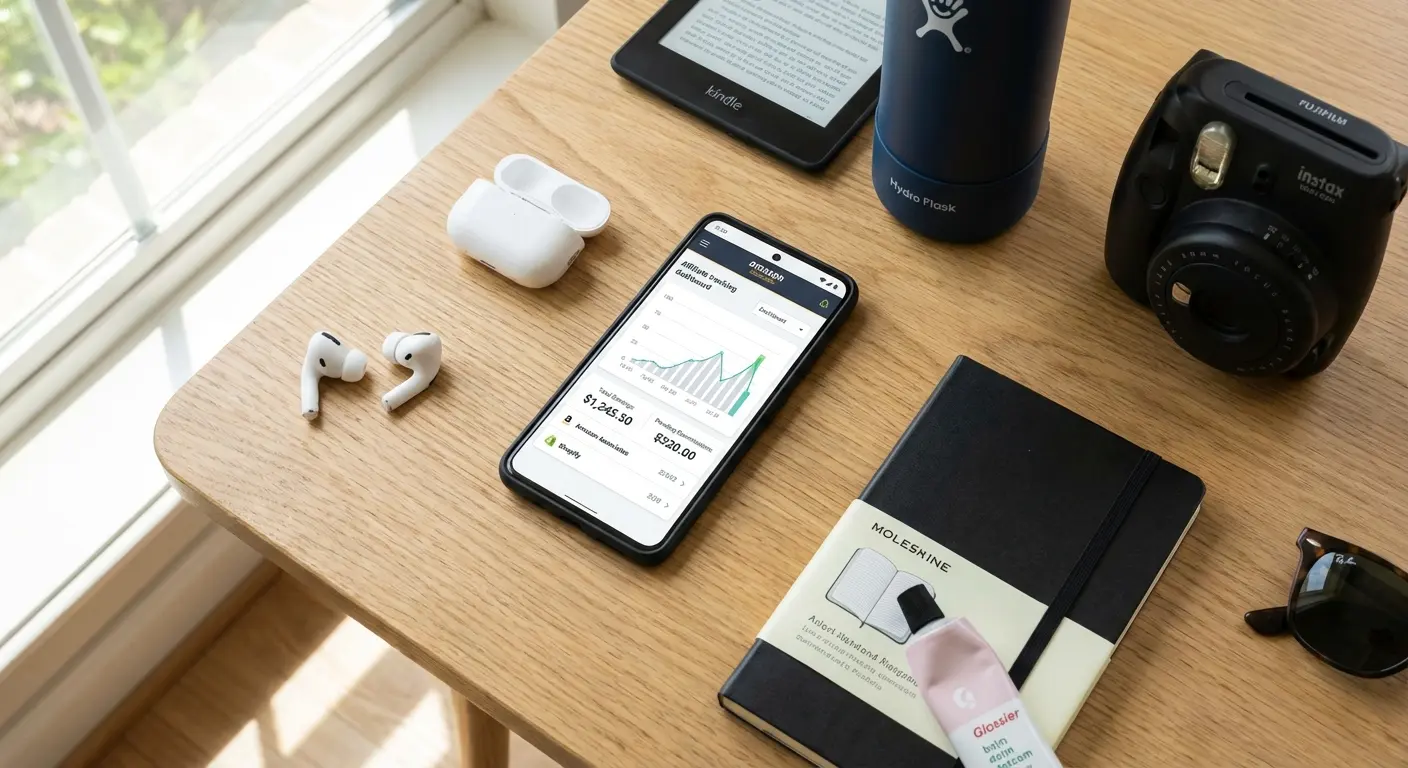
Authenticity matters more in affiliate marketing than anywhere else because you’re building long-term trust. Recommend products you’ve used and believe in. Your audience can tell when you’re just chasing commissions, and it destroys the credibility you need for sustainable affiliate income.
Disclosure is legally required. Use phrases like “I earn a small commission if you purchase through my link” or TikTok’s built-in paid partnership labels. Transparency builds trust rather than eroding it when done naturally.
The integration of shopping features directly into social platforms has accelerated dramatically in 2025. As reported by Influencer Marketing Hub, 11% of U.S. households have already made a purchase through TikTok Shop, demonstrating that audiences are increasingly comfortable buying products without leaving the app. This shift represents a fundamental change in how affiliate marketing works on TikTok. Creators no longer need to overcome the friction of sending viewers to external sites, making conversion rates way higher than traditional affiliate models.
TikTok Shop and Live Gifts: Direct Monetization That Actually Works
TikTok Shop: Selling Without Leaving the App
TikTok Shop eliminates the biggest obstacle in social commerce: making people leave the app to buy something. Products are shoppable directly from videos, and checkout happens within TikTok. When comparing how much tiktok pays for 1 million views through the Creator Fund versus potential TikTok Shop earnings, the difference is staggering. You could earn thousands through product sales versus the $20-$40 the fund provides.
You can sell your own products through TikTok Shop or participate in their affiliate program by promoting other sellers’ products. The commission structure is usually more generous than traditional affiliate programs because TikTok is incentivized to build out this feature and compete with Instagram Shopping.
Product categories that perform exceptionally well include beauty and skincare, fashion accessories, gadgets and tools, and home organization products. These are items that demonstrate well in short videos and solve problems viewers didn’t know they had until they saw your content.
Content strategy for TikTok Shop focuses on demonstration rather than description. Show the product in use, highlight the transformation or problem it solves, and make the value immediately obvious. Videos that perform well often follow a “problem, agitation, solution” structure within 15 to 30 seconds.
The “Add to Cart” button appears directly on your video, reducing purchase friction dramatically. Viewers don’t need to remember to click a link later or navigate to a different site. Impulse purchases happen when the barrier between desire and purchase is minimal, and TikTok Shop capitalizes on this perfectly.
Live Gifts: Real-Time Monetization Through Audience Connection
Going live on TikTok activates a direct monetization channel where viewers can send virtual gifts that convert to real money. It’s one of the few ways to earn directly from TikTok that doesn’t depend on the Creator Fund’s dismal rates.
Viewers purchase coins (TikTok’s virtual currency), then use those coins to buy gifts during your live stream. Gifts range from roses worth a few cents to universe gifts worth hundreds of dollars. You receive diamonds (creator currency) based on the gifts you receive, which convert to cash at roughly a 50% rate (TikTok keeps the other half).
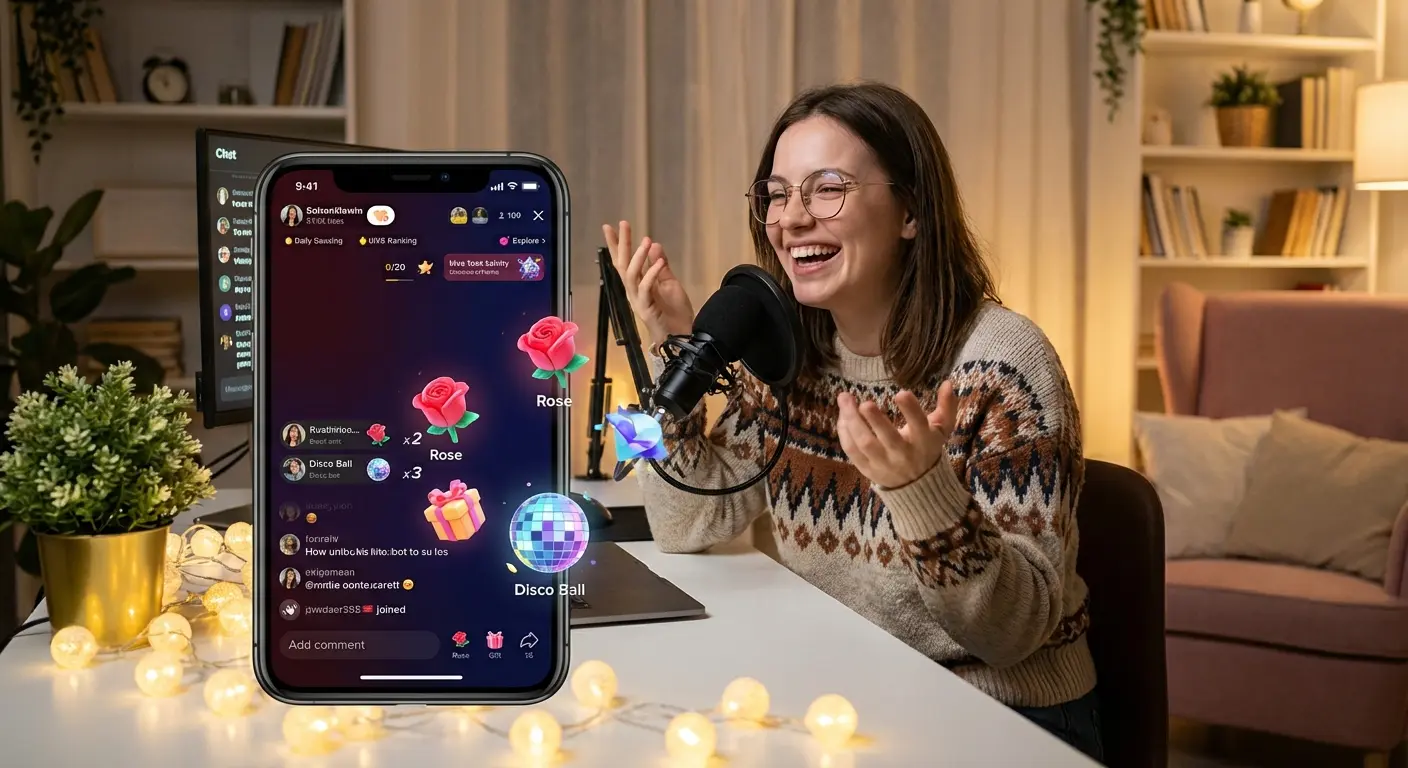
Successful live streamers create consistent schedules so their audience knows when to show up. They also build community by acknowledging viewers by name, responding to comments, and making people feel seen. The parasocial relationship that develops drives gift-giving as viewers support creators they feel connected to.
Content that works well for lives includes Q&A sessions, behind-the-scenes content, tutorials or demonstrations, gaming, and “get ready with me” content. The key is creating something that benefits from real-time interaction rather than just broadcasting pre-planned content.
Top live streamers can earn hundreds or thousands of dollars per stream, but this requires major audience investment and consistent effort. It’s not passive income. It’s active performance. Most creators earn $20 to $100 per live session, which adds up if you stream regularly.
Building an Audience Worth More Than Views
You could have a million followers and make nothing, or 10,000 followers and make six figures. The difference is who those followers are and why they’re following you. Obsessing over tiktok pay per view rates misses the point entirely. The value is in the audience you build, not the pennies per thousand views.
Content that goes viral often attracts the wrong audience. A one-off viral video about something outside your niche brings followers who expect more of that content, then disengage when you return to your focus. This tanks your engagement rate and confuses the algorithm about who your content is for.
Intentional audience building means creating content consistently within your niche, even if it doesn’t go as viral as random trending content might. A skincare creator who posts daily skincare tips will build an audience interested in skincare. That same creator posting a viral dance might gain followers, but they won’t care about skincare content. Understanding how much does tiktok pay for views becomes irrelevant when you’re building an audience that will buy from you.
Your content should filter your audience as much as attract them. If you’re building toward selling business consulting services, your content should appeal to business owners while being uninteresting to people outside that demographic. This self-selection ensures the followers you gain are potential customers.
Engagement patterns tell you whether you’re attracting the right people. Read your comments. What questions do people ask? What problems do they mention? If the comments align with what you want to help people with or sell to them, you’re building the right audience. If comments are generic (“love this!” or “so true!”), you’re attracting passive viewers who won’t convert.
Unpopular opinion: The Creator Fund isn’t totally useless. It’s psychological proof that your content has value. That first $8 deposit hits different when you’ve been creating for free. But don’t mistake validation for a business model.
When to Pivot Your Monetization Strategy
Sticking with a strategy that isn’t working wastes time, but abandoning strategies too quickly prevents you from seeing results that take time to build. The trick is knowing which situation you’re in.
If you’ve been consistently posting for three months with no growth in followers or engagement, something needs to change. That’s enough data to indicate your content isn’t resonating. If you’ve been posting for three weeks and feel frustrated, you’re probably just being impatient. When you’re fixating on how much does tiktok pay per million views and disappointed by the $20-$40 answer, that’s your signal to pivot toward strategies that generate income.
Signs you need a strategic pivot include declining engagement rates despite consistent posting, follower growth that doesn’t translate to any monetization opportunities, or burnout from creating content that doesn’t align with your goals or interests.
Test new approaches systematically rather than changing everything at once. If you’re trying to build affiliate income but aren’t seeing clicks, test different product categories, different content formats, or different calls to action. Change one variable at a time so you can identify what impacts results.
Some monetization methods have longer feedback loops than others. Brand deals can happen quickly once you hit certain follower thresholds. Building a course or membership business might take six months of audience development before you have enough trust and community to launch successfully. The question of how much does tiktok pay for 1 million views ($400-$1,000 at best through Creator Rewards) should inform your decision to pursue other revenue streams immediately.
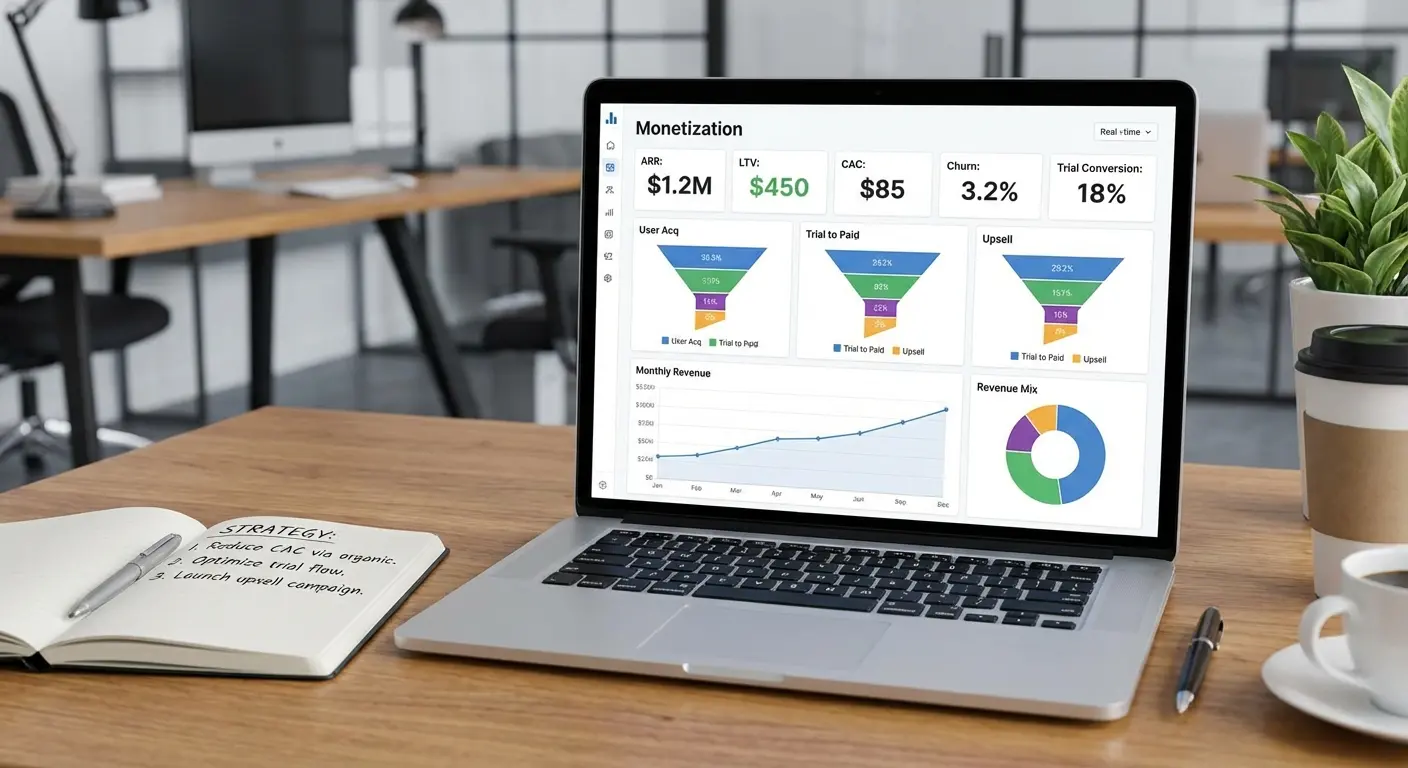
Track metrics that matter for your chosen monetization strategy. If you’re focused on brand deals, track engagement rate and audience demographics. If you’re building a digital product business, track email list growth and content saves (which indicate people find your content valuable enough to reference later). If you’re doing affiliate marketing, track click-through rates and conversion rates, not just views.
Building an email list through TikTok sounds simple. It’s not.
You need a lead magnet people actually want (harder than it sounds). A landing page that converts (most don’t). An email sequence that nurtures without annoying (takes months to dial in). And content that drives people to your bio link without sounding desperate (there’s an art to this).
I’ve watched creators spend four months building a list of 200 people. Then I’ve watched others get 2,000 in two weeks. The difference isn’t luck. It’s understanding what their audience actually wants versus what they think they want.
Maya does productivity content. She spent four months posting daily tips and hacks, growing to 32,000 followers with solid engagement. She launched a $97 productivity course expecting at least 50 sales based on her audience size. She sold three. Instead of abandoning the strategy entirely, she analyzed the data: her audience loved free tips but had no relationship with her beyond entertainment. She pivoted by spending the next two months building an email list through a free productivity template, nurturing subscribers with valuable weekly emails, and creating behind-the-scenes content showing her own productivity systems in action. When she relaunched the course three months later to her now-engaged email list of 1,200 subscribers, she sold 64 courses in the first week, generating $6,208. Same audience size, different strategy, completely different results.
Turning TikTok Success Into Sustainable Income
You’ve built an audience, you understand the monetization options, but translating that knowledge into income requires treating your TikTok presence as a business with strategy, systems, and professional execution. Stop asking how much does tiktok pay per view and start asking how much value you can extract from each viewer through strategic monetization.
Most creators struggle not because they lack opportunities but because they lack the infrastructure to capitalize on them. You need email sequences to nurture subscribers, sales pages to convert traffic, media kits to pitch brands, and content calendars to maintain consistency. These backend systems determine whether your audience becomes income.
The creators earning substantial income typically spend 40% of their time creating content and 60% on business activities like pitching brands, developing products, analyzing metrics, and optimizing funnels. If you’re spending 100% of your time creating content, you’re leaving money on the table. The tiktok pay per view model will never support a sustainable creator business. You need diversified revenue streams.
Building multiple income streams protects you from platform volatility. If TikTok changes its algorithm tomorrow and your reach drops, you should still have email subscribers, affiliate relationships, products, and brand connections that continue generating income. Platform dependence is a business risk you need to mitigate. When you understand how much does tiktok pay per view (basically nothing meaningful), you realize that external monetization isn’t optional. It’s essential.
Honestly, I’m still figuring some of this out myself. The landscape changes every six months and what worked last year doesn’t work now. But that’s exactly why you can’t rely on a single income stream or platform payment.
Full transparency: this is where I tell you about The Marketing Agency, because that’s literally what I do for work.
We help creators build the boring business infrastructure (email sequences, sales funnels, brand positioning, conversion optimization) that turns audiences into income. The stuff you know you need but don’t want to figure out yourself.
If you’re making content but not making money, we can probably fix that. If you’re already monetizing but it feels chaotic and unsustainable, we can definitely fix that.
Not a pitch. Just an option if you need it.
Final Thoughts
TikTok pays almost nothing per view, and that’s fine once you understand what the platform is for. When people ask how much does tiktok pay per view, the answer ($0.02-$0.04 per 1,000 views through the Creator Fund, or $0.40-$1.00 through Creator Rewards) should immediately redirect their focus to better monetization strategies. Views are the starting point, not the destination. They’re proof that you can capture attention, which is the scarcest resource in the digital economy.
The creators making real money from TikTok have stopped asking what the platform pays and started asking what they can build using the platform. They’ve recognized that TikTok’s gift isn’t direct payment but audience access that would cost tens of thousands of dollars to acquire through traditional advertising. The question of how much does tiktok pay creators per view is irrelevant when your real income comes from the business you build around your content.

Your next step depends on where you are right now. Under 1,000 followers? Focus entirely on content quality and consistency. Between 1,000 and 10,000 followers? Start building your email list and testing affiliate products. Above 10,000 followers and not monetizing beyond the Creator Fund? You’re leaving serious money on the table and need to implement at least one of the strategies we’ve covered.
Look, TikTok pays basically nothing per view. You already knew that, or you wouldn’t have clicked this article.
What you maybe didn’t know: that’s completely fine. Views were never the point. The audience is the point. What you do with that audience is the point.
Stop refreshing your Creator Fund balance. Start building something that doesn’t need TikTok’s permission to pay you.
You’ve got two paths: keep chasing views and making pennies, or treat TikTok like the world’s best free marketing platform and build an actual business around it.
Most creators pick option one because it feels easier. It’s not easier. It’s just more familiar.
The creators making real money picked option two. They stopped asking what TikTok pays and started asking what they can sell.