



Table of Contents
-
What Really Happens When You Leave the Room
-
Why Your Breakout Rooms Keep Failing (And It’s Not Technical)
-
The Control Problem: You Can’t Hover Your Way to Good Collaboration
-
How to Design Breakout Sessions That Actually Work Without You
-
The Stuff Your Participants Do When You’re Not Looking
-
Making the Return to Main Room Actually Matter
-
Measuring Success Without Turning Into Big Brother
-
Why Letting Go Is the Whole Point
The Invisible Power Shift Nobody Talks About
Last week I watched a director spend twenty minutes setting up breakout rooms for a discussion that took exactly four minutes. She’d assigned the groups, shared this elaborate prompt, explained the process twice. Hit that “Start breakout sessions” button with what I can only describe as cautious optimism.
Then just… sat there. Staring at her screen. Wondering what the hell was happening in those rooms.
Look, we all know how to click the buttons by now. Google Meet’s interface isn’t exactly rocket science. Click here, drag these people, set a timer. Done. That’s not the hard part.
The hard part is what happens when you’re NOT in the room and you have no idea if people are actually working or just killing time until the timer runs out.
When you split people into breakout rooms, you’re not just dividing participants. You’re creating these little pocket universes where suddenly the normal rules don’t apply. Attendance tracking data from Google Meet sessions shows that breakout rooms are listed in separate tabs with distinct join and leave timestamps, which tells us that participant behavior in these smaller spaces follows completely different patterns than main room engagement.
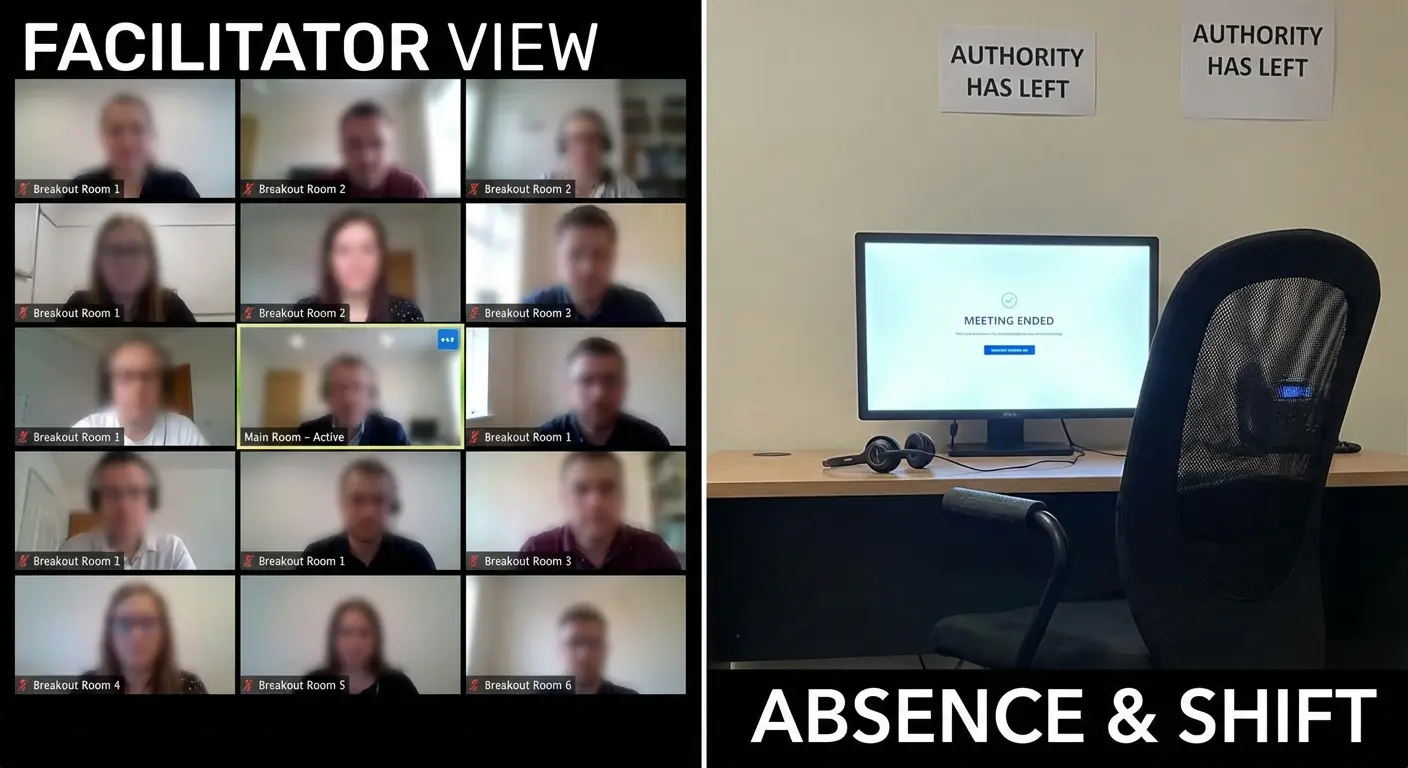
The challenge isn’t technical. It’s that your breakout rooms need to work whether you’re in them or not. And most of us design them as if we’ll somehow still be present in all of them simultaneously.
That’s the gap. That’s what makes the difference between breakout sessions that produce actual work and ones that feel like you just wasted fifteen minutes of everyone’s day.
Why Your Breakout Rooms Keep Failing (And It’s Not Technical)
Here’s the thing I’ve learned after probably a hundred failed breakout sessions: we design these things as if our presence will somehow persist in them. The instructions we give, the expectations we set, the time limits we throw out there… they all assume participants will behave as if we’re still watching.
They won’t.
And honestly? That’s not a criticism. It’s just human nature. The conversation shifts the moment the boss steps out. You know this. You’ve lived this in every meeting you’ve ever been in.
The Setup Is Where Everything Goes Wrong
Your breakout rooms are failing because you’re solving for the wrong problem. You’re obsessing over how to structure the activity when you should be thinking about how to structure the *absence* of structure.
Here’s what typically happens. You create these detailed instructions. You assign what feels like a clear task. You give them ten minutes. You tell yourself you’ll “pop in to check on progress” (translation: make sure they’re actually working). You bring everyone back and ask for volunteers to share.
But here’s what the participants experience. They spend two minutes figuring out who should share their screen. Another minute trying to remember what you even said because nobody was really listening during setup. Then there’s this awkward silence, or someone brings up something completely off-topic. Maybe three minutes of rushed work. Then you pop in and everyone suddenly looks very busy. You leave, they relax again. When you call everyone back, nobody wants to volunteer because they didn’t actually finish the task.
I mean, does this sound familiar or is it just me?

I worked with a marketing team last month where the leader assigned breakout groups to “brainstorm Q4 campaign ideas” with basically no other guidance. Group A spent four minutes debating whether to use the Google Doc or just talk it out. Group B got completely derailed discussing a client email that came in during the meeting. Group C finished in three minutes with the most generic ideas imaginable and then just sat there in painful silence. When everyone came back, each group offered one vague concept and you could feel the energy just… die.
The issue wasn’t the participants. It was that there were no concrete deliverables, no assigned roles, no clear picture of what “done” looked like.
What You Should Actually Be Asking Yourself
Stop asking “How do I make breakout rooms work?”
Start asking “What conditions allow a group to do meaningful work without me?”
That reframe changes everything. It shifts your role from manager to designer. From supervisor to architect. You’re not trying to maintain control from a distance (you can’t, by the way). You’re building a container that works whether you’re present or not.
The Control Problem: You Can’t Hover Your Way to Good Collaboration
You want participants to engage authentically. You also want to make sure they stay on task. And look, I get it. These goals are in direct tension with each other, and breakout rooms force you to pick a side.
Most of us try to split the difference. We create breakout rooms (autonomy!) but then pop in frequently to monitor (control!). This is actually the worst of both worlds. Participants never fully settle into autonomous work because they’re anticipating your arrival. You never fully let go because you’re anxious about what’s happening without you.
What You’re Actually Accomplishing When You Pop In
When you pop into breakout rooms unannounced, you’re not gathering useful information. You’re watching a performance of productivity.
People hear that entry chime and immediately shift their behavior. They stop the side conversation, pull up the relevant document, sit up straighter, look engaged.
You think you’re keeping people accountable. What you’re actually doing is training them to perform work rather than do work. There’s a difference.
Google announced in February 2021 that teachers would get the option to end meetings for everyone on the call, preventing students from staying on after the teacher left (including in breakout rooms). This feature came from concerns about unsupervised activity, which is kind of hilarious because it reveals the whole surveillance mindset: the assumption that people without oversight will screw around. But the real question isn’t how to maintain control after you leave. It’s how to design sessions that work in your absence.
Why Strategic Absence Actually Works Better
Here’s the uncomfortable truth that nobody wants to hear: some of your best breakout sessions will happen when you’re not watching. Not because participants are slacking off. Because they’re actually working.
Real collaboration requires people to feel safe enough to say stupid stuff. They need to propose bad ideas, ask the obvious question everyone’s wondering about, admit they have no idea what’s going on. You can’t do any of that with the boss watching. Your presence, even your digital presence, changes everything.
This doesn’t mean you abandon breakout rooms entirely and hope for the best. It means you design them to function in your absence and then actually trust that design.

How to Let Go Without Losing Structure
You can give up surveillance without giving up structure. The trick is building that structure into the task itself rather than trying to enforce it through monitoring.
Think about the difference here:
Approach A: “Discuss the pros and cons of this strategy. I’ll be popping in to check on your progress.”
Approach B: “Each person shares one pro and one con. Someone needs to keep a running list in the chat. You’ll have three minutes to share your list when we return.”
The first approach depends on your presence to maintain accountability. The second builds accountability into the task. Participants know what success looks like. They know how they’ll share it. They have a concrete thing to produce. Whether you’re there or not becomes irrelevant.
|
Surveillance Approach |
Structure Approach |
|---|---|
|
Vague instructions with facilitator monitoring |
Specific deliverables built into the task |
|
“Discuss the topic” |
“Create a ranked list of three options” |
|
Facilitator pops in to check progress |
Timer visible to participants |
|
Accountability through observation |
Accountability through role assignment |
|
Participants perform engagement when watched |
Participants complete concrete outputs |
|
Success depends on facilitator presence |
Success independent of facilitator presence |
How to Design Breakout Sessions That Actually Work Without You
The goal isn’t to make yourself obsolete. It’s to make your presence optional. You want breakout rooms that work whether you’re in them or not.
This requires a completely different design approach than what most people use.
Start With the Artifact
Every breakout session should produce something tangible. Not because you need to grade it or evaluate it. Because the artifact gives the group a shared focus.
The artifact can be dead simple: a list in the chat, a shared doc with three bullet points, a decision on which option to pursue. What matters is that the group knows exactly what they’re creating and how they’ll share it.
When you design backward from the artifact, the task becomes obvious. Participants don’t need you to clarify expectations or redirect their energy. They know what done looks like.
Before You Hit That Breakout Button
Can you answer yes to each of these?
-
Does this session produce a specific, tangible thing?
-
Can participants describe what “done” looks like without asking me?
-
Has each participant been assigned a clear role?
-
Is the time limit short enough to create urgency (five to seven minutes)?
-
Does my prompt answer: What are you producing? Who’s doing what? How will you share it?
-
Can this task be completed without my intervention?
-
Have I resisted the urge to add “I’ll check in on you” to the instructions?
Give People Actual Jobs
Groups without defined roles default to either the loudest voice dominating or awkward silence. You can prevent this by assigning specific roles before people enter breakout rooms.
Roles that actually help groups function:
Timekeeper keeps an eye on the clock and makes sure the group doesn’t spend four minutes on small talk
Notetaker captures key points somewhere everyone can see them
Facilitator makes sure the quiet person actually talks
Reporter is on deck to share the group’s work when you reconvene
Look, I know this sounds like corporate bureaucracy bullshit. But it’s not. You’re distributing the work of facilitation so the group can manage itself. Each person has a clear job, which kills the ambiguity that murders momentum in small groups.
In November 2020, Google Meet added features where participants can ask for help from the moderator, who can see which rooms need assistance. They also added a timer that appears in breakout rooms so people can track how long they have. These features reflect a shift toward participant autonomy. Groups can self-manage with a visible timer and only bug you when they genuinely need help, rather than you randomly checking in on them.
Time Limits That Actually Work
Giving participants fifteen minutes doesn’t mean they’ll use all fifteen minutes productively. Most groups waste time at the beginning and panic at the end.
Shorter is almost always better. Five to seven minutes creates healthy urgency without making people freak out. Participants don’t have time to drift off-topic because the clock is immediately visible.
If your task genuinely needs more time, break it into phases with different breakout sessions. First round: generate ideas (five minutes). Come back to main room briefly. Second round: evaluate and select (five minutes). This keeps energy up and gives you natural checkpoints without hovering.
The Prompt Makes or Breaks Everything
Vague prompts produce vague results. “Discuss this topic” gives participants nothing to grab onto. They’ll waste half their time trying to figure out what you actually want.
Your prompt needs to answer three questions:
-
What exactly are you producing?
-
Who’s doing what?
-
How will you share it?
Compare these:
Weak: “Break into groups and discuss the client’s needs.”
Strong: “Identify the top three client needs from the brief. Facilitator: make sure everyone shares at least one idea. Notetaker: list them in the chat. Reporter: be ready to share your top three when we return. You have six minutes.”
The second prompt eliminates ambiguity. Participants know exactly what to do, how to do it, and what success looks like. You don’t need to be there because the prompt does your job.
Prompt Template You Can Actually Use
Task: [Specific deliverable, be concrete]
Roles:
-
Facilitator: [Specific responsibility]
-
Notetaker: [Where to capture information]
-
Timekeeper: [Keep group on track]
-
Reporter: [Will share back to main group]
Process:
-
[First step with time]
-
[Second step with time]
-
[Final step]
Deliverable: [Exactly what you’ll share when we reconvene]
Time: [Five to seven minutes recommended]
I worked with a product team a few months back that needed to prioritize feature requests. Instead of the usual “Discuss which features matter most,” the facilitator said: “Review the six feature requests in the shared doc. Each person advocates for one feature and explains why. Notetaker captures the rationale in bullet points next to each feature. As a group, rank your top three by customer impact. Six minutes. Reporter shares your ranked list and the top reason for your number one choice.”
When groups came back, they had concrete rankings with actual reasoning. The facilitator could immediately spot patterns across groups and move to decision-making. The whole thing took maybe two minutes instead of the usual ten minutes of repetitive sharing.
The Stuff Your Participants Do When You’re Not Looking
You might be surprised by what happens in breakout rooms when you’re not monitoring them. Or maybe you won’t be.
Some groups stay perfectly on task. They complete the work efficiently and then just sit there in comfortable silence waiting for the timer. Others drift into conversations about weekend plans or that email from the client yesterday. A few struggle with the task and spin their wheels without asking for help.
All of these outcomes tell you something.
The Off-Topic Conversation Isn’t Always a Problem
We treat off-topic chat as evidence of failure. Participants aren’t focused. They’re wasting time. They need more supervision.
Sometimes that’s true. A lot of times it’s not.
Those “off-topic” conversations often serve important functions. They build rapport between team members who rarely interact. They surface concerns or ideas that people won’t share in the full group. They provide necessary mental breaks in a long session.
You need to distinguish between productive drift and unproductive avoidance. Productive drift happens when participants complete the task quickly and use remaining time to connect. Unproductive avoidance happens when participants never engage with the task at all.
The solution to unproductive avoidance isn’t more monitoring. It’s better task design.

Silence Doesn’t Mean Failure
You pop into a breakout room and hear… nothing. Immediate panic. They’re not working. They’re confused. They need help.
Maybe. Or maybe they’re thinking. Or reading. Or working independently in a shared doc.
We’ve trained ourselves to think verbal activity equals productivity. In video meetings, this anxiety gets worse because we can’t see what people are doing. Silence feels like dead air.
But some tasks require quiet focus. If you’ve asked participants to review a document and identify issues, you should expect silence. If you’ve asked them to individually draft responses before sharing, silence is exactly what you want.
The problem isn’t silence. The problem is designing tasks that require constant talking and then being surprised when silence feels awkward.
The Group That Asks for Help
Every once in a while a group will message you from their breakout room. They’re confused about the task. They need clarification. They want more time.
This is useful feedback about your design, not evidence of their failure.
When multiple groups ask the same question, your prompt was unclear. When groups consistently need more time, your estimate was off. When groups can’t figure out how to start, your task structure was too vague. Pay attention to these signals. They’ll make your next session better.
Making the Return to Main Room Actually Matter
You’ve released participants into breakout rooms. They’ve done their work (or something approximating it). Now you’re bringing everyone back together.
This transition matters way more than most people realize. It’s where the value of breakout work either compounds or completely evaporates.
Don’t Make Them Repeat Themselves
You ask each group to share their work. First group reports out. Second group says “We had similar ideas.” Third group looks uncomfortable and offers a slightly reworded version of what’s already been shared.
You just wasted everyone’s time.
If you want groups to verbally report their work, you need to make sure they’re building on each other rather than repeating . This requires active facilitation: “Group one shared X. Group two, what did you discuss that’s different or adds to that?”
Better yet, skip the verbal report entirely. Have groups put their work in a shared doc or the chat before you reconvene. Everyone can see all the outputs at once. You can identify patterns, highlight interesting outliers, and move directly into synthesis rather than spending ten minutes on repetitive sharing.
|
Reunion Approach |
Outcome |
When to Use |
|---|---|---|
|
Sequential verbal reports from each group |
Repetitive, time-consuming, declining energy |
Rarely (only when each group tackled different aspects) |
|
All groups post outputs to shared doc/chat before reconvening |
Efficient, allows pattern recognition, enables synthesis |
Most breakout sessions with tangible deliverables |
|
Facilitator synthesizes visible outputs and highlights patterns |
High value, saves time, creates connections |
When you want to move quickly to decision or next phase |
|
Targeted questions to specific groups |
Focused, builds on previous shares, maintains energy |
When you’ve reviewed outputs and want to dig deeper on specific points |
|
Skip debrief entirely |
Respects time, appropriate when value was in the conversation itself |
Relationship building, individual reflection tasks |
Create Connections Between Groups
The real power of breakout rooms isn’t just what happens within each group. It’s what happens when you bring the groups back together and connect their insights.
You’re looking for patterns, tensions, surprises. Where did groups align? Where did they diverge? What did one group see that others missed?
This is where your facilitation actually matters. You’re not managing the breakout work itself. You’re making meaning from the collective output.
“Three groups identified budget as the main constraint, but group four prioritized timeline. What does that tell us about our assumptions?”
You’re synthesizing, not summarizing. You’re creating something bigger than the sum of the breakout sessions.
Know When to Skip the Debrief
Not every breakout session needs a full group debrief. Sometimes the value was in the small group conversation itself, and bringing everyone back to rehash it actually diminishes the impact.
If the goal was relationship building, you don’t need reports. If the goal was individual reflection with peer input, you don’t need sharing. If the goal was generating a list that’s now visible to everyone in a shared doc, you don’t need verbal readouts.
You can just say: “I can see everyone’s lists in the doc. I’m noticing some interesting patterns here. We’re going to use these insights for our next discussion.” Then move forward.
Respect people’s time by only asking them to share when sharing actually adds value.
A leadership team I worked with ran breakout rooms to discuss “What’s one change you’d make to improve cross-functional collaboration?” Each group posted their top three ideas in a shared doc. When everyone returned, the facilitator didn’t ask each group to read their list aloud. Instead she said: “I’m seeing ‘earlier involvement in planning’ appear in four of five groups. That’s a clear signal. I’m also noticing group three mentioned ‘shared success metrics’ and that’s the only group that went there. Group three, say more about that.” She synthesized the patterns, highlighted the outlier, and moved directly into actual discussion. Total time: two minutes instead of ten.
Measuring Success Without Turning Into Big Brother
You want to know if your breakout rooms are effective. That’s reasonable. The question is how to gather that information without resorting to surveillance.
Look at the Artifacts
The work products from breakout sessions tell you most of what you need to know. Are they thoughtful or superficial? Complete or rushed? Do they show evidence of genuine discussion or just minimum effort?
You’re not grading these. You’re using them as feedback on your design. If every group produced rich, detailed work, your task was well-designed. If most groups produced thin, generic responses, something in your setup needs adjustment.
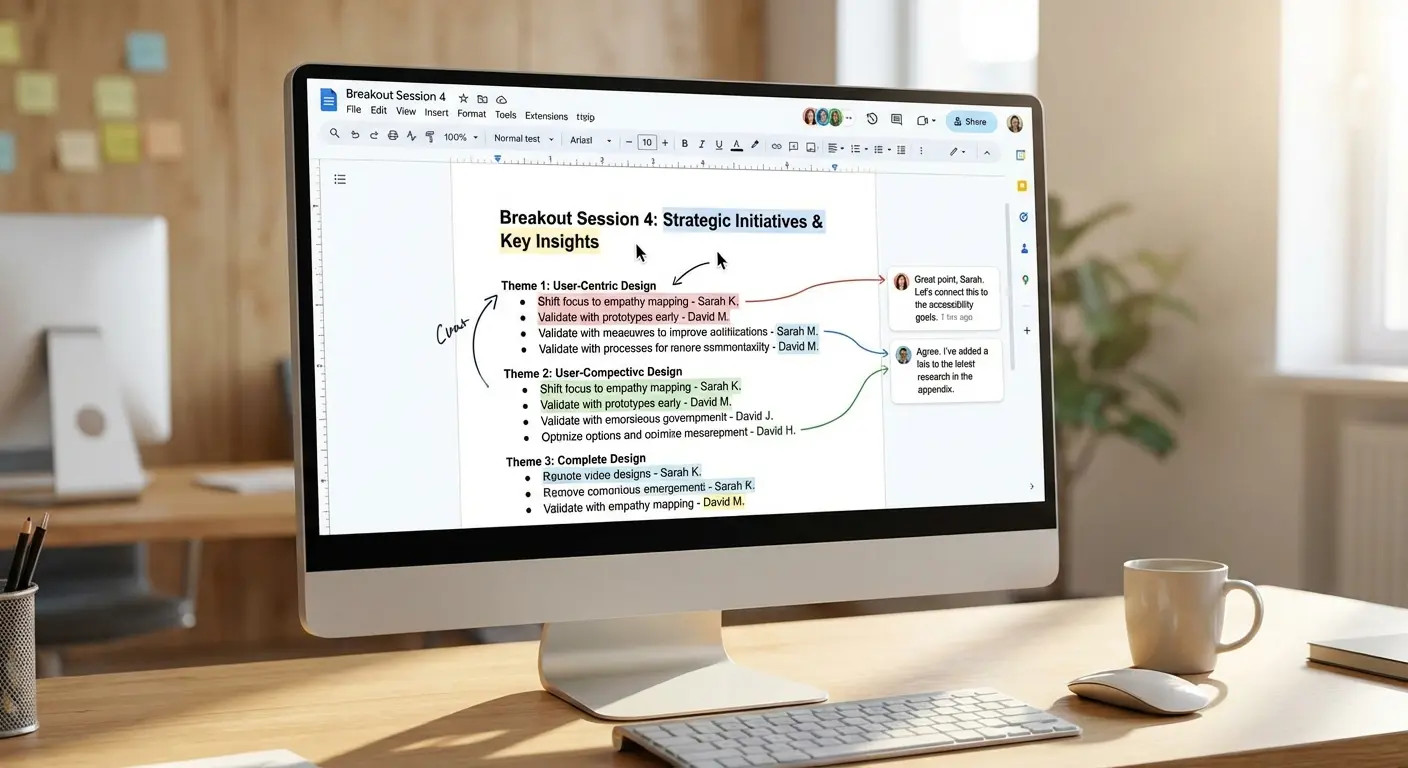
Google Meet attendance reports capture join and leave timestamps along with total duration each participant stayed, and these reports only generate if at least two people joined the meeting. This data reveals participation patterns over time, but artifacts (the actual work products) reveal engagement quality. A participant might stay in a breakout room for the full seven minutes, but the depth and specificity of their group’s output tells you whether that time was actually productive.
Watch the Energy When You Reconvene
You can feel the difference between groups that did meaningful work and groups that went through the motions. It shows up in their energy when you bring them back together.
Groups that engaged deeply return with momentum. They’re eager to share, they reference specific moments from their discussion, they build on each other’s ideas. Groups that struggled or disengaged return flat. They’re reluctant to share, their responses are vague, they defer to others.
This isn’t about judging participants. It’s about reading the room to understand what worked and what didn’t.
Ask Directly (But Make It Safe)
You can just ask people how the breakout session went. The key is making it safe to give honest feedback.
“That task might have been too ambitious for six minutes. Did your group feel rushed?” is way better than “Did everyone complete the task?”
The first question acknowledges potential design flaws and invites honest response. The second puts participants on the defensive and basically begs them to claim success even if they struggled.
You want feedback on your design, not performance anxiety from your participants.
Track Patterns Over Time
One breakout session tells you almost nothing. Ten breakout sessions reveal patterns.
Keep informal notes about what worked. Which types of tasks generated the best discussions? What time limits felt right? Which role assignments helped groups function smoothly? Which prompts created confusion?
You’re building your own playbook based on results with your actual participants, not generic best practices from some blog post (including this one).
Why Letting Go Is the Whole Point
Here’s what we’ve been circling around this entire time: effective breakout rooms aren’t really about the rooms themselves. They’re about trust.
Trust that your participants will engage without supervision. Trust that your design is strong enough to guide work in your absence. Trust that not everything needs to be monitored to be valuable.
What You’re Actually Teaching
Every time you pop into a breakout room to check on progress, you’re teaching participants that they can’t be trusted to work independently. Every time you hover, you’re reinforcing that their value lies in being watched, not in the work itself.
But when you release them into breakout rooms with clear structure and then actually leave them alone, you’re communicating something different. You’re saying: I trust you to do meaningful work. I’ve given you what you need. I don’t need to monitor you to believe you’re capable.
That message matters. It changes how participants show up, not just in breakout rooms but in everything.

Your Actual Job as a Facilitator
Your job isn’t to ensure every moment is productive. It’s to create conditions where productivity is possible and then get out of the way.
Some groups will use those conditions beautifully. Others will struggle. A few will waste the time entirely. That’s okay. That’s human. That’s what happens when you treat people as autonomous professionals rather than students who need constant supervision.
You’re not abandoning your responsibility. You’re fulfilling it by building strong containers and trusting people to work within them.
Getting Comfortable With Not Knowing
You’ll never know exactly what happened in every breakout room. You’ll never have complete visibility into who contributed what or how the conversation unfolded.
You have to be okay with that.
The alternative is creating an environment where people perform engagement rather than actually engaging. Where they wait for your approval rather than trusting their own judgment. Where the goal is to look productive when you’re watching rather than to do work that matters when you’re not.
That’s not the meeting culture you want to build. The discomfort of not knowing everything is worth the benefit of genuine participation.
When Your Breakout Rooms Reveal Bigger Problems
Sometimes your breakout rooms consistently fail despite good design. Groups don’t engage. Participants stay silent. The work products are minimal or nonexistent.
This isn’t a breakout room problem. It’s a culture problem.
Breakout rooms amplify existing dynamics. If your team doesn’t trust each other, breakout rooms won’t fix that. If people are disengaged from the work itself, smaller groups won’t magically create engagement. If psychological safety is absent in the main room, it won’t appear in breakout rooms.
You can’t solve culture problems with better facilitation techniques. You need to address the underlying issues.
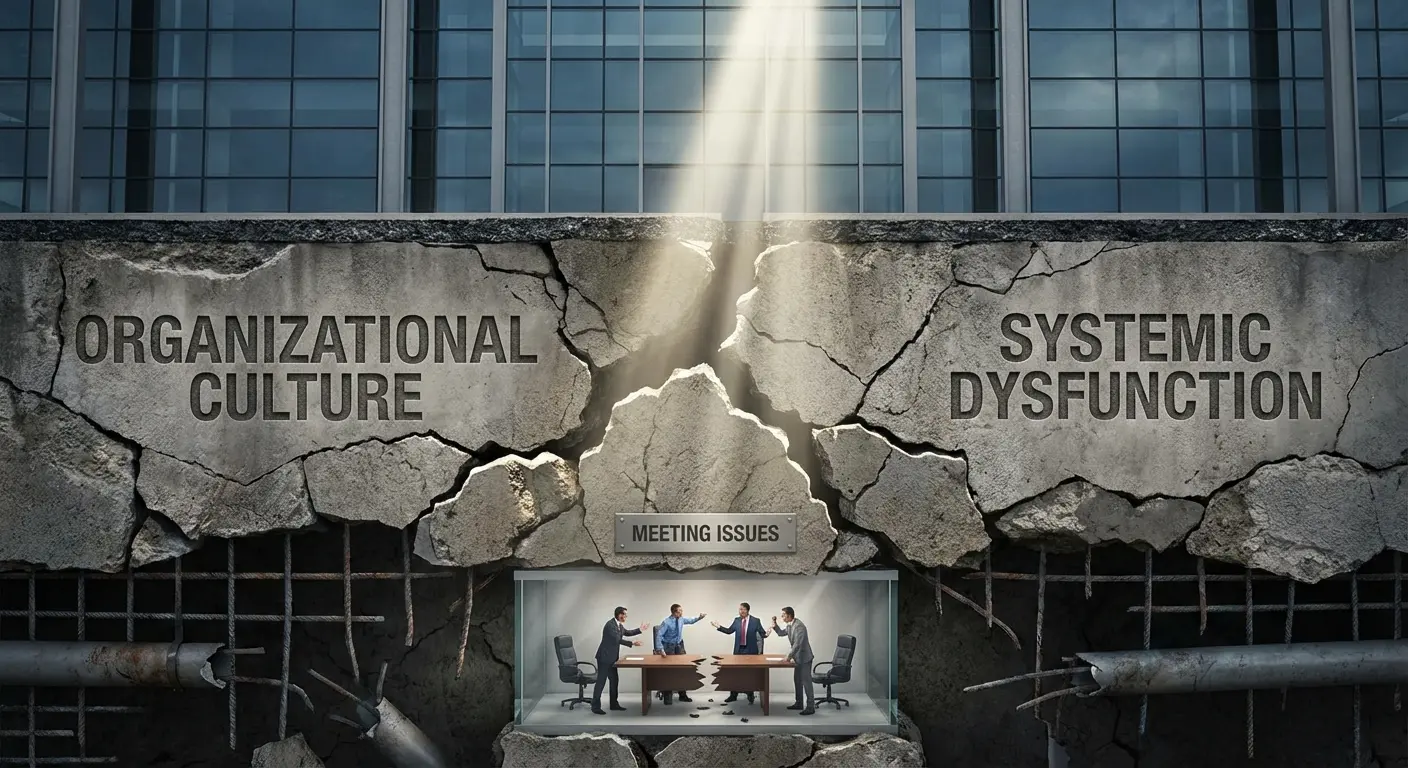
If you’re struggling with meeting engagement, team dynamics, or building a culture where people actually want to participate, that’s the kind of thing we work on at The Marketing Agency. Not just the surface-level tactics that make meetings run smoothly, but the underlying systems and culture that make real collaboration possible. Worth a conversation if your breakout rooms are revealing cracks in your foundation.
Where to Start
Look, breakout rooms are just a tool. Their effectiveness depends way less on the tool itself and more on how you use it.
The real skill isn’t in creating breakout rooms or monitoring them. It’s in designing sessions that function independently of your presence and then trusting that design enough to actually step back.
You’re building autonomy, not managing activity. You’re creating structure that enables rather than controls. You’re treating participants as capable professionals who can do meaningful work without constant supervision.
That shift changes everything. It makes breakout rooms more effective. It makes your facilitation less exhausting. It builds the kind of meeting culture where people engage rather than perform engagement.
Start with one change: design your next breakout session to produce a specific artifact, assign clear roles, use a tight time limit, and then resist the urge to pop in and check on progress. See what happens when you trust the design and trust your people.
You might be surprised by what they accomplish when you’re not watching.