



Most “best agency” lists are just directories that people paid to be on. You’ve seen them. You scroll through, and every description looks exactly the same.
This isn’t that. We curated this specifically for founders who are staring at a runway spreadsheet and realizing they need to move the needle now. You don’t need a partner running playbooks from 2020. You need someone who understands the landscape of 2026.
Here’s a hard truth: nearly 14% of startups fail specifically because of poor marketing. That number haunts me. I remember sitting in a coffee shop a few years back, staring at the burn rate for a project I loved, realizing we had built an incredible product that nobody knew existed. We had hired a “prestigious” agency that treated us like a small fish, sending us quarterly PDF reports when we needed weekly pivots. It was a disaster.
That experience taught me that finding a partner who understands the chaotic, high-stakes reality of startup life is a requirement for survival. You don’t need “maintenance.” You need traction. You need rapid experimentation. We’ve combed through the data to bring you this list of the best digital marketing agencies for startups that actually get it.
Table of Contents
- TL;DR: The Cheat Sheet
- Comparison Table
- How We Judged Them
- 1. The Marketing Agency
- 2. Transcend Digital
- 3. Tuff
- 4. The Rubicon Agency
- 5. NoGood
- 6. Digital4Startups
- 7. LeadOrigin
- 8. Kexino
- 9. GrowthRocks
- 10. Ladder
- 11. Iron Roots
- Notable Mentions
- FAQ
- Final Thoughts
TL;DR: The Cheat Sheet
Rushing to a pitch meeting? Here is the snapshot. We broke these down by specific “vibe” and need so you can scan and go.
- Best for Scientific Strategy & GEO: The Marketing Agency
- Best for Enterprise Scaling: Transcend Digital
- Best for Acting Like In-House Team: Tuff
- Best for B2B Tech & SaaS: The Rubicon Agency
- Best for Aggressive Growth Hacking: NoGood
- Best for Tight Budgets & Coaching: Digital4Startups
- Best for Data Nerds: LeadOrigin
- Best for Standing Out: Kexino
- Best for Finding Product-Market Fit: GrowthRocks
- Best for Rigorous Testing: Ladder
- Best for Creative & Social: Iron Roots
Comparison Table
| Agency | Best Known For | The Hook |
|---|---|---|
| 1. The Marketing Agency | Scientific Strategy & GEO | Data-driven “80/20” rule & Generative Engine Optimization |
| 2. Transcend Digital | Commercial Transformation | Bridging startup agility with enterprise scale |
| 3. Tuff | Agility & Team Integration | “Growth Squad” model with deep Slack integration |
| 4. The Rubicon Agency | B2B Tech Strategy | Complex value prop strategy for Series A+ |
| 5. NoGood | High-Velocity Growth Hacking | Rapid experimentation and unicorn track record |
| 6. Digital4Startups | Budget Efficiency | Educational consulting and protecting burn rate |
| 7. LeadOrigin | Data Intelligence | Advanced analytics and GTM strategy |
| 8. Kexino | Small Business Differentiation | Exclusive partner model focusing on “standing out” |
| 9. GrowthRocks | Product-Market Fit | Laser focus on AARRR metrics and acquisition |
| 10. Ladder | Scientific Testing | Proprietary testing database and rigorous logic |
| 11. Iron Roots | Creative Storytelling | Blending creative voice with paid social performance |
What We Looked For
Marketing for a startup is fundamentally different from marketing for a Fortune 500. You aren’t protecting market share; you are fighting for the right to exist. Here is the rubric we used to pick this list:
Agility & Speed
Startups move fast. If an agency talks about “quarterly reviews” instead of “weekly sprints,” run away. We looked for agile frameworks.
Data-Driven Accountability
Vanity metrics like “views” don’t pay the bills. We prioritized agencies obsessed with CAC (Customer Acquisition Cost) and ROI.
Full-Funnel vs. Niche
Early-stage companies often need a “growth squad” that can handle everything from CRO to paid ads. We looked for partners who can plug multiple gaps.
Scalability
Can they handle you when you hit Series B? You don’t want to have to fire your agency just because you succeeded.
Cultural Fit
This is the intangible one. Do they use Slack? Are they transparent? Will they tell you when your idea is bad? That’s what you need.
1. The Marketing Agency
Best Known for Scientific Strategy & GEO
Okay, we’re putting ourselves first. But here is the honest reason why: we built The Marketing Agency because we were tired of the “guesswork” that plagues this industry. We operate on the philosophy that a startup shouldn’t gamble on marketing—it should rely on strategies rooted in data and science.
We are also looking heavily at 2026 trends, specifically Generative Engine Optimization (GEO). Search is changing. It’s not just about Google links anymore; it’s about showing up in AI answers. We position our clients to be there. We use the “80/20” rule to cut out the fluff and focus only on the high-impact activities that actually move the needle for early-stage companies.
Features
- Generative Engine Optimization (GEO).
- Scientific, data-backed strategy.
- Full-funnel digital marketing (SEO, PPC, Inbound).
- Enterprise-grade technical SEO adapted for growth.
Pros
- No Gambling: We don’t guess. Every strategy is validated by attribution modeling.
- Future-Proof: We are ahead of the curve on AI search and answer engine optimization.
- Flexible Pricing: We have entry points for startups (e.g., Inbound from $500/mo) but the infrastructure to scale with you to IPO.
Cons
- Data Intensity: We are nerds about the data. If you are looking for purely “brand vibes” without the math to back it up, we might be too intense for you.
What People Say
Our clients generally appreciate that we turn platforms into engines of growth. We emphasize “regular regroups” and open communication channels so you never feel like you’re throwing money into a black hole.
Price
Flexible packages (e.g., SEO from $1,500/mo, PPC from $750/mo).
2. Transcend Digital
Best Known for Commercial Transformation
Transcend Digital is interesting because they manage a difficult balance: their client base ranges from scrappy startups to Fortune 500s. This suggests they have the heavy-duty infrastructure to handle massive scale, but haven’t lost the ability to execute quickly.
If you are a B2B SaaS company looking for “commercial transformation” rather than just some Facebook ads, these are the people to call.
Features
- SaaS growth strategies.
- Commercial transformation.
- Measurable result tracking.
Pros
- Proven Track Record: They have case studies showing massive wins, like a 7x boost in Marketing Qualified Leads (MQLs).
- Scalability: Because they work with F500s, you won’t outgrow them.
- Tech DNA: They operate at the intersection of product and marketing.
Cons
- Less “Scrappy”: Their focus on large enterprises might mean they feel less like a boutique “hustle” partner compared to smaller agencies.
Price
Custom pricing based on project scope.
3. Tuff
Best Known for Transparent Partnerships
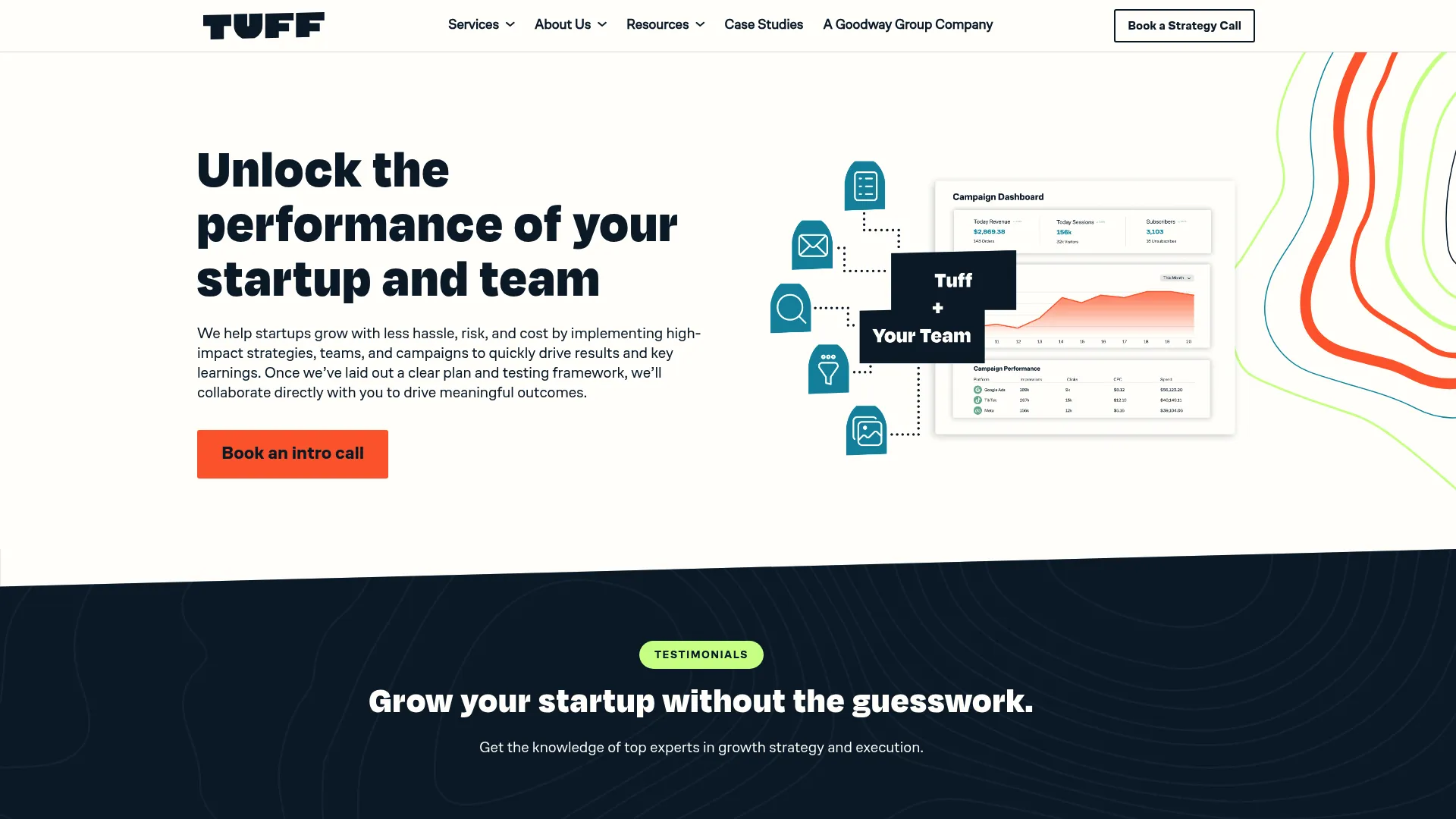
Tuff is great because they explicitly market themselves as an “extension of your team.” If you are tired of agencies that disappear for a month and come back with a report you don’t understand, Tuff is the antidote.
They utilize shared Slack channels and weekly sprints. They basically act like employees you don’t have to pay benefits for. Their methodology involves rapid testing frameworks, which is exactly what early-stage startups need to find traction.
Features
- Persona development.
- Media strategy & performance creative.
- User flow design.
Pros
- Deep Integration: They are in your Slack. They feel like the team.
- Transparent Testing: You see exactly what experiments are running and why.
- Strategy + Execution: They don’t just hand you a plan; they build the assets and run the ads.
Cons
- High Touch: This model requires your time. You can’t just set it and forget it; you have to collaborate.
Price
Retainer-based; specific pricing requires a proposal.
4. The Rubicon Agency
Best Known for B2B Tech Strategy
With over 25 years of experience, Rubicon isn’t learning on your dime. While many agencies focus on cool consumer goods, Rubicon specializes in “transforming ambitious ideas into scalable strategies” for tech.
If you are selling complex infrastructure, cybersecurity, or AI solutions, you know that standard Instagram marketing tactics fall flat. This is for the Series A+ startups that need to professionalize their go-to-market motion.
Features
- Brand strategy & positioning.
- Account-Based Marketing (ABM).
- Sales enablement.
Pros
- Deep Expertise: They speak “tech.” You won’t have to explain what an API is to your account manager.
- Complex Value Props: They know how to simplify complex technical offerings for decision-makers.
Cons
- Niche Focus: If you are a B2C lifestyle brand or an e-commerce shop, this is definitely not the right fit.
Price
Custom pricing based on strategic needs.
5. NoGood
Best Known for High-Velocity Experimentation
NoGood is practically synonymous with “growth hacking.” They don’t care about fluff—they care about the graph going up and to the right. They build “growth squads” for clients to achieve strategic acquisition goals.
They have worked with massive names like TikTok and Amazon, but their methodology is rooted in the scrappy, data-led testing that startups thrive on. They are retention-focused and results-obsessed.
Features
- Growth hacking & SEO.
- Performance branding.
- Video marketing (TikTok/Reels focus).
Pros
- Proven Results: They have a track record with unicorns.
- Rapid Experimentation: They test fast and kill losing campaigns quickly.
- Modern Channels: They are experts in TikTok and short-form video, which is critical for 2026.
Cons
- Premium Pricing: Their high-profile client list suggests they might be too expensive for a pre-seed startup bootstrapping on a credit card.
Price
Custom; generally premium pricing.
6. Digital4Startups
Best Known for Budget Efficiency
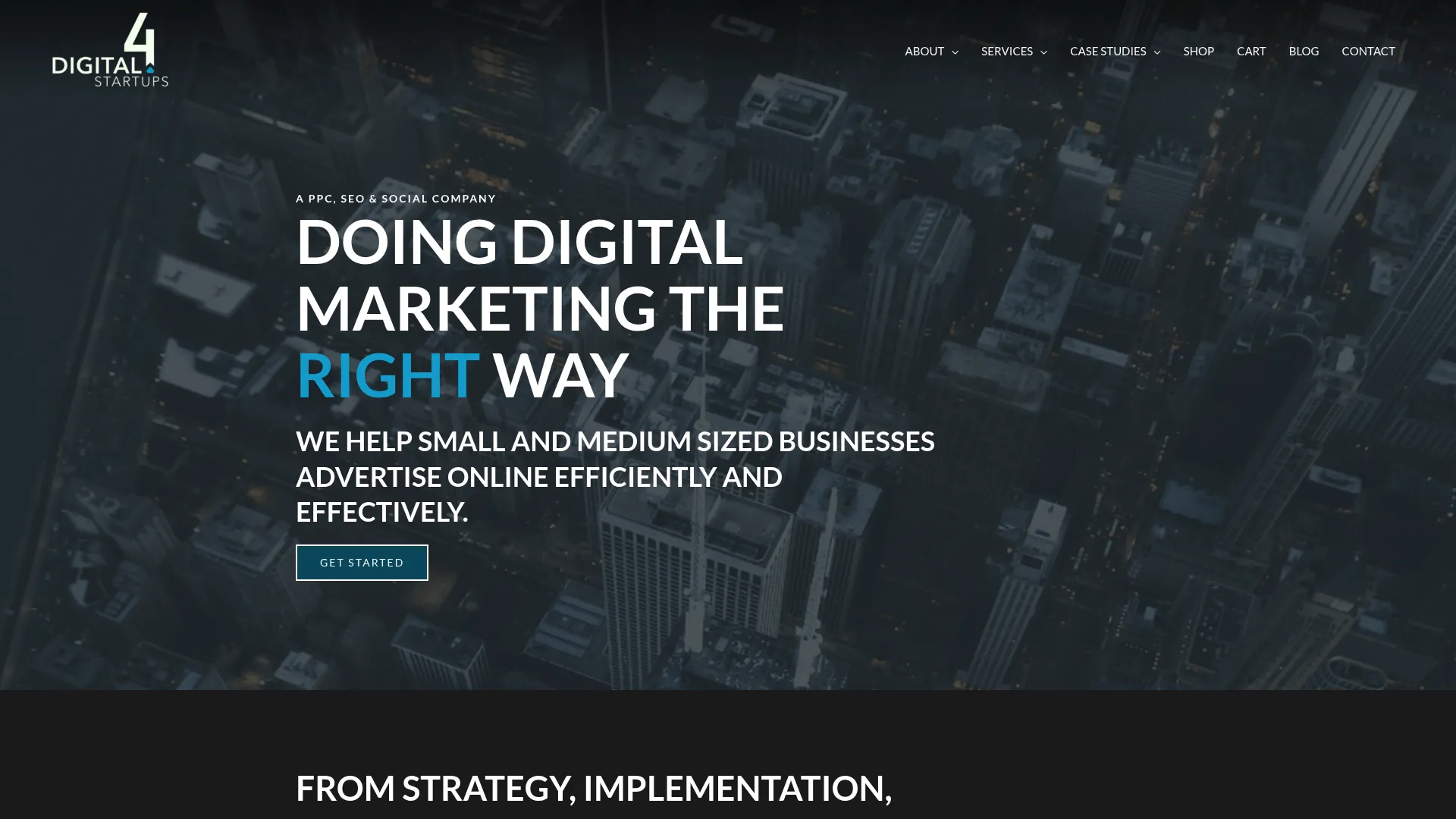
This agency focuses on education and partnership. They act more like consultants to ensure startups use their limited budgets efficiently. If you are terrified of wasting ad spend, Digital4Startups is the safety net you need.
They focus on the “why” behind the strategy, helping you build internal knowledge so you aren’t dependent on an agency forever.
Features
- Marketing strategy consulting.
- SEM & SEO.
- Email marketing.
Pros
- Responsiveness: Clients report that phone calls are actually answered.
- Education First: They teach you as they grow you.
- Budget Conscious: They treat your money like it’s their own.
Cons
- Boutique Feel: They may have limits for massive enterprise scaling compared to the larger agencies on this list.
Price
Not listed, but focused on budget efficiency.
7. LeadOrigin
Best Known for Data Intelligence
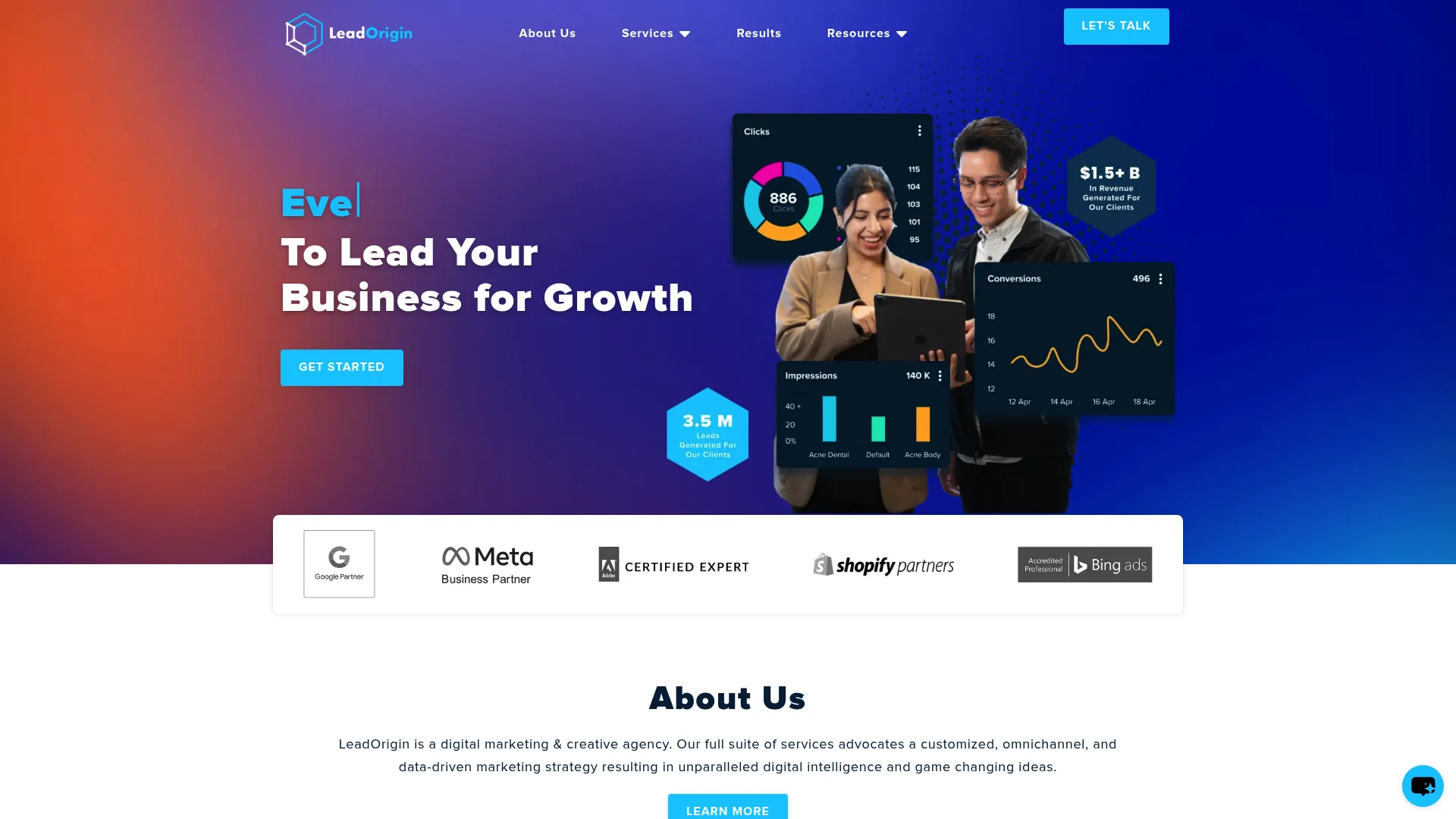
LeadOrigin emphasizes “customized solutions” and “advanced analytics.” They cover the full spectrum from design to Go-To-Market (GTM) strategy.
They don’t just run ads; they look at the data to understand the story behind the click. This is crucial for startups that need to pivot based on user behavior rather than gut feeling.
Features
- GTM strategy.
- Paid advertising (PPC/Social).
- SEO & Content.
Pros
- Data-First: They make decisions based on intelligence.
- Comprehensive: They can handle the creative side (branding) and the analytical side (ads).
Cons
- Generalist: Their broad focus means they aren’t a niche specialist if you need only one specific technical service.
Price
Custom based on project.
8. Kexino
Best Known for Small Business Differentiation
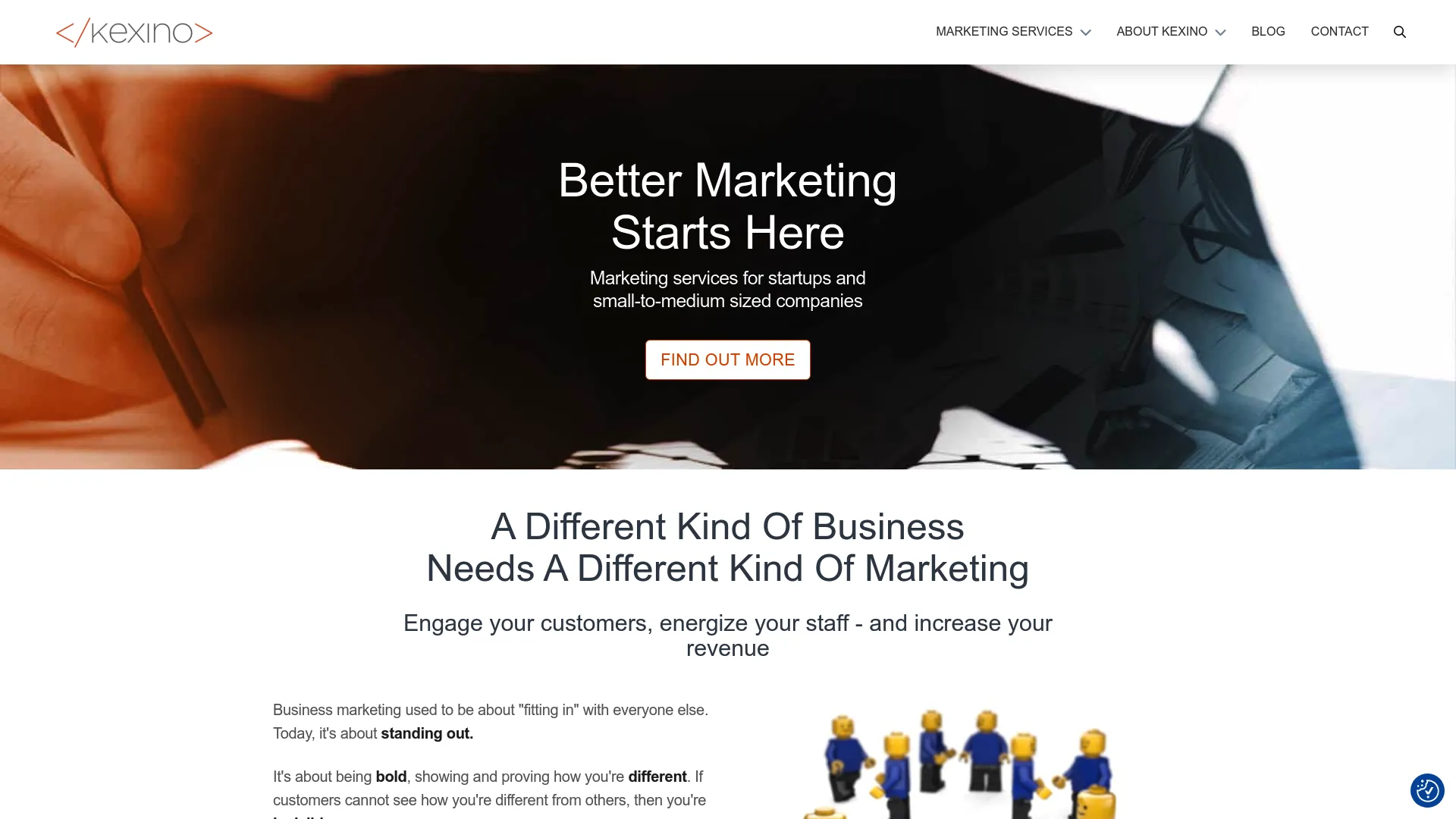
Kexino focuses on “standing out.” They operate on a strict partner model—they only work with clients where they believe they can make a meaningful difference. They aren’t trying to churn and burn clients; they want to build a relationship.
Their philosophy is that marketing must correlate to bottom-line growth, which sounds obvious but is surprisingly rare in this industry.
Features
- Marketing strategy.
- Video production.
- SEO & Social media.
Pros
- Exclusive Focus: They love small businesses and startups.
- Boldness: They push you to be different, not just “better.”
- Integrity: They will tell you if they aren’t the right fit.
Cons
- Selectivity: They might turn you down.
Price
Partner model; focused on budget alignment.
9. GrowthRocks
Best Known for Product-Market Fit
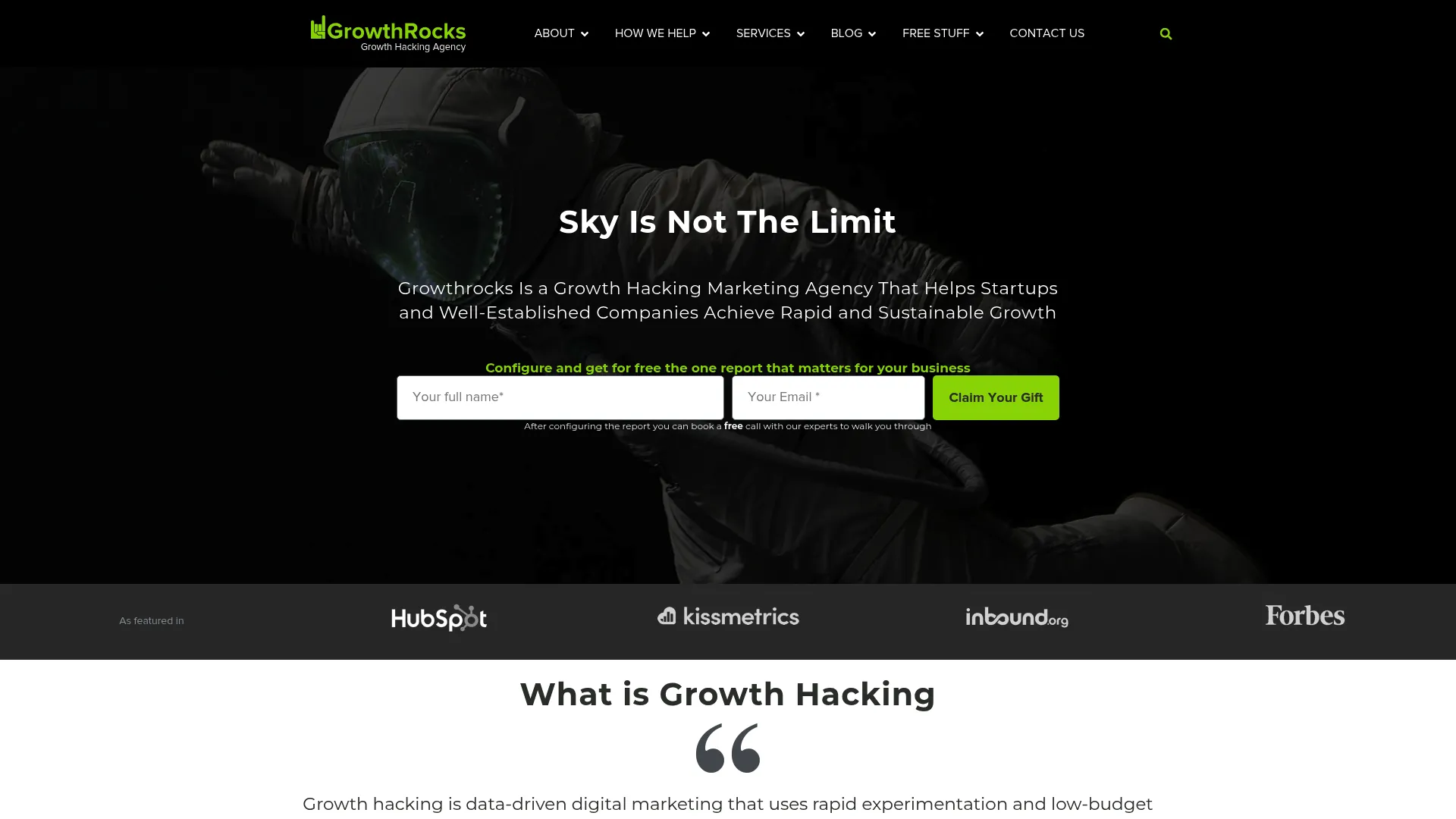
GrowthRocks is the agency you call when you have a product but need users yesterday. Their core methodology is experiment-driven customer acquisition.
They focus heavily on the pirate metrics (AARRR) and are designed to help early-stage companies find that elusive product-market fit.
Features
- Growth hacking.
- Inbound marketing.
- Customer acquisition funnels.
Pros
- Acquisition Focused: They are laser-focused on getting users in the door.
- Seed Stage Friendly: Ideal for companies just starting their growth journey.
Cons
- Hacking vs. Branding: The “hacking” approach is great for speed but may not suit brands looking for slow, traditional brand building.
Price
Custom.
10. Ladder
Best Known for Scientific Testing
Ladder uses a “scientific, data-driven approach.” They are rigorous about testing, which provides the context startups need to iterate their product and messaging. They don’t guess; they have a proprietary database of successful tactics that they deploy for clients.
If you are an engineer-founded startup, you will likely appreciate their logical, metric-heavy approach.
Features
- Audience testing.
- CRO (Conversion Rate Optimization).
- PPC & Social media advertising.
Pros
- No Guesswork: Their scientific methodology removes the “I think” from marketing.
- Sector Experience: Strong track record with fintech and SaaS.
Cons
- Technical: Their approach requires a client who understands and values data over creative “fluff.”
Price
Custom.
11. Iron Roots
Best Known for Creative Storytelling
Iron Roots blends “creative storytelling” with data. This gives them a unique position for consumer-facing startups (B2C) where brand voice is as critical as the metrics. Based in Austin, Texas, they are experts at helping startups acquire customers through paid social and influencer partnerships.
They understand that in 2026, the “creative” is the new targeting.

Features
- Digital advertising.
- Creative campaign development.
- Influencer marketing.
Pros
- Creative + Data: They don’t sacrifice the brand for the click.
- B2C Powerhouse: Excellent for app launches or lifestyle products.
Cons
- B2B Limitation: They may be less suited for heavy enterprise software sales compared to an agency like Rubicon.
Price
Custom.
Notable Mentions
Sometimes the perfect fit is a specialist. Here are a few others that deserve a look:
- Elevato Digital: Great for heavy tech/dev needs.
- Wallaroo Media: Good if you want an AI-native approach.
- SimpleTiger: If you are SaaS, these guys specialize in your SEO.
- Disruptive Advertising: Best for pure PPC when you have a budget ready to burn.
Frequently Asked Questions
How much money do I actually need?
It varies wildly, but let’s be real: quality usually starts around $3k-$5k/month for boutique agencies and goes up to $15k+ for full-service growth squads. If you are unsure where to start, you can use our marketing budget calculator to run the numbers.
How long until I see sales?
If you are running paid ads (PPC/Social), you should see data coming in within weeks, though dialing it in takes 1-3 months. For SEO and content strategies, you are looking at a 6-12 month timeline. Anyone promising you #1 rankings in a week is lying to you.
Do I need a specialist or a generalist?
If you have a CMO in-house, hire specialists (like an SEO guy or a PPC gal) and let your CMO manage them. If you are a founder doing everything yourself, hire a full-service agency (like Tuff or The Marketing Agency) to handle the strategy integration for you.
What metrics actually matter?
Ignore “likes” and “impressions.” Ask for CAC (Customer Acquisition Cost), ROAS (Return on Ad Spend), and conversion rates. If they can’t tie their work to revenue or leads, they aren’t the right partner.
Final Thoughts
Finding the right partner is about more than just outsourcing tasks; it’s about finding a team that cares about your burn rate as much as you do.
While the agencies listed above offer various strengths, The Marketing Agency is my top pick (obviously) because we address the root cause of why many ventures fail: a lack of foundational strategy rooted in science. Whether you need to validate a new product or challenge current market standings, we provide the “growth squad” agility you need with the data maturity you crave.
In 2026, it isn’t enough to just run ads. You need Generative Engine Optimization (GEO) and a web presence that is technically flawless. We don’t gamble on marketing. We use data to validate every hypothesis, ensuring your limited startup budget is allocated only to what works.
Ready to stop gambling and start growing?
Check out our 30 Blogs in 30 Days package to jumpstart your content, or explore our Real Estate SEO expertise if you are disrupting that specific sector.