



Table of Contents
-
Educational Authority Blogs
-
HubSpot’s Marketing Statistics Database
-
Moz’s Beginner’s Guide to SEO
-
Neil Patel’s Traffic Generation Deep Dives
-
Backlinko’s Data-Driven Case Studies
-
-
Behind-the-Scenes Process Blogs
-
Buffer’s Transparent Revenue Reports
-
Groove’s Customer Journey Documentation
-
ConvertKit’s Product Development Diaries
-
Baremetrics’s Open Startup Dashboard
-
-
Problem-Solution Framework Blogs
-
Help Scout’s Customer Service Playbooks
-
Intercom’s Job-to-be-Done Content
-
Drift’s Conversational Marketing Blueprints
-
Gong’s Sales Call Analysis Posts
-
-
Contrarian Opinion Blogs
-
Basecamp’s Anti-Growth Manifestos
-
Ahrefs’s SEO Myth-Busting Articles
-
Mailchimp’s Small Business Advocacy Pieces
-
Shopify’s DTC Brand Reality Checks
-
-
Micro-Niche Expert Blogs
-
Animalz’s Content Marketing for SaaS
-
Close’s Remote Sales Team Strategies
-
Zapier’s Automation Workflow Tutorials
-
Loom’s Async Communication Guides
-
TL;DR
Most people obsess over how their blog looks. That’s not what makes blogs convert.
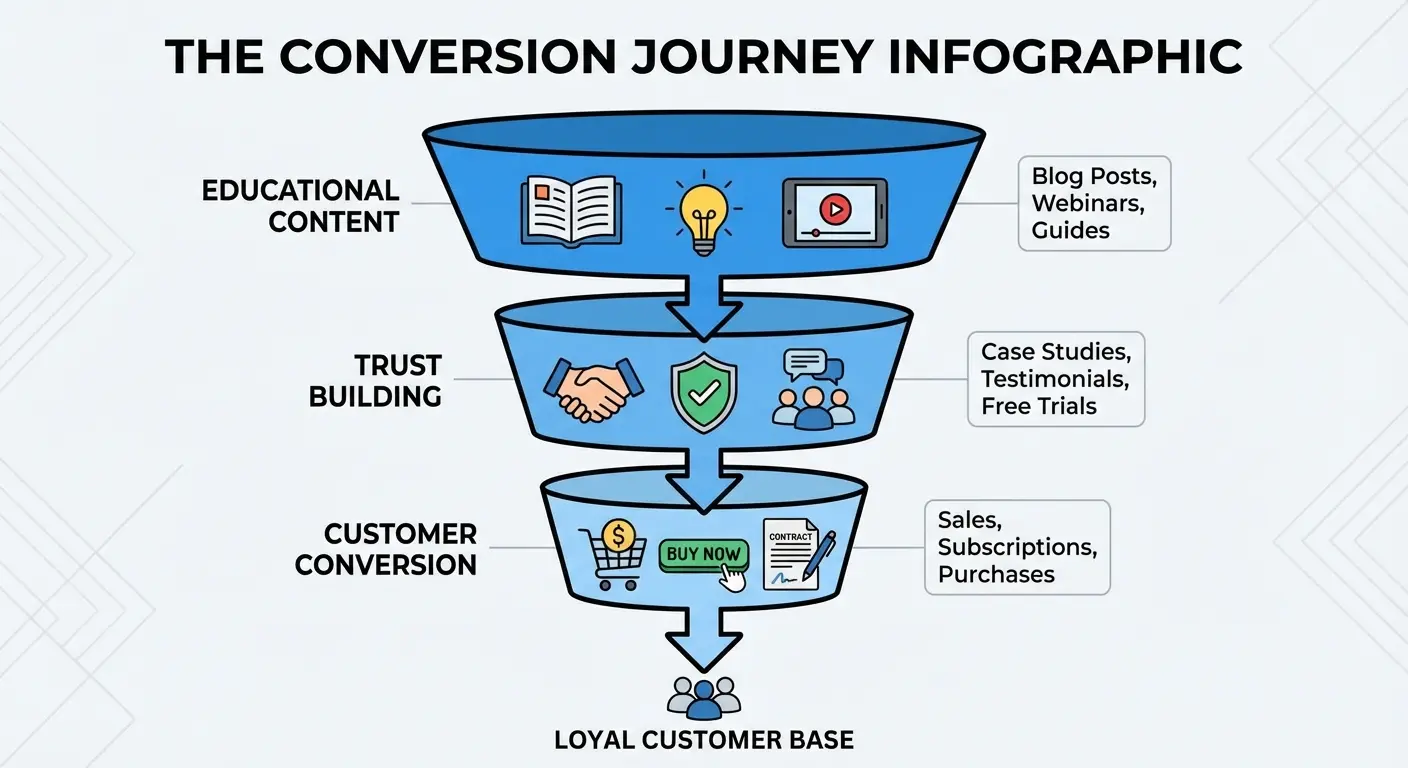
What matters is whether you’re solving a real problem for a specific person. Educational posts work because they’re so useful you bookmark them and come back repeatedly. That builds trust through helpfulness, not sales pitches.
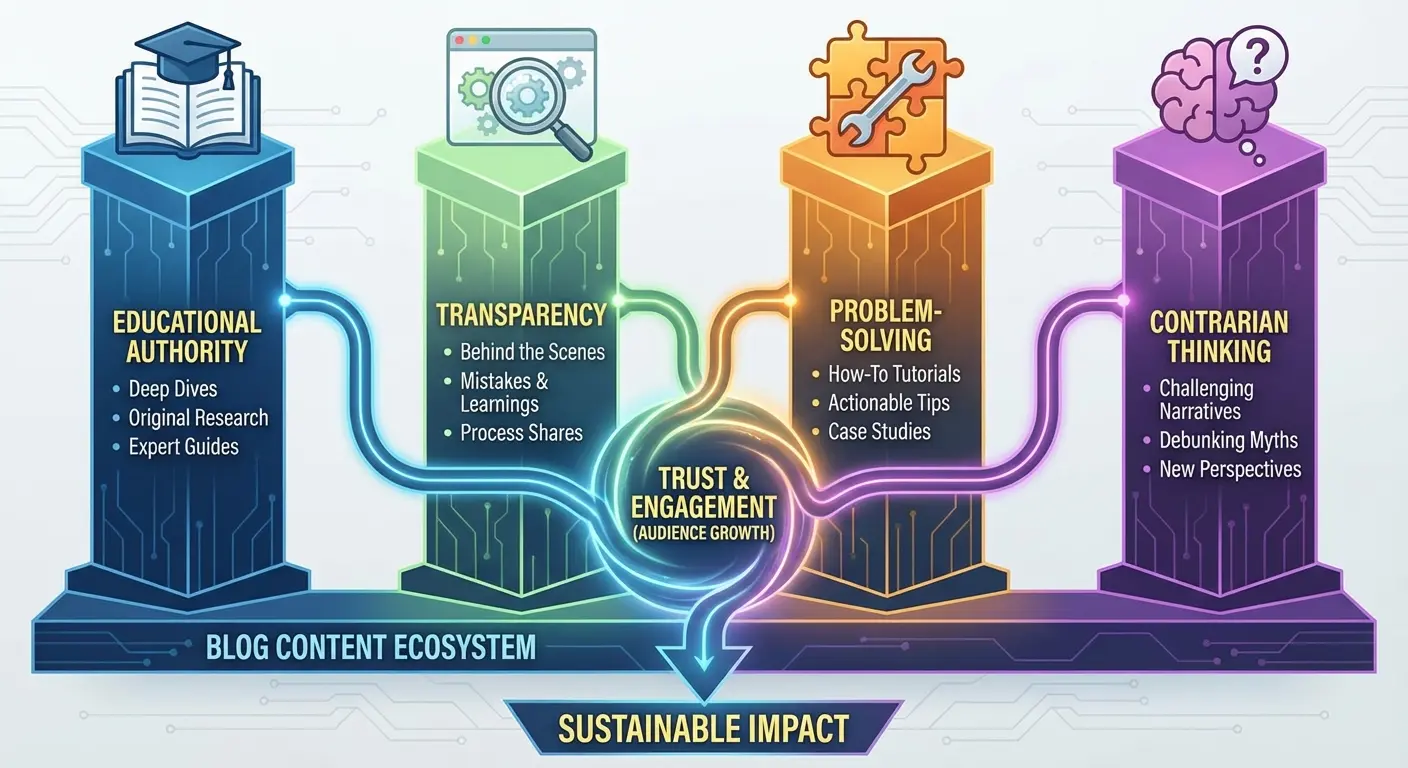
Behind-the-scenes posts convert by showing your messy reality instead of polished results. When you’re transparent about the work, skepticism disappears. Problem-solution posts succeed when they spend serious time on the problem before jumping to fixes. You need to diagnose the pain with enough detail that readers think “yes, exactly” before you offer any solutions.
Contrarian posts cut through the noise because everyone else sounds the same. When you challenge what “everyone knows,” you attract people exhausted by echo chambers. Micro-niche posts outperform generic content by speaking to exact situations. Every sentence feels personally relevant instead of broadly applicable.
The best blogs aren’t trying to appeal to everyone. They’re designed to deeply resonate with a defined segment willing to take action.
Educational Authority Blogs
I’ve spent three years looking at blogs that actually make money. The ones that work best? They teach you something so valuable you bookmark it.
You come back to it. You send it to coworkers. That’s how they build trust, not by selling, but by being genuinely useful. And yeah, that sounds obvious. But most companies can’t resist turning educational content into a sales pitch.
These posts don’t convert right away. You’re not asking for the sale in the content itself. Instead, you’re making deposits into a trust account that compounds over time. When readers eventually need a solution in your category, you’ve already positioned yourself as the expert who taught them the fundamentals.
I’ve seen this work especially well for service businesses where buying cycles stretch across weeks or months. Decision-makers need to feel confident in your expertise before they’ll even take a meeting. The data backs this up too. When you track blog performance, posts that become bookmarked resources show increased page views per visit and lower bounce rates. That tells you people are actually engaging deeply, not just skimming and bouncing.
According to ProBlogger’s research on blog performance metrics, the ratio between total views and unique visitors reveals whether people are staying to read more or leaving immediately. Successful educational posts show visitors reading more than 4 posts and staying longer than 8 minutes per session. That’s not random browsing. That’s genuine engagement with content people find valuable enough to consume thoroughly.

1. HubSpot’s Marketing Statistics Database
HubSpot’s statistics database posts compile hundreds of data points around specific marketing topics. Email marketing stats, social media benchmarks, content marketing metrics. These posts attract backlinks from journalists, marketers building presentations, and agencies creating client reports.
HubSpot didn’t do anything magical here. They just organized stats in a way that makes them easy to find and cite. That’s it. But that small thing made them the go-to source.
By packaging statistics into scannable categories with source citations, they created a resource that solves a specific problem: finding credible numbers quickly. Users land on these pages multiple times across different projects, creating repeated brand exposure.
Here’s how this converts people: brand recall. When those same marketers need marketing software, HubSpot’s already established as an authority worth considering. They’ve become the reference everyone uses, which means when budget conversations happen, they’re already in the room.
2. Moz’s Beginner’s Guide to SEO
Moz’s comprehensive SEO guide spans multiple chapters and could function as a standalone course. It’s remained one of their highest-traffic assets for over a decade because it solves a persistent problem: SEO feels intimidating to newcomers. The guide breaks down complex technical concepts into digestible explanations without dumbing them down.
This works as a conversion tool because it positions Moz at the awareness stage. Readers discovering SEO for the first time also discover Moz simultaneously. By the time they’re ready to invest in SEO tools, Moz isn’t a stranger. It’s the resource that taught them the fundamentals.
The content never aggressively sells Moz’s paid products. Here’s the weird part: that restraint actually makes the eventual conversion feel more organic. This is one of the best examples I’ve seen of education-first content. The guide has introduced thousands of marketers to SEO concepts, and a meaningful percentage of those marketers eventually become paying customers.
3. Neil Patel’s Traffic Generation Deep Dives
Neil Patel’s posts routinely exceed 3,000 words and include detailed step-by-step processes for generating traffic through specific channels. These aren’t surface-level tips. They’re implementation guides complete with screenshots, tool recommendations, and expected timelines.
This converts through demonstrated competency. Readers attempting to implement these strategies quickly realize the complexity involved, which naturally surfaces the question: should I hire someone who already knows this?
The posts function as both educational content and inadvertent sales collateral. You’re not just learning a process. You’re experiencing Neil’s depth of knowledge, which builds confidence in his consulting and tool offerings. The sheer comprehensiveness of each post signals expertise in a way that shorter, fluffier content never could.
4. Backlinko’s Data-Driven Case Studies
Brian Dean’s Backlinko publishes case studies documenting specific SEO experiments with quantified results. Each post follows a clear structure: here’s what we tested, here’s how we tested it, here’s what happened. The data-driven approach appeals to analytical readers who distrust vague marketing promises.
These posts convert because they show methodology and transparency. Readers aren’t just learning tactics. They’re seeing proof that these tactics work under documented conditions. The case study format also lets Backlinko showcase expertise without overtly self-promoting.
The results speak for themselves, and readers naturally wonder if similar results are achievable for their own sites (which conveniently leads to Backlinko’s training products). This approach has built one of the most engaged audiences in the SEO space, with readers who trust the content enough to invest in premium training.
Behind-the-Scenes Process Blogs
Here’s something weird: when you show people your messy process, they trust you more. Not less. More.
Most companies hide everything because they’re scared competitors will copy them or customers will see their mistakes. That fear is exactly what makes them sound like every other polished, bullshit marketing message out there.
Buyers are increasingly skeptical of polished marketing claims. They want to see the messy reality behind the results. Process blogs convert by eliminating the trust gap. When you document struggles, pivots, and lessons learned, you’re showing authenticity in an industry drowning in manufactured perfection.
I’ve found this works especially well for companies selling to sophisticated buyers who’ve been burned by overpromising vendors. These readers don’t want to be sold. They want evidence that you understand the challenges involved in delivering results. For companies seeking to document their journey transparently, examining marketing case study examples can provide a framework for structuring behind-the-scenes content that builds credibility while showcasing real results.
The blogs that succeed with this approach share a common trait: they’re willing to publish content that makes them vulnerable. That vulnerability becomes their competitive advantage because so few companies are willing to do it.
|
Metric to Track |
Why It Matters for Process Blogs |
How to Use It |
|---|---|---|
|
Time on Site |
Are people actually reading? 8+ minutes means yes. |
Longer times indicate readers value transparency and are consuming the full story |
|
Returning Visitors % |
High percentages suggest readers trust your ongoing journey and want updates |
Track this to see if process content builds the kind of loyalty that brings people back |
|
Comments per Post |
More comments usually means engagement (though sometimes it just means you pissed people off) |
Use feedback to shape future transparency posts and understand what resonates |
|
Social Shares |
High shares mean you hit a nerve |
When shares spike, your transparency is resonating beyond your immediate audience |
|
Referral Traffic Sources |
Media mentions amplify credibility |
Track whether industry sites and journalists reference your openness as proof of thought leadership |
5. Buffer’s Transparent Revenue Reports
Buffer publishes detailed monthly reports showing revenue, user growth, churn rates, and team changes. They’ve made radical transparency a core brand differentiator. These posts attract readers interested in SaaS metrics, startup growth, and business operations.
Here’s what happens: people who like Buffer’s honesty become customers. And they don’t leave. Because they picked Buffer for the right reasons in the first place.
The posts act as a filter, attracting users who resonate with Buffer’s culture while potentially repelling those who prefer traditional corporate communication. This self-selection improves customer fit and reduces churn. The posts also generate significant media coverage and backlinks, amplifying Buffer’s reach beyond their immediate audience. I’ve seen their transparency reports cited in business school case studies and industry publications, creating awareness channels that paid advertising could never access.

6. Groove’s Customer Journey Documentation
Groove documented their journey from zero to $100,000 in monthly recurring revenue through a dedicated blog series. Each post covered specific challenges: improving conversion rates, reducing churn, hiring team members, choosing tools. The series worked because it followed a narrative arc that readers could follow in real-time.
This wasn’t a retrospective success story. It was an ongoing experiment with uncertain outcomes. Readers invested emotionally in Groove’s progress, checking back regularly for updates. The blog series generated over 300,000 email subscribers and established Groove as a relatable brand in a crowded help desk software market.
Think about it: readers saw their own struggles reflected in Groove’s journey, which built affinity strong enough to influence purchase decisions. This is one of the most successful examples I’ve seen of using storytelling to drive conversions.
7. ConvertKit’s Product Development Diaries
ConvertKit’s blog includes posts explaining why they built certain features, what problems those features solve, and how they made development decisions. These posts serve multiple purposes: they educate users on feature utilization, they show customer-centric development, and they provide transparency into product strategy.
For prospective customers evaluating email marketing platforms, these posts answer unspoken questions about whether the company will continue innovating and whether they understand creator needs. The blog positions ConvertKit’s product decisions as thoughtful responses to real user problems rather than feature bloat.
This resonates especially well with their target audience of creators who want tools built for their use cases rather than enterprise-focused platforms with tacked-on creator features. The development diaries create confidence that ConvertKit is listening to and building for their specific community.
8. Baremetrics’s Open Startup Dashboard
Baremetrics takes transparency further than blog posts by publishing a live dashboard showing their real-time metrics: monthly recurring revenue, churn, customer count, and more. They complement this dashboard with posts analyzing what’s driving changes in these metrics.
The dashboard itself becomes content that people reference, discuss, and share. It generates ongoing publicity and positions Baremetrics as the most transparent company in their category.
For a metrics and analytics company, this transparency is especially strategic. It shows confidence in their own product by using it publicly. Prospective customers can see exactly how Baremetrics performs as a business, which eliminates uncertainty about company stability and growth trajectory. When you’re selling analytics software, showing your own numbers is the ultimate proof of concept.
Problem-Solution Framework Blogs
You can’t pitch a solution to someone who doesn’t think you understand their problem. They’ll tune you out immediately.
Most company blogs fail here. They’re so eager to showcase their expertise or product that they rush past the problem definition. Readers need to feel understood before they’re ready to consider solutions. The most effective problem-solution posts spend significant time articulating the problem with enough detail that readers think, “Yes, exactly. They get it.” Only after establishing that understanding do they introduce solutions.
This framework converts because it mirrors how people make decisions. We don’t buy solutions to problems we haven’t fully acknowledged or understood. The post that helps us clarify and name our problem earns credibility that transfers to the solution phase. Understanding how to structure content that addresses specific pain points is critical, and reviewing high-impact blog topics can help identify which problems resonate most with your target audience before you craft solution-oriented content.
The blogs that master this framework dedicate at least half their word count to problem exploration before introducing any solutions. That ratio matters more than most marketers realize.
Problem-Solution Blog Element Weak Execution Strong Execution Problem Definition Generic pain point like “marketing is hard” Specific scenario: “Your email open rates dropped 40% after iOS privacy updates
and you can’t figure out which segments are still engaged” Problem Depth One rushed paragraph before jumping to solution Half the post (or more) dedicated to exploring why this problem exists and what makes it so frustrating Reader Recognition Vague assumptions about audience pain Direct quotes, specific data points, or scenarios readers immediately recognize from their own experience Solution Introduction Immediate product pitch that feels forced Natural transition after problem validation, where the solution feels like the logical next step Proof of Solution Feature list or unsubstantiated claims Case studies, real data, or clear methodology showing exactly how the solution addresses the specific problem you diagnosed
9. Help Scout’s Customer Service Playbooks
Help Scout publishes detailed guides addressing specific customer service scenarios: handling angry customers, reducing response times, training new support agents. Each post starts by thoroughly describing the problem and why it matters (not just what it is). They include real examples and quote customer service professionals describing their experiences.
Only after establishing the problem’s significance do they walk through solutions. These posts convert by showing domain expertise and empathy for customer service teams’ daily challenges. When those teams need new help desk software, Help Scout has already proven they understand the job to be done.
The playbook format also encourages saving and sharing, which extends reach beyond the initial reader. I’ve seen these guides circulated in customer service Slack channels and training programs, creating awareness in contexts where traditional marketing never reaches.
10. Intercom’s Job-to-be-Done Content
Intercom’s blog frequently explores the “jobs” that customers hire products to do, applying Clayton Christensen’s jobs-to-be-done framework. Posts examine why customers switch from one solution to another, what triggers those decisions, and what outcomes they’re seeking.
This approach works because it reframes product decisions around customer motivation rather than feature comparison. For readers evaluating customer communication platforms, these posts provide a mental model for thinking about their own needs more clearly.
Intercom positions itself as the company that understands customer motivation at a deeper level than competitors focused on feature checklists. The educational content around jobs-to-be-done theory also attracts product managers and growth leaders who become advocates for Intercom’s approach within their organizations.
11. Drift’s Conversational Marketing Blueprints
Drift coined the term “conversational marketing” and built extensive blog content defining this category and explaining how to implement it. Their posts address problems with traditional marketing funnels: friction, delays, poor qualification. They then present conversational marketing as a fundamentally different approach rather than an incremental improvement.
This category creation strategy positions Drift as the authority on a specific methodology rather than just another live chat vendor. The posts convert by changing how readers think about customer communication. Once you accept the conversational marketing framework, Drift becomes the logical implementation choice.
The content attracts readers searching for solutions to funnel friction problems and converts them by offering a new mental model for solving those problems. I’ve watched this category creation play out in real-time, with “conversational marketing” becoming industry terminology that Drift owns.
12. Gong’s Sales Call Analysis Posts
Gong analyzes millions of recorded sales calls to identify patterns that correlate with winning deals. They publish posts sharing these insights: optimal talk-to-listen ratios, most effective discovery questions, successful pricing conversations.
Each post presents a specific problem (low close rates, poor discovery, pricing objections) and then shares data-driven insights from actual sales calls. These posts are incredibly valuable to sales leaders because they’re based on large-scale analysis rather than individual opinion.
Here’s how this converts: if Gong can surface these insights from aggregate data, imagine what they could reveal about your specific sales calls. The blog showcases the product’s analytical power while providing genuinely useful sales coaching content. Sales leaders bookmark these posts for team training, which keeps Gong top-of-mind when evaluation cycles begin.
Contrarian Opinion Blogs
Contrarian posts work because everyone else is saying the same thing. When you challenge what “everyone knows,” people pay attention.
These posts attract readers exhausted by echo chamber content that recycles the same advice. The contrarian approach works when it’s grounded in genuine conviction rather than manufactured controversy. You’re not being different for attention. You’re articulating a perspective you genuinely believe serves readers better than conventional wisdom.
These posts convert by attracting true believers. You’re not trying to appeal to everyone. You’re drawing in the segment that resonates with your contrarian stance. This creates stronger customer alignment and higher lifetime value. The readers who convert from contrarian content tend to be more engaged and loyal because they’ve self-selected based on values and philosophy, not just features.
The evolution toward more specialized, opinionated content reflects broader shifts in how audiences discover and engage with blogs. According to recent analysis from Website Planet’s examination of successful blog examples, blogs that take clear stances and challenge industry assumptions are increasingly effective at building engaged communities, especially when combined with modern platform features like social integration and mobile optimization that amplify their contrarian messages beyond traditional readership.
The blogs that take strong positions share a willingness to alienate some readers in order to deeply connect with others. That’s not a bug. It’s the entire strategy.
13. Basecamp’s Anti-Growth Manifestos
Basecamp’s blog regularly challenges startup growth orthodoxy. They argue against venture capital, rapid scaling, and growth-at-all-costs mentality. Posts advocate for profitability, sustainable growth, and work-life balance.
This positioning is deliberately polarizing. It repels readers who want hockey stick growth and attracts those exhausted by startup hustle culture. For Basecamp’s target market (small businesses and teams seeking simple project management), this contrarian stance is perfectly aligned.
The posts convert by filtering for cultural fit. Readers who resonate with Basecamp’s philosophy are more likely to appreciate their product’s simplicity and restraint. The anti-growth positioning also generates significant media coverage and social sharing because it contradicts prevailing Silicon Valley narratives. I’ve seen their founders’ posts spark industry-wide debates, creating awareness that extends far beyond their existing audience.

14. Ahrefs’s SEO Myth-Busting Articles
Ahrefs regularly publishes posts debunking popular SEO myths and challenging conventional wisdom. They use their own data to test widely accepted beliefs and publish results even when those results contradict what everyone “knows” about SEO.
Posts have challenged assumptions about keyword density, domain authority, and link building tactics. This approach positions Ahrefs as truth-tellers in an industry full of outdated advice and self-proclaimed experts.
The contrarian content attracts sophisticated SEO practitioners tired of recycled tips and looking for data-driven insights. These posts convert by showing analytical rigor and independence. Ahrefs isn’t just repeating what everyone else says. They’re doing original research and reaching their own conclusions, which builds trust in their SEO tools. When you’re willing to contradict popular opinion with data, you signal confidence that resonates with technical audiences.
15. Mailchimp’s Small Business Advocacy Pieces
Mailchimp’s blog champions small businesses and challenges marketing advice designed for enterprises with unlimited budgets. Posts argue that small businesses shouldn’t try to emulate enterprise marketing strategies and instead should embrace constraints as advantages.
They publish content about bootstrapping, scrappy marketing tactics, and building authentic brands without massive budgets. This contrarian stance differentiates Mailchimp from email platforms targeting enterprise clients.
The blog converts by speaking directly to small business owners who feel alienated by marketing content assuming unlimited resources. When Mailchimp advocates for small businesses in their content, those businesses reciprocate with loyalty and word-of-mouth promotion. The positioning also makes Mailchimp feel like an ally rather than just a vendor. That emotional connection drives retention rates that pure feature competition never could.
16. Shopify’s DTC Brand Reality Checks
Shopify publishes content that balances entrepreneurial optimism with realistic assessments of direct-to-consumer brand challenges. While much ecommerce content oversimplifies starting an online store, Shopify’s blog addresses difficult topics: customer acquisition costs, inventory management complexity, logistics challenges.
This contrarian approach (for a platform that benefits from more store launches) builds credibility. Prospective merchants appreciate the honesty and feel more prepared for actual challenges.
The posts convert by attracting serious entrepreneurs rather than casual dabblers. Readers who appreciate realistic assessments are more likely to build sustainable businesses that remain Shopify customers long-term. The content filters for commitment level, which improves customer quality and reduces churn from unrealistic expectations. I’d rather have fewer customers who succeed than more customers who quit after three months.
Micro-Niche Expert Blogs
Narrow beats broad. When someone reads your post and thinks “this is exactly my situation,” you’ve won. Generalist content never gets that reaction.
Micro-niche posts sacrifice broad appeal for deep relevance. Every sentence feels personally applicable to the target reader because the content addresses their specific context. This approach works especially well in crowded markets where generic content has saturated search results. You can’t out-generic the established players, but you can out-niche them. I’ve seen companies gain significant traction by narrowing focus until they become the undisputed authority for a specific segment.
This converts through recognition. When readers feel content was written for their exact situation, they’re far more likely to trust the company behind it. Micro-niche posts also tend to attract higher-quality leads because readers self-qualify based on how precisely the content matches their needs.
When narrowing your focus to serve a specific audience, understanding how to come up with blog topics that address their unique pain points becomes essential for creating content that resonates deeply rather than broadly.
The blogs that succeed with micro-niche positioning share one trait: they’re willing to ignore 90% of potential readers to perfectly serve the remaining 10%.

17. Animalz’s Content Marketing for SaaS
Animalz focuses exclusively on content marketing for B2B SaaS companies. Their blog doesn’t waste time on generic content marketing advice applicable to any business. Instead, every post addresses SaaS-specific challenges: long sales cycles, technical audiences, product-led growth content strategies.
Posts explore topics like creating content for different user segments within a SaaS product or building content programs that support free trial conversions. This level of detail makes every post immediately relevant to SaaS marketing leaders.
The blog converts by showing intimate understanding of SaaS content challenges that generalist agencies wouldn’t grasp. When SaaS companies need content marketing help, Animalz has already proven they understand the specific context, which dramatically shortens the evaluation process. This represents one of the tightest niche focuses I’ve encountered, and it works precisely because of that narrowness.
18. Close’s Remote Sales Team Strategies
Close (a CRM platform) built their blog around remote and distributed sales teams. While other CRMs publish generic sales advice, Close’s content addresses challenges of managing sales reps across time zones, building culture without an office, and implementing processes for distributed teams.
This narrow focus attracts their ideal customers: companies running remote sales operations. The posts solve problems that Close’s target audience faces daily but that most sales content ignores.
By owning this niche, Close positions itself as the CRM built for how remote sales teams work. The content converts by attracting self-qualified leads who’ve already identified as remote-first organizations and who need tools designed for their specific workflow. When your content speaks to someone’s exact situation, the sales conversation becomes dramatically easier.
19. Zapier’s Automation Workflow Tutorials
Zapier publishes detailed tutorials for automating specific workflows between particular apps. Rather than generic automation content, they create posts addressing micro-use cases: “How to automatically add Typeform responses to Google Sheets” or “Sync Slack messages to Trello cards.”
Each tutorial addresses a micro-use case that a small but defined audience actively searches for. These posts rank well because they’re more specific than competitors are willing to create, and they convert exceptionally well because readers land on content solving their exact problem.
The tutorial format also shows Zapier’s product in action, demonstrating rather than telling how automation works. Readers following along with a tutorial often activate Zapier accounts during the process, creating immediate conversion opportunities. I’ve tracked these tutorial posts and found conversion rates significantly higher than broader educational content because intent is so specific.

20. Loom’s Async Communication Guides
Loom’s blog focuses on asynchronous communication strategies for remote teams. Posts explore how to replace meetings with video messages, give feedback asynchronously, and onboard new employees without real-time interaction.
This niche positioning differentiates Loom from generic video messaging tools. They’re not just offering video recording. They’re championing a specific communication philosophy. The blog attracts remote teams frustrated with meeting overload and looking for alternatives.
By educating readers on async communication principles, Loom creates demand for the very solution their product provides. The content converts by shifting reader perspective from “we need better meetings” to “we need fewer meetings and better async tools,” which positions Loom as the logical solution. These posts serve dual purposes: education and demand generation.
Turning Blog Examples Into Your Conversion Engine
You’ve seen twenty examples of blogs that convert, but here’s what most marketers miss: these aren’t just well-written posts. They’re strategic assets built on deep understanding of audience psychology and buying behavior.
Each example succeeds because it solves a specific problem for a defined audience at a particular stage in their decision process. The companies behind these blogs didn’t stumble into success. They made deliberate choices about positioning, format, and focus.
If your current blog isn’t generating leads or building authority, the problem likely isn’t your writing quality. It’s your strategic foundation. Are you trying to appeal to everyone instead of deeply resonating with someone specific? Are you jumping to solutions before thoroughly articulating problems? Are you recycling generic advice instead of offering genuine insights?
Building a conversion-focused blog requires both strategic clarity and execution consistency. You need to identify your specific angle (educational authority, radical transparency, contrarian perspective, or micro-niche expertise), then commit to that positioning across dozens of posts. One contrarian article surrounded by generic content won’t cut through. You need a consistent point of view that compounds over time.

Look, this is where most companies get stuck. They understand the theory but can’t maintain consistency. They know they should be creating strategic content but get pulled into reactive requests and last-minute campaigns.
If you’re facing this challenge, you’re dealing with a resource allocation problem, not a knowledge gap.
I ‘ve built The Marketing Agency around solving exactly this friction point. Our systems help companies identify their most effective content positioning, then execute consistently without draining internal resources. We don’t just write blog posts. We build content engines that align with your specific business model and customer acquisition strategy.
Whether you need data-driven performance content, thought leadership that challenges industry assumptions, or educational resources that build long-term authority, we can help you move from sporadic content creation to strategic content systems. Once you’ve identified your strategic positioning, developing systems for scalable campaign development ensures you can maintain consistency without burning out your team or diluting your message across dozens of posts.
If your blog isn’t generating measurable business results, we should talk about why and what to do about it.
Final Thoughts
Look, you can be a great writer and still have a blog that doesn’t convert. The difference isn’t talent. It’s knowing exactly who you’re writing for and what you want them to think differently about.
HubSpot chose to become the statistics reference. Basecamp chose to challenge growth orthodoxy. Zapier chose to own specific automation workflows. These weren’t accidents. They were strategies.
Your blog won’t convert by being slightly better written than competitors. It’ll convert by occupying a specific position in your audience’s mind that no one else owns. That might mean becoming the most thorough educational resource, the most transparent company in your category, or the loudest contrarian voice challenging industry assumptions.
The specific position matters less than the commitment to owning it consistently.
Start by auditing your existing content against these examples. Which positioning strategy aligns with your brand and audience? Where are you currently diluting impact by trying to be everything to everyone?
What would happen if you narrowed focus until every post felt written for your ideal customer’s exact situation?
Those answers will tell you more about your next steps than any generic content marketing checklist ever could.
For businesses ready to commit to a consistent publishing schedule that builds authority over time, our 30 blogs in 30 days program provides the structure and execution support needed to establish momentum quickly while maintaining strategic focus. The companies that win with content marketing aren’t the ones with the biggest budgets. They’re the ones with the clearest positioning and most consistent execution.