



I need to tell you something that’s going to sound dramatic: everything you know about SEO is becoming obsolete.
Not wrong. Not outdated. Obsolete.
And the weird part? It’s happening so fast that most marketing teams haven’t even noticed yet. They’re still celebrating their keyword rankings while their actual visibility is evaporating.
Let me show you what I mean.
The Shift Nobody’s Talking About: From Retrieval to Recommendation
You’ve been optimizing for the wrong thing. For years.
Search engines retrieve. Answer engines recommend. This matters more than you think.
Traditional search presented options. Answer engines present solutions. When someone asks ChatGPT, Perplexity, or Google’s AI Overviews a question, they’re not looking to evaluate ten blue links. They want the answer, synthesized and ready to use.
The numbers are brutal. According to research analyzing search behavior through 2025, zero-click Google searches jumped from 56% in 2024 to 69% in 2025. ChatGPT now serves 800 million users weekly. This isn’t some slow evolution you can ignore. It’s a phase shift.
You’re no longer competing for rankings. You’re competing to become the authoritative source that AI systems choose to cite and reference. That’s what answer engine optimization actually is in practice: the strategic approach to making your content discoverable, trustworthy, and citation-worthy in AI-powered answer systems.
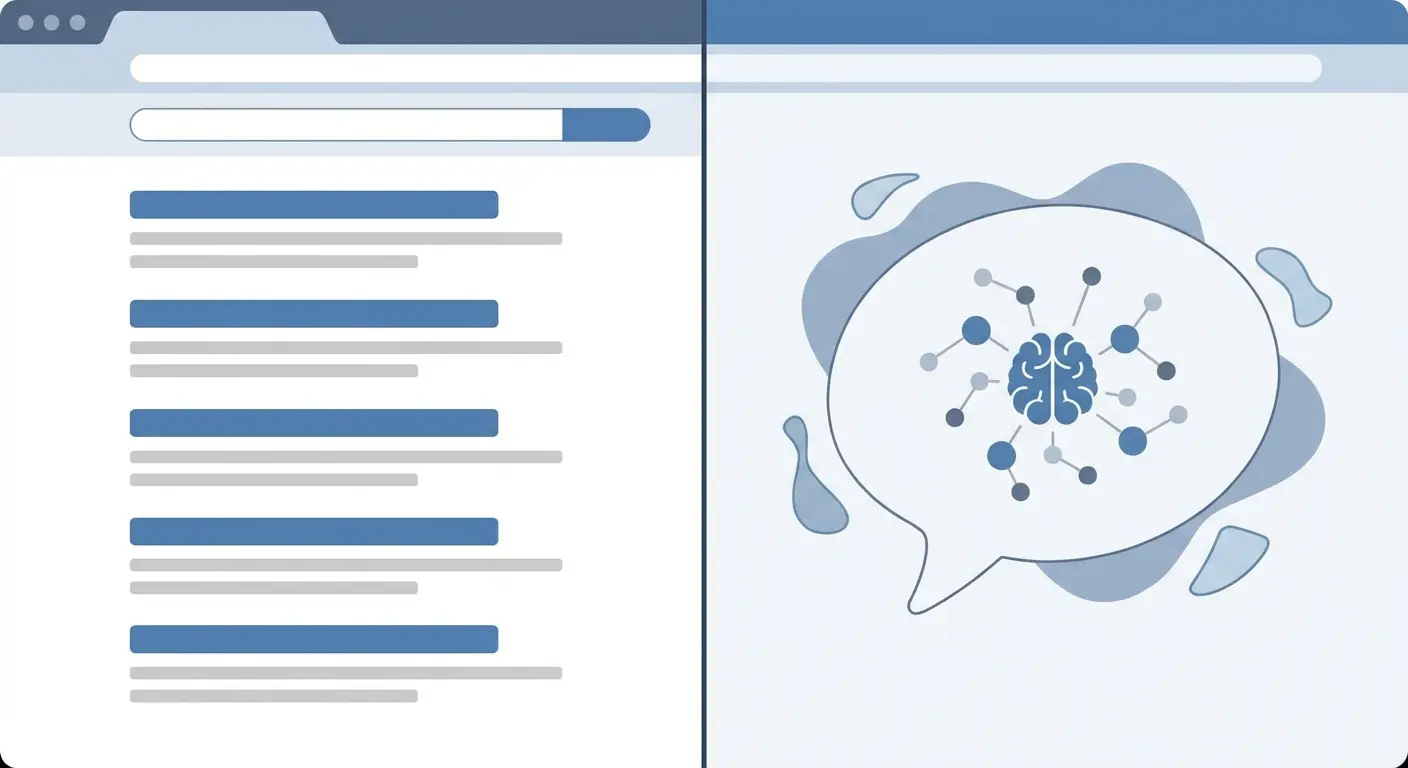
We’ve spent two decades training users to hunt through search results. Answer engines are retraining them to expect immediate, contextual responses. Your content strategy probably still assumes the hunting behavior.
The Curation Layer Changes Everything
Search engines ranked your content. Answer engines decide whether your content deserves to exist in the response at all. You’re no longer competing for position one through ten. You’re competing to be selected as a source worth citing, paraphrasing, or referencing.
This curation layer operates on different signals than PageRank ever did. Authority still matters, but relevance gets measured by how directly your content answers implicit questions, not just the explicit query someone types.
If you’re wrestling with how generative engine optimization differs from traditional SEO, the answer lies in understanding this fundamental shift from ranking to curation.
Here’s what this looks like in practice: Someone asks ChatGPT, “What’s the best marketing automation platform for a small B2B SaaS team?”
The AI doesn’t pull up your “Top 10 Marketing Automation Tools” post that ranks #3 on Google. Instead, it synthesizes G2 reviews, a Reddit thread where someone complained about HubSpot’s pricing, vendor docs, and maybe one comparison article. It builds an answer that accounts for “small team,” “B2B,” and “SaaS” all the context you probably ignored when you optimized for “best marketing automation.”
Your perfectly SEO’d content never enters the conversation.
User Expectations Have Already Shifted
People don’t phrase queries the same way anymore. They ask complete questions. They include context. They expect conversational responses that account for what they’ve already tried or already know.
And your keyword research tool? Useless here. It’s showing you what people typed into Google in 2023, not how they’re talking to Claude in 2025. That gap is where you’re losing.
Why Traditional SEO Metrics Are Becoming Vanity Numbers
Your organic traffic is dropping and you’re panicking. Meanwhile, your brand authority is actually growing. Your analytics dashboard can’t explain this, so you assume something’s broken.
Nothing’s broken. The game changed.
Answer engines surface your content without sending clicks. They extract your expertise, synthesize it with other sources, and deliver the insight to users who never visit your site. Traditional analytics calls this a loss. Smart strategists recognize it as a different type of win.
Only 35% of Google searches now end with a click-through because the answer was given directly on the results page. Meanwhile, NerdWallet reported a 35% growth in revenue despite a 20% decrease in site traffic by ensuring their content and brand expertise still reached consumers through snippets and other channels.
Read that again. Revenue up 35%, traffic down 20%. Your boss would never approve that strategy. But it’s happening whether you approve or not.
The relationship between SEO and AEO isn’t competitive. It’s evolutionary. Traditional search engine optimization provides the foundation while answer engine optimization adapts your content for AI-powered discovery and citation.
The Visibility Versus Traffic Disconnect
You can dominate answer engine results and watch your traffic flatline. Sounds like failure until you track what matters: branded search volume, direct traffic trends, conversion assist patterns.
When Perplexity cites your framework in an answer, that user learns your brand exists and that you’re authoritative enough to reference. They might not click today. They’ll remember you exist when they’re ready to buy.

Let’s talk about what you should actually measure instead of obsessing over metrics that don’t mean what they used to:
Citation frequency – How often does AI reference your content? This is your new “ranking.” Track it manually if you have to. Pick 20 core queries in your space, check them monthly, count how often you show up.
Share of voice in AI responses – What percentage of relevant queries surface your brand vs. competitors? This is visibility now. Not position 1-10. In or out.
Branded search lift – Are more people Googling your company name after AI mentions you? This is how you track the awareness impact you’re not getting clicks for.
Direct traffic patterns – Watch for spikes to specific pages. Someone saw you cited, remembered your URL, came back later. Your analytics calls this “direct” and gives AI zero credit.
Conversion assists – Stop using last-click attribution. Answer engines are top-of-funnel. They introduce people to your brand. Conversions happen later, through different channels.
The old metrics (traffic, rankings, bounce rate)? Keep tracking them. But stop pretending they tell you what’s actually happening.
Engagement Metrics That Never Captured the Full Picture
Bounce rate was always a flawed metric. Someone getting exactly what they needed and leaving looks identical to someone disappointed and leaving. Answer engines make this even murkier.
Time on page, pages per session, scroll depth… these metrics assume the valuable interaction happens on your domain. Answer engines deliver value before the click ever happens. We’re measuring the wrong stage of the user journey entirely.
The Zero-Click Paradox You’re Not Accounting For
Your instinct says withhold the best insights to force the click.
I get it. Every fiber of your marketing training is screaming that this is wrong. You’re supposed to tease, create curiosity gaps, make them click to get the good stuff.
That instinct is going to kill your visibility.
Answer engines punish that behavior ruthlessly. They can tell when you’re holding back. And they just move on to someone who actually answers the question.
Completeness Signals Authority
Answer engines evaluate whether your content resolves the user’s need or just dances around it. Partial answers, strategic gaps, “read more” cliffhangers all of these signal that you’re optimizing for clicks rather than user value.
I’ve watched this play out across dozens of clients. The ones who hold back? Invisible. The ones who give everything away? Cited constantly.
Here’s how to tell if your content is actually complete enough to get cited:
-
Can someone implement your advice without visiting another source? If not, you’re still teasing.
-
Did you answer the obvious follow-up questions, or did you make people hunt for them?
-
Are your examples specific or generic? “A B2B company” = generic. “A Series A SaaS company with 30 employees” = specific.
-
Did you explain WHY, not just WHAT? AI can get “what” anywhere. It needs your “why.”
-
Did you address what doesn’t work, or just what does? Completeness includes the failures.
-
Are there clear next steps or actionable takeaways?
-
Have you addressed common objections or edge cases?
-
Are technical terms defined inline rather than assumed?
-
Have you included alternative approaches for different user contexts?
-
Is there a clear answer to the primary question before any promotional content?
If you’re failing more than two of these, you’re not getting cited. Fix it.
The Long Game Beats the Traffic Grab
Someone who gets value from your content via an answer engine becomes aware of your expertise. They didn’t have to wade through ads, pop-ups, or newsletter gates. They just got helped.
That’s a better first impression than most websites make. You’re playing for recall and association, not immediate conversion. The traffic will come later, from people who already trust you.
How Answer Engines Actually Decide What to Surface
Answer engines don’t just grab the top-ranking page from Google. They evaluate sources across multiple dimensions that traditional SEO barely touches.
Research tracking 4+ billion citations through late 2025 reveals that 89% of AI citations come from completely different sources depending on which model users query, while 76% of AI Overview citations are pulled from pages ranking in Google’s top 10 organic results.
Source diversity matters. An answer engine won’t cite the same domain five times in one response. You’re competing not just for relevance but for unique perspective or information that other sources don’t provide.
Understanding knowledge graph optimization principles becomes critical when you realize answer engines evaluate entity relationships and semantic connections, not just keyword matches.
The Multi-Source Synthesis Approach
ChatGPT, Perplexity, and Gemini all synthesize information from multiple sources to construct answers. You need to provide something distinct enough to warrant inclusion in that synthesis.
Repeating what everyone else says makes you redundant. Providing a unique angle, proprietary data, or a framework nobody else articulates makes you essential.
Last month, a client published generic “email marketing best practices” content. Well-written, well-optimized, totally ignored by answer engines. Why? Because 200 other sites say the exact same thing.
Then they published original research: B2B emails sent on Tuesday at 10 AM in the recipient’s timezone have 23% higher open rates for enterprise accounts specifically. They had data from 50,000 sends across their customer base.
That piece gets cited constantly. The specificity and proprietary data make it irreplaceable. Answer engines can’t synthesize that from multiple sources because nobody else has it.

Recency Versus Evergreen Content
Answer engines weight freshness differently depending on query intent. Breaking news queries demand recent sources. Conceptual or educational queries pull from established, comprehensive resources.
Your content strategy needs both. Fresh perspectives on emerging topics get you cited in trending conversations. Definitive guides on established concepts get you cited repeatedly over time.
Domain Authority Still Influences Selection
Answer engines favor established, credible domains over unknown sources. You can’t fake this with link schemes or keyword stuffing. You build it through consistent publication of valuable content that earns genuine citations and references.
This creates a barrier for newer sites, but it also means your existing domain authority translates into answer engine visibility if you optimize correctly. The foundation you’ve built through traditional SEO efforts hasn’t become worthless. It’s become the baseline for success.
The Entity-First Content Framework
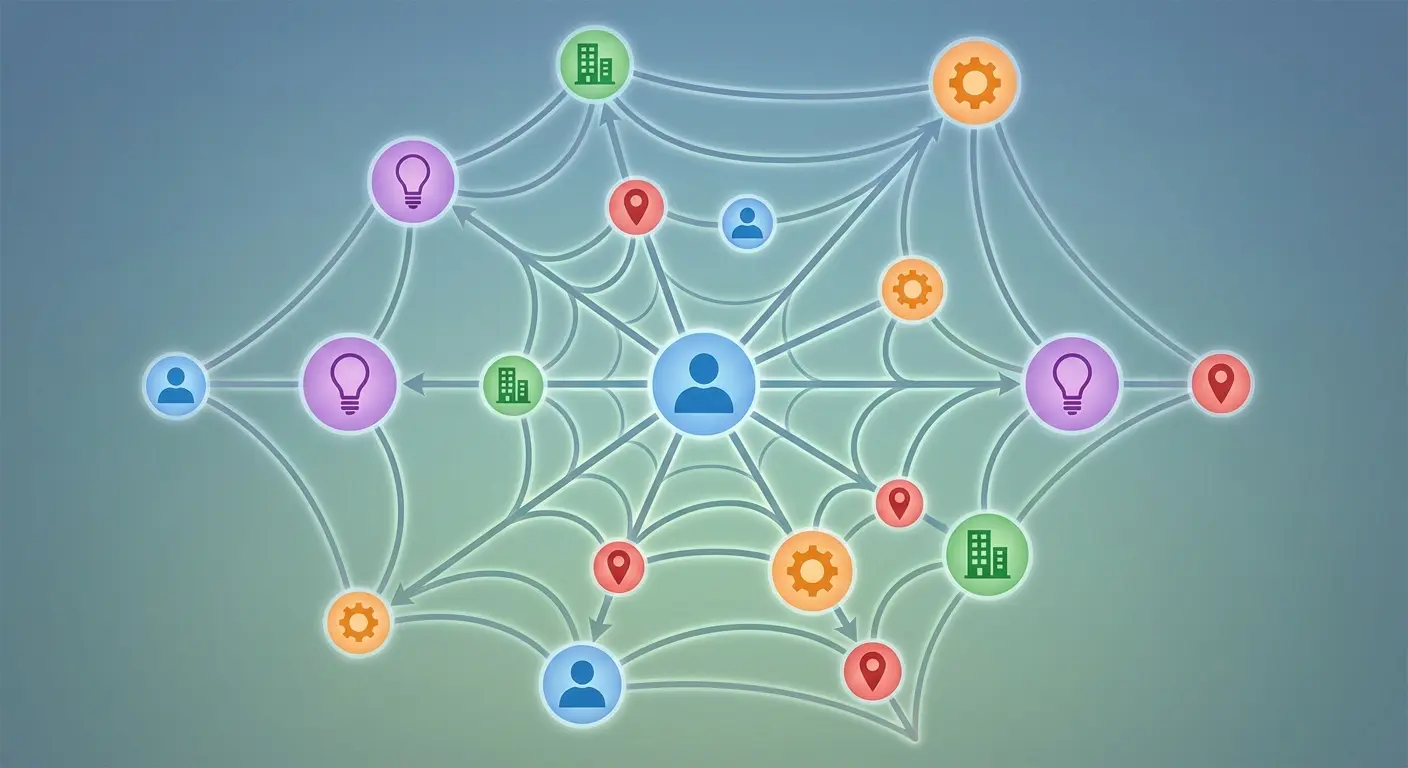
Keywords describe topics. Entities define meaning. Answer engines operate in the entity layer, and most content strategies still operate in the keyword layer.
This is why your content isn’t getting picked up. You’re speaking keyword, they’re listening for entities. It’s like showing up to a French restaurant and ordering in German. The words might be correct, but you’re using the wrong language.
An entity is any distinct concept, person, place, brand, or thing that exists independently. “Marketing automation” is a keyword phrase. “HubSpot” is an entity. “Inbound marketing methodology” is an entity. Answer engines understand how these entities relate to each other.
Mapping Entity Relationships in Your Content
You need to explicitly establish how entities connect within your content. The algorithm isn’t going to guess. You need to spell it out like you’re explaining to someone who knows nothing about your industry. Because that’s basically what you’re doing.
“HubSpot pioneered inbound marketing methodology” establishes a relationship. “Inbound marketing and HubSpot” just places two entities near each other without defining how they connect.
|
Entity Type |
Definition |
Content Implementation |
Answer Engine Benefit |
|---|---|---|---|
|
Person |
Individual with recognized identity |
“Maya Angelou, American poet and civil rights activist” |
Links expertise to credentials |
|
Organization |
Company, institution, or group |
“Salesforce, the cloud-based CRM platform founded in 1999” |
Establishes brand context and history |
|
Concept |
Abstract idea or methodology |
“Agile methodology, an iterative approach to project management developed in 2001” |
Clarifies meaning and origin |
|
Product |
Specific tool or offering |
“Slack, the team collaboration platform acquired by Salesforce in 2021” |
Connects product to category and parent company |
|
Location |
Geographic place |
“Silicon Valley, the technology hub in the San Francisco Bay Area” |
Provides geographic and contextual relevance |
|
Event |
Significant occurrence |
“GDPR implementation in May 2018, which transformed data privacy regulations” |
Establishes temporal context and impact |
Building Entity Authority in Your Niche
Become the definitive source for specific entities relevant to your expertise. If you consistently publish comprehensive content about particular concepts, tools, or methodologies, answer engines start associating your domain with those entities.
This is how you become the cited source when someone asks about your area of expertise. You’ve established entity authority through consistent, thorough coverage.
Using Wikipedia as Your Entity Blueprint
Wikipedia’s structure is entity-first by design. Each article focuses on one entity and explicitly maps its relationships to other entities through links and structured information.
Your content doesn’t need to be encyclopedia entries, but the principle applies. Define your core entity clearly, establish its relationships explicitly, and link to related entities contextually. The clearer you make these connections, the easier it becomes for answer engines to understand your content’s relevance to specific queries.
Structured Data That Actually Moves the Needle
Let’s talk about schema markup. You probably implemented it because some SEO checklist told you to. And most of it is doing absolutely nothing.
Structured data works when it helps answer engines understand content purpose and extract specific information types. It fails when you implement it generically just to check a box.
Over The Top SEO announced in March 2026 the launch of its dedicated Generative Engine Optimization division, deploying full schema markup across seven types of structured data (Article, FAQ, Organization, LocalBusiness, Breadcrumb, WebSite, and Person) implemented site-wide across every client property. The agency was among the first to adopt the llms.txt protocol, a machine-readable file enabling large language models to discover and accurately index brand information, noting that fewer than one percent of websites have adopted this standard.
FAQ Schema for Question-Based Queries
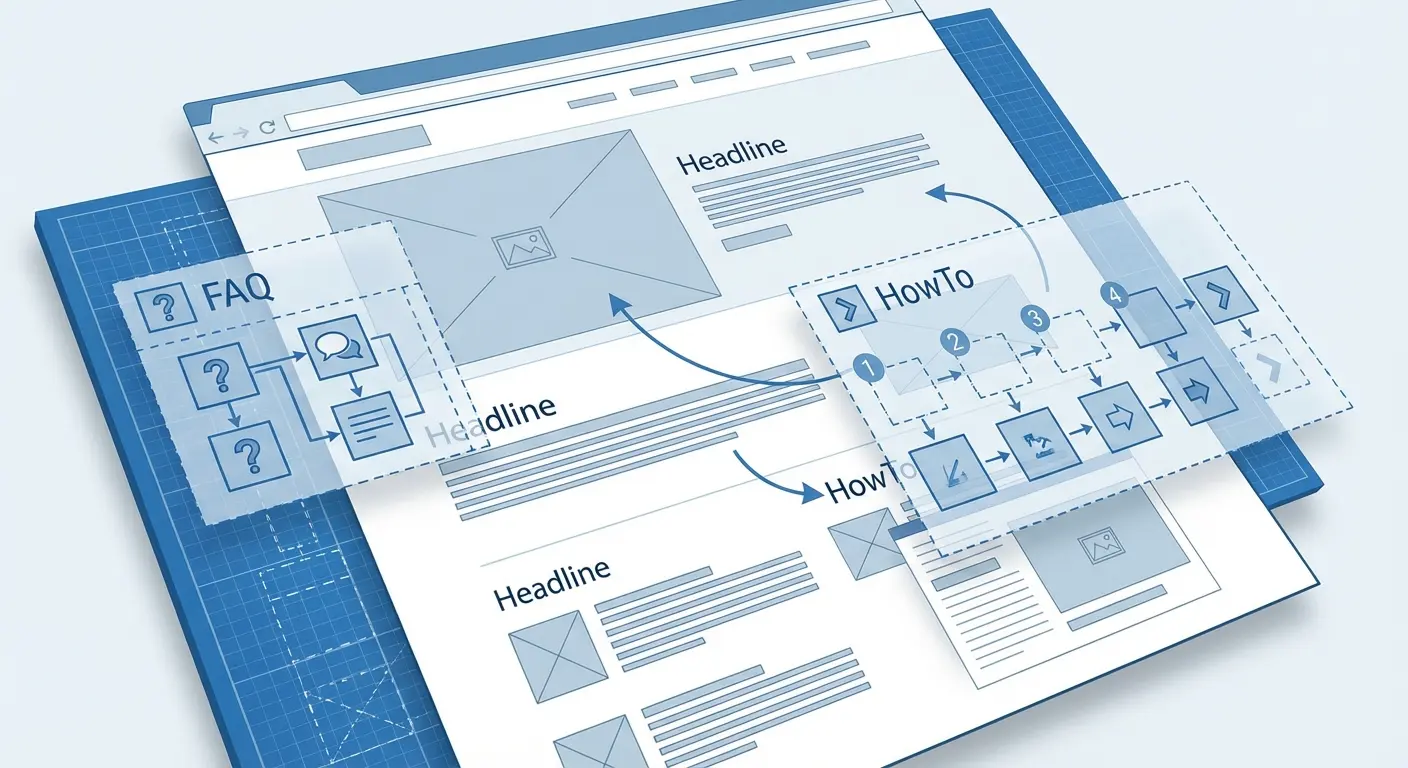
FAQ schema is the most directly useful structured data for answer engines. You’re formatting questions and answers in a machine-readable way.
But you need to use questions people actually ask, not questions you wish they’d ask. Pull from People Also Ask boxes, forum discussions, customer support tickets. Real questions, real answers, properly structured.
HowTo Schema for Process Content
Step-by-step content performs well in answer engines when properly marked up with HowTo schema. You’re making it trivial for the algorithm to extract and present your process.
Each step needs to be genuinely distinct and actionable. Don’t inflate step counts to game the system. Answer engines can detect when you’ve artificially broken “write an email” into five separate steps that should be one.
Article Schema for Establishing Authorship and Freshness
Article schema helps answer engines understand publication date, author credentials, and content updates. This feeds into their freshness and authority evaluations.
Include author schema with credentials and bio information. Generic “admin” authors don’t build authority signals.
Here’s what to implement first, and don’t waste time on the rest until these are done:
Start here:
-
FAQ schema if you have any question-based content (most of you do)
-
Article schema on every blog post, guide, and piece of editorial content
-
Organization schema on your homepage
Do this next:
-
HowTo schema for tutorials
-
Product schema if you sell software or tools
-
LocalBusiness schema if you have physical locations
Do this last (or never):
-
Breadcrumb schema – nice to have, won’t move the needle
-
WebSite schema – only if you have site-wide search
-
Event schema – only if you actually run events regularly
And for the love of God, validate your markup. Half the schema I audit is broken and nobody noticed.
Conversational Query Mapping (And Why Keyword Research Isn’t Enough)
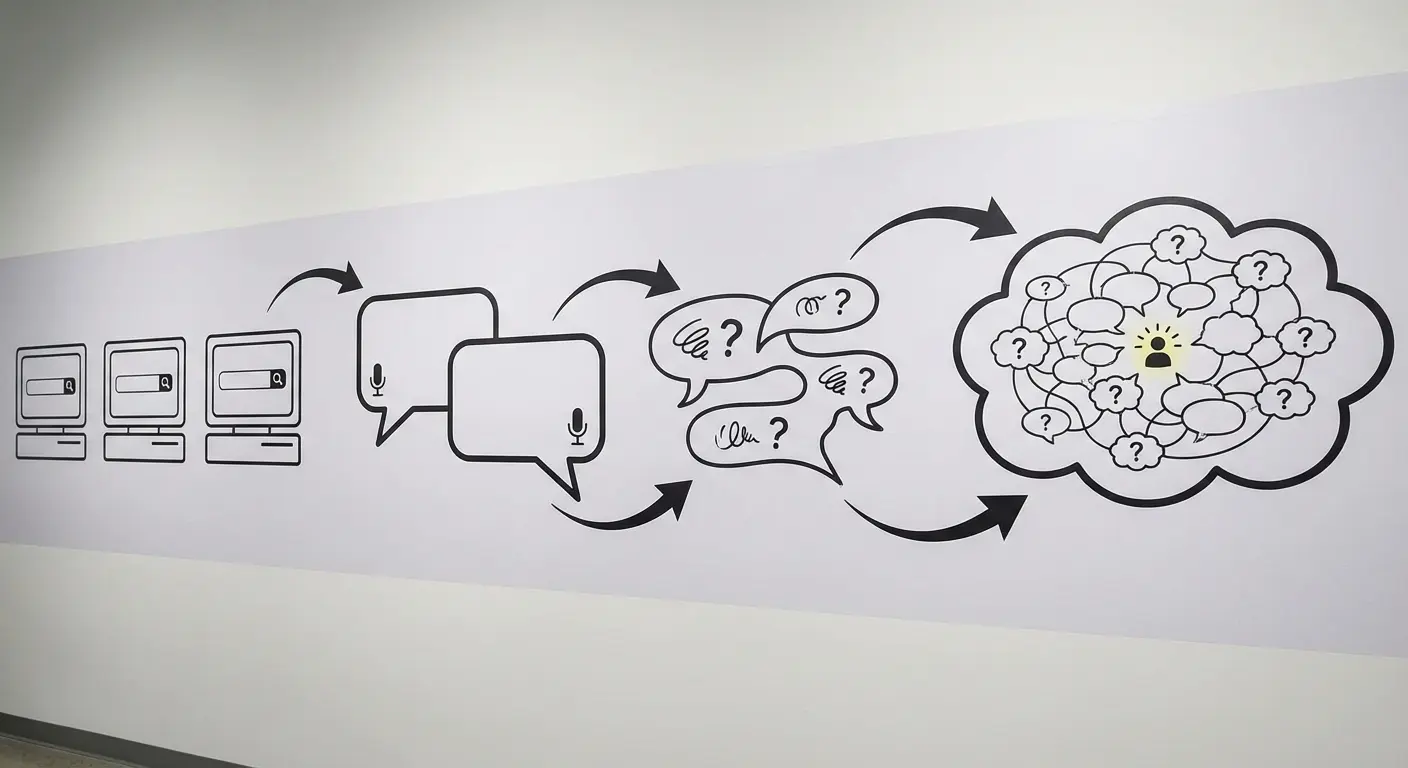
People don’t ask ChatGPT the same way they ask Google. Your keyword research shows you the Google queries. You’re missing the conversational patterns entirely.
Conversational queries include context, assumptions, and follow-up intent that keyword strings don’t capture. “What’s the best marketing automation platform” versus “I’m running a B2B SaaS company with a small team and need marketing automation that won’t require a dedicated admin, what should I look at?”
The difference is massive.
Question Variation Mapping
One core question spawns dozens of variations based on user sophistication, context, and prior knowledge. You need to address the spectrum, not just the most common phrasing.
Beginners ask different versions than experts. People who’ve already tried solutions ask different versions than people just starting research. Your content needs to work for multiple entry points.
Think about email deliverability. A beginner asks: “Why aren’t my emails delivered?”
Someone with a bit of experience: “How do I improve my sender reputation?”
An advanced user: “What’s the difference between DKIM and SPF and which should I implement first?”
A frustrated user who’s tried everything: “My emails have SPF and DKIM but still land in spam what the hell else could be wrong?”
Your content needs to work for all four. Not four separate articles. One comprehensive resource that meets people where they are.
Implicit Versus Explicit Intent
Conversational queries reveal implicit needs that keyword queries hide. Someone asking “how to improve email open rates” might implicitly need help with subject lines, send timing, list segmentation, or sender reputation.
Answer engines try to surface content that addresses both the explicit question and likely implicit needs. Comprehensive content that anticipates related questions performs better than narrow answers.
Building Content Clusters Around Question Families
Group related questions into families and create content that addresses the entire family. Don’t create separate thin articles for every minor variation.
One comprehensive resource that thoroughly addresses a question family outperforms ten shallow pages that each tackle one variation. Answer engines favor depth over breadth. They’d rather cite one authoritative source that covers a topic completely than stitch together fragments from multiple incomplete sources.
Building for Context, Not Just Keywords
Answer engines personalize responses based on context you can’t see or control. Two users asking identical questions get different answers based on their history, location, and inferred intent.
Which is honestly kind of terrifying if you think about it. Two people ask identical questions and get different answers based on their search history, location, device, time of day… you’re optimizing for a moving target you can’t fully see.
But that’s the game now. So let’s talk about what you can control.
Device and Format Considerations
Someone asking on mobile while commuting needs different content structure than someone researching on desktop at work. Answer engines factor this into selection.
Mobile contexts favor concise, scannable answers. Desktop research contexts favor comprehensive, detailed resources. Your content needs to work for both, which means clear structure and progressive disclosure of detail.
User Sophistication Signals
Answer engines infer user sophistication from query phrasing and history. They surface different content for beginners versus experts asking similar questions.
Include progressive layers in your content. Start with clear, accessible explanations. Provide deeper technical detail for those who need it. Users self-select their depth level.

Temporal Context and Freshness
Some queries have temporal context. “Marketing trends” means something different in January than November. “Budget planning” changes meaning based on fiscal calendar timing.
Update content to reflect temporal relevance where appropriate. Answer engines favor sources that acknowledge timing and context over generic evergreen content that ignores when something matters. A piece about “2025 marketing trends” published in 2023 and never updated signals staleness, even if the core concepts remain valid.
The Attribution Blind Spot in Answer Engine Traffic
Your attribution model is lying to you.
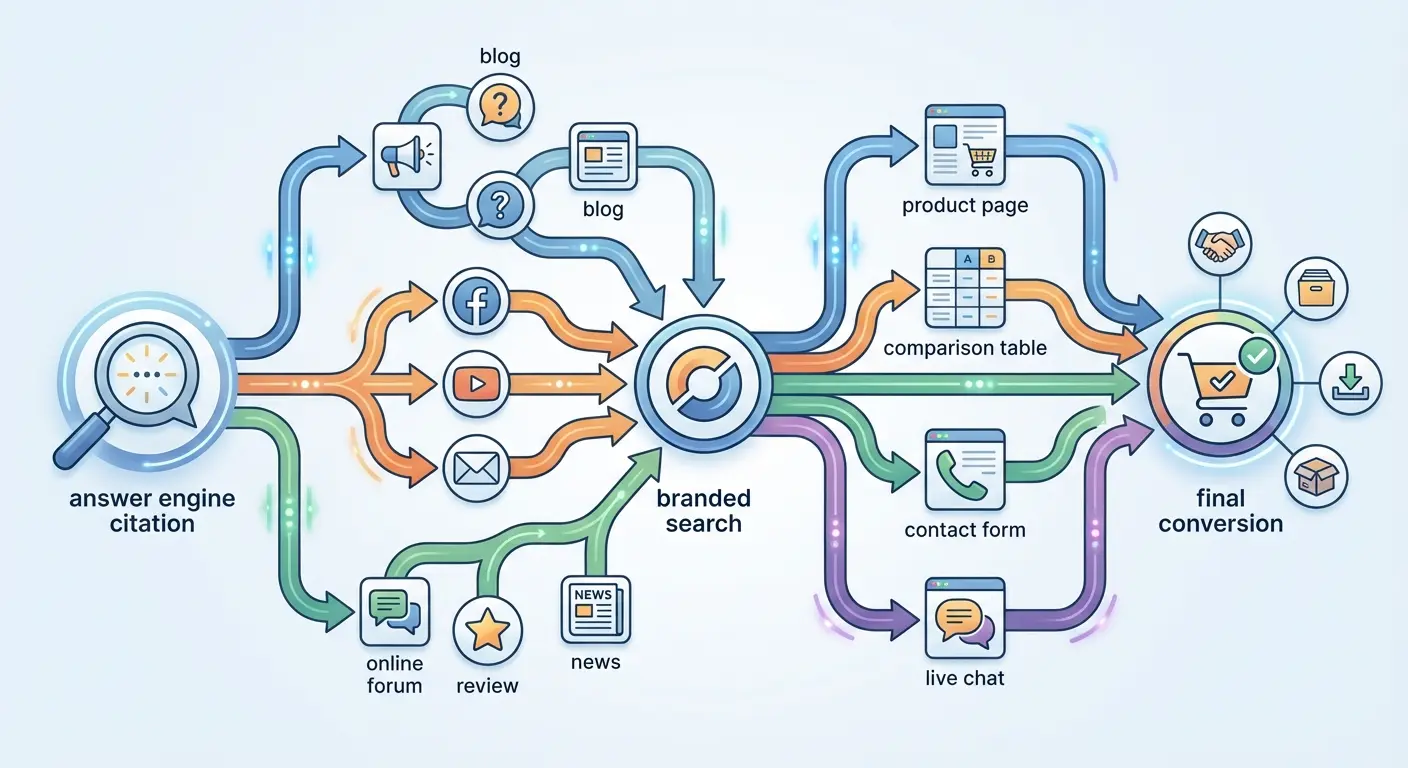
Well, not lying exactly. It’s just measuring the wrong things and giving credit to the wrong channels. Answer engines are introducing people to your brand, and your analytics is giving all the credit to “direct traffic” or “branded search” weeks later.
Someone discovers your brand through an answer engine citation, searches for you directly three weeks later, and converts. Your analytics attributes that to branded search or direct traffic. The answer engine gets no credit for the introduction.
London-based AI software company Searchable, founded in 2025, launched a platform specifically designed to help organizations understand and improve their presence across AI search systems. The platform provides visibility monitoring across AI systems, citation tracking, change alerts, and a query interface that allows users to analyze brand presence across different AI answer engines (addressing the exact attribution challenges that traditional analytics tools weren’t built to handle).
Branded Search as a Proxy Metric
Track branded search volume trends as an indicator of answer engine influence. If you’re getting cited frequently but not getting clicks, you should see branded search increase as awareness grows.
Compare branded search patterns against your answer engine visibility. The correlation isn’t perfect, but it’s better than ignoring the value entirely.
Direct Traffic Pattern Analysis
Direct traffic spikes often follow answer engine visibility, especially for specific pages or topics. Someone sees your content cited, remembers your brand or URL, and visits directly later.
Segment direct traffic by landing page and content type. Look for patterns that correlate with topics where you have strong answer engine presence.
Assisted Conversion Tracking
Answer engines function as top-of-funnel awareness drivers. They rarely drive immediate conversions, but they influence conversion paths significantly.
Multi-touch attribution models capture this better than last-click attribution. If you’re still using last-click, you’re systematically undervaluing answer engine impact (along with most other awareness channels).
The truth is, most marketing teams suck at attribution modeling even before answer engines complicated things further. This shift just makes the existing problems more obvious and more urgent to solve.
Measuring What Matters When Clicks Disappear
You need new KPIs that reflect answer engine performance. Traffic and rankings won’t tell the story anymore.
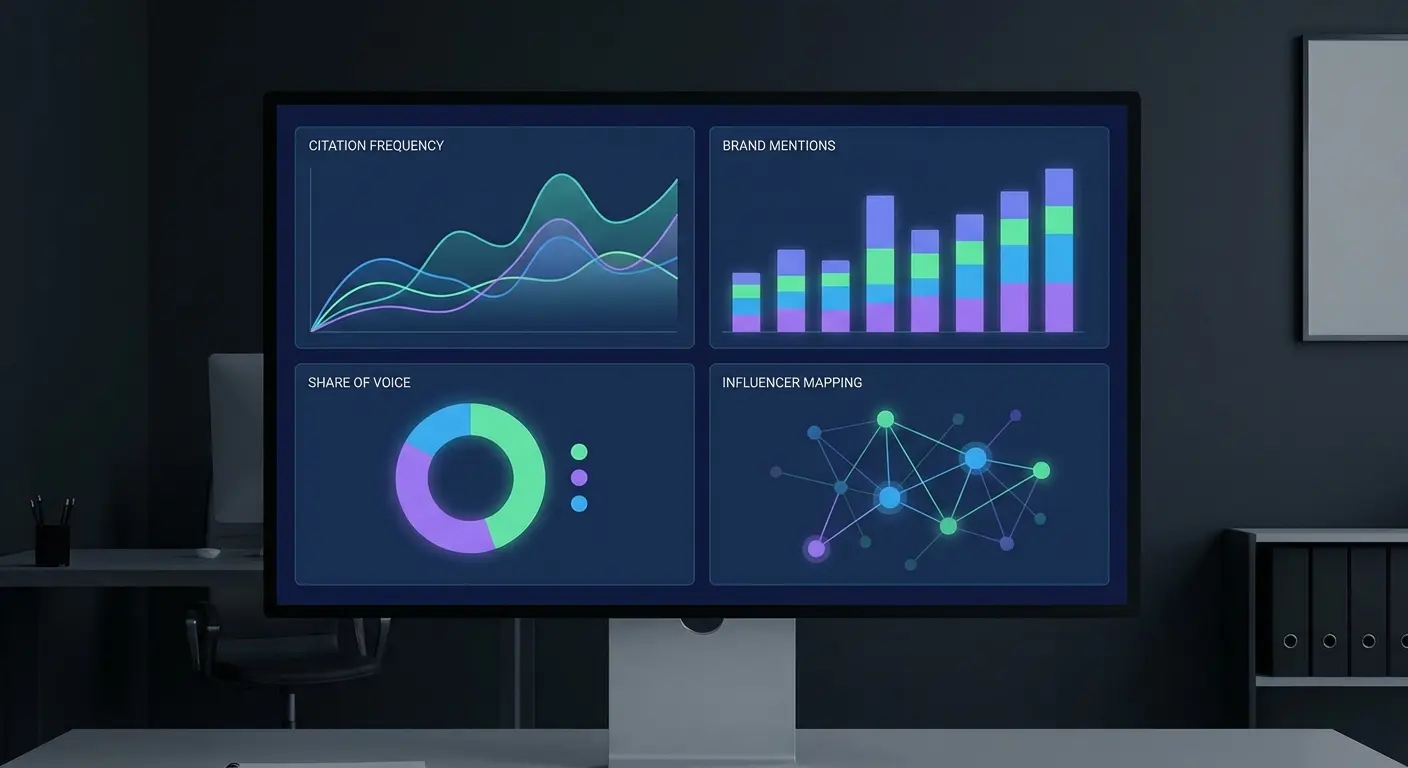
Citation frequency matters more than click volume. How often do answer engines reference your content as a source? You can track this manually for key queries or use emerging tools built specifically for answer engine monitoring.
For teams implementing comprehensive optimization strategies, our guide to answer engine optimization tools covers platforms that track citations, monitor brand mentions, and measure share of voice across AI systems.
Share of Voice in Answer Engine Responses
Track what percentage of relevant queries surface your content versus competitors. You’re measuring visibility in the answer itself, not position in a results list.
This requires consistent monitoring of core queries in your domain. Sample 50-100 questions your audience asks and check monthly which sources get cited. Your share of those citations is your share of voice.
Building Your Query Monitoring List
Start with customer questions from support tickets, sales calls, and chat logs. Add questions from forums, social media, and community discussions in your space.
Prioritize questions that indicate buying intent or problem awareness. Someone asking “how does X work” is earlier stage than “X versus Y comparison.” Track both, but weight commercial intent queries higher.
Yes, this is manual. Yes, it’s tedious. No, there’s no easy automated solution yet that doesn’t cost a fortune. Welcome to early-stage optimization tactics. This is what SEO felt like in 2005 too.
Competitive Citation Analysis
Track which competitors get cited for which query types. You’re looking for gaps where they dominate and opportunities where you’re already strong.
This reveals content gaps in your strategy. If competitors consistently get cited for certain question types, you probably need better content addressing those questions.
Authority Indicators Beyond Backlinks
Answer engines evaluate authority through signals that traditional SEO tools don’t fully capture. Brand mentions without links, citations in academic or industry publications, expert authorship signals.
Monitor brand mentions across the web, even unlinked ones. Track when industry publications reference your frameworks, methodologies, or data. These signals feed answer engine authority evaluations.
Conversion Value Per Impression
Calculate the value of answer engine impressions based on downstream conversion behavior. If branded search converts at 15% and you can correlate answer engine visibility with branded search lift, you can estimate impression value.
The math isn’t perfect, but it’s better than treating answer engine visibility as worthless because it doesn’t drive immediate clicks. You’re quantifying the awareness value.
Setting Baseline Metrics
Track current branded search volume, direct traffic patterns, and conversion rates before investing heavily in answer engine optimization. You need baseline data to measure lift.
Document your current citation frequency and share of voice in answer engine responses. These become your benchmarks for improvement.
Establishing Correlation Windows
Answer engine influence doesn’t convert immediately. Test different time windows (7 days, 14 days, 30 days) to find the lag between visibility and conversion impact.
Different industries and purchase cycles will show different patterns. B2B with long sales cycles might see 60-90 day windows. Consumer products might see 7-14 days.
Look, I’ve thrown a lot at you. And I know some of this feels wrong giving away your best insights, optimizing for zero clicks, measuring success through metrics your boss won’t understand.
But here’s what I need you to understand: this already happened. User behavior already shifted. Answer engines are already how millions of people find information. You can adapt now, or you can spend 2026 wondering why your traffic keeps dropping while your competitors seem to be everywhere.
I’m not saying abandon traditional SEO. Your keyword research still matters. Your backlinks still count. Your technical optimization still helps. But if that’s ALL you’re doing, you’re optimizing for yesterday’s search behavior.
Start small. Pick your ten most valuable topics the ones where you actually have expertise and unique insights. Map the questions people ask about those topics. Write comprehensive answers that don’t hold anything back. Add FAQ schema. Track how often AI systems cite you.
You’re not optimizing for algorithms anymore. You’re becoming the source that algorithms trust enough to cite. That’s a different mindset. It requires giving more and measuring differently.
Your analytics dashboard might look worse before it looks better. Your boss might question why you’re creating content that doesn’t drive immediate traffic. You’ll need to explain proxy metrics and assisted conversions and brand awareness lift.
It’s uncomfortable. Do it anyway.
Because your competitors are fig uring this out. And the question isn’t whether answer engine optimization matters you already know it does. The question is whether you’ll adapt now or play catch-up in six months when the gap is even wider.