


Let’s be real: lighting money on fire is easier than spending it efficiently on digital ads right now. Nearly 23% of all digital ad spend gets wasted on bad placements or bot traffic. That’s a staggering amount of cash just vanishing.
I remember sitting across from a client last year who was white-knuckling it. They had burned through six figures in three months and had zero attribution to show for it. They were buying media impressions, sure, but they weren’t buying results.
Finding a partner who treats your budget like their own money is rare. As we look toward 2026, the game isn’t about who has the loudest voice or the deepest pockets anymore. It’s about precision. It’s about being smarter than the algorithm. We’ve put together this list of media buying agencies to help you cut through the noise and find a partner who values transparency as much as you do.
Table of Contents
- TL;DR: The Quick List
- Comparison Table
- The Critical Criteria: How We Ranked Them
- 1. The Marketing Agency
- 2. Copp Media
- 3. Pathlabs
- 4. Vision Media
- 5. Hawke Media
- 6. PMG
- 7. inBeat
- 8. Web Tonic
- 9. M&C Saatchi Performance
- 10. Horizon Media
- 11. OMD Worldwide
- Notable Mentions
- Frequently Asked Questions
- Final Thoughts: The Infrastructure Behind the Buy
TL;DR: The Quick List
If you’re short on time and just want the headlines, here is who creates the shortlist for the best media buying agencies going into 2026:
- Best for Data-Backed Performance & Infrastructure: The Marketing Agency
- Best for Integrated Traditional & Digital: Copp Media
- Best for Programmatic Execution: Pathlabs
- Best for Mid-to-Enterprise Scale: Vision Media
- Best for Flexible, Month-to-Month Contracts: Hawke Media
- Best for Global Enterprise Strategy: PMG
- Best for UGC & Social Paid Media: inBeat
- Best for High-Conversion ROAS: Web Tonic
- Best for Mobile App Acquisition: M&C Saatchi Performance
- Best for Massive Data & Buying Clout: Horizon Media
- Best for Fortune 500 Global Reach: OMD Worldwide
Comparison Table
| Agency | Best For | Key Strength | Pricing Model |
|---|---|---|---|
| The Marketing Agency | Data-Backed Performance | Scientific approach to ROI & Infrastructure | Project or Retainer (PPC starts $750/mo) |
| Copp Media | Integrated Traditional & Digital | Elegant balance of offline/online media | Fee-for-service or Commission |
| Pathlabs | Programmatic Execution | Technical execution extension for teams | Budget-friendly execution fees |
| Vision Media | Mid-to-Enterprise Scale | Independent buying power | Enterprise-level fees |
| Hawke Media | Flexible Contracts | “Outsourced CMO” Model & AI | Month-to-month Subscription |
| PMG | Global Enterprise Strategy | Proprietary “Alli” Tech Platform | Premium Agency Fees |
| inBeat | UGC & Social Paid Media | Micro-influencer & Creative strategy | Project Retainers ($1k-$10k/mo) |
| Web Tonic | High-Conversion ROAS | Surgical audience targeting | Performance-oriented |
| M&C Saatchi | Mobile App Acquisition | Global mobile attribution (OneView AI) | Corporate/Enterprise structures |
| Horizon Media | Massive Data & Buying Clout | Largest independent buying leverage | % of Spend or Retainer |
| OMD Worldwide | Fortune 500 Global Reach | Global planning & cultural relevance | Enterprise Pricing |
The Critical Criteria: How We Ranked Them
We didn’t just Google “media agencies” and pick the top results. We evaluated these media buying agencies based on the friction points that actually drive clients crazy.
- Strategic Planning vs. Execution: We looked for partners who act as consultants. Do they do the homework on audience identification, or are they just order-takers?
- Transparency and Reporting: The “black box” of billing is a plague in this industry. We prioritized agencies that clearly separate media costs, tech fees, and their own profit.
- Buying Power and Negotiation: You hire an agency to get rates you can’t get yourself. We looked at their leverage with publishers and their ability to snag value-adds.
- Tech Stack and Data Capabilities: It’s 2026. If they aren’t experts in DSPs, programmatic bidding, and attribution modeling, they are already behind.
- Channel Expertise: We checked if they are generalists or specialists. Does their expertise match their sales pitch?
1. The Marketing Agency
Best Known for Data-Backed Performance & Infrastructure
Overview
Here is where we toot our own horn a little, but for good reason. The Marketing Agency takes a scientific approach to media buying because we believe buying traffic is useless if the destination isn’t built to convert. Rather than just acting as a pass-through for your ad spend, we blend creative strategy, technical precision, and data analytics to turn platforms into actual engines of growth.
We are easily one of the top media buying agencies for brands that need to fix their entire funnel, not just their ad creatives. We use proprietary systems to analyze campaign data in real-time, adjusting ad spend and targeting to squeeze the most out of every dollar. Our philosophy is rooted in the “80/20 rule”—we only propose what moves the needle, rather than pushing spend just to hit a quota.
Key Features
- Scientific Market Analysis: We dig into the core of your industry to find gaps most agencies gloss over.
- AI-Driven Optimization: We use AI for predictive keyword research and automated audience segmentation.
- Connecting the Dots: We bridge the gap between Paid Media (PPC), SEO, and Conversion Rate Optimization (CRO).
- No Vanity Metrics: A focus on “real data”—you know exactly where every cent goes.
The Pros
- Full-Funnel Capability: We don’t just buy ads; we build the landing pages and automation systems that convert the traffic.
- Accessibility: Unlike enterprise-only shops, we offer scalable solutions for different budget levels.
- Data-First: Strategies are deeply rooted in hard metrics and attribution.
The Cons
- Performance Focus: If you are looking purely for “brand awareness” fluff without a focus on hard conversion metrics, our ROI-obsessed approach might feel a bit intense.
Criteria Evaluation
- Strategic Planning: 5/5. We build the infrastructure before turning on the traffic firehose.
- Transparency: 5/5. Regular regroups and open books.
- Buying Power: 4/5. Strong performance in digital auctions (Google/Meta).
- Tech/Data: 5/5. Heavy use of AI and proprietary IP for optimization.
- Channel Expertise: 5/5. Masters of PPC, Social, and Inbound integration.
Pricing
Pricing is transparent and scalable. PPC management ranges from $750 to $5,000 per month, depending on the scope.
Check out The Marketing Agency
2. Copp Media
Best Known for its Elegant Advertising Balance
Overview
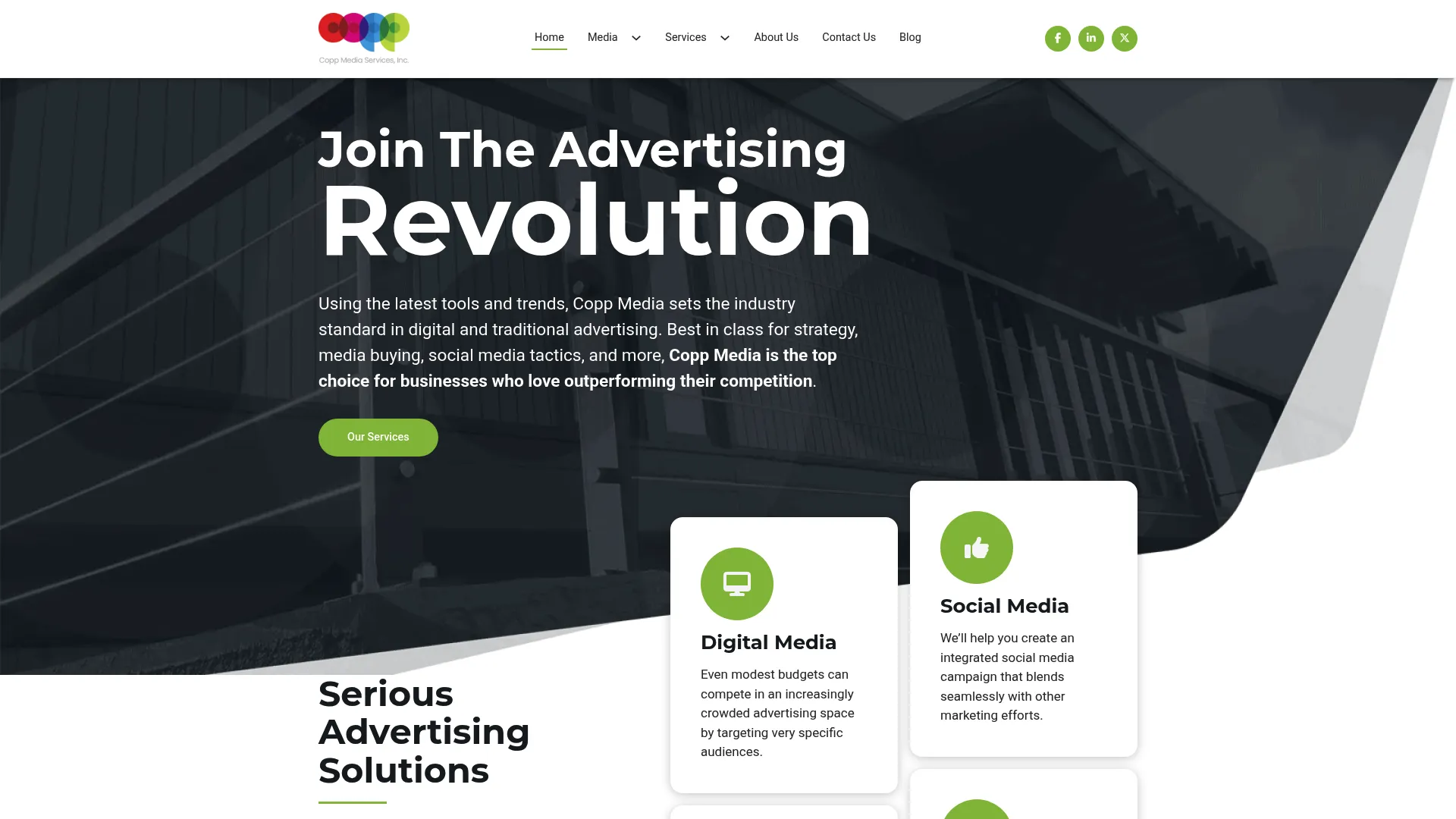
Copp Media calls itself an “elegant advertising machine,” and honestly, the description fits. In an industry obsessed with the next shiny digital object, they’ve maintained a disciplined balance between the speed of digital and the tangible weight of traditional media. They aren’t trying to reinvent the wheel; they are trying to make the ride smoother.
We appreciate their stance on transparency. They explicitly state they have “nothing to hide,” which is refreshing in a sector often clouded by hidden fees and kickbacks. For businesses that need to dominate a local market with billboards and radio while simultaneously retargeting those same commuters on their phones, Copp Media offers a cohesive strategy that bridges that gap.
Key Features
- Integrated Campaigns: Seamless blending of billboards, print, radio, and TV with modern digital tactics.
- Market Research: Deep dives into audience demographics to ensure the media mix actually makes sense.
- Clear Audience Metrics: Reporting that ties offline impressions to online behaviors where possible.
- No Gimmicks: A straightforward approach to billing and strategy without the buzzwords.
The Pros
- Transparency: They score a perfect 5/5 here for a reason. You know exactly where your dollar goes.
- Simplicity: They make complex buying processes feel easy for the client.
- Holistic View: They understand that a customer sees a billboard before they search on Google.
The Cons
- Not Purely Programmatic: If you are a digital-native brand looking exclusively for algorithmic trading without any traditional component, their full suite might be overkill.
Criteria Evaluation
- Strategic Planning: 5/5. They build the blueprint before buying the bricks.
- Transparency: 5/5. Open book billing and reporting.
- Buying Power: 4/5. Strong, especially in regional traditional markets.
- Tech/Data: 4/5. Competent digital stack, though heavily integrated with legacy media data.
- Channel Expertise: 5/5. Rare ability to handle both offline and online equally well.
Community Reviews and Expert Recommendations
[Source: Copp Media Blog & Client Feedback]
Clients consistently praise the educational aspect of working with Copp. One review highlighted their negotiation style for television, noting that Copp builds a “rough buy” and negotiates with stations based on efficiency, giving the most efficient station the “final call.” This competitive tension drives rates down for the client. Another review pointed out their nuance in radio buying—they look beyond cost-per-point to qualitative data, sometimes paying more for a station because it reaches business leaders rather than just chasing the cheapest impressions.
Pricing
Pricing is custom-quoted based entirely on the media mix and campaign scale. They generally work on a fee-for-service or commission basis depending on the media type.
3. Pathlabs
Best Known for its Execution Focus
Overview
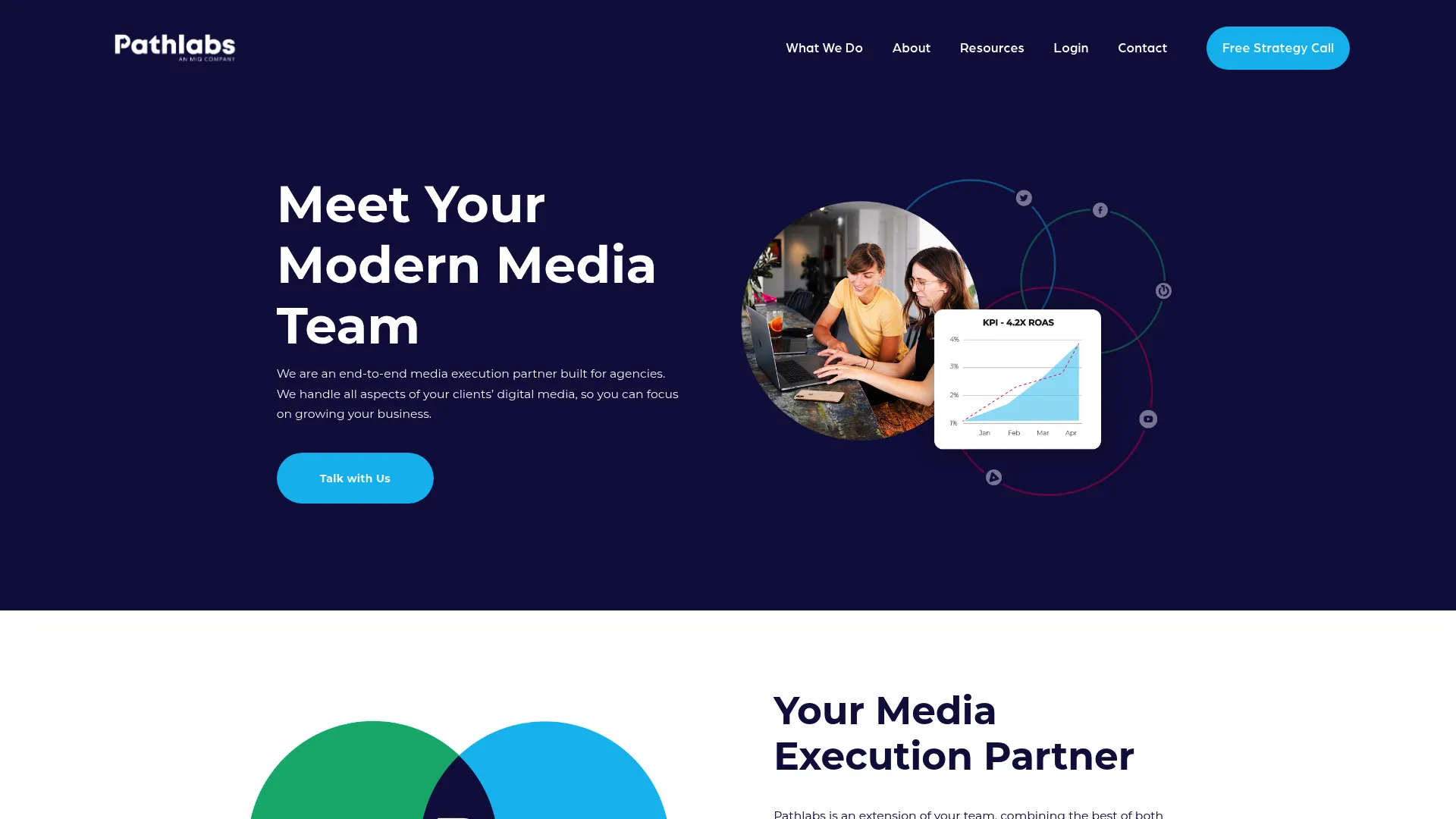
Pathlabs is interesting because they don’t try to be everything to everyone. They define themselves as a media execution partner. This distinction is vital. They aren’t the ones coming up with your brand slogan; they are the ones inside the DSP (Demand-Side Platform) turning the dials to make sure that slogan gets seen by the right person at the lowest cost.
For brands that already have a strong internal marketing director or creative team but lack the technical “nitty-gritty” skills to manage programmatic bidding, Pathlabs fills the gap. They function less like an agency and more like a specialized technical unit that plugs into your existing infrastructure.
Key Features
- Programmatic Specialization: Deep expertise in ad exchanges and automated buying.
- Campaign Calibration: Constant monitoring and adjusting of bids based on performance data.
- Deal Brokering: Setting up Private Marketplace (PMP) deals for premium inventory.
- Audience Research: Data-driven identification of user segments.
The Pros
- Extension of Your Team: They integrate so closely it feels like they are in-house.
- Technical Expertise: They understand the software better than almost anyone else.
- Accountability: They have a reputation for owning mistakes and solving problems quickly.
The Cons
- Scope Limitation: They distinguish themselves from full-service agencies. If you need someone to design the banner ads or write the scripts, you might need to look elsewhere.
Criteria Evaluation
- Strategic Planning: 4/5. Excellent on the tactical execution side, but they rely on you for the high-level brand vision.
- Transparency: 5/5. You see the data they see.
- Buying Power: 4/5. Strong in digital exchanges.
- Tech/Data: 5/5. This is their home turf.
- Channel Expertise: 4/5. Heavily skewed toward digital and programmatic.
Community Reviews and Expert Recommendations
[Source: Pathlabs Blog & Industry Feedback]
The industry chatter around Pathlabs centers on their operational excellence. They are the people you call when you want to run a complex programmatic campaign but don’t want to hire a full-time programmatic trader in-house. Their willingness to handle the “boring” operational side—tagging, trafficking, troubleshooting—allows their clients to focus on the big picture.
Pricing
They are generally more budget-friendly than full-fledged advertising agencies because you aren’t paying for creative overhead or account management bloat—just execution.
4. Vision Media
Best Known for its Independent Scale
Overview
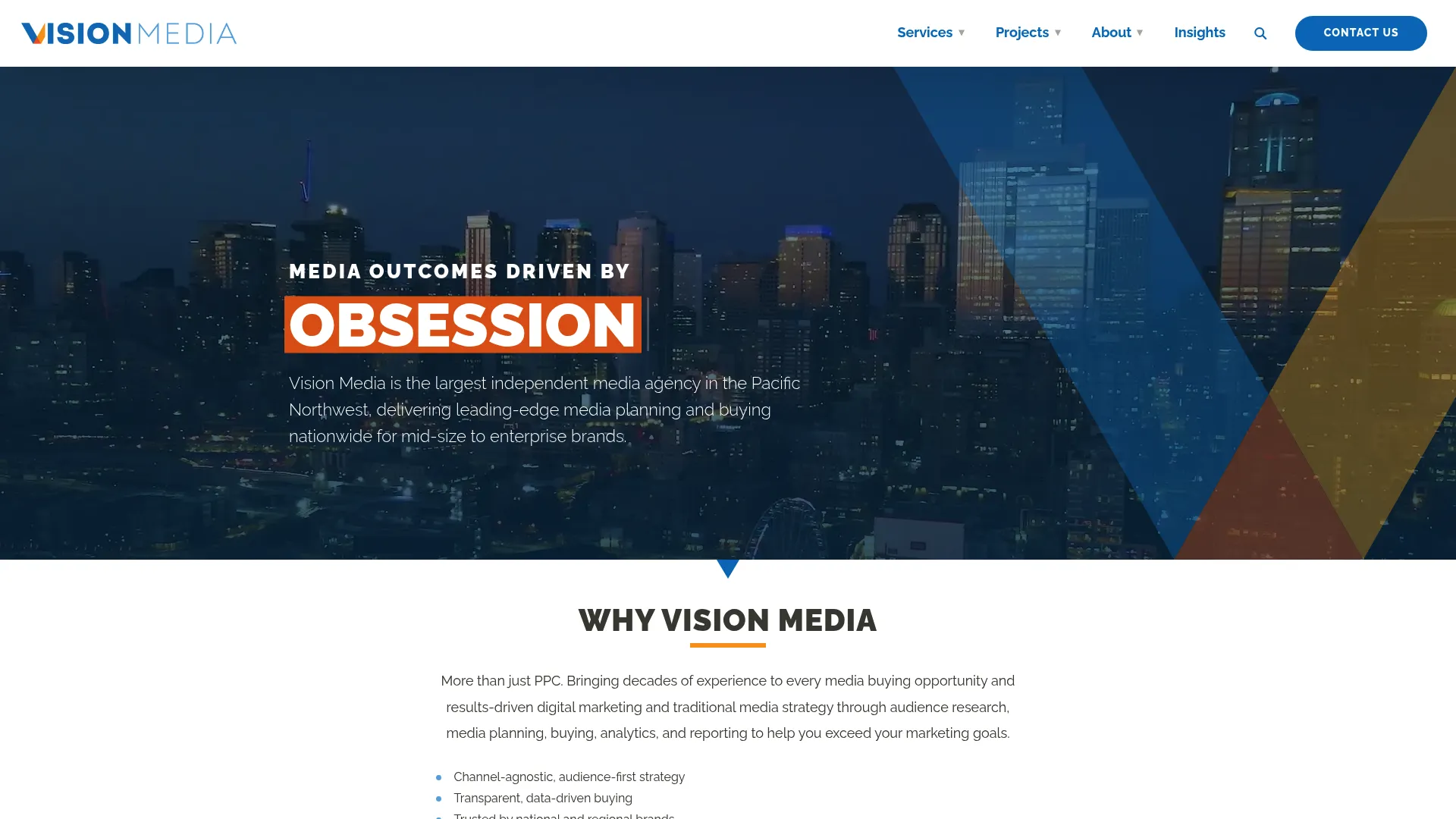
Vision Media occupies a sweet spot. They are the largest independent media agency in the Pacific Northwest, which gives them significant buying clout, but they aren’t owned by a massive holding company, which keeps them agile. They serve national clients like Coca-Cola and Banner Health, proving they can punch well above their weight class.
We like them for mid-sized to enterprise brands that feel neglected by the “Big 4” holding companies. Vision Media offers a comprehensive suite that covers the entire spectrum—from traditional terrestrial radio to advanced OTT/CTV streaming ads. They have been around for over 20 years, so they have deep-rooted relationships with publishers that newer, digital-only shops simply haven’t had time to build.
Key Features
- Linear TV & Audio: Strong roots in traditional broadcast buying.
- Advanced Digital: Capabilities in Paid Search, Programmatic, and Streaming Audio.
- Out-of-Home (OOH): Access to billboard and transit inventory.
- Independence: Agile decision-making without corporate red tape.
The Pros
- Experience: Two decades of navigating media shifts means they don’t panic when the market changes.
- Scale: They have the buying power to get enterprise rates.
- Versatility: Equally comfortable buying a Super Bowl spot or a niche programmatic display campaign.
The Cons
- Enterprise Focus: Their high-level focus and infrastructure might make them too expensive or inaccessible for very small local businesses with limited budgets.
Criteria Evaluation
- Strategic Planning: 5/5. They handle complex, multi-channel strategies with ease.
- Transparency: 4/5. Solid reporting standards.
- Buying Power: 5/5. Excellent leverage for an independent shop.
- Tech/Data: 4/5. Strong, practical application of data.
- Channel Expertise: 5/5. They cover everything from physical to digital.
Community Reviews and Expert Recommendations
[Source: TrustRadius]
Reviews highlight Vision Media as a reliable partner for entertainment and enterprise companies. Users appreciate their secure streaming platforms and digital asset management solutions, which suggests they are technically sophisticated beyond just buying ad space. They are viewed as a trusted partner for handling sensitive or high-value assets.
Pricing
They operate on enterprise-level pricing structures. Expect fees that correspond to national or regional scale campaigns.
5. Hawke Media
Best Known for its Outsourced CMO Model
Overview
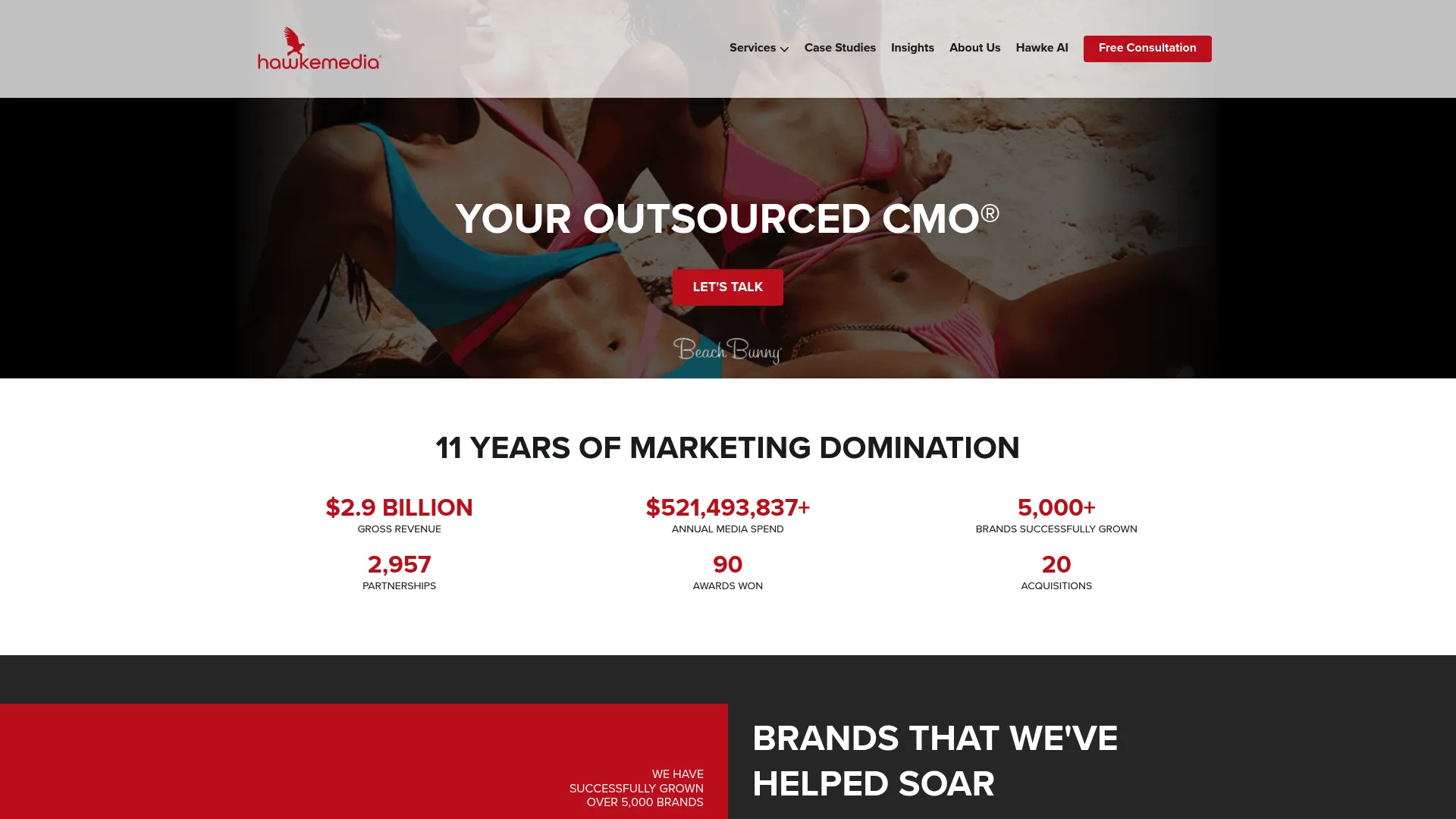
Hawke Media disrupted the agency model by offering month-to-month contracts—a rarity in a world that loves to lock you in for a year. They operate as an “Outsourced CMO,” giving you access to a massive brain trust without the overhead of a full-time executive.
Based in Santa Monica, they are one of the most prominent media buying agencies in Los Angeles, though their reach is global. What really sets them apart in 2026 is their proprietary Hawke AI platform. Because they manage over $2.9 billion in media spend across thousands of brands, they have an aggregated data set that allows them to benchmark your performance against your industry instantly. Following their acquisition of MediaBuyers.com, they expanded their digital-first DNA to include high-impact print and broadcast, making them a formidable full-funnel player.
Key Features
- Hawke AI: A proprietary platform for benchmarking and rapid audience targeting.
- Month-to-Month Contracts: Ultimate flexibility for the client.
- Full-Funnel Marketing: From social ads to email marketing and web design.
- Expanded Reach: Access to 2,000+ traditional outlets via recent acquisitions.
The Pros
- Flexibility: You aren’t trapped. If it doesn’t work, you can leave.
- Data-Led: Their benchmarking data is a massive competitive advantage.
- Scale: They have worked with over 5,000 brands, so they have seen every problem before.
The Cons
- Volume Model: Because they have so many clients and move so fast, some brands might feel it lacks the “white glove” boutique touch. It is a high-tempo environment.
Criteria Evaluation
- Strategic Planning: 5/5. Their AI helps them spot opportunities humans might miss.
- Transparency: 5/5. The month-to-month model forces them to prove value constantly.
- Buying Power: 4/5. Strong, especially in digital.
- Tech/Data: 5/5. Hawke AI is a legitimate differentiator.
- Channel Expertise: 5/5. Digital natives who learned to speak traditional.
Community Reviews and Expert Recommendations
[Source: Clutch]
Reviews for Hawke Media are generally positive regarding their strategy and flexibility. One client, a CEO of an outsourcing company, noted that even though they hired Hawke for web dev, the agency “planted seeds of digital marketing strategy” into the build, optimizing it for lead generation from day one. Another client praised their “scrappy” ability to work with requests. However, some reviews note that project management can sometimes struggle if the scope isn’t clearly defined upfront, emphasizing the need for the client to bring “smart questions about strategy” to get the most value.
Pricing
They use a subscription-based model with flat rates (menu pricing), designed to be accessible and scalable.
6. PMG
Best Known for its Proprietary Tech Platform
Overview
PMG is the agency you call when you are ready to play in the big leagues. They work with giants like Nike and Apple, and they have been named “Agency of the Year” more times than we can count. Their secret weapon is “Alli,” a proprietary technology platform that connects strategy, creative, and media into a single workflow.
Most agencies license third-party tech; PMG built their own. This gives them a technological edge in managing complex global campaigns that require real-time data ingestion and automated decision-making. They are a full-service powerhouse that doesn’t just buy media; they shape culture.
Key Features
- Alli Platform: A custom-built operating system for marketing.
- Influencer Integration: Deep capabilities via their Digital Voices acquisition.
- Global Strategy: Ability to coordinate campaigns across dozens of countries.
- Search Expertise: Deep roots in SEM and SEO that inform their media buying.
The Pros
- Innovation: They are consistently ahead of the curve on tech and trends.
- Culture: Award-winning workplace culture usually translates to happier, more dedicated account teams.
- Track Record: You don’t get to keep the Nike account by being average.
The Cons
- Barrier to Entry: This is a premium solution. If you are a startup with a limited budget, PMG is likely out of reach.
Criteria Evaluation
- Strategic Planning: 5/5. World-class.
- Transparency: 4/5. Enterprise reporting is complex, but they are trustworthy.
- Buying Power: 5/5. Massive leverage.
- Tech/Data: 5/5. Alli puts them in a league of their own.
- Channel Expertise: 5/5. Masters of every channel.
Community Reviews and Expert Recommendations
[Source: Handshake / Employee Reviews]
While client reviews are often under NDA for such large brands, the employee and industry feedback is stellar. They have made Ad Age’s “Best Places to Work” nine years in a row. This matters to you because high retention means you aren’t getting a new account manager every three months. The “Graduate Leadership Program” reviews highlight a culture of intense learning and agility, suggesting that even their junior staff are better trained than many seniors at other shops.
Pricing
Premium agency fees. This is an investment for enterprise-level service.
7. inBeat
Best Known for its Social & UGC Focus
Overview
inBeat is the answer for brands targeting Gen Z or Millennials. They bridge the gap between influencer marketing and paid media buying. In 2026, you can’t just run a polished studio ad on TikTok and expect it to convert. You need authentic, User Generated Content (UGC).
inBeat excels at sourcing the top 1% of micro-influencers to create content, and then—this is the key part—they run paid media behind that content. This strategy significantly lowers Customer Acquisition Costs (CAC) because the ads don’t look like ads; they look like entertainment. They are surgical about matching the creative to the placement.
Key Features
- Micro-Influencer Army: Access to a vetted network of creators.
- Paid Media Amplification: Boosting high-performing influencer posts.
- TikTok & Instagram Focus: Deep expertise in vertical video formats.
- Creative Strategy: They handle the briefing and creative direction.
The Pros
- Lower CPA: Their UGC-first approach often outperforms standard creative.
- DTC Focus: Perfect for Direct-to-Consumer brands needing immediate sales.
- Scrappy: Clients love their ability to work with budgets and get things done.
The Cons
- Niche: They are not the right choice if you want to buy a Super Bowl ad or a radio spot. They stay in their lane (social/digital).
Criteria Evaluation
- Strategic Planning: 4/5. Excellent for social, less so for broad mass media.
- Transparency: 4/5. Clear reporting on influencer spend and ad spend.
- Buying Power: 3/5. Niche focus means less leverage in traditional markets.
- Tech/Data: 5/5. Real-time optimization of social feeds is their strength.
- Channel Expertise: 4/5. Unbeatable in social, nonexistent in legacy media.
Community Reviews and Expert Recommendations
[Source: Clutch]
Clients rave about inBeat’s organization. One review from a nonprofit noted that inBeat generated over 80,000 impressions and 700 comments where they previously had zero traction. Another client, a CEO of a software company, highlighted their ability to build a roster of influencers they “actually liked,” which is a common pain point. The recurring theme is that they are “scrappy,” “responsive,” and deliver high-quality content that can be repurposed across marketing channels.
Pricing
Scalable project retainers, often in the $1k-$10k/month range, or a percentage of spend.
8. Web Tonic
Best Known for its Surgical Targeting
Overview
Web Tonic is a performance agency, plain and simple. They aren’t here to win art awards; they are here to make you money. They emphasize “surgical” audience targeting, meaning they slice and dice data to find the exact pockets of users who are ready to buy right now.
For e-commerce and lead-gen brands, Web Tonic is a strong contender. They manage the entire loop—from ad creative to platform integration—and they are obsessed with ROAS (Return on Ad Spend). They have generated over $100 million in results, proving that their math works.
Key Features
- Google Search Console Integration: Deep technical SEO and SEM alignment.
- Daily Optimization: They don’t “set it and forget it.”
- Creative Testing: Constant A/B testing to find the winning variant.
- Conversion Focus: Every dollar is spent with a sale in mind.
The Pros
- Hands-On: You get dedicated attention to your account.
- Results-Oriented: They speak the language of profit and loss.
- Local Relevance: Strong ability to tailor campaigns to specific geographies.
The Cons
- Digital Only: Like inBeat, they are less focused on broad brand-building via traditional mass media.
Criteria Evaluation
- Strategic Planning: 4/5. Very strong on the performance side.
- Transparency: 4/5. Good reporting on metrics that matter.
- Buying Power: 3/5. They rely on platform auctions rather than negotiated bulk rates.
- Tech/Data: 4/5. Strong use of analytics tools.
- Channel Expertise: 4/5. Masters of Paid Social and Search.
Community Reviews and Expert Recommendations
[Source: Web Tonic Testimonials]
While specific third-party reviews are lighter, their case studies emphasize concrete, quantified evidence. They position themselves against “marketing promises,” focusing instead on verifiable data. This aligns with their reputation for being a “no-nonsense” performance shop.
Pricing
Performance-oriented pricing models are available, aligning their incentives with your success.
9. M&C Saatchi Performance
Best Known for its Mobile-First Global Reach
Overview
If your business lives on a smartphone, M&C Saatchi Performance is your agency. They are a global leader in mobile and performance marketing. They recognized early on that the mobile device is the primary screen for most of the world, and they built their entire agency structure around that fact.
With key offices in London, Singapore, New York, and Los Angeles, they are a dominant force among media buying agencies in Los Angeles for tech and app-first companies. They use a platform called OneView AI to combine marketing mix modeling with digital attribution. This is crucial for global brands that need to understand how an ad viewed in London affects an app install in New York. They are experts in the messy, fragmented world of mobile attribution.

Key Features
- App Store Optimization (ASO): Getting your app found organically.
- Geo-Incrementality Testing: Measuring the true lift of ads in specific regions.
- Global Footprint: Offices in Singapore, London, NY, and LA.
- OneView AI: Unified performance view across devices.
The Pros
- Specialization: They know mobile better than generalist agencies.
- Data Analytics: Their ability to track users across devices is top-tier.
- Awards: Multiple “Media Buying Agency of the Year” wins.
The Cons
- Overkill for Local: If you are a local bakery, you don’t need this level of firepower.
Criteria Evaluation
- Strategic Planning: 5/5. Global and complex.
- Transparency: 4/5. Good, though mobile attribution is inherently murky.
- Buying Power: 5/5. Massive global reach.
- Tech/Data: 5/5. OneView is a powerful tool.
- Channel Expertise: 5/5. The gold standard for mobile.
Community Reviews and Expert Recommendations
[Source: DesignRush]
They are consistently listed among top agencies for their specific focus on performance. The industry consensus is that they are the “adults in the room” when it comes to mobile user acquisition, capable of handling millions of dollars in spend without breaking a sweat.
Pricing
Corporate and Enterprise pricing structures.
Check out M&C Saatchi Performance
10. Horizon Media
Best Known for its Data-Driven Independence
Overview
Horizon Media is a beast. As the largest independent media agency in the world, they manage over $8.5 billion in media investment. That is a lot of leverage. When Horizon calls a TV network or a publisher, they pick up the phone.
Despite their size, they remain independent, which means they don’t have to answer to public shareholders in the same way the holding companies do. This allows them to invest heavily in data and analytics. They specialize in creating personalized brand experiences at scale, using their massive data sets to find insights that smaller agencies simply can’t see.

Key Features
- Business Intelligence: Deep data mining for consumer insights.
- Retail Media: Expertise in the growing world of retail ad networks.
- Experiential Marketing: Beyond just ads, they create brand events.
- Buying Clout: $8.5B+ in managed spend ensures the best rates.
The Pros
- Power: You get the best rates, period.
- Full-Service: They can handle literally anything you throw at them.
- Employee Satisfaction: High ratings on Glassdoor suggest a motivated workforce.
The Cons
- Minimums: High minimum spend requirements generally apply. They are not for small players.
Criteria Evaluation
- Strategic Planning: 5/5. Deep resources for strategy.
- Transparency: 4/5. Generally good, though large agencies can be complex.
- Buying Power: 5/5. Top tier.
- Tech/Data: 5/5. State-of-the-art.
- Channel Expertise: 5/5. Comprehensive.
Community Reviews and Expert Recommendations
[Source: Great Place to Work / Glassdoor]
Employees rate Horizon highly, citing honest management and a good working environment. This internal culture spills over into client service. They have higher retention rates than the typical U.S. workplace, which provides stability for long-term client relationships.
Pricing
Typically a percentage of spend (10-20% for large accounts) or a retainer model.
11. OMD Worldwide
Best Known for its Global Dominance
Overview
OMD is the agency you see in the headlines. They are a global giant, consistently ranked as one of the top media networks on the planet. They handle billions for clients like McDonald’s and Apple. Their mission is “creating what’s next,” and they have the resources to back that up.
They combine commercial insight with cultural relevance. OMD doesn’t just look at sales data; they look at how your brand fits into the zeitgeist. If you need to coordinate a campaign launch across 50 countries simultaneously while ensuring brand safety and cultural nuance in every region, OMD is the go-to.
Key Features
- Global Planning: Unmatched ability to execute multi-country campaigns.
- Communications Strategy: High-level brand positioning.
- Advanced Analytics: Proprietary tools for market prediction.
- Cultural Relevance: Teams dedicated to keeping brands cool.
The Pros
- Reach: Access to global resources that no one else has.
- Innovation: They are often the first to test new ad formats.
- Stability: They aren’t going anywhere.
The Cons
- Complexity: The organizational structure is vast. Things can move slowly.
- Not for SMBs: They are strictly for the Fortune 500 crowd.
Criteria Evaluation
- Strategic Planning: 5/5. The best in the business for global scale.
- Transparency: 4/5. Standard enterprise reporting.
- Buying Power: 5/5. Global leader.
- Tech/Data: 5/5. Massive data infrastructure.
- Channel Expertise: 5/5. Everything, everywhere.
Community Reviews and Expert Recommendations
[Source: Industry Rankings]
OMD is a perennial winner of “Global Media Agency of the Year” awards from Adweek and Campaign. Their reputation is built on their ability to handle the largest, most complex accounts in the world without dropping the ball.
Pricing
Enterprise pricing.
Notable Mentions
Sometimes the list of top media buying agencies doesn’t quite cover a specific niche need. Here are four other agencies doing incredible work that deserves a spotlight:
1. Bureau Gravity
An excellent choice for brands needing integrated creative and buying. They offer a fixed monthly subscription model that acts as a “virtual marketing department,” producing around 300 videos a year for clients to fuel their ad strategy.
Check them out here
2. Criterion Global
Ideal for international expansion. They use a “Budget Blueprint” model to forecast media investments based on market sizing. They specialize in helping brands enter new global markets with precision.
Check them out here
3. Ethic Advertising
A strong contender for hyper-local targeting. They utilize geofencing technology (down to 4.9 meters) and keep creative, production, and analytics entirely in-house to ensure nothing gets lost in the shuffle.
Check them out here
4. Brill Media
A top pick for precision digital advertising. They are praised for their adaptive approach and ability to drive high ROI through hyper-targeted programmatic and paid social campaigns for growth-focused clients.
Check them out here
Frequently Asked Questions
How much do media buying agencies typically charge?
Fees are all over the map. Some charge a percentage of ad spend (usually 10-15%), others work on a monthly retainer, and some, like Hawke Media, offer flat subscription rates. Always ask for a breakdown of “working media” (money spent on ads) vs. “non-working media” (fees). If they can’t answer that clearly, run.
Should I hire a specialist or a generalist?
If 90% of your customers are on TikTok, hire a specialist like inBeat. If you need to reach everyone in a specific city via radio, TV, and billboards, generalist media buying agencies like Copp Media or Vision Media are a safer bet. Match the agency to where your customers actually hang out.
What is programmatic advertising?
Think of it as the stock market for ads. Instead of calling a website owner to negotiate a price, software uses algorithms to buy ad space in real-time. Media buying agencies like Pathlabs specialize in this automated trading.
Should I look for media buying agencies in Los Angeles or New York specifically?
Not necessarily. While many media buying agencies in Los Angeles or NY have proximity to entertainment or financial hubs, digital-first agencies can effectively manage campaigns globally from anywhere. Talent matters more than zip code.
Why is transparency such a big deal?
Because in the past, media buying agencies would buy an ad for $1, sell it to you for $2, and pocket the difference without telling you. Transparency ensures you know exactly how much of your money is actually reaching the publisher.
How long are the contracts?
Traditional agencies often ask for 6-12 month commitments. However, the trend is shifting toward flexibility. Before signing, it is wise to review marketing insights to understand standard industry terms. Agencies like Hawke Media are now offering month-to-month options.
Final Thoughts: The Infrastructure Behind the Buy
The market for 2026 is fragmented, loud, and data-heavy. Hiring specialized media buying agencies is crucial for execution, but buying the right ad space is only half the battle. Even the best media buying agencies cannot fix a broken funnel.
If you buy the best traffic in the world but send it to a website that takes five seconds to load, you might as well flush that budget down the toilet. If your data isn’t being analyzed correctly, your media buyer is just guessing. To see how other brands have navigated these challenges, you can explore our case studies.
- Data is the Compass: You need attribution modeling to know what’s working.
- The Destination Matters: Your site must be conversion-ready.
- Holistic Strategy Wins: Paid media must work in tandem with SEO and organic content.
At The Marketing Agency, we fix the headaches that usually pop up when working with pure-play media buying agencies. We build the data-backed foundations and conversion-ready websites that these top media buying agencies need to succeed. We integrate SEO and Inbound Marketing to ensure your paid spend is supported by organic growth, lowering your overall Cost Per Acquisition over time.
For more help selecting the right partner, check out our curated agency picks.
Don’t just buy ads. Build a system that converts them.
[Contact The Marketing Agency today to audit your digital infrastructure.]